

Note: This article contains affiliate links. If you click on these links and make a purchase, I may earn a small commission at no extra cost to you. This helps support my research and content. Read my full affiliate disclosure here.
Picking the right Plants for Extremely Low Light matters when windows are small, rooms face north, or interior spaces get only reflected daylight. In dim corridors, windowless bathrooms, and deep-plan apartments, the wrong choice wastes time and leads to leggy, yellowing plants. This guide covers seven top picks suited to those conditions and explains how we evaluated their tolerance, watering needs, and care tradeoffs. Read on to understand which plants will keep good form and healthy leaves without bright sun, and what maintenance routines support success.
Top Picks at a Glance
| Best Overall The best all-around choice for most situations | Costa Farms ZZ Plant — Live Indoor Air‑Purifying Houseplant |  |
| Best Quality Built to a higher standard if you want something more solid | Costa Farms Chinese Evergreen (Aglaonema) Live Indoor Plant, Medium, in Grow Pot |  |
| Best Value The sweet spot between price and what you get | Altman Plants Snake Plant (Laurentii) in 4 in Grower Pot |  |
| Best Budget The cheapest option that still gets the job done reliably | Neon Pothos (Epipremnum aureum) live houseplant in 3.5-inch pot |  |
| Highest Rated A top-rated pick with lots of positive feedback | Live ZZ Plant in Spencer Bamboo Planter by Wild Interiors |  |
| Most Popular A crowd favorite that many people choose with confidence | Costa Farms Snake Plant (Sansevieria) live indoor plant in decorative pot |  |
| Best Seller A high-volume bestseller chosen again and again | Plants for Pets Marble Queen Pothos in 4" Nursery Pot |  |
Costa Farms ZZ Plant — Live Indoor Air‑Purifying Houseplant

| Indoor Outdoor Usage | Indoor |
|---|---|
| Other Special Features | Air Purification, Drought Tolerant, Low Maintenance |
| Sunlight Exposure | Partial Sun |
| USDA Hardiness Zone | 9-11 |
| Moisture Needs | Little To No Watering |
The Costa Farms ZZ Plant is a resilient, compact indoor houseplant suited to tabletops, shelves, and low-light corners. It’s grown to arrive in a 6-inch plastic grower pot and displays upright, glossy leaf clusters that add structured, modern greenery to a room. Typical use is simple: place the plant in medium indirect to low light and water sparingly — roughly one cup every two weeks — allowing soil to drain and avoid standing water. Notable features include drought tolerance, low maintenance needs, and suitability across a wide range of indoor light levels, which makes it a good pick for busy households or offices. Practical benefits are minimal care time, attractive vertical form that fits small spaces, and modest air-purifying properties. Important limitations are that it is a slow grower so it does not become a large statement plant quickly and the included plastic grower pot has no drainage holes which requires care when watering or repotting. Also it is hardy in warmer zones indoors and needs protection from freezing temperatures during transport or delivery.
Best for: Buyers who want a fuss-free, attractive indoor plant that tolerates low light and irregular care and who prefer a dependable, low-maintenance addition for desks, shelves, or small living spaces.
Less Ideal for: Anyone who wants a fast-growing, large statement plant or a bloom-producing specimen for seasonal flowers should choose a different species.
- Very low water needs and drought tolerant for infrequent watering schedules
- Thrives in low to medium indirect light making it suitable for offices and dim rooms
- Glossy, upright foliage provides a tidy, modern look for small spaces
- Arrives in a ready-to-display grower pot and transfers easily to decorative containers
- Slow growth means it will take time to reach larger sizes
- Shippped grower pot lacks drainage holes so repotting or careful watering is needed
Verdict: A no-fuss, low-light tolerant houseplant that delivers attractive glossy foliage and minimal care requirements for busy indoor spaces.
Costa Farms Chinese Evergreen (Aglaonema) Live Indoor Plant, Medium, in Grow Pot

| Indoor Outdoor Usage | Indoor |
|---|---|
| Other Special Features of the Product | Air Purification |
| Sunlight Exposure | Partial Sun |
| Moisture Needs | Regular Watering |
| USDA Hardiness Zone | 10-11 |
The Costa Farms Chinese Evergreen is a straightforward choice when you want a tall, low-light houseplant that does most of the work for you. It’s an Aglaonema sent in a plastic grow pot and described as reaching about three feet tall, with variegated leaves that provide a strong decorative focal point for a living room, office, or bedroom. Care needs are minimal: the plant tolerates a range of light levels (does well in partial to low light) and requires only regular watering—about a cup once a week as a starting guideline. The listing highlights air-purifying qualities and farm-fresh packaging, so you get a plant ready to display on arrival. Important limitations are that it is not frost-hardy and needs indoor temperatures consistent with USDA zones 10 to 11, and the grow pot is basic plastic so you may want to transplant to a decorative container for long-term display. For someone focused on performance in low-light spaces, this plant delivers attractive foliage and reliable vigor with modest maintenance.
Best for: Buyers who need a tall, low-light tolerant plant that performs reliably with minimal attention and makes an immediate decorative statement indoors.
Less Ideal for: People who want an outdoor-hardy specimen or who prefer flowering plants or compact desk plants; also not suited for unheated spaces exposed to cold.
- Tolerates low to medium light, suitable for dim rooms and offices
- Low watering needs with simple weekly guideline
- Variegated large leaves provide strong decorative presence
- Advertised air-purifying benefit for indoor environments
- Shipped in a basic plastic grow pot so transplanting may be desirable
- Not cold-hardy and requires indoor temperatures above cool-zone ranges
Verdict: A reliable, tall Aglaonema that delivers impressive foliage and low-light performance for buyers who prioritize dependable indoor plant performance with minimal upkeep.
Altman Plants Snake Plant (Laurentii) in 4 in Grower Pot

| Indoor Outdoor Usage | Indoor, Outdoor |
|---|---|
| Other Special Features of the Product | Low Maintenance |
| Sunlight Exposure | Full Sun |
| USDA Hardiness Zone | 10, 11, 12 |
| Soil Type | Sandy Soil |
The Altman Plants Laurentii is a classic variegated snake plant that provides tall, architectural foliage with minimal fuss. Sold fully rooted in a 4-inch grower pot, it is grown to handle typical indoor conditions and is frequently used as a low-light office or home plant to add vertical structure and color. Notable features are its tolerance for a wide range of light levels, drought resilience, and simple watering needs — water only when the top few inches of soil dry out. Because it is hardy and low maintenance it works well on shelves, in corners, or near windows with indirect light and helps improve indoor air quality. Limitations are inherent to the small nursery pot size on arrival, which means you may want to repot within a few months for fuller growth, and it is listed for warm USDA zones if placed outdoors. Overall care is straightforward, making it a reliable pick for someone who wants a durable, low-effort plant.
Best for: Buyers who want a no-fuss, durable houseplant to brighten low-light rooms or busy environments without frequent care. Ideal for people seeking a reliable, easy-care plant that can be left to dry between waterings.
Less Ideal for: Gardeners wanting instant, large statement plants or those who need outdoor-hardy specimens for cooler climates should look elsewhere.
- Very low maintenance and drought tolerant, suitable for irregular watering
- Tolerates low, medium, and bright indirect light, versatile placement indoors
- Variegated leaves add height and visual interest to small spaces
- Arrives fully rooted in a grower pot so it can be displayed immediately
- Ships in a small grower pot which may require repotting for faster growth
- Not cold-hardy outside except in warm USDA zones listed
Verdict: A tough, variegated snake plant that delivers low-light tolerance and minimal care, perfect for practical buyers who want a dependable, low-effort indoor plant.
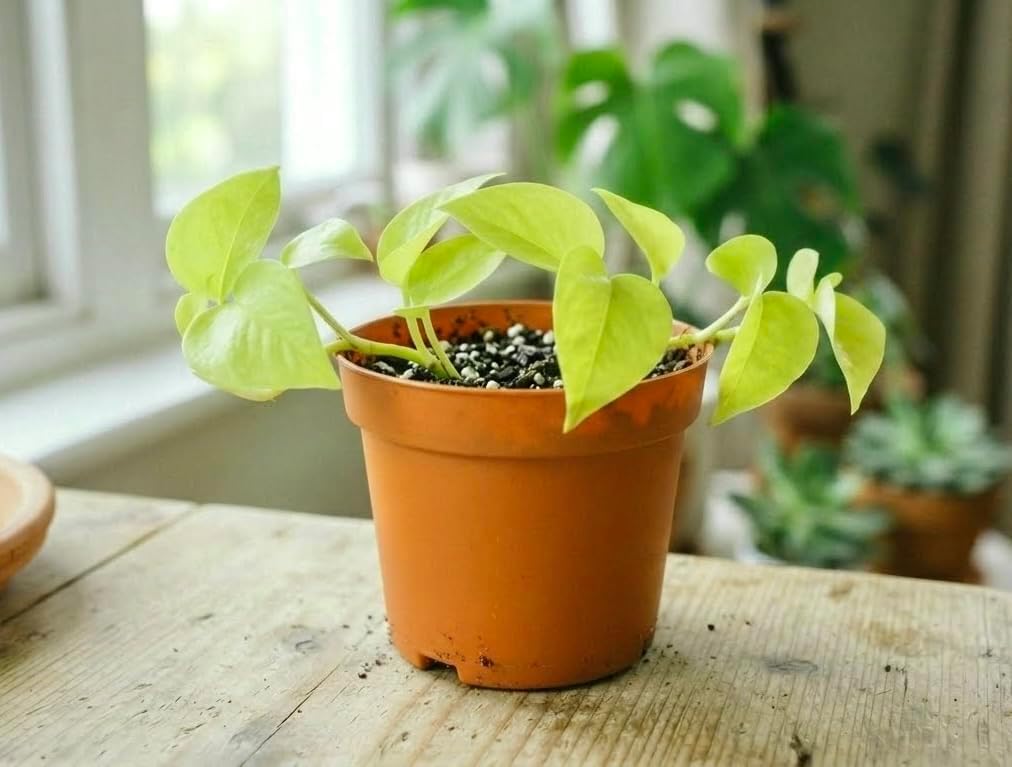
Neon Pothos (Epipremnum aureum) live houseplant in 3.5-inch pot
| Indoor Outdoor Usage | Indoor |
|---|---|
| Sunlight Exposure | Low Light |
| Moisture Needs | Moderate, Keep Soil Slightly Moist |
| USDA Hardiness Zone | 10-12 |
This Neon Pothos is a small, affordable trailing houseplant that brings bright chartreuse foliage to low‑light corners. Supplied in a 3.5‑inch plastic nursery pot, it is ready to display on a shelf or in a hanging basket where its vines can drape. The plant tolerates a wide range of indoor light from low to moderate indirect light and prefers soil kept slightly moist, so it works well for owners who water on an irregular schedule. Practical benefits include easy placement, minimal maintenance, and a vigorous trailing habit that adds vertical interest without special supports. Because it is sold in a small plastic container, plan to repot within a season if you want faster growth or fuller vines. Buyers should also expect modest initial size — the plant is listed with a small expected height — so it will take time to develop long trails. For very dark rooms without any indirect light, supplemental light will still be needed.
Best for: Good for budget-minded indoor plant owners who want a low-effort, visually striking vine to brighten dim rooms and are comfortable with a small starter specimen.
Less Ideal for: Not the best choice for someone wanting an immediate, large display plant or for plant owners who prefer mature specimens already trained on support.
- Tolerates low to moderate indirect light, suitable for dim indoor spots
- Low maintenance and forgiving of irregular watering
- Attractive neon chartreuse foliage that brightens indoor spaces
- Ready to display in a 3.5‑inch nursery pot for immediate placement
- Comes in a small plastic pot and will need repotting for faster growth
- Small initial size means it will take time to develop long trailing vines
Verdict: A wallet‑friendly, low‑light tolerant starter pothos that adds bright foliage to dim indoor spots with minimal care.
Live ZZ Plant in Spencer Bamboo Planter by Wild Interiors

| Sunlight Exposure | Partial Sun |
|---|---|
| Soil Type | Well-draining soil. |
| Moisture Needs | Regular Watering |
| USDA Hardiness Zone | 2 |
This Live ZZ Plant arrives potted in a Spencer bamboo planter and is designed as a low-maintenance indoor accent for low-light rooms. The ZZ plant is known for glossy, upright stems and tolerance of a range of indoor light levels, so it works well on desks, shelves, or corners that receive only indirect light. The included bamboo planter gives a finished look for immediate display without needing to repot, and greenhouse-grown stock from an established grower helps ensure a healthy specimen on arrival. Practical benefits include minimal watering needs and resilience to occasional neglect, which suits busy households and offices. Important limitations are that it still needs well-draining soil and regular but infrequent watering, and like other houseplants it will eventually outgrow the 5-inch pot and require repotting for long-term health. If you want a fuss-free, attractive plant that performs reliably in low light and comes ready to display, this is a sensible choice.
Best for: Buyers who want a reliable, low-effort indoor plant for low-light spaces and prefer a ready-to-display planter that minimizes setup.
Less Ideal for: Collectors who want large, fast-growing specimens or those seeking a long-term planter solution without future repotting.
- Tolerates low to bright indirect light, suitable for rooms with limited natural light
- Arrives planted in a decorative bamboo planter ready for immediate display
- Low-maintenance and drought-tolerant, reducing the need for frequent care
- Greenhouse-grown stock increases the likelihood of receiving a healthy plant
- Comes in a small pot and will need repotting as it grows
- Requires well-draining soil despite being low-maintenance
Verdict: A hassle-free, attractive ZZ plant that reliably thrives in low-light indoor spots and comes ready to display in a bamboo planter.
Costa Farms Snake Plant (Sansevieria) live indoor plant in decorative pot

| Indoor Outdoor Usage | Indoor |
|---|---|
| Other Special Features of the Product | Air Purification, Drought Tolerant, Low Maintenance |
| Sunlight Exposure | Partial Sun |
| USDA Hardiness Zone | 3 |
| Moisture Needs | Moderate Watering |
This Costa Farms Snake Plant is a compact, low-maintenance Sansevieria sold ready-to-display in a decorative pot. It provides upright, architectural foliage that works well on a windowsill or narrow spot and is commonly used to add vertical interest to living rooms, offices, or bedrooms. The plant is drought tolerant and thrives in a wide range of light conditions, so it adapts to an east-facing window where morning sun and bright indirect light are typical. Notable features include air-purifying qualities, simple care instructions (bright indirect light and light weekly watering), and a reputation for longevity when not overwatered. Practical benefits are easy placement, minimal daily attention, and durable growth even for beginners. Important limitations are that it does not bloom and care still requires avoiding consistently soggy soil; varieties may differ in leaf pattern so appearance is not guaranteed. For buyers prioritizing a resilient, low-effort plant that performs well in morning sun, this is a sensible choice.
Best for: Buyers who want a resilient, easy-care houseplant that performs reliably in an east-facing window and requires minimal daily attention.
Less Ideal for: Anyone seeking a flowering or fast-growing showy specimen for seasonal color or rapid canopy filling.
- Very low maintenance and drought tolerant, suitable for busy owners
- Tolerates a wide range of light including bright indirect morning sun common to east windows
- Provides vertical, architectural foliage that fits narrow spots and enhances decor
- Marketed with air-purifying properties to improve indoor air quality
- Does not produce blooms and offers primarily foliage interest
- Appearance may vary between individual plants since varieties are hand-selected
Verdict: Choose this Snake Plant when you need a low-effort, durable houseplant that thrives in morning sun and adds structured foliage to an east-facing window.
Plants for Pets Marble Queen Pothos in 4" Nursery Pot

| Indoor Outdoor Usage | Indoor |
|---|---|
| Other Special Features of the Product | Air Purification |
| Moisture Needs | Moderate Watering |
| Material Features | Natural |
The Marble Queen pothos is a compact, easy-care vining houseplant that arrives fully rooted in a 4" nursery pot and is suited for indoor spaces with limited light. Typical use is as a hanging plant, shelf specimen, or trailing accent where it can receive bright, indirect light or tolerate lower light levels. Notable features from the listing include variegated green-and-cream foliage, moderate watering needs, and an air-purifying benefit. Practically, this means the plant adds visual interest without demanding daily attention and recovers well if watering is occasionally missed, provided you avoid prolonged saturation that can cause root rot. It also responds to occasional feeding during spring and summer to keep new growth colorful. Limitations are its small nursery pot size on arrival, so taller or fuller displays will require repotting over time, and the plant is toxic to pets so it should be kept out of reach of cats and dogs. Buyers seeking a low-fuss, attractive trailing houseplant will find this an easy add to bedrooms, offices, and shaded living rooms.
Best for: Buyers who want an attractive, low-maintenance trailing houseplant for shaded rooms, shelves, or hanging displays and prefer a reliable plant that tolerates occasional care lapses.
Less Ideal for: People who need instant tall or full specimens without repotting or those who have curious pets that access plant foliage.
- Variegated, decorative foliage that brightens low-light spaces
- Tolerant of low to bright indirect light, making placement flexible
- Arrives fully rooted and ready to display in a nursery pot
- Low care: moderate watering and occasional feeding are sufficient
- Ships in a small 4" nursery pot so repotting is likely for faster growth
- Not pet friendly and should be kept away from cats and dogs
Verdict: A forgiving, variegated pothos that brings low-light rooms life with minimal maintenance and easy placement.
Choosing the Right Plants for Extremely Low Light: Key Factors to Consider
True Low-Light Ability
True low-light ability describes how well a species maintains leaf color, shape, and compact growth when it receives only reflected or artificial light. Some plants can survive long-term in very dim rooms but will thin out or lose lower leaves. Favor species that keep full, healthy foliage rather than ones that simply limp along. Assess this factor by observing a plant's historical performance in similar indoor locations or by checking whether the species is commonly used in interior landscaping where light is limited. Plants marketed as "shade tolerant" are not all equal; look for notes about "deep shade" or "low light" endurance.
Watering and Drought Tolerance
In low light, plants use water more slowly, so watering needs differ from sunlit rooms. A good low-light plant tolerates infrequent watering without root rot or leaf drop. Overwatering is the most common cause of failure for indoor plants in dim locations. Choose species with moderate drought tolerance or that prefer to dry slightly between waterings. Consider how easy it is to judge soil moisture for that species and whether it resists soggy-soil diseases when left moist longer than usual.
Leaf Structure and Durability
Leaf size, thickness, and arrangement affect how well a plant handles low light and indoor traffic. Thick, robust leaves store resources and resist yellowing; narrow or highly dissected leaves can look sparse in dim rooms. Durable leaves also tolerate occasional bumps in hallways or low-ventilation bathrooms. Think about how leaf appearance contributes to room aesthetics in low light. Plants with glossy or darker foliage often read as healthier and hide minor dust better than thin, pale leaves.
Growth Habit and Space Needs
Growth habit determines whether a plant stays compact, trails, or becomes upright and leggy in low light. Some species become stretched when light is inadequate, which requires regular pruning or repositioning. Others remain tidy and predictable even with little sun. Match habit to location: compact, upright plants suit shelves and corners, while trailing types work for hanging planters. Also consider mature size and how often you will trim to maintain form in dim conditions.
Pest and Disease Susceptibility in Low Light
Low-light environments can increase humidity and reduce airflow, which changes pest and disease pressure. Plants that are naturally more resistant to common indoor pests and fungal problems are better choices for dim spaces. Evaluate species by their historical resistance to issues like scale, spider mites, mealybugs, and root rot. Plants that tolerate a wider range of humidity and recover from minor infestations with simple care are preferable for low-light settings.
Maintenance and Propagation Ease
Low-light plant care should lean toward simplicity. Consider how easy a species is to prune, propagate, or replace from cuttings. Plants that propagate readily allow you to refresh an aging specimen without sourcing a new plant. Maintenance ease also includes how often a plant needs fertilizing in low light and whether grooming tasks like dusting large leaves are manageable in your space. Choose plants that fit your willingness to care for them.
Placement Tips for Dim Rooms
Placement can make the difference between survival and slow decline in extremely low light. Position plants where they get any available reflected light, such as near doorways, across from small windows, or under skylights that let in ambient illumination. Avoid spots that are completely cut off from indirect light for months at a time.
Rotate pots occasionally so all sides receive whatever light exists. For hanging or trailing plants, place them higher where light may be marginally stronger. For very deep interiors, consider supplementing with warm-spectrum lamps on a simple timer rather than upgrading to high-intensity lighting.
- Move plants a few feet toward light sources when possible
- Rotate weekly to prevent one-sided growth
- Use reflective surfaces or light-colored walls to boost ambient light
Soil, Potting, and Drainage Advice
Good drainage is crucial in low light because slower evaporation and uptake increase root-saturation risk. Choose a well-draining potting mix that retains some moisture but releases excess water. For many low-light species, mixes with added perlite or coarse sand help prevent waterlogging.
Pick pots with drainage holes and consider using a shallow tray to catch excess water while allowing the soil surface to dry between drinks. When repotting, avoid oversized containers that hold too much water for the plant's root mass.
- Favor well-draining mixes with organic matter and perlite
- Ensure pots have drainage holes and avoid oversizing
- Let the top inch or two of soil dry before watering
Watering Strategy in Low Light
Water less often than you would in bright rooms. Check soil moisture with a finger or moisture meter and err on the side of under-watering rather than keeping the medium constantly wet. Many low-light plants tolerate mild drying and will recover faster from drought than from root rot.
Adjust frequency seasonally. In winter, reduced indoor temperatures and lower metabolic rates mean even less frequent watering. If leaves show signs of dehydration, increase humidity or mist occasionally rather than saturating the soil.
- Test soil moisture before watering
- Reduce watering frequency in cooler months
- Raise humidity for drooping leaves instead of watering more
Pruning and Training to Prevent Legginess
Leggy growth is common in low light as plants reach for scarce photons. Regular pruning maintains a compact shape and encourages fuller branching. Pinch back long stems, remove yellowing lower leaves, and selectively trim to promote a bushier form.
For trailing species, shorten vines and root trimmed tips to create new plants. Use clean, sharp tools and avoid heavy pruning during very low-light periods when recovery is slower.
- Pinch back new growth to encourage branching
- Remove weak, elongated stems to redirect energy
- Propagate healthy cuttings to replace thinning areas
Using Artificial Light Sparingly
When natural light is essentially zero for long stretches, a low-intensity grow light can be a practical supplement. Choose a warm-white LED lamp and run it on a modest schedule to mimic daylight hours rather than blasting plants with high-intensity output.
Position lights to provide diffuse illumination rather than focused beams to avoid creating heat stress. Use timers to give consistent daily light and observe plant response before increasing duration or intensity.
- Use low-intensity LEDs set on a timer
- Aim for diffuse placement to avoid hotspots
- Start with short daily durations and monitor plant health
How We Chose the Best Plants for Extremely Low Light
We shortlisted plants that reliably survive and show reasonable growth in very low indoor light. Selection prioritized species known for shade tolerance and a track record in interior landscaping. We excluded plants that merely tolerate short periods of low light but need bright indirect sun to remain healthy. Our editorial filters focused on measurable, gardener-relevant dimensions: minimum light level tolerance, water and humidity tolerance, growth habit and space needs, resistance to common indoor pests and disease in low-light settings, and ease of propagation or replacement. We also considered leaf durability and how quickly a plant becomes leggy when undersupplied with light. Plants requiring supplemental grow lights or frequent grooming were deprioritized unless their low-light hardiness was exceptional. Excluded from the roundup were high-light tropicals, heavy bloomers that need bright indirect light to flower, and specimens with extreme humidity or temperature demands. The final list reflects species that balance low-light endurance with manageable watering and pruning, so gardeners get healthy foliage without intensive care.
FAQ
Can any plant survive without natural light at all?
Almost no true plant thrives with zero natural light long-term. Some species tolerate extended low-light indoors and will maintain foliage, but most need at least a bit of indirect or artificial light to stay healthy and avoid etiolation.
How often should I fertilize plants kept in very low light?
Fertilize sparingly. Low-light plants grow slowly and need fewer nutrients. A light feeding once or twice during the active growing season is usually sufficient, and cut back or skip feeding in winter when growth stalls.
Will higher humidity help low-light plants?
Higher humidity can improve leaf turgor and reduce stress for many indoor species, especially those with tropical origins. However, poor airflow plus high humidity can encourage fungal issues, so balance humidity increases with ventilation.
How do I know a plant is getting too little light?
Signs include elongated, weak stems, small or pale new leaves, and dropping lower foliage. If a plant becomes noticeably taller but produces fewer leaves, it is likely stretching for light and needs better placement or occasional pruning.
Are trailing plants a good option for dim spaces?
Trailing plants can work well because they can be hung closer to available light and hide sparse upper growth. Choose varieties known to keep foliage even in low light and prune regularly to maintain fullness.
Can I rotate plants between bright and dim rooms?
Rotating is possible but expect some adjustment stress. Plants accustomed to bright light may drop leaves when moved into dimmer spaces. If you plan to rotate, do so gradually and monitor watering since light changes affect water use.
Final Verdict
Choose low-light plants that combine genuine shade tolerance with forgiving watering habits and compact growth. Prioritize species with durable leaves and resistance to common indoor pests so they remain attractive with minimal intervention. Balance placement, soil drainage, and occasional pruning to prevent legginess. Your best choice depends on how little light the location actually receives and how much time you will spend on upkeep. Focus on plants that match your maintenance rhythm and spatial constraints to enjoy dependable green foliage in even the dimmest rooms.
