

Note: This article contains affiliate links. If you click on these links and make a purchase, I may earn a small commission at no extra cost to you. This helps support my research and content. Read my full affiliate disclosure here.
Choosing the right plants for a full sun planter box matters because containers heat up and dry out faster than ground beds. In tight urban patios, balconies, or sunny windowsills you need species that tolerate high light, handle warm root zones, and reward you with reliable blooms or foliage through the season. This guide shortlists seven top plants suited for full sun planter box conditions and explains how they perform under heat, drought, and routine container care. Use the evaluation notes and criteria to match plant habits to your planter size and maintenance rhythm before you plant.
Top Picks at a Glance
| Best Overall The best all-around choice for most situations | Clovers Garden Black Eyed Susan (Rudbeckia) Live Perennial Plants — Pack of 2 |  |
| Best Quality Built to a higher standard if you want something more solid | Perennial Farm Marketplace Sedum Sunsparkler 'Wildfire' (Quart) |  |
| Best Value The sweet spot between price and what you get | Sow Right Seeds Mexican Sunflower (Tithonia diversifolia) Seeds |  |
| Best Budget The cheapest option that still gets the job done reliably | Carpet Creeping Mixed Gazania (300 Seeds) |  |
| Highest Rated A top-rated pick with lots of positive feedback | Costa Farms Ruellia (Mexican Petunia) Live Outdoor Plant, Purple Flowers |  |
| Most Popular A crowd favorite that many people choose with confidence | KVITER Mix Moss Rose (Portulaca grandiflora) Heirloom Flower Seeds — Double Moss Rose Mix |  |
| Best Seller A high-volume bestseller chosen again and again | BuggyBeds Moss Rose (Portulaca grandiflora) Seeds — Mixed Colors, 20,000+ |  |
Clovers Garden Black Eyed Susan (Rudbeckia) Live Perennial Plants — Pack of 2

| Quantity | Two live plants |
|---|---|
| Pot size | 4" pots |
| Plant height at shipment | 4" to 8" tall |
| Non-GMO | Yes |
These Clovers Garden Rudbeckia arrive as two healthy, potted perennial plants ready for transplanting into a sunny planter or garden bed. They are sold at roughly 4" to 8" tall in 4" pots and are described as having strong root development for faster establishment. In practice these plants are used as foundation or mixed-border specimens where their bright yellow petals and dark centers provide consistent mid-summer to fall color and attract bees and butterflies. They are hardy perennials in most temperate zones and will bulk up each year, making them a low-effort option for full-sun containers and large planter boxes. Notable features include non-GMO stock, pollinator appeal, and included planting guidance. Limitations are that you receive small potted specimens that need transplanting and space to reach their mature height, so they are not an instant, full planter solution and will require routine watering while establishing.
Best for: Gardeners who want low-maintenance, pollinator-friendly perennials to fill full-sun planter boxes or borders and who are willing to transplant small potted stock for long-term payoff.
Less Ideal for: Anyone needing an immediate, fully mature look in a small planter or those who prefer instant container combos without planting and establishment time.
- Arrives as large, live potted plants ready to transplant for quicker establishment
- Season-long blossoms that attract pollinators and work well as cut flowers
- Described root development helps plants establish faster after planting
- Hardy perennial habit means plants should return and thicken each year
- Supplied in 4" pots so plants need time and space to reach full size in a planter box
Verdict: A straightforward choice for filling sunny planter boxes with dependable, pollinator-attracting perennial color that improves each year.
Perennial Farm Marketplace Sedum Sunsparkler 'Wildfire' (Quart)

| Indoor Outdoor Usage | Outdoor |
|---|---|
| Other Special Features of the Product | Drought Tolerant |
| Sunlight Exposure | Full Sun |
| USDA Hardiness Zone | 4 |
| Moisture Needs | Moderate Watering |
Sedum Sunsparkler 'Wildfire' is a low-growing perennial that brings long-lasting color to containers and rock gardens. It produces hot cherry-red foliage from spring through summer, which develops orange tones in fall, and bears rose-pink flowers above the mat of leaves in late summer. This quart-sized plant is marketed as drought tolerant and prefers sandy, well-draining soil in full sun, making it easy to place in sunny planters or mixed container designs. Practical benefits include year-round foliage interest, low maintenance watering needs once established, and suitability for small-space accenting or filling gaps in a planter. Limitations are its preference for full sun and sandy soil, so it will not perform well in deep shade or heavy, poorly drained mixes, and it reaches only about 6 inches tall so it is not a tall focal specimen. Buyers should also expect seasonal dormancy in colder months if planted in the edge of its hardiness range.
Best for: Gardeners who want a low-maintenance, color-forward perennial for sunny planters or rock-garden containers and value attractive foliage through multiple seasons.
Less Ideal for: Those seeking a tall or shade-tolerant focal plant or gardeners with heavy, poorly draining soil who cannot provide a sandy mix in containers.
- Striking year-round foliage color that adds visual interest to containers
- Drought tolerant and low maintenance once established
- Compact 6-inch height fits well in small planters and mixed container arrangements
- Attracts pollinators when in bloom
- Requires full sun and well-draining sandy soil to perform best
Verdict: Choose this sedum for a compact, drought-tolerant planter plant that delivers strong seasonal foliage color and late-summer blooms.
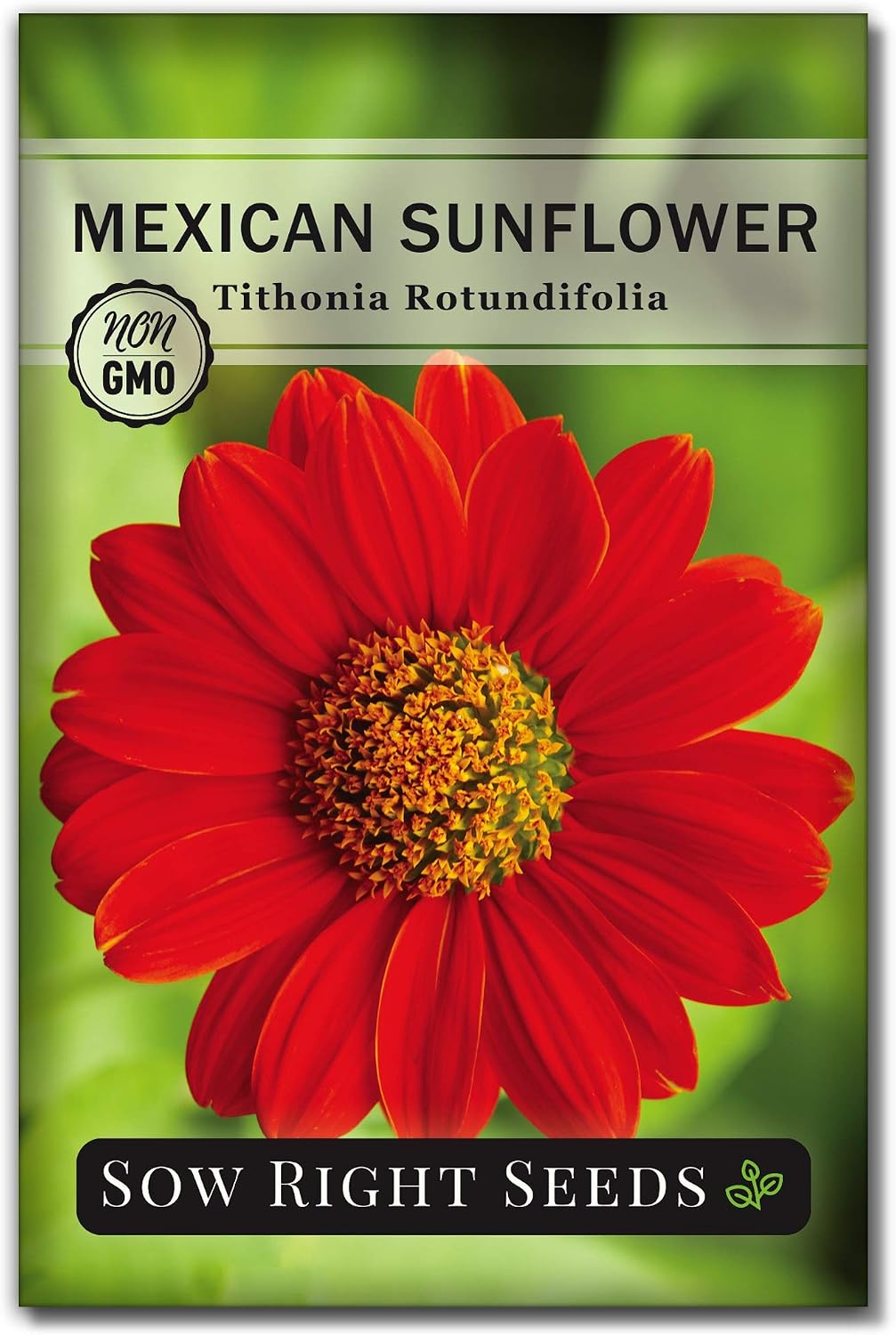
Sow Right Seeds Mexican Sunflower (Tithonia diversifolia) Seeds
| Plant or Animal Product Type | Tithonia diversifolia |
|---|---|
| Indoor Outdoor Usage | Indoor, Outdoor |
| Sunlight Exposure | Full Sun |
| Other Special Features of the Product | Attracts Pollinators, Fragrant, High Germination Rate |
| Material Features | GMO Free, Heirloom |
These Sow Right Seeds Mexican Sunflower seeds provide an affordable way to add large, orange pollinator-attracting blooms to a sunny garden. The packet contains at least 1 gram (about 110 seeds) of Tithonia diversifolia, an easy-to-grow annual that germinates in 10 to 14 days when soil temperatures are warm. Plant in full sun with regular watering and thin to the recommended spacing; the flowers develop in roughly 80 to 90 days and draw bees and late-season birds. Key practical benefits are the high germination rate noted by the brand and clear planting instructions included on the packet, making these seeds beginner-friendly and low-maintenance once established. Because they are non-GMO heirloom seeds from a solar-powered operation, they suit gardeners who prefer sustainable seed sources. Limitations are that this variety is recommended for USDA zones 8 to 11, so gardeners in cooler climates will need to start indoors or treat them as annuals; plants also need warm soil to germinate and adequate spacing since they spread more than they grow tall. For budget plantings in full sun, these seeds give a reliable, pollinator-focused display.
Best for: Gardeners looking for an inexpensive, low-effort way to add full-sun, pollinator-friendly color to beds or borders and who prioritize sustainable heirloom seeds.
Less Ideal for: Homeowners in cool-climate gardens who want perennial blooms without starting seeds indoors or using transplanting methods.
- Large packet size with about 1 gram (~110 seeds) suitable for multiple plantings
- Non-GMO heirloom seed sourcing adds sustainability and seed-saving potential
- High germination rate and clear packet instructions make them beginner-friendly
- Flowers attract bees and birds, supporting pollinators and wildlife
- Recommended for USDA zones 8–11 so not ideal as a perennial in cooler climates
- Requires warm soil (around 70°F) to germinate reliably
Verdict: A budget-friendly seed packet that reliably produces bold, pollinator-attracting flowers for sunny gardens.
Carpet Creeping Mixed Gazania (300 Seeds)

| Sunlight Exposure | Full Sun |
|---|---|
| Expected Blooming Period | Spring to Fall |
| USDA Hardiness Zone | 9 |
| Unit Count | 300 Count |
| Material Features | GMO Free, Heirloom |
These mixed Gazania seeds grow low, mat-forming plants that produce daisy-like blooms in bright oranges, yellows, pinks, reds, and whites from late spring through fall. Sow on the soil surface indoors 6–8 weeks before the last frost or direct sow after frost risk has passed; seeds need light to germinate and typically sprout in 10–21 days at 65–70°F. Once established, Gazania is used as a sunny container or pot perennial in warm climates or as an annual elsewhere, providing long-lasting color with minimal watering and little maintenance. The plants tolerate poor, sandy soils, coastal conditions, and heat, and their compact 6–12 inch habit makes them suitable for pots and small planters. Limitations are that they require full sun to open flowers and will not perform in shade, and germination and early care need consistent moisture without waterlogging. Also, performance as a true perennial is zone-dependent, so growers in colder zones should expect annual behavior or overwinter indoors.
Best for: Buyers who want an inexpensive way to fill sunny pots with long-blooming, low-maintenance annuals or perennials in warm climates and who are comfortable starting seeds or direct sowing.
Less Ideal for: Gardeners who only have shaded balconies or who prefer instant potted color from plants rather than starting seeds should consider bedding plants or nursery pots instead.
- Large variety pack of 300 heirloom, non-GMO seeds for multiple pots or repeated plantings
- Heat, drought, and salt tolerant once established, suited to hot full-sun locations
- Low-growing, mat-forming habit that works well as a colorful ground cover in containers and suppresses weeds
- Long bloom period from late spring through fall for extended color
- Easy-growing instructions included for starting indoors or direct sowing
- Requires full sun to open flowers and will perform poorly in shaded pots
- Perennial behavior is limited to warmer zones so may act as an annual in colder climates
- Seeds need light for germination, so they cannot be buried deeply and require some attention during starting
Verdict: A very budget-friendly seed pack to produce heat-tolerant, long-blooming Gazania for sunny pots and containers.
Costa Farms Ruellia (Mexican Petunia) Live Outdoor Plant, Purple Flowers

| Indoor Outdoor Usage | Outdoor |
|---|---|
| Sunlight Exposure | Full Sun |
| Expected Plant Height | 36 inches |
| Container Material | Plastic |
This Costa Farms Ruellia (Mexican petunia) is a vigorous, easy-care flowering plant that delivers continuous purple trumpet-shaped blooms and quick vertical growth. For pots on a sunny patio it establishes fast and reaches about 2 to 3 feet tall, making it a dependable thriller or focal plant in large containers. The plant performs best in full sun but tolerates partial shade and a wide range of soils as long as drainage is reasonable. Its drought tolerance and heat resilience mean lower watering needs once established, and its nectar-rich flowers attract pollinators such as hummingbirds and butterflies. Practical limitations include its rapid growth habit, which can require regular pruning or dividing in confined pots to prevent crowding, and the plastic nursery container that may need upgrading for long-term container culture. For gardeners seeking a low-effort, high-impact annual or summer perennial look in warm climates, this is an efficient choice for sunny pots and mixed container arrangements.
Best for: Buyers who want a high-performing, low-maintenance flowering plant to create bold color and height in full-sun pots and mixed container designs.
Less Ideal for: Gardeners seeking a very compact, slow-growing filler for small pots or those who do not want to perform occasional pruning or repotting should consider other compact annuals.
- Produces prolific, continuous purple blooms for strong visual impact
- Fast growth that quickly fills large pots or provides vertical interest
- Heat and drought tolerant once established, reducing watering frequency
- Attracts pollinators, adding wildlife and movement to containers
- Can outgrow containers quickly and needs regular pruning or dividing in pots
- Supplied in a basic plastic nursery container that may require repotting for long-term use
Verdict: Choose this Ruellia when you need a fast-growing, heat-tolerant plant that reliably delivers nonstop purple blooms and strong container presence in full sun.
KVITER Mix Moss Rose (Portulaca grandiflora) Heirloom Flower Seeds — Double Moss Rose Mix

| Indoor Outdoor Usage | Outdoor |
|---|---|
| Other Special Features of the Product | Drought Tolerant, Growing Guide Included, High Germination Rate, Made in the USA |
| Expected Blooming Period | Late Spring to Fall |
| Sunlight Exposure | Full Sun |
| USDA Hardiness Zone | 2-12 |
KVITER Mix Moss Rose seeds provide a straightforward way to establish a low, flowering ground cover that blooms from late spring through fall. The packet contains heirloom, non-GMO seeds of Portulaca grandiflora selected for double, ruffled blooms in pinks, reds, yellows and oranges; the included growing guide and high germination rate make direct sowing into warm, well-drained soil simple. These plants thrive in full sun and minimal water, so they are ideal for hot, dry spots, rocky borders, edging and shallow containers where you want continuous pink and mixed-color flowers without much care. Expect compact succulent foliage that spreads to form a colorful mat and attracts pollinators. Limitations are that moss rose prefers sandy or loamy, very well-drained soils and will not do well in shade or waterlogged conditions, and the low height means it is decorative rather than structural. Seed mix variability means color distribution is not uniform, so the result is a blended, natural look rather than a single solid block of pink.
Best for: Gardeners who want an easy, low-maintenance flowering ground cover for sunny, dry areas and who prioritize continuous seasonal color with minimal watering.
Less Ideal for: People seeking tall or structural plants, dense single-color lawns of pink flowers, or gardeners with shady, poorly drained sites should look elsewhere.
- Heirloom non-GMO seeds with high stated germination for reliable sprouting
- Drought tolerant and thrives in full sun, suited to hot, dry sites
- Large unit count suitable for covering substantial ground or many containers
- Includes step-by-step growing guide to simplify direct sowing for beginners
- Performs poorly in shade or wet soils so site selection is important
- Seed mix produces a varied color blend rather than uniform pink-only coverage
Verdict: A simple, low-water choice to create a long-blooming, low pink-and-mix ground cover in hot sunny spots.
BuggyBeds Moss Rose (Portulaca grandiflora) Seeds — Mixed Colors, 20,000+

| Indoor Outdoor Usage | Indoor, Outdoor |
|---|---|
| Sunlight Exposure | Full Sun |
| Expected Blooming Period | Spring to Fall |
| USDA Hardiness Zone | 2-11 |
| Moisture Needs | Regular Watering |
This seed pack supplies over 20,000 Portulaca grandiflora seeds designed to establish a low-growing, colorful ground cover in full-sun mulch beds. Sow directly in spring on well-drained loam or in containers; the plants are drought-tolerant once established and attract pollinators, which helps flowering borders come alive with pinks, reds, yellows, and whites. Notable features are the large seed count for covering more area, GMO-free seed stock, and an extended bloom period from spring to fall. In practice these plants work best in hot, sunny sites and need regular but not excessive watering during establishment; they prefer lean, well-drained soil and can struggle in shade or overly rich, wet soil. Expect fast germination and a carpet-like habit that suppresses weeds, but be prepared to re-seed thin spots since moss rose is annual/perennial behavior varies by zone and plants are low-growing rather than tall focal specimens. For mulch beds this is a practical, cost-effective way to add continuous seasonal color with minimal ongoing maintenance.
Best for: Gardeners who want an economical, low-maintenance way to add continuous color to sunny mulch beds and prioritize coverage and seasonal blooms over tall structure.
Less Ideal for: Those seeking tall or focal specimen plants or gardeners with shady, waterlogged beds should consider alternative species better suited to those conditions.
- Very large seed count suitable for covering multiple small beds or filling gaps
- Attracts pollinators and provides long bloom from spring to fall
- Drought-tolerant and low-maintenance once established
- GMO-free seed stock
- Performs poorly in shade or poorly drained, overly rich soil
- Plants are low-growing ground cover and not suitable as tall specimen plants
Verdict: If you need an inexpensive, low-effort ground cover to brighten sunny mulch beds with sustained seasonal color, these moss rose seeds deliver the best value.
Choosing the Right Plants for Full Sun Planter Box: Key Factors to Consider
Sun and Heat Tolerance
Full sun planter boxes are exposed to intense light and elevated temperatures, especially on south- and west-facing balconies. Plants that scorch, bleach out, or drop leaves under sustained high light will struggle. Look for species described as heat tolerant or full sun adapted and consider leaf texture and pigment: thicker, smaller, or silvery leaves often reflect light and resist heat stress. Matching plants to the true sun intensity at your location reduces replacement and maintenance needs.
Heat tolerance also affects watering frequency. Plants that tolerate heat well typically regulate water loss better, so you can avoid daily watering cycles that are hard to sustain.
Drought Efficiency and Water Needs
Planter boxes dry more quickly than garden beds because their soil volume is limited and the sides heat up. Choose plants that use water efficiently or store moisture, such as those with succulent leaves or deep root tendencies relative to container depth. Understanding whether a plant prefers consistently moist potting mix or intermittent drying between waterings will determine whether it suits your routine and the planter's drainage.
Also consider how plants respond to uneven moisture. Some will drop flowers or drop leaves quickly under drought stress, while others maintain appearance longer. That behavior influences whether a plant remains attractive during busy stretches when you might not water daily.
Container Habit and Size Management
Plants for planter boxes should fit the available depth and width without becoming rootbound too quickly. Compact mounding forms, clumping perennials with restrained spread, and trailing species that can cascade are all good habits depending on planter shape. Avoid vigorous, deep-rooted plants that require frequent repotting or root pruning in a shallow box.
Also think about how the plant interacts with neighbors in the container. Some thrive when grouped for a fuller look, while others need solitary space to avoid competition for limited nutrients and moisture. Plan root space and planting density to maintain health and reduce frequent maintenance.
Seasonal Interest and Bloom Duration
Because planter boxes are focal points, choose plants that provide visible rewards: long bloom spans, striking foliage, or both. Annuals with extended flowering can keep color through the season, while perennials with repeated flushes or attractive foliage can reduce replanting. Consider bloom timing so you have continuous interest from spring through fall or pair early and late performers together.
Plants that require minimal deadheading but still rebloom are particularly useful in containers, lowering upkeep while keeping a neat appearance.
Maintenance and Pest Resilience
Container plants are more exposed to pests and diseases because airflow, soil biology, and humidity differ from the ground. Choose species known for resistance to common foliar pests and fungal problems in hot, windy spots. Maintenance needs such as regular pruning, deadheading, and fertilizing should align with how much time you can commit. Low-maintenance plants reduce the risk of decline if care is missed for a week or two.
Also factor in winter considerations if the planter is outdoors year-round. Some plants tolerate brief cold snaps while others need to be lifted or protected during frosts.
Matching Plant Habit to Planter Depth
Planter box depth is one of the first constraints when choosing species. Shallow boxes favor compact and trailing plants with shallow roots. Deeper boxes allow clump-forming perennials and plants with more substantial root systems. Measure available soil depth and pick plants whose mature root habits fit that depth to avoid frequent repotting.
Think vertically as well. Use a mix of upright plants for height, mid-height fillers for body, and trailing plants to soften edges. This layered approach maximizes visual impact while respecting root volume and water needs.
- Shallow boxes: choose low-growing mounds and trailing species
- Medium depth: include small perennials and annuals with moderate roots
- Deep boxes: consider larger clumps or woody shrubs with controlled growth
Soil Mix and Drainage Best Practices
A well-draining, fertile potting mix helps plants survive heat and intermittent watering. Add components that increase moisture retention without holding waterlogged conditions, such as fine compost or coconut coir, combined with perlite or coarse grit for drainage. Avoid using garden soil alone because it compacts and reduces aeration.
Ensure drainage holes are clear and use a layer of coarse material at the bottom only if it does not impede water flow. Good drainage reduces root rot risk, which is common when planter boxes bake in full sun and then receive heavy irrigation.
- Aim for a mix that holds moisture but drains freely
- Top-dress annually with fresh compost to replenish nutrients
- Check drainage holes seasonally for blockages
Watering Strategies for Sunny Planter Boxes
Establish a consistent watering routine that reflects high light and temperature. Morning watering reduces midday stress and lets foliage dry before evening. In very hot spells you may need to water more frequently, but deep, infrequent soaks encourage stronger roots compared to light surface wetting.
Consider mulching the surface with decorative gravel or organic mulch to slow evaporation. Self-watering inserts or wicking mats can help sustain moisture between waterings without overwatering.
- Water deeply to moisten the entire root ball
- Monitor moisture with a finger test or moisture meter
- Adjust frequency during heat waves and after heavy rain
Combining Annuals and Perennials for Continuous Color
Pair fast-blooming annuals with reliable perennials to keep containers attractive through the season. Perennials provide structure and foliage interest while annuals fill gaps and supply long-lasting color. When annuals fade, rotate replacements without disturbing the perennial root systems too much.
Plan bloom timing so that as one plant finishes, another is beginning. This staggered approach minimizes bare spots and reduces the need for wholesale replanting.
- Use perennials as anchors and annuals as seasonal accents
- Replace spent annuals mid-season for continued color
- Balance textures and heights for visual interest
Light Variation and Microclimate Considerations
Full sun is not uniform. Reflected heat from walls, rooftop exposure, or nearby pavement can increase thermal stress. Observe how light and heat behave across the day at your specific spot and choose plants that match that microclimate. Some species can handle a few hours of extreme afternoon sun better than continuous, intense exposure.
Wind and exposure to drying breezes also influence plant selection. Sheltered balconies differ from exposed rooftops; pick sturdier, tougher-leaved plants for windy situations and more delicate bloomers for protected spots.
- Track sun intensity and duration before planting
- Prefer tough-leaved species where reflected heat is strong
- Provide temporary shade cloth in extreme heat waves
How We Chose the Best Plants for Full Sun Planter Box
We focused on traits that matter for container success in full-sun exposures. Plants were selected for proven tolerance of intense sunlight, heat resistance during peak season, and efficient water use in shallow, fast-draining media. We prioritized compact or adaptable growth habits that fit typical planter box depths, plus consistent flowering or ornamental foliage across a long season. Ease of care for container gardeners was a major filter, including pest tolerance and straightforward pruning or deadheading. Hardiness and regional adaptability were considered where appropriate so selections are useful across a wide range of climates. We excluded plants that need deep soil, heavy shade, exacting humidity control, or frequent transplantation, because those are poor fits for small, sun-exposed planter boxes.
FAQ
How often should full-sun planter box plants be watered in summer?
Watering frequency depends on planter size and material, but expect to water more often in summer. Smaller or metal boxes may need daily checks, while larger containers often need deep watering every two to three days. Use a finger test to ensure the root zone is moist rather than guessing by schedule alone.
Can I mix sun-loving perennials and annuals in the same planter?
Yes. Combining perennials for structure with annuals for extended color is a common strategy. Ensure both have similar light and water needs and avoid crowding, which can increase competition and stress in limited soil volume.
What soil mix is best for planter boxes in full sun?
A high-quality potting mix blended for containers is best: lightweight, fertile, and well-draining. Add components like compost for nutrients and perlite or grit for aeration. Avoid heavy garden soil that compacts and retains too much heat.
How do I prevent plants from overheating in a very sunny spot?
Provide morning watering, use reflective or light-colored containers, and consider mulching the surface to reduce evaporation. Temporary shade during peak heat and selecting heat-tolerant species with tougher foliage also help reduce scorch and stress.
Do full-sun planter plants need extra feeding?
Container plants typically need more frequent feeding because nutrients wash out with regular watering. Use a balanced, slow-release fertilizer at planting and supplement with periodic liquid feeds during the growing season, following label directions for containers.
Final Verdict
When selecting plants for a full sun planter box, prioritize sun and heat tolerance, efficient water use, and a growth habit suited to your planter depth. Decide whether you want seasonal bursts of color or lower-maintenance foliage, and arrange plants so root competition and watering needs are compatible. By matching plant traits to the microclimate and maintenance you can create a resilient, attractive container display that requires predictable care.
