

Note: This article contains affiliate links. If you click on these links and make a purchase, I may earn a small commission at no extra cost to you. This helps support my research and content. Read my full affiliate disclosure here.
If you manage several acres or a tidy suburban yard, a bagger for your riding mower keeps clippings contained and saves time emptying. The right bagger system reduces cleanup, prevents thatch buildup, and makes mulching or composting easier when you want to collect clippings. This guide covers seven shortlisted options built for residential riding mowers and compares them across the factors that matter in the yard. We evaluated capacity, installation fit, material durability and how they affect everyday use. Read on to understand which features will matter most for your property and mowing routine.
Top Picks at a Glance
| Best Overall The best all-around choice for most situations | 8TEN TURFBUCKET Twin Bagger System for Cub Cadet XT1/XT2 (42"/46") |  |
| Best Quality Built to a higher standard if you want something more solid | EGO Power+ T6 42" Lawn Tractor Bagging Kit (ABK4200T) |  |
| Best Value The sweet spot between price and what you get | Husqvarna Twin 2-Bin Lawn Mower Bagger for 42-Inch Riding Mowers |  |
| Best Budget The cheapest option that still gets the job done reliably | Kerlista Twin Double Bagger Kit for 42"–46" Riding Lawn Mowers |  |
| Highest Rated A top-rated pick with lots of positive feedback | Cub Cadet 30" Double-Bag Bagger Assembly (OEM 19A30014OEM) |  |
| Most Popular A crowd favorite that many people choose with confidence | MTD Genuine Parts 46-Inch Double Bagger for Riding Lawn Mowers | 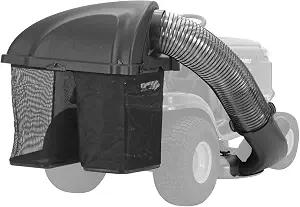 |
| Best Seller A high-volume bestseller chosen again and again | Arnold 19A30034000 Twin Bagger for 42" and 46" Side-Discharge Tractors |  |
8TEN TURFBUCKET Twin Bagger System for Cub Cadet XT1/XT2 (42"/46")

| Power Source | Gas Powered |
|---|---|
| Operation Mode | Manual |
| Material Type | Polypropylene (PP) |
The 8TEN TURFBUCKET is a twin bagger attachment that replaces OEM Cub Cadet fast-attach bagging systems for many XT1 and XT2 models with 42- and 46-inch fabricated decks. It mounts to the tractor using the included frame, brackets, and chute hardware and routes clippings through a quick-connect hose into two UV-resistant polypropylene buckets with hinged lids and see-through windows so you can monitor fill from the seat. The dual-bag layout increases capacity and evens out load on the mower for fewer stops to empty, while the baffles and mesh on the lid help maintain airflow and reduce clogging. Included handles and a twist-lock hose adapter make routine emptying and clearing straightforward. Expect a practical, OEM-style fit when used on the listed compatible models, but note this is not universal so proper model-year compatibility must be confirmed before purchase. Installation requires basic mechanical aptitude and some assembly hardware is provided, so professional installation is optional for users who prefer not to mount it themselves.
Best for: Homeowners who own a compatible Cub Cadet XT1 or XT2 tractor and want an OEM-style bagging system that reduces trips to empty while keeping turf tidy.
Less Ideal for: Owners of different mower makes or older/newer Cub Cadet models not listed should look for a universal or model-matching alternative; buyers who want a plug-and-play, tool-free install may prefer dealer installation or a different kit.
- Model-specific design for direct replacement on many Cub Cadet XT1 and XT2 tractors
- Dual-bagger configuration increases collection capacity and balances load
- UV-resistant polypropylene parts resist sun degradation for longer outdoor life
- Quick-connect hose adapter and hinged lids simplify emptying and clearing blockages
- See-through windows let you check bag fill from the operator seat
- Fits only the listed Cub Cadet models and deck types so it will not work with unrelated tractors
- Assembly and mounting require time and basic mechanical skills
Verdict: If you have a listed Cub Cadet XT1 or XT2 with a 42- or 46-inch fabricated deck, this twin-bagger provides a durable, high-capacity OEM-style solution to keep clippings contained and reduce emptying stops.
EGO Power+ T6 42" Lawn Tractor Bagging Kit (ABK4200T)

| Compatible model | POWER+ 42" T6 Lawn Tractor (TR4204) |
|---|---|
| Capacity | 6.5 bushels |
| Includes | Bagger, (2) 21" bagging blades, counterweights |
| Full bag indicator | Yes |
This kit converts the EGO POWER+ 42" T6 lawn tractor into a full bagging system by combining a mesh double-bin bagger, two 21-inch all-steel high-lift blades, and counterweights. Installation is intended to be quick and straightforward so you can attach the bagger for bagging and remove it when switching to mulching or side discharge. The mesh double-bin holds 6.5 bushels and has a full-bag indicator to simplify disposal. High-lift steel blades increase airflow and improve grass collection compared with standard blades, and the counterweights keep the tractor balanced as bags fill. Because the parts are designed specifically for the T6 tractor, fit and performance are reliable and maintenance is minimal. Limitations are that this kit is made for the 42" T6 model only and will not work on unrelated tractors, and the mesh bins may require more frequent emptying on heavy, wet turf than a larger rigid hopper.
Best for: Buyers who prioritize clean, high-performance bagging on the EGO POWER+ 42" T6 tractor and want a factory-designed kit that maximizes collection efficiency and ride stability.
Less Ideal for: Owners of other tractor brands or models should look for universal or model-specific kits for their machines and those who rarely bag grass may not need the added bulk.
- Purpose-built fit for the EGO 42" T6 tractor ensures reliable attachment and performance.
- High-lift 21" all-steel blades increase airflow for better grass pick-up into the bags.
- 6.5-bushel double-bin with full-bag indicator simplifies emptying and reduces guesswork.
- Counterweights preserve ride stability and handling as the collection bins fill.
- Compatible only with the POWER+ 42" T6 lawn tractor and not universal for other mowers.
- Mesh bagger capacity can require frequent emptying on large or damp lawns.
Verdict: If you own the EGO POWER+ 42" T6 and want best-in-class bagging performance and stability, this factory kit delivers a complete, turnkey solution.
Husqvarna Twin 2-Bin Lawn Mower Bagger for 42-Inch Riding Mowers

| Power Source | Manual |
|---|---|
| Number of Positions | 1 |
| Material Type | Polyester |
| Item Type Name | Lawn Bagger |
The Husqvarna Twin 2-Bin lawn mower bagger attaches to 42-inch riding mower decks to collect grass clippings into two polyester mesh bags for easier disposal. It is typically used on compatible Husqvarna models to catch and store several bushels of clippings at a time, reducing trips to a compost pile or yard waste bin. Notable features include a 6-bushel (210-liter) collector capacity, improved airflow for fuller bags, a full-bag indicator, built-in handles and an easy-glide design that lets you lift and dump the bags quickly. Setup is tool-free and the unit can be used with or without the mesh bags, which adds flexibility for light cleanup or heavy mowing sessions. Practical benefits are clear for someone trying to speed up mowing and minimize loose clippings on the lawn. Expect some added bulk when mounted and the system is specific to 42-inch stamped decks so it is not a one-size-fits-all solution for every riding mower model.
Best for: Buyers who want to streamline mowing by collecting large volumes of clippings with minimal fuss and who own a compatible 42-inch riding mower.
Less Ideal for: Homeowners with different deck sizes, non-stamped decks, or those who prefer mulching or side-discharge systems should look elsewhere.
- Large 6-bushel (210 L) two-bin capacity reduces how often you need to stop and empty
- Polyester mesh bags and improved airflow promote fuller, more efficient collection
- Tool-free installation and easy-glide design with built-in handles for quick dumping
- Full-bag indicator helps avoid overfilling and minimizes mess
- Compatible only with select 42-inch stamped-deck riding mowers
- Adds noticeable bulk to the rear of the mower when installed
Verdict: A practical, high-capacity twin bagger that speeds lawn cleanup for owners of compatible 42-inch riding mowers.
Kerlista Twin Double Bagger Kit for 42"–46" Riding Lawn Mowers

| Power Source | Gas Powered |
|---|---|
| Operation Mode | Manual |
| Material Type | Plastic |
| Number of Positions | 1 |
This Kerlista twin bagger kit is a replacement grass collection system intended for 42"–46" riding and zero-turn mowers. It includes the hood assembly, chute tube, grass bags, seals, and connector pieces so you can replace a worn or missing bagger without buying a full OEM unit. In use it bolts onto compatible mower decks and routes clippings into the two detachable bags; the bags have integrated straps and an easy-open lid for faster dumping and reduced clogging thanks to the advertised venting. Because the kit is plastic it is lightweight and resists rust, but plastic parts and fittings may wear faster than metal brackets under heavy use. Fitment is broad for many brands and several Cub Cadet OEM numbers are listed, but installation may require an extra bracket that is not included. This is a practical option if you need a complete replacement bagger set that restores bagging functionality on older mowers, though buyers should confirm exact compatibility and be prepared for some DIY fitting work.
Best for: Buyers who need an affordable, all-in-one replacement bagger to restore bagging on mid-size residential riding mowers and are comfortable confirming fit and doing light DIY installation.
Less Ideal for: Large properties or commercial mowing contractors who need heavy-duty metal baggers and fully bolted OEM systems should look for more rugged, service-grade options.
- Complete kit includes hood, chute, bags, seals, and connector pieces for a full replacement
- Designed to fit a wide range of 42"–46" riding and zero-turn mower decks
- Plastic construction resists rust and keeps the assembly lightweight
- Bags have integrated straps and easy-open lids to simplify emptying
- Plastic parts and connectors may wear sooner than metal alternatives under heavy or commercial use
- May require purchasing a separate bracket for mounting that is not included
Verdict: A budget-friendly, complete replacement bagger kit that restores bagging capability on 42"–46" residential riding mowers without buying full OEM assemblies.
Cub Cadet 30" Double-Bag Bagger Assembly (OEM 19A30014OEM)

| Manufacturer | CUB CADET |
|---|---|
| Item model number | 19A30014OEM |
| Compatible models | CC30, CC30E, CC30H Mini Rider |
| Bag capacity | 3.25 Bushel |
This OEM Cub Cadet 30-inch bagger is a straightforward grass-collection kit for CC30 mini rider mowers. It installs to the rear of the mower and includes two vented nylon bags, chutes, mounting hardware, and instructions so you can quickly convert a cut-and-discharge machine into a bagging setup. The vented bags improve airflow to reduce clogging and the 3.25 bushel capacity per side cuts down trips to empty during medium-size jobs. Because it is a factory replacement part built for specific Cub Cadet models, fit and durability are superior to many generic baggers and it integrates cleanly with the mower frame. Limitations are typical of rear-mounted systems: you will add bulk behind the mower and need to stop to empty the bags periodically, and the kit is only compatible with the listed CC30 mini rider variants. If you want reliable, OEM-fit grass collection for those Cub Cadet models, this bagger delivers practical performance without extra features you will not use.
Best for: Homeowners who own a compatible Cub Cadet CC30 mini rider and prioritize dependable factory-fit replacement parts for consistent bagging performance during regular mowing.
Less Ideal for: People who need a universal bagger that fits multiple mower brands or those who want high-capacity or side-discharge-free systems for very large properties.
- OEM part made to fit CC30 Mini Rider models for reliable compatibility
- Vented nylon bags improve airflow and reduce clogging during use
- Includes both chutes, mounting hardware, and instructions for installation
- 3.25 bushel bag capacity reduces frequency of emptying on medium jobs
- Only compatible with specified CC30 mini rider models so not universal
- Adds rear bulk to the mower footprint which can affect maneuvering
Verdict: Buy this OEM Cub Cadet bagger if you own a CC30 mini rider and want a reliable, factory-fit solution that reduces clogs and simplifies grass collection.
MTD Genuine Parts 46-Inch Double Bagger for Riding Lawn Mowers
| Power Source | Manual |
|---|---|
| Operation Mode | Automatic |
| Material Type | Plastic |
| Cutting width | 46 inches |
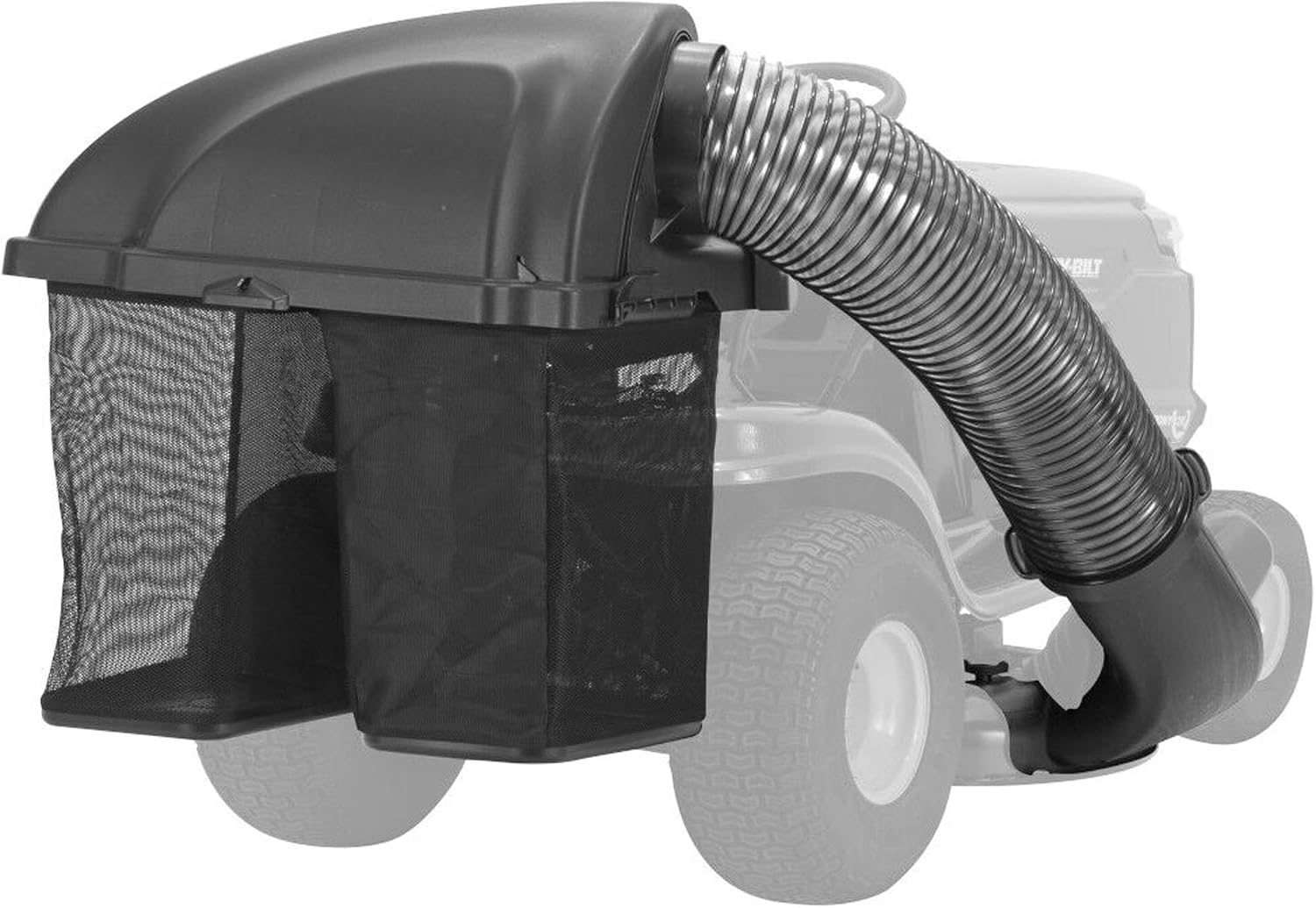
This MTD double bagger mounts to 42- and 46-inch riding mower decks (2010 and later) to collect clippings instead of discharging them back onto the lawn. It uses clear flex discharge tubing so you can watch for clogs and a sight window to check when the 6.5-bushel bags are full. The top-hinged hood makes bag removal and replacement easier without having to move the seat, and the system is primarily plastic for lower weight and corrosion resistance. In practice it converts a rear discharge mower into a productive bagging setup that reduces thatch and leaves a cleaner finish, useful when curb appeal matters. Limitations to note are that it is an OEM replacement part so fit depends on deck model compatibility and some buyers report the plastic parts feel less heavy-duty than metal alternatives. Installation typically requires basic tools and time to align brackets, and vacuums or severe wet grass can still clog the hose despite the clear tubing.
Best for: Buyers who value a tested OEM bagger that produces a cleaner, bagged finish and prefer parts that match original mower designs for straightforward replacement and lawn presentation.
Less Ideal for: Owners who need a heavy-duty metal bagger for commercial or extreme-duty use or those with older mower decks or nonstandard configurations that may not be supported.
- Fits many 42- and 46-inch riding mower decks from leading brands, simplifying replacement and upgrades
- Clear flex tubing and sight window let you monitor grass flow and spot clogs quickly
- Top-hinged hood allows easier bag removal without flipping the seat up
- Large 6.5 bushel capacity reduces trips to empty and speeds up bagging jobs
- Plastic construction can feel less durable than steel aftermarket baggers
- Compatibility is limited to 2010-and-later decks and specific models so fit must be confirmed before purchase
Verdict: Choose this MTD double bagger when you want an OEM-compatible solution that converts a rear discharge mower into a high-capacity bagging system for a neater lawn finish.
Arnold 19A30034000 Twin Bagger for 42" and 46" Side-Discharge Tractors

| Power Source | Gas Powered |
|---|---|
| Operation Mode | Manual |
| Number of Positions | 2 |
| Material Type | Polyester |
This Arnold twin bagger converts a side-discharge riding mower into a bagging system to collect grass clippings and speed post-mow cleanup. It attaches to tractors with 42" or 46" side-discharge decks and includes twin polyester bags, chutes, mounting hardware, and instructions for installation. The 6.5-bushel capacity reduces the frequency of emptying and the tight-weave polyester bags with integrated straps and an easy-open lid make dumping straightforward. Its airflow-optimized chutes help reduce clogging while bagging, which is useful for heavier or damp clippings. Expect a manual installation and an operation mode that requires occasional adjustment to keep both bags balanced and flowing. The kit is a practical, no-frills solution built for utility rather than style; materials are simple polyester and hardware rather than heavy-gauge metal, so long-term durability will depend on how it is used and stored. It is best for owners who want consistent bagging performance and less rake-up time rather than buyers seeking a heavy-duty commercial system.
Best for: Best for homeowners who want to streamline weekly mowing and reduce time spent raking and clearing clippings, and who prefer a straightforward, install-once accessory for their mid-size riding mower.
Less Ideal for: Not a good choice for large commercial mowing operations or users who need a heavy-duty, metal-framed collector designed for constant professional use.
- Direct fit for many 42" and 46" side-discharge tractors including HOP-built Craftsman models
- 6.5-bushel twin bag capacity reduces stops to empty during larger mowing jobs
- Includes bags, chutes, mounting hardware and installation instructions for a complete kit
- Tight-weave polyester bags and optimized airflow help reduce clogging and make dumping easier
- Polyester construction and basic hardware may wear faster than heavier metal commercial systems
- Manual setup and adjustment can require time and occasional tweaking to maintain even collection
Verdict: A practical, ready-to-install twin bagger that significantly cuts emptying stops for owners of 42" and 46" side-discharge tractors.
Choosing the Right Bagger Riding Lawn Mower: Key Factors to Consider
Hopper Capacity and Layout
Hopper capacity dictates how often you stop to empty clippings and directly affects mowing efficiency. Larger hoppers let you cover more ground between stops, which is valuable on half-acre properties or larger. Capacity should be weighed against hopper footprint so it does not block rear visibility or add excessive weight to the rear axle.
Layout matters because some systems use a single large hopper while others use dual bags that balance weight. Dual-bag systems can be faster to empty if they are reachable from the operator platform, but they may require more mounting hardware and slightly more maintenance because there are two collection points.
Mounting and Compatibility
A bagger that fits securely with minimal modification saves time and prevents damage to the mower. Look for systems made to match the frame, hitch points, and deck height of residential riding mowers. Universal or generic mounts can work, but they often need extra brackets, spacers, or cutting to align properly.
Consider how the mounting hardware attaches and whether common hand tools are sufficient for installation. Systems that bolt to existing threaded holes or use clamped brackets are easier to remove for winter storage. Also check how the bagger affects access to the engine and battery, since awkward mounts can complicate routine maintenance.
Chute Design and Airflow Efficiency
Effective chute routing keeps clippings moving smoothly from the deck to the hopper without clogging. A short, direct chute with smooth transitions is less likely to trap wet clippings. Some systems use rigid metal chutes while others rely on flexible hose; each has tradeoffs between durability and ease of routing.
Airflow efficiency also influences how well the system collects leaves and longer grass. A poorly sealed chute or a configuration with sharp bends reduces suction and increases the chance of spillage. Pay attention to how chutes attach and seal at both the deck discharge and the hopper inlet.
Material Quality and Weather Resistance
Bagger components spend time exposed to sun, rain, and corrosive clippings, so materials matter. Metal hoppers and chutes should be powder-coated or galvanized to resist rust. Heavy-duty fabrics for soft-sided bags should be mildew-resistant and have reinforced seams to withstand repeated emptying.
Hardware such as hinges, latches, and mounting brackets should be stainless or plated to avoid corrosion. UV-resistant plastics and rubber seals maintain fit and prevent brittle failure during repeated seasonal cycles. Consider the long-term durability of straps and fasteners as these are common wear points.
Ease of Emptying and Daily Handling
Emptying method affects how quickly you can return to mowing. Some hoppers tip or release with a quick latch, while others require you to unhook and carry bags. Systems that can be emptied from the operator platform or that have simple release levers minimize interruptions and reduce strain.
Think about how heavy a full hopper will be and whether the emptying motion requires bending or awkward lifting. Handles, quick-release hooks, and lightweight bag materials make frequent emptying far less tiresome, especially on larger properties.
Maintenance and Replacement Parts
Routine maintenance keeps a bagger working season after season. Check how easily you can access the chute for clearing blockages and whether replacement bags, seals, or mounting hardware are commonly available. Systems that use standard fasteners and commonly sourced materials are less likely to be sidelined when a component fails.
Also consider whether the design allows for winter storage without long-term deformation of fabrics or hoses. Removable bags and modular chutes often store more compactly and avoid permanent kinks or crushed panels.
How Baggers Affect Mower Handling
Adding a bagger changes rear weight distribution and can alter steering feel on smaller residential tractors. On gentle slopes the difference may be negligible, but on steeper terrain you may notice increased rear traction and slightly slower steering response. Consider ballast and tire pressure adjustments if you frequently use a heavy hopper.
Be mindful of clearance for reverse maneuvers and trailer hookups. Some bagger frames extend beyond the mower's rear profile and can snag low-hanging branches or garden beds when turning. A low-profile or removable system reduces those risks.
- Check rear axle load limits and adjust tire pressure as needed
- Test turning radius with an empty and loaded hopper before full-season use
- Use lower speeds on slopes when hopper is full to avoid balance issues
Installation Tips and Common Pitfalls
Before you start, park the mower on level ground and read the mounting instructions. Lay out all hardware and verify hole alignment. If holes need to be drilled, mark and pilot-drill carefully to avoid misalignment that can twist the frame.
Avoid overtightening clamps and bolts which can warp brackets or strip threads. If an adapter kit is required, confirm that the adapter does not block engine service points or the battery. When routing the chute, aim for gradual curves and avoid sharp kinks that encourage clogs.
- Use thread locker on bolts that face vibration
- Support large hoppers during assembly to prevent stress on welds
- Test-fit the chute before attaching final clamps
Storing and Winterizing Your Bagger
Clean out all grass and debris before winter storage to prevent mold and corrosion. Detach any fabric bags and store them in a dry, ventilated area to avoid mildew. Metal chutes and hoppers benefit from a light coat of corrosion inhibitor if they will sit in a humid shed.
Label small hardware in a bag and keep installation instructions so you can reinstall quickly in spring. If space is limited, look for systems with removable bags and collapsible chutes that reduce storage footprint.
- Drain any trapped moisture and let components dry before packing
- Store soft bags flat to prevent permanent creasing
- Periodically inspect seals and hoses for cracks before the next season
Clipping Uses: Composting, Disposal, or Mulch
Collected clippings can feed your compost pile or be bagged for green waste pickup. Dry clippings compost more readily, so leave them to dry briefly on a tarp if you plan to compost. Avoid compacting wet clippings in bags because that slows decomposition and can create odor.
If you sometimes need to switch between bagging and mulching, choose a system that allows relatively quick removal. Some bagger setups can be disengaged or detached without tools, letting you return the mower to a mulching configuration in minutes.
- Dry clippings for better composting results
- Alternate between bagging and mulching based on lawn health and leaf drop
- Keep a tarp or container handy for temporary clipping storage
Safety Considerations While Bagging
Always shut the mower off and remove the key before servicing chutes or emptying jammed material. Chutes can hold debris while blades may still be spinning under certain conditions, so verify the blades have stopped before reaching under the deck.
Be cautious of hot surfaces near the engine and muffler when mounting or removing hoppers. Use gloves when handling sharp or rusted parts, and keep bystanders clear while emptying heavy hoppers to prevent accidental drops.
- Turn engine off and wait for blade stop before clearing clogs
- Allow metal surfaces to cool before handling after use
- Wear eye protection when detaching or reattaching chutes
How We Chose the Best Bagger Riding Lawn Mower
We selected bagger systems that are purpose-built for residential riding mowers and that represent the range of installation styles commonly used by homeowners. Our editorial filters prioritized functional fit, material durability, and real-world handling because bagger performance depends on how well the system integrates with a given mower. Evaluation criteria focused on hopper capacity and configuration, mounting and installation complexity, chute routing and airflow efficiency, materials and weather resistance, and maintenance accessibility. We excluded temporary or universal gizmos that required extensive custom fabrication or major modifications to the mower chassis. Systems that relied on fragile plastic components or had no clear replacement parts availability were deprioritized. The final picks were chosen for predictable fit, straightforward mounting hardware, durable bag or hopper materials, and serviceability. We also considered how each system affects mower balance and visibility during typical yard tasks. Products that failed to deliver reliable chute sealing or that risked interfering with mower controls were not included.
FAQ
Will adding a bagger reduce my mower's fuel efficiency?
Adding a bagger can slightly increase engine load because of added weight and the need to move clippings into the hopper, so fuel use may rise modestly. The difference is usually small on residential mowers, but heavier hoppers and steep terrain will have a larger effect.
Can I install a bagger myself or do I need professional help?
Many bagger systems are designed for DIY installation with common hand tools and clear instructions. Complex adapters or systems that require drilling into the mower frame may benefit from professional assistance to ensure secure fit and avoid voiding mower warranties.
How do I prevent chute clogs when collecting wet grass or leaves?
Avoid bagging immediately after rain when clippings are wet and sticky. Use a shorter, straighter chute route and clear out any accumulation after a few passes. If you must collect wet material, empty more frequently and inspect seals to reduce buildup.
Are soft fabric bags as durable as metal hoppers?
Fabric bags are lighter and easier to handle but can wear out faster than metal hoppers, especially if exposed to sun and moisture. Heavy-duty, UV-resistant fabrics with reinforced stitching perform better, but metal hoppers still outlast fabric in many situations.
How do I choose the right hopper capacity for my lawn size?
Larger properties benefit from bigger hoppers to reduce stopping frequency, while small yards may be fine with compact bags that keep rear visibility clear. Consider how often you want to stop, whether you prefer single large hoppers or dual bags for balance, and how heavy a full hopper will be to lift.
Will a bagger interfere with rear attachments or trailer use?
Some bagger frames extend beyond the mower's rear and can block hitch access or reduce clearance for trailers. Choose a low-profile or easily removable system if you frequently use rear attachments to avoid interference.
Final Verdict
Choosing the right bagger for a riding mower is about balancing capacity, fit, and handling. Prioritize secure mounting and a chute design that avoids clogs for reliable day-to-day use. If you cover large areas, larger hoppers and easy-emptying systems save time; for smaller yards, low-profile or detachable bags preserve visibility and maneuverability. Weigh durability and maintenance access against ease of installation and emptying. Focus on the criteria that affect your mowing routine most often and select a system that integrates cleanly with your tractor to keep your lawn maintenance efficient and predictable.
