

Note: This article contains affiliate links. If you click on these links and make a purchase, I may earn a small commission at no extra cost to you. This helps support my research and content. Read my full affiliate disclosure here.
If you propagate rhododendrons from cuttings, the right rooting hormone makes a real difference in rooting speed and survival. Rhododendrons are acid-loving, shallow-rooted shrubs that can be sensitive to rot and salt buildup, so you want a hormonal treatment that encourages root initiation without stressing the tissue. This guide shortlists the top rooting hormone options for rhododendron cuttings and explains how we evaluated concentration, application method, formulation stability, and rot risk. Read on to see which choices suit stem type, propagation timing, and your preferred potting media.
Top Picks at a Glance
| Best Overall The best all-around choice for most situations | Hormex Rooting Powder #8 (0.8% IBA), 21 g |  |
| Best Budget The cheapest option that still gets the job done reliably | Bonide Bontone II Rooting Powder, 1.25 oz |  |
| Highest Rated A top-rated pick with lots of positive feedback | Hormodin 2 Rooting Hormone Powder (0.3% IBA), 16 oz |  |
| Most Popular A crowd favorite that many people choose with confidence | Garden Safe TakeRoot Rooting Hormone Powder, 2-Pack (2 oz) | 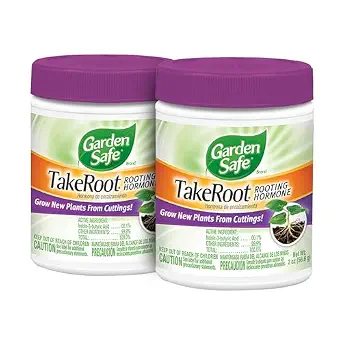 |
| Best Seller A high-volume bestseller chosen again and again | Clonex Rooting Gel High-Performance Rooting Compound, 250 ml |  |
Hormex Rooting Powder #8 (0.8% IBA), 21 g

| Item Form | Powder |
|---|---|
| Specific Uses For Product | Rooting Hormone for Cloning Plants | Root Starter for Plant Cuttings | Propagation | Root Development |
| Application Method | Dip |
| Coverage | Semi-Hardwood Plants, Medicinal and Tree Cuttings |
Hormex #8 is designed to help semi-hardwood and woodier cuttings develop roots more reliably. You prepare a 3–6 inch cutting, moisten the base, dip about an inch of stem into the powder, tap off excess and plant into your chosen medium such as potting mix, coco coir or propagation cubes. At 0.8% IBA this strength is aimed at plants like azalea, grape and rhododendron-type shrubs that are trickier than softwood cuttings but not full hardwood. The 21 g bottle is concentrated enough to treat many cuttings, and the powder format is easy to store and apply without mixing. Practical benefits include clearer guidance on choosing strengths for different plant types and simple dip application that fits common propagation workflows. Limitations are that success still depends on correct cutting technique and aftercare, and powder form requires care to avoid contaminating the bottle or overapplying compared with measured liquids.
Best for: Gardeners who propagate shrubs and woody ornamentals and want a ready-to-use powder matched to semi-hardwood cuttings, especially when rooting rhododendrons and similar plants.
Less Ideal for: Casual growers who prefer pre-measured liquid formulas or those who only root very softwood cuttings; professional nurseries needing bulk liquid hormone may prefer other formats.
- Formulated specifically for semi-hardwood cuttings common to shrubs and woody houseplants
- Simple dip-and-plant application that fits standard propagation steps
- Concentrated 0.8% IBA strength appropriate for moderately difficult-to-root varieties
- Small 21 g bottle treats many cuttings so it lasts through multiple propagation sessions
- Powder format requires careful handling to avoid cross-contamination and mess
- Does not replace good cutting technique and humidity/light management needed for reliable rooting
Verdict: Choose Hormex #8 when you need a straightforward, powder-based rooting hormone tuned for semi-hardwood shrubs like rhododendrons to improve rooting success.
Bonide Bontone II Rooting Powder, 1.25 oz

| Item Form | Powder |
|---|---|
| Specific Uses For Product | Root Development |
| Application Method | dip and shake |
| Target Species | azaleas, mums, geraniums, pachysandra, poinsettias and others |
| Unit Count | 1.25 Ounce |
Bonide Bontone II is a classic IBA-based rooting powder sold in a small 1.25 oz dust jar for home gardeners and hobbyists. You apply it by dipping a cutting’s wound into the powder, shaking off excess, and planting into moist media; it can also be used to coat seeds or bulbs in a bag before planting. The product’s straightforward formulation of indole-3-butyric acid targets root initiation and is effective on both softwood and hardwood cuttings as well as many ornamentals and vegetables. In practice the powder is convenient to use, has a medium coverage per package, and reduces the time and failure rate for many common cuttings. Limitations are the small unit size if you plan to take large numbers of cuttings, and because it is a dry powder it can be messier to apply than gel alternatives. Safety precautions are also reasonable to follow since it is a plant hormone rather than an inert filler.
Best for: Gardeners who want a reliable, easy-to-use rooting hormone backed by long-standing use and positive user feedback and who take a cautious approach to selecting proven products for their cuttings.
Less Ideal for: Propagation professionals or growers who take very large numbers of cuttings and need bulk quantities or who prefer the tidier application of gels or liquid dilutions.
- Contains indole-3-butyric acid (IBA), a proven rooting hormone for cuttings
- Ready-to-use powder that is simple to apply by dip and shake
- Versatile for cuttings, seeds, bulbs, and transplants across many ornamental and edible plants
- Compact jar size convenient for occasional home garden use
- Small 1.25 oz package may not be economical for frequent or large-scale propagation
- Powder form can be messier and harder to control than gel or liquid formulations
Verdict: A proven, ready-to-use IBA powder that reliably speeds rooting for home gardeners focused on successful cuttings.
Hormodin 2 Rooting Hormone Powder (0.3% IBA), 16 oz

| Item Form | Powder |
|---|---|
| Specific Uses For Product | Root Development |
| Target Species | woody and semi-woody plants, including some of the evergreens |
| Unit Count | 16 Ounce |
| Mixing Ratio | 1:0 or 100% |
Hormodin 2 is a powder-form rooting hormone designed to improve success when propagating woody and semi-woody plants. You use it by moistening the basal end of a fresh cutting, dipping the stem in the powder, tapping off the excess, and planting the treated cutting in rooting medium. The 0.3% IBA concentration targets plants that are moderately difficult to root, and the powder format makes application quick and low-tech for both hobbyists and small-scale growers. Practical benefits include faster root initiation, lower propagation bench time, and reduced losses from failed cuttings. The product description notes it prevents disease migration between cuttings because you dip individuals rather than sharing solutions. Important limitations are that it is formulated for woody and semi-woody species so it is not the best choice for very soft herbaceous plants, and being a powdered chemical it requires careful handling and storage to keep it dry and out of reach of children. The large 16 ounce jar suits repeat propagation but may be more than a casual user needs.
Best for: Gardeners and small-scale propagators who prioritize consistent, reliable rooting of woody and semi-woody cuttings and want a straightforward, repeatable application method.
Less Ideal for: Casual gardeners propagating mostly soft-stemmed annuals or those who prefer liquid dipping solutions and smaller single-use packages.
- Formulated specifically for woody and semi-woody plant cuttings with 0.3% IBA concentration.
- Powder format enables quick "dip it, tap it, stick it" application without mixing solutions.
- Large 16 oz jar provides many treatments for frequent propagators.
- Helps speed root initiation and reduce propagation bench time.
- Not formulated for soft herbaceous species where lower-strength products perform better.
- Powder requires dry storage and careful handling to avoid spills or contamination.
Verdict: Choose Hormodin 2 when you need a dependable powdered rooting hormone to reliably start roots on woody and semi-woody cuttings.
Garden Safe TakeRoot Rooting Hormone Powder, 2-Pack (2 oz)

| Item Form | Powder |
|---|---|
| Specific Uses For Product | Plant Growth, Root Development |
| Application Method | Stir cut ends in powder |
| Number of Packs | 2 |
| Active Ingredient | Indole-3-butyric acid |
Garden Safe TakeRoot is a simple powder rooting hormone intended to help grow new plants from stem cuttings. You moisten the cut end, dip or stir it in the powder, tap off excess and plant the treated cutting in a rooting medium, then mist regularly. The active ingredient is indole-3-butyric acid, a commonly used auxin that encourages root initiation on a wide range of houseplant and garden varieties such as African violets, geraniums, roses, poinsettias and many woody ornamentals. In practice the powder form is easy to apply, low-mess compared with liquids, and the included two-pack gives extra supply for repeated propagation attempts. Limitations are that it is a basic, single-concentration product so you cannot adjust strength for difficult species, and you must avoid cross-contaminating the jar when treating multiple plants. For cautious gardeners who prefer a proven, no-frills rooting aid, this product reliably increases the odds that common cuttings will form roots when used with proper cutting and aftercare techniques.
Best for: Buyers who want a straightforward, proven rooting aid to improve success with common cuttings and who favor reliable, low-risk products over experimental approaches.
Less Ideal for: Propagators seeking adjustable-concentration hormones, specialized formulations for very difficult-to-root plants, or liquid dosing systems should consider other options.
- Contains indole-3-butyric acid, a widely used rooting hormone that promotes root formation
- Powder form is easy to apply and reduces spills compared with liquid formulations
- Suitable for many common houseplants and garden cuttings including roses, geraniums and African violets
- Two-pack supply lets you treat multiple cuttings or keep a back-up jar
- Single-strength powder does not allow dosing adjustments for very sensitive or hard-to-root species
- Requires careful handling to avoid contaminating the container when treating multiple plants
Verdict: A dependable, easy-to-use powder rooting hormone that raises your chances of success with typical houseplant and garden cuttings.
Clonex Rooting Gel High-Performance Rooting Compound, 250 ml

| Item Form | Gel |
|---|---|
| Specific Uses For Product | Root Development |
| Application Method | Dip |
| Liquid Volume | 0.25 liters |
Clonex Rooting Gel is a tenacious, water‑based rooting compound designed for dipping cuttings to encourage rapid root initiation. You apply it by dipping the base of a fresh cutting into the gel, then inserting the treated cutting into your chosen rooting medium and keeping it warm and moist. The gel formulation adheres to stem tissue so the active ingredient stays in contact longer than powders or liquid dips, which helps with consistent rooting across many soft‑tissue plants. Practical benefits include straightforward application, good coverage from the viscous gel, and a long track record used by hobbyists and commercial growers. Limitations: the product is focused solely on root initiation and does not replace good sanitation, appropriate humidity, or correct cutting technique, and root development will still vary by species and environmental conditions. The bottle size is suitable for repeated hobby use but larger propagation operations may prefer bulk quantities.
Best for: Gardeners who want a reliable, easy‑to‑use rooting aid for regular propagation of houseplants, ornamentals, and other soft‑tissue cuttings and who value consistent rooting performance.
Less Ideal for: Large commercial nurseries or growers who need bulk volumes or an integrated propagation system with automated misting and disease management.
- Gel formulation adheres to cuttings for prolonged contact with the rooting hormone
- Contains IBA, a widely used auxin that promotes root initiation
- Easy dip application makes it quick to treat many cuttings
- Versatile across a wide range of soft‑tissue plant species
- Targets only rooting initiation and offers no disease control or humidity management
- Smaller retail bottle may be insufficient for large‑scale commercial propagation
Verdict: Choose Clonex Rooting Gel when you want a proven, easy dip‑on rooting hormone that stays in contact with cuttings for consistent root initiation.
Choosing the Right Rooting Hormone for Rhododendron: Key Factors to Consider
Active Ingredient Strength and Formulation
The strength of the active auxin compound directly influences how quickly a rhododendron cutting will produce roots. Higher concentrations can speed root initiation but also raise the risk of tissue burn, especially on softwood cuttings. Powder formulations allow quick dusting and minimal waste for single cuttings, while liquid dips and gels provide more controlled, even coverage for batches of cuttings.
Formulation stability matters because a degraded product delivers inconsistent results. Look for products with clear labeling of active concentration and simple instructions for dilution. For rhododendrons, moderate-strength formulations often offer the best balance between rooting success and low tissue stress.
Application Method and Ease of Use
How you apply the hormone will affect timing and success in the nursery or on the patio bench. Quick-dip liquids are fast for dozens of cuttings but require careful dilution. Powders are tidy for single cuttings and store well in damp garden conditions. Gels can cling to the wound and offer even contact but may be harder to measure precisely.
Consider how often you propagate and how much precision you need. If you do only a few cuttings a year, a small powder may be simplest. For repeat propagation sessions, a stable liquid concentrate with clear dilution ratios will save time and reduce dosing errors.
Compatibility With Propagation Media and Acidity
Rhododendrons prefer acidic, well-aerated mixes. The rooting hormone must not alter the media pH or create salt buildup that can stress fine root hairs. Some formulations contain inert carriers or preservatives that can change moisture retention; others are nearly neutral and integrate cleanly into peat, coco, or bark-based mixes.
Choose a product that is known to work with acidic media and that will not leave residues which retain excess moisture around the cutting base. This reduces rot risk and encourages healthy root architecture suited to rhododendron habits.
Disease Management and Rot Risk
Cutting bases are vulnerable to fungal infection when wounded. A rooting hormone cannot replace good hygiene, but some formulations contain agents that reduce microbial growth or are formulated to minimize retained moisture where fungi thrive. Avoid products that create a damp film at the wound surface or attract water to the base of the cutting.
Pair hormone use with sterile tools, a clean propagation bench, and quick-setting media that drains well. Managing ambient humidity and avoiding prolonged saturation will further lower rot incidence during root initiation.
Shelf Life, Storage, and Measuring Accuracy
Gardeners often use rooting hormone sporadically, so long shelf life and simple storage instructions are practical benefits. Powders and sealed gels generally tolerate garden shed conditions better than open liquids, but concentrates in tightly capped bottles can remain effective for seasons if kept cool and dry.
Also evaluate how easy it is to measure single doses without waste. Products that require precise pipetting or complex dilution may introduce dosing errors that impact rooting outcomes. Prefer formulations with straightforward dosing guidance for occasional-use gardeners.
Safety and Handling
Rooting hormones contain active compounds that require basic safety precautions. Gloves and eye protection prevent accidental contact while mixing or dusting. Containers that reduce dust release or spill risk make handling safer for casual gardeners.
Consider whether the product requires rinsing of tools or any neutralization after use. Lower-toxicity carriers and clear safety labeling reduce the chance of misuse and make winter storage and family- or pet-safe handling simpler.
Timing and Cutting Type for Rhododendron Propagation
Rhododendron cuttings root best when they are taken at the right stage. Softwood cuttings from spring to early summer root fast but are more delicate, while semi-ripe cuttings in midsummer give a sturdier balance. Match the hormone strength and application method to cutting type: gentler treatments for softwood, slightly stronger or longer dip times for semi-ripe stems.
Pay attention to leaf size and stem thickness when deciding how much hormone to use. Remove lower leaves and wound the base lightly to expose fresh tissue before applying hormone. Timing also affects environmental controls; earlier cuttings may need more misting, which changes how you manage rot risk.
- Softwood cuttings: lower concentration, quick-dip or light powder
- Semi-ripe cuttings: moderate concentration, controlled dip or gel
- Avoid hardwood techniques designed for trees; rhododendrons use shrub propagation approaches
Preparing a Rhododendron-Friendly Propagation Mix
Use an acidic, well-draining propagation mix that mimics rhododendron soil preferences. Blends with peat, fine bark, and perlite give stability and drainage while maintaining the lower pH rhododendron roots prefer. Free-draining media reduce standing moisture and lower rot risk at the hormone-treated base.
Sterilize or start with clean, fresh media to limit pathogens. A slightly acidic fertilizer program after roots have formed will support establishment, but avoid adding fertilizer at the time of cutting unless the product specifically recommends it.
- Aim for airy texture and quick drainage
- Keep media slightly acidic; avoid alkaline components
- Use fresh or sterile media to reduce fungal pressure
Application Best Practices and Common Mistakes
Apply hormone to the freshly cut basal surface only. Over-coating stems above the wound wastes product and can trap moisture. For liquids, follow dilution instructions and do not soak cuttings longer than recommended. For powders, tap off excess to prevent caking at the soil line.
Common mistakes include repeated heavy misting that keeps the cutting base soaked, using a hormone meant for hardwood tree cuttings, and applying fertilizer at the same time as hormone. Keep work surfaces and tools clean and label dilution ratios you use to replicate success later.
- Treat only the wound; remove excess after dipping or powdering
- Avoid prolonged saturation during the initial rooting period
- Log dilution ratios and dip times for repeatable results
Managing Humidity and Light During Root Initiation
High humidity helps leaves avoid desiccation while roots are forming, but excessive humidity increases fungal risk. Use intermittent misting or a clear cover that allows airflow rather than a sealed dome. Provide bright, indirect light rather than direct sun until roots are established.
Gradually reduce humidity and increase airflow as roots form to toughen cuttings and reduce disease pressure. That transition timing can be as important as the hormone choice itself when determining final survival rates.
- Use high humidity with good air exchange
- Provide bright, indirect light until roots are visible
- Reduce humidity slowly after root formation
Record-Keeping and Small-Scale Trials
Because gardening conditions vary, run small trials when trying a new hormone or method. Track cutting source, date, hormone strength and form, media mix, and environmental conditions. Record both rooting percentage and root system quality, not just whether a cutting survived.
Over time, these notes will reveal which combinations work best in your microclimate and for your specific rhododendron varieties. Small experiments reduce waste and help you refine concentration and timing for reliable propagation.
- Test one variable at a time across small batches
- Track root quality as well as percentage rooted
- Keep simple logs of dilution, dip time, and media
How We Chose the Best Rooting Hormone for Rhododendron
Our selection focused on products suited to propagating rhododendron cuttings across common garden methods: softwood and semi-ripe stem cuttings, heel cuttings, and layering. We prioritized formulations proven to stimulate root initiation while minimizing tissue damage and fungal issues. Key evaluation criteria included active hormone concentration and stability, available application methods (powder, liquid dip, or gel), compatibility with acidic, well-draining propagation mixes, and shelf life under typical garden storage. We also assessed ease of measuring and applying the product and how forgiving the formulation is if a gardener overwets their cutting or uses misting. Excluded items included multipurpose fertilizers or wound dressings that do not contain auxin-type rooting compounds, and products intended only for hardwood cuttings of trees rather than shrub propagation. Our focus remained on items commonly used by home gardeners and small-scale propagators whose priorities are rooting rate, reduced rot risk, and straightforward application. The scoring metrics below reflect these priorities and guided every pick.
FAQ
When is the best time to take rhododendron cuttings?
The best time is usually late spring to mid-summer. Softwood cuttings in spring root faster but are fragile, while semi-ripe cuttings in midsummer give sturdier results. Timing affects hormone strength and environmental care.
Should I use powder, liquid, or gel for rhododendron cuttings?
It depends on scale and precision. Powders are tidy for occasional cuttings, liquids are efficient for batches when diluted correctly, and gels can offer even contact. Choose based on how many cuttings you do and how comfortable you are with measuring.
Can rooting hormone prevent rot completely?
No. Rooting hormone stimulates root formation but does not replace sanitation, good drainage, and humidity control. Proper media, clean tools, and sensible moisture management are essential to limit rot risk.
How long before I can pot rooted rhododendron cuttings?
Roots usually form in several weeks to a couple of months depending on cutting type and conditions. Wait until a healthy network of roots is visible and the cutting resists gentle tugging before moving into a larger pot or planting in the garden.
Do I need to fertilize cuttings after applying rooting hormone?
Avoid fertilizing at the moment of cutting. Once roots are established, use a mild, acid-formulated feed to encourage growth. Fertilizing too early can stress the unrooted cutting and increase failure risk.
Final Verdict
Choose a rooting hormone that matches your propagation routine and the cutting type you take from rhododendrons. Balance active concentration and application method against rot risk and media compatibility. Prioritize formulations that are easy to dose, stable in storage, and known to work with acidic, free-draining mixes. Small trials will clarify which product and method produce consistent, healthy roots in your garden.
