

Note: This article contains affiliate links. If you click on these links and make a purchase, I may earn a small commission at no extra cost to you. This helps support my research and content. Read my full affiliate disclosure here.
If you grow vegetables or tender flowers in raised beds, the right row cover can mean the difference between a short harvest window and months more production. Row covers for raised beds protect plants from frost, insect pressure, and sun stress while still allowing light, air, and water through. Choosing well matters because covers that are too heavy can smother seedlings, while flimsy fabric fails in wind or during extended cold snaps. This guide shortlists the top options for raised beds and explains the practical tradeoffs we looked at, including breathability, light transmission, and durability. Use the evaluation notes to match a cover to your season-extension and pest-control needs.
Top Picks at a Glance
| Best Overall The best all-around choice for most situations | AlpineReach 10 x 30 ft Plant Frost Cover, 1.2 oz/yd² Breathable Garden Blanket |  |
| Best Quality Built to a higher standard if you want something more solid | Fippy 10 x 50 ft Plant Frost Cover Kit with Garden Hoops and Clips |  |
| Best Value The sweet spot between price and what you get | KLEWEE 10 x 50 ft Thicker Frost Cloth Plant Cover, 1.5 oz/yd² |  |
| Best Budget The cheapest option that still gets the job done reliably | Agfabric 10'x25' Lightweight Floating Row Cover (0.55 oz) |  |
| Highest Rated A top-rated pick with lots of positive feedback | Meuallikit Extra-Thick Frost Cloth Plant Cover 6.5 x 30 ft |  |
| Most Popular A crowd favorite that many people choose with confidence | Valibe 10 x 30 ft Floating Row Cover (0.9 oz/yd²) |  |
| Best Seller A high-volume bestseller chosen again and again | FARAER 10 x 33 ft Reusable Plant Row Cover (Polypropylene) |  |
AlpineReach 10 x 30 ft Plant Frost Cover, 1.2 oz/yd² Breathable Garden Blanket

| Material weight | 1.2 oz / sq. yard |
|---|---|
| Size | 10ft x 30ft |
| Type | Plant frost cover blanket |
| Applications | Frost, UV and wind protection |
This 10 x 30 ft AlpineReach frost cover is a straightforward row-cover solution for raised beds and small garden plots. Made from 1.2 oz/yd² breathable fabric, it creates a mild insulating layer that helps keep soil and plants warmer on cold nights while still letting light, air, and water pass through. Typical use is draping the blanket over hoops or directly onto plants to form a floating row cover that reduces frost damage, shields against wind stress, and limits sunscorch on vulnerable foliage. The material is reusable and easy to cut to size, so it adapts well to irregular bed shapes and can be stored between seasons. Because it is lightweight and permeable, it will not suffocate seedlings but offers less thermal protection than heavier fleece or cloches in extreme freezes. It also needs stakes or hoops to prevent sagging under wet snow. For gardeners who want a durable, low-effort cover to extend the season and protect against common cold snaps, this is a practical option; those facing sustained sub-28 F freezes should consider sturdier insulating methods.
Best for: Gardeners who want an easy, reusable way to protect raised beds from common frosts, wind, and sun damage without heavy insulation; ideal for season extenders who value versatility and low maintenance.
Less Ideal for: Gardeners who need maximum freeze protection for prolonged subfreezing storms or who prefer rigid individual plant protection for very small transplants.
- Breathable fabric allows light, air, and water to reach plants while reducing frost risk
- 1.2 oz/yd² material provides thicker insulation than many lightweight covers
- Large 10 x 30 ft sheet covers multiple raised beds or can be trimmed to fit
- Reusable and easy to cut and store between seasons
- Not designed for deep freezes below low 20s where rigid cloches or heated solutions are required
- Will sag under heavy wet snow unless supported by hoops or stakes
Verdict: A versatile, breathable frost cover that easily protects multiple raised beds and extends the growing season with low-effort year-round use.
Fippy 10 x 50 ft Plant Frost Cover Kit with Garden Hoops and Clips

| Manufacturer | Fippy |
|---|---|
| Item model number | ZN-CPF |
| Includes | Frost cover, 10 garden hoops, 20 fixing clips |
This kit supplies everything needed to build a grow-tunnel style row cover for raised beds: a large 10 x 50 ft thick non-woven frost cloth, ten garden hoop frames and 20 clips to secure the fabric. The breathable fabric keeps light and air flowing while blocking frost, light snow and pests, which helps seedlings and cool-season vegetables like lettuce, cabbage and broccoli survive late-season chills. The hoops have a steel inner tube and plastic coating for strength and corrosion resistance, so the frame holds shape and keeps the fabric off delicate foliage rather than letting it rest on plants. Because the cloth is large and cut-to-fit, you can cover long rows or multiple beds and trim pieces to different layouts. Assembly is straightforward: push hoops into soil, drape the cover and fasten clips, then anchor the edges with soil or stakes. The main limitations are that a single layer offers modest insulation in severe freezes and the kit does not include ground stakes for windy sites, so heavy winds or hard freezes may require extra anchoring or a second layer for adequate protection.
Best for: Gardeners looking to extend the raised-bed growing season and reliably protect cool-season crops and seedlings from light frost who want a ready-made, durable tunnel system they can assemble quickly.
Less Ideal for: Growers in regions that regularly see severe freezes or very high winds who need multi-layer insulation or heavy anchoring should consider heavier-duty solutions.
- Complete kit includes large frost cloth, ten hoops and 20 clips for immediate assembly
- Thickened non-woven fabric is breathable so plants receive light and air while being protected from frost
- Steel-core hoops with plastic coating provide sturdy, corrosion-resistant support to keep fabric off foliage
- Large 10 x 50 ft sheet can be cut to fit long rows or multiple raised beds for flexible coverage
- Single-layer fabric provides only modest insulation during very cold freezes
- Does not include dedicated ground stakes or heavy-duty anchors for very windy locations
Verdict: This all-in-one kit is the easiest way to convert raised beds and long rows into a sturdy, breathable grow tunnel to protect crops from light frost and pests.
KLEWEE 10 x 50 ft Thicker Frost Cloth Plant Cover, 1.5 oz/yd²

| Material | Non-woven polypropylene |
|---|---|
| Weight | 1.5 oz/yd² |
| Size | 10 ft x 50 ft |
| Light transmission | 70% – 80% |
| Frost protection range | Down to 21°F |
This 10 x 50 ft KLEWEE frost cloth is a heavy-duty floating row cover aimed at covering large garden beds and multiple raised beds at once. Made from 1.5 oz/yd² spun polypropylene with UV stabilization, it transmits about 70 to 80 percent of light while trapping some heat, so it will help seedlings germinate earlier and protect plants down to roughly 21°F. Use it laid directly over plants and anchored with soil or stones, or float it on hoops to give taller crops room to grow. The oversized sheet is easy to cut to custom lengths and the thicker fabric is noticeably more tear resistant than thinner hobby cloths. Limitations are that it is a single-layer fabric so protection against very low temperatures or heavy snow is limited and it can be bulky to fold and store when wet. For raised beds it is practical because one sheet covers several beds, reduces trips to put on multiple smaller covers, and provides decent pest exclusion without blocking rain or air.
Best for: Gardeners who want a durable, ready-to-cut row cover to protect multiple raised beds, extend seasons, and reduce time spent swapping small covers.
Less Ideal for: Growers needing rigid cold frames or insulated cloches for hard freezes or those who prefer lightweight disposable covers for one-off seasonal use.
- Large 10 x 50 ft size covers multiple raised beds in one piece or can be cut to custom lengths
- 1.5 oz/yd² spun polypropylene is thicker and more tear resistant than common lightweight frost cloths
- Breathable material transmits 70–80% of light and allows water and air through
- UV stabilized with 2% UV agent for longer outdoor life and reusable seasons
- Single-layer fabric offers limited protection in extreme freezes or heavy snow
- Bulky to fold and store when wet or after heavy use
Verdict: A heavy-duty, oversized floating row cover that saves time by protecting multiple raised beds at once while letting light and moisture through.
Agfabric 10'x25' Lightweight Floating Row Cover (0.55 oz)

| Material weight | 0.55 oz/sq yd |
|---|---|
| Material | Non-woven polypropylene |
| Size | 10 x 25 ft |
This Agfabric floating row cover is a simple, budget-friendly fabric sheet intended to drape directly over raised-bed crops or over low hoops. Made from 0.55 oz/sq yd non-woven polypropylene, the cover is breathable so air, light, and moisture reach plants while providing a basic barrier against frost, wind, hail, and birds. Typical use is laying it loosely over beds then anchoring the edges with soil, stones, or staples, or lifting it on inexpensive hoops to give seedlings room to grow. The material is lightweight and easy to handle and store, and the 10 x 25 foot size covers most standard raised beds or several short beds at once. Limitations are that the thin fabric offers modest insulation compared with heavier frost blankets and will need secure anchoring in strong wind; it is also not a rigid structure so it can sag onto tall plants without hoop support. For routine season extension and pest exclusion on raised beds this cover delivers practical protection at a low cost.
Best for: Gardeners on a tight budget who want an inexpensive way to extend the season and protect vegetables and seedlings in raised beds without complex installation.
Less Ideal for: Growers needing heavy-duty frost protection or a self-supporting cover for taller plants should choose thicker frost blankets or structured cloches instead.
- Breathable non-woven polypropylene lets air and moisture reach plants
- Large 10 x 25 ft size covers multiple raised beds or long beds
- Lightweight and easy to handle, store, and cut to fit
- Effective as a basic barrier against frost, wind, hail, and birds
- Thin 0.55 oz fabric provides limited insulation compared with heavier frost blankets
- Requires secure anchoring or hoop support in windy conditions
Verdict: A low-cost, breathable row cover that gives raised beds straightforward frost and pest protection when supported and securely anchored.
Meuallikit Extra-Thick Frost Cloth Plant Cover 6.5 x 30 ft
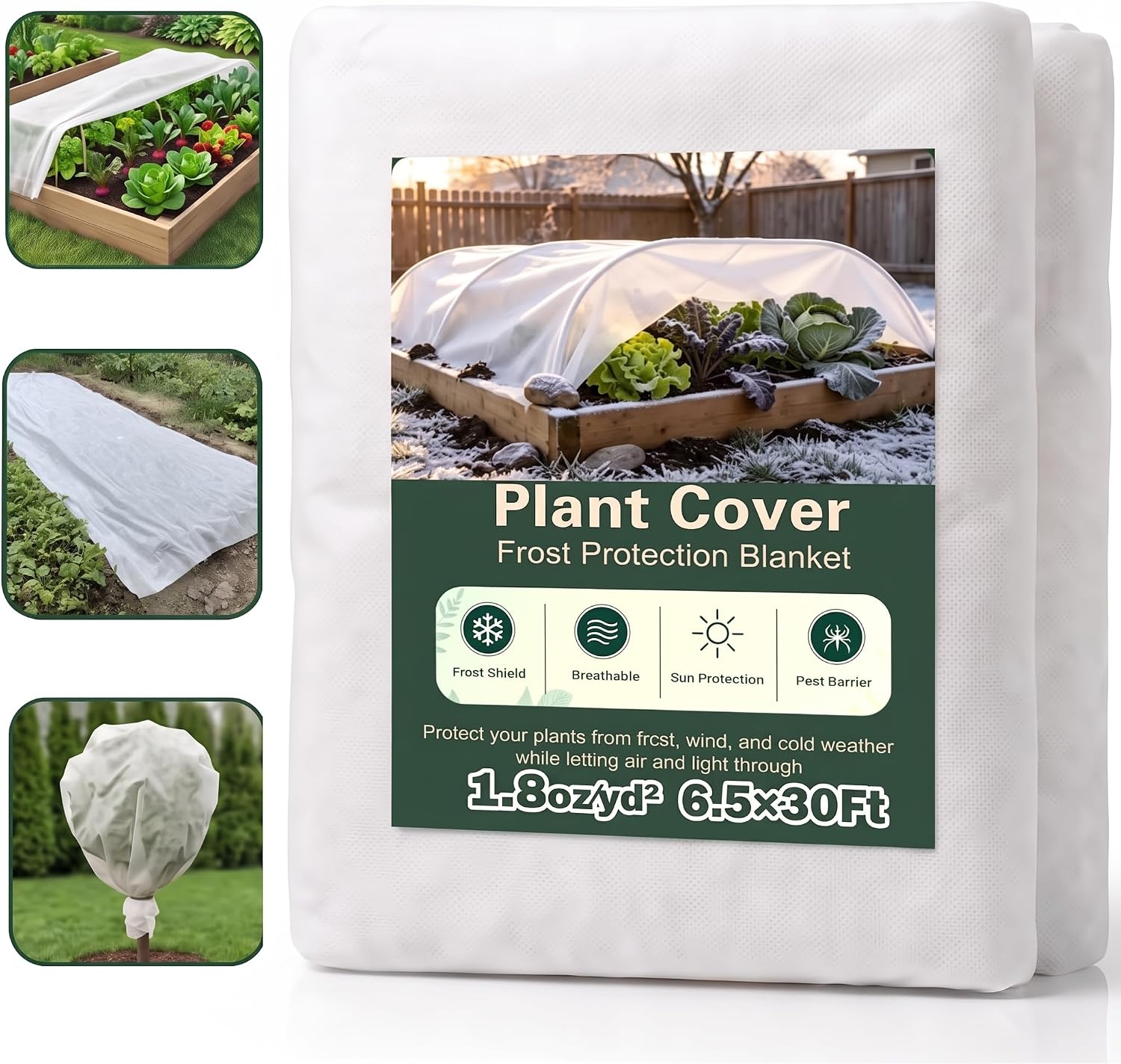
| Material weight | 1.8 oz/yd² |
|---|---|
| Material | Nonwoven polypropylene |
| Temperature protection | -4°F (-20°C) claimed |
| UV treatment | UV-stabilized |
This extra-thick frost cloth is built for dependable season-extension and winter protection on raised beds and rows. Made from 1.8 oz/yd² UV-stabilized nonwoven polypropylene, the fabric traps and holds a little warmth while still letting sunlight, air, and water pass, so seedlings and established plants stay covered without becoming waterlogged. Typical use is to drape it over beds or hoops, secure the edges with soil or stakes, or cut it to size for containers and small fruit plants. Notable features include heavy-weight construction for better tear resistance, breathability to avoid smothering, and easy scissors-friendly sizing for custom fits. In practice the material lays softly on plants and works well with hoop supports to prevent sagging under snow. The main limitations are that it is a single-layer fabric without built-in fasteners or rigid structure, so you will need hoops or careful anchoring in windy sites and extra support if heavy wet snow is expected.
Best for: Gardeners who prioritize reliable, robust frost protection for raised beds and rows and want a breathable cover they can customize and reuse season after season.
Less Ideal for: People seeking a self-supporting or rigid cold frame solution or those who need a decorative cover with integrated closures and mounting hardware.
- Extra-thick 1.8 oz/yd² nonwoven polypropylene for improved durability and frost protection
- Breathable material lets light, air, and water reach plants while covered
- UV-stabilized to resist sun damage during extended outdoor use
- Easy to cut to custom sizes for rows, raised beds, containers, and hoop houses
- No built-in fasteners or structure so hoops or anchors are needed in wind or heavy snow
- Single-layer fabric may require multiple layers or additional insulation for extreme cold below the stated protection range
Verdict: Choose this heavy-duty, breathable frost cloth when you need dependable, customizable frost protection for raised beds and garden rows.
Valibe 10 x 30 ft Floating Row Cover (0.9 oz/yd²)

| Material | Nonwoven polypropylene |
|---|---|
| Fabric weight | 0.9 oz/yd² |
| Coverage area | 10 x 30 ft (300 sq ft) |
This 10 x 30 ft Valibe floating row cover is a simple, large-area frost blanket designed for garden beds and shrubs. Made from 0.9 oz/yd² nonwoven polypropylene, it drapes directly over plants or can be supported on hoops to create a low tunnel; the fabric is breathable so light, moisture, and air still reach foliage while reducing frost damage and insect contact. Typical use is to lay the cover over raised beds at dusk to trap ground heat overnight, secure the edges with soil or staples, and remove when daytime temperatures rise. The generous size covers multiple raised beds or a single long bed and can be cut to fit smaller areas. Practical benefits include easy handling because the fabric is lightweight, versatility for early-season seed starting and season extension, and compatibility with existing hoop supports. Important limitations are that the material is thin so it offers limited insulation against extreme freezes and needs to be secured well in windy conditions; repeated cutting reduces coverage and it does not replace a rigid cold frame for hard freezes.
Best for: Gardeners who want an affordable, easy-to-use way to extend the growing season and protect raised beds from light frost and pests while keeping plants accessible.
Less Ideal for: Growers facing frequent hard freezes or who need rigid, heavyweight protection for overwintering should choose a dedicated cold frame or insulating structure instead.
- Large 10 x 30 ft size covers multiple raised beds or long beds without seams
- Breathable polypropylene lets light and moisture through while blocking light frost and pests
- Lightweight fabric is easy to drape, move, and secure
- Can be supported with hoops or frames for extra plant clearance and protection
- Thin 0.9 oz/yd² material provides limited insulation in severe freezes
- Requires edge anchoring to prevent wind from displacing the cover
- Cutting to size reduces the usable coverage area
Verdict: Choose this large, breathable row cover when you need quick, lightweight frost and pest protection for multiple raised beds and easy seasonal use.
FARAER 10 x 33 ft Reusable Plant Row Cover (Polypropylene)
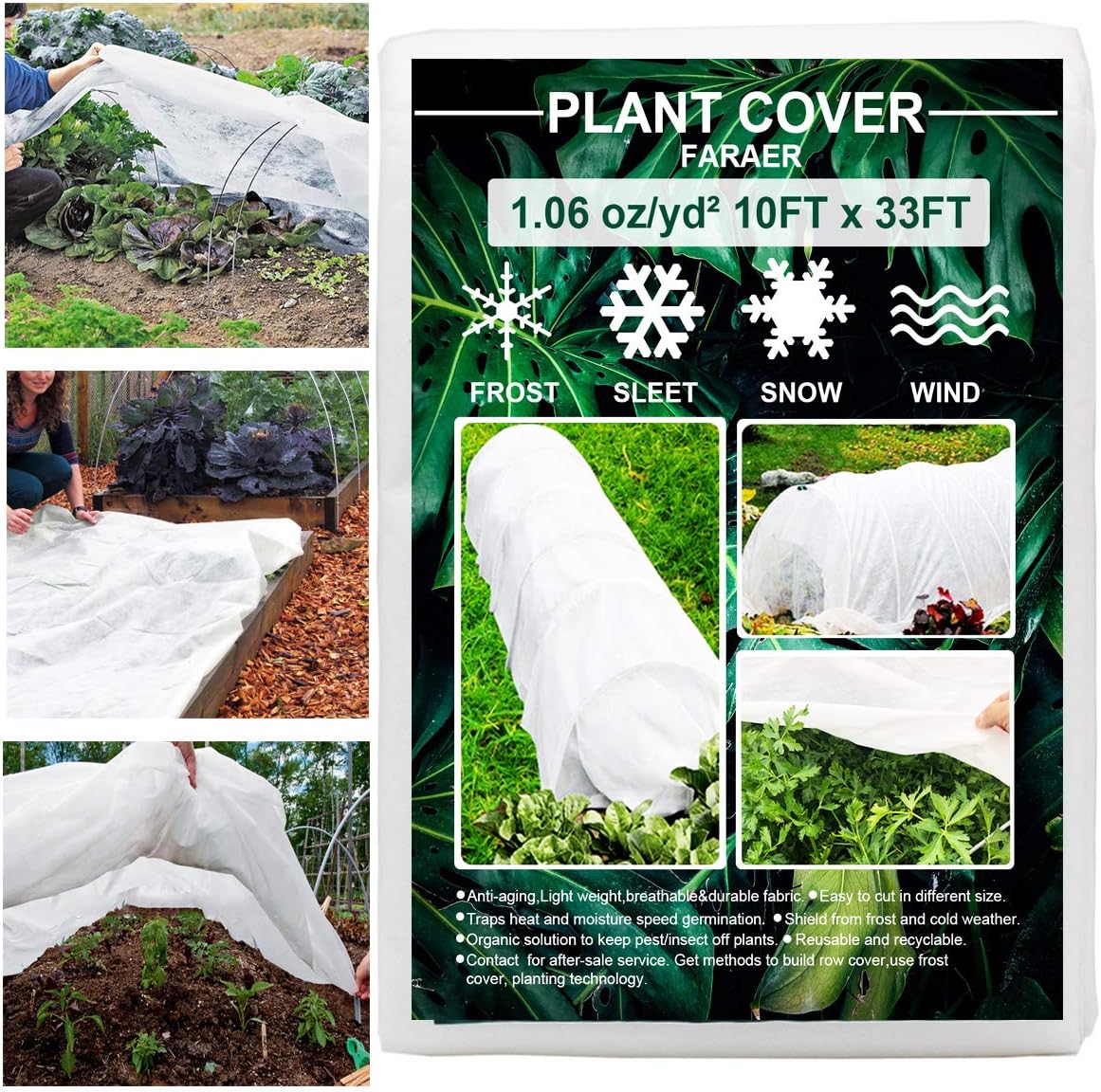
| Material Type | Polypropylene |
|---|---|
| Unit Count | 1 Count |
| Item Highlight | Thicken Frost Protection Reusable Plant Blanket |
| Model Number | 10x33FT Plant Covers |
The FARAER 10 x 33 ft row cover is a straightforward floating fabric designed to winterize raised beds and protect transplants through early spring and late fall. Made from a thickened, UV-stabilized polypropylene, the sheet drapes over plants or hoops to trap residual warmth and block insects and bird damage while still transmitting roughly 70 percent of light and letting rain or overhead irrigation pass. It is reused season after season if stored dry and out of direct sun, and its large single-piece size can be cut to fit narrow beds or left intact for wider rows. In practice it is easy to lay down and secure with pins or weights, and it provides noticeable frost protection reported down to about 38°F. Limitations are that the fabric is lightweight so heavy, wet snow or very strong winds will require additional support (hoops or rebar) and fastening, and cutting the cover reduces full-coverage flexibility if you need different shapes later.
Best for: Gardeners who want a low-effort, reliable way to protect raised beds and young transplants from light freezes, pests, and wind without blocking light or irrigation.
Less Ideal for: Those needing a rigid winter shelter for heavy snow loads or who require an opaque thermal blanket for extreme subfreezing conditions.
- Thickened, UV-stabilized polypropylene offers reusable frost and pest protection
- Transmits light and allows rain and overhead irrigation to reach plants
- Large 10×33 ft size covers long raised beds or can be trimmed to fit
- Lightweight fabric reduces plant damage when draped directly over seedlings
- Not structurally rigid so heavy snow or high winds need hoops or stakes for support
- Cutting to fit narrower beds reduces ability to reconfigure for other garden layouts
Verdict: A simple, reusable floating row cover that keeps pests and light frosts off raised beds while letting light and water through.
Choosing the Right Row Cover for Raised Beds: Key Factors to Consider
Fabric Weight and Frost Protection
Fabric weight is usually expressed in grams per square meter or as an ounce-per-square-yard equivalent. Lighter fabrics let more light and air through and are useful for insect exclusion and light frost protection. Heavier fabrics trap more heat and can protect against harder frosts, but they reduce light transmission and can restrict airflow.
For raised beds, consider the crops you grow and the local climate. Seedlings and lettuce favor high light and airflow, so choose a lighter fabric that still keeps insects out. For hardy brassicas or young transplants in early spring, a midweight cover can provide a useful temperature bump without causing excessive shading.
Light Transmission and Crop Needs
Different fabrics transmit different amounts of photosynthetically active radiation. Low-transmission materials can delay growth or reduce yields for sun-loving crops, while higher-transmission options keep plants productive under cover.
Match the cover to plant stage and species. Use high-transmission fabric for seedlings and fruiting crops, and reserve denser material for overnight frost events or when active sun protection is needed during heat spikes.
Breathability and Moisture Management
Breathability affects humidity around leaves and soil evaporation. Nonporous or very dense covers can trap moisture, increasing disease risk in cool, wet conditions. Porous fabrics allow airflow and let rain reach the soil, which reduces the need for hand-watering beneath the cover.
In raised beds, where drainage can be faster and soil warms quickly, select a fabric that balances vapor exchange with the desired microclimate effect. For humid climates, prioritize airflow to lower the chance of fungal issues.
Fit, Attachment, and Garden Workflow
Raised beds are a wide variety of widths and heights, so a row cover that is easy to secure and access matters. Look for fabric sold in widths that match common bed sizes, or choose a size that can be anchored with simple clips, soil tucks, or landscape staples. Flexible hoop systems let you create removable tunnels with minimal hardware.
Also think about daily tasks. If you need to access plants frequently, choose a cover that lifts easily or can be folded back without damaging crops. Fastening methods that allow quick removal and resecuring save time during routine garden work.
Durability and UV Resistance
Sunlight degrades many fabrics over time. UV-stabilized materials last longer and maintain their structural integrity and light-transmission qualities through a season or more. Durability also includes resistance to tearing from wind and snagging during handling.
For raised beds exposed to full sun and regular wind, prioritize covers with proven UV stabilization and reinforced edges. That reduces the frequency of replacement and keeps costs down over multiple seasons.
Pest Exclusion and Edge Sealing
Pest exclusion depends on weave density and how well edges are sealed against the bed frame or soil. A tightly woven fabric will exclude most common chewing and sucking insects, but it must be anchored to prevent gaps where pests can enter.
Consider how the fabric is intended to be fastened. Tucking edges under soil, clipping to wooden frames, or using specialized edge fasteners all affect protection. For small insect pressure such as aphids or flea beetles, the weave density is critical; for larger pests, the integrity of the edge seal matters more.
Season-Extension Strategies With Row Covers
Row covers are a flexible tool for season extension in raised beds. Use lightweight covers to protect against light frosts and insect pests early in spring, then switch to heavier or doubled layers for late-spring or fall freezes. Multiple thin layers separated by a small air gap can provide incremental insulation without overly reducing light.
- Single-layer lightweight fabric: best for insect exclusion and mild frost protection
- Double layers or midweight fabric: use for colder nights when extra insulation is needed
- Temporary hoops: create quick tunnels that lift covers off tall plants and improve air circulation
Mounting Options for Raised Beds
Raised beds work with several attachment strategies. Tucking fabric under the bed lip or soil is the simplest method and works well for short-term protection. For frequent access, lightweight hoops made from conduit or PVC let you lift the cover without disturbing plants. Clips that attach to wooden bed rails provide a durable solution for long-term installations.
- Soil tuck: fastest but may need re-tucking after wind
- Hoop tunnels: best for frequent access and taller crops
- Clips or staples: provide a secure edge seal in windy locations
Managing Light and Heat Under Covers
Covers alter microclimates by modifying temperature and light. On cold nights, covers trap outgoing heat and moderate the drop in soil and air temperature. On sunny days, especially under doubled covers, temperatures can climb quickly. Monitor soil and canopy temps during the first days after installing a cover and vent as needed to avoid heat stress.
Ventilation can be as simple as propping one side open during the warmest part of the day or rolling the end of the cover for short intervals. Automatic venting devices are uncommon for small raised beds, so manual checks early in the season help prevent bolting and overheating.
- Check temps inside the cover after installation
- Vent on warm days to prevent excessive heat buildup
- Use shading cloth separately if persistent high temperatures are expected
Repair and Seasonal Storage
Small tears and edge wear are common after a season of use. Patch kits or strips of matching fabric can extend service life. Reinforce stress points like corners and attachment areas before the first winter to reduce in-season failures.
Store covers dry and folded or rolled to prevent mold and UV damage during the off-season. Label and keep fasteners together so you can re-install quickly the following year.
- Carry a small patch kit in the garden shed
- Reinforce edges where clips or staples are used
- Store covers away from direct sun and moisture
How We Chose the Best Row Cover for Raised Beds
We focused on features that matter in raised-bed vegetable and flower production. Criteria included fabric weight and breathability, which determines frost tolerance and airflow; light transmission, because crops in raised beds need predictable PAR levels; and UV and weather durability, to avoid early fabric breakdown from sun exposure and repeated handling. Fit and attachment options were considered, since raised beds come in many widths and require simple methods to secure fabric under wind. We also evaluated ease of use for common raised-bed tasks such as seeding, weeding, and harvesting. That means assessing how easy the cover is to lift, cut, or form into hoops without causing plant damage. Pest exclusion effectiveness was judged by fabric weave and edge-sealing options rather than claims about complete insect elimination. Excluded from consideration were fabrics designed only for long-term shade structures, heavy greenhouse covers that require framing, and single-use disposable sheets that cannot withstand a season of outdoor wear. The result is a list of practical, reusable row covers suited to real raised-bed gardens.
FAQ
How long can a row cover stay on a raised bed?
It depends on fabric durability and weather. Lightweight insect-exclusion covers are usually left on through the season, removed only for harvesting or heavy storms. Midweight covers used for frost protection are often put on at night and removed by day. Inspect fabric regularly and remove covers if plant growth is being restricted or moisture is trapped.
Will a row cover prevent all insect damage?
Row covers reduce most insect damage when the fabric weave is fine and edges are sealed, but no fabric guarantees zero pest pressure. Some very small pests or eggs already on plants before installation can escape. Combine covers with good crop hygiene and monitoring for best results.
Can I water plants with the cover on?
Many porous covers allow rain and light irrigation through, but very dense or layered covers can limit water penetration. If you use denser fabric, plan for supplemental watering under the cover or water before lowering the cover for the night.
How do I secure a row cover in windy conditions?
Use a combination of tucking edges under soil, landscape staples, weighted boards, or clips attached to bed rails. Adding a low hoop structure reduces fluttering by lifting the fabric off plants and protecting edges from direct wind shear.
Is a row cover the same as shade cloth?
No. Row covers are designed to modify temperature, block pests, and in some cases provide light frost protection while allowing most light through. Shade cloth is designed primarily to reduce light intensity and heat and is usually rated by percentage of shade rather than by grams or transmission for frost protection.
Final Verdict
Prioritize the factors that match how you garden. If insect exclusion and maximum light are most important, choose a lightweight, high-transmission fabric and focus on good edge sealing. If your primary goal is frost protection, a midweight or doubled arrangement that balances warmth and light will serve better. Consider fit and fastening next, since even the best fabric fails if gaps let pests in or wind tears it. Think seasonally: use lighter covers for spring and summer insect control and reserve denser layering for fall and early-spring freezes. With attention to fabric weight, breathability, and secure installation, a row cover can be one of the most practical tools for healthier, more productive raised beds.
