

Note: This article contains affiliate links. If you click on these links and make a purchase, I may earn a small commission at no extra cost to you. This helps support my research and content. Read my full affiliate disclosure here.
Choosing the right row cover makes a big difference in how well you protect tender plants from cold, wind, and insect pressure. The best choice balances light transmission, breathability, and durability so seedlings, transplants, and late-season crops keep growing without overheating or suffocating. This guide shortlists six top-performing row covers suited to common garden situations and evaluates each by fabric weight, tear resistance, and how easy they are to install and maintain. Read on to find a cover that matches your garden layout and seasonal needs.
Top Picks at a Glance
| Best Overall The best all-around choice for most situations | AlpineReach 10 x 30 ft Plant Frost Cover, 1.2 oz/yd² Breathable Garden Fabric |  |
| Best Quality Built to a higher standard if you want something more solid | Abimars 10 ft x 33 ft Reusable Plant Cover — 1.77 oz/yd² Frost Protection |  |
| Best Value The sweet spot between price and what you get | GARUTOM Plant Cover Frost Cloth 10 ft x 33 ft (1.1 oz) – Breathable Freeze Protection |  |
| Best Budget The cheapest option that still gets the job done reliably | YFFSIDMY 6.5 ft x 16 ft Frost Cloth Plant Cover (Freeze Protection) |  |
| Highest Rated A top-rated pick with lots of positive feedback | Meuallikit Heavy-Duty Frost Cloth Plant Cover 6.5 x 30 ft (1.8 oz/yd²) |  |
| Most Popular A crowd favorite that many people choose with confidence | Valibe Floating Row Cover Plant Protection Fabric, 10 x 30 ft (0.9 oz/yd²) |  |
AlpineReach 10 x 30 ft Plant Frost Cover, 1.2 oz/yd² Breathable Garden Fabric

| Material weight | 1.2 oz / sq. yard |
|---|---|
| Size | 10 ft x 30 ft |
| Applications | Frost, UV, wind protection |
| Reusable | Yes |
This AlpineReach 10 x 30 ft plant frost cover is a simple floating row cover intended to extend the growing season and shield beds, seedlings, and small shrubs from cold, wind, and sun scorch. Made from a heavier 1.2 oz per square yard breathable fabric, it creates a mild insulating microclimate while still letting light, rain, and air through so plants are not smothered. Typical use is draped directly over plants or supported with hoops for taller crops; it is easy to cut to size and reusable season after season. The thicker material gives better frost protection than very lightweight covers and adds UV and wind resistance, but it is not a rigid structure so it needs pins, clips, or hoops to stay in place in strong winds. For gardeners who want reliable all-season protection without complicated setup, this cover balances durability and plant access, though it will be less effective than rigid cold frames for very low temperatures or heavy snow loads.
Best for: Gardeners who want a durable, easy-to-use row cover to extend the season and protect beds and seedlings from mild to moderate frost and sun damage.
Less Ideal for: Growers needing rigid, insulated protection for very low temperatures, heavy snowfall, or long-term overwintering of large shrubs and trees should choose cold frames or greenhouses instead.
- Thicker 1.2 oz/yd² fabric offers stronger frost and UV protection than lightweight covers
- Breathable material allows light, air, and water to reach plants while reducing cold stress
- Large 10 x 30 ft size covers multiple beds or rows and can be easily cut to fit
- Reusable and simple to install or remove for seasonal use
- Fabric is not a rigid structure so it requires stakes, clips, or hoops to secure in wind
- Not intended for heavy snow loads or to replace a heated greenhouse for very low temperatures
Verdict: A practical, heavier-weight floating row cover that gives reliable frost and sun protection for beds and seedlings while staying breathable and reusable.
Abimars 10 ft x 33 ft Reusable Plant Cover — 1.77 oz/yd² Frost Protection

| Material composition | 98% non-woven polypropylene + 2% UV protector |
|---|---|
| Area | 10 ft x 33 ft (3 x 10 m) |
| Fabric weight | 1.77 oz/yd² |
| Light transmission | 80% |
| UPF | 30+ |
This 10 x 33 foot plant cover is a performance-oriented frost blanket made from 98% non-woven polypropylene with a 2% UV protector and a listed weight of 1.77 oz/yd². It is used as a row cover or loose drape over shrubs, perennials, and vegetable rows to trap daytime heat, reduce overnight radiative cooling, and block harmful UV while still letting about 80% of light through. The thicker fabric gives noticeably better tear resistance than thinner covers and is breathable enough to let rain and air pass so plants do not suffocate or accumulate condensation the way a plastic sheet would. Practical benefits include easy cutting to custom sizes, reusable durability under sunlight thanks to UV additives, and simple securing with soil, stones, or hoops for floating row setups. Limitations are that the heavier fabric reduces light transmission slightly compared with ultra-thin covers and it must be removed as temperatures rise to avoid overheating or leaf scorch on sunny days.
Best for: Gardeners who prioritize reliable winter protection and durability for vulnerable perennials, shrubs, or vegetable rows and who need a reusable cover that tolerates sun and rough weather.
Less Ideal for: Growers who need maximum light for frost-free season extension or those who prefer an ultra-lightweight, near-invisible cover for delicate seedlings.
- Thicker 1.77 oz/yd² fabric offers improved tear resistance and durability in wind and snow
- Contains UV protectant for extended sun exposure without rapid breakdown
- Breathable, porous material lets rain and air pass while reducing evaporation
- High light transmission (about 80%) keeps plants photosynthesizing while providing insulation
- Heavier material slightly reduces maximum light transmission compared with thinner row covers
- Must be removed on warm, sunny days to prevent overheating or plant scorch
Verdict: Choose this heavy-duty, UV-treated row cover when you want dependable frost protection and long-lasting durability for winter and cold-season use.
GARUTOM Plant Cover Frost Cloth 10 ft x 33 ft (1.1 oz) – Breathable Freeze Protection

| Material weight | 1.1 oz/yd² polypropylene non-woven fabric |
|---|---|
| Light transmission | About 85% of available light |
| Breathable | Yes |
| Permeable | Yes |
This GARUTOM plant cover is a roomy frost blanket made from 1.1 oz/yd² polypropylene non-woven fabric that transmits about 85% of light while providing winter and pest protection. Use it draped loosely over shrubs, raised beds, fruit trees or supported on hoops to create a floating row cover; stones, soil, or staples hold the edges in place. The material is breathable and water-permeable so plants still receive air and moisture, yet it traps enough warmth to reduce frost damage and snow crush. It also blocks insects and birds and reduces UV exposure on hot days, making it useful across seasons for extending the growing window. Because it is thin and lightweight, it is easy to cut to size and store when not in use, but it will require secure anchoring in windy conditions and will not provide the insulation of heavier multi-layer fabrics. For gardeners who want a practical, multipurpose cover to protect beds and small trees without blocking light, this is a convenient option.
Best for: Gardeners who want a practical, multipurpose frost cloth to stretch their growing season and protect beds or small trees without blocking light, and who prefer a lightweight, easy-to-handle solution.
Less Ideal for: Those needing heavy-duty insulation for prolonged deep freezes or commercial growers who require thicker multi-layer row covers and long-term durability.
- Lightweight, breathable fabric that transmits most available light while retaining warmth
- Large 10 ft x 33 ft size can cover raised beds, rows, or multiple small shrubs
- Permeable to water and air so plants continue to receive moisture and ventilation
- Protects against frost, snow, wind, insects, birds, and UV exposure
- Easy to cut to fit custom shapes and easy to store when not in use
- Thin 1.1 oz material offers limited insulating power compared with heavier blankets
- Requires secure anchoring or hoop support in windy conditions
Verdict: A lightweight, easy-to-cut frost cloth that protects plants from frost, pests, and sun while letting light and moisture through, ideal for practical home gardeners extending their season.
YFFSIDMY 6.5 ft x 16 ft Frost Cloth Plant Cover (Freeze Protection)

| Material | UV stabilized polypropylene |
|---|---|
| Weight | 0.9 oz/yd² (listed as thicker lightweight) |
| Coverage | 6.5 ft x 16 ft (104 sq ft) |
This 6.5 by 16 foot frost cloth is a straightforward row cover for gardeners who need affordable seasonal protection. Made from UV-stabilized polypropylene at about 0.9 oz/yd2, the fabric is breathable so light and air still reach plants while the material provides a modest insulating layer against frost, wind and light snow. It also blocks some harsh sun and doubles as a short-term shade or pest screen for vegetables, seedlings and small shrubs. The large single-piece size covers beds up to 104 sq ft and can be trimmed to fit raised beds or wrapped over hoops; secure it with soil, stakes, clips or stones. Expect easy folding and storage when not in use. Limitations are typical for this price class: the material is lightweight so it will not bear heavy snow loads or replace rigid cold frames, and the single-layer fabric offers only moderate insulation compared with thicker or multi-layer systems. For budget row-cover use where breathability and easy handling matter, this does the job without extras.
Best for: Gardeners on a tight budget who need an economical, easy-to-handle row cover to protect seedlings, vegetables and small beds during light freezes and to provide temporary shade or pest protection.
Less Ideal for: Growers who need heavy-duty winter protection for larger shrubs or who require a rigid structure to support snow loads should choose thicker or multilayer options instead.
- Breathable, UV-stabilized polypropylene that lets light and air through while reducing frost risk
- Large 6.5 ft x 16 ft single piece covers about 104 square feet for beds or multiple plants
- Can be trimmed and secured easily with soil, stakes, hoops or clips for flexible use
- Also functions as a shade cloth and pest barrier, adding seasonal versatility
- Lightweight fabric cannot support heavy snow or provide the insulation of multi-layer covers
- No built-in fasteners or weighted hem so extra anchors are required
Verdict: A budget-friendly, breathable row cover that gives reliable light frost and pest protection for small beds and seedlings.
Meuallikit Heavy-Duty Frost Cloth Plant Cover 6.5 x 30 ft (1.8 oz/yd²)
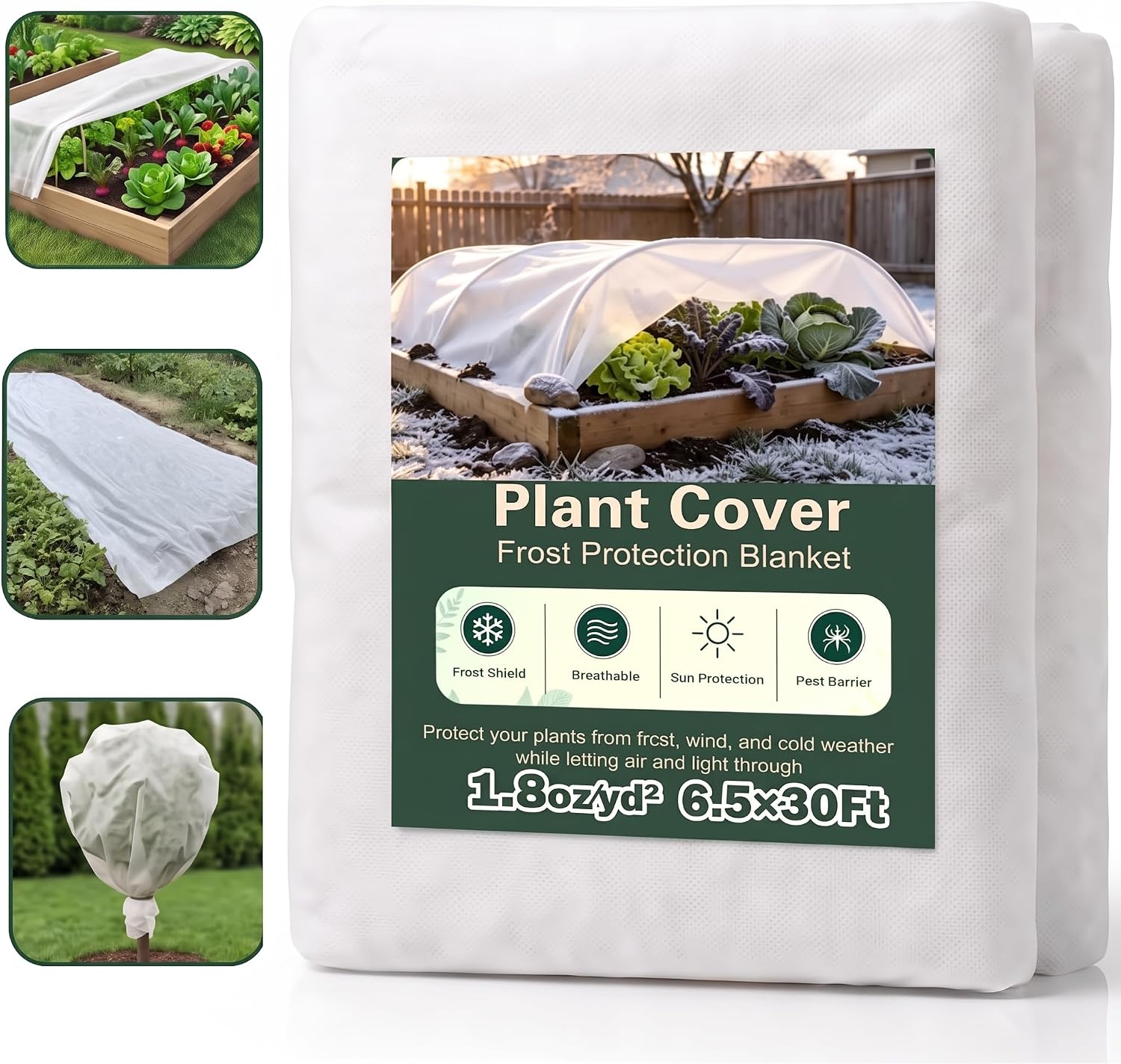
| Material | Nonwoven polypropylene |
|---|---|
| Weight | 1.8 oz/yd² |
| Manufacturer | Meuallikit |
| Size | 6.5 x 30 ft |
This frost cloth is designed to give reliable cold-weather protection for garden rows, raised beds, containers, and small shrubs. Made from extra-thick 1.8 oz/yd² UV-stabilized nonwoven polypropylene, it traps warmth and blocks frost, freezing wind, light snow and hail while still passing sunlight, air and water so plants can breathe. Typical use is to drape it directly over plants or over simple hoop supports and secure the edges with soil, rocks, or stakes; it is easy to cut to size for narrow rows or individual pots. Practical benefits include stronger tear resistance compared with thinner covers, year-round versatility as a winter blanket or summer shade cloth, and compact flat folding for storage. Important limitations are that it will sag under heavy snow without proper support and that its effectiveness depends on correct sealing at edges to retain warmth. The material is not transparent enough for growing seedlings that need full direct sun without any diffusion.
Best for: Gardeners who prioritize dependable frost protection and durable materials for seasonal row and bed covers and who want a low-maintenance product that can be cut to fit varied garden spots.
Less Ideal for: Growers who need crystal-clear greenhouse glazing or who routinely face very heavy snowfall without the ability to provide rigid support structures.
- Thicker 1.8 oz/yd² construction for improved durability and tear resistance
- Breathable polypropylene lets light, air and water reach plants while covered
- UV-stabilized material resists sun damage for seasonal outdoor use
- Easy to cut to size and folds flat for compact storage
- Works over beds, rows, containers, hoops and small shrubs for flexible use
- Will sag and risk plant contact under heavy snow unless supported with hoops or frame
- Does not provide full transparent light transmission for seedlings needing direct sunlight
Verdict: Choose this heavy-duty, breathable frost cloth when you need a durable, reliable row cover that protects plants from frost while still allowing air and moisture flow.
Valibe Floating Row Cover Plant Protection Fabric, 10 x 30 ft (0.9 oz/yd²)

| Material weight | 0.9 oz/yd² |
|---|---|
| Material | Non-woven polypropylene |
| Size | 10 x 30 ft |
| Manufacturer | Valibe |
This Valibe floating row cover is a simple, no-frills frost blanket for gardeners who need to protect large beds and shrubs. Made from 0.9 oz/yd² non-woven polypropylene, the fabric is lightweight and breathable so it lets light and moisture through while reducing frost and sun intensity. Typical use is to drape it over plants or support it on hoops to create a low tunnel, then secure the edges with soil, staples, or rocks. The generous 10 x 30 foot sheet covers roughly 300 sq ft and can be cut to size for smaller areas. Practical benefits include earlier spring starts, modest pest exclusion, and easy storage when dry. Expect it to perform well for short-term frost events and season extension, but know it is not a rigid greenhouse substitute and offers limited insulation against prolonged deep freezes. The material can tear if snagged on branches or handled roughly, and it will need re-securing in windy conditions. For gardeners wanting straightforward frost protection over large plantings, this cover is effective and easy to use.
Best for: Gardeners who want an affordable, easy-to-deploy frost protection for large beds and want to extend their season with minimal setup and maintenance.
Less Ideal for: Growers needing heavy-duty winter insulation for prolonged subfreezing conditions or those who require a rigid, permanent greenhouse solution.
- Large 10 x 30 ft sheet covers up to about 300 sq ft for whole beds or multiple plants
- Lightweight breathable polypropylene (0.9 oz/yd²) allows light and moisture through while reducing frost
- Can be draped directly or used over hoops for low tunnels, and is easy to cut to custom sizes
- Helps extend the growing season for seedlings and offers basic pest and sun protection
- Limited insulating value against extended deep freezes compared with heavier covers
- Lightweight fabric can tear if caught on branches or handled roughly
Verdict: Choose this cover when you need a large, breathable sheet that makes quick, effective frost and sun protection for beds and shrubs.
Choosing the Right Row Cover: Key Factors to Consider
Fabric Weight and Light Transmission
Fabric weight is the primary determinant of how much frost protection and light your plants receive. Lightweight fabrics transmit more sunlight and warm less, making them ideal for pest exclusion and mild frost protection. Heavier weights trap more heat overnight but reduce the percentage of usable light during sunny days.
You should pick a weight that matches your climate and season. In early spring or late fall when nights drop near freezing, choose a moderate weight that balances warmth and light. For insect control or summer shading, lighter weights preserve growth while still blocking pests.
Durability and Tear Resistance
Row covers are exposed to wind, staples, clips, and repeated handling, so fabric strength matters. Look for woven or spunbond constructions with known tensile strength and reinforced edges to reduce ripping during installation or from wind gusts.
Durability also affects long-term cost and convenience. A more tear-resistant cover will withstand being stretched over hoops or anchored with soil, reducing the need for frequent replacement. Consider whether the cover can be patched easily and if edges are finished to resist fraying.
Breathability and Moisture Management
Good airflow through the fabric prevents heat spikes under intense sun and reduces condensation that can promote fungal disease. Breathability is tied to fabric porosity; higher porosity lets air and water through while still providing a barrier to insects.
If you plan to use covers for extended periods, especially during wet seasons, choose fabrics that allow rainwater to percolate or drip through rather than pooling on top. Proper drainage and air exchange keep leaves drier and reduce stress on plants.
Size, Width, and Coverage Options
Row covers come in specific widths and are sold by the roll length. Wider widths reduce seams and make it easier to cover beds or multiple rows. If you have raised beds or long rows, measure beforehand to avoid gaps that let pests in or cold leak through.
Also think about how many layers you might use. Some gardeners double light-weight covers for extra protection, which requires generous width and overlap. Coverage options should align with your typical bed sizes and whether you will drape, hoop, or anchor the fabric.
Attachment Methods and Ease of Use
How you secure a row cover affects both plant safety and the convenience of daily garden work. Covers that accept clips, staples, or have sewn hems simplify attachment to hoops or frames. Easy-to-use edges reduce time spent re-anchoring after wind or maintenance.
Consider whether the fabric is lightweight enough to remove and replace by one person, or whether you will need assistance for larger areas. Fast, tool-free attachment methods help when you need to vent on warm days and re-cover at night.
When to Use Row Covers in the Garden
Row covers are versatile season-extension tools. Use them to protect young transplants from late spring frosts, to shield warm-season seedlings from unexpected cold snaps, and to exclude insects during peak pest pressure. They also provide light shading during hot spells, depending on fabric density.
- Early spring frost protection for seedlings
- Insect exclusion for brassicas and lettuce
- Light shading and wind reduction on hot, exposed sites
Draping Vs Hooping: Installation Approaches
Draping fabric directly over plants is the simplest method for short-stature crops and quick frost events. Secure edges with soil, rocks, or landscape staples to prevent wind from lifting the cover. This approach is low-cost and fast but can crush taller plants if not given clearance.
Hooping the cover over wire or PVC creates an airspace that protects taller crops and reduces contact injuries. Hoops also make it easier to ventilate and perform maintenance without removing the entire cover. Choose hoops with enough height to avoid rubbing and to allow plants to grow.
- Draped covers are fastest for low crops
- Hooped covers protect taller seedlings and ease access
- Secure edges to prevent wind damage
Multi-Layer Strategies for Extra Protection
Layering two lighter-weight covers is a common strategy to increase frost protection while maintaining better light transmission than a single heavy cover. The air gap between layers provides additional insulation, and the two layers together reduce radiational heat loss overnight.
Be aware that adding layers reduces airflow and may increase humidity under the cover. Monitor soil and foliage moisture, and ventilate during warm daytime conditions to avoid overheating and disease.
- Two lightweight layers often outperform a single heavy layer for warmth and light
- Monitor moisture and vent layers on warm days
- Use layering selectively during short cold spells
Maintenance and Storage Tips
Handle fabrics gently when removing and refitting to extend useful life. Clean covers of mud and plant debris before storage to prevent staining and microbial growth. Fold along the width rather than stuffing to avoid concentrated wear along creases.
Store in a dry, cool place out of direct sunlight to reduce ultraviolet degradation. Inspect hems and edges before the next season and reinforce any small tears with repair tape or patches to prolong service life.
- Clean and dry before storage
- Fold loosely to avoid thin creases
- Repair small tears to extend lifespan
How We Chose the Best Row Cover
We selected covers that gardeners rely on for season extension, frost protection, and pest exclusion. Our editorial process prioritized fabrics and designs that deliver measurable benefits in the garden rather than novelty features. Evaluation criteria focused on fabric weight and light transmission because these determine how much warmth and photosynthetically active radiation plants receive. Durability and tear resistance were assessed to estimate lifespan under wind and handling. Breathability and drainage were included to avoid moisture buildup and plant disease. Ease of use covered available widths, hemming or attachment options, and how straightforward covers are to secure and remove. We excluded specialty items intended only for greenhouse retrofit or industrial-scale use and products that lack clear fabric specifications. Final selections reflect materials and construction suited to backyard and small-scale market gardening conditions.
FAQ
How much frost protection does a row cover provide?
Protection varies with fabric weight and layering. Lightweight covers might protect to a few degrees above freezing, while medium-weight fabrics or double layers can extend protection several degrees lower. Local conditions and overnight wind also influence outcomes.
Can I water plants through a row cover?
Many row covers are breathable and allow light rain to seep through, but heavy downpours may not penetrate all fabric types. If the cover sheds water, open or remove it during rain events to ensure adequate soil moisture and avoid puddling.
Will row covers harm plants by trapping heat?
They can if left on during warm, sunny days. Breathable fabrics and timely ventilation prevent excessive heat buildup. Monitor temperatures under the cover on sunny days and prop or vent the fabric when temperatures rise.
How long do row covers last?
Lifespan depends on material, exposure to sunlight, and handling. Spunbond fabrics used seasonally and stored properly can last several seasons, while thin, low-cost materials may need replacing annually. Protect edges and minimize wind abrasion to extend life.
Can row covers stop all pests?
Row covers are effective against many flying and crawling insects when edges are sealed. They are less effective against soilborne pests and larger animals such as rabbits unless combined with additional barriers. Proper anchoring is key to preventing insects from entering.
Final Verdict
Pick a row cover that matches how and when you garden. Prioritize the right fabric weight for the season, durable construction if you handle covers frequently, and breathability to avoid moisture problems. Measure beds before buying and decide whether you will drape or hoop the cover; attachment method and width influence daily use and long-term durability. Balancing these tradeoffs helps you choose a cover that extends your season, protects plants from pests, and fits into your garden routine. Focus on the few criteria that matter most for your site and cropping plan and use layering or hoops when extra protection is needed.
