

Note: This article contains affiliate links. If you click on these links and make a purchase, I may earn a small commission at no extra cost to you. This helps support my research and content. Read my full affiliate disclosure here.
Starting veg seeds indoors or in a sheltered spot sets the season's success. The right seed starting tray for vegetables creates consistent moisture, good drainage, and an easy way to move young seedlings outdoors when it is time. In this guide we shortlist the top options and explain the practical tradeoffs gardeners face, from reusability and drainage to cell size and heat retention. Each pick below was chosen to match common vegetable-starting needs across small patios, balcony gardens, and larger backyard setups. We evaluated trays on seed-starting performance, durability, and handling so you can pick an option that fits your space and workflow.
Top Picks at a Glance
| Best Overall The best all-around choice for most situations | Patigrow 120-Cell Self-Watering Seed Starter Kit with LED Grow Light and Humidity Dome |  |
| Best Quality Built to a higher standard if you want something more solid | Bootstrap Farmer 5-Pack 1020 Seed Starter Trays (No Drain Holes) |  |
| Best Value The sweet spot between price and what you get | MIXC Seed Starter Tray Kit with Humidity Dome (10-Pack, 12-Cell Trays) |  |
| Best Budget The cheapest option that still gets the job done reliably | The Hydroponic City 24-Pack Seed Starter Trays (144 Cells) with Plant Stakes |  |
| Highest Rated A top-rated pick with lots of positive feedback | AC Infinity Humidity Dome 5×8 Seed Starter Propagation Kit |  |
| Most Popular A crowd favorite that many people choose with confidence | Burpee SuperSeed 36-Cell Reusable Silicone Seed Starting Tray |  |
Patigrow 120-Cell Self-Watering Seed Starter Kit with LED Grow Light and Humidity Dome

| Cell count | 120 |
|---|---|
| Material | PET (BPA-free) |
| Special features | Self Watering, Grow Light Bar, Aeration |
| Included components | Humidity dome, capillary mat, LED light, seed trays |
The Patigrow 120-Cell Seed Starter Kit is a complete indoor germination system aimed at getting lots of seedlings started with minimal fuss. The kit pairs a self-watering base and capillary mats with 120-cell seed trays and humidity domes so you can water once and maintain consistent moisture through germination. Integrated LED grow light bars with adjustable brightness and a timer provide supplemental light to prevent leggy seedlings when natural light is limited. Practical extras such as ventilation ports, enlarged drainage holes and plant labels make staging and monitoring seedlings straightforward. The kit is made from BPA-free PET and includes stands, spare vents and two full tray sets so it suits larger windowsill or bench projects and sharing between two growers. Limitations to note are that this is designed for indoor seed starting only and the built-in light covers a tray-sized footprint so larger setups will need additional lighting; also the PET parts are durable but are still plastic so expect some wear over multiple seasons. For someone who wants a turnkey, tidy way to start many seedlings indoors, this kit covers the bases well.
Best for: Gardeners who want an all-in-one, low-maintenance indoor seed starting solution to raise many seedlings at once without fussing daily over water and light.
Less Ideal for: Growers who need outdoor-ready propagation or who plan to scale to greenhouse-sized production should choose modular bench systems or standalone lights instead.
- Self-watering base with capillary mat reduces need for daily watering and helps prevent overwatering
- Adjustable LED grow light bars with timer and brightness control support healthy, compact seedlings
- Includes two full tray sets, humidity domes, vents and labels so it is ready to use out of the box
- Enlarged drainage holes and ventilation allow good air circulation to reduce damping-off risk
- Designed for indoor tray-sized setups so expanding to larger bench systems requires extra lighting
- Plastic components can show wear after repeated multi-season use
Verdict: If you want a ready-to-use indoor seed starting system that combines reliable self-watering with built-in LED lighting to raise large numbers of seedlings easily, this kit is a strong, practical choice.
Bootstrap Farmer 5-Pack 1020 Seed Starter Trays (No Drain Holes)

| Material Type | Plastic |
|---|---|
| Other Special Features of the Product | No Drainage Holes |
| Unit Count | 5 Count |
| Indoor Outdoor Usage | Outdoor |
| Capacity | 35 pounds |
These Bootstrap Farmer 1020 trays are built for growers who run a busy propagation bench and prefer bottom watering. The set includes five opaque, solid-bottom trays sized to nest 1020 inserts or hold standard 3.3 inch pots, so you can keep media and water separated for consistent moisture without mess. Made from tough, BPA-free polypropylene, the trays resist warping and are labeled as manufactured in the USA to withstand repeated use in greenhouse racks. The lack of drain holes is the standout feature: it lets you set up tray-in-tray or capillary mat systems and blocks light to reduce algae during germination. That design does mean you cannot use them for top-draining setups unless you drill holes or pair them with a perforated insert. They are shallow at 2.5 inches, which is ideal for seedlings and microgreens but not for larger transplants. Overall these trays favor growers focused on reliability, repeatable bottom-watering workflows, and heavier-duty, long-lasting gear rather than casual, single-season use.
Best for: Growers who run frequent seed-starting cycles and prioritize reliable, bottom-watering workflows and durable equipment for a productive bench.
Less Ideal for: Casual gardeners who want simple top-draining trays out of the box or anyone needing deeper trays for larger transplants.
- Solid-bottom design enables clean bottom-watering and reduces algae by blocking light
- Durable, food-safe polypropylene construction suited to repeated greenhouse use
- Fits standard 1020 cell trays and 3.3 inch pots so it integrates with common propagation systems
- Five-pack provides enough trays for staging multiple batches or continuous propagation
- No factory drain holes limits use to bottom-watering or requires modification for top drainage
- Shallow 2.5 inch depth is not suitable for larger seedlings or deep-rooted starts
Verdict: Choose these heavy-duty, solid-bottom 1020 trays when you need reliable, bottom-watering seed propagation that stands up to repeated greenhouse use.
MIXC Seed Starter Tray Kit with Humidity Dome (10-Pack, 12-Cell Trays)
| Included Components | humidity dome, seedling starter trays |
|---|---|
| Unit Count | 10 Count |
| Material Type | Plastic |
| Indoor Outdoor Usage | Indoor, Outdoor |
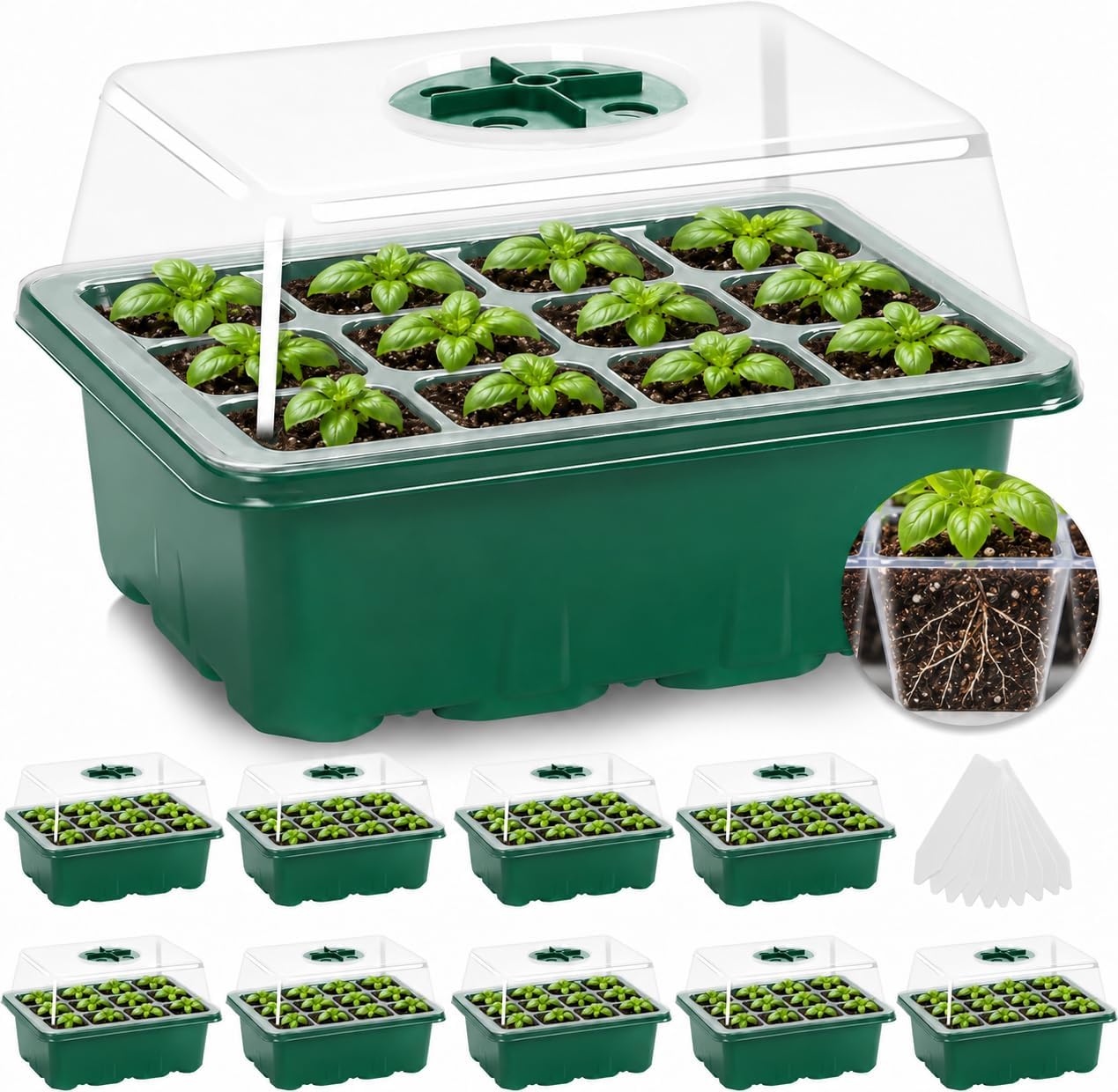
This MIXC kit supplies ten compact 12-cell seed trays with matching watertight bases and clear humidity domes so you can start large batches of vegetable seedlings at once. Typical use is filling the cells with seed mix, sowing seeds, and using the domes and adjustable vents to control humidity during germination; once seedlings appear you remove the domes and use the drainable bases to water from below or top water as needed. Notable features include the transparent domes for easy monitoring, bottom drainage to reduce root rot risk, and included plant labels that help manage many varieties. The trays are lightweight, stackable and reusable plastic so they are easy to store between seasons and simple to clean. Important limitations are that the trays are small and better suited for early seedling stages rather than long-term growth, and the plastic construction is not insulated so they need a warm, protected spot or supplemental heat for consistent germination in cool climates.
Best for: Gardeners who want an efficient, no-frills way to start many vegetable seedlings at once and who value organization and repeatable results.
Less Ideal for: Growers needing larger cells for extended transplant-ready growth or those who prefer biodegradable or heavy-duty insulated trays for cold starts.
- Ten trays with matching humidity domes let you start many varieties at once
- Adjustable vents on domes for simple humidity and airflow control
- Watertight base trays and drainage holes reduce overwatering and root rot
- Transparent domes let you monitor germination without disturbing seedlings
- Reusable lightweight plastic is easy to clean and store between seasons
- Trays are small and intended for seed starting only, not for extended potting on
- Plastic material offers no thermal insulation so germination may need extra heat in cool environments
Verdict: If you need a practical, space-efficient kit to start dozens of vegetable seedlings reliably, this 10-pack with vents and domes gets the job done.
The Hydroponic City 24-Pack Seed Starter Trays (144 Cells) with Plant Stakes
| Unit Count | 24 Count |
|---|---|
| Set Name | 24 Trays (144 Cells) |
| Material Type | Plastic |
| Other Special Features of the Product | Drainage Hole |
| Indoor Outdoor Usage | Outdoor |
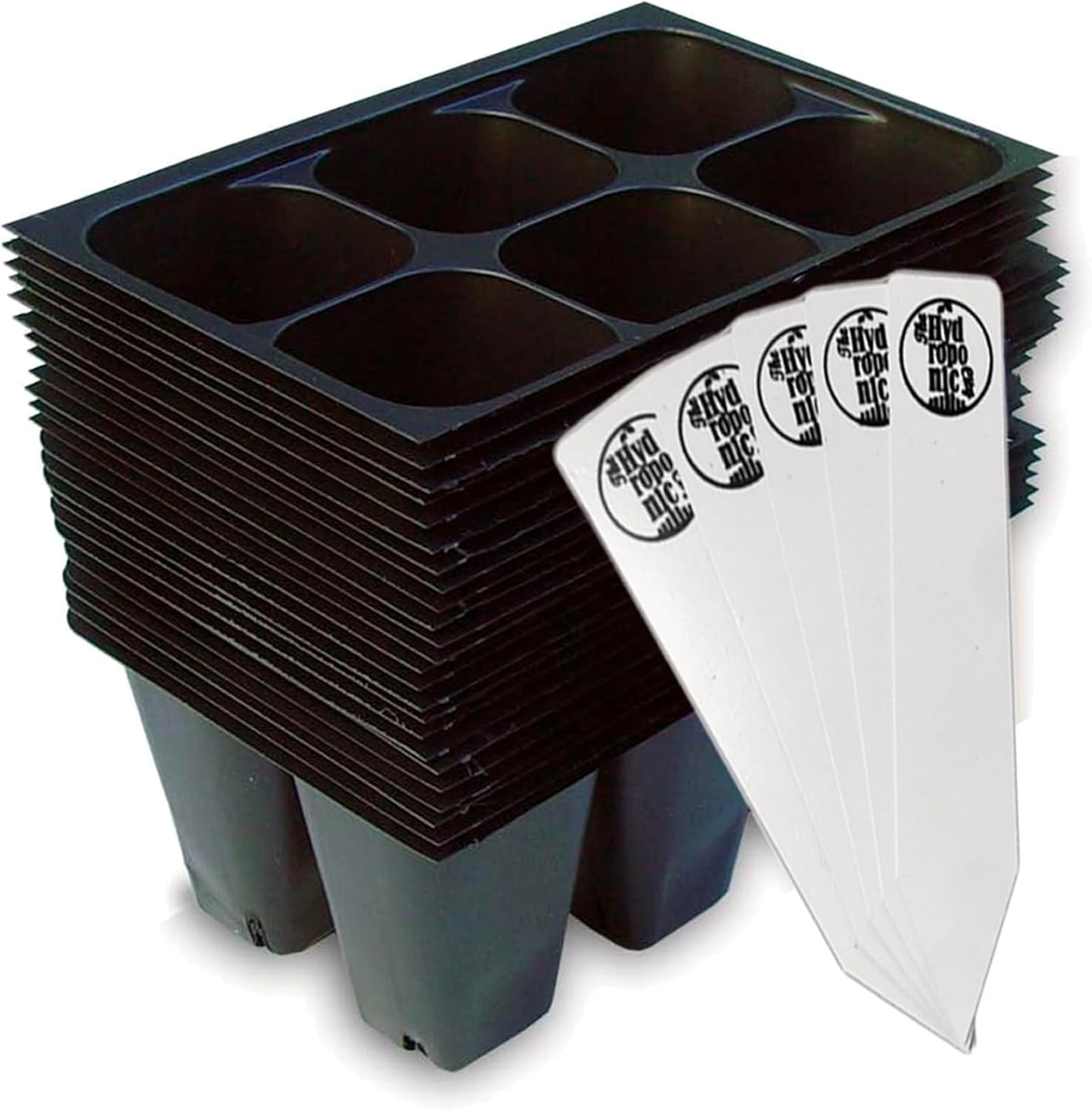
These seed starter trays provide a large, inexpensive way to start vegetable seedlings indoors or in a protected outdoor bench. The 24-pack contains 6-cell trays (144 cells total) made from durable plastic with drainage holes to reduce overwatering. Cells are shallow and square, which encourages compact root development and makes transplanting small seedlings straightforward. The set includes a few plant stakes for labeling. Because the trays are lightweight and stackable, they are easy to move and store between growing cycles and can be reused across seasons with basic cleaning. Limitations to expect are the small cell size, which fits early-stage seedlings but will require timely potting up for larger vegetable seedlings, and the basic plastic finish that will eventually wear with heavy outdoor exposure. For gardeners focused on maximizing seedling count on a tight budget, these trays deliver straightforward, usable performance.
Best for: Vegetable gardeners who want to start a large number of seedlings on a tight budget and are prepared to pot up seedlings as they grow.
Less Ideal for: Growers who need larger individual cells for big transplants or who want premium, UV-stable materials for long-term outdoor bench use.
- High seedling capacity with 144 cells across 24 trays for starting many vegetable varieties
- Drainage holes in each tray to help prevent overwatering
- Reusable plastic construction that is easy to clean and store
- Includes plant stakes for quick labeling and organization
- Cells are small and will require transplanting to larger pots for bigger vegetable seedlings
- Basic plastic may degrade over long exposure to sunlight and heavy use
Verdict: If you need to start many vegetable seedlings cheaply, this 24-pack gives the most seedlings per dollar with basic, reusable trays.
AC Infinity Humidity Dome 5×8 Seed Starter Propagation Kit

| Cell Count | 40 |
|---|---|
| Tray Thickness | 3 mm |
| Total Vents | 4 (w/ extender) |
| Plant or Animal Product Type | seed |
| Accepted Voltage Frequency | 100 to 120 Volts and 60 Hertz |
The AC Infinity Humidity Dome 5×8 is a heavy-duty seed starting kit that keeps seedlings and cuttings in a stable, humid microclimate to improve germination and rooting success. The clear 3 mm dome fits over a 40-cell seedling tray to hold moisture and light while optional height extenders and adjustable vents let you control airflow as seedlings grow. The tray is molded to drain excess water and resist leaks, so it works well with regular bottom-watering and propagation mixes. This compact kit is typically used on a bench, shelf, or inside a small grow tent; it can be paired with a heat mat or supplemental LED bars available in larger configurations. Notable strengths are the sturdy construction and simple venting system that reduce the need for constant monitoring. Limitations are that the basic model does not include a heat mat or built-in lighting, so you will need to add separate warmth or light for faster germination in cool or low-light conditions.
Best for: Gardeners who prioritize a dependable, low-maintenance propagation environment and want a robust starter tray that maintains consistent humidity for reliable germination.
Less Ideal for: Growers building a full plug-and-play system who want integrated heat or lighting or those needing larger commercial-scale propagation capacity.
- 3 mm thick clear dome for reliable humidity retention and light penetration
- Compatible height extenders and adjustable vents for staged airflow control
- 40-cell tray supports many seedlings for small-scale starting
- Durable, leak-resistant tray design suitable for repeated reuse
- Does not include heat mat or grow light in this compact kit
- Compact footprint may be too small for larger propagation projects
Verdict: Buy this if you want a sturdy, no-nonsense humidity dome and tray that consistently maintains the microclimate seedlings need for reliable germination.
Burpee SuperSeed 36-Cell Reusable Silicone Seed Starting Tray
| Unit Count | 36 Count |
|---|---|
| Material Type | Silicone |
| Other Special Features of the Product | Drainage Hole, Reusable |
| Indoor Outdoor Usage | Indoor |
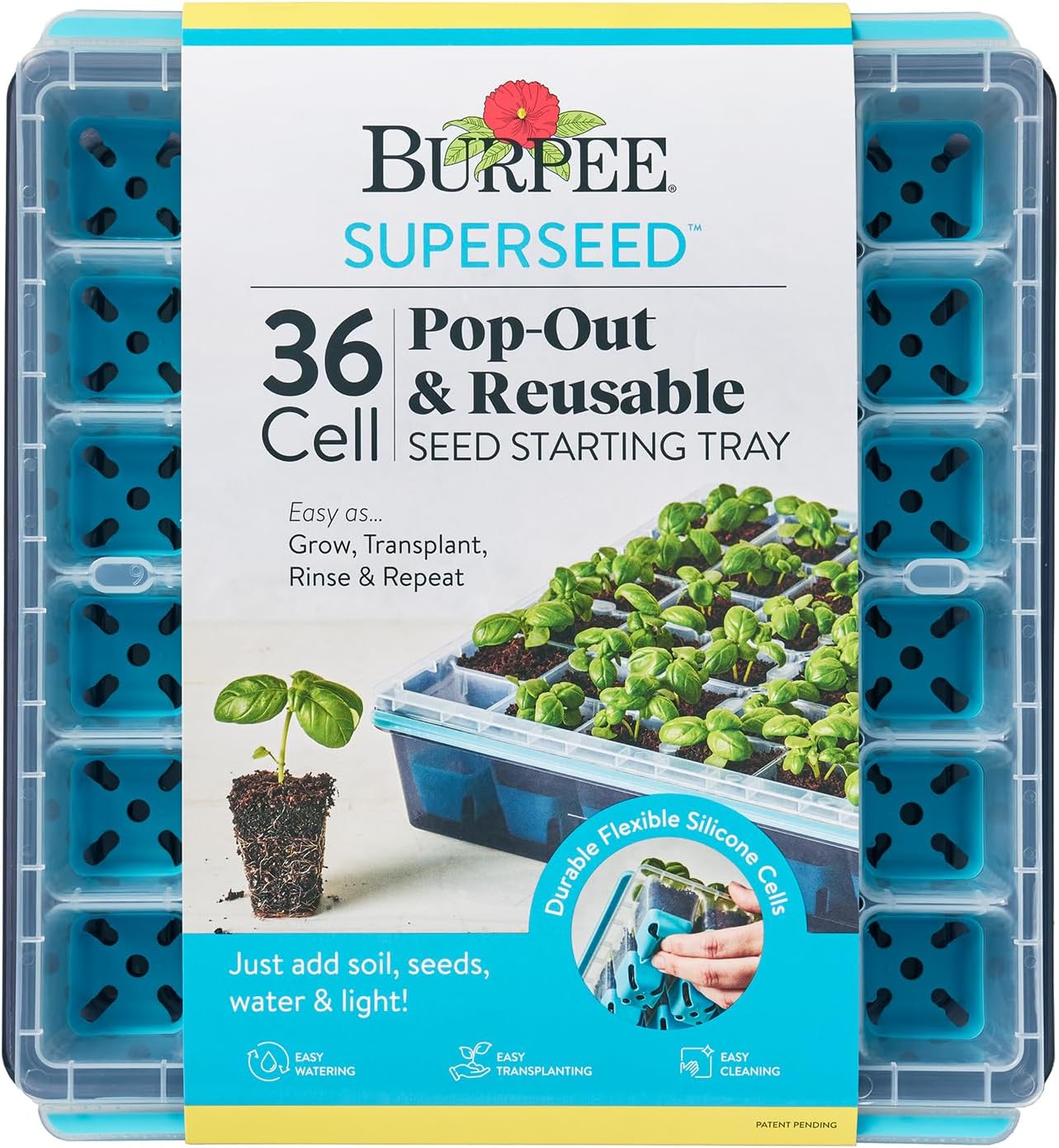
The Burpee SuperSeed 36-cell tray is designed to simplify indoor seed starting for herbs, flowers and vegetables. You fill each silicone cell with seed-starting mix, sow seeds, and use the raised reservoir and deep channels to manage excess water while the molded corner slots improve drainage and aeration. The soft, food-grade silicone cells flex so seedlings can be popped out with minimal root disturbance for transplanting. Labeled rows and included Plant-o-Gram make it easier to keep varieties organized. In practice the tray is lightweight, easy to lift by the side handles and dishwasher-safe on the top rack, which speeds cleanup between seasons. Limitations to note are that the tray is intended for indoor use only and the silicone material does not provide rigid support the way plastic cells do, so very top-heavy transplants may need extra handling. For gardeners focused on reliable germination and gentle transplanting, this tray streamlines the starting-to-potting workflow.
Best for: Gardeners who want a dependable, low-stress way to start multiple varieties indoors and value gentle transplanting and easy cleanup.
Less Ideal for: People who need heavy-duty outdoor trays or rigid cell structure for large transplants should consider sturdier plastic or individual pots instead.
- Flexible food-grade silicone cells allow seedlings to pop out with minimal root disturbance
- Built-in drainage slots and deep reservoir channels reduce overwatering and spillage
- 36 individually labeled cells and Plant-o-Gram help keep multiple varieties organized
- Top-rack dishwasher safe for easy cleaning and seasonal reuse
- Designed for indoor use only and not suitable as a heavy-duty outdoor planter
- Silicone cells are not rigid, which can make handling larger or top-heavy seedlings trickier
Verdict: Choose this tray if you want a reusable, silicone seed-starting system that protects roots and makes transplanting easier.
Choosing the Right Seed Starting Tray for Vegetables: Key Factors to Consider
Cell Size and Depth
Vegetable seedlings vary in root growth rates. Small cells work well for quick crops like lettuces and herbs, while deeper, larger cells suit tomatoes, peppers, and brassicas that need room for an initial root system. Choosing the right cell dimensions reduces transplant shock and the need for early repotting.
Cell shape also affects how easily you remove seedlings. Tapered cells and flexible plastics make popping seedlings out simpler and reduce root disturbance. Consider how long you plan to keep seedlings in the tray before moving them outside; longer indoor starting periods demand larger, deeper cells.
Drainage and Watering Options
Good drainage prevents waterlogging that causes damping-off and slow growth. Look for trays with multiple drainage holes or modular inserts that allow bottom-watering by placing the tray in a shallow water bath. Bottom-watering encourages roots to grow downward and reduces surface fungal problems.
Some trays include removable inserts or flats that separate drainage from the seed cells, which simplifies watering and cleanup. If you rely on misting or overhead watering, check that the tray design drains quickly enough to avoid standing water around stems.
Material and Construction Durability
Frequent handling, cleaning, and seasonal storage demand sturdy materials. Thicker plastics or molded composites resist cracking and warping when exposed to fluctuating temperatures and repeated moisture cycles. Reusable trays reduce waste and cost over multiple seasons compared with flimsy, single-use trays.
UV-stabilized plastics stand up better if trays spend time outdoors. Also consider how the tray tolerates cleaning: smooth surfaces and simple geometries are easier to disinfect between uses to prevent disease carryover.
Ease of Handling and Ergonomics
You will move trays between light sources, heat mats, and outdoor staging areas, so thoughtful rim shapes, finger holds, and stackability matter. Trays with rigid rims are easier to grip when full of moist potting mix. Lightweight trays reduce strain but must still resist bending that can spill seedlings.
Stackable designs save space during storage. Also evaluate how easily you can pop individual cells free for transplanting; some trays require tools or twisting, while others let you lift seedlings cleanly by the root plug.
Compatibility With Domes and Heat Mats
Seed trays often work alongside clear propagation domes and heat mats to regulate humidity and soil temperature. Check whether the tray dimensions match common dome sizes so you can maintain consistent humidity without gaps that invite pests or sudden temperature swings.
If you plan to use a heat mat, ensure the tray base sits flat and transfers warmth evenly. Some trays are specifically designed with shallow reservoirs that work well with bottom-heat methods; others may insulate too much and prevent efficient heat transfer.
Cleaning and Disease Management
Seed-starting is vulnerable to fungal diseases and soil-borne pathogens. Trays that disassemble or have smooth, easy-to-wipe surfaces make routine cleaning and disinfection straightforward. Avoid designs with narrow crevices that trap soil and moisture where pathogens can persist between seasons.
Consider whether materials tolerate common disinfectants. Being able to fully dry trays before storage also reduces mildew and odor buildup, extending the life of the tray and protecting future crops.
Choosing the Right Tray for Your Space
Match tray footprint to your available light and bench space. If you use a windowsill or small grow shelf, narrow flats with many shallow cells let you start a dozen varieties without using much room. For bench spaces or dedicated propagation tables, larger trays and deeper cells let you raise bigger transplants in fewer containers.
- Measure the usable surface area under grow lights before buying.
- Think about transport paths – can you carry a full tray from indoors to the yard?
- Prioritize trays that stack or nest for compact off-season storage.
Seed Starting Mix and Filling Tips
A light, sterile seed-starting mix is crucial for good germination. Fill cells firmly but not compacted so seeds have contact with moist mix while still allowing air movement around emerging roots. Overly dense medium reduces oxygen and slows seedling growth.
- Moisten mix before filling to ensure even hydration.
- Tap the tray gently after filling to level the medium without compressing it.
- Top-dress with a thin layer of coarse vermiculite for moisture retention if needed.
Using Heat Mats and Humidity Domes Effectively
Heat mats and domes speed germination and reduce transplant timing by keeping soil temperatures steady. Set mats to the recommended soil temperature for the vegetable you are starting, and use domes until most seeds sprout to maintain humidity and reduce watering frequency. Remove domes gradually to harden seedlings and avoid sudden drops that can stretch or weaken stems.
- Start with higher humidity and reduce ventilation as seedlings develop true leaves.
- Monitor soil temperature rather than air temperature when using mats.
- Watch for condensation on domes – that signals you can open vents or remove the dome briefly.
Hardening Off Seedlings Gently
Hardening off is the staged process of acclimating seedlings to outdoor conditions. Begin with a few hours of protected shade and increase exposure daily over one to two weeks. Proper hardening prevents shock and helps seedlings recover quickly after transplanting into garden beds or bigger containers.
- Bring seedlings in overnight during cool spells.
- Avoid direct midday sun at first to prevent leaf scorch.
- Reduce watering slightly during hardening to encourage stronger root systems.
Extending Tray Lifespan With Maintenance
Regular cleaning and proper storage extend tray life. After each use, remove potting mix and disinfect trays with a mild bleach solution or horticultural disinfectant, then rinse and dry completely. Store trays flat or nested in a cool, dry place to prevent warping and UV damage.
- Inspect trays for cracked rims and replace damaged units before the next season.
- Label and rotate trays in multi-season use to track wear.
- Avoid storing wet trays to prevent mildew growth.
How We Chose the Best Seed Starting Tray for Vegetables
We applied practical, garden-focused filters to identify seed starting trays that actually work for vegetable seedlings. First, we prioritized trays with cell sizes and depths suited to common vegetable crops so roots can establish without becoming root-bound before hardening off. We also rated tray construction and material durability to ensure repeated seasonal use under damp, sometimes warm conditions. Water management mattered in our selection. We looked for systems that offer reliable drainage and the option to bottom-water, since overwatering and poor drainage are leading causes of damping-off and weak transplants. Ease of handling was another filter: trays had to be compatible with standard greenhouse domes, heat mats, and flatbenches, and be simple to move without disturbing roots. Practical cleaning and storage were required; trays that trap soil or have fragile rims were excluded. We excluded single-use or non-reusable materials that will not withstand repeated seasons. The final selection balances root space, drainage, thermal behavior, material longevity, and gardener ergonomics.
FAQ
What cell size is best for starting most vegetable seedlings?
For many vegetables, medium-depth cells that are 1.5 to 2 inches deep work well because they allow initial root development without early transplanting. Larger crops like tomatoes and peppers benefit from deeper cells if you plan a longer indoor period.
Can I reuse trays from last season?
Often you can reuse trays if they are intact and properly cleaned. Remove all soil, disinfect to kill pathogens, rinse, and dry fully. Discard trays with deep cracks or persistent mold that cannot be cleaned.
Is bottom-watering better than overhead watering for seedlings?
Bottom-watering is usually gentler because it encourages roots to grow downward and reduces moisture on stems and leaf surfaces where fungi thrive. Overhead misting may be used for initial moisture but switch to bottom-watering as seedlings develop.
Do I need a heat mat to start vegetable seeds?
A heat mat speeds germination for warmth-loving crops like peppers and tomatoes but is not necessary for cool-season crops such as lettuce and brassicas. You can start many vegetables without heat mats by using a warm, well-lit location.
How long should seedlings stay in a tray before transplanting?
That depends on the crop and cell size. Small cells are good for quick crops that transplant in a few weeks, while larger or deeper cells let you keep slower growers longer. Transplant when seedlings have a healthy root ball and at least one set of true leaves.
Final Verdict
Choose a seed starting tray for vegetables based on how long you will raise seedlings indoors, the crops you plan to start, and your watering routine. Prioritize adequate cell depth for root development, reliable drainage or bottom-watering capability, and durable material that cleans easily. Balancing these features will reduce transplant shock and simplify seasonal workflow. If you need compact starts for many varieties, favor smaller cells and stackable trays. For longer-term seed raising of larger vegetables, pick deeper, sturdier trays that work with heat mats and domes. Focus on the tradeoffs above and you will pick a tray that matches your garden space and transplant schedule.
