

Note: This article contains affiliate links. If you click on these links and make a purchase, I may earn a small commission at no extra cost to you. This helps support my research and content. Read my full affiliate disclosure here.
If you share your yard with curious dogs or cats, choosing a slug control method that is effective yet safe around pets matters. Pet-safe slug killers remove slimy pests without exposing animals to toxic baits or persistent residues. In a typical home garden you need solutions that stop slug damage to seedlings, ornamental beds, and edible plots while posing minimal risk to animals that sniff, lick, or explore the soil. This guide covers five top pet-safe slug killers shortlisted for real garden use. We evaluate them on safety for domestic animals, slug control effectiveness, ease of application, and durability so you can pick the right approach for lawns, raised beds, containers, or vegetable patches. Read on to see which options match your garden layout and pet habits.
Top Picks at a Glance
| Best Overall The best all-around choice for most situations | Monterey Sluggo Snail & Slug Killer — 2.5 lb Jug (Iron Phosphate) |  |
| Best Budget The cheapest option that still gets the job done reliably | Corry's Slug and Snail Killer Pellets, 1.75 lb |  |
| Highest Rated A top-rated pick with lots of positive feedback | Monterey Sluggo Maxx Slug and Snail Killer, 10 lb |  |
| Most Popular A crowd favorite that many people choose with confidence | Garden Safe Slug & Snail Bait Granules, 2 lb |  |
| Best Seller A high-volume bestseller chosen again and again | Corry's Slug and Snail Killer Bait, 3.5 lb |  |
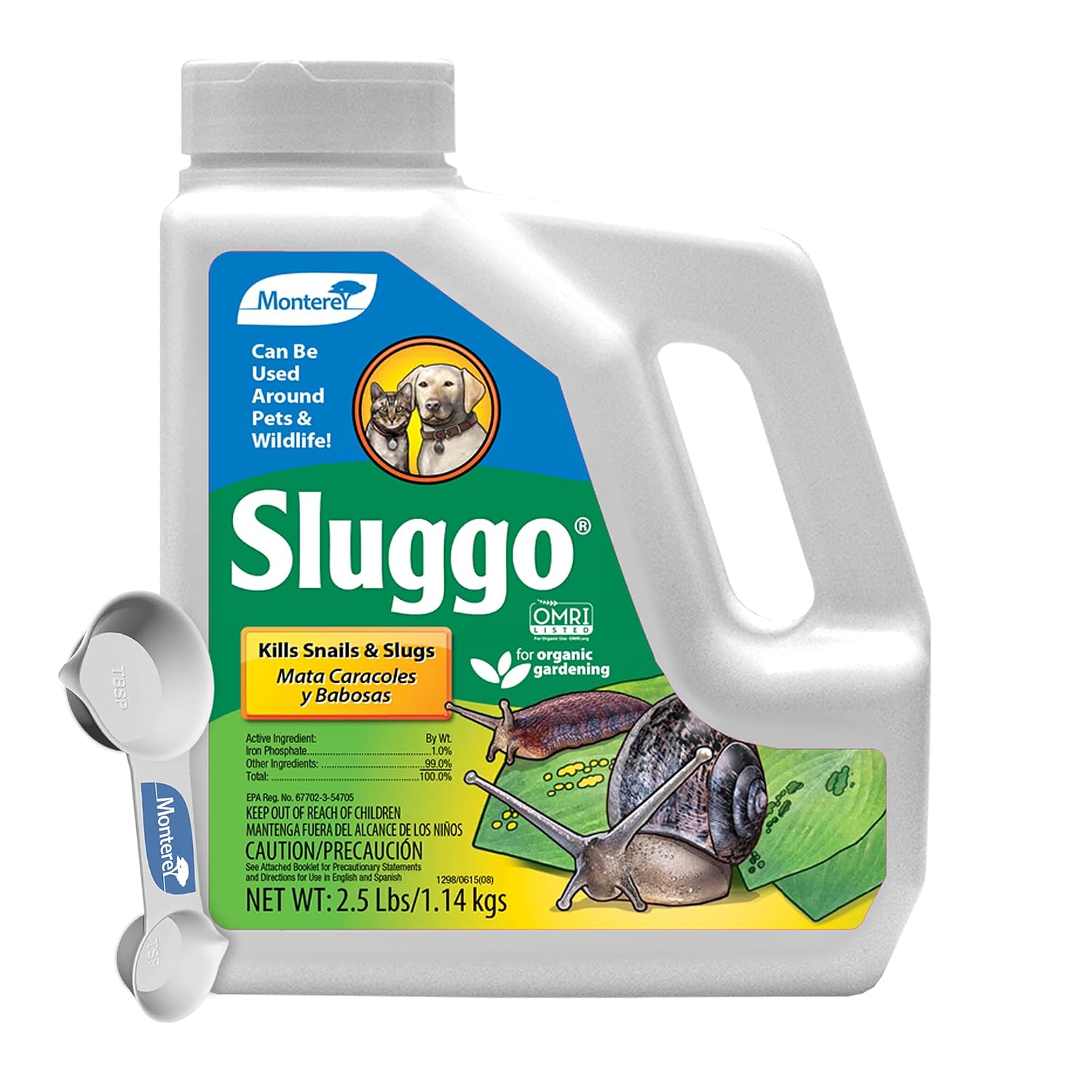
Monterey Sluggo Snail & Slug Killer — 2.5 lb Jug (Iron Phosphate)
| Unit Count | 40 Ounce |
|---|---|
| Item Form | Powder |
| Target Species | Slug |
| Liquid Volume | 1.13 kg |
| Active Ingredient | Iron Phosphate 1.0% |
Monterey Sluggo is a granular iron phosphate bait formulated to attract and control slugs and snails without harming pets or wildlife. Apply the granules around plants, along borders, or with a broadcast spreader for larger areas, ideally in the evening when slugs are most active. The OMRI listing makes it suitable for certified organic and home garden use, and the active ingredient remains effective after normal rainfall, so bait does not wash away easily. Safety directions recommend wearing gloves and eye protection when handling the concentrate. Practical benefits include easy scatter application, compatibility with edible and ornamental plantings, and a wildlife-friendly active ingredient. Limitations are that very heavy rain can require reapplication and control relies on repeated baiting rather than a one-time cure, so expect to monitor populations and reapply as needed during peak slug seasons.
Best for: Gardeners who want a practical, pet- and wildlife-friendly way to reduce slug and snail damage across vegetable beds, ornamentals, and lawns and who prefer products compatible with organic practices.
Less Ideal for: People seeking an instant kill or single-application solution for severe infestations or those who prefer non-bait mechanical controls like traps or barriers.
- OMRI listed iron phosphate formula safe for use in organic gardens
- Granular form is easy to scatter by hand or with a spreader for larger beds
- Effective after normal rain so treatment remains active until heavy washout
- Suitable for use around vegetables, ornamentals, lawns, greenhouses and berries
- Requires periodic reapplication after heavy rainfall or during high slug pressure
- Control is population management rather than immediate elimination
Verdict: A pet- and wildlife-friendly, OMRI-listed granular bait that provides reliable slug and snail control for organic-minded gardeners.
Corry's Slug and Snail Killer Pellets, 1.75 lb

| Item Form | Pellets |
|---|---|
| Target Species | Insects |
| Unit Count | 1 Count |
| Item Weight | 1.8 pounds |
Corry's Slug and Snail Killer is a pellet bait designed to control common slugs and snails around the home. You scatter the pellets around plants or on soil in the morning or evening, where pests eat the bait then retreat to hide and die over three to six days. The formula stays effective when wet and is cleared for use in vegetable and fruit gardens up to and including day of harvest, which makes it practical for edible beds. It is marketed as safe for people and pets to re-enter treated areas immediately after application, and the product is easy to apply without special equipment. Limitations include the need to reapply after heavy disturbance of the area and that control is gradual rather than immediate, so expect a few days before populations drop. Also follow basic safety steps to avoid eye or skin contact when handling the pellets.
Best for: Gardeners who want a straightforward, low-effort way to reduce slug and snail damage in lawns and edible beds while keeping costs down.
Less Ideal for: Users seeking an immediate kill or a non-bait mechanical solution should consider traps or barriers instead of a bait-based product.
- Effective pellet formulation that kills slugs and snails within about 3–6 days
- Approved for use in vegetable and fruit gardens up to day of harvest
- Remains effective in wet conditions so performance is less impacted by rain
- People and pets can re-enter treated areas immediately after application
- Control is not instantaneous and requires several days for full effect
- Requires periodic reapplication if soil is disturbed or after heavy rain events
Verdict: A simple, budget-friendly pellet bait that reliably reduces slug and snail populations in lawns and vegetable gardens within a few days.
Monterey Sluggo Maxx Slug and Snail Killer, 10 lb

| Ingredients | Iron Phosphate (3.0%) |
|---|---|
| Weight | 10 lb |
| OMRI Listed | Yes |
| Water Resistance | Remains effective after rain or sprinkling |
Monterey Sluggo Maxx is a concentrated iron phosphate bait designed to control slugs and snails across large areas. Applied as granular bait around vulnerable plants, it delivers a 3.0% iron phosphate formula that the manufacturer says is roughly three times stronger than standard 1% products, so you can expect quicker reductions in slug activity. The granules are water resistant, so they retain effectiveness after rain or irrigation and reduce the need for immediate reapplication. It is OMRI listed for organic gardening and labeled safe to use around pets, wildlife, and edible crops when used as directed, which makes it suitable for vegetable beds, ornamentals, lawns, and greenhouses. The product claims high coverage per pound, letting a single container treat a large area, which helps keep labor and repeat purchases down. Limitations to note are that it still relies on correct placement to intercept pests and that effectiveness depends on slug pressure and environmental conditions rather than being an instant fix.
Best for: Gardeners and landscapers who prioritize dependable, long‑lasting slug control and want a product that is safe to use around edibles and pets while covering large areas efficiently.
Less Ideal for: People who need immediate knockdown of heavy infestations or who prefer non‑bait mechanical controls like traps or barriers.
- Higher concentration iron phosphate formula for faster control than standard 1% baits
- Water-resistant granules remain effective after rain or sprinkler events
- OMRI listed and labeled safe for use around edible crops, pets, and wildlife when used as directed
- High coverage per pound reduces frequency of reapplication and treats large areas
- Performance still depends on correct bait placement and local slug pressure
- Not an instant kill; results occur over days as slugs feed and stop damaging plants
Verdict: Choose Sluggo Maxx when you want a reliable, pet‑ and edible‑safe iron phosphate bait that covers large areas and holds up after rain.
Garden Safe Slug & Snail Bait Granules, 2 lb

| Item Form | Granules |
|---|---|
| Included Components | Slug & Snail Bait, 2 lb |
| Item Type Name | Slug and Snail |
Garden Safe Slug & Snail Bait uses iron phosphate granules to control slugs and snails in lawns, vegetable beds, ornamentals and greenhouses. Scatter the granules in the evening or early morning where slugs travel, avoid application if rain is expected within 24 hours, and reapply as directed. The active iron phosphate is a common garden nutrient so the product is labeled for use around pets, wildlife and edible plants when used according to instructions, and pests typically stop feeding and die within three to six days. Practical benefits include easy broadcast application, compatibility with organic gardens, and minimal risk to birds or mammals compared with metaldehyde baits. Limitations are that results are not instant and repeated applications may be needed during heavy infestations or wet weather, and the bait can wash away if applied before rain or on steep slopes.
Best for: Buyers who want a low-toxicity, pet- and wildlife-friendly bait with established user acceptance for routine slug and snail control in edible and ornamental plantings.
Less Ideal for: People needing instant elimination for extreme infestations or a bait suitable for aquatic or heavily rainy sites should consider different control methods.
- Uses iron phosphate which is accepted for use around pets and wildlife when label directions are followed
- Designed for use on lawns, vegetable gardens, ornamentals and greenhouses
- Granular form is easy to scatter for spot treatments or larger areas
- Kills slugs and snails within three to six days after ingestion
- Not an immediate knockdown; pests stop feeding and die over several days
- Can be washed or blown away if applied before rain or windy conditions
Verdict: A practical low-toxicity granular bait for gardeners who prioritize safety around pets and edible plants while controlling slugs and snails.
Corry's Slug and Snail Killer Bait, 3.5 lb

| Unit Count | 56 Ounce |
|---|---|
| Item Form | Granules |
| Active Ingredients | ferric edta |
| Specification Met | USDA |
Corry's Slug and Snail Killer is a granular bait that uses ferric EDTA to control slugs and snails within a few days while allowing people and pets back into treated areas immediately. You apply the granules around susceptible plants in the morning or evening, scattering a light barrier on soil near plants you want to protect. The formula is labeled for use on lawns, ornamentals and vegetable or fruit gardens and is stated to remain effective after rain, which reduces the need for repeat applications after wet weather. Practical benefits include a low-restriction active ingredient that can be used up to harvest and straightforward application with no special equipment. Limitations are that it is a contact/ingestion bait so effectiveness depends on pest feeding activity and placement, and granules can be less tidy than contained baits in windy or high-traffic spots. Follow label safety directions to avoid eye irritation and wash hands after handling.
Best for: Gardeners who want a straightforward, low-restriction bait that protects lawns, ornamentals and edibles without complicated application steps.
Less Ideal for: People wanting a non-bait physical barrier or deterrent method or those who prefer contained, tamper-resistant bait stations for high-pet households.
- Contains ferric EDTA effective against slugs and snails with results in 3 to 6 days
- Approved for use in vegetable and fruit gardens including up to the day of harvest
- Remains effective after rain, reducing reapplication after wet weather
- Ready-to-use granules that are easy to scatter without special equipment
- Granular form can be messy in windy conditions or where pets and children play
- Depends on pests finding and ingesting the bait so placement is critical
Verdict: A practical, low-restriction granular bait that gives reliable slug and snail control for mixed home gardens and lawns.
Choosing the Right Pet Safe Slug Killer: Key Factors to Consider
Pet Safety
Pet safety is the primary concern when choosing a slug control method in yards with dogs or cats. Consider whether the product is labeled non-toxic to mammals, whether it contains ingredients that can irritate skin or mucous membranes, and how likely a pet is to encounter treated areas. Products that leave accessible granules, scented baits, or attractive pellets create the greatest ingestion risk. Barrier solutions and traps that do not use attractants reduce direct contact exposure.
Also think about indirect risks such as residues on plants or in soil. If you grow edibles, select methods with quick breakdown in soil or ones that are safe for use around food crops. Finally, evaluate how easy it is to keep pets away during and after application. The best choices combine inherently low toxicity with an application style that minimizes accidental pet contact.
Slug Control Effectiveness
An otherwise safe product is not useful if it fails to reduce slug damage. Effectiveness depends on the mode of action, the density of slug populations, and habitat factors like mulch, ground cover, and moisture. Methods that physically trap slugs or create hostile surfaces tend to work reliably in small areas. Biological or non-toxic bait approaches can succeed but often require correct placement and repeated use.
Match the method to the level of infestation. For light to moderate slug pressure, barriers, copper strips, or hand trapping may be sufficient. For heavier infestations, choose methods with demonstrated attraction or lethality to common garden slug species while still meeting safety requirements for pets.
Ease Of Application
How easy a slug control method is to use will affect whether you keep up with it. Busy gardeners benefit from products that require minimal daily attention, have straightforward placement, and do not demand complex setup. Consider whether the method is suitable for the garden areas you care for: small container gardens benefit from compact, low-maintenance solutions, while large beds need options that scale without excessive labor.
Also check whether the product needs regular recharging, bait replacement, or protection from weather. The simpler the routine, the more consistently it will be applied, and consistent application is critical to managing slugs over a season.
Longevity Of Protection
The length of time a control method keeps slugs away affects both results and maintenance. Some approaches provide a season-long physical barrier if installed correctly, while others require frequent reapplication after rain or watering. Materials that break down quickly may be safer for pets and edibles but need closer attention.
Assess how weather, irrigation, and garden activity will impact longevity. A durable method reduces labor but may leave residues longer. Choose a balance that matches your tolerance for maintenance and your need to minimize residual exposure for pets and beneficial wildlife.
Edible Garden Compatibility
If you are protecting vegetables, herbs, or fruiting plants, compatibility with edible plantings is essential. Some slug control techniques are explicitly safe to use around food, while others require withholding harvests or avoiding direct contact with produce. Look for options that do not leave harmful residues on leaves or in the root zone.
Also consider how the control method interacts with soil life. Many gardeners prefer approaches that preserve earthworms and beneficial insects. Choose solutions that protect crops without harming soil health or requiring elaborate protective measures before harvest.
Non-Toxic Bait Options And How They Work
Non-toxic baits rely on materials that discourage slugs through taste, surface irritation, or physical disruption rather than systemic poisons. These baits can be useful in areas where pets might access the garden because they do not contain mammal-toxic active ingredients. Placement is important: put baits in targeted pathways or under shelters where slugs feed, and away from areas pets frequent.
Expect variable results depending on slug species and environmental moisture. These options often need regular inspection and replenishment during damp weather. They are most effective when combined with habitat modification such as removing hiding spots and reducing night-time moisture.
- Place baits during evening hours when slugs are active
- Avoid scattering baits where pets play or nap
- Combine with cultural controls for best effect
Physical Barriers And Garden Layout Adjustments
Barriers such as copper strips, coarse mulches, or raised edging create a physical challenge for slugs. Copper produces a mild electrical reaction when slugs cross it, while rough textures deter movement. These solutions are inherently pet-safe when installed correctly and also reduce the need for repeated chemical applications.
Adjusting garden layout can help: move susceptible seedlings to beds with cleaner edges, use narrow pathways that are easy to monitor, and reduce dense ground cover near plant crowns. A thoughtful layout minimizes slug-friendly hiding spots and reduces the area you need to protect.
- Inspect barrier seams regularly for gaps
- Use raised beds or containers for highly vulnerable seedlings
- Combine barriers with regular hand checks after dusk
Trapping Techniques That Keep Pets Safe
Traps use attractants and sheltered containers to capture slugs without distributing toxic bait. Beer traps or grapefruit halves are common examples, but choose trap types that do not create an ongoing attraction for curious pets. Place traps in out-of-the-way zones or under coverings to limit pet access.
Check traps daily and dispose of captured slugs away from the garden. Trapping is labor intensive but very safe for pets and can reduce slug numbers effectively in small to medium plots when combined with other methods.
- Position traps along known slug corridors
- Empty and reset traps regularly during wet periods
- Avoid using food-based attractants in high-pet-traffic areas
Cultural Practices To Reduce Slug Habitat
Changing garden habits can reduce slug pressure long term. Water in the morning rather than evening so surfaces dry before nightfall, clear away heavy mulch near plant crowns, and remove dense low foliage that offers daytime shelter. Tidier beds make slugs easier to find and reduce the refuges where they breed.
Encourage natural predators like birds and ground beetles by maintaining diverse plantings and avoiding broad-spectrum pesticides. Cultural tactics are low cost and pet-safe, and they complement targeted control methods for more durable results.
- Water early to reduce nocturnal moisture
- Keep compost and debris away from bed edges
- Create habitat for slug predators away from play areas
Using Barriers In Vegetable Patches And Containers
Containers and raised beds allow you to isolate plants and use physical barriers more intensively. Lining pot rims with copper tape or using tightly fitted cloches over young seedlings provides strong protection without chemicals. Containers also let you place deterrents out of pet reach and move vulnerable plants indoors briefly during peak slug activity.
For vegetable patches, install narrow perimeter barriers and maintain clean soil surfaces. Regular inspection of low-growing crops like lettuce and herbs is important because slugs hide under leaves during the day.
- Use removable covers during seedling establishment
- Inspect undersides of leaves frequently
- Move high-risk plants to higher, less accessible locations
How We Chose the Best Pet Safe Slug Killer
We focused on safety-first criteria and real-world gardener needs when shortlisting these pet-safe slug killers. Key evaluation points included the degree of documented safety for common pets, the product or method's proven effectiveness against a range of slug species in home gardens, and how long protection lasts under typical outdoor conditions. We also considered user-facing practicalities such as ease of application, compatibility with edible plantings, and cleanup or removal requirements. Products or methods that rely on known toxic active ingredients or present clear ingestion risks to pets were excluded. We also filtered out options that only work in laboratory conditions or need professional handling. The final list emphasizes low-toxicity chemistries, physical traps, and barrier approaches that provide measurable slug reduction without introducing persistent hazards for dogs and cats. Scoring focused on pet safety, slug control effectiveness, application simplicity, longevity of protection, and suitability for edible versus ornamental plantings.
FAQ
Are copper barriers safe for pets?
Copper barriers are generally safe for pets because they do not contain toxic chemicals. Pets may nibble at the edge occasionally, so ensure copper tape is firmly attached and edges are not sharp. Copper effectiveness varies with installation quality and must be kept free of debris to remain a reliable deterrent.
Can I use any bait if my pet does not go into the garden?
If pets never access the garden, a wider range of baits may be usable, but consider runoff and residue on edible plants. Even in restricted gardens, choose options that break down quickly and avoid attractants that could draw wildlife. Physical controls and traps are still useful because they reduce environmental exposure overall.
How often do I need to check traps or barriers?
Check traps and barriers at least every few days during wet periods and weekly when conditions are dry. High-moisture spells drive slug activity, so more frequent checks during those times help you remove captured slugs and repair any gaps in barriers before damage occurs.
Will pet-safe methods control a severe slug infestation?
Pet-safe methods can reduce numbers and protect specific areas, but severe infestations are harder to eliminate without heavier interventions. Combining multiple pet-safe tactics-barriers, traps, cultural changes, and frequent hand removal-gives the best chance to bring high populations under control while keeping pets protected.
Are there long-term risks to soil health from pet-safe slug controls?
Most pet-safe approaches such as barriers, traps, and habitat modification have minimal impact on soil health. Avoid repeated use of non-biodegradable sheets or chemicals that could alter soil biology. Favor practices that promote beneficial organisms and reduce slug habitat without disrupting soil structure.
Final Verdict
Choose a pet-safe slug control strategy that matches the level of infestation and the layout of your garden. Prioritize methods that reduce direct pet exposure, such as physical barriers, targeted traps, and cultural changes, and use non-toxic baits only where pets cannot access them. Expect to combine tactics and invest time in monitoring for the best results. For most home gardeners with pets, the right balance is a reliable barrier or trapping routine supplemented by habitat management. That approach minimizes risk to animals while keeping slug damage in check, letting you protect both plants and pets with confidence.
