

Note: This article contains affiliate links. If you click on these links and make a purchase, I may earn a small commission at no extra cost to you. This helps support my research and content. Read my full affiliate disclosure here.
Choosing the right potting mix makes a big difference when you grow in containers, window boxes, or patio planters. The best mixes keep roots oxygenated, hold moisture without waterlogging, and supply steady nutrients through the growing season. In this guide we shortlisted seven top potting mixes suited to a range of container gardening situations, and we explain the traits that matter in practical use. Below you will find concise product summaries followed by clear buying guidance and the evaluation factors we used, so you can pick a mix that matches your plants, container type, and watering habits.
Top Picks at a Glance
| Best Overall The best all-around choice for most situations | Miracle-Gro Potting Mix, 16 qt. (2-Pack) |  |
| Best Quality Built to a higher standard if you want something more solid | Brut Worm Farms Organic Potting Soil, 2-Pack (21 qt each) |  |
| Best Value The sweet spot between price and what you get | Miracle-Gro Moisture Control Potting Mix, 16 qt. (2-Pack) |  |
| Best Budget The cheapest option that still gets the job done reliably | Back to the Roots 3-in-1 Seed Starting Mix, 6 Quart Organic Seed & Potting Mix |  |
| Highest Rated A top-rated pick with lots of positive feedback | FoxFarm Happy Frog Potting Soil, Container Garden, 2 cu ft (with 2 Plant Tags) |  |
| Most Popular A crowd favorite that many people choose with confidence | Miracle-Gro Potting Mix, 16 qt. |  |
| Best Seller A high-volume bestseller chosen again and again | Back to the Roots Organic Indoor Potting Mix, 6 Quart |  |
Miracle-Gro Potting Mix, 16 qt. (2-Pack)

| Feeds up to | 6 months |
|---|---|
| Volume | 16 quarts (per bag) |
| Number of packs | 2 |
| Ingredients | Sphagnum Peat Moss, Perlite, Compost, Fertilizer |
Miracle-Gro Potting Mix is a general-purpose outdoor container soil designed to give potted flowers, vegetables, herbs and shrubs an easy nutrient boost. Gardeners typically use it to fill planters, hanging baskets and patio pots following simple potting steps: choose a container with drainage, fill about one third with mix, set the plant and top off before watering. The formula combines sphagnum peat, perlite, compost and a slow-release fertilizer so roots get both good drainage and steady feeding for up to six months. In practice that means fewer weekly feedings and faster establishment for new transplants. The mix is convenient in a two-pack of 16-quart bags that each claims to fill a 12-inch pot, and the lightweight texture makes potting and repotting less messy. Limitations are typical of peat-based mixes: it will compact over time and needs replacing or amending annually for best long-term container health, and it is formulated for containers rather than in-ground beds.
Best for: Gardeners who want a simple, reliable potting mix for outdoor containers and prefer a product that reduces feeding frequency and speeds plant establishment.
Less Ideal for: People looking for a soil to amend in-ground beds or those who prefer fully organic, peat-free mixes should consider alternatives.
- Feeds outdoor container plants up to six months with built-in slow-release fertilizer
- Light, fast-draining texture from peat and perlite helps prevent waterlogged roots
- Suitable for a wide range of plants including vegetables, annuals, perennials and herbs
- Two 16-quart bags provide enough mix to fill typical 12-inch pots and simplify repotting
- Peat-based mix can compact and lose structure over time, requiring annual replacement
- Not formulated for in-ground garden beds where a denser garden soil would be better
Verdict: A dependable, easy-use potting mix for outdoor containers that feeds plants for months and speeds establishment.
Brut Worm Farms Organic Potting Soil, 2-Pack (21 qt each)
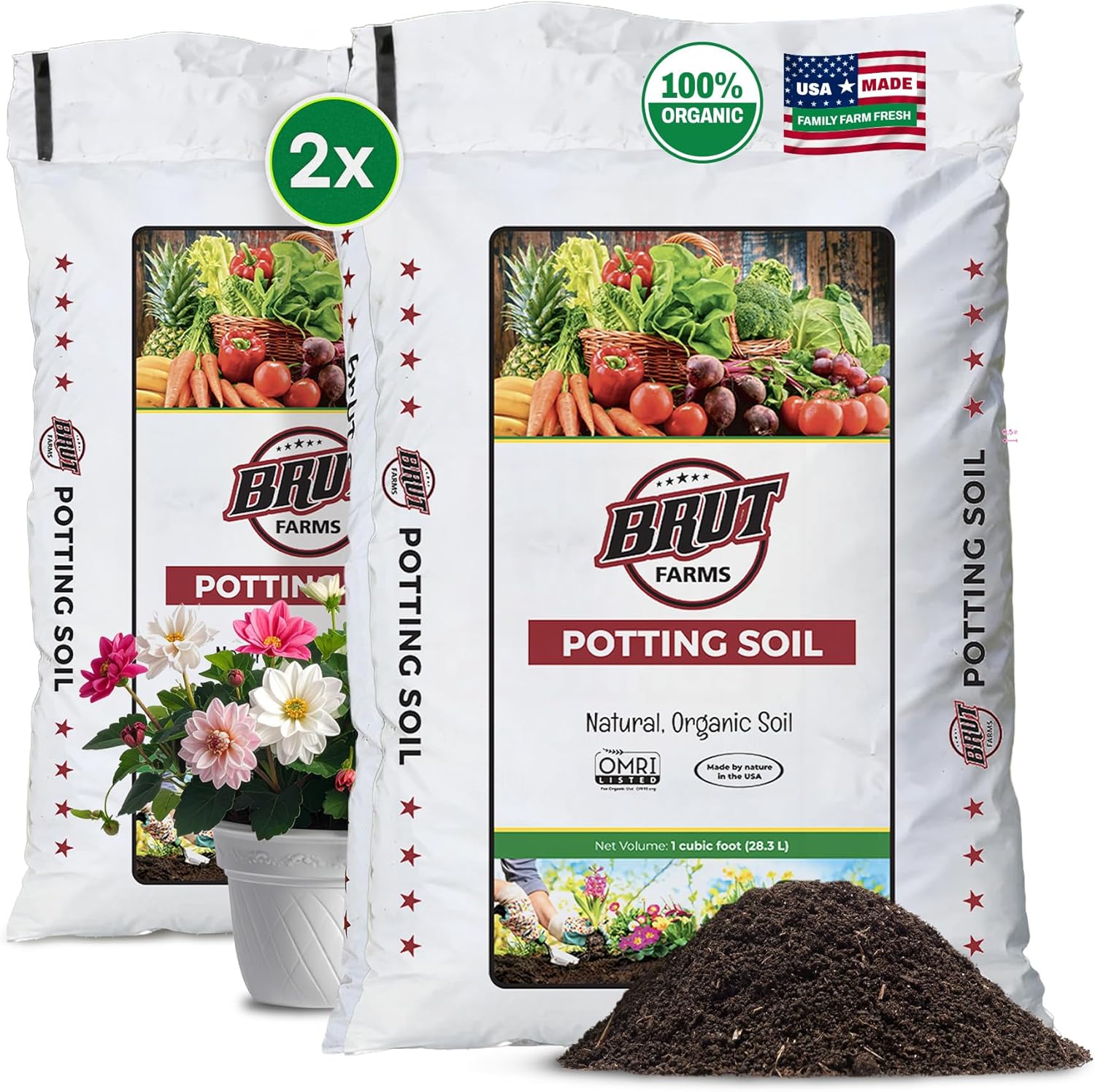
| Volume | 21 quarts |
|---|---|
| Number of Packs | 2 |
| Certified Organic | OMRI listed |
Brut Organic Potting Soil is a ready-to-use, chemical-free mix designed to feed potted plants and garden containers from the start. It combines microbe-rich worm castings, composted manures, perlite for drainage and Azomite and kelp for trace minerals, so it works as both a planting medium and a mild fertility boost. Use it straight from the bag for repotting houseplants, filling containers, or top-dressing seedlings and raised beds; it is pH balanced for general plant health. Practical benefits include improved moisture retention that reduces watering frequency and a nutrient profile that supports early growth without synthetic fertilizers. The mix is filler-free, so you will not find large wood chips or inert bulkers. Expect the soil to feed plants gradually rather than provide an instant high-NPK push, so heavier feeders may still need targeted fertilization later in the season. Also follow basic safety guidance to avoid inhaling dust when handling and to store bags dry to prevent contamination.
Best for: Gardeners who prioritize organic, performance-oriented potting mixes that support steady plant growth without synthetic additives, and who want a versatile soil for repotting, containers, and seed starting.
Less Ideal for: Buyers seeking an immediate, high-NPK boost for heavy-feeding crops or those who prefer pre-fertilized, short-term potting mixes designed for single-season use.
- Certified organic, made from 100% natural ingredients including worm castings and composted manures
- Contains perlite and organic amendments for balanced aeration and moisture retention
- Includes trace minerals (Azomite and kelp) and beneficial microbes to support plant health
- Filler-free formulation with no sticks or large wood debris
- Provides gradual nutrient release so heavy-feeding vegetables may require additional fertilizer
- Bag must be stored dry to avoid contamination or clumping
Verdict: Choose this mix if you want a certified organic, microbe-rich potting soil that improves moisture retention and supports steady, long-term plant health.
Miracle-Gro Moisture Control Potting Mix, 16 qt. (2-Pack)
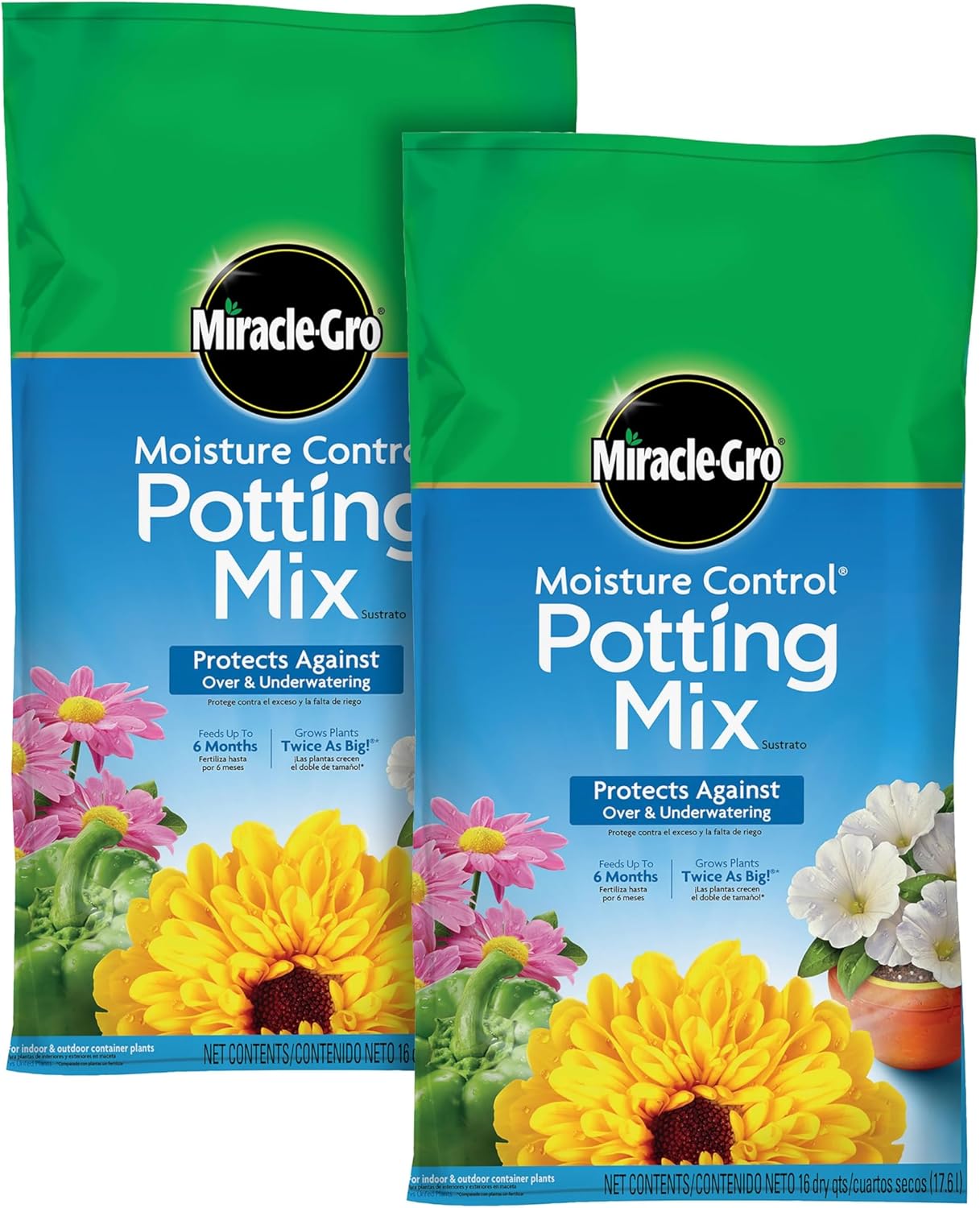
| Number of Packs | 2 |
|---|---|
| Item Highlight | Plant Soil For Container Plants, Protects against Over- and Under-Watering |
| Feeds Plants | Up to 6 months |
| Style Name | 16 qt. |
Miracle-Gro Moisture Control Potting Mix is a ready-to-use soil blend aimed at outdoor container gardening. It uses an AquaCoir formula with peat, coir, and a wetting agent to absorb more water than basic potting soils while remaining airy so roots can breathe. In practice you fill a pot with drainage, plant or repot as instructed, then water through and allow the mix to dry to the touch between waterings. The blend advertises up to six months of feeding, which reduces the need for frequent fertilizing and helps containers support flowers, vegetables, perennials, and shrubs. Practical benefits include more forgiving watering—helpful if you sometimes miss a watering—and lighter, well-draining media that suits hanging baskets and 12-inch pots specifically called out by the manufacturer. Limitations are that this is designed for containers rather than in-ground beds and that nutrients are time-limited so annual repotting or supplemental feeding is recommended for long-term plantings.
Best for: Buyers who want a low-maintenance, container-specific potting mix that reduces watering fuss and cuts down on short-term feeding chores when planting flowers, vegetables, or shrubs in pots.
Less Ideal for: Gardeners who need soil for in-ground beds or long-term raised beds should choose garden soil or an amendment formulated for in-ground use instead.
- Designed for containers so it drains well and supports root health
- AquaCoir formula absorbs up to 33% more water than basic potting soil to reduce watering mistakes
- Feeds plants for up to six months, lowering immediate fertilizer needs
- Light, airy texture helps roots breathe and suits hanging baskets and planters
- Nutrient supply is temporary and will require repotting or additional feeding after several months
- Formulated for container use so it is not intended as an amendment for in-ground beds
Verdict: If you want a container potting mix that eases watering mistakes and provides months of feeding, this moisture-control blend is a practical, low-fuss choice.
Back to the Roots 3-in-1 Seed Starting Mix, 6 Quart Organic Seed & Potting Mix

| Unit Count | 192 Fluid Ounces |
|---|---|
| Style Name | 3-in-1 Seed Starting Mix |
| Brand Name | Back to the Roots |
| Volume | 0.23 cubic feet |
This 6-quart Back to the Roots 3-in-1 Seed Starting Mix is a peat-free, ready-to-use soil designed for starting seeds and growing potted herbs, vegetables, and flowers. It combines coconut coir, mycorrhizae, yucca extract and worm castings to support root development, nutrient uptake, and moisture regulation so seedlings get a balanced start. The texture is light and drains well while retaining enough moisture for small pots and seed trays, which reduces common problems like compaction and poor germination. Practical benefits include organic inputs and a peat-free formula for gardeners who prefer sustainable options. Because it is sold in a modest 6-quart bag, it is convenient for starting several flats or refreshing a few small containers without excess waste. The main limitations are volume and scope: this size is best for seed starting and small pots rather than filling multiple large containers or beds, and heavier-feeding plants may need additional fertilizer as they mature.
Best for: Ideal for gardeners who want an affordable, sustainable seed-starting mix to get vegetables, herbs, and flowers off to a healthy start in trays or small containers.
Less Ideal for: Not the best choice for someone who needs bulk soil to fill many large containers or for long-term potting of heavy-feeding plants without supplementing nutrients.
- Peat-free organic blend with mycorrhizae and worm castings to support early root growth
- Light, airy texture that promotes drainage and reduces compaction in seed trays
- Includes moisture-controlling yucca extract to help retain appropriate dampness for seedlings
- Convenient 6-quart bag suitable for starting multiple flats or refreshing small pots
- Small 6-quart volume limits use to seed starting and a few containers rather than large-scale potting
- Not formulated as a long-term potting soil for heavy feeders without additional fertilizer
Verdict: A compact, peat-free seed-starting mix that gives seedlings a nutrient-rich, well-draining start while keeping cost and waste low.
FoxFarm Happy Frog Potting Soil, Container Garden, 2 cu ft (with 2 Plant Tags)

| Brand Name | FoxFarm |
|---|---|
| Item Highlight | Ready-to-Use Amended Container Blend with Soil Microbes, Earthworm Castings, Bat Guano, and Aged Forest Products |
| Volume | 2 cubic feet |
| Style Name | Container Garden |
FoxFarm Happy Frog Potting Soil is a premium container mix designed to give potted plants a nutrient-rich, biologically active growing medium right out of the bag. It is typically used for container gardening—houseplants, patio pots, shrubs in containers, and small fruit or flowering plants—where roots cannot access garden soil. Notable features include earthworm castings, bat guano, aged forest products, and a blend of soil microbes and mycorrhizal fungi that promote root development and nutrient uptake. In practice that means stronger vegetative growth, more vigorous root systems, and improved flowering or fruiting compared with basic bagged soils. The mix is pH adjusted and ready to use, so you can pot immediately without extra amendments, and the included plant tags help keep track of varieties and dates. Important limitations are typical of rich, high-organic mixes: it is heavier than lightweight soilless mixes and may require supplemental fertilization over time for heavy feeders depending on crop and container size.
Best for: Buyers who want a reliable, ready-to-use potting soil that promotes strong root growth and steady plant performance in containers without needing to blend amendments themselves.
Less Ideal for: People who prioritize ultra-lightweight, fast-draining soilless mixes for hydroponic-style container setups or who need an inert starting medium for precise nutrient control.
- Richly amended with earthworm castings, bat guano, and aged forest products for immediate nutrient availability
- Contains beneficial microbes and mycorrhizal fungi to improve root development and nutrient uptake
- pH adjusted and ready to use for container planting without pre-mixing
- Includes plant tags to label varieties and planting dates
- Heavier and denser than lightweight soilless mixes, which can affect large container drainage and handling
- May need periodic supplemental fertilizer for long-term heavy-feeding plants
Verdict: Choose this potting soil when you want an off-the-shelf, nutrient-rich container mix that helps roots establish quickly and supports reliable flowering and fruiting.
Miracle-Gro Potting Mix, 16 qt.

| Volume | 16 quarts |
|---|---|
| Feeds up to | 6 months |
| Unit Count | 592 Ounce |
Miracle-Gro Potting Mix is a pre-mixed container soil designed to give potted flowers, vegetables and shrubs a nutrient-rich, well‑draining foundation. It is used by filling a drained container about one third full, seating the plant, adding more mix up to an inch from the rim, and watering through. The mix contains peat, processed forest products, perlite and a built-in fertilizer blend that is polymer-coated for slow release, so it claims to feed plants for up to six months and reduce the need for frequent feeding. Practical benefits include good aeration and moisture retention for container roots and an easy, consistent starting medium that fills a 12-inch pot from a 16 qt. bag. Limitations are that the fertilizer formula is relatively low in NPK and may not suit heavy-feeding crops long term, and some regional formulations vary in exact ingredients. For gardeners who repot annually or top up containers seasonally this is a convenient, reliable option; for specialty mixes or specific soil chemistry needs you may prefer to blend your own media.
Best for: Gardeners who want a convenient, reliable potting medium that supplies slow-release nutrients and consistent drainage for everyday container flowers, herbs, and vegetables.
Less Ideal for: Growers seeking a custom soil recipe, precise pH control, or high-nutrient mixes for intensive vegetable production should consider specialty blends or add targeted amendments.
- Includes polymer-coated slow release fertilizer that feeds container plants for up to six months
- Formulated for good drainage and aeration using perlite and processed forest products
- Ready-to-use bag makes potting and repotting quick and consistent
- One 16 qt. bag is sized to fill a typical 12-inch container
- Lower overall NPK numbers may be insufficient for heavy-feeding vegetables without supplemental fertilizer
- Ingredients and exact formulation vary by region which can affect consistency between bags
Verdict: A convenient, ready-to-use potting mix that delivers reliable drainage and built-in slow-release fertilizer for healthy container plants with minimal fuss.
Back to the Roots Organic Indoor Potting Mix, 6 Quart

| Volume | 6 quarts |
|---|---|
| Unit Count | 192 Fluid Ounces |
| Ingredients | Coconut Coir, Yucca, Mycorrhizae, Perlite, Horticultural Sand |
| Item Type Name | Indoor Potting Mix 6qt |
This 6-quart Back to the Roots indoor potting mix is designed for everyday houseplants like pothos, monstera and ferns. The blend uses coconut coir as the base and adds yucca extract to help the mix retain moisture, plus mycorrhizae to support root health and nutrient uptake. It is peat-free and made in the USA, which appeals if you prefer more sustainable ingredients. In practice the texture drains reasonably well thanks to horticultural sand and perlite, while the added dolomitic limestone helps balance pH so plants access nutrients more reliably. The bag size is convenient for repotting a few medium pots or topping up baskets, and the formula is less likely to attract indoor gnats than mixes with bark or compost. If you want a ready-to-use, organic indoor mix with hydration support and root-boosting microbes, this covers those needs, but gardeners who need a large volume for many pots will need multiple bags.
Best for: Buyers who prioritize a safe, organic, low-pest indoor potting mix and want an easy, ready-to-use option for repotting houseplants and container displays.
Less Ideal for: Those replanting many pots at once or filling raised beds should choose larger bulk mixes or garden soil tailored to outdoor use.
- Peat-free organic blend with coconut coir base for more sustainable sourcing
- Contains yucca extract to improve moisture retention for indoor conditions
- Includes mycorrhizae to support root development and nutrient uptake
- Formulated with perlite and horticultural sand for improved drainage and aeration
- Dolomitic limestone added to help balance soil pH
- Small 6-quart bag may require multiple purchases for several plants
- Not formulated for outdoor beds or large-volume garden use
Verdict: A convenient, peat-free organic potting mix built for indoor houseplants that improves moisture retention and root health in small repotting jobs.
Choosing the Right Potting Mix: Key Factors to Consider
Water Retention and Drainage
Water management is the core function of a potting mix. In containers you need a balance: enough water retention to avoid constant drying, paired with enough drainage and aeration to prevent root rot. A mix that holds moisture too tightly will suffocate roots and invite disease, while a mix that drains excessively forces frequent watering and stress for thirsty plants.
Think about your watering style and container material. Plastic pots hold moisture longer than terracotta, and large pots buffer moisture better than small ones. Choose a mix with peat, coir, or fine compost for retention when you need it, and more perlite, pumice, or coarse bark when you need quicker drainage and air space.
Nutrient Content and Longevity
Potting mixes can come pre-charged with starter nutrients or be essentially inert to let you control feeding. Pre-fertilized mixes simplify early growth but may run out after several weeks. For longer-term containers or heavy feeders like vegetables, a mix with slow-release fertilizer or richer compost content reduces the frequency of top-ups.
Consider how often you want to fertilize and whether you prefer liquid feeding. Some mixes are designed for easy repotting and provide four to six months of nutrients, while simpler mixes require immediate feeding after planting. Match nutrient longevity to your maintenance plan.
Texture, Particle Size, and Aeration
Texture affects root penetration, moisture distribution, and how quickly the mix compacts. Coarse particles like bark, perlite, or pumice create stable air pockets that help roots breathe. Fine textures like peat or compost improve water holding but can compact over time, reducing aeration.
For established container plants aim for a loamy, light texture that resists compaction. Seed starting and cuttings often prefer finer, more uniform mixes for moisture consistency, while succulents and cacti need coarse, fast-draining textures.
pH and Ingredient Composition
The pH and the components used in a potting mix influence nutrient availability. Many ornamentals and vegetables prefer a near-neutral to slightly acidic pH. Ingredients such as compost, bark, coir, peat, lime, or dolomite shift pH and buffering capacity over time.
If you grow acid-loving plants or delicate edibles, check the ingredient profile and whether pH adjustments are needed. Knowing the base composition also helps you predict performance as the mix ages and as you top-dress or repot.
Suitability for Plant Type and Container
Different plants have different root needs. Vegetables and heavy feeders benefit from mixes with higher nutrient and moisture-holding capacity, while orchids, succulents, and bromeliads require specialized, chunky mixes with excellent drainage. Container size and depth also shape which mix works best; shallow pots need mixes that retain water evenly, while deep pots benefit from mixes that balance moisture across a greater volume.
Picking a mix labeled for your plant category usually helps, but understanding the underlying ingredients ensures long-term success across different container setups.
Environmental and Sustainability Considerations
Many gardeners now weigh environmental impact when selecting mixes. Peat-based mixes are common because of their water retention, but some gardeners prefer peat-free alternatives made from coir, composted bark, or other recycled materials. Certifications or clear sourcing statements indicate more sustainable practices.
Also consider whether a mix contains biochar, slow-release organic fertilizers, or recycled components. These choices can affect both performance and your garden's ecological footprint.
Choosing a Mix for Vegetables and Edibles
Edibles need steady nutrients and consistent moisture to produce well. Look for mixes that supply organic matter and slow-release nutrients, and pair them with regular side-dressing or liquid feeding during peak growth.
For deep-rooted vegetables use mixes formulated for larger pots or add a looser base layer of coarse material to improve drainage at depth.
- Prefer mixes with compost or slow-release fertilizer for sustained feeding
- Ensure good water retention for fruiting crops like tomatoes and peppers
- Top-dress or refresh surface mix annually to replenish organic matter
Potting Mixes for Succulents and Cacti
Succulents and cacti need quick drainage and minimal water retention. Choose a coarse mix with pumice, grit, or large perlite particles and minimal peat or compost.
These mixes reduce the risk of rot and mimic the porous medium these plants evolved in. For mixed plantings, modify a general-purpose mix by adding extra coarse material.
- Aim for a gritty texture with visible chunks
- Avoid heavy compost or fine peat if you want succulent-friendly conditions
Adjusting Mixes for Small or Shallow Containers
Small pots dry out faster and are more sensitive to overwatering. Use mixes with higher water-holding capacity if you cannot water often, but balance that with good drainage to prevent soggy roots.
A layer of moisture-retaining material like coir combined with coarse additives can stabilize moisture in shallow containers.
- Increase fines for moisture retention in small pots
- Use terracotta or glazed pots intentionally; material affects drying speed
Repotting and Refreshing Potting Mix
Potting mixes break down and lose structure over time. For most container plants plan to repot or refresh the top few inches every year or two depending on plant vigor and container size.
When repotting, remove compacted old mix, inspect roots, and add fresh mix that restores aeration and nutrients. For large established plants, a partial mix replacement can be less disruptive than a complete repot.
- Replace depleted mix to restore aeration and fertility
- Trim damaged roots and loosen root ball before adding new mix
Maintaining Moisture and Fertility Between Repots
Even the best mixes need maintenance. Mulching container surfaces with compost or bark chips reduces evaporation. Regular, light feedings with balanced fertilizer keep plants productive without overwhelming the mix.
Monitor plants rather than sticking to a strict schedule. Wilting, yellowing, or poor blooms often indicate nutrient depletion or inconsistent moisture rather than an inherently bad mix.
- Use surface mulch to slow evaporation
- Apply periodic liquid feedings for quick nutrient corrections
How We Chose the Best Potting Mix
We looked for potting mixes that perform reliably in containers and small-space gardening. Our filters prioritized mixes formulated specifically for container use rather than garden soil blends meant for beds. We evaluated moisture management, nutrient profile and longevity, ingredient transparency, and suitability for different plant types like ornamentals, edibles, and succulents. Physical texture and aeration were checked to ensure mixes do not compact quickly and still allow healthy root growth. We also considered organic or peat-free formulations for gardeners with environmental preferences. Exclusions included general garden soil, topsoil blends, or mixes intended only for seed starting unless they also function well for established container plants. The result is a selection of versatile potting mixes that cover common container gardening needs.
FAQ
How often should I replace potting mix in containers?
It often depends on plant type and container size. Many containers benefit from a refresh every one to two years. Heavy feeders or fast-growing plants may require more frequent replenishment of nutrients and structure.
Can I reuse potting mix from old containers?
You can reuse it after removing compacted portions and reconditioning with fresh compost or amendments. Sterilize or discard mixes that show disease or pest problems, and always refresh nutrients before replanting.
Is peat-free potting mix as effective as peat-based mixes?
Peat-free mixes can be effective when formulated with coir, composted bark, or other water-retentive components. Performance depends on the overall blend, not just the absence of peat.
Do indoor plants need a different potting mix than outdoor container plants?
Indoor plants often need mixes with better moisture retention and stable nutrient content because watering conditions differ. However, plant type matters more than location; match the mix to the species' root needs.
Should I add fertilizer to potting mix at planting time?
If the mix is inert, add balanced starter nutrients or plan for immediate feeding. Pre-fertilized mixes may not require feeding for several weeks. Check the product description for nutrient longevity and adjust your feeding schedule accordingly.
How can I improve drainage in a heavy potting mix?
Work in coarse amendments like perlite, pumice, or coarse sand to increase pore space. Avoid adding garden soil, which often compacts. For persistent problems, repot into a chunkier, purpose-made mix.
Final Verdict
Prioritize the mix properties that match your plants and containers. Water management and aeration are the most important tradeoffs: aim for mixes that balance retention and drainage based on pot size and plant needs, and choose nutrient longevity to fit your feeding plan. Consider texture and ingredient transparency to predict long-term behavior in the pot. By matching a potting mix to plant type, container material, and maintenance habits, you reduce stress on roots and make routine care simpler. Use the evaluation criteria above to pick a mix that suits how you garden and revisit your choice when plants or conditions change.
