

Note: This article contains affiliate links. If you click on these links and make a purchase, I may earn a small commission at no extra cost to you. This helps support my research and content. Read my full affiliate disclosure here.
Picking the right weed-and-feed for couch lawns matters because couch grass responds differently to herbicides and fertilizers than cool-season turf. The wrong mix can burn stolons, leave bare patches, or fail to kill common broadleaf weeds that compete for moisture and nutrients. This guide covers five shortlisted weed-and-feed options suited to couch, chosen for their balance of selective weed control and fertilizer formulation. We focused on how products perform on warm-season stolon-forming grasses and how they affect recovery, color, and weed suppression. Below you will find practical evaluation criteria and guidance to help match a product to your lawn conditions and care routine.
Top Picks at a Glance
| Best Quality Built to a higher standard if you want something more solid | The Andersons Premium Weed and Feed 24-0-16 (18 lb) |  |
| Best Value The sweet spot between price and what you get | BioAdvanced 3-in-1 Weed & Feed Granules for Southern Lawns, 10 lb |  |
| Best Budget The cheapest option that still gets the job done reliably | Spectracide Weed & Feed 20-0-0 Ready-to-Spray, 32 oz |  |
| Most Popular A crowd favorite that many people choose with confidence | Scotts Turf Builder Weed & Feed 5, 11.32 lb. | 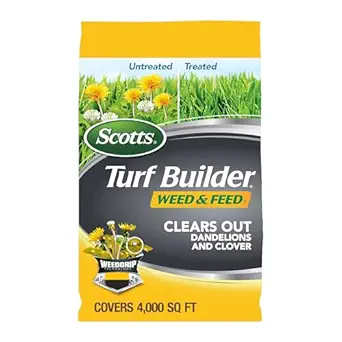 |
| Best Seller A high-volume bestseller chosen again and again | Scotts Turf Builder WinterGuard Fall Weed & Feed, 11.43 lb |  |
The Andersons Premium Weed and Feed 24-0-16 (18 lb)

| Item Form | Granule |
|---|---|
| Coverage | 5,000 sq ft |
| Unit Count | 288 Ounce |
| Active Ingredients | Herbicide, Iron, Nitrogen, Sulfur |
The Andersons Premium Weed and Feed 24-0-16 is a granular lawn product designed to kill broadleaf weeds while feeding turf with a mix of quick- and slow-release nitrogen plus iron for deeper greening. You apply it with a rotary or drop spreader to a dry lawn, following the label spreader settings and the two-step application schedule for best control. It targets over 250 broadleaf weeds and lists compatibility with St. Augustine and other common warm- and cool-season grasses, making it useful for seasonal lawn program maintenance. Practical benefits include combined weed control and extended feeding in one pass and improved lawn color from added iron. Important limitations are geographic restrictions and the need to follow the two-application procedure and post-application watering to activate herbicide; it is also not suitable for dichondra or carpet grass. For performance-focused users, correct spreader calibration and adherence to timing will determine results more than the product alone.
Best for: Homeowners who prioritize visible lawn performance and want a combined weed-control plus feeding product for regular seasonal maintenance of St. Augustine and similar grasses.
Less Ideal for: People managing sensitive or restricted lawns such as dichondra or carpet grass or those located in states where this product is not approved.
- Combines herbicide and fertilizer so you kill weeds while feeding grass in one application
- Includes both quick- and slow-release nitrogen for immediate green-up and longer-lasting feeding
- Contains iron for deeper, faster greening of turf
- Covers up to 5,000 sq ft per bag, suitable for medium-sized yards
- Not approved for sale or use in some states which limits availability
- Requires specific spreader settings and a two-step application schedule for full effectiveness
Verdict: Choose this product if you want a single granular treatment that controls broadleaf weeds and delivers both quick and extended feeding for a noticeably greener St. Augustine lawn.
BioAdvanced 3-in-1 Weed & Feed Granules for Southern Lawns, 10 lb

| Item Form | Granule |
|---|---|
| Coverage | 4,000 square feet |
| Active Ingredients | Dicamba acid, Indaziflam, Penoxsulam |
| Unit Count | 160 Fluid Ounces |
This 3-in-1 granule combines selective herbicides with a slow-release fertilizer for one-step care of St. Augustine and other southern warm-season lawns. Use it with a broadcast or drop spreader when temperatures are 50 to 90 degrees and weeds are actively growing; a single 10 lb bag covers about 4,000 sq ft at the recommended rate. The product kills common southern broadleaf weeds such as dandelion, dollarweed, and clover while feeding and greening turf for roughly three months, and it claims up to six months of prevention against listed grassy and broadleaf weeds. Practical benefits include easy application, targeted chemistry for southern species, and reduced need for separate weed control and fertilizing products. Limitations: it is formulated only for southern turfs (not for northern lawns or edible plants), is restricted from sale in many states, and requires attention to temperature and spreader calibration to avoid damage to sensitive turf or non-target plants.
Best for: Homeowners with St. Augustine or other southern warm-season lawns who want a single-product solution to kill listed weeds, green the turf, and reduce repeat applications during the growing season.
Less Ideal for: Gardeners with cool-season or mixed turf, vegetable gardens, or who need a product approved for use in states where this formulation is restricted should look elsewhere.
- Combined weed control and slow-release fertilizer simplifies seasonal maintenance
- Formulated specifically for southern warm-season grasses including St. Augustine
- Granular form works with broadcast or drop spreaders for even coverage
- Provides up to six months prevention of listed weeds and feeds the lawn for up to three months
- Not intended for northern turf or edible plants and is restricted for sale in many states
- Requires correct application timing and spreader calibration to be safe and effective
Verdict: Choose this product if you want a convenient, single-step granular treatment to kill common southern lawn weeds and feed St. Augustine turf through the season.
Spectracide Weed & Feed 20-0-0 Ready-to-Spray, 32 oz

| Unit Count | 32 Fluid Ounces |
|---|---|
| Item Form | Spray |
| Coverage | 7500 square_feet |
| Active Ingredients | Nitrogen |
Spectracide Weed & Feed 20-0-0 is a hose-end spray that combines a broadleaf weedkiller with a high-nitrogen feed to treat lawns without mixing. You attach the QuickFlip sprayer to a garden hose, spray when weeds are actively growing, and the formula targets dandelion, chickweed, clover, plantain and similar weeds while delivering nitrogen to green up turf. The ready-to-spray design makes application fast for mid-season spot or whole-lawn treatments, and the stated coverage (up to 7,500 sq ft) suits small to medium yards. Important practical points: use on actively growing lawns, water 1–2 days before applying, and avoid application in extreme heat or before rain. Safety precautions are needed because the product can irritate skin and eyes and must be kept away from children and pets. This product is best for straightforward seasonal weed control and fertilization in established lawns rather than for new seedings or sensitive sites where reseeding is planned soon.
Best for: Buyers who want a quick, no-mix solution to reduce visible broadleaf weeds while boosting lawn greenness on an established lawn and who prefer an easy hose-end application.
Less Ideal for: Gardeners planning to seed or sod soon, or those with small specialty lawns that require low-nitrogen or organic treatments should consider other options.
- Ready-to-spray hose-end applicator simplifies application with no measuring or mixing
- High nitrogen formulation feeds lawn while treating broadleaf weeds
- Wide stated coverage that can treat up to 7,500 sq ft
- Targets common broadleaf weeds like dandelion, clover, chickweed and plantain
- Contains ingredients that can irritate skin and eyes so protective gear is required
- Not suitable for newly seeded, sodded, or reseeded areas for at least six months
Verdict: A fast, no-mix hose-end weed-and-feed that kills common broadleaf weeds while giving a strong nitrogen boost to established lawns.
Scotts Turf Builder Weed & Feed 5, 11.32 lb.

| Item Form | Granule |
|---|---|
| Coverage | 4000 square feet |
| Unit Count | 1 Count |
Scotts Turf Builder Weed & Feed 5 is a granular lawn treatment that mixes broadleaf weed control with lawn fertilizer to both kill visible weeds and help the turf fill in. You apply it to a wet lawn when dandelions and other broadleaf weeds are actively growing and temperatures are in the recommended 60°F to 90°F range, using a broadcast, drop, or hand spreader for even coverage; one 11.32 lb. bag treats about 4,000 sq. ft. The formula uses WeedGrip technology and contains 2,4-D and dicamba to target more than 50 listed weeds including dandelion and clover, while delivering nitrogen and potassium to promote greener, thicker grass. Practical benefits are straightforward: weed suppression plus feeding in a single application and clear spreader settings are provided for consistent results. Important limitations to note are application restrictions for certain grass types such as St. Augustine and bentgrass, a requirement to keep the lawn dry for 24 hours after treatment, and that it should not be applied more than twice per year. As with any herbicide, follow label directions and keep people and pets off the treated area until granules settle.
Best for: Buyers who want a dependable, single-application solution to reduce dandelions while feeding their lawn and who prefer clear instructions for consistent application.
Less Ideal for: Those with St. Augustine, bentgrass, carpetgrass, dichondra, or Lippia lawns or gardeners seeking an organic weed control approach should consider alternatives.
- Controls common broadleaf weeds including dandelions and clover
- Includes fertilizer to thicken turf while treating weeds
- Clear spreader settings and coverage guidance for uniform application
- Covers 4,000 sq. ft. per 11.32 lb. bag
- Contains synthetic herbicides (2,4-D and dicamba) so it may not suit organic-only gardens
Verdict: A reliable one-step product to kill dandelions and feed the lawn for buyers who want straightforward, proven results.
Scotts Turf Builder WinterGuard Fall Weed & Feed, 11.43 lb

| Item Form | Granule |
|---|---|
| Coverage | 4000 square feet |
Scotts Turf Builder WinterGuard is a fall granular weed-and-feed formulated to kill common broadleaf weeds such as clover and dandelion while feeding cool- and warm-season grasses. It is applied with a broadcast or drop spreader to a moist lawn on a calm day when temperatures are between 60°F and 90°F. Notable features include WeedGrip Technology to improve granule adhesion to weed leaves, instructions tuned for Scotts spreaders, and coverage sized for about 4,000 square feet per 11.43 lb bag. In practice it simplifies a seasonal task by combining weed control and fertilization in one application, which helps build root strength and recover summer stress heading into winter. Important limitations are that it is labeled for specific grass types only and must not be used on St. Augustinegrass, bentgrass, or several groundcover species, and you must avoid watering for 24 hours after application for best effect. For homeowners who want a dependable, single-step fall treatment for typical lawn weeds, this performs as advertised; those with unsupported grass types or very large lawns will need a different product or multiple bags.
Best for: Homeowners who prioritize a reliable, low-effort fall solution to eliminate clover and other broadleaf weeds while feeding their lawn for winter hardiness.
Less Ideal for: Properties planted with unsupported turf species or buyers who need coverage for very large lawns without buying multiple bags.
- Kills over 50 listed lawn weeds including clover and dandelion
- Combined fertilizer and weed control saves an extra application
- WeedGrip Technology helps granules stick to moist weed leaves for better uptake
- Clear application guidance for use with Scotts spreaders and recommended timing
- Labeled for specific grass types only and should not be used on St. Augustinegrass, bentgrass, or certain groundcovers
Verdict: Choose this product if you want a dependable one-step fall treatment that both kills clover and feeds your lawn to build stronger roots for spring.
Choosing the Right Weed and Feed for Couch: Key Factors to Consider
Herbicide Selectivity and Target Weeds
Herbicide chemistry determines which weeds are controlled and how safe the product is for couch grass. Look for selective broadleaf herbicides with documented efficacy against dandelions, clover, plantain, and nutgrass variants common in warm-season lawns.
Different active ingredients act on plant systems in different ways. Choosing a product with the right mode of action reduces the likelihood of missing persistent weeds and helps avoid damage to couch stolons. Also consider whether the formula lists tolerance for closely related warm-season grasses to minimize scorch or thinning.
Fertilizer Formulation and Release
Fertilizer type affects how quickly turf responds and how long color and vigor improvements last. Slow-release nitrogen gives steadier growth and reduces the risk of forcing tender shoots that can be damaged after herbicide application.
Check N-P-K ratios and the proportion of soluble versus controlled-release nitrogen. A balanced approach supports root recovery and stolon production without promoting excessive top growth that can stress the lawn in hot weather.
Timing and Seasonal Suitability
When you apply weed-and-feed matters for both efficacy and turf safety. Apply during active growth of both couch and the target weeds; this is typically late spring to early autumn in warm climates when couch is actively spreading.
Avoid applications during very hot spells or drought stress. Many products recommend waiting a certain number of days after fertilizing or mowing. Compliance with timing guidance reduces the risk of scorch and improves herbicide uptake by weeds.
Application Method and Coverage
Broadcast spreaders and hose-end or pump sprayers are common delivery methods. Even coverage is essential because missed strips can allow weeds to persist and over-applied bands can damage turf. Consider the granule size and flow characteristics for spreaders or the spray pattern and dilution instructions for liquids.
Ease of calibration, clear label directions, and compatibility with standard garden equipment all reduce application errors that lead to poor results or turf injury.
Turf Recovery and Residual Effects
After treatment you want the couch to recover quickly and fill any gaps, not thin out. Some herbicides have residual soil activity that suppresses weed germination but can also slow reseeding or overseeding efforts. Choose a product whose residual period matches your lawn management plan.
If you plan to overseed or repair damaged patches, check label guidance on waiting periods after application. Residual effects also influence how often you need to retreat and whether follow-up spot treatments are necessary.
Environmental and Safety Considerations
Consider runoff risk, labeled buffer zones near water, and safety directions for pets and children. Many weed-and-feed products have specific re-entry intervals, irrigation restrictions, and measures for minimizing off-target movement.
Choosing a product with clear, practical safety instructions and following them reduces environmental impact and keeps household members safe during and after application.
When to Treat Couch Lawns
Treat couch when the grass is actively growing and weeds are green and metabolically active. This timing improves herbicide uptake and the likelihood of good control. For warm-season lawns this typically means late spring through early autumn.
Avoid treating during heat waves or when the lawn is drought stressed. If rain is expected within a few hours of application, check label directions because rain can wash away granules or reduce spray efficacy. Plan applications on calm, mild days and adjust mowing schedule per the product instructions.
- Best results when soil temperatures support couch growth
- Delay treatment if lawn shows heat or drought stress
- Follow label re-entry and irrigation timing
How to Apply Granular Versus Liquid Formulas
Granular spreads are measured and applied with a broadcast or drop spreader. Walk at a consistent pace, overlap passes slightly, and avoid dumping product in one spot. Calibrate your spreader to the recommended rate before you start to prevent uneven feeding or herbicide burn.
Liquid formulations are mixed to label rates and applied with a pump or hose-end sprayer. Maintain even spray pressure, use appropriate nozzles for coarse droplets if recommended, and rinse equipment after use. Liquids can give more uniform contact but require careful mixing and coverage.
- Calibrate equipment before treating
- Apply evenly and avoid streaking
- Rinse application gear according to instructions
Managing Mowing, Irrigation, and Post-Treatment Care
Adjust mowing so you do not remove more than one-third of leaf height before or after application, unless the label says otherwise. Short mowing immediately before treatment can reduce leaf area and herbicide uptake.
Irrigation timing differs by product. Some granules require watering-in while others warn against irrigation for a set period. Follow the product label to balance activation and turf safety. After herbicide application, monitor the lawn weekly and be ready for targeted spot treatments if resistant weeds persist.
- Mow higher to promote recovery if recommended
- Follow irrigation wait times exactly
- Inspect lawn after 7 to 14 days for signs of control
When Spot-Treatments Are a Better Option
If weeds are limited to small patches, spot-treating with a targeted herbicide can avoid unnecessary exposure of the entire lawn to chemicals. Spot treatments reduce risk to adjacent plants and limit fertilizer overload in areas that do not need it.
Spot treatments are also useful after observing localized damage or persistent weeds following a broadcast application. Use labeled spot-treat products that are safe on couch and follow mixing and application limits to prevent turf injury.
- Spot-treat dense or isolated weed patches
- Avoid overlapping spot treatments with broadcast rates
- Check label for maximum application frequency
Integrating Cultural Controls with Chemical Treatments
Good cultural practices reduce the need for frequent chemical intervention. Regular dethatching, appropriate fertilization, correct mowing height, and adequate irrigation encourage dense couch growth that crowds out weeds.
Use weed-and-feed as one part of an overall program. Combine it with seasonal maintenance tasks like core aeration and soil testing to address underlying fertility or compaction issues that allow weeds to establish.
- Soil testing guides fertilizer choices
- Aeration improves root health and herbicide penetration
- Dense, healthy turf minimizes future weed outbreaks
How We Chose the Best Weed and Feed for Couch
We shortlisted products that match the specific needs of couch lawns by applying practical garden-focused filters. We prioritized selective herbicide chemistry known to target broadleaf weeds common in warm-season turf while minimizing risk to stolons and bermudagrass-type grasses. Fertilizer formulation was evaluated for slow-release nitrogen content and N-P-K balance that supports recovery without forcing excessive top growth. Application flexibility was important, so we favored products with clear spreader or sprayer instructions and tolerances for typical home gardener application windows. Persistence and residual weed control were assessed to balance season-long protection against repeated surface injury. We also checked product directions for safe timing relative to mowing, irrigation, and temperature to avoid turf stress. Excluded items included nonselective weed killers, products formulated only for cool-season lawns, and specialty spot-treatment blends that lack a fertilizer component. The selection focuses on options intended for broadcast application to established couch turf and that include both weed control and feeding in one treatment.
FAQ
Can I use weed-and-feed on newly established couch lawns?
Usually you should wait until couch is well established before using a combined weed-and-feed. Newly established stolons and seedlings are more sensitive to herbicides and high fertilizer rates. Check product labels for specific establishment interval recommendations.
Will weed-and-feed harm nearby garden beds or ornamentals?
There is risk of off-target movement. Granules or spray drift can damage broadleaf plants and ornamentals, so protect beds and use buffer zones. Rinse footwear and equipment after application to avoid transferring product to garden plants.
How often should I apply weed-and-feed to maintain couch lawns?
Frequency depends on the product residual and local weed pressure. Many programs use one to two applications per growing season for broad suppression, combined with spot treatments as needed. Always follow label limits on maximum annual applications.
Can I overseed or repair patches after applying weed-and-feed?
Residual herbicides in some formulations can inhibit seed germination. If you plan overseeding or repair, read label wait periods closely and schedule turf renovation activities outside the prescribed residual window to avoid establishment failure.
Is it safe to apply weed-and-feed when it will rain soon?
Timing relative to rain varies by formulation. Some products need watering-in to activate while others require dry periods to avoid wash-off. Check label instructions for rainfall windows to ensure efficacy and minimize runoff.
Final Verdict
Choose a weed-and-feed for couch by prioritizing selective herbicide chemistry that controls the broadleaf weeds common in warm-season lawns while protecting stolons and encouraging steady recovery. Match the fertilizer release profile to your maintenance schedule and use application methods that ensure even coverage without overfeeding. Balance residual weed suppression with your overseeding or repair plans, and combine chemical control with good cultural practices to reduce future outbreaks. When in doubt, follow label timing and equipment calibration guidance to protect your couch lawn and get predictable results.
