

Note: This article contains affiliate links. If you click on these links and make a purchase, I may earn a small commission at no extra cost to you. This helps support my research and content. Read my full affiliate disclosure here.
Choosing the right drip emitter matters because these small components control how much water each plant gets, how often you need to refill reservoirs or adjust timers, and how well your irrigation copes with debris or hard water. In gardens, containers, and raised beds a consistent, clog-resistant emitter prevents under- or over-watering that can stress plants or encourage disease. This guide presents five shortlisted drip emitters suited to a range of garden setups and flow requirements. We evaluate each option against flow consistency, clog resistance, and installation flexibility so you can match an emitter to your soil type, water quality, and planting layout.
Top Picks at a Glance
| Best Overall The best all-around choice for most situations | Raindrip PC8010B 2 GPH Pressure Compensating Drippers (10-Pack) |  |
| Best Quality Built to a higher standard if you want something more solid | Rain Bird Drip Irrigation Repair & Expansion Kit (102-Piece) |  |
| Best Value The sweet spot between price and what you get | Raindrip PC8050B Pressure‑Compensating 2 GPH Drip Emitters, 50-Pack | |
| Highest Rated A top-rated pick with lots of positive feedback | Rain Bird 2 GPH Pressure-Compensating Dripper |  |
| Most Popular A crowd favorite that many people choose with confidence | Rain Bird SW20-30PS 2 GPH Drip Emitter, 30-Pack | 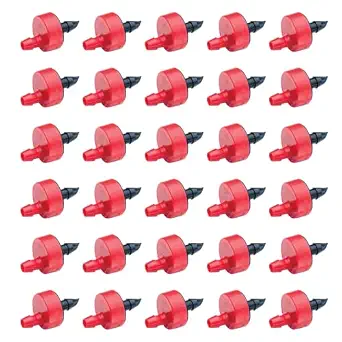 |
Raindrip PC8010B 2 GPH Pressure Compensating Drippers (10-Pack)

| Flow rate | 2 GPH |
|---|---|
| Quantity | 10 per pack |
| Compatible tubing | 1/4 in. feeder or 1/2, 5/8, 0.710 in. supply tubing |
| Material | Polyethylene with UV inhibitors |
These Raindrip PC8010B emitters provide a reliable, steady 2 GPH output regardless of moderate pressure changes, so each plant receives consistent water whether the emitter is near the faucet or at the far end of tubing. They install by attaching to 1/4-inch feeder line or punching directly into 1/2-, 5/8- or 0.710-inch supply tubing, making them easy to add when building or expanding a drip layout. The internal turbulent-flow design helps flush sediment and reduces clogging compared with simple non-compensating drippers. Made from polyethylene with UV-treated components, they are intended for landscape shrubs, individual trees and container plants or hanging baskets. The main limitation is the fixed 2 GPH rate and pack size; if you need different flow rates for mixed plant needs you will need other emitter models or to pair with pressure regulators and fittings. These are a practical choice when you want consistent per-plant delivery and low-maintenance operation in a typical home drip system.
Best for: Gardeners who want dependable, low-maintenance emitters to deliver uniform watering to individual shrubs, trees, pots, or hanging baskets across a small-to-medium drip layout.
Less Ideal for: Growers who need adjustable flow rates per plant or a single pack solution for widely varying water requirements should consider adjustable emitters or mixed-rate packs.
- Pressure-compensating design maintains consistent 2 GPH output across varying inlet pressures
- Self-cleaning turbulent flow reduces clogging from sediment
- Compatible with common tubing sizes and easy to punch into supply lines
- UV-treated polyethylene construction for outdoor durability
- Fixed 2 GPH flow rate limits flexibility for plants with different water needs
Verdict: Choose these when you need simple, low-maintenance emitters that deliver a steady 2 GPH to each plant for consistent drip watering.
Rain Bird Drip Irrigation Repair & Expansion Kit (102-Piece)

| Number of Pieces | 102 |
|---|---|
| Hose Length | 100 feet |
| Material | Polyethylene |
| Power Source | Manual |
This Rain Bird kit supplies the parts most gardeners need to repair or extend a 1/4" drip irrigation run. The kit is typically used to replace damaged tubing, swap clogged emitters, add branches with tees and couplers, or anchor lines with stakes; it stores everything in a compact pouch for easy access. Notable items include 100 ft of self-dispensing 1/4" distribution tubing, 40 spot-watering emitters in three flow rates (0.5, 1.0 and 2.0 GPH), barbed tees and couplings, tubing plugs, and Rain Bird’s emitter installation/removal tool. For performance-focused users the pressure-compensating emitters and multiple flow options make it straightforward to tune output for different plants, and the universal barbed fittings work with other 1/4" components. Practical benefits are fast on-site repairs, predictable emitter flow choices, and a tidy kit that keeps parts organized. Limitations are that the kit is focused on 1/4" distribution lines only and does not include a pressure regulator, filter, or 1/2" mainline components, so you will need those elsewhere in a high-performance system.
Best for: Gardeners or small-scale landscapers who prioritize reliable, tunable irrigation performance and want a ready kit for fast repairs and system expansion.
Less Ideal for: Users building a new system that requires 1/2" mainline components, pressure regulation, or filtration should choose a more complete starter kit instead.
- Comprehensive 102-piece set covers common repair and expansion needs for 1/4" drip lines
- Includes 100 ft of self-dispensing 1/4" tubing for quick layout and extension
- Emitters in three flow rates (0.5, 1.0, 2.0 GPH) let you match output to plant water needs
- Emitter installation/removal tool speeds installation and maintenance
- Organized pouch with individual bags keeps parts accessible on the job
- Only supports 1/4" distribution tubing and does not include pressure regulators or filters
Verdict: A compact, performance-minded repair and expansion kit that gives you the parts and emitter flow options needed to quickly tune and maintain 1/4" drip systems.
Raindrip PC8050B Pressure‑Compensating 2 GPH Drip Emitters, 50-Pack
| Unit Count | 50 Count |
|---|---|
| Flow Rate | 2 GPH |
| Operating Pressure Range | 10-60 PSI |
| Material Type | Polyethylene, Silicone |
The Raindrip PC8050B is a simple, workmanlike pressure‑compensating dripper intended to provide a consistent 2 gallons‑per‑hour flow to individual plants. Install each unit at the end of a 1/4" feeder line or punch it into 1/2" supply tubing to water shrubs, container plants, or hanging baskets. Its pressure‑compensating design keeps output steady across a wide operating range (10 to 60 PSI), which makes long runs, slopes, and mixed‑pressure layouts easier to design. The turbulent flow chamber helps reduce clogging from sediment and the molded polyethylene construction is durable enough to bury or surface‑mount. You get 50 emitters in one pack, which is convenient for outfitting a small to medium garden without buying singles. Limitations are that these are fixed 2 GPH emitters so they are not adjustable on the fly and you will need different flow values if plants have very different water needs. For users who want adjustable flow or very low‑flow options, supplementary emitters are required.
Best for: Gardeners who want a reliable, low‑maintenance emitter to give consistent watering to individual shrubs, pots, or beds and who prioritize predictable output over per‑plant adjustment.
Less Ideal for: People who need variable flow per plant or micro‑adjustments on each emitter should choose adjustable drippers or a mixed emitter kit instead.
- Pressure‑compensating design maintains a consistent 2 GPH across 10–60 PSI for even watering on long runs and slopes
- Turbulent flow internal design reduces sediment clogging for more reliable performance
- Durable polyethylene construction can be buried or surface‑mounted and is easy to install
- 50‑pack provides enough emitters to set up multiple plants or a small garden without repeat purchases
- Fixed 2 GPH output with no on‑unit adjustment, requiring different emitters for other flow rates
Verdict: Choose these emitters when you need dependable, clog‑resistant 2 GPH output across varying pressures for a straightforward drip layout.
Rain Bird 2 GPH Pressure-Compensating Dripper

| Flow Rate | 2 gph |
|---|---|
| Material | Plastic |
| Inlet Size | 1/4 in. |
| Model Name | SW20-75 |
The Rain Bird 2 GPH dripper is a pressure-compensating emitter designed to deliver a consistent 2.0 gallons per hour to plant root zones. It is typically installed in drip irrigation lines or 1/4-inch tubing to water shrubs, garden plants, small trees, and medium containers where steady slow delivery is needed. The pressure-compensating mechanism helps maintain near-constant flow across typical yard pressure variations so adjacent plants receive similar amounts even on uneven terrain. Practical benefits include precise root-zone watering that reduces runoff and overwatering, simple inline installation, and suitability for landscape beds and containers. Because this listing is for a single plastic emitter, users will need multiple units and basic tubing fittings for a full system. The small plastic body is lightweight and easy to handle but may be less durable than heavier commercial designs in high-traffic or UV-intense environments. For reliability-focused installs it performs well at keeping flow uniform, but plan on stocking spares and checking emitters periodically for clogging in areas with hard water or sediment.
Best for: Buyers who prioritize consistent, dependable delivery of water to individual plants and want an easy-to-install emitter for beds, containers, or small landscape runs.
Less Ideal for: Those building heavy-duty commercial irrigation systems or users who need a bulk pre-assembled manifold rather than individual emitters.
- Pressure-compensating design keeps flow close to 2.0 GPH across typical pressure variations
- Delivers targeted root-zone watering that reduces runoff and conserves water
- Simple 1/4-inch inlet fits standard drip tubing for easy installation
- Lightweight plastic is easy to handle and replace when needed
- Sold as a single emitter so large installations require buying many units
- Plastic body may be less UV- and impact-resistant than heavier-duty emitters
- Can clog over time in systems with hard water or sediment without filtration
Verdict: Choose this Rain Bird emitter when you need a simple, pressure-compensating 2 GPH solution to reliably deliver consistent water to individual plants.
Rain Bird SW20-30PS 2 GPH Drip Emitter, 30-Pack

| Volume Capacity | 2 Gallon Per Hour |
|---|---|
| Fit Type | Self-piercing |
| Maximum Pressure | 50 psi |
| Unit Count | 30 Count |
| Material | Plastic |
The Rain Bird SW20-30PS are pressure-compensating drip emitters sold in a 30-pack that deliver a steady 2.0 gallons per hour to individual plants. They are designed for direct insertion into 1/2" or larger drip tubing via a self-piercing barb or for use with 1/4" tubing when you need precise placement near roots. The pressure-compensating mechanism holds flow uniform across 15 to 50 psi so plants along the same run get similar water regardless of distance from the source. Large internal passages and a self-flushing action reduce clogging, and the UV and chemical-resistant plastic is built for outdoor durability. Installation is simple by hand or faster with Rain Bird insertion tools. Limitations to note are the fixed 2.0 GPH flow rate for this SKU and the need for a filter and pressure regulation in most systems to prevent erosion and debris issues. These emitters work best as part of a properly filtered, pressure-regulated drip setup rather than as a standalone solution for high-debris supplies.
Best for: Buyers who prioritize reliable, proven components and want emitters that deliver consistent watering across a run for garden beds, shrubs, or medium containers backed by strong user feedback.
Less Ideal for: People who need adjustable flow at each plant or who lack a filtered, pressure-regulated water source should consider alternative emitters or complementary system parts.
- Pressure-compensating design keeps flow consistent across a wide pressure range (15–50 psi)
- Self-piercing barb and barbed ends allow easy insertion into 1/2" or 1/4" tubing for flexible placement
- Large passages and self-flushing action reduce clogging risk
- Durable UV and chemical-resistant plastic for outdoor longevity
- Comes in a 30-pack for multiple plants or a small garden run
- Fixed 2.0 GPH flow rate limits per-plant customization without buying other flow options
- Requires a filter and pressure regulator to perform as intended and prevent issues
Verdict: Choose these Rain Bird 2 GPH emitters when you want dependable, pressure-compensated spot watering across a small to mid-size drip run.
Choosing the Right Drip Emitter: Key Factors to Consider
Flow Rate and Output Precision
The emitter's flow rate, typically expressed in gallons or liters per hour, determines how quickly soil around a plant wets and how long irrigation cycles must run. Precise low-flow emitters suit small pots and drought-tolerant ornamentals, while higher-flow options are better for thirsty vegetables or trees.
Output precision also affects how evenly moisture is distributed across a bed. If emitters vary widely from their labeled rate, you will need to monitor soil moisture more frequently and may end up overcompensating with longer run times. Choose emitters with consistent calibrated output to match plant root zone requirements and irrigation timing.
Clogging Susceptibility
Emitters draw directly from tubing that can carry sediment, mineral scale, and organic debris. Designs with built-in turbulence paths, larger internal passages, or self-flushing features are less likely to clog. When water quality is poor or you use surface-fed systems, clog resistance becomes a primary concern.
Also consider whether the emitter can be disassembled or backflushed for cleaning. Even the most clog-resistant emitter benefits from a coarse prefilter or periodic maintenance; plan for access and serviceability when laying out your system.
Compatibility with Tubing and Layout
Different emitters attach in-line, snap into tubing, or stake onto lateral lines. Compatibility with common tubing diameters and the ability to install emitters mid-run or at line ends gives you layout flexibility. For container gardens, look for options that allow short drop lines or direct connection to small pots without excessive fittings.
Layout compatibility also includes how easily emitters can be repositioned as plants grow or beds are reworked. Removable or barbed emitters that pull out without cutting tubing make seasonal changes simpler and reduce waste.
Pressure Tolerance and Range
Emitters are designed to operate within a pressure window. Too high pressure can cause misting and uneven distribution, while too low pressure can reduce flow or deactivate pressure-compensating features. Match emitters to the expected operating pressure of your irrigation zone and include pressure regulators where needed.
For systems with elevation change or long lateral runs, choose emitters with a broad operating range or use pressure-compensating designs to maintain uniform output across the layout.
Material Durability and UV Resistance
Emitters spend seasons outdoors exposed to sunlight, temperature swings, and physical disturbance. Materials that resist UV degradation and cracking will last longer and avoid brittle failure during winter or when moved. Check for robust barbs and stake connections that resist being pulled loose when adjusting lines.
Durable materials also reduce micro-leaks and help maintain intended flow rates over time. While no emitter is immune to wear, those made from stabilized plastics or with reinforced fittings minimize replacement frequency.
Serviceability and Maintenance Needs
Consider how easy it is to clean, test, or replace emitters. Systems that allow individual emitters to be removed and inspected simplify troubleshooting when a zone underperforms. Some emitters include small screens or snap-apart bodies for clearing sediment, which saves time compared with cutting tubing to access a clogged inline part.
Also think about maintenance frequency based on water source. If you use well water or reclaimed sources, plan for routine flushing and filter checks. Simpler, user-serviceable emitters reduce long-term upkeep and unexpected irrigation gaps.
Matching Emitters to Plant Types
Different plants need different water volumes and wetting patterns. Use low-flow emitters for small pots, succulents, and seedlings to avoid waterlogging. For larger shrubs, vegetable beds, or groups of thirsty perennials, step up to higher-flow emitters or use multiple emitters per root ball to spread moisture evenly.
For trees and deep-rooted plants, consider placing several emitters around the root zone at varying distances to encourage a broad, deep root system rather than a single surface-saturated spot.
- Pots and small containers: 0.5 to 2 liters per hour typical
- Vegetable rows: 2 to 8 liters per hour depending on crop
- Trees and shrubs: multiple emitters placed radial around root flare
Installing Emitters for Easy Maintenance
Plan emitter placement with future access in mind. Leave short slack loops in tubing so emitters can be pulled up for inspection without cutting lines. Use stakes or clips to keep emitters positioned at soil level and to avoid magnets or soil compaction from moving them.
Label zones or mark tubing runs so you can quickly identify which emitter serves which planting. That saves time when adjusting flow or diagnosing dry spots.
- Install emitters slightly above soil surface to check flow visually
- Group similar plant water needs on the same zone for easier scheduling
Dealing with Hard Water and Mineral Buildup
Hard water raises the risk of mineral deposits inside small passages. If your water is hard, expect more frequent cleaning and consider inline filters sized to catch grit before it reaches emitters. Periodic soaking or flushing of emitters can remove scale and restore flow.
When mineral buildup is severe, magnetic or chemical treatments do not replace mechanical cleaning. Opting for larger passage emitters or ones designed for easy disassembly reduces service time.
- Use a coarse prefilter at the zone start
- Run periodic high-flow flushes to push sediment out of lines
Seasonal Use and Winter Care
In climates with freezing winters, drain lines and remove emitters from low spots to prevent cracking. If you run a winterized system, consider storing removable emitters indoors between seasons to extend lifetime.
For year-round irrigation in mild climates, inspect emitters at the start and end of peak seasons. Replace any showing cracks or persistent clogging to maintain even distribution across the system.
- Drain low points before freeze events
- Store delicate or removable parts out of UV exposure during off-season
Testing and Calibrating Flow
After installation, test each zone by collecting emitter output in small containers for a set time to verify labeled flow rates. This simple test reveals clogged emitters and helps balance run times between zones.
Adjusting run duration rather than emitter choice can compensate for minor flow differences, but consistent calibration saves water and keeps plants healthy.
- Use a stopwatch and small cup to measure actual output
- Re-test after a few weeks to confirm stability under real conditions
How We Chose the Best Drip Emitter
We prioritized functional criteria that reflect how drip emitters behave in real gardens. Key evaluation dimensions included consistent flow output under typical micro-irrigation pressures, resistance to common clogging sources like sediment and algae, and installation versatility for different tubing sizes and planting positions. We also measured long-term durability in outdoor conditions including UV exposure and freeze-thaw cycles, plus user-level serviceability such as cleanable filters or replaceable parts. Excluded items included devices that are primary pressure regulators, inline filters, or distribution manifolds rather than individual emitters. We also filtered out emitters that only work with proprietary tubing sizes or that require specialized fittings not commonly available to home gardeners. The resulting selections balance reliable water delivery, ease of maintenance, and compatibility so the listed emitters perform across containers, raised beds, and landscape plantings.
FAQ
How often should I inspect drip emitters?
Inspect emitters at least once a month during the irrigation season and after any heavy rain or system work. Monthly checks catch clogs, dislodged emitters, and low-flow issues before plants show stress.
Can I use drip emitters with rainwater or well water?
Yes, but water quality affects maintenance. Rainwater and well water often carry more organic matter or sediment than municipal water, so use a coarse filter and plan for more frequent emitter cleaning.
When should I use pressure-compensating emitters?
Choose pressure-compensating emitters when you have long lateral runs or significant elevation change between emitters. They help maintain uniform output across the zone despite pressure differences.
Is it better to use one high-flow emitter or several low-flow ones around a plant?
Several lower-flow emitters spaced around a root zone provide more even wetting and encourage deeper root growth. A single high-flow emitter can create a concentrated wet spot and shallow rooting.
How do I clear a clogged emitter without replacing it?
Remove the emitter if possible and rinse it with clean water, or soak it briefly in vinegar to dissolve mineral deposits. Use a gentle backflush through the tubing to dislodge sediment before reinstalling.
Can I combine drip emitters and drip tape on the same zone?
You can combine them but be mindful of differing flow characteristics and pressure needs. Keep emitters and tape on separate manifolds or adjust pressure and scheduling to suit the most sensitive component.
Final Verdict
Pick emitters that match the needs of your plants and the realities of your water source. Prioritize consistent flow rates for even watering, clog-resistant designs if your water carries sediment, and materials that stand up to sun and temperature swings. Tradeoffs are common: very precise low-flow emitters can demand more maintenance, while larger-passage emitters tolerate poor water but may deliver more water than delicate plants need. Choose based on plant type, tubing layout, and how much time you want to spend on upkeep, and you will get steady, efficient irrigation from your drip system.
