

Note: This article contains affiliate links. If you click on these links and make a purchase, I may earn a small commission at no extra cost to you. This helps support my research and content. Read my full affiliate disclosure here.
Getting the right soil mix for snake plants changes how they grow and how often you need to water. These plants need a mix that sheds excess moisture quickly but still keeps enough organic material to supply nutrients and anchor roots. In this guide we shortlisted the top soil mixes optimized for snake plant conditions and tested criteria important to real gardeners. We evaluate drainage, aeration, nutrient retention, and ease of repotting so you can pick a mix that matches your watering style and indoor conditions. Read on for straightforward guidance before you refresh a pot.
Top Picks at a Glance
| Best Overall The best all-around choice for most situations | Omitgoter Organic Snake Plant Potting Soil, 4 qt |  |
| Best Quality Built to a higher standard if you want something more solid | Leaves & Soul Snake Plant Potting Soil, Premium 8.2-Quart Mix |  |
| Best Value The sweet spot between price and what you get | Leaves & Soul Professional Snake Plant Potting Soil, 2.2 Quart |  |
| Best Budget The cheapest option that still gets the job done reliably | Doter Premium Snake Plant Potting Mix, 1 qt |  |
| Highest Rated A top-rated pick with lots of positive feedback | Gardenera Snake Plant Potting Mix, 1 Quart |  |
| Most Popular A crowd favorite that many people choose with confidence | Perfect Plants Snake Plant Soil, 4 qt Coco Coir & Bark Potting Mix |  |
| Best Seller A high-volume bestseller chosen again and again | Gardenera Snake Plant Potting Mix (5 Quart) |  |
Omitgoter Organic Snake Plant Potting Soil, 4 qt

| Volume | 4 quarts |
|---|---|
| Style Name | Succulent, Well-draining |
| Unit Count | 128 Ounce |
| Ingredients | Coconut fiber, peat, perlite, bark, humus castings |
| pH | 6.0-6.5 |
This 4 quart Omitgoter potting soil is a pre-mixed, organic blend designed specifically for snake plants and other succulents. It combines coconut fiber, peat, perlite, bark, and humus castings with a slow‑release organic fertilizer to give roots good aeration and steady nutrition without risking fertilizer burn. The mix targets a slightly acidic pH around 6.0 to 6.5 and is described as well draining, which helps prevent root rot when you repot into terra cotta, ceramic, or plastic containers. For practical use you can unpack and pot immediately, and the coarse components reduce compaction so watering cycles are more forgiving. The main limitations are the small 4 quart volume, which is fine for individual pots or small collections but requires multiple bags for larger projects, and the reliance on peat in the formula if you prefer peat‑free mixes. If you want a straightforward, plant‑specific medium for healthier snake plant roots and fewer watering headaches, this mix delivers what it promises.
Best for: Buyers who want a convenient, plant‑specific potting medium that reduces overwatering issues and supports healthy snake plant growth with minimal mix preparation.
Less Ideal for: Gardeners who need bulk soil for many pots or who prefer a peat‑free formulation should consider larger bags or alternative mixes tailored to those preferences.
- Formulated for succulents with coarse ingredients that improve drainage and reduce compaction
- Contains slow‑release organic fertilizer to supply steady nutrients without burning roots
- pH optimized (6.0–6.5) to aid nutrient uptake and reduce leaf yellowing
- Ready to use out of the bag for quick repotting in most container types
- 4 quart bag is small for larger plants or multiple repots
- Includes peat which some growers prefer to avoid for environmental or moisture reasons
Verdict: If you want a no‑fuss, well‑draining organic mix that helps prevent root rot and supports steady growth in snake plants, this 4 qt Omitgoter soil is a practical choice.
Leaves & Soul Snake Plant Potting Soil, Premium 8.2-Quart Mix

| Brand Name | Leaves and Soul |
|---|---|
| Style Name | Snake Plant Soil (8.2 Quarts) |
| Volume | 8.2 quarts |
| Made in | USA |
Leaves & Soul Snake Plant Potting Soil is a prepared potting mix designed for repotting and maintaining indoor snake plants. It is used straight from the bag to fill containers with drainage, and the blend of peat moss, coco coir, perlite, and dolomite aims to keep the root zone airy while holding enough moisture for normal growth. In practice the mix helps prevent prolonged saturation that causes root rot and provides a loose structure that supports root expansion and fertilizer uptake. The resealable 8.2 quart bag makes storage between projects simple and the formulation is suitable for newly potted plants, established specimens, and divisions. Limitations to note are that the product is a general-purpose ready mix rather than a tailored fertilizer regimen, so growers who want pre-charged slow-release nutrition or a custom pH adjustment will need to add amendments. Also soil handling precautions are advised to avoid inhalation or skin contact during repotting.
Best for: Buyers who prioritize healthy root environment and consistent performance when repotting or maintaining snake plants and who want a reliable, ready-to-use mix that minimizes overwatering issues.
Less Ideal for: Growers seeking a soil preloaded with long‑term fertilizer, specific pH adjustment, or custom blends for other specialty plants should consider a different or amended mix.
- Formulated for fast drainage to reduce risk of root rot in snake plants
- Balanced mix of peat moss, coco coir, perlite and dolomite for aeration and moisture retention
- Ready-to-use and resealable 8.2 quart bag for convenient repotting and storage
- Does not include long‑term slow‑release fertilizer or specific nutrient charges
Verdict: If you want a ready-to-use, fast-draining mix that prioritizes root aeration and moisture control for snake plants, this 8.2‑quart blend delivers reliable, performance-oriented results.
Leaves & Soul Professional Snake Plant Potting Soil, 2.2 Quart

| Brand Name | Leaves and Soul |
|---|---|
| Volume | 2.2 quarts |
| Style Name | Snake Plant Soil (2.2 Quarts) |
| Made in | USA |
This 2.2 quart Leaves & Soul soil mix is built for repotting and maintaining snake plants by combining peat moss, coco coir, perlite, and dolomite into a loose, fast-draining medium. Use it straight from the resealable bag when repotting pups, newly purchased plants, or mature specimens to improve root aeration and reduce the risk of prolonged saturation that causes root rot. The blend retains moderate moisture while letting excess water escape, which helps plants that store water in their leaves without needing constant watering. The packaging is convenient for small projects and includes a resealable closure for storage between uses. Important limitations are the small bag size for larger pots or multiple plants and the safety note to avoid inhalation or skin contact during handling. For growers who prefer to custom-blend their mixes, this ready mix may be less flexible than buying components separately, but it delivers a straightforward, low-effort option for most indoor snake-plant repotting tasks.
Best for: Buyers who want a low-effort, purpose-built soil for snake plants and prefer a ready-made mix that improves drainage and root aeration without custom blending.
Less Ideal for: People repotting many large containers or those who prefer to create custom soil blends from individual components.
- Formulated for snake plants with peat moss, coco coir, perlite, and dolomite to balance drainage and moisture retention
- Ready-to-use in a resealable bag for convenient small repotting jobs
- Fast-draining structure helps reduce risk of root rot in drought-tolerant houseplants
- Made in the USA and intended for both beginner and experienced indoor growers
- Single 2.2 quart bag is small for larger pots or multiple repots
- Contains peat-based materials and handling warnings for dust inhalation and skin contact
Verdict: A convenient, ready-to-use fast-draining potting mix that simplifies repotting and care for snake plants.
Doter Premium Snake Plant Potting Mix, 1 qt

| Brand Name | Doter |
|---|---|
| Unit Count | 32 Ounce |
| Item Type Name | Garden soil |
| Volume | 1 quarts |
This 1 quart Doter potting mix is blended specifically for snake plants and other indoor succulents, delivering a balance of drainage and moisture retention that reduces the risk of root rot while still holding enough water for low-maintenance care. It is sold ready to use so you can top up small pots or repot a single plant without mixing amendments. The product description and brand notes emphasize aeration, organic matter and nutrients to promote root development and healthy foliage, and the package size makes it convenient for testing in a few containers or for individual houseplants. Because it is a small 1 qt unit the mix is best for potting or refreshing single plants rather than large-scale projects. Also, handling dry mix can create dust so dampening before use is advisable. For budget-minded buyers the small size limits cost per plant but makes it easy to try a plant-specific blend without committing to a large bag.
Best for: Buyers who want a small, plant-specific soil blend to repot one or a few snake plants without mixing amendments and who prioritize convenience and low initial cost.
Less Ideal for: Gardeners repotting multiple large plants or building custom potting mixes who need bulk quantities or full ingredient transparency.
- Formulated to balance drainage and moisture retention for snake plants
- Ready-to-use mix that saves time versus blending your own soil
- Nutrient-rich composition designed to promote root development
- Convenient 1 quart size for repotting single plants or testing a new mix
- Small 1 qt volume is not cost-effective for multiple or large pots
- No detailed ingredient proportions provided to compare with other mixes
Verdict: A convenient, ready-to-use 1 qt soil mix made for snake plants that lets budget-conscious buyers repot or top up individual plants without mixing their own blend.
Gardenera Snake Plant Potting Mix, 1 Quart

| Brand Name | Gardenera |
|---|---|
| Unit Count | 32 Ounce |
| Volume | 1 quarts |
This one-quart Gardenera mix is a ready-to-use potting medium designed specifically for snake plants. The blend of peat moss, perlite, lime, and earthworm castings gives it a light, airy texture that promotes rapid root development while draining excess water to reduce root rot risk. It is typically used for repotting small to medium snake plants or refreshing topsoil in containers; its pre-mixed format saves time compared with assembling components yourself. Notable features include extra perlite for aeration, organic-friendly ingredients, and a small-batch hand-mixed production that aims for consistent composition. Practical benefits include improved drainage, easier transplanting, and a nutrient boost from worm castings that supports steady growth. Important limitations are the small 1-quart volume, which means multiple bags are required for larger pots, and the peat-based formula which requires careful moisture monitoring to avoid over-drying or environmental concerns tied to peat use. Safety notes advise avoiding inhalation and skin contact during handling.
Best for: Buyers who prioritize a reliable, plant-specific soil that consistently drains well and supports steady root growth for indoor snake plants.
Less Ideal for: People repotting large plants or filling multiple containers at once who need bulk soil, or gardeners avoiding peat-based products entirely.
- Formulated specifically for snake plants with peat moss, perlite, lime, and worm castings
- High drainage and aeration from extra perlite to reduce risk of waterlogged roots
- Ready-to-use premixed bag that simplifies repotting and transplanting
- Organic-friendly ingredients suitable for organic growing
- Small 1 quart volume is insufficient for larger pots and requires multiple bags
- Contains peat moss which may necessitate regular moisture checks and has environmental considerations
Verdict: Choose this premixed Gardenera blend when you want a dependable, snake-plant-specific soil that improves drainage and encourages faster root development.
Perfect Plants Snake Plant Soil, 4 qt Coco Coir & Bark Potting Mix
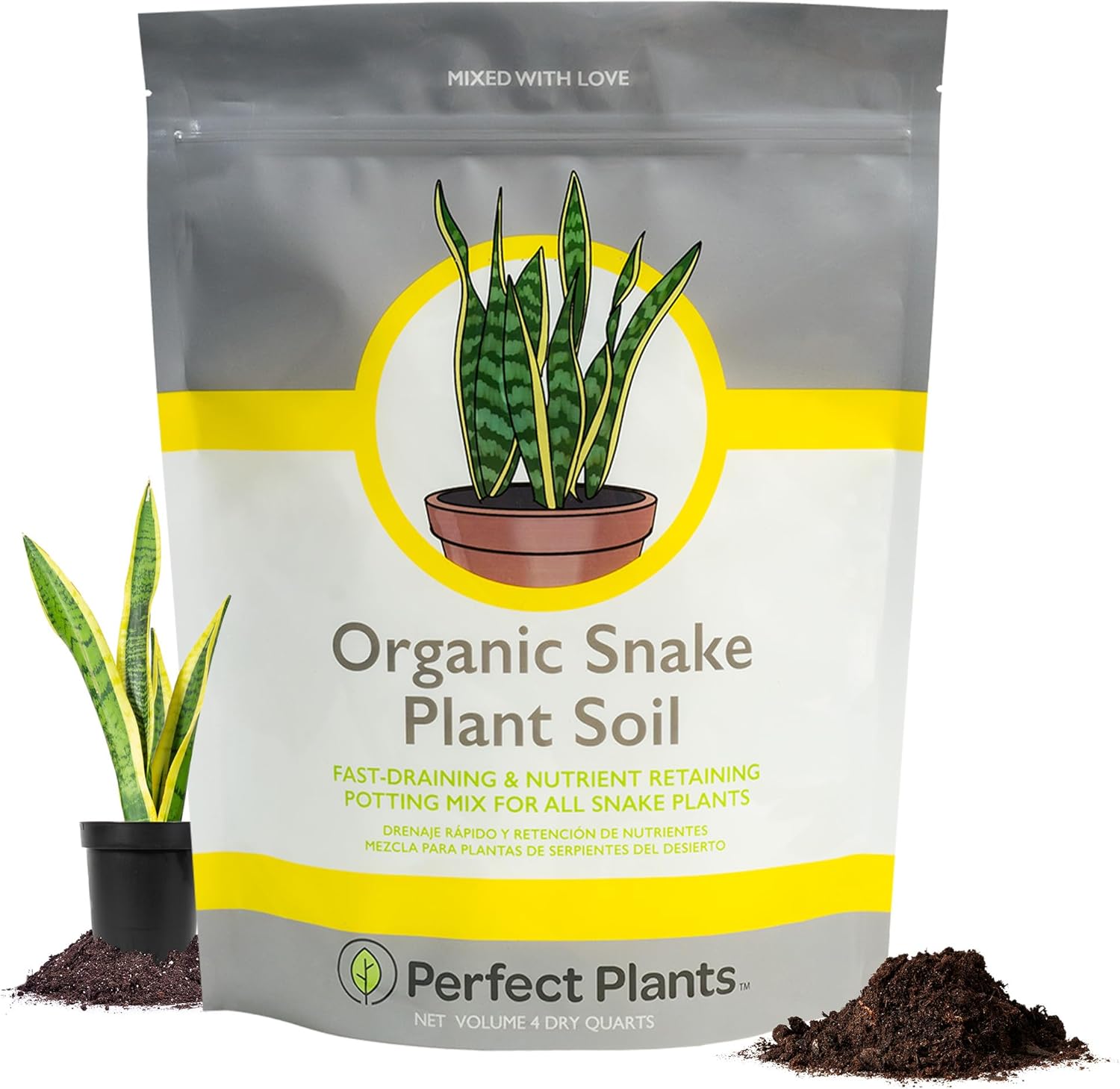
| Unit Count | 1 Count |
|---|---|
| Item Type Name | Snake Plant Soil 4qt. |
| Item Highlight | All-natural pine bark, perlite and sand blend for Sansevieria varieties |
| Manufacturer | Perfect Plants |
This 4 quart Perfect Plants mix is formulated specifically for snake plants and other Sansevieria varieties, with coarse ingredients that help water move through the potting media quickly. Typical use is repotting or top-dressing indoor snake plants where root rot is a concern; the coconut coir and pine bark give structure while perlite and sand improve drainage. The bag lists no added slow-release fertilizer, which is useful if you prefer to control feeding separately. It arrives in a resealable bag sized for small to medium houseplants and is mixed in the USA on a family farm. Expect a chunky, bark-forward texture that reduces moisture retention compared with standard all-purpose mixes, so watering frequency will need slight adjustment. If you want a nutrient-rich, ready-to-grow mix right away you will need to supplement with your preferred fertilizer, but for preventing overwatering and encouraging healthy roots this blend performs as advertised.
Best for: Buyers who prioritize preventing overwatering and want a purpose-made, well-draining mix for repotting or refreshing indoor snake plants with predictable moisture control.
Less Ideal for: Gardeners who want a nutrient-rich all-in-one potting soil or who need large-volume bags for many or large plants should look at general-purpose or bulk mixes instead.
- Designed for snake plants with a coarse blend that promotes fast drainage
- Made from all-natural components like coconut coir, pine bark, perlite, and sand
- No slow-release fertilizer included so feeding can be controlled separately
- Resealable bag convenient for storage and multiple repottings
- No added nutrients means you must fertilize after repotting for best growth
- 4 quart size may be small for multiple or larger plants
Verdict: If you want a purpose-built, fast-draining potting mix to reduce root rot risk in snake plants, this blend delivers dependable drainage and structure.
Gardenera Snake Plant Potting Mix (5 Quart)

| Item Type Name | Snake Plant Potting Mix |
|---|---|
| Brand Name | Gardenera |
| Unit Count | 1 Count |
| Volume | 5 quarts |
| Style Name | Snake Plant Potting Mix |
Gardenera Snake Plant Potting Mix is a ready-to-use, small-batch blend made for repotting or potting Sansevieria and similar houseplants. The mix combines peat moss, perlite, lime, and worm castings to create a light, airy substrate that drains quickly while retaining enough moisture for roots. That formulation supports faster root development and reduces the risk of waterlogged soil and root rot, which makes it useful when repotting established plants or when starting new divisions. The inclusion of worm castings adds organic nutrients so you can delay feeding for a short time after potting. Because it is pre-mixed and bagged in a modest 5 quart size, it is easy to handle and convenient for one or two pots without measuring or blending your own components. Limitations are the small volume for larger collections and the use of peat, which some buyers avoid for sustainability reasons. For buyers who prefer a simple, consistent mix that minimizes overwatering problems, this product delivers exactly that.
Best for: A cautious plant owner who values a predictable, ready-made soil that reduces overwatering risk when repotting one or two snake plants.
Less Ideal for: Large collections, commercial growers, or gardeners who avoid peat and prefer fully peat-free or bulk soil options.
- Formulated specifically for snake plants with a peat, perlite, and worm casting blend
- Light, fast-draining texture that helps prevent root rot
- Pre-mixed and ready to use for immediate repotting
- Contains organic worm castings for added nutrients
- Small 5 quart bag may not be enough for multiple or larger pots
- Contains peat moss, which some gardeners avoid for environmental reasons
Verdict: Buy this if you want a simple, pre-mixed, fast-draining soil that helps snake plants establish healthy roots with minimal fuss.
Choosing the Right Snake Plant Soil Mix: Key Factors to Consider
Drainage Rate
How quickly water moves through the mix determines risk of root rot. Snake plants prefer a medium that does not stay saturated for long periods. A faster drainage rate helps excess water escape during wetter months or accidental overwatering.
Drainage is influenced by coarse components like pumice, perlite, or coarse sand. The right balance avoids both standing water and overly rapid drying that stresses the plant. When assessing mixes, consider the particle size distribution and whether the blend includes coarse aggregates to improve flow.
Aeration and Porosity
Oxygen at the root zone supports healthy root growth and prevents anaerobic conditions. Mixes with good porosity have a range of pore sizes created by chunky minerals and fibrous organics that do not collapse when wet.
Porous mixes also help roots explore and anchor. Avoid blends that compact into dense clods after watering. Look for ingredients that retain structure over multiple wet-dry cycles to keep air channels open.
Organic Matter and Nutrient Retention
Snake plants do not need heavy feeding, but a base level of organic matter supplies slow-release nutrients and supports microbial life. Too much fine organic material, however, can retain excess moisture and cause compaction.
A good mix balances stable organics such as coconut coir or composted bark with inert mineral components. That balance provides modest nutrient availability while preventing the mix from becoming a moisture trap over time.
pH and Mineral Balance
Soil pH affects how easily roots access essential nutrients. Snake plants do best in slightly acidic to neutral ranges but tolerate a fairly broad span. Mixes with built-in lime or mineral amendments can shift pH and supply calcium or magnesium for long-term health.
Avoid mixes with unknown or extreme amendments that may alter pH outside normal ranges. If your water supply is very hard or very soft, consider how that will interact with the mix chemistry over months of watering.
Particle Size and Texture
The size and feel of particles determine how the mix behaves when you water and repot. Coarse sand, grit, pumice, and bark keep the texture open. Fine peat or dust creates compact zones that impede drainage.
Choose a texture that matches your pot size and watering frequency. Smaller pots benefit from slightly finer mixes to prevent the soil from flowing out of drainage holes, while larger containers tolerate chunkier blends that encourage deeper root systems.
Longevity and Reuse
Some mixes break down faster than others when subjected to repeated wetting and drying. Materials like bark and pumice retain structure longer than peat or fine compost.
Consider how often you want to refresh or repot. A long-lasting mix reduces maintenance and keeps pore space available for roots. Also think about whether the mix can be amended later with fresh grit or organics to extend its useful life.
Why Snake Plants Need a Gritty Mix
Snake plants evolved in well-drained, often rocky soils. Indoors, they do best when their potting medium mimics that environment by combining moisture-holding organics with stable, chunky minerals. A gritty mix reduces the risk of rot and encourages compact, healthy roots.
Using a mesh of coarse particles and light organics also changes how you water. Instead of frequent shallow watering, you can water more deeply and allow the surface to dry slightly between sessions, which aligns with a snake plant's drought-tolerant habits.
- Mimics natural soil textures found in their native habitat
- Reduces prolonged wetness at the root crown
- Supports less frequent, deeper watering schedules
Common Ingredients and What They Do
Pumice and perlite increase drainage and keep the mix from packing. Coarse sand adds weight and improves runoff. Bark and coconut coir supply modest organic matter while resisting compaction better than peat.
Some mixes include slow-release mineral amendments or a small proportion of compost for nutrients. Know the role each ingredient plays so you can adjust a premixed blend with extra grit or organics to match your pot and climate.
- Pumice: long-lasting, adds porosity
- Perlite: lightweight, boosts drainage
- Coarse sand: increases flow and stability
- Bark or coir: provides gentle nutrients and structure
How to Adjust a Mix for Your Conditions
If you live in a humid climate or use high-humidity indoor spaces, increase the proportion of chunky mineral components to speed drying. In dry heated homes, retaining a little more organic matter helps prevent the soil from turning hydrophobic and repelling water.
For small pots or shallow planters, slightly finer particles prevent the soil from falling out while still improving drainage. For larger containers, add coarser elements so roots can spread and air can circulate more freely.
- Humid indoor spaces: +pumice or perlite
- Dry heated rooms: +organic fraction like coir
- Small pots: finer grit balance
- Large pots: chunkier aggregates
Repotting Tips for Snake Plant Mixes
When repotting, gently tease roots and remove obviously rotten sections before placing the plant into fresh mix. A new gritty mix gives immediate benefits by reestablishing pore space and improving oxygen access for roots.
Fill the pot with a base layer that encourages drainage, place the plant at the correct height, and backfill with the mix without overpacking. Avoid burying the crown too deep; keep the base of the leaves at or slightly above the soil line to reduce rot risk.
- Use a clean pot with a drainage hole
- Remove soggy soil and dead roots
- Do not press mix tightly around the crown
Small-Scale DIY Mixes Gardeners Use
A reliable DIY approach is to blend one part coarse mineral (pumice, grit, or coarse sand) with one part bark or coir and one part well-draining potting medium. That ratio gives a balance of drainage, aeration, and modest nutrients while remaining stable over time.
You can tweak that base by adding more mineral for faster drainage or more organic matter for nutrient support. Always mix thoroughly and let any dusty components settle before potting to avoid clogs in drainage holes.
- Base DIY ratio: 1 mineral : 1 organic : 1 potting medium
- Adjust minerals up for humidity, organics up for dry heat
- Sieve dusty components to reduce compaction
How We Chose the Best Snake Plant Soil Mix
We focused on properties that matter to snake plants rather than broad houseplant claims. Key evaluation criteria included drainage rate, aeration and porosity, organic nutrient content, pH balance and mineral composition, and ease of repotting and handling. For drainage we looked for mixes that allow excess water to escape quickly without becoming bone dry between waterings. Aeration and porosity measures how well roots receive oxygen and avoid compacting over time. Organic nutrient content assesses whether the mix supplies slow-release feed and supports beneficial microbes. pH and mineral balance influence nutrient availability and long-term leaf health. Ease of repotting covers texture, dust level, and how readily the mix packs into a new container. We excluded straight garden soil, heavy clay mixes, and mixes formulated for tropical moisture-loving plants. Blends that rely entirely on peat with poor airflow were also filtered out. The final list emphasizes well-draining, slightly gritty formulas suitable for indoor pots and shallow planters commonly used with snake plants.
FAQ
How often should I repot snake plant soil mix?
Usually every 1 to 3 years depending on how fast the mix breaks down and how rootbound the plant becomes. If the mix has compacted or drainage has slowed, repot sooner. Repotting also gives a chance to refresh nutrients and remove decayed material.
Can I use regular houseplant potting mix for snake plants?
Regular mixes can work if you amend them to improve drainage and aeration. Add pumice, coarse sand, or bark to increase porosity. Pure, unamended all-purpose mixes are often too moisture-retentive for long-term snake plant health.
Is perlite or pumice better for snake plant mixes?
Both help drainage, but pumice tends to be heavier and more durable over time while perlite is lighter. Pumice is preferable if you want a long-lasting structure; perlite is useful when weight is a concern.
Should I add fertilizer to a snake plant soil mix?
A low, slow-release nutrient source in the mix is helpful, but snake plants need only modest feeding. Feed lightly during the active growing season rather than relying on high-nutrient mixes that retain more moisture.
How can I tell if my soil mix is causing root rot?
Symptoms include soft, blackened roots, yellowing leaves, and a musty smell from the soil. If you suspect rot, remove the plant, trim affected roots, and repot into a well-draining fresh mix. Also evaluate watering practices and container drainage.
Final Verdict
Prioritize drainage and stable porosity when choosing a snake plant soil mix. Balanced organic content and sensible particle sizes give you enough nutrients without trapping water. Think about your microclimate and pot size and be prepared to tweak a premix with extra grit or organics to match those conditions. A well-chosen mix reduces watering mistakes, supports healthy roots, and lengthens the interval between repottings. Focus on the tradeoffs described above to pick a mix that fits your routine and the environment where your snake plant will live.
