

Note: This article contains affiliate links. If you click on these links and make a purchase, I may earn a small commission at no extra cost to you. This helps support my research and content. Read my full affiliate disclosure here.
Getting potting soil right is one of the quickest ways to improve success with rose cuttings. The wrong mix holds too much water or lacks oxygen and nutrients, and that makes cuttings prone to rot, slow rooting, or weak transplants. This guide covers six carefully shortlisted potting soils for rose cuttings and explains the features gardeners should prioritize when starting new plants from stems. We evaluated each mix for drainage, aeration, nutrient profile, and disease resistance so you can choose a starting medium that helps cuttings root quickly and transplant cleanly.
Top Picks at a Glance
| Best Overall The best all-around choice for most situations | Rosy Soil Organic Houseplant Potting Mix, Peat-Free, 4 Quart |  |
| Best Quality Built to a higher standard if you want something more solid | Omitgoter Rose Potting Soil — Natural Organic Mix (32 fl oz) |  |
| Best Budget The cheapest option that still gets the job done reliably | Doter Plant Propagation Potting Mix (1 qt) |  |
| Highest Rated A top-rated pick with lots of positive feedback | Soil Sunrise Plant Propagation Mix (8 Quarts) |  |
| Most Popular A crowd favorite that many people choose with confidence | Miracle-Gro Indoor Potting Mix for Seed Starting, 8 qt. (2-Pack) |  |
| Best Seller A high-volume bestseller chosen again and again | Back to the Roots Premium Organic Potting Mix, 6 Quart |  |
Rosy Soil Organic Houseplant Potting Mix, Peat-Free, 4 Quart

| Unit Count | 128 Ounce |
|---|---|
| Style Name | Houseplant |
| Ingredients | Biochar, Bark Fines, Compost, Worm Castings, Mycorrhizae |
| Volume | 4 quarts |
Rosy Soil Houseplant Potting Mix is an organic, peat-free potting medium designed to boost root health and keep containers well drained. It combines biochar, worm castings, mycorrhizal fungi and compost in a chunky texture that resists compaction, so pots stay aerated and water moves through instead of pooling. You would use this as a straight potting mix for tropical houseplants or blend it into existing soil when repotting; the manufacturer says 4 quarts fills two to three medium pots. The inclusion of mycorrhizae and beneficial microbes supports stronger root establishment and better nutrient uptake, which is useful if you are prioritizing vigorous growth. Practical benefits include reduced need for frequent repotting because biochar holds structure, and improved foliage health from the added micronutrients in worm castings. Limitations are the small bag size for larger shrubs or multiple jasmines and the need to monitor water for plants that prefer very dry conditions, since organic components still retain some moisture. Always wear gloves when handling and follow safety guidance to avoid inhaling dust.
Best for: A grower focused on maximizing root performance and steady vegetative growth who wants a ready-to-use, organic peat-free mix for container-grown tropicals and flowering houseplants.
Less Ideal for: Not the best choice for someone planting large outdoor jasmine beds or managing many plants on a tight budget who needs bulk soil; also avoid if you need an ultra-sandy, cactus-specific mix.
- Peat-free organic formula with biochar and worm castings for lasting structure and micronutrients
- Contains mycorrhizal fungi and beneficial microbes to improve root colonization and nutrient uptake
- Chunky, well-draining texture reduces compaction and helps prevent root rot
- Resealable bag and stable biochar mean mix stays usable longer between repots
- Small 4 quart volume may be insufficient for multiple plants or large pots
- Not formulated specifically for very dry-loving plants so some adjustment to watering may be needed
Verdict: Choose this mix if you want an organic, peat-free potting soil that promotes stronger roots and reliable drainage for container-grown jasmine and other tropical houseplants.
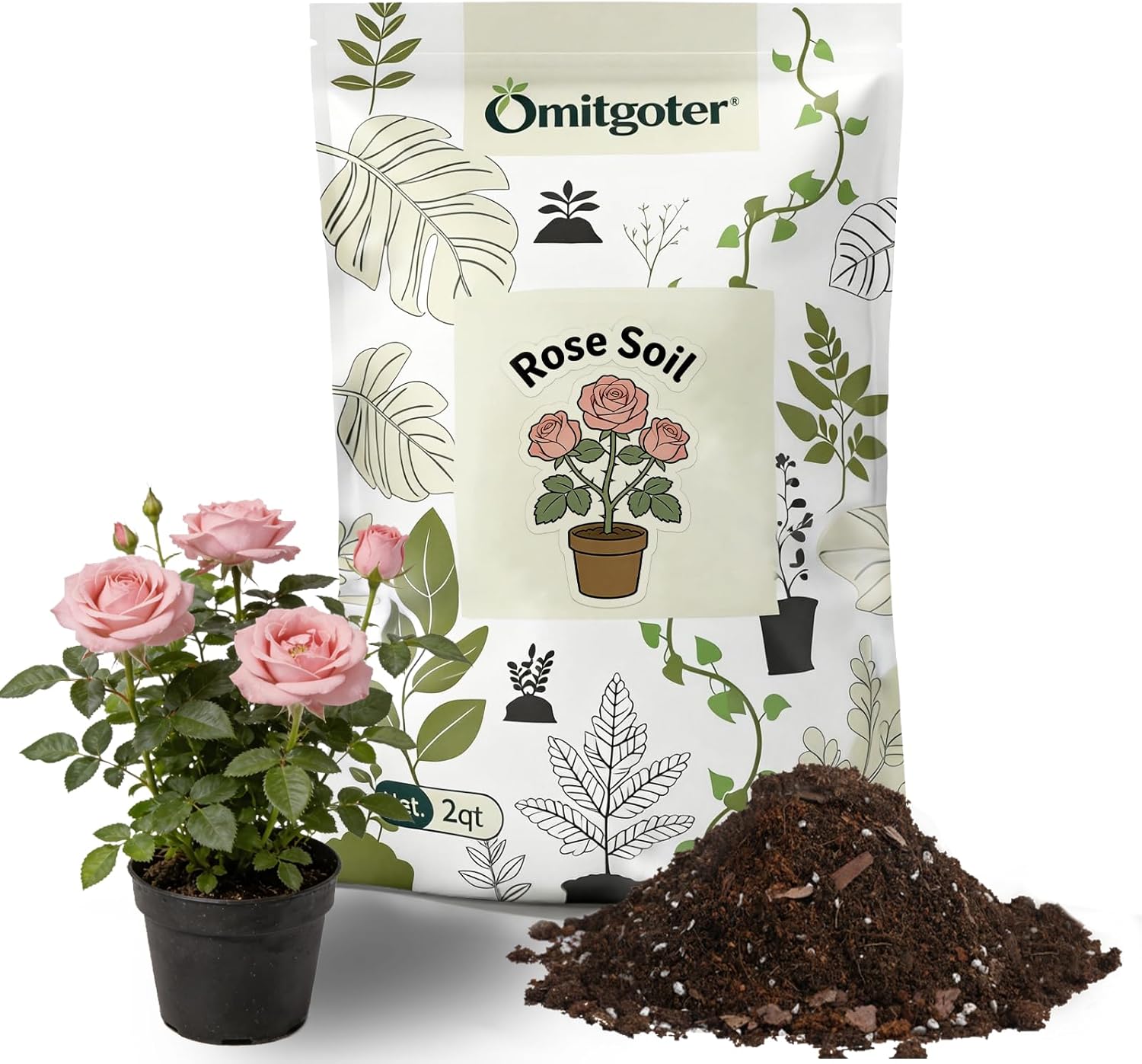
Omitgoter Rose Potting Soil — Natural Organic Mix (32 fl oz)
| Brand Name | Omitgoter |
|---|---|
| Unit Count | 32 Ounce |
| Style Name | Well-draining, Bonsai-specific |
| Volume | 32 fluid ounces |
This Omitgoter rose potting soil is a ready-to-use organic mix designed to make growing roses easier, especially in pots and bonsai containers. The formula combines peat moss, coco coir, perlite, bark, and humus to create a loose, well-draining medium that helps prevent waterlogging and root rot while keeping roots aerated. It is typically used straight from the bag for repotting rose bushes, topping up containers, or as the planting medium for new transplants. Practical benefits include built-in long-lasting nutrients that reduce the need for immediate fertilizer applications and a lightweight texture that improves root development and flowering. Because it is formulated specifically for roses, it suits both indoor potted roses and outdoor container plantings. Limitations to note are the small 32 fl oz volume, which means multiple bags will be needed for larger pots or several plants, and the product does not list specific nutrient analysis or feed schedules, so gardeners wanting precise fertilizer planning will need to supplement accordingly.
Best for: Gardeners on a budget who want an easy, natural potting mix for potted or container roses and prefer a ready-to-use product that improves drainage and bloom potential.
Less Ideal for: Large-scale rose beds or multiple full-size shrubs where bulk soil or custom mixes are more economical; growers who require exact nutrient breakdowns for fertilization planning should look elsewhere.
- 100% natural organic ingredients including peat, coco coir, perlite, bark, and humus
- Designed for superior drainage and aeration to reduce risk of root rot
- Contains long-lasting nutrients to support flowering without immediate additional feeding
- Ready to use with no mixing required, convenient for beginners
- Small 32 fl oz volume means limited coverage per bag
- No detailed N-P-K or nutrient analysis provided for precision feeding
Verdict: A convenient, natural potting mix that improves drainage and supports healthy blooms, perfect for budget-minded gardeners caring for potted roses.
Doter Plant Propagation Potting Mix (1 qt)

| Brand Name | Doter |
|---|---|
| Unit Count | 32 Ounce |
| Item Type Name | Garden soil |
| Volume | 1 quarts |
This 1 quart Doter propagation mix is built for starting cuttings and seedlings. It blends perlite and vermiculite to create a loose, sterile medium that holds moisture without staying waterlogged, which helps roots form quickly while reducing the risk of rot. The mix is very lightweight and easy to handle in small trays or individual pots, and its clean composition makes it convenient for indoor work where disease-free media matters. Typical use is filling small propagation pots, inserting cuttings to about one-third their length, and keeping the substrate slightly moist until roots appear. Practical benefits include improved oxygen around developing roots and simpler handling compared with heavier potting soils. Limitations are the small 1 qt volume, which means frequent repurchasing for larger projects, and the product may require added nutrients once cuttings are rooted and moved to longer-term pots.
Best for: Home gardeners who want an affordable, ready-to-use propagation medium for small batches of cuttings and who prioritize a clean, easy-to-handle mix over bulk quantity.
Less Ideal for: Gardeners propagating large numbers of cuttings, nurseries, or projects that need nutrient-rich potting soil for long-term growth should consider larger or richer mixes.
- Formulated with perlite and vermiculite for balanced drainage and moisture retention
- Lightweight and loose texture makes inserting cuttings and checking roots easy
- Sterile, clean medium reduces risk of soil-borne contaminants during propagation
- Suitable for a wide range of plants including flowers, herbs, and vegetables
- Only 1 quart per package so not cost-effective for large batches of cuttings
- No built-in nutrients so cuttings need feeding after rooting
Verdict: A compact, inexpensive propagation mix that gives beginner and budget-focused gardeners a reliable, sterile medium for rooting cuttings.
Soil Sunrise Plant Propagation Mix (8 Quarts)

| Ingredients | peat moss, perlite, worm castings, lime |
|---|---|
| Volume | 8 quarts |
| Style Name | Peat Moss, Perlite, Worm Castings, pH-Balanced Plant Propagation Mix |
Soil Sunrise Plant Propagation Mix is a ready-to-use, soil-less blend designed to help cuttings form strong roots and to refresh lightweight potting for tropical and houseplants. The formula combines peat for moisture retention, perlite for drainage and aeration, worm castings for gentle nutrition, and lime to stabilize pH. In practice the mix holds enough moisture to keep delicate cuttings from drying while still allowing oxygen to reach developing roots, so you see fewer soggy stems and more healthy root threads. The light texture also makes it easy to insert cuttings and remove them for inspection without compacting. Because it is a specialized propagation mix rather than a complete potting soil, you may need to switch to a richer potting medium after roots establish or top-dress for longer-term growth. The 8 quart bag is convenient for small batches of cuttings but not intended for large-scale propagation projects. If you want a straightforward, low-mess starting medium that reduces rot risk, this does the job very well.
Best for: Buyers looking for a no-fuss, reliable starting medium to root cuttings and repot small tropical or houseplant specimens; ideal for people who value predictable rooting conditions and low maintenance during the rooting phase.
Less Ideal for: Growers who need a heavy-duty long-term potting soil or who propagate at large scale should consider larger-volume potting blends or custom mixes tailored to their species and batch size.
- Light, fast-draining texture helps oxygen reach roots and reduces risk of root rot
- Includes worm castings for gentle, natural nutrients during early root development
- pH-balanced formula with lime to stabilize acidity for sensitive cuttings
- Ready-mixed blend saves time compared with sourcing individual components
- 8 quart volume is small for large or repeated propagation batches
Verdict: A compact, ready-made propagation mix that gives cuttings the moisture control and aeration they need to root reliably.
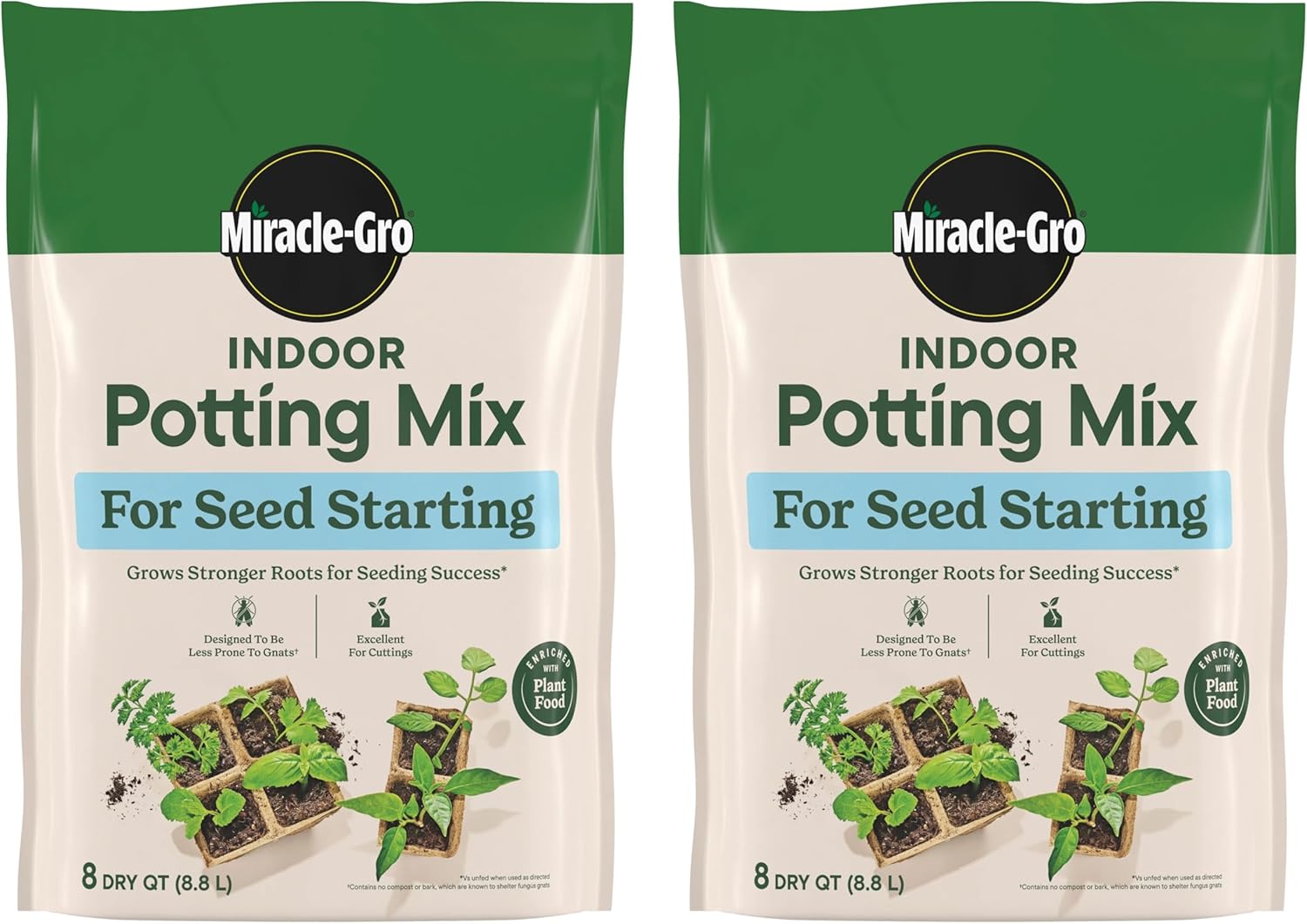
Miracle-Gro Indoor Potting Mix for Seed Starting, 8 qt. (2-Pack)
| Brand Name | Miracle-Gro |
|---|---|
| Item Type Name | Potting Mix |
| Number of Packs | 2 |
| Volume | 8 quarts |
This two-pack of Miracle-Gro Indoor Potting Mix is designed specifically for starting seeds and rooting cuttings indoors. The blend is lightweight and pre-enriched with plant food so seedlings get a nutrient boost during early root development, and the manufacturer says it yields stronger roots compared with unfed mixes when used as directed. It is intended for vegetables, flowers, and herbs and works well in cell trays and small containers; one 8 qt. bag will fill roughly three 72-cell trays. Notably, the formula omits compost and bark, which helps lower the chance of fungus gnat infestations in damp seed-starting setups. Use it by filling trays or pots, keeping the mix evenly moist, and shielding newly sown seeds from direct sun until germination. Important limitations are standard for enriched mixes: it contains fertilizer (so handle carefully) and it is a seed-starting medium rather than an all-purpose potting soil for mature plants, so you will likely transplant seedlings into a different mix or amend soil later.
Best for: Buyers who want a low-effort, indoor seed-starting medium that supports faster root development and reduces common pest risks while following proven seed-starting practices.
Less Ideal for: Gardeners who need a permanent potting soil for mature container plants or who prefer fully organic, compost-rich mixes should consider alternatives.
- Lightweight, ready-to-use formula tailored for seed germination and cuttings
- Pre-enriched with plant food to support early root and seedling growth
- Excludes compost and bark to reduce habitat for fungus gnats
- Comes as a two-pack so you have enough mix for multiple trays
- Contains fertilizer which requires careful handling and storage
- Intended for seed starting so not formulated as long-term potting soil for mature plants
Verdict: A practical, low-risk seed-starting mix that boosts early root growth and reduces fungus gnat risk, making it a reliable choice for indoor vegetable seedlings.
Back to the Roots Premium Organic Potting Mix, 6 Quart

| Unit Count | 192 Fluid Ounces |
|---|---|
| Volume | 6 quarts |
| Item Highlight | Peat-free potting soil for outdoor plants, indoor plants, vegetables, herbs and flowers |
| Made in | USA |
Back to the Roots Premium Organic Potting Mix is a small-batch, all-purpose soil designed for indoor and outdoor container plants, including flowers, herbs, and vegetables. The 6 quart bag contains a peat-free blend made from upcycled plant matter and wood fines, with added organic plant food, yucca extract to help retain and regulate moisture, and dolomitic limestone to stabilize pH. In practice this mix is easy to use straight from the bag for potting annuals and bedding plants or for refreshing topsoil in containers. Its light, well-draining texture helps roots establish without becoming waterlogged while still holding enough moisture for frequent flowering plants. Because it is organic and made in the USA, it suits growers who want a lower-carbon-footprint option. Limitations are the small bag size for larger projects and that very heavy feeders or long-term container plantings may need periodic fertilization or larger volumes of soil to maintain vigor.
Best for: Buyers who want a safe, organic, ready-to-use potting mix for potted flowers and small container gardens and prefer products with predictable performance and lower environmental impact.
Less Ideal for: Gardeners planning large-scale repotting, heavy-feeding perennials, or long-term container plantings that require bulk soil or extended nutrient release.
- Peat-free organic formula made from upcycled plant matter and wood fines
- Includes yucca extract for improved moisture retention and control
- Dolomitic limestone added to help balance soil pH for flowering plants
- Light, well-draining texture suitable for container-grown flowers and annuals
- Small 6 quart bag is not economical for large pots or multiple containers
- Does not include slow-release fertilizer strong enough for long-term heavy feeders
Verdict: A reliable, peat-free organic potting mix that delivers predictable moisture control and pH balance for potted flowers and small container gardens.
Choosing the Right Potting Soil for Rose Cuttings: Key Factors to Consider
Drainage and Aeration
Rose cuttings need a medium that gives roots oxygen while allowing excess water to escape. Poor aeration suffocates newly forming roots and promotes rot. Look for mixes containing coarse components such as perlite, coarse sand, or shredded bark that create visible pore space and keep the medium open. A mix that drains freely after watering yet still stays in contact with the cutting's base helps roots access both water and air.
Drainage matters more for cuttings than for established plants because there is little root mass to wick moisture away. For many gardeners, a blend that includes at least some inorganic material or coarse organic bits provides the most consistent results across waterings.
Moisture Retention Balance
Keeping the cutting lightly moist without saturating the stem base is a delicate balance. A good potting mix for rose cuttings will retain enough water to prevent the stem from desiccating but will release excess quickly so the crown does not sit in water. Materials like coconut coir or finely aged peat can hold water while still allowing excess to drain when blended with aerating components.
Avoid mixes that are either bone-dry after a day or that remain soggy for long periods. The right balance reduces the need for constant misting and lowers the chance of fungal issues during the rooting phase.
Starter Nutrient Profile
New rose cuttings root best with modest, accessible nutrients rather than high-strength feeds. A mix formulated for cuttings or seedlings typically contains low levels of starter nutrients or slow-release formulas that will not burn delicate new roots. Some gardeners prefer near-sterile mixes with almost no nutrients and then add a diluted feed after roots are established.
Consider whether you plan to use a dilute liquid feed or a gentle starter fertilizer and choose a mix that complements that approach. Too much soluble fertilizer in the potting medium can stress young tissue and reduce rooting success.
Disease and Pathogen Control
Cuttings are vulnerable to damping-off and other fungal diseases, especially when the soil is consistently moist. Look for potting soils that use pasteurized or sterilized components and avoid mixes that include fresh compost or uncomposted organic matter that can carry pathogens. Some commercial mixes include beneficial microbes or disease-suppressive components; others rely on clean, inert bases to reduce risk.
Practices such as using clean containers, fresh cutting tools, and disinfected media further reduce disease risk. Media that arrive naturally low in pathogens give cuttings a better chance before their root systems and natural defenses develop.
Texture and Particle Size
Particle size directly affects how a mix behaves under watering and how roots grow through it. Fine textures can pack and limit oxygen, while very coarse textures may not retain enough moisture around the cutting. For rose cuttings, a mix that includes a range of particle sizes-fine enough to hold moisture at the cutting base but coarse enough to allow root penetration and air pockets-is ideal.
Particle uniformity also matters for container stability. A stable mix resists crusting at the surface and lets new roots push through without struggling against dense clumps.
Ease of Use and Preparation
Some gardeners prefer ready-to-use mixes that require no amendments, while others like to blend their own from base components. Consider how much time and effort you want to spend preparing medium. Ready-made formulas save time for large batches of cuttings, while DIY blends let you tailor moisture and nutrient levels precisely.
Also think about compatibility with propagation tools such as trays, labeled pots, or propagation domes. A mix that compacts too much can impede bottom-watering techniques, while a very light mix may require additional firming around the cutting stem.
When to Use Sterile Mixes Vs. Live Mixes
Sterile or pasteurized mixes are a common choice for rose cuttings because they start with a low pathogen load and predictable physical properties. They are particularly helpful when you are propagating many cuttings or working in a humid environment where fungal pressure is higher.
Live mixes with composted organic matter or added microbes can speed root development for gardeners who prefer biological soil life. Use them cautiously and only if the compost is well-aged and the environment is dry enough to avoid damping-off.
- Sterile mixes reduce disease risk but may require external feeding later.
- Live mixes offer biological activity but need careful moisture management.
Propagation Containers and Drainage Setup
Choice of container influences how a potting mix performs. Shallow trays with many small cells warm and dry out faster than single pots. Ensure containers have reliable drainage holes and, if necessary, raise trays slightly to prevent water pooling under pots.
For individual cuttings, small deep pots can support both root formation and initial transplanting. Use a saucer only when you plan to bottom-water briefly and then remove excess water so the cutting does not sit in a saturated saucer for extended periods.
- Use containers with multiple drainage points for better water flow.
- Consider bottom-watering briefly to encourage roots to grow downward.
Mixing Your Own Cuttings Blend
A common DIY blend that balances drainage and moisture retention combines equal parts coarse perlite or pumice, coconut coir or fine peat, and a light fine bark or composted pine fines. Adjust the ratio toward more perlite for faster drainage or more coir for longer moisture retention based on your climate.
Always use clean, well-aged organic inputs. Sift materials to remove large uncomposted bits and mix thoroughly so the medium is consistent from cell to cell.
- Start with small batches to test behavior before committing large numbers of cuttings.
- Label mixes with date and components so you can reproduce successful blends.
Watering Tips for Newly Potted Cuttings
Water deeply right after planting so the medium settles around the stem, then allow the surface to dry slightly. Avoid repeated shallow misting that leaves the surface constantly wet without moistening the deeper medium.
Use a gentle spray or a controlled pour to avoid dislodging the cutting. Monitor the weight of the container to judge when to water; small pots dry quickly and may need more frequent attention, while larger pots retain moisture longer.
- Water to settle the medium, then check moisture with your finger or a weight test.
- Avoid overhead watering in high humidity that encourages fungal spores.
After Roots Establish: Transitioning Media
Once roots are a few inches long and the cutting shows new top growth, it is time to consider moving to a richer potting mix or a larger container. Transplant gently to avoid chilling or damaging the new root mass.
Move gradually if the initial medium was sterile and low in nutrients: introduce a dilute feed schedule and give the plant time to adjust before switching to a heavy potting mix.
- Transplant on an overcast day or in dappled light to reduce transplant shock.
- Keep watering consistent for the first few weeks after potting up.
How We Chose the Best Potting Soil for Rose Cuttings
We focused on characteristics that directly affect how well rose cuttings form roots and survive the early weeks. Selection started with mixes and blends commonly used for softwood and hardwood cuttings, then filtered for clear advantages in structure and disease control. Key evaluation criteria included drainage and aeration to prevent waterlogging, nutrient profile and controlled-release starter feeding to support early root growth, and pathogen management including low disease load and inclusion of sterilized or pasteurized components. We also checked moisture retention balance so mixes hold enough water without staying soggy, and ease of use for gardeners mixing or using a ready-made formula. Products were excluded if they were primarily potting mixes designed only for long-term container growth with heavy organic content and poor drainage, or if they relied solely on uncomposted manures that can burn young roots. We did not include specialty rose fertilizers or rooting hormones as a substitute for the potting medium itself. The final list favors reliable physical structure, gentle nutrient support, and components that reduce rot and fungal risk, reflecting what matters most when starting rose cuttings.
FAQ
Can I use regular garden soil for rose cuttings?
Garden soil is often too dense and can compact around cutting bases, reducing oxygen and raising rot risk. If you must use it, improve structure with coarse sand or perlite and avoid fresh, unaged organic matter.
Should I add rooting hormone to potting soil for rose cuttings?
Rooting hormone is often applied to the stem rather than mixed into the medium. It can help callus formation and root initiation, especially with hardwood cuttings, but it does not replace the need for a well-structured potting mix.
How often should I water newly potted rose cuttings?
Water to settle the medium after potting, then water again when the top inch feels slightly dry. Frequency varies with container size, mix composition, and ambient conditions, so check moisture regularly rather than following a fixed schedule.
Is coconut coir better than peat for rose cuttings?
Both have merits. Coir holds water well and is more sustainable, while peat retains moisture and is familiar in many mixes. The best choice depends on your need for water retention versus aeration and your environmental preferences.
When should I start feeding cuttings that are in a low-nutrient mix?
Wait until roots are visible and the cutting shows new leaf or stem growth. At that point, begin with a diluted, gentle feed to avoid burning tender roots and increase concentration slowly as the plant matures.
Final Verdict
Choose a potting soil for rose cuttings based on how well the mix balances free drainage with enough moisture retention to keep stems from drying out. Prioritize an open texture, low initial nutrient strength or controlled starter feeding, and components that minimize pathogen load. Expect tradeoffs: mixes that drain fast reduce rot risk but require more frequent watering, while moisture-retentive blends reduce watering but need careful aeration. Focus on the criteria most important in your environment and propagation method. With a stable, well-structured starting medium and consistent hygiene and watering practice, you will give rose cuttings the best chance to root quickly and establish strong young plants.
