

Note: This article contains affiliate links. If you click on these links and make a purchase, I may earn a small commission at no extra cost to you. This helps support my research and content. Read my full affiliate disclosure here.
Choosing the right wood chipper changes how you manage pruning, storm cleanup, and yard waste. A well-matched chipper turns branches and brush into usable mulch quickly, reduces trips to the curb, and lowers the physical effort required to process woody material. We narrowed the field to a short list of top-performing chippers suited for home gardens and small properties. This guide covers shortlisted options and explains the practical tradeoffs you should weigh, including cutting power, feed handling, and safety features. The picks are evaluated against real gardener needs to help you pick a chipper that works in your yard or small acreage.
Top Picks at a Glance
| Best Overall The best all-around choice for most situations | Landworks Rotor Wood Chipper Shredder Mulcher — 3" Max Capacity, 7 HP |  |
| Best Quality Built to a higher standard if you want something more solid | Patriot Products CSV-3090B Gas Wood Chipper |  |
| Best Value The sweet spot between price and what you get | GREAT CIRCLE 7HP Mini Wood Chipper Shredder Mulcher |  |
| Best Budget The cheapest option that still gets the job done reliably | SEYVUM 15-Amp Electric Wood Chipper and Shredder |  |
| Highest Rated A top-rated pick with lots of positive feedback | GOODJOB Electric Wood Chipper 1.8-inch Cutting Diameter |  |
| Most Popular A crowd favorite that many people choose with confidence | WORX WG430 13 Amp Electric Leaf Mulcher |  |
| Best Seller A high-volume bestseller chosen again and again | Yeryork Electric Wood Chipper with 1.8" Cutting Capacity |  |
Landworks Rotor Wood Chipper Shredder Mulcher — 3" Max Capacity, 7 HP

| Power Source | Gas Powered |
|---|---|
| Horsepower | 7 hp |
The Landworks rotor wood chipper is a compact, gas-powered machine designed to handle routine yard cleanup and light landscaping work. It uses a 7 HP horizontal 4-stroke OHV engine running up to 3600 RPM and a 15:1 reduction ratio to chip and shred branches up to 3 inches thick through a large hopper into a vertical discharge chute. In practice it is straightforward to move around the yard thanks to its 10 inch rear wheels and relatively compact footprint, and the extended hopper simplifies feeding larger pieces. Maintenance is user-friendly with check windows for blade access and high-speed steel cutters intended for durability. Limitations to note are the fuel requirement and routine maintenance that gas units demand, and the unit is not rated for green material like fresh leaves, palm branches, or vines. For homeowners who need a capable, petrol-powered chipper for seasonal pruning, it delivers strong performance; those needing heavy commercial throughput or electric quiet operation should consider alternatives.
Best for: Homeowners who want a robust, petrol-powered chipper for seasonal pruning and landscaping debris and who prioritize power and throughput over quiet or electric operation.
Less Ideal for: Apartment dwellers, very small urban yards, or users who need a quiet electric model or a machine rated for processing large-scale commercial waste.
- 7 HP gas engine provides strong chipping power for branches up to 3 inches
- Large extended hopper makes feeding larger branches and high-volume yard waste easier
- Compact, wheeled design improves mobility and storage for residential use
- High-speed steel blades and access windows simplify blade replacement and maintenance
- Requires gasoline and regular engine maintenance inherent to petrol units
- Not suitable for fresh green material, palm branches, pine cones, or vines
Verdict: A powerful, compact gas chipper that is a strong choice for homeowners needing reliable chipping of branches up to 3 inches.
Patriot Products CSV-3090B Gas Wood Chipper

| Engine | 9 hp Briggs |
|---|---|
| Max branch diameter | 3 inches |
The Patriot CSV-3090B is a gas-powered chipper built for homeowners who need reliable, performance-oriented chipping. It uses a 9 hp Briggs engine and a funnel-shaped cone to pull branches through and produce coin-sized chips from limbs up to about 3 inches in diameter. Leaves and softer material are handled by the swinging Y-hammer shredding system, and the side discharge keeps you working in one spot without repositioning the unit. The machine is designed with serviceability in mind, featuring greasable outboard bearings and a rugged frame intended for long life when maintained. Practical benefits include fast reduction of bulky yard waste into usable mulch and fewer trips to disposal. Limitations are typical of gas chippers: it is heavy to move and requires fuel, routine maintenance, and some operator learning to feed material safely and efficiently.
Best for: Buyers who prioritize chipping performance and durability and want a gas unit that turns limbs and yard debris into usable mulch quickly.
Less Ideal for: Those wanting a lightweight, electric, or low-maintenance option for small yards or occasional light trimming should consider smaller electric models instead.
- 9 hp Briggs gas engine provides strong chipping power for branches up to 3 inches
- Cone-shaped feed and design produce small, coin-sized chips suitable for mulch
- Swinging Y-hammer system shreds leaves and softer material effectively
- Serviceable components such as greasable outboard bearings for easier maintenance
- Heavy and bulky which makes it difficult to move without equipment or two people
- Requires gas, routine maintenance, and operator familiarity for safe, efficient use
Verdict: Choose this Patriot gas chipper when you want a powerful, serviceable machine that quickly converts branches and yard waste into small chips for mulch.
GREAT CIRCLE 7HP Mini Wood Chipper Shredder Mulcher

| Power Source | gasoline-powered |
|---|---|
| Engine | 7 HP horizontal 4-stroke |
| Maximum Wood Capacity | 3 inch diameter |
| Reduction Ratio | 15:1 |
The GREAT CIRCLE 7HP Mini Wood Chipper is a gasoline-powered shredder built for homeowners and small-scale landscapers who need to reduce branches, brush, and garden waste into mulch. It uses a 7 HP horizontal 4-stroke engine and a rotor-style feed to handle branches up to 3 inches in diameter, producing fine chips at an advertised 15:1 reduction ratio. The unit is relatively compact and lighter than many steel chippers, and it has a vertical adjustable discharge chute that can be aimed between about 90 and 145 degrees for directing expelled debris. Typical use is clearing pruning cuttings, small limbs, and leaf material to make mulch or reduce volume for disposal. Practical benefits include strong engine power for its size, a large feed hopper that accepts varied garden debris, and basic user-friendly features such as a recoil starter and an easy-fill fuel area. Limitations to expect are gasoline maintenance and noise, the need to avoid certain materials that will jam (palm fronds, fresh greens, pine cones, vines), and that heavier commercial workloads will quickly outstrip this mini unit's capacity.
Best for: Buyers who want a practical, powerful backyard chipper to convert typical pruning and garden waste into usable mulch and who prefer a compact gasoline unit over electric options.
Less Ideal for: Those needing a heavy-duty commercial chipper for frequent large-diameter logging work or buyers who need a quiet, emission-free electric machine for small urban yards.
- 7 HP gas engine provides strong, consistent power for chipping small branches
- Designed to handle up to 3 inch diameter wood for common yard pruning
- Compact, lighter-than-steel design makes it easier to move and store
- Adjustable vertical discharge chute allows directing mulch where needed
- Gasoline engine requires regular maintenance, fuel handling, and produces noise
- Not suitable for certain materials like palm fronds, pine cones, fresh greens, or vines which can jam the machine
Verdict: A powerful, compact gas chipper for homeowners who want an efficient way to turn routine pruning and yard debris into mulch.
SEYVUM 15-Amp Electric Wood Chipper and Shredder

| Motor | 15 Amp / 2800W |
|---|---|
| Blade type | Dual-sided SK5 steel blades |
| Collection bag | 45 L capacity |
| Reduction ratio | 18:1 |
This SEYVUM electric wood chipper is a budget-friendly, plug-in machine for turning small branches, twigs, and leaves into mulch. It uses a 15-amp (about 2800W) motor running at high RPM to feed material through dual-sided SK5 steel blades that can be flipped when one edge dulls, extending blade life. Typical use is straightforward: feed yard waste with the push paddle, collect shredded material in the 45 L bag, then wheel the 22.8 lb chassis to storage with its 7-inch wheels. The unit delivers a high reduction ratio so output is suitable for spreading around garden beds or composting. Practical benefits include low maintenance compared with gas units, no fuel handling, and a lightweight, portable design that suits small yards. Important limitations are its cutting diameter and power constraints which make it best for small branches and light pruning rather than large trunks, and the electric cord limits range unless you use a heavy-duty extension cord rated for outdoor power tools.
Best for: Gardeners on a tight budget who need an easy-to-use, electric solution for shredding small branches, pruning waste, and leaves around a small to medium yard.
Less Ideal for: Property owners who need to chip large-diameter logs or who require long continuous run times for heavy-duty land clearing should look at higher-powered gas or commercial machines.
- 15-amp (approximately 2800W) motor provides consistent electric power without fuel
- Dual-sided SK5 blades can be flipped to double usable blade life
- 45 L collection bag keeps shredded material contained for easy transport
- Lightweight chassis with 7-inch wheels for easier moving and storage
- Not intended for large trunks or heavy-duty commercial shredding
- Requires an outdoor-rated extension cord for distant work areas
Verdict: A cost-conscious, lightweight electric chipper that converts small yard waste into usable mulch for gardeners with modest chipping needs.
GOODJOB Electric Wood Chipper 1.8-inch Cutting Diameter

| Cutting diameter | 1.8 in |
|---|---|
| Motor | 15 Amp, 4500 RPM |
| Collection bag capacity | 45 L |
| Reduction ratio | 15:1 |
This GOODJOB electric wood chipper is built as a dependable backyard processor for routine pruning and garden cleanups. Powered by a 15 A, 4500 RPM motor with a reversible double-sided blade, it shreds branches up to 1.8 inches and reduces yard waste into fine mulch with a claimed 15:1 reduction ratio. Practical features for regular use include an auto-cutoff overload protection and heat dissipation to prevent motor burnout during extended runs, a large 45 L collection bag, and tool-free assembly so you can get started quickly. The unit’s anti-clog frame and reversible blade help keep jams minimal and simplify maintenance, and wide anti-tip wheels make it easy to move around uneven lawns. Limitations to note are the 1.8-inch maximum branch diameter, which rules out larger limbs, and that being an electric model it needs a power source and is not suited for heavy commercial workloads. For homeowners who need a reliable, low-maintenance machine for daily to weekly yard debris, this chipper covers the basics well.
Best for: Home gardeners who prioritize a dependable, low-maintenance chipper for regular pruning and yard waste recycling and who value safety features that reduce the chance of motor overload.
Less Ideal for: People who need to process large-diameter limbs, landscapers with heavy daily workloads, or anyone who must operate far from a power outlet.
- 15 A, 4500 RPM motor with reversible double-sided blade for longer blade life
- Auto-cutoff overload protection and heat dissipation for safer continuous use
- Optimized anti-clog frame and 15:1 reduction ratio produce fine mulch useful for compost
- Tool-free assembly and wide anti-tip wheels for easy setup and maneuvering
- Maximum cutting diameter of 1.8 inches prevents processing larger branches
- Requires access to electrical power so not suitable for remote or heavy commercial jobs
Verdict: A reliable, easy-to-use electric chipper that turns routine pruning and yard trimmings into fine mulch while protecting the motor from overload.
WORX WG430 13 Amp Electric Leaf Mulcher
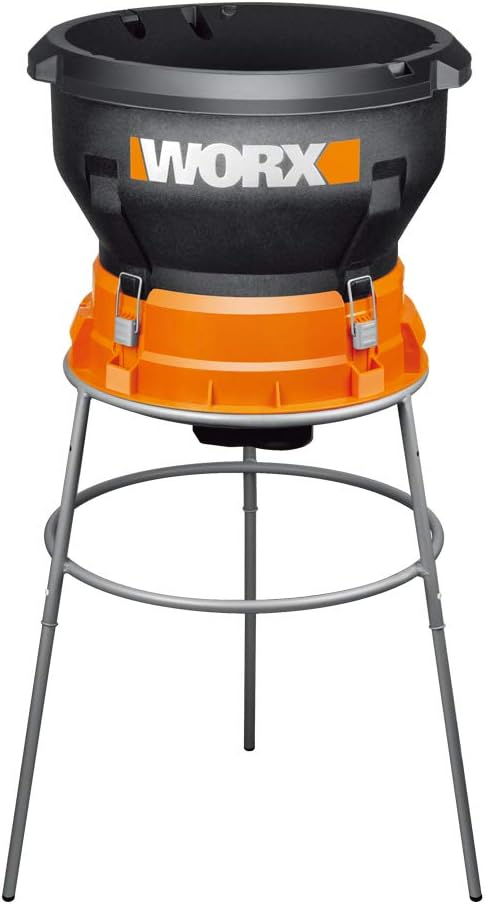
| Motor | 13 Amp |
|---|---|
| Throughput | 53 gallons per minute |
| Mulch ratio | 11:1 |
| Cutting system | Flex-a-Line bladeless line |
The WORX WG430 is an electric leaf mulcher designed for homeowners who need to reduce large volumes of dry leaves and light yard debris quickly. It accepts leaves fed into the top funnel and shreds them with the bladeless Flex-a-Line string system, processing up to about 53 gallons per minute and reducing roughly 11 bags of leaves down to one. The unit sits over a standard bag held by the included support ring so mulch discharges directly into a receptacle for disposal or composting. Practical benefits include tool-free assembly and disassembly for seasonal storage, a dust-reducing motor cooling design, and an included supply of replacement cutting lines to simplify maintenance. Because it is a 13 amp corded electric tool it is quieter and cleaner than gas chippers and avoids blade sharpening, but it is not intended for heavy branches or thick woody material. The need for an appropriately rated outdoor extension cord and indoor storage in winter are additional considerations for regular use.
Best for: Homeowners who want a safer, low-maintenance electric solution to shrink large piles of leaves quickly and prefer a cleaner, quieter alternative to gas chippers.
Less Ideal for: Property owners who need to chip branches, thick brush, or heavy woody debris should consider a dedicated wood chipper or gas-powered shredder instead.
- High processing rate reported at up to 53 gallons of leaves per minute for fast cleanup
- 11:1 mulching ratio significantly reduces bag volume for easier disposal or composting
- Flex-a-Line bladeless system lowers blade-related hazards and includes tool-free line replacement
- Tool-free assembly and compact nesting parts for easier storage and off-season handling
- Not suitable for woody branches or heavy brush since it is a line-based leaf mulcher
- Requires a properly rated outdoor extension cord and access to an electrical outlet
Verdict: Choose the WORX WG430 if you need a fast, low-maintenance electric mulcher that turns large volumes of leaves into manageable mulch for disposal or composting.
Yeryork Electric Wood Chipper with 1.8" Cutting Capacity

| Cutting capacity | Up to 1.8 inches |
|---|---|
| Motor | 15A, 4000 RPM |
| Blade material | SK5 high-carbon steel (reversible) |
| Reduction ratio | 21:1 |
| Ingress protection | IPX4 |
This electric wood chipper is designed for homeowners who want an easy, low-maintenance way to reduce yard waste. Powered by a 15A motor running at 4000 RPM, it pulls small branches into dual feed chutes and chips material down at a reported 21:1 reduction ratio so you end up with far less volume to handle or compost. The SK5 high-carbon reversible blades are a practical touch because flipping them doubles usable blade life and delays replacement. Safety features include automatic cutoff for overcurrent or overheating and a rear interlock that prevents the unit from starting when opened for cleaning. The polypropylene housing with IPX4 splash resistance makes it durable for outdoor use but keep in mind the unit is meant for fresh branches only and will not accept leaves, roots, bamboo, hay, straw, or frozen wood. For routine yard cleanup and turning small limbs into usable mulch, it is straightforward to operate and maintain, though it is not intended for heavy commercial workloads or thick hardwood logs.
Best for: Homeowners who prioritize a safe, easy-to-use machine for regular yard cleanup and want to turn small branches into mulch without complex maintenance.
Less Ideal for: Professional landscapers or users needing to process large-diameter logs, woody waste with mixed materials, or frozen debris should choose a more heavy-duty or specialized machine.
- Reversible SK5 high-carbon steel blades extend usable life and simplify maintenance
- 15A motor with 4000 RPM and anti-jam design provides steady feeding and torque for small branches
- 21:1 reduction ratio greatly reduces yard waste volume for easier disposal or composting
- Built-in safety systems cut power on overload or overtemperature and include a start-interrupting maintenance interlock
- IPX4 splash-resistant polypropylene housing improves durability for outdoor use
- Not suitable for leaves, roots, bamboo, hay, straw, frozen branches, or large hardwood logs
- Designed for light to moderate residential use rather than heavy commercial workloads
Verdict: A safe, user-friendly electric chipper that turns small branches into compact mulch for homeowners focused on straightforward yard cleanup.
Choosing the Right Wood Chipper: Key Factors to Consider
Cutting Capacity and Drive Type
Cutting capacity determines the maximum branch diameter the chipper can handle without frequent jams or manual resizing. Gas engines usually provide higher torque for larger-diameter branches, while electric motors are quieter and lower maintenance but often limit usable branch thickness. Consider the types of pruning you do most: trimming ornamental shrubs and small branches demands much less capacity than clearing storm-downed limbs or thick hedge prunings.
Drive type also affects how consistently the chipper cuts wet versus dry wood. A system with higher torque and robust blade design will handle tougher, wetter branches more reliably, which matters if you chip immediately after storms or seasonal trims.
Feed Mechanism and Throughput
The feed mechanism defines how you present material to the blades and how aggressively the chipper pulls in branches. Hopper-style chippers with wide inlets are easier for irregular brush and multiple small stems. Dedicated feed rollers or automatic feeders reduce user effort and can increase throughput, but they add mechanical complexity.
Throughput is how quickly the machine converts yard waste into chips. If you produce a lot of material from routine pruning or a large cleanup, prioritize higher throughput and a more powerful feed design to limit the time spent feeding and clearing jams.
Safety Features and Operator Controls
Safety matters because chippers deal with rotating blades and can pull in material unpredictably. Look for clear guards, anti-kickback designs, emergency stop switches within reach, and simple feed-reverse controls to clear clogs. A well-designed hopper and feed throat reduce the chance of hands or loose clothing getting near moving parts.
Operator controls that are intuitive and reachable from a safe stance will reduce risky maneuvers. Also consider whether the unit has clear labeling, safety interlocks, and a stable base to prevent tipping when feeding longer pieces.
Maintenance Access and Replacement Parts
Regular tasks like blade sharpening or replacement, belt inspection, and engine service are inevitable. Machines that offer easy access to cutting assemblies, simple belt paths, and common fasteners will save time and keep downtime low. Units that require partial disassembly for routine checks will discourage regular maintenance and shorten usable life.
Availability of replacement blades, belts, and engine components matters for long-term ownership. Choose designs with straightforward wear items and accessible service points so you can maintain cutting performance season after season.
Portability, Footprint, and Storage
Where you store and move the chipper affects your daily utility. Compact, lightweight units are easier to tow on small trailers or wheel around a yard, while heavier, higher-capacity machines often need a vehicle hitch or dedicated trailer space. Consider driveway access, shed or garage storage dimensions, and whether you will need to carry the machine between multiple sites.
Foldable chutes, removable hoppers, and simple wheel kits reduce storage footprint. Also think about setup time and whether quick-connect features will let you get to work faster during short weather windows.
Noise, Emissions, and Neighborhood Impact
Noise and emissions are practical constraints for homeowner use. Gas-powered chippers typically run louder and produce exhaust, which can limit early-morning or weekend use in tightly spaced neighborhoods. Electric or battery-powered models offer quieter operation and lower local emissions, making them better for noise-sensitive locations and enclosed spaces like garages or near garden beds.
Consider local ordinances and neighbor relations when selecting drive type. If you chip frequently in a suburban setting, a quieter option may reduce complaints and make chipping possible at more convenient hours.
How Chipper Types Match Garden Tasks
Different chipper designs suit specific garden chores. Compact, single-stage chippers handle twigs, small branches, and shrub trimmings quickly and are ideal for routine maintenance. Two-stage or drum-based machines are better for thicker branches and consistent throughput when clearing larger areas.
Think about the tasks you repeat most often. If you mostly tidy flower beds and prune small ornamentals, a lighter, quieter unit is likely the best match. If you clear downed limbs after storms or manage a lot of woody hedge material, prioritize machines with higher feed capacity and robust cutting systems.
- Single-stage units: good for small branches, easy storage
- Two-stage or drum units: higher capacity, better for thicker wood
- Electric options: quieter, lower maintenance, lower capacity
- Gas options: more torque and throughput, louder and heavier
Preparing Wood for Efficient Chipping
Proper preparation speeds work and reduces jams. Remove rocks, metal, and soil-clogged roots before feeding branches. Cut long limbs into manageable lengths that fit the hopper without forcing them. Stiff, straight sections feed more evenly than tangled brush.
For large or knotty branches, splitting or sawing down to recommended diameters prevents strain on the drive train. Keep an eye on moisture content; extremely wet sotwood can gum up blades while very dry wood may create more dust and spark concerns in dry conditions.
- Clear debris and foreign objects from branches
- Cut long limbs to hopper-friendly lengths
- Feed straight sections first to reduce jams
- Avoid chipping during extreme dryness when sparks are a risk
Safe Operation Practices
Adopt safe habits to prevent injury. Wear eye and hearing protection, heavy gloves, and close-fitting clothing. Stand to the side of the feed throat rather than directly in front when presenting material, and keep bystanders at a safe distance throughout operation.
Use push sticks or long wooden poles to feed short pieces so your hands never approach moving blades or rollers. If a jam occurs, shut the machine off and disconnect power or spark plug before clearing. Familiarize yourself with emergency stops and feed-reverse controls before starting work.
- Always wear eye, ear, and hand protection
- Keep clear communication with helpers
- Shut down and lock out power before servicing
- Feed short pieces with push tools, not hands
Managing Output: Chips, Mulch, and Compost Use
The size and quality of chips affect how you can use them. Fine chips and shredded material work well as mulch and in compost piles because they break down faster and knit together to suppress weeds. Coarser chips are better for paths and larger landscape coverings where slower decomposition is acceptable.
Mix woody chips with green, nitrogen-rich material when composting to keep decomposition balanced. Store chips in a ventilated pile to age before applying around plants that prefer more humus-rich material.
- Fine chips: good for mulch and compost accelerant
- Coarse chips: suited for paths and long-lasting groundcover
- Combine with green waste to balance compost carbon-to-nitrogen ratio
Storage and Winter Care
Store the chipper in a dry place and follow manufacturer recommendations for winterizing engines and electrical components. Drain fuel or add stabilizer for seasonal storage, and protect cutting assemblies from corrosion with light oiling. Remove debris from chutes and hoppers before long-term storage to discourage pests.
Inspect belts, blades, and mountings after storage before returning the unit to service. Tighten fasteners and check tire pressure or wheel condition so the machine is ready when the next pruning window arrives.
- Keep machine dry and covered if stored outdoors
- Service blades and belts before and after storage
- Drain or stabilize fuel for winter storage
- Clear hopper and chute of debris to prevent pests
How We Chose the Best Wood Chipper
We filtered candidates for everyday garden and small-acreage use by focusing on practical, measurable features that matter in real-world yard work. Primary evaluation criteria included cutting power and feed capacity, which determine what branch sizes the chipper will handle without jams. We also assessed feed mechanism and throughput to gauge how fast and how confidently you can process typical pruning waste. Safety features and ease of maintenance were required filters: machines missing basic anti-kickback guards, emergency stop systems, or accessible service points were excluded. Portability and footprint were considered for homeowners who store equipment in a garage or shed. Noise and vibration levels were noted for neighborhood use and operator comfort. Finally, build quality and replacement-part availability were considered to estimate longevity for seasonal or frequent use. We excluded industrial or commercial-grade chippers clearly intended for professional crews and heavy-duty clearing. The final short list emphasizes machines aligned with domestic chores, small acreage clearing, and municipal yard waste at homeowner scale.
FAQ
What size branches can a typical homeowner wood chipper handle?
It depends on the chipper type. Compact single-stage units usually handle small branches up to about one to two inches, while higher-capacity two-stage designs can accept thicker limbs. Always check the machine's specified maximum feed diameter before use.
Are electric chippers worth considering for small yards?
Yes. Electric models are quieter, require less maintenance, and are fine for regular pruning and light brush. They usually have lower cutting capacity and rely on available power, so they are best for gardens with modest woody waste.
How often do blades need sharpening or replacement?
Frequency depends on how often and what you chip. Regular seasonal users may need to sharpen or replace blades annually, while occasional users might go several seasons. Inspect blades for nicks and dullness and follow the manufacturer's guidance for safe sharpening intervals.
Can I compost the chips directly in my garden beds?
You can, but coarse chips should be aged or mixed with nitrogen-rich material to avoid tying up soil nitrogen. Fine chips are more garden-friendly sooner. Applying a thin mulch layer and allowing time for decomposition reduces issues with nutrient immobilization.
What are the main safety risks when using a wood chipper?
The primary risks are entanglement, kickback from lodged material, and injuries from moving parts. Using guards, emergency stops, proper feeding techniques, and personal protective equipment greatly reduces these risks.
How noisy are wood chippers and does noise vary by type?
Noise varies substantially. Gas engines and high-power chippers are usually loud and may require hearing protection and careful timing of use. Electric and battery models are noticeably quieter, which can be important in residential neighborhoods.
Final Verdict
Pick the wood chipper that matches the scale of your work and the kinds of branches you typically produce. Prioritize cutting capacity and feed design if you often process thicker limbs or large volumes. If noise, storage, or low maintenance are important, consider electric options and smaller, easier-to-store designs. Balance throughput, safety features, and maintenance access to find a machine that fits your storage space and workload. Choosing with those tradeoffs in mind will get you a chipper that reduces waste, speeds cleanup, and lasts through many seasons of yard work.
