

Note: This article contains affiliate links. If you click on these links and make a purchase, I may earn a small commission at no extra cost to you. This helps support my research and content. Read my full affiliate disclosure here.
Growing tomatoes in containers changes the rules for soil. Containers warm and dry faster than garden beds, roots have limited room, and nutrient reserves can be exhausted quickly. Picking the right potting soil for growing tomatoes in containers affects water schedules, feeding frequency, and the vigor and fruit set of your plants. This guide covers the top shortlisted potting soils built for container tomatoes and explains the practical traits that matter in a patio or balcony setup. We evaluate water retention, drainage, fertility delivery, and how the mix behaves through a growing season to help you choose the best fit for your situation.
Top Picks at a Glance
| Best Overall The best all-around choice for most situations | Espoma Organic Potting Mix, 16-Quart |  |
| Best Quality Built to a higher standard if you want something more solid | FoxFarm Ocean Forest Potting Soil, 12 Quart |  |
| Best Value The sweet spot between price and what you get | Miracle-Gro Moisture Control Potting Mix, 8 qt. (2-Pack) |  |
| Best Budget The cheapest option that still gets the job done reliably | Doter Organic Vegetable Potting Soil Mix, 1 qt |  |
| Highest Rated A top-rated pick with lots of positive feedback | FoxFarm Happy Frog Potting Soil, Container Garden, 2 cu ft (with 2 Plant Tags) |  |
| Most Popular A crowd favorite that many people choose with confidence | Miracle-Gro Potting Mix, 16 qt. |  |
| Best Seller A high-volume bestseller chosen again and again | Back to the Roots Premium Organic Potting Mix, 6 Quart |  |
Espoma Organic Potting Mix, 16-Quart
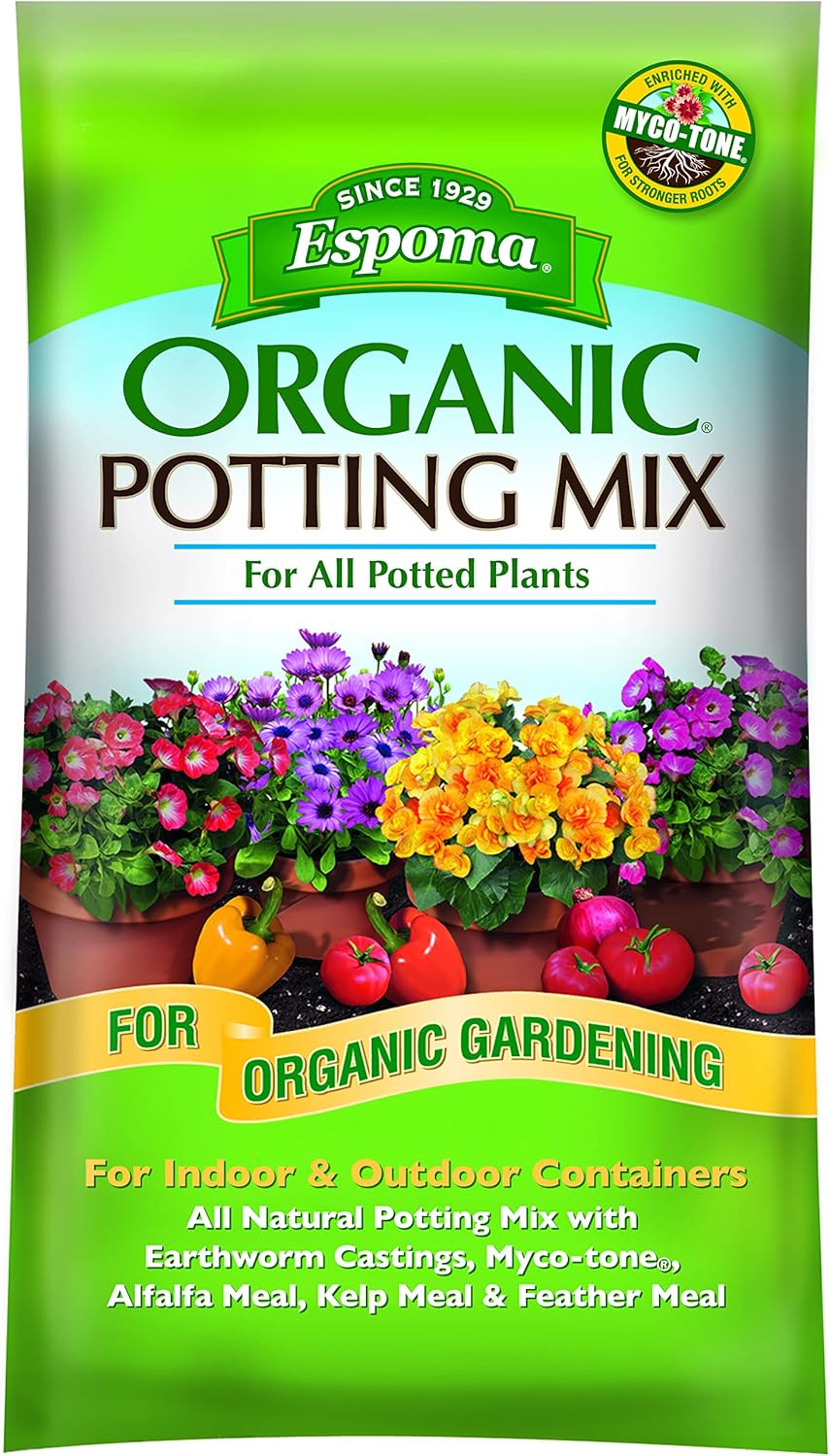
| Volume | 16 quarts |
|---|---|
| Item Weight | 16 ounces |
| Style Name | Mix |
Espoma Organic Potting Mix is a general-purpose, organic blend designed for container gardening and transplanting. It combines sphagnum peat moss, humus and perlite for drainage and aeration, and is enriched with earthworm castings, alfalfa, kelp and feather meals to supply slow-release nutrients. The added Myco-tone mycorrhizae can help roots establish faster after potting, which is helpful when repotting or starting new plants. In practice this mix works well for potted herbs, vegetables and ornamentals where a balance of moisture retention and drainage is needed. Because it is peat-based it holds water longer than coarse, mineral-heavy mixes so you will likely water less frequently but should monitor for overwatering with moisture-sensitive plants. It is fully organic and does not include synthetic fertilizers, so nutrient buildup and salt stress are less of a concern for sensitive plants when used as directed. The bagged 16-quart size is convenient for small patios and containers but may require multiple bags for several large pots.
Best for: Gardeners who prioritize organic inputs and want a reliable, nutrient-rich potting medium for container-grown herbs and ornamentals and who value easier establishment after repotting.
Less Ideal for: Growers seeking an extremely fast-draining, gritty mix tailored to Mediterranean plants that require very low moisture between waterings should look for a cactus or specialized lavender mix instead.
- Organic ingredient blend with no synthetic fertilizers
- Includes mycorrhizal inoculant to support root establishment
- Perlite and humus improve drainage and aeration compared with pure peat
- Contains slow-release organic amendments for steady nutrient supply
- Peat-based formula retains more moisture than very gritty mixes preferred by some Mediterranean herbs
Verdict: Choose this organic mix if you want a balanced, nutrient-rich potting soil with mycorrhizae that helps container plants establish and grow well.
FoxFarm Ocean Forest Potting Soil, 12 Quart

| Item Form | Granules |
|---|---|
| Specific Uses For Product | Dry Fertilizer |
| Coverage | 4.8 sq ft |
| Mixing Ratio | 1:1 |
FoxFarm Ocean Forest is a pre-mixed potting soil that combines aged forest products, sandy loam and sphagnum peat moss with organic amendments like fish meal, crab meal and earthworm castings. It is sold ready to use straight from the bag for planting in containers, seed starting or top dressing; the manufacturer recommends no additional nitrogen fertilizer for the first 30 days. The mix has a light, aerated texture that promotes drainage while still retaining moisture, and the built-in micronutrients make it practical for growers who want strong early growth without immediate feeding. Practical benefits include easy pot filling, good root zone aeration for roses in containers, and built-in organic fertility to support blooms. Limitations to consider are that the bag is best for containers or small beds only and heavier feeders may need supplemental feeding after the initial month; users should also follow handling precautions to avoid skin or eye irritation.
Best for: Gardeners who want a high-quality, nutrient-rich potting medium to get container roses or plant starts off to a strong, flowering start and prefer a ready-made organic blend.
Less Ideal for: Large in-ground rose beds or landscapers needing bulk soil amendments should look for bulk garden soil or custom rose mixes instead.
- Ready-to-use out of the bag so you can pot immediately
- Organic amendments (fish meal, crab meal, earthworm castings) supply early nutrients
- Light, aerated texture that supports drainage and root development
- pH adjusted for optimal nutrient uptake per product description
- Pack size (12 qt) covers a small area and may require multiple bags for several roses
- No long-term feeding provided after the first 30 days so additional fertilizer is needed for sustained heavy bloom
Verdict: Choose this soil if you want a ready-made, organically amended potting mix that jump-starts container roses and seedlings with good drainage and early fertility.
Miracle-Gro Moisture Control Potting Mix, 8 qt. (2-Pack)

| Number of Packs | 2 |
|---|---|
| Unit Count | 512 Ounce |
| Item Type Name | Potting Mix |
| Feeds Plants | Up to 6 months |
| Style Name | 8 qt. |
This Miracle-Gro Moisture Control Potting Mix is designed for outdoor container gardening and makes potting and repotting straightforward. The proprietary AquaCoir formula combines coir, sphagnum peat moss, and a wetting agent so the mix absorbs more water than standard potting soils and helps protect plants from both over- and under-watering. It also contains plant food that feeds up to six months, so newly potted flowers, vegetables, and shrubs get an extended nutrient boost. Use it in pots, planters, and hanging baskets with drainage holes; the manufacturer’s instructions to fill a third of the pot, set the plant, then top off are practical and easy to follow. The mix is airy to encourage root breathing and reduces compaction compared with dense garden soils. Important limitations: it is formulated for containers rather than in-ground beds and you should repot annually to refresh nutrients and avoid compaction over time. Also follow basic safety guidance to avoid skin or eye contact.
Best for: Buyers who want a low-fuss, reliable potting mix that stabilizes watering and gives container plants a long-lasting nutrient boost without frequent feeding; good for practical gardeners optimizing maintenance time.
Less Ideal for: Gardeners who need a soil for in-ground beds or who prefer organic-only mixes should consider alternatives tailored to those uses.
- Moisture-control formula absorbs up to 33% more water than basic potting soil
- Feeds plants for up to six months, reducing immediate need for fertilizing
- Airy texture promotes root aeration and reduces compaction in containers
- Suitable for a wide range of outdoor container plants including flowers, vegetables, and shrubs
- Formulated specifically for container use and not intended as in-ground garden soil
- Nutrients decline over time so annual repotting or supplemental feeding is recommended
Verdict: Choose this mix when you want a fuss-minimizing potting soil for containers that improves water retention and feeds plants for months.
Doter Organic Vegetable Potting Soil Mix, 1 qt

| Brand | Doter |
|---|---|
| Item Type Name | Garden soil |
| Volume | 1 quarts |
This 1 quart Doter vegetable potting mix is a ready-to-use, nutrient-rich media aimed at container vegetable growing. It is formulated to improve drainage and aeration while maintaining balanced pH and added organic matter so seedlings and small pepper plants can establish healthy roots. Typical use is for starting transplants, top-dressing small pots, or refreshing the soil in 1 to 3 quart containers for peppers, lettuce, herbs and similar crops. The mix’s emphasis on aeration and nutrient content helps reduce transplant shock and supports steady early growth, but the small 1 qt volume means you will need multiple bags for larger pots or entire pepper beds. Because it is a blended product rather than a single amendment, performance will depend on pot size and watering habits; heavy feeders or mature pepper plants will need additional fertilizer and larger volumes of soil. For budget-minded gardeners this pack is useful for trialing the brand or for small-scale container pepper production where convenience and a balanced starter mix matter more than bulk quantity.
Best for: Gardeners growing peppers or other vegetables in small containers who want a ready-made, plant-focused starter mix and prefer buying small quantities to control budget and waste.
Less Ideal for: Growers planning to fill large containers, raised beds, or to support mature, high-yield pepper plants who need bulk soil or a long-term nutrient plan.
- Formulated for vegetables with balanced nutrients and pH for better early growth
- Improves drainage and aeration to promote healthy root development
- Convenient ready-to-use 1 qt size ideal for starting transplants or small pots
- Organic components and added organic matter suitable for edible container crops
- Small 1 quart volume requires many bags for larger pots or multiple pepper plants
- Not a complete long-term growing medium for mature heavy-feeding peppers without extra fertilizer
Verdict: A convenient, nutrient-balanced 1 qt organic potting mix that is a practical choice for starting peppers and small container vegetable projects.
FoxFarm Happy Frog Potting Soil, Container Garden, 2 cu ft (with 2 Plant Tags)

| Brand | FoxFarm |
|---|---|
| Style Name | Container Garden |
| Unit Count | 600 Ounce |
| Volume | 2 cubic feet |
FoxFarm Happy Frog Potting Soil is a premixed container blend made to nourish potted plants without additional amendments. It comes ready to use and is formulated with beneficial microbes and mycorrhizal fungi alongside organic inputs such as earthworm castings, bat guano, and aged forest humus to support root development and nutrient uptake. For growing hot peppers in containers this mix offers a nutrient-rich, well-amended medium that encourages strong vegetative growth and flowering when paired with proper watering and feeding. The included plant tags make keeping track of varieties and planting dates convenient. Practical limits to note are that this is a potting soil designed for containers rather than field beds, so peppers in ground or very large planters may still need different soil or additional bulk amendments. Also, while the mix is nutrient-dense at planting, active growers should plan a feeding schedule because high-demand fruiting crops benefit from supplemental fertilizer over the season.
Best for: Growers who want a dependable, ready-made potting medium for container-grown hot peppers and prefer a product that supports root health out of the bag.
Less Ideal for: Gardeners planting directly in raised beds or open ground who need large volumes of soil or want to custom-blend base soil at scale.
- Pre-amended with earthworm castings, bat guano, and aged forest products for immediate nutrient availability
- Contains beneficial microbes and mycorrhizal fungi to improve root health and nutrient uptake
- Ready to use straight from the bag for quick potting and repotting
- Includes plant tags to track varieties and planting dates
- Formulated specifically for containers so may not be ideal for in-ground garden beds
- Nutrient levels diminish over time for heavy-feeding crops and require supplemental fertilization
Verdict: A reliable, microbe-rich potting mix that simplifies container pepper growing by delivering immediate nutrients and strong root support.
Miracle-Gro Potting Mix, 16 qt.

| Volume | 16 quarts |
|---|---|
| Feeds up to | 6 months |
| Guaranteed analysis | 0.21-0.11-0.16 (N-P-K) |
Miracle-Gro Potting Mix is a general-purpose container mix built to give potted plants a balanced growing medium and multi-month feeding. It is typically used to fill pots before planting annuals, perennials, vegetables, and shrubs; the bag instructions recommend filling a container about one third, setting the plant, topping off and watering. The mix contains peat/coir-based components, perlite for drainage, and a slow-release fertilizer designed to feed plants for up to six months, which helps reduce the need for immediate fertilizer applications. Practical benefits are easier transplanting, improved root aeration and consistent nutrient availability without frequent feeding. For peonies in pots this mix supplies a light, well-draining base and built-in nutrients to support establishment in the first season. Important limitations are that peonies prefer rich, long-term soil and larger volumes than many pots provide, so this 16 qt bag fills one 12-inch container only and will need annual repotting or supplemental organic matter and long-term fertilizer for mature plants.
Best for: Gardeners who want an easy, reliable potting mix that supplies immediate structure and built-in nutrients for newly potted container plants, including those trialing peonies in patio pots.
Less Ideal for: Growers planning to keep peonies in the same pot long-term or cultivate very large specimens should consider custom mixes, larger volumes of soil, or mixes formulated for long-term perennial growth.
- Includes slow-release fertilizer that feeds container plants for up to six months
- Formulated with perlite and organic components for improved drainage and aeration
- Ready-to-use bag with clear planting instructions for easy potting
- Designed specifically for container gardening and a wide range of plant types
- 16 qt capacity fills only one 12-inch pot, so larger peony containers require multiple bags or a bigger mix
- Not formulated as a long-term perennial bed soil so additional amendments and feeding are needed for mature peonies
Verdict: A convenient, nutrient-rich potting mix that makes establishing peonies in pots easier by providing drainage and six months of built-in feeding.
Back to the Roots Premium Organic Potting Mix, 6 Quart

| Unit Count | 192 Fluid Ounces |
|---|---|
| Volume | 6 quarts |
| Item Highlight | Peat-free potting soil for outdoor plants, indoor plants, vegetables, herbs and flowers |
| Made in | USA |
Back to the Roots Premium Organic Potting Mix is a small-batch, all-purpose soil designed for indoor and outdoor container plants, including flowers, herbs, and vegetables. The 6 quart bag contains a peat-free blend made from upcycled plant matter and wood fines, with added organic plant food, yucca extract to help retain and regulate moisture, and dolomitic limestone to stabilize pH. In practice this mix is easy to use straight from the bag for potting annuals and bedding plants or for refreshing topsoil in containers. Its light, well-draining texture helps roots establish without becoming waterlogged while still holding enough moisture for frequent flowering plants. Because it is organic and made in the USA, it suits growers who want a lower-carbon-footprint option. Limitations are the small bag size for larger projects and that very heavy feeders or long-term container plantings may need periodic fertilization or larger volumes of soil to maintain vigor.
Best for: Buyers who want a safe, organic, ready-to-use potting mix for potted flowers and small container gardens and prefer products with predictable performance and lower environmental impact.
Less Ideal for: Gardeners planning large-scale repotting, heavy-feeding perennials, or long-term container plantings that require bulk soil or extended nutrient release.
- Peat-free organic formula made from upcycled plant matter and wood fines
- Includes yucca extract for improved moisture retention and control
- Dolomitic limestone added to help balance soil pH for flowering plants
- Light, well-draining texture suitable for container-grown flowers and annuals
- Small 6 quart bag is not economical for large pots or multiple containers
- Does not include slow-release fertilizer strong enough for long-term heavy feeders
Verdict: A reliable, peat-free organic potting mix that delivers predictable moisture control and pH balance for potted flowers and small container gardens.
Choosing the Right Potting Soil for Growing Tomatoes in Containers: Key Factors to Consider
Moisture Management
Tomatoes in containers experience faster moisture swings than in-ground plants because pots expose roots on more surface area and dry from the sides as well as the top. A potting mix must retain enough water to go a reasonable interval between waterings while avoiding waterlogged pockets that cause root oxygen stress. Look for mixes that include components such as coir or composted bark to hold moisture alongside coarse aggregates that prevent saturation.
Good moisture management reduces watering frequency without encouraging shallow rooting. It also influences how often you must top-dress with fertilizer and whether you can rely on a simple liquid-feed schedule.
Drainage and Aeration
Adequate drainage keeps tomato roots healthy by preventing prolonged saturation and creating air spaces for root respiration. Aeration affects root branching and the plant's ability to take up water and nutrients. For containers, drainage depends on particle size and the presence of materials such as perlite, coarse sand, or bark that maintain pore space.
A balance between moisture retention and aeration is essential. Too fine a texture compacts and holds water, inviting root diseases, while too coarse a mix dries out quickly and limits nutrient availability.
Nutrient Profile and Release Pattern
Container-grown tomatoes need a steady supply of nutrients because pots contain a finite volume of substrate. The best potting soils for tomatoes contain a starter nutrient charge and elements that release slowly over several weeks, reducing the need for constant feeding. Ammonium, nitrate, phosphorus, potassium, and micronutrients all matter for fruit set and development.
Consider whether the mix includes slow-release granules, composted material that mineralizes over time, or relies on supplementary liquid feed. The release pattern determines how often you need to add fertilizer, and can affect fruit quality and plant vigour during peak production.
Organic Matter and Texture Stability
Organic matter improves water retention and nutrient-holding capacity, but not all organic components behave the same. Peat and coir retain water but can compact; well-composted bark and leaf mold add structure and aeration. Texture stability over the season matters because some mixes break down quickly, leading to compaction and poorer drainage midseason.
Choose mixes with stable, chunky components that maintain pore space as they age. That stability supports longer-term plantings and reduces the need to repot or refresh the soil during fruiting.
pH and Nutrient Availability
Tomatoes prefer a slightly acidic to neutral pH range for optimal nutrient uptake. A potting soil should either be pH-balanced out of the bag or respond predictably to common fertilizer applications. If the pH drifts too far one way, certain nutrients become less available and plants can show deficiency symptoms even when the nutrients are present.
Consider mixes that list pH buffering or include limestone adjustments for acidic components. Regular testing and occasional adjustment help maintain steady nutrient availability throughout the season.
Cleanliness and Disease Suppression
Containers concentrate root systems and any pathogen in the mix can quickly affect the entire plant. Sterilized or pasteurized potting media and mixes produced to be free of weed seeds and common pathogens reduce early-season losses. Some mixes include beneficial microbes or mycorrhizae that can help roots access nutrients and tolerate stress.
Avoid mixes that rely on unprocessed garden soil unless it has been properly treated. Cleanliness reduces risk and simplifies early care routines like watering and fertilizing without compensating for pests or diseases in the mix itself.
Container Size and How It Affects Mix Choice
Container volume changes how much water and nutrients your mix must store. Small pots dry out faster and need mixes with higher water-holding components, while large containers allow for coarser, more aerated blends that still hold enough moisture for a few days between waterings.
Match the mix texture to pot size and expected water frequency to avoid stress. For hanging baskets or small patio pots, prioritize moisture retention. For half-barrels or large grow bags, prioritize drainage and root space.
- Small containers: more water retention, finer textures
- Large containers: coarser mixes with extra drainage
- Very large pots: stable structure to avoid settling
Feeding Schedule with Different Mix Types
How often you feed tomatoes depends on whether your potting soil contains slow-release nutrients or is an inert, soilless blend. Soilless mixes often require regular liquid feeding; mixes with composted material or slow-release granules can go longer between applications.
Plan to monitor foliage and fruit set rather than a fixed calendar. Yellowing between veins or poor fruiting signals the need for supplemental feeding regardless of the advertised release pattern.
- Soilless mixes: weekly or biweekly liquid feed
- Amended mixes: monthly slow-release top-ups plus occasional liquid feed
- Monitor plant cues rather than relying solely on the label
Adapting Mixes for Hot or Dry Climates
In hot or windy conditions, surface evaporation and pot heating increase water demand. Amend a standard potting mix with water-retentive components like coir or finely shredded compost to give plants a buffer between waterings. Mulching the container surface also cuts evaporation.
Avoid amendments that impede drainage in heavy clay pots. Consider lighter-colored containers or insulation to reduce root-zone temperature spikes, and choose mixes that maintain pore space when warm.
- Add coir or compost for hotter, drier sites
- Use mulch to reduce surface evaporation
- Ensure added moisture-holders do not block drainage
Reusing and Refreshing Potting Soil
Used potting soil often needs rejuvenation before replanting tomatoes. Nutrients are depleted and structure can break down. Refresh by mixing in compost, fresh potting mix, and a balanced slow-release fertilizer, or replace a portion of the old mix with new media.
Sterilize or sun-bake only if you suspect disease. Otherwise, blend old and new materials and add organic amendments to restore fertility and texture for the next season.
- Replace a third of the mix with fresh potting soil for light refresh
- Add compost and slow-release feed for deeper rejuvenation
- Inspect roots and remove diseased material before reuse
Environmental and Sustainability Considerations
Many potting soil components vary in environmental impact. Peat is a common water-retentive ingredient but has sustainability concerns. Alternatives such as coir and reclaimed compost can supply similar benefits with lower ecological cost.
Look for mixes that disclose component sourcing and use recycled or renewable materials where possible. Sustainable choices can still deliver the water retention and nutrient performance container tomatoes need.
- Coir is a renewable alternative to peat
- Composted green waste supports nutrient cycling
- Check for transparent sourcing and reduced peat content
How We Chose the Best Potting Soil for Growing Tomatoes in Containers
We narrowed candidates by focusing on attributes that directly affect tomato performance in containers. Primary evaluation dimensions included moisture management, nutrient profile and release pattern, organic matter content and texture, and disease-free cleanliness. Moisture management looks at how mixes hold enough water between waterings while still draining excess to avoid root rot. Nutrient profile and release pattern considers initial fertility plus the presence of slow-release components or amendments that sustain feeding over several weeks. Organic matter content and texture assess whether the mix offers a stable, friable structure that supports root development without compacting. Disease-free cleanliness means the mix is free from common soil-borne pathogens and weed seeds, important because container-grown tomatoes are more vulnerable in a closed root environment. We also checked practical handling factors such as mix weight when wet, pH buffering, and compatibility with common fertilizer routines. Exclusions included garden topsoil, unamended compost-only blends, and potting mixes designed solely for indoor houseplants that lack the drainage or nutrient density tomatoes require. The final short list prioritized mixes that balance water retention with aeration and provide consistent nutrient delivery during the typical container tomato season.
FAQ
How often should I water tomatoes in containers with potting soil?
Watering frequency depends on pot size, mix composition, and weather. Small pots may need daily watering in hot weather while large containers might go several days. Check moisture an inch or two below the surface and aim to keep the root zone consistently moist but not saturated.
Can I use garden soil in container-grown tomatoes instead of potting mix?
Garden soil alone usually compacts and drains poorly in containers, leading to root stress and disease. If you use garden soil, amend it heavily with coarse materials to improve aeration and drainage, or blend a portion with a lighter potting mix.
Do I need to add fertilizer with potting soils that advertise nutrients included?
Many mixes include a starter charge that supports early growth but declines over weeks. Expect to supplement with regular liquid feeding or a top-up of slow-release fertilizer during peak fruiting to maintain vigor and yields.
How can I tell if my potting soil is compacting and needs replacement?
Signs of compaction include poor drainage, slow drying on the surface, and roots circling or hugging the pot walls. If water pools on top or roots are tightly matted, refresh or replace the mix and add chunky organic matter to restore pore space.
Is pH adjustment necessary for container tomatoes?
pH matters because it affects nutrient availability. Tomatoes prefer slightly acidic to neutral ranges. Many potting soils are formulated in the right range, but if plants show persistent deficiencies, test the soil and adjust with limestone or sulfur amendments as needed.
Final Verdict
Choose a potting soil that balances moisture retention and drainage while delivering a steady nutrient supply. Match mix texture to container size and local climate, and plan a feeding schedule that complements the mix's release pattern. Prioritize clean, stable components that resist compaction so roots stay healthy through the fruiting season. Focusing on moisture management, aeration, and nutrient release will help you pick the right potting soil for growing tomatoes in containers and give you the best chance of reliable yields with manageable watering and feeding routines.
