

Note: This article contains affiliate links. If you click on these links and make a purchase, I may earn a small commission at no extra cost to you. This helps support my research and content. Read my full affiliate disclosure here.
Healthy vegetables start below ground. If you want consistent production, fewer pest problems, and easier seasonal work, choosing the right soil blend matters more than any single tool in the garden. This guide covers seven shortlisted soil options specifically tuned for vegetable gardens, focusing on mixes that balance drainage, fertility, and structure so roots can thrive. We evaluate each soil on real gardener concerns like texture, nutrient retention, and how the mix performs across raised beds, in-ground rows, and containers. Read on to compare those practical qualities and find the right soil approach for your growing situation.
Top Picks at a Glance
| Best Overall The best all-around choice for most situations | Espoma Organic Vegetable & Flower Garden Soil Mix, 1 cu ft |  |
| Best Quality Built to a higher standard if you want something more solid | FoxFarm Raised Bed Planting Mix, 1.5 cu ft |  |
| Best Value The sweet spot between price and what you get | Brut Organic Worm Castings, 5 lb |  |
| Best Budget The cheapest option that still gets the job done reliably | Sukh Organic Vermiculite, 14.6 oz (Fine 1–3 mm) |  |
| Highest Rated A top-rated pick with lots of positive feedback | Wiggle Worm Pure Worm Castings Organic Fertilizer, 30 lb |  |
| Most Popular A crowd favorite that many people choose with confidence | Burpee Premium Organic Potting Mix with Coco Coir (9 Quart) |  |
| Best Seller A high-volume bestseller chosen again and again | Back to the Roots 3-in-1 Seed Starting Mix, 6 Quart, Organic Peat-Free |  |
Espoma Organic Vegetable & Flower Garden Soil Mix, 1 cu ft
| Volume | 1 cubic feet |
|---|---|
| Style Name | Peat Moss |
| Unit Count | 1536 Ounce |
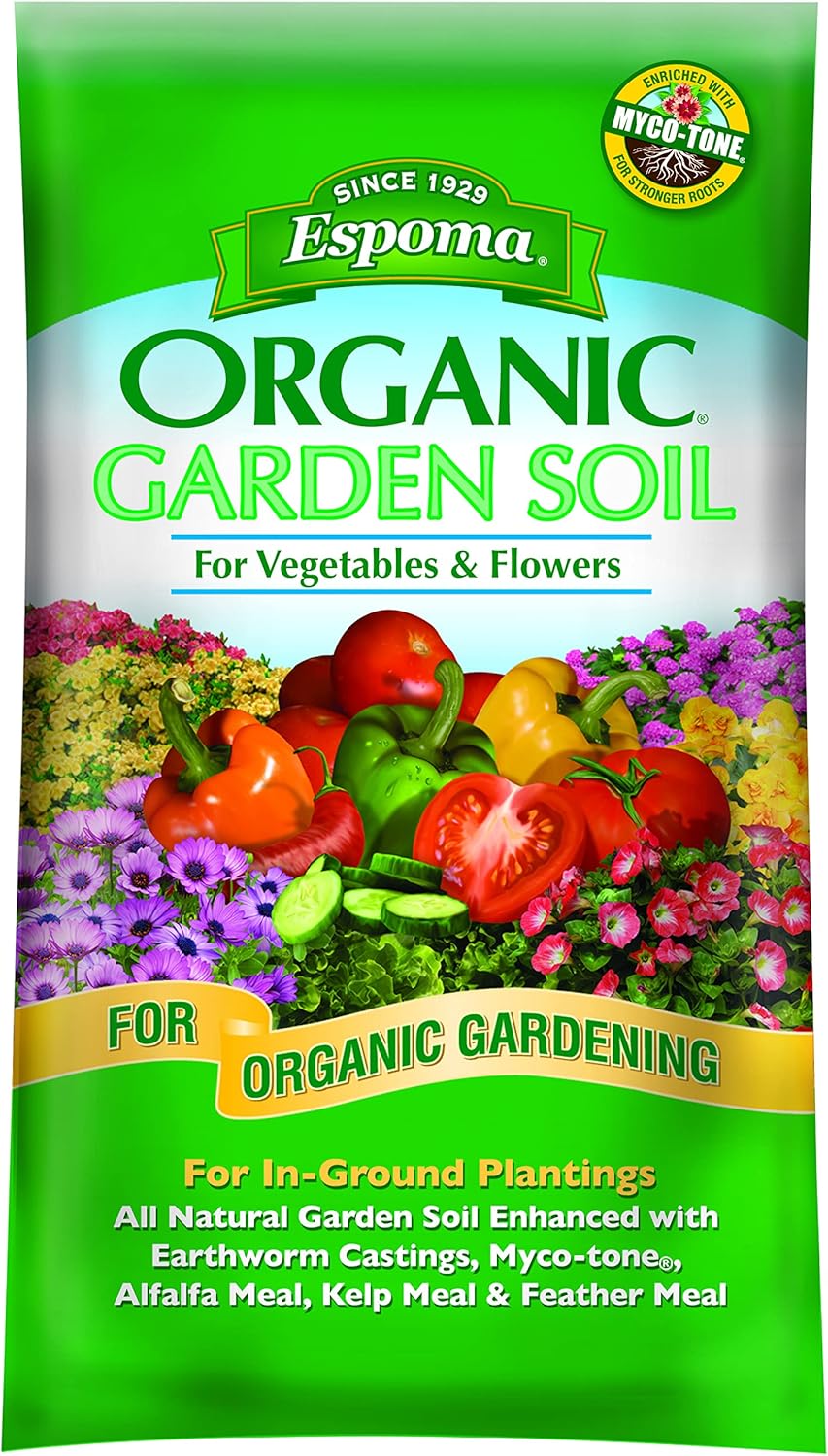
Espoma Organic Vegetable & Flower Garden Soil is a 1 cubic foot, peat-based planting mix designed to be blended into native garden soil at planting or transplanting. It contains Canadian sphagnum peat moss, earthworm castings, alfalfa meal, kelp meal, feather meal, limestone for pH adjustment, and a mycorrhizal blend to help root establishment. In practice you work a few inches of this mix into planting holes or rows to loosen dense soil, add organic matter, and give young squash transplants a nutrient-rich root zone. The organic amendments supply slow-release nutrients and biological activity that support early growth, while the mycorrhizae improve water and nutrient uptake. Limitations to note are the peat-heavy base, which dries faster than compost-rich mixes and may require more frequent watering, and the small 1 cu ft bag size that means multiple bags are needed for larger beds. For gardeners who prefer organic inputs and want an easy-to-use planting mix to boost transplant success, this product is straightforward and effective.
Best for: Gardeners who prioritize organic inputs and want a convenient planting mix to boost transplant success for vegetables like squash in established beds.
Less Ideal for: Large-scale landscapers or gardeners needing bulk soil amendments for entire raised beds who prefer compost-rich mixes or peat-free alternatives.
- Formulated with organic amendments like earthworm castings, alfalfa meal, kelp meal, and feather meal for slow-release nutrients
- Contains a mycorrhizal blend to support root establishment and improved nutrient uptake
- pH adjusted with limestone to better suit common garden plants
- Ready-to-use planting mix that blends easily with native soil when transplanting
- Peat-heavy base can dry out faster than compost-rich mixes, increasing watering frequency
- Small 1 cubic foot bag requires many bags for larger squash beds
Verdict: A compact, organic planting mix that makes transplanting squash easier by giving young roots nutrient-rich, biologically active soil.
FoxFarm Raised Bed Planting Mix, 1.5 cu ft

| Brand Name | FoxFarm |
|---|---|
| Volume | 1.5 cubic feet |
| Style Name | Raised Bed |
| Ingredients | Aged forest products, sphagnum peat moss, earthworm castings, oyster shell, dolomite lime |
This FoxFarm Raised Bed Planting Mix is a premixed soil blend intended for filling raised beds and containers without additional amendments. It mixes aged forest products and sphagnum peat moss for moisture retention and aeration, with earthworm castings, oyster shell, and dolomite lime supplying slow-release nutrients and pH buffering. Typical use is simple: fill your raised bed or pot, plant seedlings or transplants, and water; the mix is designed to hold moisture while still draining to avoid waterlogging. The clear benefits are convenience and a balanced starting environment for vegetables and herbs, which can reduce the need for immediate fertilizing and heavy soil amendments. Limitations include the small 1.5 cubic foot bag size for larger beds and the presence of peat which may concern gardeners favoring peat-free or fully organic-certified media. Also, heavier-feeding crops may still require supplemental fertilization later in the season.
Best for: Gardeners who want a convenient, plant-ready soil that gives vegetable beds and containers a balanced, nutrient-holding foundation without extra mixing or complex preparation.
Less Ideal for: Large-scale growers or those filling full-size raised beds who need bulk soil or prefer peat-free mixes should look for bigger-volume or alternative formulations.
- Ready-to-use blend eliminates mixing and speeds planting
- Formulated for raised beds and containers to balance moisture retention and drainage
- Includes earthworm castings and oyster shell for slow-release nutrients and mineral support
- Contains dolomite lime to help stabilize pH for many vegetable crops
- Small 1.5 cu ft bag requires multiple bags for typical raised beds
- Contains sphagnum peat moss, which some gardeners avoid for environmental reasons
Verdict: Buy this if you want a convenient, nutrient-rich, ready-to-use soil that jumpstarts raised bed vegetable and container gardens.
Brut Organic Worm Castings, 5 lb

| Item Form | Granules |
|---|---|
| Specific Uses For Product | Gardening,Organic |
| Target Species | All plants |
| Mixing Ratio | 1:5 |
Brut Organic Worm Castings function as a concentrated, natural soil amendment you mix into potting mixes or top-dress garden beds and raised beds. Typical use is mixing at the recommended 1:5 ratio for new indoor plants, sprinkling a cup around established houseplants, or working into outdoor planting holes and beds according to the brand directions. The product is OMRI/CDFA listed and produced in controlled conditions, which supports consistent nutrient content and beneficial microbial life that help roots establish, improve soil structure, and increase moisture retention without burning plants. Practical benefits for raised garden beds include improved aeration, slow-release nutrients, and a boost in microbial activity that supports long-term fertility. Limitations are that it is not a complete NPK fertilizer for immediate heavy feeding needs and larger beds require significant quantities to hit the suggested per-square-foot rates, so frequent applications or bulk purchases may be needed for big projects.
Best for: Gardeners who prioritize dependable, organic soil improvement for raised beds and container gardens and prefer predictable, low-risk amendments that support long-term soil health.
Less Ideal for: Those needing immediate, high-NPK feeding for heavy-feeding crops or gardeners who want to amend very large beds without buying supplemental bulk material.
- Certified organic and produced indoors for consistent purity
- Rich in beneficial microbes that improve soil structure and plant vigor
- Easy-to-use granular form suitable for mixing or top-dressing
- Not a standalone high-NPK fertilizer for rapid nutrient correction
- Five-pound bag may be small for large raised beds and repeated seasonal use
Verdict: Use this OMRI/CDFA-listed worm castings product to reliably build long-term fertility and microbial health in raised beds and containers.
Sukh Organic Vermiculite, 14.6 oz (Fine 1–3 mm)

| Unit Count | 14.6 Ounce |
|---|---|
| Granule Size | 1-3MM |
| Volume | 14.6 quarts |
| Item Highlight | Soil Amendment for Seed Starting, Indoor Potting, Gardening |
This small bag of fine (1–3 mm) vermiculite is a straightforward soil amendment for seed starting, propagation and improving container or garden soil. Gardeners typically mix a scoop into seed-starting mixes or potting media to hold moisture around delicate roots while still improving aeration compared with straight soil. The product is stable and does not break down quickly, so it helps loosen dense soils and retain water between waterings without becoming compacted. It also mixes well with perlite, coco coir, peat, or potting soil to tune moisture and drainage for seedlings, cuttings, bonsai and potted vegetables. Important limitations are the small pack size and light weight, which means frequent repurchases for active gardeners or larger beds, and the product can irritate skin or eyes so basic precautions are advised when handling. For budget-focused gardeners this offers a low-cost way to test vermiculite in mixes before buying larger quantities.
Best for: Buyers who want an inexpensive way to improve seed starting and container mixes and who prefer trying small quantities before committing to bulk amendments.
Less Ideal for: Large-scale gardeners or landscapers who need bulk volumes for beds and raised planters should choose larger commercial bags instead.
- Fine 1–3 mm granule size suited for seed starting and propagation
- Improves moisture retention while adding aeration to potting mixes
- Stable material that resists rapid breakdown in soil
- Versatile: mixes easily with perlite, coco coir, peat, or potting soil
- Small 14.6 oz package may be insufficient for larger gardens or repeated use
- Can cause skin and eye irritation if handled without protection
Verdict: An affordable small-pack vermiculite that lets budget-minded gardeners boost seed starting and container mixes without buying bulk.
Wiggle Worm Pure Worm Castings Organic Fertilizer, 30 lb
| Item Form | Granules |
|---|---|
| Specific Uses For Product | Soil Conditioning |
| Application Method | Apply to soil |
| Unit Count | 480 Ounce |
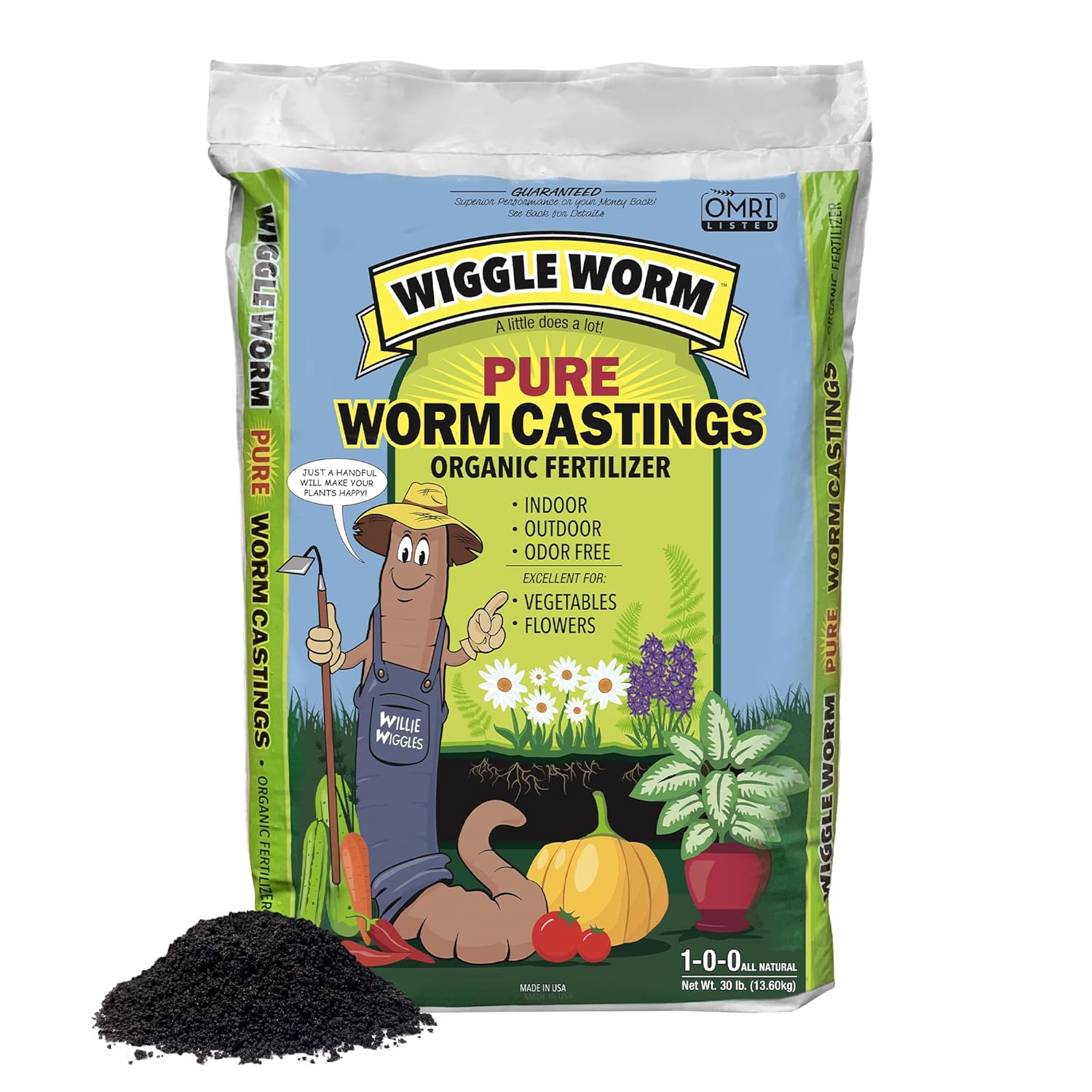
Wiggle Worm Pure Worm Castings are a ready-to-use organic soil amendment made from concentrated earthworm castings. Gardeners typically mix a portion into potting mixes, top-dress established plants, work it into transplant holes, or brew it as a nutrient tea; the product page includes specific dosing for vegetables, containers, lawns, and roses. The castings are odorless, non-burning, and OMRI listed for organic use, so they supply water-soluble nutrients plus microbes that improve aeration, water retention, and root development without synthetic chemicals. Practical benefits include easy application, safe use on seedlings and mature plants, and versatility across raised beds, container gardens, and lawns. The main limitation is that this is a concentrated soil builder rather than an all-in-one fertilizer with NPK labels, so users seeking precise, fast-acting nutrient ratios may need to supplement for specific deficiencies; also a 30 lb bag is bulky to handle for small-space gardeners. For gardeners focused on long-term soil health and organic production, it functions as a low-risk, effective amendment.
Best for: Gardeners who prioritize building long-term soil health and want a safe, organic amendment for vegetables, ornamentals, and containers; buyers who value proven, low-risk inputs backed by strong user feedback.
Less Ideal for: Gardeners who need targeted, rapid nutrient correction based on precise NPK values or those who only want a lightweight product for very small balconies or indoor micro-gardens.
- OMRI listed organic and made from 100% worm castings
- Provides beneficial microbes that improve soil structure and water retention
- Odorless and non-burning so safe for seedlings and established plants
- Versatile dosing for containers, raised beds, lawns, and making worm casting tea
- No standard NPK nutrient label so not a precise standalone fertilizer for targeted feeding
- Large 30 lb bag can be heavy and awkward for gardeners with limited storage or mobility
Verdict: Choose this product when you want a proven, OMRI-listed worm casting that builds soil biology and improves plant health across beds and containers.
Burpee Premium Organic Potting Mix with Coco Coir (9 Quart)

| Item Form | Powder |
|---|---|
| Specific Uses For Product | Plant Growth, Root Development, Seed Development, Soil Conditioning |
| Coverage | 9 Qt Container |
| Liquid Volume | 9 quarts |
Burpee Premium Organic Potting Mix is a ready-to-use container soil designed for indoor and outdoor pots, seed starting, and raised bed containers. The mix combines coco coir for improved aeration and moisture retention with a nutrient blend that feeds plants for up to three months, making it useful for establishing seedlings or repotting established vegetables, herbs, and ornamentals. It is OMRI listed, which suits organic growers, and the bag is sold in a convenient 9-quart size that fits most small to medium containers. Practical benefits include reduced watering frequency thanks to the coir component and a balanced medium that promotes root development and germination. Limitations are the small bag size for larger projects and that it supplies nutrients for only a limited period, so longer-term containers will need supplemental fertilizer. The mix is powdery and light, so it is easy to handle but may compress over time in deep pots and benefit from occasional loosening.
Best for: Gardeners who want a compact, ready-made organic potting mix that reduces maintenance and supports reliable seed starting and container growth.
Less Ideal for: Those establishing large beds or filling many large containers at once should choose bulk soil or larger bags instead.
- OMRI listed organic blend suitable for organic container gardening
- Coco coir improves moisture retention while maintaining good aeration
- Includes slow-release nutrients that feed plants for up to three months
- Light, easy-to-handle texture ideal for seed starting and repotting
- 9-quart bag is small for larger containers or multiple pots
- Nutrient supply is temporary so additional fertilizer is required for long-season crops
Verdict: A compact OMRI-listed potting mix with coco coir that simplifies seed starting and short-term container growing by improving moisture balance and early root development.
Back to the Roots 3-in-1 Seed Starting Mix, 6 Quart, Organic Peat-Free

| Unit Count | 192 Fluid Ounces |
|---|---|
| Style Name | 3-in-1 Seed Starting Mix |
| Brand Name | Back to the Roots |
| UPC | 810667035822 |
This 6-quart Back to the Roots 3-in-1 Seed Starting Mix is a peat-free, organic blend aimed at making seed starting and early potting simple. You use it straight from the bag to fill trays, small pots, or starter cells; the mix includes coconut coir for water retention, dolomitic limestone to balance pH, mycorrhizae to support root uptake, and yucca extract for moisture control. Practically, that means fewer extra amendments for a new gardener and a more forgiving environment for delicate seedlings. The formula is designed to drain well while retaining enough moisture for even watering, and the included nutrients and worm castings can reduce early feeding. Limits to note are the small 6-quart volume, which is best for hobby-scale starting rather than large beds, and a lighter texture that may dry faster in very hot, exposed conditions. For budget growers who want an all-in-one starter mix without experimenting with multiple additives, this is a convenient choice.
Best for: Great for budget-minded home gardeners who want a single, ready-to-use seed starting mix that reduces extra amendments and simplifies starting herbs, vegetables, and flowers.
Less Ideal for: Not the best fit for landscapers or gardeners starting large numbers of plants or filling large containers where bulk bagged mixes would be more economical.
- Peat-free organic formula with coconut coir for moisture retention and aeration
- Includes mycorrhizae and worm castings to support early root development and nutrient uptake
- pH balancing with dolomitic limestone reduces the need for corrective amendments
- Ready-to-use blend suitable for seed trays, small pots, and indoor container starts
- Only 6 quarts per bag, so multiple bags are needed for larger projects
- Light, fast-draining texture can require more frequent watering in hot or windy conditions
Verdict: A convenient, peat-free all-in-one starter mix that saves time and extra purchases for home gardeners starting small batches of seeds.
Choosing the Right Making Good Soil for Vegetable Gardens: Key Factors to Consider
Soil Texture and Structure
Texture and structure determine how easily roots move, how water flows, and how well soil resists compaction. A loamy texture with a mix of sand, silt, and clay gives both drainage and water-holding capacity. Structure describes how those particles form aggregates; well-aggregated soil resists compaction, warms evenly in spring, and provides pore space for roots and air.
For vegetable gardens you want a balance that allows fine root networks to access nutrients but still sheds excess water after heavy rain. Very heavy clay will stay wet and slow roots, while very sandy mixes drain quickly and can require more frequent watering and feeding. When choosing a soil, consider how the texture will behave in your climate and under your watering routine.
Nutrient Content and Availability
Total nutrient content matters less than how available those nutrients are to plants. Soils with blended organic inputs provide a slow-release supply as microbes break down matter, while mineral amendments can correct specific deficiencies quickly. For vegetables, readily available nitrogen, phosphorus, and potassium are important early in the season, and steady release supports fruiting crops later on.
Check whether a soil blend includes composted material, well-aged manure, or other stabilized organics. Those materials not only add nutrients but also promote microbial activity that converts organic pools into plant-available forms. Avoid mixes that rely only on unprocessed raw materials that may tie up nitrogen initially.
Moisture Retention and Drainage
Vegetable roots need oxygen as well as water. The best soils hold enough moisture between irrigations without becoming waterlogged. In practice this means a soil that retains moisture near the root zone while still allowing excess to drain away after heavy rain or deep watering.
Consider your local rainfall pattern and irrigation frequency. In hot, dry regions prioritize mixes with higher water-holding components. In wet climates choose blends with more coarse material to prevent saturation. Good soil also reduces fluctuations, so seedlings are less likely to suffer from stress during dry spells.
Workability and Ease of Planting
Workability describes how easy the soil is to dig, fork, and level at planting time. Gardeners frequently amending beds or rotating crops need a soil that crumbles into a fine tilth without becoming a sticky mass. Workable soils speed planting, reduce strain on your tools, and improve transplant success because roots can penetrate without resistance.
Late-season compaction, surface crusting after heavy rain, or a tendency to become rock-hard when dry all make garden tasks harder. When selecting a soil, think about how often you will be cultivating and whether you prefer lighter, easier-to-manage mixes.
Organic Matter and Biological Support
Organic matter is the backbone of productive vegetable soils. It feeds soil life, improves structure, and holds nutrients. A steady supply of well-decomposed organic matter encourages worms, fungi, and bacteria that cycle nutrients and suppress some soilborne issues.
High organic content also buffers temperature and moisture swings, helping seedlings and fruiting plants. But balance matters: too much undecomposed material can immobilize nitrogen initially. Favor soils with mature compost or stabilized amendments that provide immediate benefits without a prolonged breakdown period.
Longevity and Maintenance Needs
Different soil blends require different levels of upkeep. Some mixes give a quick fertility boost but break down rapidly, meaning more frequent top-dressing and amendment. Others are designed for multi-season stability and only need annual replenishment.
Think about how much seasonal maintenance you want to do. If you prefer low-effort beds, look for soils with stable structure and sustained organic matter content. If you rotate heavily or amend often, a more active but shorter-lived mix could suit your workflow.
Preparing Existing Beds Before Adding New Soil
Before adding a new soil blend, assess the current bed for compaction, drainage problems, and past fertility issues. Loosen the top 6 to 12 inches mechanically if it is compacted, and correct persistent drainage issues by creating raised rows or improving surface slope.
Remove perennial weeds and large roots, and incorporate a thin layer of mature compost to improve biological activity. If the existing soil is very poor, consider creating a transition zone: mix new soil into the top layer rather than fully replacing the bed to allow organisms and root systems to adapt.
- Test how quickly water drains through the bed before you amend.
- Avoid burying bulky uncomposted material that can cause nitrogen drawdown.
- Work amendments in when soil is moist but not saturated to prevent clumping.
Using Soil in Raised Beds Versus In-Ground Rows
Raised beds and in-ground plots have different needs. Raised beds benefit from lighter, well-draining mixes because the walls limit lateral soil movement and root volume. In-ground rows can tolerate heavier textures if the native subsoil supports drainage, but they still need organic matter to enhance fertility and tilth.
When filling raised beds, aim for a mix that balances water retention and drainage so you do not overwater. For in-ground work, focus on improving the top foot of soil with compost and amendments while preserving existing soil structure below to encourage deep rooting.
- Top off raised beds annually with compost rather than replacing the whole fill.
- In-ground plots respond well to sheet composting in situ during the off-season.
- Containers need an even lighter blend with excellent drainage and steady nutrient release.
Seasonal Care and Feeding with Good Soil
Good soil reduces the need for heavy feeding, but vegetables still require seasonal attention. Early spring applications of balanced, soluble nutrients help seedlings get established. As plants set fruit, consider side-dressing with compost or an appropriate organic fertilizer to sustain production.
Mulching the surface conserves moisture and moderates temperature, which helps the soil biology keep nutrients cycling. Monitor crop appearance and soil moisture, and adjust watering rather than assuming the soil will supply everything uniformly.
- Apply mulch after soil warms in spring to retain moisture and reduce weeds.
- Use compost tea or light top-dressings during peak growth for heavy feeders.
- Avoid deep cultivation that disrupts soil structure and beneficial organisms.
Addressing Common Soil Problems
Yellowing leaves, poor fruit set, or stunted growth often point to nutrient or drainage issues rather than a single defect. Start diagnosis with a simple soil texture check and a nutrient test. Many problems can be corrected by adjusting watering, adding targeted mineral amendments, or improving organic matter.
If drainage is the problem, raise root zones or add coarse material to the subsoil layer. If fertility is low, regular additions of mature compost provide a steady fix. For pH-related issues, choose corrective liming or sulfur treatments based on test results rather than guesswork.
- Use a jar test to estimate sand, silt, and clay percentages quickly.
- Rotate heavy-feeding crops with legumes or green manures to rebuild nitrogen.
- Plan corrective work in the off-season to avoid stressing plants.
Building Your Own Vegetable Soil Blend
If you mix your own soil, aim for a base of good screened topsoil or composted yard material, then add coarse sand or grit for drainage and a source of stable organic matter. A small proportion of well-aged compost provides nutrients and microbial life, while mineral amendments can correct specific deficiencies.
Sift components to remove large debris, and mix in batches that match how much you will use. Let a new blend rest for a few weeks before planting to allow organisms to begin stabilizing the material and to avoid early-season nitrogen tie-up from fresh organic matter.
- Include a source of calcium such as crushed eggshells or gypsum if your soil test shows a need.
- Avoid fresh wood chips or uncomposted manures in large quantities.
- Label and rotate stockpiles so older, more stable mixes get used first.
How We Chose the Best Making Good Soil for Vegetable Gardens
We selected soils that suit vegetable production and everyday garden conditions. Primary filters included texture and structure, because those determine root penetration and water flow; nutrient profile and organic matter content, since vegetables need accessible fertility across the season; and moisture management, so the mix drains enough to avoid rot but holds water for even growth. We also looked at particle size distribution and amendment balance, which affect how the soil breaks down over time and how often gardeners must top up or rework beds. Other editorial criteria were workability at planting, compatibility with common watering methods, and the likelihood of supporting steady microbial activity without synthetic additives. Exclusions included mixes formulated only for ornamentals, products intended solely for lawns, and overly specialized blends for a single crop. The result is a list of broadly useful soils that perform in raised beds, in-ground vegetable plots, and large containers while minimizing frequent corrective maintenance.
FAQ
How deep should I fill a raised bed with new soil for vegetables?
Aim for at least 12 inches of quality soil for most vegetables and 18 inches for deep-rooted crops. If your bed is shallow, focus on shallower-rooting vegetables and use containers for deeper-rooted plants.
How often should I top-dress vegetable beds with compost?
Top-dress with a thin layer of mature compost annually, typically in late fall or early spring. Heavy feeders may also benefit from a midseason light dressing, but frequent thick layers can change soil structure over time.
Can I use garden soil alone in containers for vegetables?
Garden soil alone is usually too dense for containers and can compact, reducing oxygen to roots. Use a lighter container blend that includes coarse material and high-quality compost to improve drainage and nutrient availability.
How do I prevent nutrient lockup when adding lots of organic material?
Avoid using large amounts of fresh, high-carbon materials without composting them first. Mature compost and well-aged manures minimize nitrogen immobilization. Incorporating a small starter fertilizer or composted amendments can also reduce early-season tie-up.
Will a soil blend help in clay-heavy yards?
A good blend can improve the top layer by adding organic matter and coarse amendments, which enhances drainage and tilth. For severe clay, consider building raised beds or deeply ameliorating the soil in stages rather than relying solely on surface amendments.
Final Verdict
Prioritize a soil that matches your site and your maintenance style. Balance texture, moisture management, and ongoing organic matter additions to support healthy root systems and steady yields. Expect tradeoffs: mixes that hold more water need less frequent irrigation but may require better drainage planning, while very free-draining soils need more regular feeding. Focus on the criteria that matter most for your garden climate and crop choices. With the right soil approach, you will spend less time correcting problems and more time harvesting robust vegetables.
