

Note: This article contains affiliate links. If you click on these links and make a purchase, I may earn a small commission at no extra cost to you. This helps support my research and content. Read my full affiliate disclosure here.
Growing potatoes in containers, raised beds, or in-ground trenches starts with the right organic soil. The wrong mix holds too much water or lacks the nutrients tubers need, while the right soil balances aeration, moisture retention, and fertility to encourage steady, even tuber development. This guide covers seven shortlisted organic soils for potatoes that perform well across common garden setups, from single large containers to deep potato trenches. We evaluate each option for drainage, nutrient retention, texture, and organic matter content so you can pick a soil mix that matches your planting method and climate. Read on to understand what makes a potato-specific organic soil and how to match a mix to your growing style.
Top Picks at a Glance
| Best Overall The best all-around choice for most situations | Coast of Maine Organic Planting Soil for Vegetables & Tomatoes (20 Qt, 2 Pack) |  |
| Best Quality Built to a higher standard if you want something more solid | Espoma Organic Potting Mix, 16-Quart |  |
| Best Value The sweet spot between price and what you get | Back to the Roots Organic Expanding Coco Coir Potting Soil Brick (10 lb) |  |
| Best Budget The cheapest option that still gets the job done reliably | Miracle-Gro Organic Indoor Potting Mix, 16 qt. |  |
| Highest Rated A top-rated pick with lots of positive feedback | Gardenera Organic Potato Potting Mix, 5 Quart |  |
| Most Popular A crowd favorite that many people choose with confidence | Burpee Premium Organic Potting Mix with Coco Coir (9 Quart) |  |
| Best Seller A high-volume bestseller chosen again and again | Back to the Roots All-Purpose Peat-Free Potting Mix, 12 qt (2-pack) |  |
Coast of Maine Organic Planting Soil for Vegetables & Tomatoes (20 Qt, 2 Pack)

| Volume | 20 quarts |
|---|---|
| Unit count | 2 Count |
| OMRI listed | Yes |
| Ingredients highlighted | Composted manure, sphagnum peat moss, seaweed/lobster meal |
This Coast of Maine planting soil is an organic, compost-rich mix designed specifically for vegetables and tomatoes. Gardeners typically use it for seeding, transplanting, topping off raised beds, or filling pots and containers where tomatoes will grow. The formula contains composted manure, sphagnum peat moss and marine-derived amendments such as kelp and lobster meal, which contribute nutrients and support beneficial soil life. Practical benefits include improved moisture balance so roots get both water retention and drainage, and a texture light enough to work easily into existing beds or pots. It is OMRI listed, so it fits into an organic vegetable program and supports soil biodiversity over time. Important limitations are that the product comes in 20 quart bags so larger gardens will require many bags and the mix is not a complete fertilizer package so occasional feeding may still be needed for heavy-feeding tomato varieties. Also follow the safety guidance to avoid inhaling dust during handling.
Best for: A gardener who prioritizes reliable, organically produced soil that supports healthy tomato growth and soil biology, and who values consistent, repeatable results in containers or beds.
Less Ideal for: Large-scale vegetable growers who need bulk volumes or immediate complete nutrient solutions should consider bulk topsoil blends or dedicated fertilizer programs instead.
- OMRI listed organic formula suitable for organic vegetable gardens
- Contains composted manure and marine amendments that boost microbial activity and nutrients
- Balanced texture for both moisture retention and improved drainage
- Versatile for in-ground use, raised beds, and containers
- Small 20 quart bag size means many bags are needed for larger plots
- Does not include a complete, long-term fertilizer schedule for high-demand tomato varieties
Verdict: Choose this OMRI-listed Coast of Maine blend when you want an organic, biology-supporting soil that reliably balances moisture and drainage for healthy tomato plants.
Espoma Organic Potting Mix, 16-Quart
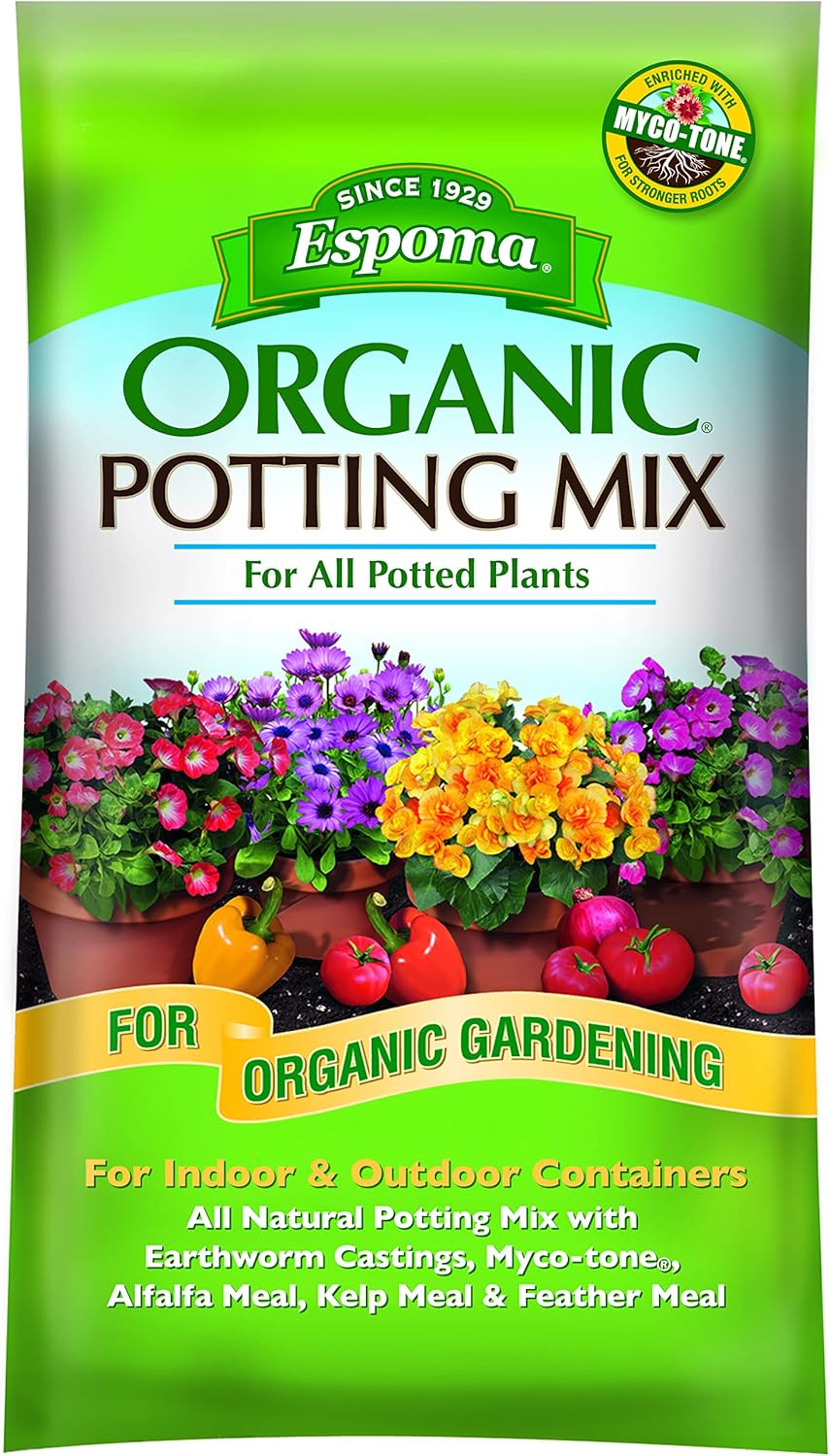
| Volume | 16 quarts |
|---|---|
| Item Weight | 16 ounces |
| Style Name | Mix |
Espoma Organic Potting Mix is a general-purpose, organic blend designed for container gardening and transplanting. It combines sphagnum peat moss, humus and perlite for drainage and aeration, and is enriched with earthworm castings, alfalfa, kelp and feather meals to supply slow-release nutrients. The added Myco-tone mycorrhizae can help roots establish faster after potting, which is helpful when repotting or starting new plants. In practice this mix works well for potted herbs, vegetables and ornamentals where a balance of moisture retention and drainage is needed. Because it is peat-based it holds water longer than coarse, mineral-heavy mixes so you will likely water less frequently but should monitor for overwatering with moisture-sensitive plants. It is fully organic and does not include synthetic fertilizers, so nutrient buildup and salt stress are less of a concern for sensitive plants when used as directed. The bagged 16-quart size is convenient for small patios and containers but may require multiple bags for several large pots.
Best for: Gardeners who prioritize organic inputs and want a reliable, nutrient-rich potting medium for container-grown herbs and ornamentals and who value easier establishment after repotting.
Less Ideal for: Growers seeking an extremely fast-draining, gritty mix tailored to Mediterranean plants that require very low moisture between waterings should look for a cactus or specialized lavender mix instead.
- Organic ingredient blend with no synthetic fertilizers
- Includes mycorrhizal inoculant to support root establishment
- Perlite and humus improve drainage and aeration compared with pure peat
- Contains slow-release organic amendments for steady nutrient supply
- Peat-based formula retains more moisture than very gritty mixes preferred by some Mediterranean herbs
Verdict: Choose this organic mix if you want a balanced, nutrient-rich potting soil with mycorrhizae that helps container plants establish and grow well.
Back to the Roots Organic Expanding Coco Coir Potting Soil Brick (10 lb)

| Item Highlight | 10 lb compressed coco coir brick; peat-free; OMRI Listed |
|---|---|
| Item Type Name | Coconut Coir |
| Volume | 2 cubic feet |
| Ingredients | Coconut Coir |
| Style Name | Expanding Potting Soil |
This compressed coco coir brick provides a lightweight, peat-free potting medium that expands when you add water to create loose, airy substrate for containers and seed flats. It is typically used by hydrating the 10 lb block to about 2 cubic feet of coir and then using it alone for potted plants, mixing it into garden soil to improve drainage and aeration, or blending with compost for starting seeds. Notable features include OMRI listing for organic use, a balanced pH suited to a wide range of plants, and compact storage before expansion which saves space. Practical benefits are improved root aeration and water retention compared with heavy garden loam, easier handling than bulky bags, and versatility across vegetables, herbs, and ornamentals. Important limitations are that coco coir is a soilless substrate and does not supply significant nutrients on its own so you will need to add fertilizer or compost for long-term potted herbs like rosemary, and the product requires time and a water source to expand before use.
Best for: Buyers who prioritize low-risk, easy-to-handle, organic potting media and want a versatile base for container herbs and seed starting without dealing with heavy bags.
Less Ideal for: Gardeners who want a ready-to-plant, nutrient-rich potting mix out of the box or those who prefer soil with built-in slow-release fertilizer.
- Peat-free OMRI listed organic coco coir suitable for organic growing
- Expands from a compact brick to about 2 cubic feet for easy storage and transport
- pH balanced and airy texture that improves drainage and root aeration
- Versatile use: can be used alone, for seed starting, or mixed into existing soil
- Provides little inherent fertility so supplemental feeding or compost is needed for nutrient-hungry plants
Verdict: A compact, peat-free coco coir brick that expands into an airy, pH-balanced base ideal for low-risk organic container gardening and seed starting when paired with fertilizer or compost.
Miracle-Gro Organic Indoor Potting Mix, 16 qt.

| Volume | 1 cubic feet |
|---|---|
| Style Name | Indoor |
| Item Highlight | Protects Against Over & Under Watering |
| OMRI Listed | Yes |
Miracle-Gro Organic Indoor Potting Mix is a ready-to-use organic blend designed for houseplants, seedlings, and container herbs. It combines coir for air space and moisture retention, sphagnum peat moss to hold and release water, and a quick-start natural fertilizer so young plants get an initial nutrient boost. Typical use is filling pots or seed trays with a drain hole, transplanting by loosening the root ball and topping up with fresh mix, or starting seeds in shallow trays and keeping them moist until germination. Practical benefits for herb growers include improved moisture regulation that helps prevent both waterlogging and rapid drying, and organic certification for those avoiding synthetic inputs. The bag claims one 16 qt. package fills a 12-inch container, which fits small- to medium-sized herb pots. Limitations are the modest volume per bag for users with multiple pots and the inclusion of peat, which some growers try to avoid for sustainability reasons. Also, plants that need very fast-draining media, such as certain succulents, may need a different blend or added grit.
Best for: Buyers who want an easy, organic potting mix for growing kitchen herbs and houseplants and who prioritize proven formulations and user guidance over sourcing bulk soil.
Less Ideal for: People looking to pot large numbers of containers at once or gardeners who prefer a peat-free, fast-draining custom mix should consider larger bags or alternative blends.
- OMRI listed and made with organic ingredients suited to organic indoor gardening
- Blend of coir and sphagnum peat moss balances aeration and moisture retention
- Includes quick-start natural fertilizer to feed plants during establishment
- Formulated specifically for indoor containers and seed starting
- 16 qt. bag provides limited coverage if you have several herb pots
- Contains peat which some gardeners avoid for environmental reasons
Verdict: A convenient OMRI-listed indoor potting mix that helps regulate moisture and gives seedlings and container herbs a reliable, organic start.
Gardenera Organic Potato Potting Mix, 5 Quart

| Brand Name | Gardenera |
|---|---|
| Unit Count | 1 Count |
| Item Type Name | Potato Pottin Mix |
| Volume | 5 quarts |
| Style Name | Potato Pottin Mix |
This Gardenera Potato Potting Mix is a small‑batch, organic potting soil designed specifically for growing potatoes at home. It is blended from coco coir, Canadian peat moss, perlite, and worm castings to create a loose, airy medium that promotes root and tuber development while draining excess water. Typical use is filling containers, grow bags, or raised beds where good drainage and steady moisture are important for tuber formation. Notable features include added perlite for improved drainage, low‑salt coconut coir to help moisture retention without waterlogging, and worm castings for natural fertility. In practice the mix should speed early root growth and reduce the risk of rot in containers compared with dense garden soil. The small 5 quart volume is convenient for trial plantings or topping up larger pots but means multiple bags are needed for larger projects. Because the product is a preblended organic mix, gardeners who want to tailor fertilizer or pH precisely may still need to amend it as plants develop.
Best for: Gardeners who prioritize consistent, reliable results when growing potatoes in containers or small raised beds and prefer a ready‑made organic mix that supports root development.
Less Ideal for: Growers planning large in‑ground plantings or commercial-scale production who need bulk soil or detailed nutrient and pH specifications.
- Formulated for potatoes with ingredients that encourage tuber and root development
- Contains perlite for reliable drainage in containers and raised beds
- Organic ingredients including worm castings provide natural fertility
- Low‑salt coco coir helps retain moisture without waterlogging
- Small 5 quart bag covers limited area so multiple bags are required for full beds or large containers
- No specific nutrient analysis or pH listed for precise amendment planning
Verdict: Choose this small‑batch organic mix when you want a plug‑and‑play, reliability‑focused soil that promotes healthy potato tuber and root development.
Burpee Premium Organic Potting Mix with Coco Coir (9 Quart)

| Item Form | Powder |
|---|---|
| Specific Uses For Product | Plant Growth, Root Development, Seed Development, Soil Conditioning |
| Coverage | 9 Qt Container |
| Liquid Volume | 9 quarts |
Burpee Premium Organic Potting Mix is a ready-to-use container soil designed for indoor and outdoor pots, seed starting, and raised bed containers. The mix combines coco coir for improved aeration and moisture retention with a nutrient blend that feeds plants for up to three months, making it useful for establishing seedlings or repotting established vegetables, herbs, and ornamentals. It is OMRI listed, which suits organic growers, and the bag is sold in a convenient 9-quart size that fits most small to medium containers. Practical benefits include reduced watering frequency thanks to the coir component and a balanced medium that promotes root development and germination. Limitations are the small bag size for larger projects and that it supplies nutrients for only a limited period, so longer-term containers will need supplemental fertilizer. The mix is powdery and light, so it is easy to handle but may compress over time in deep pots and benefit from occasional loosening.
Best for: Gardeners who want a compact, ready-made organic potting mix that reduces maintenance and supports reliable seed starting and container growth.
Less Ideal for: Those establishing large beds or filling many large containers at once should choose bulk soil or larger bags instead.
- OMRI listed organic blend suitable for organic container gardening
- Coco coir improves moisture retention while maintaining good aeration
- Includes slow-release nutrients that feed plants for up to three months
- Light, easy-to-handle texture ideal for seed starting and repotting
- 9-quart bag is small for larger containers or multiple pots
- Nutrient supply is temporary so additional fertilizer is required for long-season crops
Verdict: A compact OMRI-listed potting mix with coco coir that simplifies seed starting and short-term container growing by improving moisture balance and early root development.
Back to the Roots All-Purpose Peat-Free Potting Mix, 12 qt (2-pack)

| Number of Packs | 2 |
|---|---|
| Unit Count | 384 Ounce |
| Item Type Name | Natural & Organic All-Purpose Peat-Free Potting Mix |
| Style Name | Specialty Potting Mix |
This peat-free potting mix is designed as a ready-to-use growing medium for herbs, vegetables, and flowers in containers and raised beds. It blends coconut coir for moisture retention, beneficial mycorrhizae to support root growth, yucca extract to help move water and nutrients into roots, and dolomitic limestone to moderate pH. Typical use is topping or filling raised beds and large containers where you want a light, well-draining soil that still holds moisture and supplies initial nutrients. The organic components make it a good match for edible gardens, and the inclusion of mycorrhizae can speed early root establishment. Expect a lighter texture than traditional loam or compost-heavy mixes, so you may need to supplement with compost or aged manure for long-term fertility in production beds. Also, the bagged volume is modest per pack, so plan quantities for larger raised beds. For gardeners who avoid peat and want a plant-friendly, moisture-smart base mix, this is a practical option with clear environmental intent.
Best for: Gardeners who prioritize sustainable, peat-free products and want an easy-to-use, moisture-retentive base mix for filling or topping raised beds for vegetables and herbs.
Less Ideal for: Those building large-scale vegetable beds who prefer a heavy, compost-rich soil straight away or who want to rely solely on the bag mix for season-long fertility.
- Peat-free, organic formula supports environmentally conscious gardening
- Coconut coir and yucca extract improve moisture retention without becoming waterlogged
- Contains mycorrhizae to encourage stronger early root systems
- Dolomitic limestone helps balance pH to reduce acidity-related nutrient issues
- Light, coir-rich texture may require added compost or fertilizers for sustained vegetable production
- Small combined volume per pack means multiple bags needed for larger raised beds
Verdict: A sustainable, plant-friendly peat-free potting mix that gives raised-bed vegetable growers a moisture-smart, root-supporting base to build on.
Choosing the Right Organic Soil for Potatoes: Key Factors to Consider
Drainage and Aeration
Potatoes develop best in a loose medium that allows tubers to expand without compacting. Soil that retains too much water suffocates tubers and encourages rot, while overly fast-draining mixes can leave plants nutrient-starved and stressed.
When evaluating drainage and aeration, think about particle size and the presence of coarse components such as aged bark, perlite, or coarse sand. For containers and raised beds, aim for a mix that drains freely yet still supports root contact with moisture. In-ground soils often need amendments to improve structure and pore space so tubers form evenly and are easy to harvest.
Nutrient Retention and Release
Potatoes are heavy feeders during tuber bulking, especially for potassium and nitrogen at key stages. A good organic soil holds nutrients rather than letting them leach away after watering and releases them over several weeks so plants get steady supply.
Look for mixes with well-decomposed compost, rock mineral fines, or stabilized organic fertilizers that provide both immediate and longer-term nutrients. For container-grown potatoes, plan on supplemental feeding because smaller volumes of soil deplete faster; in-ground plantings can rely more on upfront soil enrichment.
Organic Matter Content and Texture
High-quality organic matter improves water-holding capacity, provides food for soil life, and helps aggregate particles into a stable, friable texture. However, too much fine, undecomposed material can compact as it breaks down and create dense layers around tubers.
Prefer mixes with a balance of humus, well-aged compost, and structural components like coir or fine bark. That balance supports beneficial microbes and earthworms while preserving the loose texture potatoes need throughout the season.
pH Level and Mineral Balance
Potatoes prefer slightly acidic to neutral soils, typically around pH 5.5 to 6.5. A pH in this range improves availability of key elements like potassium and reduces the risk of scab and certain nutrient imbalances.
When choosing organic soil, check whether the mix has lime or alkaline amendments that could push pH upward. If adjusting pH is necessary, use sulfur or acidifying organic inputs carefully and retest before planting to avoid sudden swings that stress tuber formation.
Disease Hygiene and Cleanliness
Soil-borne pathogens and poorly cured compost can carry organisms that attack potato seedlings or tubers. Using screened, well-matured organic materials reduces these risks and lowers the chance of passing diseases between plantings.
Avoid mixes containing unvetted manure or immature compost. For repeated container use, consider sterilizing or replacing the top layer between seasons to minimize buildup of pests and diseases. Good hygiene helps protect yield and tuber quality without relying on chemical treatments.
Volume and Suitability for Planting Method
Different planting methods demand different soil volumes and textures. Deep trenches and hilling require a light, loose mix that stays fluffy over a large depth, while grow bags and large containers need a blend that holds adequate moisture but still drains well.
Estimate how much soil your chosen method requires and choose mixes that can be easily amended with compost or grit. For portable methods, lighter mixes that reduce overall weight make handling and harvest easier while still delivering the fertility potatoes need.
Preparing Soil for Different Potato Planting Methods
Potatoes can be grown in deep trench beds, raised beds, large containers, or grow bags. Each method favors slightly different soil properties. Trenches and in-ground hills do well with a generous volume of amended soil that improves native structure, while containers need a lighter, well-draining blend to prevent waterlogging.
When converting native garden soil for trench planting, loosen the bed deeply and incorporate well-aged compost and grit to boost drainage and nutrients. For containers, use a lighter organic potting mix and add coarse material like perlite or horticultural grit to maintain pore space. In all cases, topdress or side-dress with compost during the growing season to sustain nutrient supply.
- Trenches and raised beds: add coarse compost and grit to break up clay and hold structure
- Containers and grow bags: prioritize lightweight, free-draining mixes with steady nutrient sources
- Deep beds: ensure at least 12 to 16 inches of loose, friable mix for tuber expansion
Adjusting Soil pH and Mineral Levels Before Planting
Test soil pH before planting and aim for slightly acidic to neutral conditions for the best tuber quality. If soil is too alkaline, take steps to lower pH gradually using sulfur-based amendments or acidifying organic matter such as pine needle mulch in small amounts.
If soil lacks potassium or phosphorus, incorporate rock phosphate or kelp meal at planting, but avoid sudden large doses of nitrogen once tubers begin to set. Balanced mineral amendments applied before planting give potatoes the reserves they need during bulking without forcing excessive foliage growth.
- Aim for pH around 5.5 to 6.5
- Add potassium-rich organic inputs before tuber bulking
- Avoid high nitrogen during mid and late tuber development
Watering, Mulch, and Maintaining Soil Structure
Consistent moisture matters for even tuber size and to reduce tuber defects. Organic soils that retain moisture yet drain freely make it easier to keep water levels steady. Mulching surface soil with straw or aged bark reduces evaporation and keeps soil temperature stable.
Avoid overwatering young plants; let the top inch of soil dry slightly between irrigation events. Regular light additions of compost tea or balanced organic fertilizer can maintain fertility in smaller volumes of soil.
- Use mulch to conserve moisture and moderate temperature
- Water deeply but infrequently to encourage healthy root systems
- Monitor container moisture more often than in-ground beds
Reusing and Refreshing Organic Soil Between Seasons
Soil in containers and grow bags loses structure and nutrients faster than in-ground beds. After harvesting potatoes, remove spent foliage, then refresh the soil with well-aged compost and a light mineral amendment. Consider replacing a portion of the mix each season to restore texture and fertility.
For in-ground beds, rotate away from solanaceous crops and incorporate a generous dressing of compost and green manure crops to rebuild organic matter and suppress disease. Cleaning and refreshing soil reduces pest carryover and helps maintain consistent yields year to year.
- Replace 20 to 40 percent of container mix annually for best results
- Practice crop rotation in beds to reduce disease pressure
- Add compost and cover crops to rebuild in-ground fertility
Common Soil Problems and Practical Fixes
Heavy, compacted soils cause misshapen tubers and poor drainage. Remedy compaction by incorporating coarse organics and grit and by avoiding working soils when they are wet. Raised beds can be used to bypass heavy native soils entirely.
If tubers show signs of scab or skin blemishes, check soil pH and organic matter quality. Scab is often worse in alkaline soils or when fresh manure is present. Adjust pH and use well-matured compost to reduce incidence.
- Fix compaction with coarse amendments and deep loosening
- Adjust pH to reduce scab risk
- Avoid fresh manure near seed pieces
How We Chose the Best Organic Soil for Potatoes
We selected these organic soils for potatoes based on criteria that affect tuber development and ease of growing in real garden conditions. First, drainage and aeration: potatoes need a loose, friable medium so tubers can expand and excess water can escape. Second, nutrient retention and release: the best mixes hold mineral and organic nutrients and release them steadily through the season. Third, organic matter and texture: a balanced proportion of compost, peat-free humus, or coir improves structure while avoiding compaction. Fourth, pest and disease hygiene: mixes with screened compost and low pathogen risk reduce early blight and tuber rot chances. Fifth, pH and mineral balance: slightly acidic to neutral soils favor potato nutrient uptake and reduce common disorders. We excluded mixes that are raw garden soil without amendment, heavy clay-based loams that do not drain well, and any blends with synthetic fertilizer-only nutrition. The final list favors mixes that gardeners can adapt by topping up fertility or adjusting drainage for containers, and that suit the range of planting methods covered in the article.
FAQ
How deep should organic soil be for potato planting?
Aim for at least 12 inches of loose, friable soil for tuber development in raised beds or trenches. Containers should provide similar depth where possible; shallow mixes limit tuber size and yield.
Can I use garden compost straight from my pile as potato soil?
Only if the compost is fully matured and well screened. Immature compost can heat, rob nitrogen, and introduce pathogens. Blend screened, well-rotted compost with structural components for best texture and drainage.
How often should I fertilize potatoes in organic soils?
Usually apply a balanced organic amendment at planting and topdress with compost or organic fertilizer once or twice during the growing season. Container-grown potatoes often need more frequent feeding because small volumes deplete nutrients faster.
What is the best way to prevent tuber rot in organic soil?
Ensure good drainage and avoid overwatering. Use well-draining mixes, raise beds or containers if native soil is heavy, and avoid planting in persistently wet conditions. Using screened compost and crop rotation also reduces pathogen risk.
Should I change soil after harvesting potatoes?
Refresh container soil by replacing a portion of the mix and adding fresh compost. For in-ground beds, incorporate compost and rotate crops rather than replacing all the soil. Regular refreshment prevents compaction and nutrient decline.
Final Verdict
Choosing the right organic soil for potatoes means balancing drainage, steady nutrient supply, and a stable, friable texture that allows tubers to expand. Prioritize mixes with good aeration, mature organic matter, and appropriate pH while planning for seasonal topdressing or supplemental feeding. Decide on a soil based on your planting method: lighter, fast-draining mixes for containers and more substantial, amended soils for trenches and raised beds. Focus on the tradeoffs between moisture retention and drainage to select the mix that will give consistent yields and healthy tubers.
