

Note: This article contains affiliate links. If you click on these links and make a purchase, I may earn a small commission at no extra cost to you. This helps support my research and content. Read my full affiliate disclosure here.
Getting the right compost for tulip bulbs in pots makes the difference between a floppy, weak display and a bed of vigorous spring flowers. In containers, bulbs have limited space for roots and are more sensitive to waterlogging, nutrient depletion, and temperature swings than those planted in garden beds. This guide looks at seven shortlisted compost options suited to growing tulip bulbs in pots and explains how each addresses drainage, feeding, and overwintering needs. We evaluate mixes for drainage and nutrient balance, and cover practical potting tips so you can choose a compost that fits your container, watering habits, and climate. Read on for clear guidance on what to look for and how to get the best results from tulip bulbs grown in pots.
Top Picks at a Glance
| Best Overall The best all-around choice for most situations | Espoma Organic Land and Sea Gourmet Compost with Lobster & Crab Meal, 1 cu ft |  |
| Best Quality Built to a higher standard if you want something more solid | Blue Ribbon Organics OMRI-Certified Organic Compost (Bag) |  |
| Best Value The sweet spot between price and what you get | Brut Organic Worm Castings, 5 lb |  |
| Best Budget The cheapest option that still gets the job done reliably | Gantessa Stone Premium Organic Compost, 2 lb |  |
| Highest Rated A top-rated pick with lots of positive feedback | Earth Science Premium Earthworm Castings, 3 lb |  |
| Most Popular A crowd favorite that many people choose with confidence | Miracle-Gro Potting Mix, 16 qt. |  |
| Best Seller A high-volume bestseller chosen again and again | Back to the Roots Premium Organic Potting Mix, 6 Quart |  |
Espoma Organic Land and Sea Gourmet Compost with Lobster & Crab Meal, 1 cu ft

| Item Form | Granules |
|---|---|
| Specific Uses For Product | Soil Conditioning, Plant Growth, Seed Development, Root Development |
| Included Components | Lobster and crab meal |
| Ingredients | Aged forest products, sphagnum peat moss, humus, limestone, lobster meal & crab meal |
Espoma Organic Land and Sea is a premium, ready-to-use compost intended for amending garden beds, planters, and transplant holes. The mix combines aged forest products, sphagnum peat moss, humus, limestone for pH adjustment, and lobster and crab meal to deliver organic nutrients and slow-release nitrogen. It also includes a mycorrhizae blend to help root establishment and nutrient uptake. In practice this product is mixed into native soil when planting or used to refresh container mixes, and it noticeably improves moisture retention and soil texture while adding a food source for vegetables, flowers, trees, and shrubs. Because it is a finished compost you do not need to wait for further decomposition before planting. Limitations are typical of peat-containing mixes: it is somewhat bulky to handle and not a concentrated fertilizer for rapid greening, so heavy feeders may still need supplemental feedings during the season. Overall it is a convenient, performance-focused soil amendment for gardeners who want an organic, biologically active boost at planting time.
Best for: Gardeners who prioritize reliable, organic soil improvement at planting time and want a biologically active amendment that supports root development and steady plant performance.
Less Ideal for: Buyers seeking an instant, high-nitrogen fertilizer or those who strictly avoid peat-based products should consider alternatives.
- Finished, ready-to-use compost suitable for immediate planting
- Contains lobster and crab meal for slow-release organic nutrients
- Includes endo and ecto mycorrhizae to support root growth and nutrient uptake
- Improves soil texture and moisture retention for containers and beds
- Contains peat moss which some gardeners avoid for sustainability reasons
- Not formulated as a high-concentration fertilizer for rapid greening
Verdict: A ready-to-use organic compost that boosts soil biology and root performance at planting for gardeners focused on steady, long-term results.
Blue Ribbon Organics OMRI-Certified Organic Compost (Bag)

| Brand | Blue Ribbon Organics |
|---|---|
| Included Components | Compost |
| Item Type Name | Organic Compost |
| Volume | 7.48 gallons |
Blue Ribbon Organics OMRI-Certified Compost is a bagged, fully processed organic compost designed to be worked into beds, used as a topdressing on lawns, or applied as a mulch around trees and shrubs. It is made from recycled food and yard residuals, monitored for maturity and contaminants, and certified for organic use so you can add it directly to vegetable, flower, and landscape plantings. Typical applications include incorporating 3–4 inches into new beds, adding a light 1/4–1 inch replenishment to established beds, or topdressing lawns at 1/4–1/2 inch in fall. The product claims improved aeration, increased water retention, pH buffering, and a boost of key nutrients such as nitrogen, phosphorus, and potassium. Because it is a natural material, moisture variation can affect bag weight and handling, and a single bag covers a modest area, so larger projects will require multiple bags or bulk compost. For gardeners focused on measurable soil improvement and organic certification, this compost delivers an easy, safe way to rebuild soil health without synthetic inputs.
Best for: Gardeners who prioritize measurable soil improvement and organic certification and want a ready-made compost to reliably boost planting beds, lawns, and established landscapes.
Less Ideal for: Large-scale landscapers or gardeners needing to amend many beds quickly should consider bulk compost options rather than repeated bag purchases.
- OMRI certified and meets US Composting Council standards so it is suitable for organic vegetable and flower gardens
- Processed and tested for maturity, pathogens, and weed seed to reduce risk of introducing problems
- Versatile use: can be tilled into new beds, used as a topdressing for lawns, or applied as mulch around trees and shrubs
- Contains a balanced mix of organic nutrients and improves soil aeration and water retention
- Bag size/volume is modest so several bags are needed for large beds or multiple trees
- Moisture variation in a natural product can make individual bag weights inconsistent
Verdict: Choose this bagged OMRI-certified compost when you want a tested, organic-ready product that reliably improves soil structure and supports performance-oriented gardening.
Brut Organic Worm Castings, 5 lb

| Item Form | Granules |
|---|---|
| Specific Uses For Product | Gardening,Organic |
| Target Species | All plants |
| Mixing Ratio | 1:5 |
Brut Organic Worm Castings function as a concentrated, natural soil amendment you mix into potting mixes or top-dress garden beds and raised beds. Typical use is mixing at the recommended 1:5 ratio for new indoor plants, sprinkling a cup around established houseplants, or working into outdoor planting holes and beds according to the brand directions. The product is OMRI/CDFA listed and produced in controlled conditions, which supports consistent nutrient content and beneficial microbial life that help roots establish, improve soil structure, and increase moisture retention without burning plants. Practical benefits for raised garden beds include improved aeration, slow-release nutrients, and a boost in microbial activity that supports long-term fertility. Limitations are that it is not a complete NPK fertilizer for immediate heavy feeding needs and larger beds require significant quantities to hit the suggested per-square-foot rates, so frequent applications or bulk purchases may be needed for big projects.
Best for: Gardeners who prioritize dependable, organic soil improvement for raised beds and container gardens and prefer predictable, low-risk amendments that support long-term soil health.
Less Ideal for: Those needing immediate, high-NPK feeding for heavy-feeding crops or gardeners who want to amend very large beds without buying supplemental bulk material.
- Certified organic and produced indoors for consistent purity
- Rich in beneficial microbes that improve soil structure and plant vigor
- Easy-to-use granular form suitable for mixing or top-dressing
- Not a standalone high-NPK fertilizer for rapid nutrient correction
- Five-pound bag may be small for large raised beds and repeated seasonal use
Verdict: Use this OMRI/CDFA-listed worm castings product to reliably build long-term fertility and microbial health in raised beds and containers.
Gantessa Stone Premium Organic Compost, 2 lb

| Item Form | Solid |
|---|---|
| Application Method | Soil Amendment, Top Dressing, Compost Tea |
| Coverage | Medium |
| Target Species | flowers, vegetables, herbs, and more |
| Unit Count | 32 Ounce |
This 2 lb bag of Gantessa Stone premium organic compost is a screened, manure-based amendment meant to boost soil structure and moisture retention in small vegetable garden beds or containers. Typical uses are mixing into potting mixes at the recommended 1:2 ratio, top-dressing established beds, or brewing compost tea. The product emphasizes improved porosity and water holding capacity and supplies a range of organic nutrients and beneficial microbes rather than concentrated NPK values. Because it is screened and sold in a compact unit, it is handy for hobby gardeners, balcony growers, and patch repairs where hauling large bags is impractical. Limitations are the small unit size and lack of guaranteed nutrient analysis, so it is best used to build organic matter rather than as a primary fertilizer for heavy-feeding crops. For larger beds you will need multiple bags or a bulk compost source, but for spot applications and seedling mixes this is a convenient, low-effort option.
Best for: Gardeners working on small vegetable beds, containers, or seedlings who want an easy-to-use organic amendment without hauling bulk compost.
Less Ideal for: Large-scale vegetable gardeners or those who need a measured fertilizer program for heavy-feeding crops should choose bulk compost or a product with a guaranteed nutrient analysis.
- Screened organic compost improves soil structure and water retention
- Suitable for multiple application methods: soil amendment, top dressing, or compost tea
- Compact 2 lb bag is convenient for container gardeners and small repairs
- Small 2 lb unit requires buying multiple bags for larger vegetable beds
- No detailed NPK or guaranteed nutrient analysis provided
Verdict: A handy screened organic compost for small vegetable gardens and containers when you want to quickly add organic matter without buying bulk.
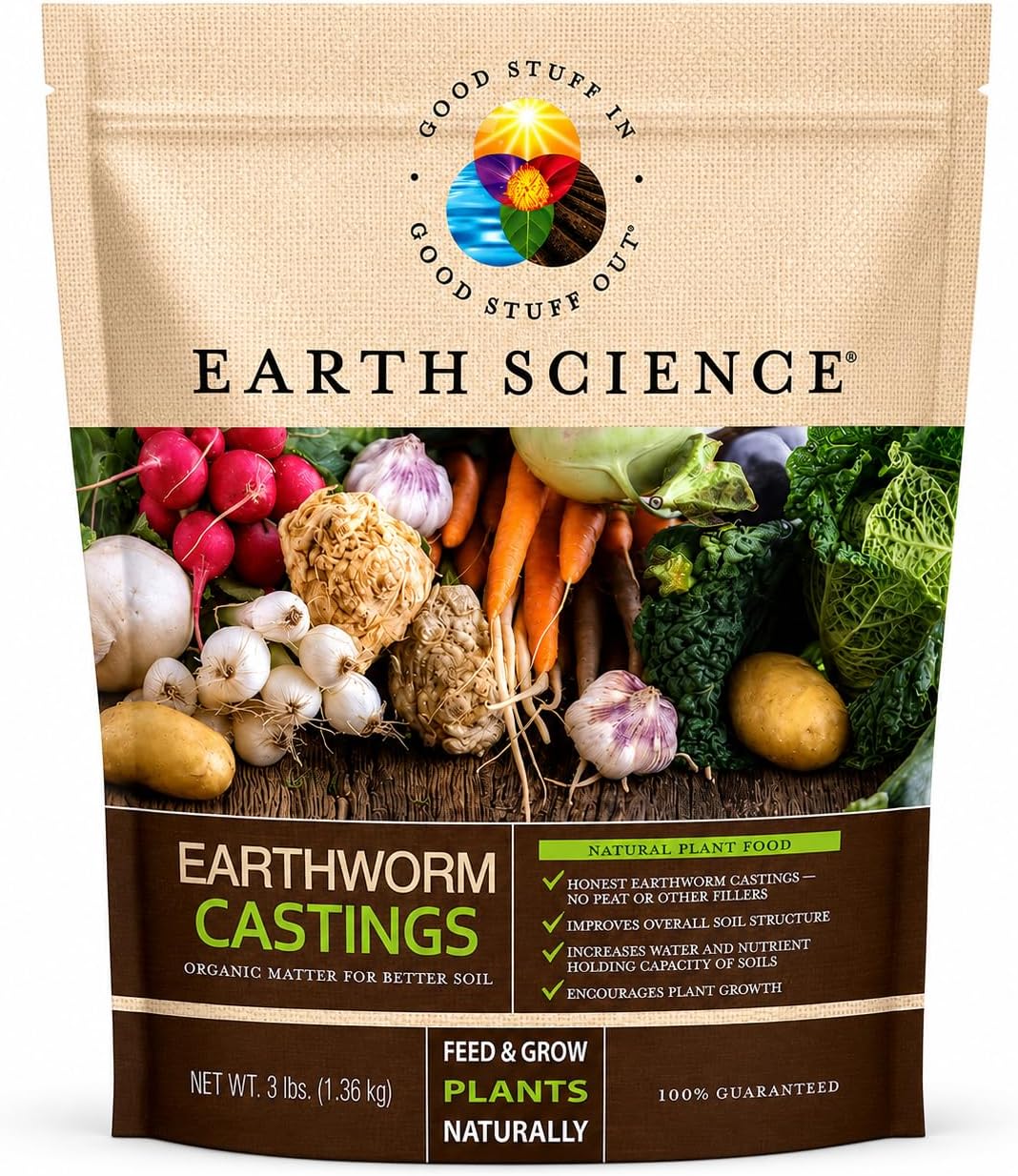
Earth Science Premium Earthworm Castings, 3 lb
| Item Form | Granules |
|---|---|
| Specific Uses For Product | Organic,Plant Food,Plant Growth |
| Coverage | Medium |
| Target Species | gardens, flower beds, fruits, trees, shrubs |
| Mixing Ratio | 1:4 |
Earth Science Premium Earthworm Castings are a pure vermicompost product intended to enrich garden and potting soils. Gardeners typically use it as a top dressing, mixed into potting mixes at about 1:4 castings to soil, or incorporated into garden beds at 1/4 to 1/2 inch and watered in; it can also be brewed as compost tea. The castings add organic matter that helps soil retain moisture, supports beneficial microbes, and can reduce compaction by improving aggregation. Practical benefits include a straightforward application for vegetables, flower beds, trees, and shrubs and the flexibility to use in pots, compost piles, or on lawns. The product is free of fillers and presented as a slow-release, natural fertilizer rather than a quick synthetic boost, so expect gradual improvements over weeks to months rather than immediate greening. Because this is a small, concentrated pouch, frequent reapplication during the growing season is recommended for larger beds or heavy-feeding crops.
Best for: Gardeners who prioritize dependable, natural soil improvement for organic vegetable beds and potted edibles and prefer steady, biology-driven results over quick chemical fixes.
Less Ideal for: Growers who need rapid, high-N fertilizer responses for a single fast-growing crop or who require large-volume amendments for extensive beds without frequent reapplication.
- 100% vermicompost with no peat or fillers
- Versatile uses: top dressing, potting mix amendment, compost tea, and compost layering
- Improves soil structure and water retention while feeding beneficial microbes
- Slow-acting nutrient release not suited for immediate greening or fast corrective feeding
Verdict: Use this pure earthworm castings product when you want a reliable, natural soil conditioner that builds long-term fertility for an organic vegetable garden.
Miracle-Gro Potting Mix, 16 qt.

| Volume | 16 quarts |
|---|---|
| Feeds up to | 6 months |
| Guaranteed analysis | 0.21-0.11-0.16 (N-P-K) |
Miracle-Gro Potting Mix is a general-purpose container mix built to give potted plants a balanced growing medium and multi-month feeding. It is typically used to fill pots before planting annuals, perennials, vegetables, and shrubs; the bag instructions recommend filling a container about one third, setting the plant, topping off and watering. The mix contains peat/coir-based components, perlite for drainage, and a slow-release fertilizer designed to feed plants for up to six months, which helps reduce the need for immediate fertilizer applications. Practical benefits are easier transplanting, improved root aeration and consistent nutrient availability without frequent feeding. For peonies in pots this mix supplies a light, well-draining base and built-in nutrients to support establishment in the first season. Important limitations are that peonies prefer rich, long-term soil and larger volumes than many pots provide, so this 16 qt bag fills one 12-inch container only and will need annual repotting or supplemental organic matter and long-term fertilizer for mature plants.
Best for: Gardeners who want an easy, reliable potting mix that supplies immediate structure and built-in nutrients for newly potted container plants, including those trialing peonies in patio pots.
Less Ideal for: Growers planning to keep peonies in the same pot long-term or cultivate very large specimens should consider custom mixes, larger volumes of soil, or mixes formulated for long-term perennial growth.
- Includes slow-release fertilizer that feeds container plants for up to six months
- Formulated with perlite and organic components for improved drainage and aeration
- Ready-to-use bag with clear planting instructions for easy potting
- Designed specifically for container gardening and a wide range of plant types
- 16 qt capacity fills only one 12-inch pot, so larger peony containers require multiple bags or a bigger mix
- Not formulated as a long-term perennial bed soil so additional amendments and feeding are needed for mature peonies
Verdict: A convenient, nutrient-rich potting mix that makes establishing peonies in pots easier by providing drainage and six months of built-in feeding.
Back to the Roots Premium Organic Potting Mix, 6 Quart

| Unit Count | 192 Fluid Ounces |
|---|---|
| Volume | 6 quarts |
| Item Highlight | Peat-free potting soil for outdoor plants, indoor plants, vegetables, herbs and flowers |
| Made in | USA |
Back to the Roots Premium Organic Potting Mix is a small-batch, all-purpose soil designed for indoor and outdoor container plants, including flowers, herbs, and vegetables. The 6 quart bag contains a peat-free blend made from upcycled plant matter and wood fines, with added organic plant food, yucca extract to help retain and regulate moisture, and dolomitic limestone to stabilize pH. In practice this mix is easy to use straight from the bag for potting annuals and bedding plants or for refreshing topsoil in containers. Its light, well-draining texture helps roots establish without becoming waterlogged while still holding enough moisture for frequent flowering plants. Because it is organic and made in the USA, it suits growers who want a lower-carbon-footprint option. Limitations are the small bag size for larger projects and that very heavy feeders or long-term container plantings may need periodic fertilization or larger volumes of soil to maintain vigor.
Best for: Buyers who want a safe, organic, ready-to-use potting mix for potted flowers and small container gardens and prefer products with predictable performance and lower environmental impact.
Less Ideal for: Gardeners planning large-scale repotting, heavy-feeding perennials, or long-term container plantings that require bulk soil or extended nutrient release.
- Peat-free organic formula made from upcycled plant matter and wood fines
- Includes yucca extract for improved moisture retention and control
- Dolomitic limestone added to help balance soil pH for flowering plants
- Light, well-draining texture suitable for container-grown flowers and annuals
- Small 6 quart bag is not economical for large pots or multiple containers
- Does not include slow-release fertilizer strong enough for long-term heavy feeders
Verdict: A reliable, peat-free organic potting mix that delivers predictable moisture control and pH balance for potted flowers and small container gardens.
Choosing the Right Compost for Tulip Bulbs in Pots: Key Factors to Consider
Drainage and Aeration
Tulip bulbs are prone to rot if left in saturated compost. Drainage and aeration determine how quickly excess water moves away from the bulb base and how much oxygen the roots receive. In pots, good drainage means a blend with coarse elements such as horticultural grit, perlite, or larger bark particles to create air pockets while still allowing water to pass through.
When evaluating compost, look for clear notes about particle size and whether the mix is described as free-draining or suitable for bulbs. Poorly drained mixes may feel moist days after watering and will show discoloration or softening at the bulb neck.
Nutrient Balance and Feeding
Containers hold a finite volume of compost, so initial nutrient content and the type of slow-release feeding included matter. Tulips need a boost of phosphorus for strong root development and flowering, plus modest nitrogen to support early growth without encouraging excessive leafy growth at the expense of blooms.
Choose compost that lists balanced nutrition or includes a bulb fertilizer component. If a mix is low in nutrients, plan a follow-up feeding schedule using a low-nitrogen granular or liquid feed designed for flowering bulbs, applied at planting and again as growth begins.
Moisture Retention Relative to Drainage
Compost for pots must strike a balance between holding enough moisture for bulbs to access water and shedding excess to prevent waterlogging. Organic components like peat replacement fibers or well-rotted compost increase moisture retention, while mineral components improve drainage.
Assess how the listed ingredients interact. A mix that holds moisture too tightly can suffocate bulbs in warm weather; a mix that dries out too quickly requires more frequent watering and can stress developing roots. Consider your watering routine and local climate when selecting a compost.
Texture, Particle Size, and Ease of Planting
The physical feel of the compost affects how easily bulbs sit at the correct depth and how roots expand. A crumbly, slightly coarse texture lets you position bulbs firmly without compacting the medium over time. Very fine, powdery mixes can compact under moisture, reducing aeration and making bulb planting fiddly.
Look for composts that specify they are suitable for bulbs or container bulbs and note the presence of coarse sand, grit, or perlite. These indicate a practical texture for planting and for repotting after the flowering season if you lift bulbs for storage.
pH and Chemical Stability
Tulips prefer a soil pH in the slightly acidic to neutral range. Compost pH affects nutrient availability, especially for phosphorus and trace elements that bulbs use during root and flower development. A stable pH also reduces the risk of toxic element release from certain amendments.
Check product information for pH range or statements about neutrality. Avoid mixes that advertise high lime content unless your local tap water is very acidic. If pH adjustment is needed, make small, measured changes rather than large corrections at planting.
Overwintering Performance and Temperature Buffering
Pots experience greater temperature swings than ground soil, which affects bulb dormancy and root survival. Compost that provides some insulation through organic matter and maintains structure in frost will help bulbs overwinter in exposed positions. Conversely, very light mixes can freeze solid and damage roots.
Consider mixes with stable structure and modest organic content that do not collapse when wet and freeze. In colder zones, place pots in sheltered locations or provide additional insulation rather than relying solely on the compost to prevent freeze-thaw damage.
Choosing the Right Container and Drainage Setup
The pot and drainage arrangement work with the compost to keep bulbs healthy. Choose a container with ample drainage holes and avoid designs that trap water at the base. If a decorative pot lacks holes, plant the bulbs in a well-draining inner liner or lift the container onto feet to allow water to escape.
Layering coarse material at the bottom is optional and sometimes unnecessary if the compost itself is free-draining. Instead of creating a perched water table with a thick gravel layer, prioritize a mix with consistent particle sizes and sufficient coarse elements to maintain airflow around bulb roots.
- Use a pot at least twice the bulb height to give roots room
- Ensure several drainage holes and elevate the pot slightly
- Avoid deep gravel layers that can hold a perched water table
Planting Depth, Spacing, and Staging
Plant tulip bulbs at the recommended depth for the bulb size, generally about two to three times the bulb height. In pots, striking the right depth is crucial because shallow planting leads to unstable bulbs and shallow roots that dry out quickly. Firm the compost around each bulb to eliminate large air pockets.
Spacing matters for airflow and nutrient sharing. Crowded bulbs reduce airflow and increase disease risk, while overly sparse planting underuses the pot volume. Staging bulbs of different flowering times in the same pot can extend the display but requires compatible soil moisture and nutrient management.
- Aim for two to three times bulb height as planting depth
- Leave some space between bulbs for airflow and root spread
- Group bulbs with similar flowering times for easier care
Watering Strategy for Potted Tulip Bulbs
Watering needs change through the tulip lifecycle. After planting, water to settle the compost and encourage root contact. During active growth and flowering, keep the compost evenly moist but not waterlogged. Once leaves yellow and the plant enters dormancy, reduce watering to allow the compost to dry slightly.
Use finger tests or a moisture meter to judge when to water rather than adhering to a rigid schedule. Container composition affects drying rates considerably, so adjust frequency seasonally and with ambient temperature.
- Water thoroughly at planting to settle the medium
- Maintain even moisture in growth, then taper as dormancy begins
- Avoid constant surface wetness to reduce rot risk
Preparing Compost for Planting and Mixing Tips
Many commercial composts benefit from small adjustments before potting tulip bulbs. You can increase drainage by mixing in coarse grit or perlite, or raise moisture retention slightly by adding a modest portion of well-rotted leaf mold. Make small trial mixes to find the balance that fits your water habits and climate.
When mixing amendments, aim for a uniform texture. Avoid adding large amounts of fresh organic matter that may tie up nitrogen as it breaks down, which can stunt early root growth.
- Add grit or perlite to heavy mixes to improve drainage
- Use aged organic matter, not fresh compost, to avoid nitrogen drawdown
- Test a small batch before potting all bulbs
Aftercare Through Flowering and Dormancy
Deadhead spent flowers to direct energy back to the bulb if you want stronger next-year blooms. Continue a light liquid feed during active growth if the compost lacks slow-release nutrients. As foliage dies back, cut it only once it has yellowed and withered naturally to allow bulbs to replenish energy stores.
If you intend to lift and store bulbs, remove them from the compost after foliage dies back and allow them to dry in a shaded, well-ventilated spot. Otherwise, refresh the top layer of compost and add slow-release fertilizer in the autumn before the next growth cycle.
- Deadhead but leave foliage until it yellows naturally
- Provide light feeding during active growth if needed
- Lift and store bulbs only if you routinely overwinter them indoors
How We Chose the Best Compost for Tulip Bulbs in Pots
We focused on attributes that directly affect tulip bulbs grown in containers. Primary evaluation criteria included drainage and aeration, because bulbs need free-draining soil to avoid rot; nutrient balance and slow-release feeding, since containers have limited organic reserves; and moisture-holding capacity relative to drainage so bulbs do not dry out between waterings. We also considered texture and particle size to support root penetration and ease of planting, plus pH stability because tulips prefer a slightly neutral to slightly acidic medium. Practical gardener concerns were included, such as whether a compost mixes easily with grit or bulb sand and if it supports overwintering in colder climates. We excluded mixes formulated only for vegetables, cacti, or long-term shrubs that do not match the particle size and feeding profile tulip bulbs need. We also filtered out blends lacking basic composition information. The result is a list of container-appropriate composts that meet these hands-on criteria.
FAQ
Can I use general potting compost for tulip bulbs in pots?
Often general potting compost works if it is modified for drainage and contains some coarse particles. If the mix is very fine or retains water heavily, blend in grit or perlite to improve aeration before planting bulbs.
How much grit or sand should I add to improve drainage?
A common approach is to add around 10 to 30 percent coarse grit or horticultural sand by volume, depending on how heavy the base mix is. Test a small amount first to ensure the resulting texture still holds enough moisture for your watering routine.
Should I fertilize at planting or wait until shoots appear?
Including a modest slow-release bulb fertilizer at planting gives bulbs an early nutrient supply, especially phosphorus for root development. If the compost is already well-balanced, you can wait and apply a light liquid feed when shoots appear.
How do I prevent bulbs in pots from drying out between waterings?
Select a compost with moderate moisture retention and water deeply but less frequently to encourage root growth. Mulching the surface with a thin layer of aged compost or shredded bark in very dry conditions can reduce surface evaporation without restricting drainage.
Can I reuse compost from last year for tulip bulbs?
You can reuse compost if it has not broken down into fine material and still has good structure and nutrients. Refresh it by adding coarse elements and some slow-release nutrients, and remove any diseased plant material before reusing.
Final Verdict
For tulip bulbs in pots, prioritize composts that provide reliable drainage and a balanced, bulb-friendly nutrient profile. Balance moisture retention with aeration so bulbs avoid both drying stress and waterlogging. Consider how your container, watering habits, and local climate interact with compost choice, and be prepared to tweak mixes with grit or aged organic matter. Focus on the core tradeoffs: drainage versus moisture retention and structure versus fine texture. When you select a compost that matches those priorities, you give tulip bulbs the best chance of producing strong roots and consistent spring blooms.
