

Note: This article contains affiliate links. If you click on these links and make a purchase, I may earn a small commission at no extra cost to you. This helps support my research and content. Read my full affiliate disclosure here.
Starting seeds in peat free compost changes how seedlings establish roots, retain moisture, and access nutrients. You want a mix that encourages steady root growth without staying waterlogged or compacting as the plants develop. This guide reviews six top peat free composts tailored for seedlings and explains the practical tradeoffs gardeners face when raising trays, pots, or plug plugs. We shortlisted mixes that focus on drainage, particle structure, and nutrient delivery. Below you will find why those factors matter and how they affect germination, early growth, and successful transplanting.
Top Picks at a Glance
| Best Overall The best all-around choice for most situations | Sawgrass Organics Organic Potting Mix, 4 qt |  |
| Best Quality Built to a higher standard if you want something more solid | Organic Mechanics 110 Blend Organic Potting Soil, Peat-Free 1.76 cu ft |  |
| Best Budget The cheapest option that still gets the job done reliably | COCF Coco Coir Brick — Low EC, pH‑Balanced Compressed Coconut Coir (1.4 lb) |  |
| Highest Rated A top-rated pick with lots of positive feedback | circle soil Houseplant Potting Mix (Peat-Free, 4 Qt) |  |
| Most Popular A crowd favorite that many people choose with confidence | Gro-Med Organic Coco Coir Block Enriched with Plant Food |  |
| Best Seller A high-volume bestseller chosen again and again | Back to the Roots Organic Seed Starting Mix — Expanding 12 Quart Block |  |
Sawgrass Organics Organic Potting Mix, 4 qt

| Volume | 4 quarts |
|---|---|
| OMRI Listed | Yes |
| Unit Count | 128 Ounce |
| Peat-Free | Yes |
| Triple Screened Compost | Yes |
This 4 qt Sawgrass Organics potting mix is a ready-to-use, peat-free blend designed for potted vegetables, herbs and seedlings. It combines fully composted, triple-screened compost with coco coir for water retention and biochar to support microbial life and nutrient holding. Because it is triple screened and blended at a controlled moisture level it arrives consistent and largely free of debris and gnats, which makes it easy to use straight from the bag for repotting, starting seeds or top-dressing containers. The peat-free formula re-wets reliably after drying and resists compaction so root systems stay airy in small pots and raised planters. It is OMRI listed, so it fits an organic vegetable garden workflow. The main limitations are the small 4 quart volume, which means frequent repurchasing for larger beds, and the lack of built-in fertilizer so regular feeding is still needed for heavy-feeding vegetables.
Best for: Gardeners who prioritize reliable, organic-tested potting media for container-grown vegetables, herbs, and seedlings and who want a consistent, low-maintenance mix to repot or start plants.
Less Ideal for: People installing or amending large in-ground vegetable beds who need bulk soil or those seeking a mix with built-in long-term fertilizer and amendments for heavy feeders.
- Peat-free blend with coco coir for good water retention and easier re-wetting
- Contains fully composted, triple-screened compost for consistent texture and few debris
- Biochar included to support beneficial microbes and nutrient retention
- OMRI listed for use in organic production
- Blended and bagged at controlled moisture to reduce gnats and make it usable immediately
- Small 4 quart bag is insufficient for large vegetable beds or multiple containers
- Does not include starter fertilizer so feeding is required for heavy-feeding vegetables
Verdict: Choose this potting mix when you want a consistent, peat-free, OMRI-listed blend that re-wets well and supports healthy roots in container vegetable gardens.
Organic Mechanics 110 Blend Organic Potting Soil, Peat-Free 1.76 cu ft

| Brand Name | Organic Mechanics |
|---|---|
| Unit Count | 1.76 Count |
| Volume | 1.76 cubic feet |
| Style Name | Potting Soil |
The Organic Mechanics 110 Blend is a peat-free, ready-to-use potting soil designed for seedlings, container plants, and small outdoor gardens. The mix combines coco coir, perlite, biochar, compost, and worm castings to deliver good drainage and aeration while retaining enough moisture for young roots. Mineral amendments such as azomite, kelp meal, bone char, zeolite, and alfalfa meal supply a spectrum of nutrients and trace elements that support early growth and soil microbial activity. In practice this makes the blend easy to use straight from the bag for seed starting in trays or transplanting into small pots, and it is particularly helpful where peat-free media are preferred. It is not a complete fertilizer system so you should plan a light feeding schedule as plants enter vegetative and flowering stages. The bag size covers several seedling flats and smaller containers, but larger projects will need multiple bags. For growers focused on performance and sustainable inputs, this mix balances structure and nutrition well, with the caveat that supplemental fertilizer will improve longer-term growth.
Best for: Growers who prioritize peat-free, performance-oriented media and want a ready-to-use mix that supports vigorous early root growth and soil biology for seedlings and small containers.
Less Ideal for: Gardeners who prefer a pre-fertilized potting mix or who need bulk quantities for large beds should consider alternatives tailored to those needs.
- Peat-free formula using coco coir and biochar for sustainable moisture retention
- Good drainage and aeration from perlite and structured blend, aiding root development
- Includes compost and worm castings to support beneficial soil microbes
- Mineral amendments (azomite, kelp, bone char, zeolite, alfalfa) provide broad micronutrient support
- Not a complete fertilization solution so supplemental feeding is recommended for longer growth
- Single 1.76 cu ft bag may be small for larger seedling runs or many containers
Verdict: A deliberately formulated peat-free potting mix that gives seedlings strong root structure and microbial support while fitting growers who will top up nutrients as plants mature.
COCF Coco Coir Brick — Low EC, pH‑Balanced Compressed Coconut Coir (1.4 lb)

| Unit Count | 22.9 Ounce |
|---|---|
| Volume | 2 gallons |
| Brand Name | COCF |
This coco coir brick is a compact, budget‑friendly way to add a neutral, airy growing medium to your potting mixes or garden beds. The compressed 1.4 lb brick soaks up water and expands to about 2 gallons of light, fibrous coir in minutes, making it handy for seed starting, mixing with garden soil, or improving drainage for bulbs like tulips. Low electrical conductivity and near‑neutral pH mean it will not add salts or shift soil acidity, and the fibrous texture improves aeration and root development while holding moisture without waterlogging. It is easy to store and portion for small projects, and it is made from renewable coconut husk. Limitations are that coco coir provides little in the way of nutrients by itself, so you will still need to mix in compost or fertilizer for tulips to get strong blooms, and more substantial amendments may be needed for long‑term in‑ground beds.
Best for: Buyers on a tight budget who need an inexpensive, space‑saving substrate to amend potting mix or prepare small batches of bulb soil for tulips and other spring bulbs.
Less Ideal for: Gardeners who want a ready‑to‑plant, nutrient‑rich potting mix or who need large volumes of pre‑amended soil for extensive beds should look at blended soils or compost instead.
- Expands to ~2 gallons from a small compressed brick for easy storage and transport.
- Low EC and near‑neutral pH suitable for mixing into bulb planting mixes without raising salinity.
- Fibrous structure improves aeration and moisture retention, reducing risk of root rot.
- Made from renewable coconut husk, a biodegradable alternative to peat.
- Contains virtually no nutrients on its own so additional fertilizer or compost is required.
- Compressed brick format requires soaking and handling before use, which adds prep time.
Verdict: A low‑cost, low‑EC coco coir brick that expands into a lightweight, airy substrate ideal for amending soil when planting tulip bulbs.
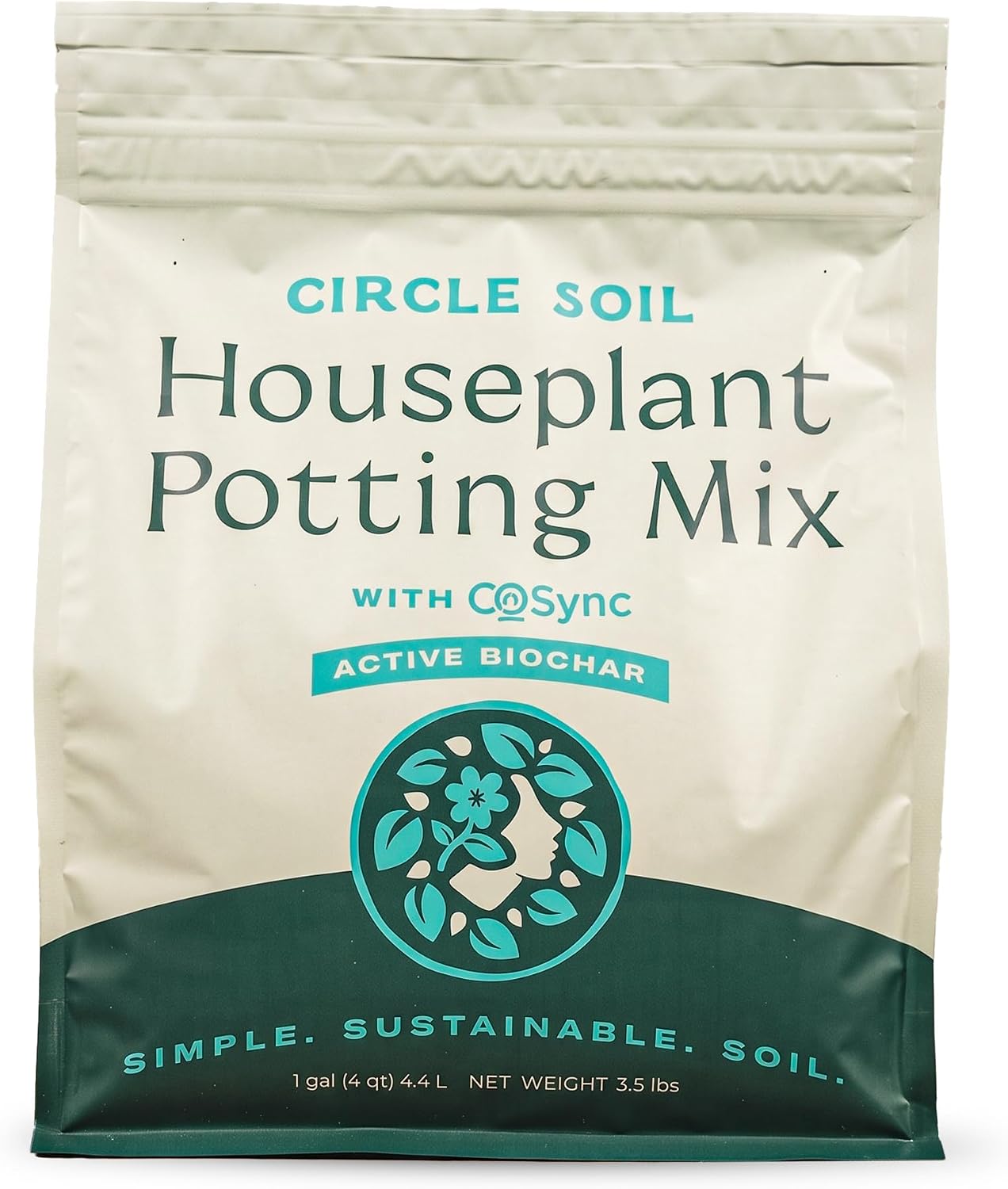
circle soil Houseplant Potting Mix (Peat-Free, 4 Qt)
| Unit Count | 56 Ounce |
|---|---|
| Item Highlight | Active Biochar, Worm Castings, Expanded Shale, Peat-Free, Organic, for Indoor Plants and Herbs |
| Brand Name | circle soil |
| Number of Packs | 1 |
This peat-free houseplant potting mix is built around active biochar, coconut coir and expanded shale to give a light, well-aerated medium that holds moisture without waterlogging. Typical uses include repotting potted herbs and common houseplants or topping up container soil for more even moisture retention. Notable features are the biochar that helps retain nutrients and support microbial life, worm castings and local compost for organic feeding, and expanded shale for natural drainage. In practice the mix should reduce the risk of root rot and encourage healthy root development by balancing air and water in small pots. Because it is designed for everyday indoor use, gardeners will appreciate the resealable packaging and the peat-free composition if they prefer sustainable ingredients. Limitations are that the bag is a modest 4 quart size, so frequent purchases are likely for multiple or larger containers, and gardeners needing a gritty, fast-draining cactus mix or a heavy-duty outdoor planting soil will want a different formula.
Best for: Gardeners who prioritize consistent, reliable results for potted herbs and common indoor plants and prefer sustainable, peat-free mixes for routine repotting and container care.
Less Ideal for: Growers who need large volumes of soil for outdoor beds or a very gritty, cactus-specific mix for drought-tolerant plants should consider other products.
- Peat-free formula with active biochar to improve nutrient retention and microbial activity
- Balanced aeration and drainage from expanded shale and coconut coir to prevent waterlogging
- Contains organic amendments like worm castings and compost for gentle, ongoing nutrition
- Resealable packaging helps keep the small bag usable between repottings
- Small 4 quart unit requires buying multiple bags for more than a few pots
- Not formulated specifically for succulents or heavy outdoor soils so drainage profile is moderate rather than very fast
Verdict: Choose this peat-free, biochar-enriched potting mix when you want a reliable, sustainable medium that keeps potted cilantro and other herbs evenly moist without soggy roots.
Gro-Med Organic Coco Coir Block Enriched with Plant Food

| Ingredients | Coco coir |
|---|---|
| Item Highlight | OMRI listed triple washed organic peat free potting mix and seed starter |
| Unit Count | 2560 Fluid Ounces |
| Volume | 75.71 cubic feet |
This Gro-Med coco coir block is a peat-free, compressed growing medium that hydrates into a light, airy potting mix suited for seedlings and young plants. You hydrate the brick with warm water and within 10 to 15 minutes it expands into a fluffy medium you can use for seed trays, small pots, or to amend mixes for raised beds and hydroponics. Notable features include triple-washed low-salt coir, added beneficial microbes and plant-derived nutrients, and a screened texture that helps roots spread. Practically, it holds water well while still draining so seedling roots stay moist without becoming waterlogged, and the low electrical conductivity reduces risk of salt damage to tender roots. Important limitations are that it is a single-component medium so seedlings started directly in it will benefit from occasional nutrient top-ups as the added food is limited, and the compressed brick requires a short prep step to rehydrate. For gardeners who prefer peat-free, OMRI-listed options, this offers a clean, consistent base for reliable seed starting.
Best for: Gardeners who want a reliable peat-free seed-starting medium with low salt content and biological enrichment, especially those who value verified product quality and predictable performance.
Less Ideal for: Growers who want an all-in-one, long-term potting soil that never needs feeding or those who cannot or prefer not to mix and hydrate compressed blocks.
- Peat-free, OMRI-listed coconut coir that supports sustainable gardening
- Triple-washed low-salt coir reduces risk of salt burn to seedlings
- Enriched with mycorrhizae and plant-based nutrients for early growth support
- Expands quickly into a light, airy texture that promotes root aeration and drainage
- Single-component medium with limited built-in nutrients, so periodic feeding is needed for longer-term growth
- Requires rehydration and handling before use, which adds a prep step
Verdict: Choose this if you want a peat-free, low-salt coco coir base that expands into a lightweight, biologically enriched medium ideal for starting seedlings.
Back to the Roots Organic Seed Starting Mix — Expanding 12 Quart Block

| Volume | 12 quarts |
|---|---|
| Item Type Name | Seed Starting Mix |
| Unit Count | 384 Fluid Ounces |
| OMRI Listed | Yes |
| Peat Free | Yes |
This compressed seed starting mix is a coir-based block that expands to 12 quarts of loose, ready-to-use seedling soil after adding water. It is designed for starting seeds, potting up seedlings, and amending small pots for herbs, vegetables, and flowers. Notable features include an OMRI-listed organic formulation, balanced pH and low electrical conductivity to support nutrient uptake, and compact storage compared with bulky soil bags. In practice the block is easy to hydrate and fluffs up quickly, producing a light, airy medium with good water retention and aeration for root development. The convenience of a single expanding block and beginner-friendly handling makes it a reliable choice for cautious gardeners who want predictable results without mixing multiple ingredients. Limitations are that it is a single-purpose starter mix rather than an all-in-one fertilized potting soil and larger projects will need multiple blocks, so plan quantities ahead.
Best for: Practical gardeners who want a reliable, easy-to-use organic starter medium for small-scale seed trays, pots, and indoor seedlings and who prioritize predictable, low-fuss results.
Less Ideal for: Gardeners needing a ready-to-use, fertilized all-purpose potting soil for large container gardens or immediate long-term container plantings should consider an enriched potting mix instead.
- Expands to 12 quarts from a compact compressed block for easy storage and transport
- OMRI-listed organic and peat-free formulation suitable for organic growing
- Neutral pH and low electrical conductivity support seedling nutrient uptake
- Light, fluffy texture promotes good aeration and root development
- Simple to hydrate and use, friendly for beginners and low-effort setups
- Sold as a bare starting mix without added fertilizer for later stages
- Single block size requires purchasing multiple units for larger seed batches
Verdict: A compact, OMRI-listed organic seed starter that reliably expands into a light, neutral-pH medium for predictable, beginner-friendly seed starting.
Choosing the Right Peat Free Compost for Seedlings: Key Factors to Consider
Drainage and Aeration
Good drainage and aeration keep young roots healthy by preventing waterlogging and promoting oxygen flow. Seedlings have fine feeder roots that suffer when mixes stay saturated; poor aeration leads quickly to damping-off and slow growth.
Assess the compost's coarse-to-fine particle ratio. Mixes with a portion of coarse material such as fine wood fibre, coir chips, or perlite help water pass while retaining some moisture. For seed trays, a balance that dries slightly between waterings is preferable to a mix that remains constantly wet.
Particle Texture and Consistency
Particle texture affects seed placement, germination uniformity, and how easily roots can push through the mix. Very fine, dusty compost compacts and creates a crust that hinders emergence. Conversely, very coarse mixes can leave seeds too exposed and dry.
Consistency matters for repeatable results. If packets vary widely in texture, you will see uneven germination across trays. Choose mixes described as fine-sowing or seed-starting with a uniform texture suited to the size of seeds you grow.
Starter Nutrient Balance
Seedlings need a modest amount of readily available nutrients once they have true leaves. Too little nutrient forces weak, pale growth and slow development. Too much, especially strong fertilizer salts, can scorch tender roots and stunt seedlings.
Look for peat free mixes formulated with a light starter feed or a predictable baseline nutrient content. That lets you control subsequent feeding without risking early burn. The ideal balance supports 2 to 4 weeks of growth before light liquid feeding or potting-on is required.
Sterility and Cleanliness
A clean, low-pathogen mix reduces the risk of damping-off, mold, and weed seed contamination during the vulnerable germination stage. Sterile production methods or heat-treated components reduce the microbial load and help seedlings get established.
While no mix can guarantee zero pathogens, those produced for seed starting typically have fewer weed seeds and lower disease pressure than recycled garden composts. This lowers maintenance and the need for corrective measures during early growth.
Water Retention Vs. Dry-Back
Peat free composts use alternatives like coir, wood fiber, and composted green waste to hold water. The key is predictable water retention so you can schedule watering and avoid soggy conditions.
For seedlings, aim for a mix that retains enough moisture to avoid daily misting but still allows the surface to dry slightly between waterings. Understanding how a mix dries back in your environment helps you avoid overwatering and ensures roots explore rather than sit in standing moisture.
Sustainability and Component Sourcing
Peat free options are often chosen for environmental reasons. Check what materials replace peat and how they are sourced. Locally produced green compost, responsibly harvested coir, and sustainably processed wood fiber are preferable to mixes relying on high-transport inputs.
Sourcing affects not just the environmental footprint but also consistency. Some renewable components vary seasonally, so blends that specify stable sourcing methods tend to deliver more predictable results in the garden.
How a Seedling Mix Behaves in a Tray
Seedling mixes need to deliver a predictable environment across an entire tray so every seed has similar moisture and oxygen. In practice that means the surface should allow tiny roots to emerge, the body of the mix must hold enough moisture without forming a crust, and the bottom should drain freely to avoid saturated pockets.
When potting up, note how easily roots slide out with minimal disturbance; mixes that cling tightly to roots can tear them during transplanting. Observing how a mix dries over several days will indicate whether you need to adjust watering frequency or add perlite or grit for better airflow.
- Fine but open texture supports small seeds and delicate roots
- Uniform moisture level across trays reduces uneven germination
- Easily crumbles at potting on to reduce transplant shock
Tips for Sowing Tiny Seeds Without Peat
Tiny seeds need close contact with the surface without being buried. Use a fine, even layer of peat free seed compost and press gently with a board or the base of a tray. Covering with a light dusting of the same mix or a very fine grit helps maintain humidity while still allowing light to reach seeds that need it.
For very small seed sizes, consider mixing a little fine grit or horticultural sand into the surface layer to improve contact and reduce the chance of floatation when watering. A fine spray of water works better than pouring for the first few waterings.
- Use a gentle misting bottle for initial watering
- Press seeds into the surface for good soil contact
- Match surface texture to seed size for best germination
Managing Watering with Fast-Draining Mixes
Peat free mixes that drain quickly are forgiving against root rot but may need more frequent monitoring. Water from below using trays to encourage downward root growth and avoid disturbing tiny seedlings. Top-watering is best applied as a fine spray once roots are established.
If you find the mix dries unevenly, amend with small amounts of water-retentive fibre or add a layer of finer compost on the surface to conserve humidity. The goal is consistent moisture at the root zone without pooling.
- Consider bottom-watering to encourage deep root growth
- Adjust watering frequency rather than volume with coarse mixes
- Use humidity domes cautiously to prevent condensation issues
Potting On: When and How to Transition Seedlings
Seedlings are ready to pot on when they have at least one set of true leaves and are sturdy enough to handle. Use a slightly richer peat free potting mix for the next stage, but avoid mixes with heavy slow-release feeds intended for mature containers.
Gently tease roots if they are circling, and plant slightly deeper to encourage strong stem development. Water after repotting and allow the compost to settle naturally; avoid compressing the mix which reduces aeration.
- Wait for true leaves before potting on
- Choose a slightly richer, still-peat-free mix for growth stage
- Handle roots gently to limit shock during transplant
Dealing with Common Seedling Problems
Damping-off, leggy growth, and patchy germination are often related to the mix and microclimate as much as to seed quality. Thin, poorly drained mixes promote fungal problems, while overly wet conditions cause roots to rot. Ensure adequate airflow and avoid overcrowding to reduce disease pressure.
Leggy seedlings usually indicate insufficient light rather than compost issues. Use a brighter location or supplemental light and avoid excessive nitrogen feed which can encourage weak, floppy growth.
- Improve light to prevent legginess
- Ensure good airflow to reduce fungal issues
- Adjust water and mix texture if damping-off appears
How We Chose the Best Peat Free Compost for Seedlings
We evaluated candidate peat free composts using criteria that matter for starting seed trays and small pots. Particle structure and drainage were prioritized because seedlings need good air at the root zone; mixes that compact quickly or hold too much water were excluded. Nutrient balance and starter feed levels were assessed so mixes provide enough food for the first true leaves without burning delicate roots. Sterility and weed/weed seed control were considered to reduce early competition and disease risk. Texture consistency and packet-to-packet reliability mattered for consistent sowing and even germination. Environmental credentials were noted, focusing on responsibly sourced, renewable components rather than peat. We excluded multi-purpose garden soils and raw materials intended for potting on because they are often too heavy for early growth. We also filtered out mixes formulated for established container plants that carry excessive slow-release fertilizer. The final list favors mixes specifically blended for seedlings or fine-sowing, evaluated on drainage, nutrient level, particle size uniformity, sterility, and environmental sourcing.
FAQ
Can I use peat free compost for all seed types?
Often yes. Most peat free seed composts are formulated for a wide range of seeds, but very small seeds may need a finer surface layer. Check the mix texture and adjust the sowing technique for fine seeds to ensure good contact and even germination.
How soon should I start feeding seedlings in peat free mixes?
Usually seedlings need light feeding after they develop their first true leaves, about two to four weeks depending on growth. If the mix contains a small starter nutrient, wait until signs of nutrient depletion before adding dilute liquid feed.
Will peat free mixes hold too little water for seedlings?
It depends on the blend. Some peat free mixes drain faster and require more frequent watering, while others include water-retentive fibers that hold moisture. Monitor how a mix dries in your environment and adjust watering or amend with fine coir to increase retention if needed.
How do I prevent damping-off when using peat free compost?
Use sterile, seed-starting specific mixes, avoid overwatering, provide good airflow, and sow at recommended depths. Avoid using garden compost in trays and keep humidity domes ventilated to reduce condensation and fungal growth.
Can I make my own peat free seed compost at home?
You can create a DIY blend using fine composted green waste, well-rotted leaf mould, fine coir, and a small portion of perlite or grit for drainage. Ensure components are clean and free of weed seeds and that texture is fine and consistent for small seeds.
Final Verdict
Choosing the right peat free compost for seedlings is a balance between drainage, texture, and a modest nutrient level. Prioritize a mix that offers good aeration and a uniform fine texture so seeds germinate evenly and roots establish without compaction. Accept the tradeoff that peat free options will vary in water-holding and sourcing. Focus on how a mix behaves in your trays and how easily it pots on. That approach will get seedlings off to a reliable start and reduce transplant shock when they move to larger containers or the garden.
