

Note: This article contains affiliate links. If you click on these links and make a purchase, I may earn a small commission at no extra cost to you. This helps support my research and content. Read my full affiliate disclosure here.
Finding the right shade plants for outdoor pots matters because containers behave differently from in-ground beds. Potted shade plants face limited soil volume, variable drainage, and hotter root temperatures in summer, so choosing species that handle those stresses keeps foliage healthy and reduces maintenance. This guide covers seven top picks suited specifically for outdoor pots and patios, shortlisted for their reliability in low to dappled light, container-friendly root habits, and ornamental value. Below you will find practical notes on container care, planting combinations, and the evaluation criteria used to pick options that perform well in real garden and patio conditions.
Top Picks at a Glance
| Best Overall The best all-around choice for most situations | Plants for Pets Autumn Fern (Dryopteris erythrosora) 1-Gallon Live Outdoor Plant |  |
| Best Quality Built to a higher standard if you want something more solid | Touch Of ECO Hosta Bare Roots 6-Pack (Mixed Heart-Shaped) |  |
| Best Value The sweet spot between price and what you get | SVI Rainbow Coleus Heirloom Flower Seeds (1200 Count) |  |
| Best Budget The cheapest option that still gets the job done reliably | CZ Grain Crimson Sky Caladium Bulbs (6) |  |
| Highest Rated A top-rated pick with lots of positive feedback | Hosta 'Blue Angel' Perennial (Size #1 Container) |  |
| Most Popular A crowd favorite that many people choose with confidence | PERFECT PLANTS Frostproof Gardenia Live Plant, 1 Gallon |  |
| Best Seller A high-volume bestseller chosen again and again | HOME GROWN Rainbow Mix Coleus Seeds (approx. 400) |  |
Plants for Pets Autumn Fern (Dryopteris erythrosora) 1-Gallon Live Outdoor Plant

| Indoor Outdoor Usage | Outdoor |
|---|---|
| Sunlight Exposure | Partial Shade |
| USDA Hardiness Zone | 7 |
| Moisture Needs | Moderate Watering |
| Soil Type | Sandy Soil |
This autumn fern is a shade-tolerant perennial sold in a 1-gallon nursery pot and intended for outdoor planting. It is used as ground cover, a border or understory specimen where filtered light prevails; new fronds emerge copper-red in spring and mature to deep green for seasonal interest. The plant spreads slowly by rhizomes, so you can expect gradual filling-in rather than rapid crowding. It prefers evenly moist, well-drained soil and regular watering but is reported to tolerate short dry periods once established. Notable features include deer and rabbit resistance, suitability for heavy shade, and hardiness to Zone 7. Practical benefits for planter use include attractive, low-profile foliage that adds texture and color contrast to shady containers and paired plantings. Limitations are that it is sized for outdoor beds and planters rather than indoor display, and it will need consistent moisture and appropriate shade to keep fronds healthy; it is not a fast spreader for quick coverage if you need instant fill in a large planter group.
Best for: Buyers who want a low-profile, reliable shade plant for planters or shady borders and prioritize attractive foliage and low pest pressure over rapid spread.
Less Ideal for: Gardeners who need fast ground cover or immediate dense screening, or those planning bright sun containers or indoor plantings.
- Shade-tolerant with attractive seasonal color from copper-red new fronds to deep green mature fronds
- Hardy to Zone 7 and resistant to deer and rabbits for low-loss outdoor planting
- Sold fully rooted in a 1-gallon nursery pot ready for transplanting into planters or beds
- Slow, rhizome-driven spread gives controlled ground-cover without aggressive invasion
- Requires consistently moist, well-drained soil and regular watering for best foliage condition
- Not intended as an indoor houseplant and may decline in bright sun or dry indoor conditions
Verdict: Choose this autumn fern when you need a hardy, shade-loving planter plant that delivers year-round foliage interest with minimal pest problems.
Touch Of ECO Hosta Bare Roots 6-Pack (Mixed Heart-Shaped)

| Unit Count | 6 Count |
|---|---|
| Indoor Outdoor Usage | Outdoor |
| USDA Hardiness Zone | 3-9 |
| Moisture Needs | Regular Watering |
These Touch Of ECO hosta bare roots arrive dormant and are intended to be planted in fall or early spring for reliable, low-maintenance shade interest. Each pack contains six mixed heart-shaped hosta crowns that produce rich green foliage and fragrant white or purple flowers on tall stems from spring through fall. Hostas are typically used in shady borders, under trees, or in large planters where regular watering and indirect light suit them best. The listing notes hardiness to zones 3 through 9, so they will return year after year in a wide range of climates, and the plants attract pollinators while being resistant to deer. Practical gardeners will appreciate that the plants ship as bare roots for easy planting and faster establishment when placed with the crown at soil level and watered in. Limitations are that these are not container-ready potted plants and need initial attention to planting depth and moisture; smaller or shallow planters may not give the crowns enough room to spread.
Best for: Gardeners who want reliable, low-maintenance shade plants to establish in planters or beds and prefer economical bare-root stock they can plant themselves.
Less Ideal for: Buyers who want instant, display-ready potted plants or who need specimens sized for very small decorative containers.
- Six bare-root crowns per pack provide quick value for filling multiple planters or a shady border
- Hardy across USDA zones 3–9 so they are suitable for most climates
- Attractive heart-shaped foliage with seasonal fragrant blooms adds texture and pollinator value
- Ships dormant for easy handling and planting in fall or early spring
- Arrives as bare roots rather than established potted plants, so initial planting care is required
- Not suitable for very small or shallow containers where crowns cannot spread
Verdict: A cost-effective way to fill shady planters or beds with hardy, low-maintenance hostas if you are comfortable planting bare-root stock.
SVI Rainbow Coleus Heirloom Flower Seeds (1200 Count)

| Unit Count | 1200 Count |
|---|---|
| Sunlight Exposure | Partial Shade |
| USDA Hardiness Zone | 4-10 |
| Moisture Needs | Regular Watering |
| Material Features | GMO Free, Heirloom |
These SVI rainbow coleus seeds are an economical choice for filling pots and shady spots with colorful, low-maintenance foliage. The packet contains a high unit count suitable for seeding many containers or creating dense drifts in garden beds. Coleus thrives in partial shade, germinates quickly in about 7 to 14 days, and grows into bushy 12-inch plants that respond well to pinching for fuller mounds. The seeds are heirloom and GMO free, and each pack includes planting guidance to simplify starting indoors or direct sowing after frost. Practical benefits include strong shade tolerance, flexible use in pots or borders, and regular watering needs that are straightforward for routine care. Limitations are mostly about the plant type: coleus is grown for foliage not flowers, so it contributes color and texture rather than prominent blooms, and successful results depend on keeping soil evenly moist and protecting plants from harsh afternoon sun in hot climates.
Best for: Buyers who want an affordable way to populate multiple pots or shady borders with colorful, low-effort foliage plants and who prefer straightforward seed-starting guidance.
Less Ideal for: Gardeners seeking plants focused on large, long-lasting blooms or those who cannot provide regular watering or occasional shade protection during heat spikes.
- High seed count (1200) lets you fill many pots or create dense plantings
- Heirloom, GMO-free seeds with planting guidance included
- Performs well in partial shade and is described as shade resistant
- Fast germination (7–14 days) and compact 12-inch habit ideal for containers
- Primarily grown for foliage rather than showy flowers
- Needs consistent moisture and protection from hot afternoon sun
Verdict: A cost-effective seed pack for quickly filling shade pots and beds with colorful, low-maintenance coleus foliage.
CZ Grain Crimson Sky Caladium Bulbs (6)

| Indoor Outdoor Usage | Outdoor |
|---|---|
| Expected Blooming Period | Summer |
| Sunlight Exposure | Partial shade to bright filtered light |
| USDA Hardiness Zone | Zones 9–11 for outdoor overwintering; lift and store tubers in colder zones |
| Moisture Needs | Evenly moist, well drained soil; avoid standing water |
These Crimson Sky caladium tubers offer an easy way to add dramatic red-and-pink foliage to a shade border or patio container during the warm season. Each pack contains six dormant tubers you plant about 2 inches deep after the soil has warmed; give plants partial shade or bright filtered light and consistently moist, well-drained soil for best results. The variety is grown for its leaves rather than flowers and can reach about 5 feet tall in favorable conditions, making it useful as a background or specimen in moist, shady spots. Because caladiums are tender, gardeners in colder zones should lift and store tubers before frost or treat them as annuals. Practical benefits include quick seasonal impact from a small number of tubers and flexible use in pots or beds, but you will need to manage winter storage in zones below 9 and avoid waterlogged soils that cause rot. Overall care is straightforward if you can provide regular moisture and filtered light.
Best for: Gardeners who want a low-effort, high-impact foliage plant for moist, partially shaded beds or containers and who prefer seasonal color they can manage year to year.
Less Ideal for: Those seeking cold-hardy perennials or gardeners who cannot provide regular moisture management and winter storage.
- Bold, decorative red and pink foliage that adds instant color to shady areas
- Six tubers allow planting as a group in one container or spacing across a bed
- Clear planting and care guidance for warm-season planting and overwintering
- Performs well in evenly moist, well drained soils suited to the article's moist-soil focus
- Tender tubers need to be lifted and stored in climates colder than USDA zones 9–11 or treated as annuals
Verdict: If you want an easy seasonal splash of bold foliage for moist, shady spots, these six Crimson Sky caladium tubers deliver immediate impact with simple warm‑season care.
Hosta 'Blue Angel' Perennial (Size #1 Container)

| Indoor Outdoor Usage | Outdoor |
|---|---|
| Sunlight Exposure | Partial Shade |
| USDA Hardiness Zone | 3 |
| Moisture Needs | Moderate Watering |
| Expected Blooming Period | Summer |
Hosta 'Blue Angel' is a shade-tolerant perennial valued for its very large blue leaves and white summer blooms. Sold in a #1 container and ready to plant, it forms a broad, graceful mound that fills shady beds or large containers; leaves can be substantial and the clump reaches roughly 36 inches tall. This variety is described as slug-resistant and low maintenance, and it tolerates some sun if soil is kept moist, which makes it useful on bright, sheltered patios or under trees. It typically blooms in June and July, adding vertical flower spikes that contrast with the deep foliage. Expect typical perennial behavior: establish in the first season, then expand into a fuller specimen in following years. Limitations are its large mature size which needs space or a big pot, and it may be shipped dormant in winter so foliage may be sparse on arrival depending on season. Does best with regular moisture and partial shade rather than full sun or very dry sites.
Best for: Gardeners who need a reliable, low-maintenance shade plant that quickly establishes a bold, architectural presence in beds or large patio containers.
Less Ideal for: People with very small pots, tiny balcony spaces, or those seeking compact plants for tight groupings should consider smaller hosta varieties instead.
- Distinctive large, deep bluish foliage that creates strong shade-season presence
- Low maintenance perennial habit suitable for long-term planting
- Slug-resistant variety reduces common pest damage on hostas
- Tolerates partial sun when kept consistently moist
- Large mature spread requires generous spacing or a large container
Verdict: Choose Hosta 'Blue Angel' when you want a dependable, low-maintenance shade plant that makes an immediate, dramatic foliage statement.
PERFECT PLANTS Frostproof Gardenia Live Plant, 1 Gallon

| Indoor Outdoor Usage | Outdoor |
|---|---|
| Other Special Features of the Product | Deer Resistant, Fragrant |
| Expected Blooming Period | Summer |
| Sunlight Exposure | Full Sun, Partial Shade |
| Expected Planting Period | Spring |
This 1-gallon Frostproof gardenia is a compact, fragrant shrub intended for outdoor landscape use. It arrives as a live plant with a recommended mature height around 5 feet and is typically planted in mulch beds, as a low hedge, or as an accent near entries where its scent can be enjoyed. Notable features include deer resistance, a history of reliable spring and summer blooms, and included easy-to-use plant food for a simpler start. The plant prefers full sun to partial shade, so it will tolerate some shaded locations but performs best where it receives several hours of direct light. Practical benefits for a cautious buyer are straightforward care, minimal pruning to maintain shape, and an aromatic presence that enhances small gardens or patios. Limitations are that it is sold as a 1-gallon specimen so it will need time to reach mature size, and the product text notes shipping exclusions to a few states which affects availability for some buyers.
Best for: Buyers who want an easy-care, scented shrub for a small garden or patio and prefer reliable, low-maintenance plants that establish steadily rather than instant large specimens.
Less Ideal for: Gardeners seeking an immediate tall screening hedge or a plant for deep, full shade should consider alternative species better suited to dense shade or instant privacy needs.
- Fragrant white blooms that enhance outdoor seating areas during spring and summer
- Deer resistant variety reduces need for protective measures in deer-prone yards
- Includes plant food to simplify initial establishment
- Tolerates partial shade, allowing placement in spots without full sun all day
- Sold as a small 1-gallon plant so it requires time to reach mature size
- Per product notes it does not ship to certain states which limits access for some buyers
Verdict: Choose this gardenia if you want a low-maintenance, fragrant shrub that tolerates some shade and adds seasonal white blooms to small outdoor spaces.
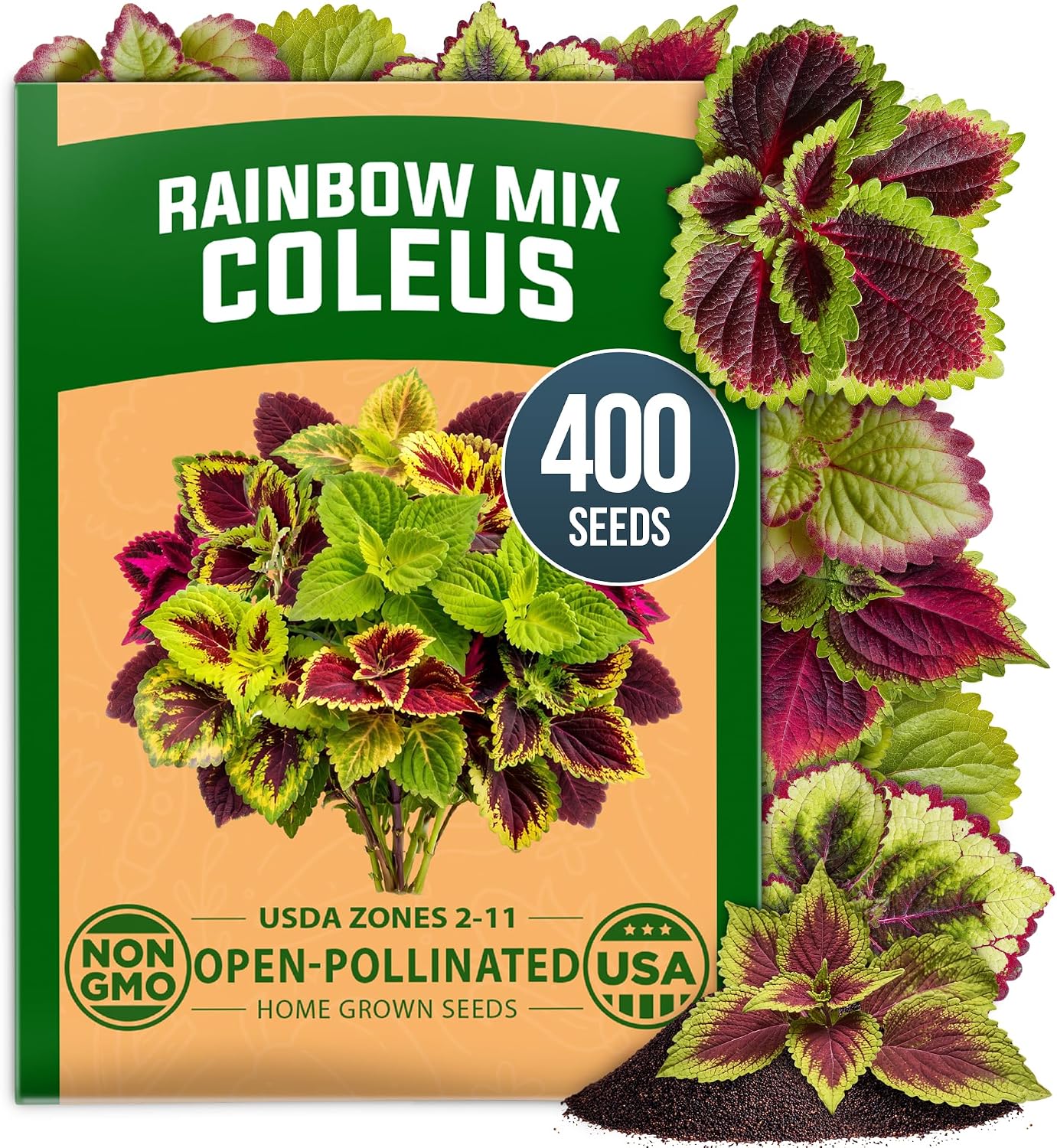
HOME GROWN Rainbow Mix Coleus Seeds (approx. 400)
| Sunlight Exposure | Part Shade to Shade |
|---|---|
| USDA Hardiness Zone | 2-11 |
| Expected Blooming Period | Spring through Frost |
| Material Features | GMO Free, Heirloom |
| Unit Count | 1 Count |
These Rainbow Mix coleus seeds produce compact, colorful foliage plants that are well suited to containers and shaded patio spots. Surface-sow the tiny seeds (do not cover), keep the medium warm and consistently moist, and seedlings typically appear in 10–14 days; pinch growing tips to encourage bushy, mounded plants. The mix is valued for season-long leaf color in shades of rose, green, bronze, cream, and scarlet, so you get visual impact without relying on flowers. Coleus grows indoors near bright north or east windows and outdoors in part shade to shade, making it a flexible choice for window boxes, mixed planters, and small pots. Important limitations are that coleus is a tender annual in most regions and needs protection from frost and prolonged drought, and it prefers warm temperatures for best germination and growth. For container gardeners who want low-maintenance, high-impact foliage, this seed mix is an easy way to produce many plants from one packet.
Best for: Gardeners who want easy-to-grow, high-impact foliage for containers and shaded patios and prefer predictable, low-fuss plants they can start from seed.
Less Ideal for: People seeking long-lived perennial landscaping or plants that tolerate full sun and drought without extra care.
- High seed count (about 400) gives many starts for containers or massing
- Open-pollinated non-GMO seeds from a mix that yields varied, colorful foliage
- Specifically suited to part shade and shade where many flowering plants struggle
- Compact, mounded habit that performs well in pots, window boxes, and mixed planters
- Tender annual in most zones and requires frost protection or indoor overwintering
- Requires consistent moisture and will suffer if soil dries out or remains waterlogged
Verdict: A high-count, non-GMO coleus seed mix that reliably produces compact, colorful foliage perfect for containers and shaded patios.
Choosing the Right Shade Plants for Outdoor Pots: Key Factors to Consider
Light and Shade Level
Different plants labeled as shade-tolerant actually prefer varying degrees of light, from deep shade to bright indirect light. Knowing whether your pot sits in full shade, dappled sun, or receives morning light only will determine which species will hold color and leaf health in a container.
Plants kept too dark often have leggy growth and fewer flowers, while those getting more than their preferred light can scorch. For container use, choose plants that match the specific light pattern on a patio or balcony, and remember that reflected light from nearby walls can increase exposure compared with a garden bed.
Pot Size and Root Space
Containers limit root spread and available moisture, so root architecture matters. Some shade plants have shallow, fibrous roots that adapt well to pots, while others develop deep taproots or aggressive runners that become pot-bound or unstable.
Selecting a plant whose mature root habit fits the pot size reduces root stress, prevents frequent repotting, and improves drought resilience. Consider the mature plant dimensions and plan pot volume accordingly to sustain steady growth through the season.
Drainage and Soil Mix
Good drainage is essential in containers because stagnant wet soil quickly promotes root rot in shade conditions where evaporation is slower. The right potting mix balances water retention and air porosity, often combining bark, compost, and a loose mineral component to keep roots oxygenated.
Plants vary in tolerance to moist versus well-drained mixes. Match the mix to the species' moisture needs and choose pots with adequate drainage holes. Using a saucer or liner requires more vigilant watering to avoid extended saturation.
Watering Frequency and Drought Tolerance
Shade pots may dry more slowly than sunny ones, but containers still heat up and can fluctuate in moisture. Some shade plants tolerate periodic drying between waterings, while others need consistently even moisture. Knowing a species' drought tolerance helps you set a realistic watering routine that fits your schedule.
Overwatering is a leading cause of decline in shade pots, so plan for drainage, choose water-wise species if you travel often, or group pots with similar needs to simplify care.
Seasonal Interest and Maintenance
Beyond surviving shade, you likely want foliage color, texture contrasts, or seasonal blooms. Some plants offer multi-season interest through variegation, architectural leaves, or long-lasting flowers, which reduces the need to swap containers frequently.
Maintenance demands vary: some plants require regular deadheading, pruning, or division, while others are low-maintenance. Factor in the time you can devote and whether you prefer a set-and-forget container or an actively tended display.
Pest and Disease Susceptibility
Shade environments can favor fungal problems and certain pests that thrive in moist, sheltered microclimates. Choosing plants with natural resistance to common container issues reduces chemical interventions and replanting frequency.
Inspect pots regularly, avoid overhead watering that wets foliage, and choose well-ventilated placements when possible. Resistance does not mean immunity, so plan for simple cultural controls and select species that respond well to corrective measures.
Best Potting Mixes for Shaded Containers
A container mix for shade plants should prioritize aeration and moderate moisture retention. Start with a high-quality peat-free potting base or compost, then add coarse perlite or grit for drainage and a small proportion of aged bark to improve structure.
Avoid garden soil, which compacts and holds water. Amend the mix with slow-release organic matter to supply nutrients without promoting overly lush, weak growth that becomes floppy in low light.
- Aim for a mix that holds moisture but sheds excess water within 24 to 48 hours after watering.
- Include a light layer of mulch or decorative top dressing to reduce evaporation and soil splash.
Grouping and Companion Planting in Pots
Combine plants with compatible light and water needs to create balanced container compositions. Use a taller, architectural form as a focal point, fill with mid-height foliage for texture, and add a trailing element to soften pot edges.
Contrast leaf shapes and colors rather than relying solely on flowers for interest. In shade, foliage combinations often outperform bloom-focused mixes because flowers can be sparse.
- Place species with higher moisture needs toward the center of the pot where soil stays moist longer.
- Use similar rooting habits together to avoid one species dominating the container.
Container Placement and Microclimate
Where you place a pot on a patio, porch, or balcony creates a distinct microclimate. Pots near walls may receive reflected heat or morning sun, while those under eaves stay cooler and drier. Note these differences when choosing plants and watering routines.
Rotate containers occasionally to prevent one-sided growth and monitor for signs of stress that indicate too little light or poor air circulation.
- Avoid placing shade pots where splash from a lawn sprinkler wets foliage regularly.
- Elevate pots slightly to improve drainage and reduce slug and snail access.
Seasonal Care and Winterizing
Some shade plants in containers are hardy and can stay in place over winter, while others need to be moved to sheltered spots or protected with insulating wraps. Drainage and pot material affect winter survival; porous materials like terracotta freeze faster than plastic or fiberglass.
Trim back spent foliage in late fall, reduce watering as growth slows, and consider moving vulnerable pots to a frost-free area or sinking large containers into the ground when extreme cold is expected.
- Reduce fertilization in late summer to harden plants off for winter.
- Group vulnerable pots near a south-facing wall for extra warmth in cold snaps.
Designing for Color Without Sun
In low-light situations, variegated leaves, glossy textures, and contrasting leaf shapes supply the color and brightness that flowers might not. Choose plants with silver or lime variegation to lift a shaded corner and pair them with deep green foliage to increase contrast.
Consider seasonal accents such as spring bulbs planted at the pot base for early color before the canopy fills in, but prioritize persistent foliage features for most of the year.
- Add a small seasonal accent plant rather than relying on blooms as the main feature.
- Use decorative pots and placement to maximize visual impact of foliage color.
How We Chose the Best Shade Plants for Outdoor Pots
We focused on traits that matter in real container gardening rather than broad landscape performance. Selection prioritized shade tolerance in confined soil, root architecture suited to pots, and aboveground traits that deliver seasonal interest without demanding high light. We favored plants that tolerate irregular watering cycles, resist common container pests and rot, and adapt to a range of potting mixes. Ornamental value was considered through foliage texture, variegation, seasonal blooms, or architectural form that adds impact in a small space. We excluded species that require full sun, deep in-ground rooting, extensive pruning, or specialized greenhouse care. Final choices balance aesthetic payoff with predictable behavior in partial to full shade, and each plant was judged on persistence in containers, ease of care, and compatibility with typical patio microclimates.
FAQ
Can shade plants survive in containers with limited drainage?
They usually struggle in poorly drained pots because shade environments dry more slowly and roots can sit wet for long periods. Improve drainage by using a free-draining potting mix, adding drainage holes, and avoiding heavy garden soil. If drainage cannot be improved, select species known for higher tolerance of persistent moisture.
How often should I fertilize shade plants in pots?
Typically feed lightly during the active growing season, about every four to six weeks with a balanced, diluted fertilizer. Shade plants in pots need less fertilizer than sun-loving container plants because they produce slower growth; overfeeding can cause weak, leggy growth.
Are there winter care steps unique to shaded containers?
Yes. Shade pots may stay colder and wetter in winter, increasing frost and rot risk. Reduce watering, move tender containers to sheltered spots, and insulate pots or lift them off cold surfaces. Hardy species still benefit from drier soil going into dormancy.
Can I mix shade plants with spring bulbs in the same pot?
You can, and it is a good strategy to add seasonal color. Plant bulbs deeper than the perennial roots and choose companion plants whose growth habit does not crowd emerging shoots. After bulbs finish, allow foliage to die back naturally to replenish the potting mix.
How do I prevent fungal problems in shaded pots?
Improve air circulation around pots, avoid overhead watering that wets leaves, and use a well-draining mix. Remove dead foliage promptly and avoid crowding plants too tightly to reduce humidity buildup that encourages fungal growth.
Final Verdict
When choosing shade plants for outdoor pots, prioritize species that match your exact light and moisture conditions, and pick containers sized to their root habits. Balance ornamental features with practical traits like disease resistance and drought tolerance to reduce maintenance. Accept tradeoffs: deeper color or larger leaves can mean higher moisture needs, while the most low-maintenance choices may be less showy. Focus on matching plant behavior to your patio microclimate and routine, and you will get reliable, attractive containers that perform through the season.
