

Note: This article contains affiliate links. If you click on these links and make a purchase, I may earn a small commission at no extra cost to you. This helps support my research and content. Read my full affiliate disclosure here.
Picking the right potting mix for snake plants matters more than many gardeners realize. These tough, architectural houseplants need a mix that drains quickly, resists compaction, and still supplies enough nutrients to support steady growth in pots. The wrong mix can stay waterlogged, invite root rot, or force frequent repotting. This guide shortlists seven top potting mixes suited to snake plants in indoor containers and bright patios. We evaluated mixes for drainage, aeration, nutrient retention, and long-term structure so you can choose a formula that matches your watering style and container type. Below are practical notes to help you pick the best blend for your setup before the product list.
Top Picks at a Glance
| Best Overall The best all-around choice for most situations | Miracle-Gro Indoor Potting Mix for All Plants, 6 qt., 2-Pack |  |
| Best Quality Built to a higher standard if you want something more solid | rePotme Snake Plant Houseplant Potting Soil Mix — 8 Quart Resealable Bag |  |
| Best Value The sweet spot between price and what you get | Grow Queen Craft Houseplant Potting Mix, 2 Quart |  |
| Best Budget The cheapest option that still gets the job done reliably | Kapecute Snake Plant Potting Soil Mix (2 QT, Sphagnum Moss + Perlite + NPK) |  |
| Highest Rated A top-rated pick with lots of positive feedback | Gardenera Snake Plant Potting Mix, 1 Quart |  |
| Most Popular A crowd favorite that many people choose with confidence | Perfect Plants Snake Plant Soil, 4 qt Coco Coir Potting Mix |  |
| Best Seller A high-volume bestseller chosen again and again | Back to the Roots Organic Indoor Potting Mix, 6 Quart |  |
Miracle-Gro Indoor Potting Mix for All Plants, 6 qt., 2-Pack

| Number of Packs | 2 |
|---|---|
| Unit Count | 400.58 Ounce |
| Item Highlight | Feeds for up to 6 Months |
| Ingredients | Sphagnum Peat Moss, Coir, Perlite, Fertilizer, Wetting Agent |
This Miracle-Gro indoor potting mix is formulated as an all-purpose soil for indoor container plants and is sold in a two-pack of 6‑quart bags. It combines sphagnum peat moss, coconut coir, and perlite to create a lightweight, well-draining mix that holds moisture yet releases it to roots, which helps tropical houseplants like a Dragon Tree avoid waterlogged roots. The bagged mix includes a slow-release fertilizer meant to feed plants for up to six months so you do not need to amend immediately after potting. Notably the formula excludes bark and compost, which can reduce habitats for fungus gnats — useful when repotting indoor specimens. Use is straightforward: fill a pot with drainage, set the plant, backfill with mix, and water. Limitations are that the fertilizer schedule is fixed to the included feed and heavy feeders may need additional fertilizing after several months, and serious growers who want a custom cactus or orchid-style mix will find the texture too fine. For routine repotting of Dragon Trees and similar tropical houseplants this mix is convenient and consistent.
Best for: Buyers who want a reliable, low-effort potting mix for repotting tropical houseplants like Dragon Trees and prefer a product with built-in feeding and pest-reduction features.
Less Ideal for: Specialist growers who need custom texture blends for succulents, orchids, or aggressive feeders should choose purpose-formulated mixes or amend this product accordingly.
- Balanced blend of peat moss, coir, and perlite for good moisture retention and drainage
- Includes slow-release fertilizer that feeds up to six months for low-maintenance care
- Bark- and compost-free formula reduces places for fungus gnats to breed
- Ready-to-use bag makes repotting quick with no mixing required
- Fertilizer is fixed for about six months so additional feeding may be necessary for heavy feeders
- Texture may be too fine for plants that prefer very fast-draining or chunky mixes
Verdict: A convenient, low-maintenance indoor potting mix that keeps Dragon Trees healthy with good drainage and up to six months of built-in feeding.
rePotme Snake Plant Houseplant Potting Soil Mix — 8 Quart Resealable Bag

| Brand Name | rePotme |
|---|---|
| Item Type Name | Potting Soil |
| Unit Count | 96 Ounce |
| Volume | 8 quarts |
This rePotme houseplant potting mix is a small-batch, hand-blended soil intended for indoor plants like snake plants, monsteras, pothos and other common houseplants. It comes in a resealable pouch and is blended to give good drainage and optimal water retention for pot-grown plants. In practice the mix handles repotting and top-ups cleanly thanks to a balanced texture that keeps roots aerated while holding enough moisture to reduce frequent watering. The brand emphasizes fresh ingredients and a formulation used by conservatories, which suggests consistent quality. Practical benefits include the resealable bag for storage and a blend suitable for a wide range of houseplants so you can use one mix across several species. Important limitations are the small 8 quart volume, which means it is best for a few pots or small repots rather than large plants, and the product can produce dust so gloves and a mask are advisable when handling.
Best for: Buyers who prioritize reliable growing performance and prefer a fresh, professionally blended mix for repotting or maintaining a few indoor plants, especially snake plants and other common houseplants.
Less Ideal for: Gardeners who need large volumes for many or very large pots should consider bulk commercial mixes or larger bags instead.
- Hand-blended in small batches for consistent freshness
- Resealable pouch for convenient storage between uses
- Formulated for good drainage and moisture balance suitable for common houseplants
- Brand used by botanical gardens and conservatories, indicating professional-grade sourcing
- Only 8 quarts per bag, so not economical for large repots or many plants
- May produce dust during use requiring protective gear
Verdict: Choose this hand-blended, resealable houseplant mix if you want a fresh, well-draining soil tailored to snake plants and other indoor favorites.
Grow Queen Craft Houseplant Potting Mix, 2 Quart

| Unit Count | 64 Ounce |
|---|---|
| Item Type Name | Potting Mix |
| Volume | 2 quarts |
| Ingredients | Douglas Fir Bark, Lava Rock, Pumice, Coco Coir, Organic Worm Castings, Charged Biochar |
This Grow Queen craft houseplant mix is a chunky, peat-free potting soil made for repotting and ongoing care of indoor plants like peace lily. The blend uses Douglas fir bark, lava rock and pumice to create permanent air pockets so the mix drains quickly and resists compaction, which helps prevent root rot while still allowing the soil to dry evenly between waterings. It arrives slightly moist and ready to use, which makes repotting new plants or rooting cuttings faster and less messy. Organic worm castings and charged biochar supply steady micronutrients and help retain water and nutrients at the root zone without synthetic fertilizer burn. The formula excludes peat and perlite and is designed to stay structured for multiple seasons, so you repot less often. Note that the bag is small at 2 quarts, so you will need larger sizes for bigger plants or multiple repots and should confirm quantity before starting a project.
Best for: Buyers who want a low-maintenance, sustainable indoor potting mix that prevents soggy roots and feeds plants gradually while minimizing repotting frequency.
Less Ideal for: People who need large volumes of soil for many plants or very large containers should choose bigger bag sizes or bulk potting mix alternatives.
- Chunky mix with bark, lava rock and pumice for lasting aeration and fast drainage
- Contains organic worm castings and charged biochar for slow-release nutrition and improved moisture retention at roots
- Peat-free and perlite-free formula reduces compaction and uses renewable ingredients
- Arrives pre-moistened and ready to use for immediate repotting or rooting cuttings
- Small 2 quart bag may not be enough for larger peace lilies or multiple plants
Verdict: A sustainable, chunky houseplant mix that keeps peace lilies healthy by combining fast drainage with bioactive nutrition.
Kapecute Snake Plant Potting Soil Mix (2 QT, Sphagnum Moss + Perlite + NPK)

| Brand | Kapecute |
|---|---|
| Item Type | potting soil |
| Material composition | Sphagnum moss, perlite, NPK fertilizer |
| Volume | 2 quarts |
| Unit Count | 3.5 Ounce |
This Kapecute mix is sold as a small, compressed kit that expands into a free-draining, slightly acidic medium suited to snake plants. Use it by soaking the compressed sphagnum flakes, mixing in the included perlite and the packaged NPK granules, squeezing out excess moisture, and potting as usual. The product's strengths are its convenience and plant-appropriate composition: sphagnum holds moisture and keeps pH slightly acidic to encourage root growth while perlite improves aeration and drainage. Individual packaging makes it easy to portion for single pots or small repots, which suits people who only need a little soil. The main limitations are the very small volume and the manual prep step required to rehydrate and blend components, so it is not practical for large collections or repeated repotting without multiple purchases. Also follow the safety note to avoid inhaling perlite dust during mixing.
Best for: Buyers repotting one or a few snake plants on a tight budget who want a ready-made, plant-appropriate mix in small, easy-to-use portions.
Less Ideal for: Collectors with many plants or anyone needing bulk potting soil for repeated repotting should choose a larger bag or bulk mix instead.
- Pre-measured kit with sphagnum moss, perlite, and NPK fertilizer included
- Sphagnum debris holds moisture and encourages slightly acidic conditions good for snake plant roots
- Perlite improves drainage and aeration to reduce root rot risk
- Individually wrapped portions make it easy to use small amounts without waste
- Very small total volume not suitable for multiple repots or larger plants
- Requires soaking and manual mixing before use which adds prep time
Verdict: A convenient, low-cost single-pot kit that gives snake plants a well-aerated, slightly acidic growing medium without buying bulk soil.
Gardenera Snake Plant Potting Mix, 1 Quart

| Brand Name | Gardenera |
|---|---|
| Unit Count | 32 Ounce |
| Volume | 1 quarts |
This one-quart Gardenera mix is a ready-to-use potting medium designed specifically for snake plants. The blend of peat moss, perlite, lime, and earthworm castings gives it a light, airy texture that promotes rapid root development while draining excess water to reduce root rot risk. It is typically used for repotting small to medium snake plants or refreshing topsoil in containers; its pre-mixed format saves time compared with assembling components yourself. Notable features include extra perlite for aeration, organic-friendly ingredients, and a small-batch hand-mixed production that aims for consistent composition. Practical benefits include improved drainage, easier transplanting, and a nutrient boost from worm castings that supports steady growth. Important limitations are the small 1-quart volume, which means multiple bags are required for larger pots, and the peat-based formula which requires careful moisture monitoring to avoid over-drying or environmental concerns tied to peat use. Safety notes advise avoiding inhalation and skin contact during handling.
Best for: Buyers who prioritize a reliable, plant-specific soil that consistently drains well and supports steady root growth for indoor snake plants.
Less Ideal for: People repotting large plants or filling multiple containers at once who need bulk soil, or gardeners avoiding peat-based products entirely.
- Formulated specifically for snake plants with peat moss, perlite, lime, and worm castings
- High drainage and aeration from extra perlite to reduce risk of waterlogged roots
- Ready-to-use premixed bag that simplifies repotting and transplanting
- Organic-friendly ingredients suitable for organic growing
- Small 1 quart volume is insufficient for larger pots and requires multiple bags
- Contains peat moss which may necessitate regular moisture checks and has environmental considerations
Verdict: Choose this premixed Gardenera blend when you want a dependable, snake-plant-specific soil that improves drainage and encourages faster root development.
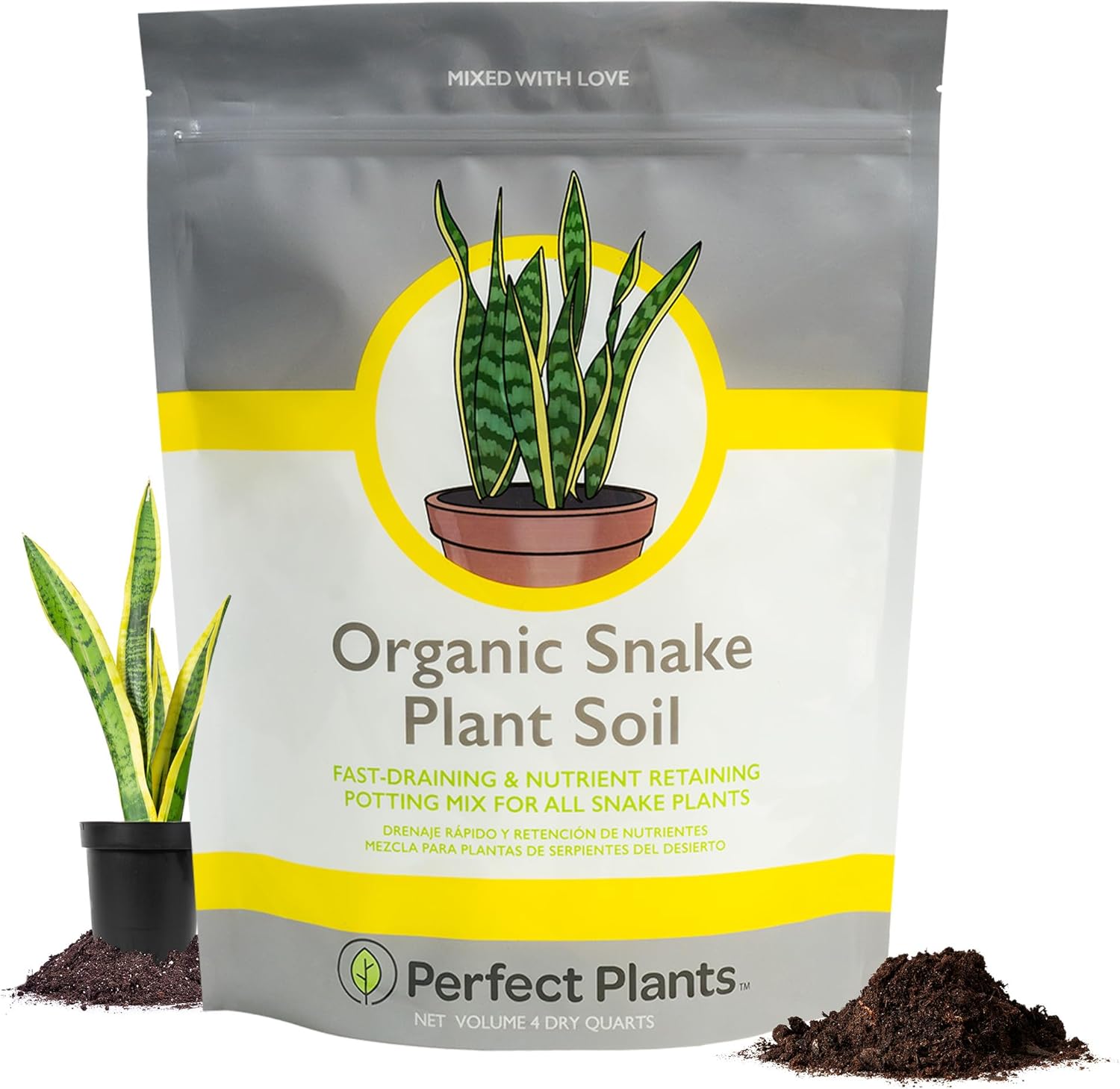
Perfect Plants Snake Plant Soil, 4 qt Coco Coir Potting Mix
| Volume | 4 quarts |
|---|---|
| Item Highlight | All-natural pine bark, perlite and sand blend for Sansevieria varieties |
| Unit Count | 1 Count |
| Style Name | Houseplant,Bark,Vermiculite,Potting,Garden |
This 4 qt mix is formulated specifically for Sansevieria and similar snake plant varieties to reduce water retention and protect roots. It is typically used when repotting indoor snake plants or refreshing the top layer in containers; the blend of coconut coir, pine bark chips, perlite, and sand gives a loose, airy structure that drains quickly after watering. Because it contains no slow-release fertilizer, it is a neutral starting medium that lets you control feeding separately. The resealable heavy-duty bag makes it convenient to store between uses and small-volume packaging is handy for single pots or propagations. Limitations include the small 4 quart volume for larger plants and the absence of added nutrients, so expect to supply fertilizer on a schedule. For growers who prefer a tailored, fast-draining substrate for snake plants, this mix is a practical, low-risk choice backed by consistent user feedback.
Best for: Buyers who want a purpose-made, fast-draining substrate for repotting or maintaining snake plants and who prefer to manage fertilization themselves.
Less Ideal for: People who need a large bulk supply for many containers or who want an all-in-one mix with preloaded nutrients and long-term feeding.
- Blend optimized for snake plants with coconut coir, pine bark, perlite, and sand for improved drainage
- No added slow-release fertilizer so you can control feeding for specific plants
- Resealable heavy-duty bag for tidy storage between uses
- Made and blended in the USA on a family-run nursery
- 4 quart size may be insufficient for larger pots or multiple repots
- No built-in nutrients requires users to add fertilizer separately
Verdict: A small-batch, fast-draining potting mix designed to keep snake plant roots healthy while letting you control feeding.
Back to the Roots Organic Indoor Potting Mix, 6 Quart

| Unit Count | 192 Fluid Ounces |
|---|---|
| Item Type Name | Indoor Potting Mix 6qt |
| Item Highlight | Peat-free, 100% organic, made in the USA |
| Ingredients | Coconut Coir, Yucca, Mycorrhizae, Perlite, Horticultural Sand |
This Back to the Roots indoor potting mix is a ready-to-use, 6-quart blend designed for common houseplants such as pothos, monstera and ferns. It combines coconut coir, yucca extract, mycorrhizae, perlite and horticultural sand to improve moisture retention, drainage and root development without peat. In practice it feels light and friable, so it is easy to pot seedlings or repot mature plants and it reduces compaction that can suffocate roots. The added mycorrhizae helps young roots establish and take up nutrients more efficiently while yucca extract helps the mix hold water between waterings, which is convenient for forgetful or busy plant owners. Because it is peat-free and made in the USA, it is a more sustainable choice versus traditional peat-based mixes. Limitations are the small 6-quart size, which means frequent repurchasing for larger collections, and the bag does not include fertilizer so you will need to feed plants separately as they grow.
Best for: Buyers who prioritize low-risk, easy-care houseplant solutions and want an organic, ready-to-use potting mix that reduces watering hassles and supports healthy root growth.
Less Ideal for: Not ideal for gardeners who need large-volume soil for many pots or for those expecting a mix that includes built-in fertilizer for long-term feeding.
- Peat-free organic formula that reduces environmental impact
- Yucca extract improves moisture retention between waterings
- Contains mycorrhizae to support root development and nutrient uptake
- Light, well-draining texture suitable for repotting seedlings and houseplants
- Small 6-quart volume may require frequent repurchasing for larger plant collections
- Does not include fertilizer so additional feeding is necessary
Verdict: A compact, peat-free potting mix that simplifies indoor plant care by holding moisture and boosting root establishment.
Choosing the Right Potting Mix Snake Plants: Key Factors to Consider
Drainage and Percolation
Snake plants need a mix that sheds excess water quickly. Fast drainage reduces the time roots sit in wet conditions and cuts the risk of fungal issues. Look for coarse components such as perlite, coarse sand, or pumice that create clear channels for water to flow through the pot.
The size and proportion of coarse particles change how fast water exits the root ball. Smaller particles can fill gaps and slow drainage, while larger particles improve percolation but reduce water retention. Consider your container material too: terra-cotta pots wick moisture from the mix and pair well with slightly water-retentive blends, whereas plastic pots hold moisture longer and suit coarser mixes.
Aeration and Root Space
Healthy snake plant roots need air as much as water. A mix that compacts will reduce oxygen around roots and slow growth. Ingredients that maintain pore space, such as chunky bark, pumice, or crushed lava rock, help roots breathe and promote fibrous root development.
Aeration matters for repotting intervals and root inspection. A free-draining, airy mix makes it easy to slide a plant from its pot and check roots without the media forming a hard ball. If you plan larger containers or slow-draining pots, prioritize mixes with a higher proportion of chunky, stable aggregates.
Particle Stability and Longevity
Over time many potting mixes break down as organic components decompose, causing compaction and poorer drainage. For snake plants you want a medium that stays loose for at least a season or two to avoid frequent repotting. Durable inorganic components such as pumice, perlite, and crushed rock help preserve structure.
Consider the expected lifespan of the mix before choosing. Mixes with high peat content or fine compost will compact faster, while blends with more mineral aggregate retain their shape and performance. That affects how often you topdress, repot, or refresh the media.
Moisture Balance and Water-Holding Capacity
Snake plants tolerate dry spells, so a mix that holds some moisture without staying soggy is ideal. Materials like coco coir or a modest amount of compost provide water-holding capacity, but should be balanced with drainage components to avoid prolonged wetness.
Your local climate and indoor humidity also influence how thirsty a mix will feel. In dry homes, a slightly more moisture-retentive blend can reduce watering frequency. In humid or cool environments, choose a drier, more open mix and water sparingly.
Nutrient Availability and Fertility
Potting mixes vary in how much immediate nutrition they deliver and how long that nutrition lasts. Some blends include slow-release fertilizer or composted material that feeds plants for months, while inert mixes rely on added fertilizer applications. Snake plants grow slowly and do not require heavy feeding, but a baseline of nutrients helps maintain leaf color and steady growth.
Think about your willingness to fertilize. If you prefer low-maintenance care, a mix with modest organic content or built-in slow-release nutrients reduces interventions. If you fertilize regularly, an inert, fast-draining mix gives you more control over nutrient levels.
Match Mix Texture to Your Watering Style
If you water infrequently and prefer to let the pot dry between sessions, choose a coarser, faster-draining mix with a higher ratio of pumice or perlite. That minimizes the chance of overwatering. If you tend to water more often or forget to check soil, a blend with modest water-holding components like coco coir will give some buffer against drying out.
Adjust textures for pot size and material. Small pots dry faster and may benefit from mixes that retain a bit more moisture, while large or glazed containers hold moisture longer and pair well with very open mixes.
- Coarse mixes suit infrequent watering.
- Slightly moisture-retentive mixes help busy plant parents.
- Match mix to pot size and material for predictable soil moisture.
Choosing Amendments for Improved Drainage
Common amendments for snake plant mixes include perlite, pumice, coarse sand, and crushed lava rock. Each adds drainage and preserves aeration. Pumice and lava rock are heavier and stay put in pots, while perlite is lighter and can rise to the surface over time.
If you use coarse sand, make sure it is horticultural sand rather than play sand, which can be too fine and increase compaction. Aim for a mix of particle sizes so the media holds some water but never turns into a waterlogged mass.
- Pumice and lava rock offer long-term structure.
- Perlite is very effective but can migrate upward.
- Use horticultural sand only; avoid fine sands that compact.
Repotting Frequency and Signs to Refresh Mix
Watch for slow drainage, compacted media, or roots growing tightly against the pot as signs it is time to repot or refresh the soil. Snake plants typically need repotting less often than fast-growing houseplants, but potting mix can still lose structure within one to three years depending on its composition.
When repotting, you can topdress with fresh mix for minor refreshes or fully replace the root ball media if the original mix has broken down. Repot in spring or early summer when the plant is entering an active growth period.
- Slow drainage and compacted soil indicate media breakdown.
- Topdressing extends life for mildly degraded mixes.
- Full repotting is best when roots circle tightly or structure is lost.
Container Considerations: Size, Drainage Holes, and Liners
Container choice interacts with potting mix performance. Ensure pots have adequate drainage holes so water can escape. If you use a decorative liner or cachepot without drainage, rely on a very fast-draining mix and minimal watering to protect roots.
Large containers retain more moisture and may require mixes with better aeration. Shallow pots dry quickly and benefit from mixes that hold a bit more water. Always consider the container's depth and material when selecting a blend.
- Always provide drainage holes or use a dry, airy mix for liners.
- Match mix moisture characteristics to pot depth and material.
- Use saucers to catch runoff but empty them after watering to avoid standing water.
Fertilizing and Long-Term Care with Potting Mixes
Decide how much feeding you want to do. If you prefer low maintenance, choose mixes with some organic matter or built-in slow-release nutrients. If you fertilize on a schedule, an inert mix gives you more control and reduces the chance of salt buildup.
Flush pots occasionally if you use fertilizer to prevent mineral buildup, and renew part of the mix every couple of years to refresh nutrients and structure.
- Built-in nutrients reduce feeding frequency.
- Inert mixes require scheduled fertilizing but avoid unpredictable nutrient spikes.
- Periodic flushing and partial media refreshes maintain a healthy root environment.
How We Chose the Best Potting Mix Snake Plants
We shortlisted potting mixes that meet the needs of snake plants by focusing on practical, garden-tested performance characteristics. Our editorial filters emphasized drainage and aeration first, because snake plants are susceptible to root rot in poorly draining media. We also evaluated particle stability to judge how well mixes hold structure over months without compacting. Nutrient profile and slow-release behavior were included to estimate how often gardeners must fertilize or repot. Water retention was scored relative to drainage so mixes balance dryness tolerance with occasional watering. Lastly, we considered ingredient transparency and suitability for container culture, looking for clear ingredient lists and sizes appropriate for small to large pots. We excluded mixes formulated only for moisture-loving houseplants, seed starting, or lawn topdressings because those product intents do not match snake plant needs. We also excluded experimental or unlabelled custom blends without ingredient details. The resulting picks reflect mixes that reliably drain, keep some moisture for infrequent watering, and stay loose inside containers.
FAQ
Can I use regular all-purpose potting soil for snake plants?
Often you can, but many all-purpose mixes hold more moisture than snake plants prefer. If using an all-purpose soil, amend it with pumice, perlite, or coarse sand to improve drainage and prevent prolonged wetness around the roots.
How much perlite or pumice should I add to a potting mix?
A common approach is to replace about 20 to 40 percent of the mix volume with perlite or pumice for improved drainage. The exact amount depends on pot size and your watering habit. Larger pots may tolerate a slightly lower percentage of amendment.
Is coco coir a good ingredient for snake plant mixes?
Coco coir can be useful because it holds moisture while remaining airy. Use it in moderation and balance it with coarse mineral components so the overall mix does not retain excess water between waterings.
How often should I repot snake plants because of soil breakdown?
It usually depends on the mix. Mixes with high organic content can compact within one to two years, while mixes with more mineral aggregate can remain stable for several years. Check for slow drainage, compacted media, or congested roots to decide when to repot.
Do I need to sterilize potting mix before using it for snake plants?
Sterilizing is generally unnecessary for store-bought, reputable mixes. It may be useful if you suspect disease or pests in reused media. Fresh, well-draining mixes that are handled cleanly rarely require sterilization.
Final Verdict
Choose a potting mix that prioritizes drainage and long-term structure while offering enough moisture buffering for your watering habits. Balance coarse mineral components with modest organic matter so the media stays airy, resists compaction, and supplies light nutrients. Consider container material and pot size when matching texture and amendment levels. Focusing on drainage, aeration, and particle stability will keep snake plant roots healthy and reduce repotting and pest risks, letting you enjoy these low-maintenance houseplants with confidence.
