

Note: This article contains affiliate links. If you click on these links and make a purchase, I may earn a small commission at no extra cost to you. This helps support my research and content. Read my full affiliate disclosure here.
If your window faces north or sits under an overhang, you still have plenty of options to create a lush, attractive window box. Choosing the right plants for shade is about matching light limits, container depth, and watering routines so you get steady growth and fewer replacements. This guide highlights the top five window box plants for shade that perform well in limited sun, with attention to hardiness, moisture needs, and foliage impact. Each shortlisted plant was selected for garden-ready reliability and suitability for typical window-box planters. Read on for practical notes on care and placement, plus the traits we used to evaluate each contender.
Top Picks at a Glance
| Best Overall The best all-around choice for most situations | Wivolibe Coleus Seed Mix (150+ Non‑GMO Seeds) |  |
| Best Quality Built to a higher standard if you want something more solid | BRENWICK SEEDS Cascading Lobelia Mix (1000 Seeds) |  |
| Best Budget The cheapest option that still gets the job done reliably | Coleus Seeds Mix (Approx. 180 Pack) |  |
| Most Popular A crowd favorite that many people choose with confidence | HOME GROWN Rainbow Mix Coleus Seeds (approx. 400) |  |
| Best Seller A high-volume bestseller chosen again and again | Sow Right Seeds Rainbow Coleus Seeds (800 Count) |  |
Wivolibe Coleus Seed Mix (150+ Non‑GMO Seeds)

| Unit Count | 1 Count |
|---|---|
| Number of Pieces | 120 |
| Indoor Outdoor Usage | Indoor, Outdoor |
| Other Special Features of the Product | High Germination Rate, Non-GMO |
| Expected Blooming Period | Spring to Fall |
These coleus seeds deliver a large batch of easy‑to‑grow foliage plants suited to shade and bright, indirect light. Seed packet contains over 150 non‑GMO seeds with a high germination rate; seeds need light to germinate so press them onto moist seed‑starting mix and keep at about 70 to 75°F for 10 to 14 days. Once started indoors and hardened off, plants transplant well into window boxes, containers, or shady borders where their vivid foliage brightens limited‑sun spots. Practical benefits include fast germination, versatility across upright and trailing forms for different container styles, and simple ongoing care: consistent moisture, regular pinching to encourage bushiness, and removal of flower spikes to maintain foliage color. Limitations are that exact color mix is vague, packet labeling lists a single color as "Bule" which may not reflect variety, and some varieties tolerate sun poorly if they dry out, so placement and watering matter. For gardeners who want abundant seedlings to fill multiple window boxes, this packet offers good value but expect some variation in performance depending on light and care.
Best for: Gardeners who want an inexpensive source of many coleus seedlings to fill shady window boxes and containers and who prefer low‑maintenance, foliage‑focused plants.
Less Ideal for: Growers seeking strictly uniform or named cultivars with guaranteed color patterns or those who prefer plants that tolerate full, hot sun without extra care.
- Large seed count (150+ seeds) provides material to fill multiple window boxes or containers
- Non‑GMO and described as heirloom for straightforward, traditional varieties
- High germination rate when seeds are started with light and warmth as instructed
- Versatile for shade and bright indirect light, suitable for containers, borders, and hanging baskets
- Color description and variety mix are unclear which may produce unpredictable foliage colors
- Some coleus types are sensitive to direct sun and drying, requiring attentive watering and placement
Verdict: A high‑count, easy‑to‑germinate coleus seed mix that gives shade window boxes and containers a fast, colorful foliage boost.
BRENWICK SEEDS Cascading Lobelia Mix (1000 Seeds)

| Unit Count | 1000 Count |
|---|---|
| USDA Hardiness Zone | 3-9 |
| Sunlight Exposure | Partial Shade To Full Sun |
| Seed Treatment Method | Sow Seeds On Surface Of Moist Seed-starting Mix |
| Moisture Needs | Regular Watering; Keep Soil Consistently Moist |
These Cascading Lobelia Mix seeds give you a large packet of Lobelia erinus suited for hanging baskets, window boxes, and elevated containers where a trailing habit is desired. The seeds are extremely fine and need to be surface sown on a moist seed‑starting mix with light and warmth for reliable germination; seedlings appear in roughly two to three weeks and should be thinned or transplanted in small clusters to create a fuller spill. Lobelia performs well in partial shade to full sun, with partial shade recommended in hotter climates to protect flowers and foliage. Practical benefits include a long bloom period when kept evenly moist, an attractive cascading form that fills hanging planters, and a mixed color palette that reduces the need for selecting individual cultivars. Limitations are the delicate nature of the seedlings, which require careful watering and good light, and natural variation in color and growth because this is a mixed selection rather than a named cultivar.
Best for: Gardeners who want an easy way to fill multiple hanging baskets or containers with cascading, colorful annuals and who are comfortable with careful seed starting and regular watering.
Less Ideal for: Gardeners looking for a single uniform cultivar or those who prefer seedless ready‑to‑plant liners and want immediate mature displays.
- Generous seed count (1000 seeds) provides coverage for multiple hanging baskets or containers
- Trailing growth habit is well suited to hanging baskets, window boxes, and elevated planters
- Performs well in partial shade, making it a solid choice for shaded or north‑facing baskets
- Mixed colors create a varied, eye‑catching display without buying several single varieties
- Extremely fine seeds require surface sowing and careful misting to avoid displacing them
- Seed mix means individual plants vary in size, color, and flowering time
Verdict: A budget‑friendly way to fill shade or partial‑sun hanging baskets with abundant, trailing color when you are willing to start delicate seeds carefully.
Coleus Seeds Mix (Approx. 180 Pack)

| Indoor Outdoor Usage | Outdoor |
|---|---|
| Other Special Features of the Product | Attracts Pollinators |
| Expected Blooming Period | Year Round |
| Sunlight Exposure | Full Sun |
| Material Features | Heirloom |
This seed pack supplies about 180 heirloom coleus seeds in a mixed color selection intended for outdoor planting where partial shade is available. Coleus is grown primarily for its colorful foliage rather than showy flowers, so these seeds are typically sown lightly on the soil surface, kept consistently moist during germination at about 65–75°F, and transplanted into window boxes or containers that receive indirect light. The listing highlights that the plants tolerate heat and are adapted to zones 5–11, and that they attract pollinators. For a budget conscious gardener outfitting multiple window boxes, a single packet offers enough seed to try several varieties or replace plants through the season. Expect variability in color and performance since these are mixed heirloom seeds and results depend on starting conditions and care. The packet does not include germination rate or detailed planting depth, so you should plan to over-sow and follow general coleus seed care. This is a low-cost way to add shade-tolerant, colorful foliage to shaded window boxes but requires patience and some trial and error to get consistent plants.
Best for: Anyone on a tight budget who wants to fill shaded window boxes with bold, colorful foliage and is willing to start plants from seed and experiment.
Less Ideal for: Gardners who need guaranteed uniform cultivars or ready-to-display mature plants quickly should choose nursery-started coleus or named cultivars instead.
- Large seed count suitable for planting multiple window boxes or successive sowings
- Heirloom seeds offering mixed, vibrant foliage colors for shade-friendly displays
- Shade and heat tolerant across a wide range of USDA zones (zones 5–11)
- No germination rate or detailed planting instructions provided on the listing
- Product focuses on foliage color so buyers seeking showy blooms may be disappointed
Verdict: A high-seed-count, low-cost way to introduce shade-tolerant, colorful coleus foliage into multiple window boxes when you are willing to start plants from seed.
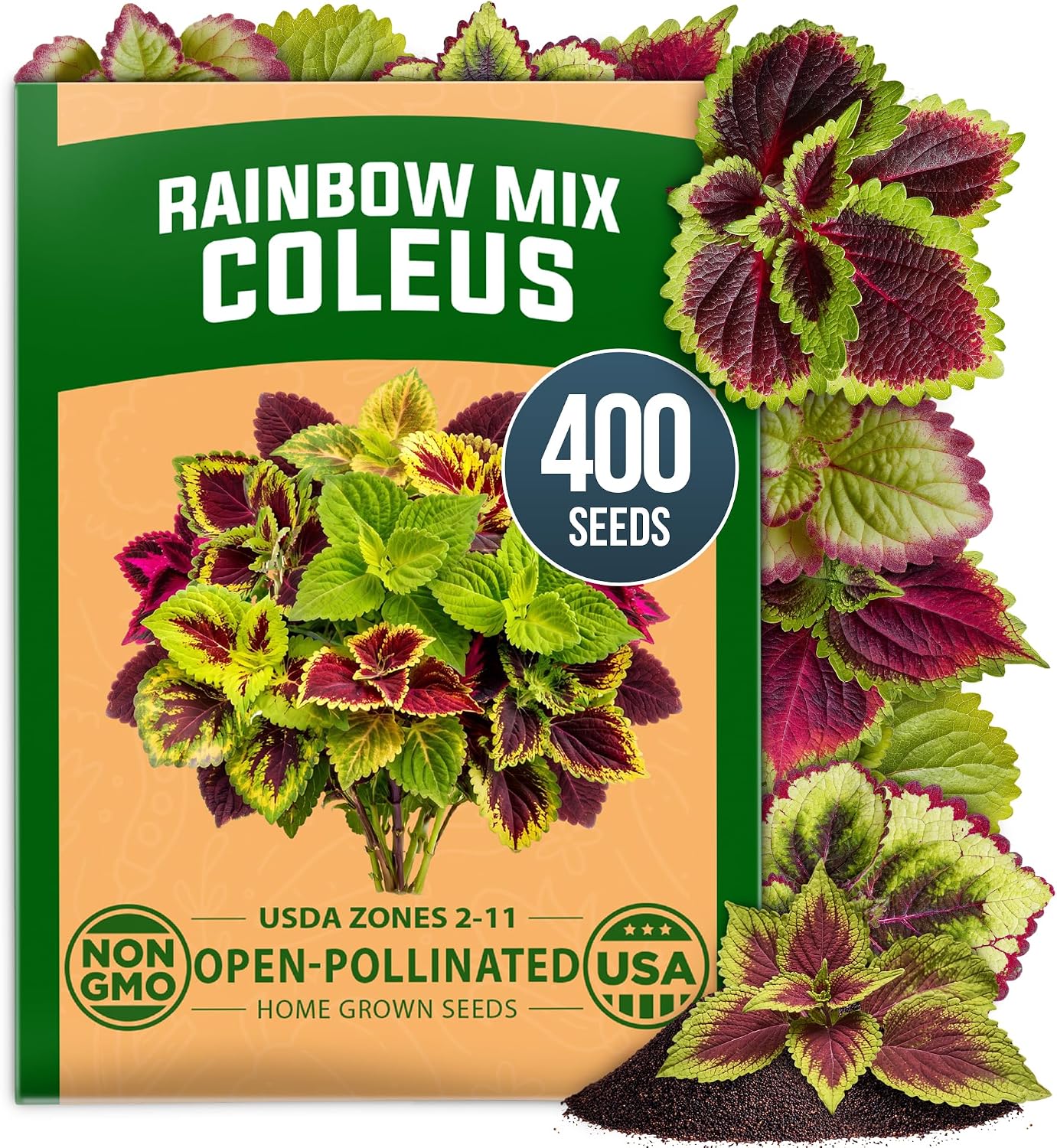
HOME GROWN Rainbow Mix Coleus Seeds (approx. 400)
| Sunlight Exposure | Part Shade to Shade |
|---|---|
| USDA Hardiness Zone | 2-11 |
| Expected Blooming Period | Spring through Frost |
| Material Features | GMO Free, Heirloom |
| Unit Count | 1 Count |
These Rainbow Mix coleus seeds produce compact, colorful foliage plants that are well suited to containers and shaded patio spots. Surface-sow the tiny seeds (do not cover), keep the medium warm and consistently moist, and seedlings typically appear in 10–14 days; pinch growing tips to encourage bushy, mounded plants. The mix is valued for season-long leaf color in shades of rose, green, bronze, cream, and scarlet, so you get visual impact without relying on flowers. Coleus grows indoors near bright north or east windows and outdoors in part shade to shade, making it a flexible choice for window boxes, mixed planters, and small pots. Important limitations are that coleus is a tender annual in most regions and needs protection from frost and prolonged drought, and it prefers warm temperatures for best germination and growth. For container gardeners who want low-maintenance, high-impact foliage, this seed mix is an easy way to produce many plants from one packet.
Best for: Gardeners who want easy-to-grow, high-impact foliage for containers and shaded patios and prefer predictable, low-fuss plants they can start from seed.
Less Ideal for: People seeking long-lived perennial landscaping or plants that tolerate full sun and drought without extra care.
- High seed count (about 400) gives many starts for containers or massing
- Open-pollinated non-GMO seeds from a mix that yields varied, colorful foliage
- Specifically suited to part shade and shade where many flowering plants struggle
- Compact, mounded habit that performs well in pots, window boxes, and mixed planters
- Tender annual in most zones and requires frost protection or indoor overwintering
- Requires consistent moisture and will suffer if soil dries out or remains waterlogged
Verdict: A high-count, non-GMO coleus seed mix that reliably produces compact, colorful foliage perfect for containers and shaded patios.
Sow Right Seeds Rainbow Coleus Seeds (800 Count)

| Unit Count | 800 Count |
|---|---|
| Plant or Animal Product Type | Plectranthus scutellarioides |
| Sunlight Exposure | Partial Sun |
| Expected Blooming Period | Spring to Summer |
| Material Features | GMO Free, Heirloom |
These Rainbow Coleus seeds come in a large packet (about 800 seeds) and are aimed at gardeners who want bright, foliage-focused plants for containers or shaded beds. Coleus is grown for its colorful leaves rather than flowers and this mix produces a wide range of yellow, pink, green, red and maroon patterns that show well in pots and hanging baskets. The packet lists a high germination rate and seedlings typically emerge in 10 to 14 days at soil temperatures around 70 to 75°F. Directions call for shallow planting and spacing appropriate for container culture; mature plants reach roughly 18 to 30 inches tall so they make a substantial potted specimen or companion plant. Because these are non-GMO heirloom seeds sold in a bulk packet, you get many plants for your investment which is useful when filling multiple containers. Limits to expect are typical for coleus: they prefer partial shade and warm conditions and are tender in cold weather, so they need protection or to be brought indoors in cool climates.
Best for: Gardeners who want an affordable way to mass-fill outside pots with colorful, shade-friendly foliage and who prefer growing many plants from seed rather than buying individual transplants.
Less Ideal for: Someone who needs uniform, predictable single-color plants from the start or who wants immediate mature plants without waiting for seed-grown development.
- Very large seed count (about 800) gives good value for filling multiple pots or containers
- Non-GMO heirloom seeds suitable for saving and replanting
- High germination rate and clear planting instructions for quick establishment
- Shade-tolerant foliage plant that performs well in partial sun pots and hanging baskets
- Tender to cold and not suitable for frost-prone outdoor locations without protection
- Packet contains a mix so you cannot predict exact colors or patterns for each plant
Verdict: A budget-friendly way to fill outside pots with vibrant, shade-tolerant coleus foliage by growing many plants from a single large packet of heirloom seeds.
Choosing the Right Window Box Plants for Shade: Key Factors to Consider
Light Level and Exposure
Window boxes labeled for shade cover a wide spectrum, from deep shade with no direct sun to bright indirect light. You need to know whether the box gets a couple of hours of morning sun, dappled light, or virtually none. This matters because some plants will tolerate a little morning sun but decline in constant deep shade, while true shade lovers stay compact and hold color better. Assess the microclimate at different times of day and across seasons, because reflected light from nearby buildings or snow will change available light in winter.
Container Size and Soil Depth
Most window boxes are shallow, which limits root development and water retention. Choose plants that have shallow, fibrous root systems or that are naturally compact. Also consider the box length and any divider locations to avoid crowding. Soil depth affects how often you need to water and how large a specimen can reach before becoming rootbound. If you have a deeper box, you can mix a few slightly larger perennials; in very shallow troughs, stick to small foliage plants and annuals designed for containers.
Moisture Management and Drainage
Shade often means slower soil drying, which increases risk of root rot in poorly drained containers. Ensure your window box has reliable drainage holes and use a light, free-draining potting mix amended with organic matter to retain some moisture without becoming waterlogged. Match plants to the moisture tendency: some shade plants prefer consistently moist soil, others need it on the drier side. Plan a watering schedule that responds to the box's exposure and the season rather than a fixed daily routine.
Plant Habit and Maintenance Needs
Compact, clumping, or trailing habits suit different design goals in a window display. Clumping foliage gives a neat, full look with low maintenance, whereas trailing plants soften edges and spill over the sill. Consider pruning frequency, deadheading, and seasonal refresh needs. Low-maintenance selections will tolerate occasional neglect and resist pest pressures; higher-maintenance choices may reward you with flowers or variegation but require more attention.
Winter Hardiness and Seasonal Longevity
If you want a multi-season display, check whether plants are annuals, tender perennials, or hardy perennials in your climate. Some shade-tolerant species will overwinter in cooler zones and provide early spring green, while others are treated as annuals and replaced each year. Winter protection for window boxes is harder than ground beds because containers freeze faster, so choose species that match your local winter conditions or plan to bring containers indoors when necessary.
Pest and Disease Resistance
Shade can increase humidity around foliage, which encourages fungal diseases in some species. Select plants known for clean foliage and resistance to common container pests. Good air circulation, proper spacing, and appropriate watering practices reduce disease risk. Consider whether you are willing to monitor and treat issues like slugs, snails, or powdery mildew, or prefer selections that rarely require intervention.
Designing a Shade-Friendly Window Box
Start the design process by picking one or two focal textures-such as a bold-leafed plant or a trailing vine-and then add contrast with a smaller-form filler. In shade, foliage often carries the visual weight, so combine different leaf shapes and variegations to create depth. Keep scale in mind: tall backings should be supported with stakes or placed at the back of a deep sill so they do not tip the box.
Think about seasonal transitions. Use evergreen or semi-evergreen species for winter structure and swap in seasonal annuals for spring and summer pop when light increases. Mulch the surface of the soil with a thin layer of organic material to retain moisture and present a finished look.
- Use lighter-colored foliage to brighten deep shade
- Place trailing plants at the front to soften edges
- Balance texture by mixing broad and fine leaves
Soil Mix and Fertilization for Shaded Containers
A well-draining, airy potting mix is critical in shaded boxes because water evaporates more slowly and roots need oxygen. Blend a commercial container mix with extra perlite or coconut coir if your box consistently stays wet. Avoid heavy garden soil that compacts and holds too much moisture.
Fertilize lightly during the growing season. Shade-grown plants often require less fertilizer than sun-loving species because growth rates are slower. Use a balanced, water-soluble fertilizer at a reduced rate every 3 to 6 weeks, or choose a slow-release formula applied at planting for steady feeding.
- Improve drainage with perlite or grit
- Apply slow-release fertilizer at planting for low-maintenance feeding
- Reduce fertilizer frequency in low-light conditions
Placement and Microclimate Adjustments
Small adjustments to placement can substantially change how plants perform. Moving a box a few feet toward reflected light or away from a drafty opening can improve vigor. If you have only a few hours of morning sun, position more light-demanding tolerant varieties in those spots and put true shade lovers in persistently dark corners.
Consider protective elements such as pergolas or shade cloth if light levels vary unpredictably. Also account for heat radiated from nearby walls, which can warm boxes and alter moisture needs even in shady exposures.
- Test light with a smartphone photo at different times of day
- Rotate boxes seasonally if possible to even out wear
- Avoid placing boxes directly under drip lines where they can get soggy
Propagation and Replacement Strategies
Many shade-loving window box plants are easy to propagate from cuttings or division, allowing you to refresh or expand your display without buying new specimens. Keep a few starter cuttings of your favorites so you can replace plants that decline or experiment with new placements.
Plan for occasional refreshes: even the best-performing container plants may need dividing or replacement every couple of years to maintain vigor. Use propagation as a way to maintain a consistent aesthetic without significant cost.
- Propagate soft-stem cuttings in water or potting mix
- Divide clumping perennials in spring or fall
- Keep labeled cuttings to remember light and moisture preferences
Common Problems and Quick Fixes
Yellowing leaves in shaded boxes often indicate too much moisture, poor drainage, or nutrient imbalance rather than lack of light. Check soil moisture and roots before changing light exposure. If roots are waterlogged, repot with a lighter mix and improve drainage.
Sluggish growth can be normal in low light, but sudden decline suggests a root or pest issue. Inspect undersides of leaves for pests and remove affected foliage promptly. Improving air circulation and reducing overhead watering will reduce fungal pressure.
- Inspect roots if leaves yellow extensively
- Trim back leggy growth to encourage denser foliage
- Adjust watering schedule before changing plant placement
How We Chose the Best Window Box Plants for Shade
We prioritized traits that matter to gardeners who need healthy, attractive window boxes in low-light conditions. Key evaluation criteria included shade tolerance range, container adaptability, and root depth needs so plants fit common window-box dimensions. We also assessed moisture and watering sensitivity, because shallow boxes dry quickly and overwatering in low light causes root issues. Foliage impact and seasonal interest were considered to ensure plants provide color, texture, or structure through multiple months. Ease of sourcing and propagation was checked to confirm reliable availability for typical gardeners. Exclusions included plants that require full sun, extremely deep containers, or aggressive invasive tendencies unsuitable for confined window-box beds. The final list focuses on species and varieties that balance compact habit, shade performance, and straightforward care.
FAQ
Can any plant survive in deep shade in a window box?
Not any plant will thrive in deep shade. Some species are adapted to low light and remain compact, but many flowering annuals and sun-loving perennials will struggle. Choose plants rated for shade and focus on foliage interest rather than heavy flowering.
How often should I water window boxes in shady locations?
Shady boxes dry out more slowly, so water less frequently than sun-exposed containers. Check soil moisture by feeling the top inch; water when it begins to dry. Frequency will vary by box depth, potting mix, and season.
Do I need to fertilize shade plants less than sun plants?
Usually yes. Plants in low light grow more slowly and need fewer nutrients. Use a diluted, balanced fertilizer at longer intervals or a low-rate slow-release product applied at planting.
Will variegated plants lose their color in shade?
Variegated plants often need a bit more light to maintain strong contrast. In deep shade, variegation can fade and plants may revert to greener growth. Choose variegated varieties rated for shade or place them where they receive some indirect light.
Can I overwinter my window box plants in place?
That depends on plant hardiness and your climate. Containers freeze more readily than ground soil, so hardy selections and insulated boxes work best. In colder zones, either bring boxes indoors or choose plants known to tolerate container winter conditions.
Final Verdict
For window boxes that sit in shade, prioritize plants with proven low-light tolerance, compact root habits, and sensible moisture needs. Focus design on foliage contrast and texture rather than heavy flowering, and use a light, well-draining soil to avoid root problems. Balance seasonal expectations by mixing evergreen or perennial structure with replaceable annuals if you want bursts of color. Ultimately, match plant habit to box depth and the specific microclimate of the sill. That approach will help you create a consistent, low-maintenance shade display that looks lively throughout the season.
