

Note: This article contains affiliate links. If you click on these links and make a purchase, I may earn a small commission at no extra cost to you. This helps support my research and content. Read my full affiliate disclosure here.
Picking the right pruning shears for bushes matters because bushes demand controlled, repeated cuts and often thicker stems than small perennials. The right shears reduce plant damage, speed work, and cut hand fatigue when you are shaping hedges, removing old wood, or deadheading large shrubs. This guide highlights a shortlist of seven top pruning shears for bushes selected for real-garden performance and durability. We evaluated cutting ability, ergonomics, and build quality to help you choose the tool that fits your pruning style and the kinds of shrubs you maintain. Read on to see why these criteria matter and which features to prioritize.
Top Picks at a Glance
| Best Overall The best all-around choice for most situations | Kimura 8" Pro Bypass Pruning Shears (Japanese SK5 Steel blades) |  |
| Best Quality Built to a higher standard if you want something more solid | FELCO F2 Pruning Shears — Swiss-Made Bypass Hand Pruner (F2) |  |
| Best Value The sweet spot between price and what you get | gonicc 8" Professional Titanium-Coated Bypass Pruning Shears |  |
| Best Budget The cheapest option that still gets the job done reliably | Fiskars SoftGrip Bypass Pruning Shears (5/8" Cut Capacity) |  |
| Highest Rated A top-rated pick with lots of positive feedback | PrunePro 3-Piece Garden Shears Set (Pruner, Extendable Hedge Shear, Lopper) |  |
| Most Popular A crowd favorite that many people choose with confidence | Fiskars Bypass Pruning Shears with Nonstick Coating |  |
| Best Seller A high-volume bestseller chosen again and again | Fiskars Forged Steel Bypass Pruning Shears (1" Cut Capacity) |  |
Kimura 8" Pro Bypass Pruning Shears (Japanese SK5 Steel blades)

| Blade Material | Japanese SK5 Steel |
|---|---|
| Cutting width | 25 millimeters |
| Blade Type | Bypass |
| Hand Orientation | Ambidextrous |
| Size | 8" |
These Kimura 8" Pro bypass pruners are built for performance-focused gardeners who need a durable, precise tool for regular pruning. The SK5 Japanese steel blades are heat treated to a high hardness and PTFE coated to resist sap and reduce friction, so cuts stay clean and require less frequent sharpening. With a stated 1" cutting capacity the shears handle rose canes, woody stems and general deadheading without bogging down. The aluminum handles are lightweight, non-slip PVC coated and shaped for ergonomic control, which helps during longer sessions and for users with grip issues. Ambidextrous orientation and a simple safety lock make them easy to use and safe to carry. The construction uses riveted joints and anti-rust components aimed at longevity, though very heavy-duty or professional vineyard use may push the limits over time. Overall these pruners trade the extra features of specialty rose snips for a robust, all-purpose cutter that prioritizes sharpness and lasting edge retention.
Best for: Gardeners who prioritize clean, durable cuts for roses and mixed borders and want a dependable, ergonomic tool for frequent pruning sessions.
Less Ideal for: Those needing to cut very large woody branches or who want specialized floral snips for delicate deadheading should consider different tools.
- High-hardness Japanese SK5 steel blades for sharp, long-lasting cuts
- PTFE coating reduces sap buildup and makes slicing smoother
- Ergonomic, lightweight aluminum handles with non-slip PVC for comfortable extended use
- Ambidextrous design and simple safety lock for ease of use and transport
- Cut capacity limited to about 1 inch, so very large branches require a saw or lopper
Verdict: If you want sharp, long-lasting bypass pruners that make clean cuts on rose canes and everyday garden stems, these Kimura professional shears deliver reliable performance.
FELCO F2 Pruning Shears — Swiss-Made Bypass Hand Pruner (F2)

| Blade Length | 2 inches |
|---|---|
| Cutting width | 1 inches |
| Hand Orientation | Right |
| Blade Material | Metal,Steel |
| Handle Material | Metal,Rubber,Steel |
The FELCO F2 is a heavy-duty, precision pruning shear designed for regular use by serious gardeners and professionals. It delivers clean cuts up to about 1 inch thanks to a hardened steel cutting blade and anvil/bypass-style geometry that reduces crushing and promotes plant health. Forged aluminum handles keep the tool lightweight while providing strong, long-lasting support and a rubberized grip that helps reduce hand fatigue during extended sessions. Every part is replaceable which makes the F2 a tool you can service for years rather than replace. Practical benefits include very reliable cutting performance, comfortable ergonomics for right-handed users, and the ability to maintain sharpness and replace worn parts. The main limitations are that it is offered in a large size and right-hand orientation only, so it will not suit left-handed users or gardeners who need a smaller pruner for fine detail work.
Best for: Gardeners and landscapers who prioritize durable, professional cutting performance and want a serviceable tool they can rely on for frequent pruning.
Less Ideal for: Casual gardeners who need a budget or ambidextrous pruner or anyone who requires a small-size tool for fine trimming and delicate work.
- Hardened carbon steel blade produces clean, precise cuts up to 1 inch
- Forged aluminum handles offer strength with a lightweight feel
- Rubberized ergonomic grip reduces hand and wrist strain during long sessions
- All parts are replaceable so the tool can be maintained for decades
- Right-hand orientation and large size limit suitability for left-handed or small-handed users
- No blade coating or locking thumb catch on this model
Verdict: Buy the FELCO F2 if you want a professional, serviceable pruning shear that delivers precise, long-lasting cutting performance.
gonicc 8" Professional Titanium-Coated Bypass Pruning Shears

| Cutting width | 0.75 inches |
|---|---|
| Blade Edge | Serrated |
| Blade Type | Bypass |
| Blade Material | Alloy Steel |
| Hand Orientation | Ambidextrous |
These gonicc 8" bypass pruning shears are built for regular garden use and small woody work. The SK-5 steel blades receive a titanium coating and fine polishing to stay sharp and resist rust, while the serrated edge and sap groove reduce slipping and sticking when cutting live stems. Drop-forged construction and alloy steel handles wrapped in PVC give the tool a solid, durable feel without becoming overly heavy, and the ambidextrous design suits either hand. In practice the shears excel on stems, roses, and small fruiting wood under the advertised 3/4" cut capacity, and the non-slip grip helps reduce hand fatigue during longer sessions. Limitations to note are the 3/4" maximum cut diameter, which rules out thicker branches, and the blade requires occasional sharpening and cleaning to maintain peak performance. Overall, these shears strike a practical balance of durability, comfort, and cutting performance for routine pruning tasks.
Best for: Gardeners who want a durable, no-nonsense pruner for routine shrub, rose, and small fruit tree maintenance and who prioritize reliable cutting and comfortable handling over heavy-duty branch cutting.
Less Ideal for: People who regularly need to prune large-diameter limbs or do heavy-duty arborist work should choose larger loppers or a pruning saw instead.
- Titanium-coated SK-5 steel blades for sharpness and improved rust resistance
- Drop-forged construction and alloy-steel handles for durability
- Ergonomic non-slip PVC-wrapped handles reduce hand fatigue
- Sap groove and serrated edge help prevent blade sticking and slipping
- Cut capacity is limited to about 3/4 inch, not suitable for thicker branches
- Blade will need periodic sharpening and cleaning to stay at peak performance
Verdict: A practical, comfortable pruning shear offering sharp, rust-resistant blades and durable construction ideal for everyday pruning of stems and small branches.
Fiskars SoftGrip Bypass Pruning Shears (5/8" Cut Capacity)

| Cutting width | 0.62 inches |
|---|---|
| Blade Type | Bypass |
| Blade Edge | Serrated |
| Hand Orientation | Ambidextrous |
| Blade Material | Alloy Steel |
The Fiskars SoftGrip Bypass Pruning Shears are small, ambidextrous hand pruners intended for routine pruning of shrubs, roses, vines, and small branches. They use a bypass cutting action and a fully hardened, precision-ground alloy steel blade with a low-friction coating that helps the blade glide through green growth and resists sap buildup and rust. The soft-grip handle and compact DuraFrame construction make them comfortable for extended use and give precise control for detailed trimming. Typical use includes deadheading, shaping, and removing small shoots up to about 5/8 inch diameter; the serrated edge helps hold stems while cutting. Because they are lightweight and sized for smaller hands, they are easy to manage for everyday garden maintenance, storage, and quick tasks. Limitations are the smaller cut capacity and compact size, which mean they are not suited for thicker limbs or heavy-duty woody pruning and may require sharpening or replacement for very frequent commercial use.
Best for: A cautious home gardener who wants a reliable, comfortable everyday pruner for routine maintenance, precise trimming, and occasional shaping in beds or containers.
Less Ideal for: Landscapers, arborists, or gardeners who need a tool for thick limbs or heavy-duty pruning should choose a larger lopper or ratchet pruner instead.
- Ambidextrous design suitable for right and left-handed users
- Low-friction coated steel blade reduces sap buildup and improves rust resistance
- SoftGrip handle and compact frame reduce hand fatigue during extended use
- Bypass cutting action produces clean cuts on live stems up to 5/8 inch
- Cut capacity and compact size limit use to small branches and routine garden tasks
- Not intended for heavy woody pruning or professional high-volume cutting
Verdict: A dependable, comfortable choice for homeowners who want a low-maintenance everyday pruner that delivers clean cuts on stems up to 5/8 inch.
PrunePro 3-Piece Garden Shears Set (Pruner, Extendable Hedge Shear, Lopper)

| Blade Material | Stainless Steel (1.4031) |
|---|---|
| Finish Types | Teflon Coated |
| Cutting width | 2 inches |
| Hand Orientation | Ambidextrous |
| Included Components | Pruning shear, hedge shear, lopper |
This PrunePro set gives you the tools for most hedge and shrub maintenance in one kit. The bypass hand pruner is suited for precise cuts, the geared lopper multiplies hand force to tackle branches up to 2 inches, and the hedge shears have an adjustable 27"–35" handle so you can trim taller hedges without a ladder. Blades are 1.4031 German stainless steel with a Teflon" diamond" coating to reduce friction, resist rust, and hold an edge longer than typical carbon-steel blades. The adjustable handle span and ambidextrous design make the tools comfortable for different hand sizes, while the lopper's gear system lowers effort when cutting thicker wood. A redesigned internal lock prevents accidental closure and jamming during use. Expect easier, cleaner cuts and lower maintenance compared with cheaper shears, though you will still need to clean sap and sharpen periodically to keep peak performance. For gardeners who value dependable, long‑lasting tools, this set covers detailed pruning, hedge shaping, and heavier branch work without needing multiple separate purchases.
Best for: Gardeners who prioritize reliable, long‑lasting tools for regular hedge shaping and mixed pruning tasks and who want a single set that covers hand pruning, hedge trimming, and heavier branch cutting.
Less Ideal for: People who only need a single specialized tool or who prefer ultra-lightweight or specialized professional-grade shears for commercial daily use.
- Durable 1.4031 German stainless steel blades offer superior rust resistance and hardness
- Teflon diamond coating reduces friction for smoother, cleaner cuts and extended sharpness
- Geared lopper provides increased leverage to cut branches up to 2 inches with less effort
- Adjustable hedge shear handles (27"–35") let you reach higher shrubs without a ladder
- Ambidextrous, adjustable hand span improves comfort and control for different users
- Requires routine cleaning and occasional sharpening to maintain the coated blades
- Set does not include a sheath or hard case for organized storage and transport
Verdict: Buy this set if you want a dependable, rust‑resistant three‑tool kit that covers pruning, hedge shaping, and heavier branch cutting with less effort.
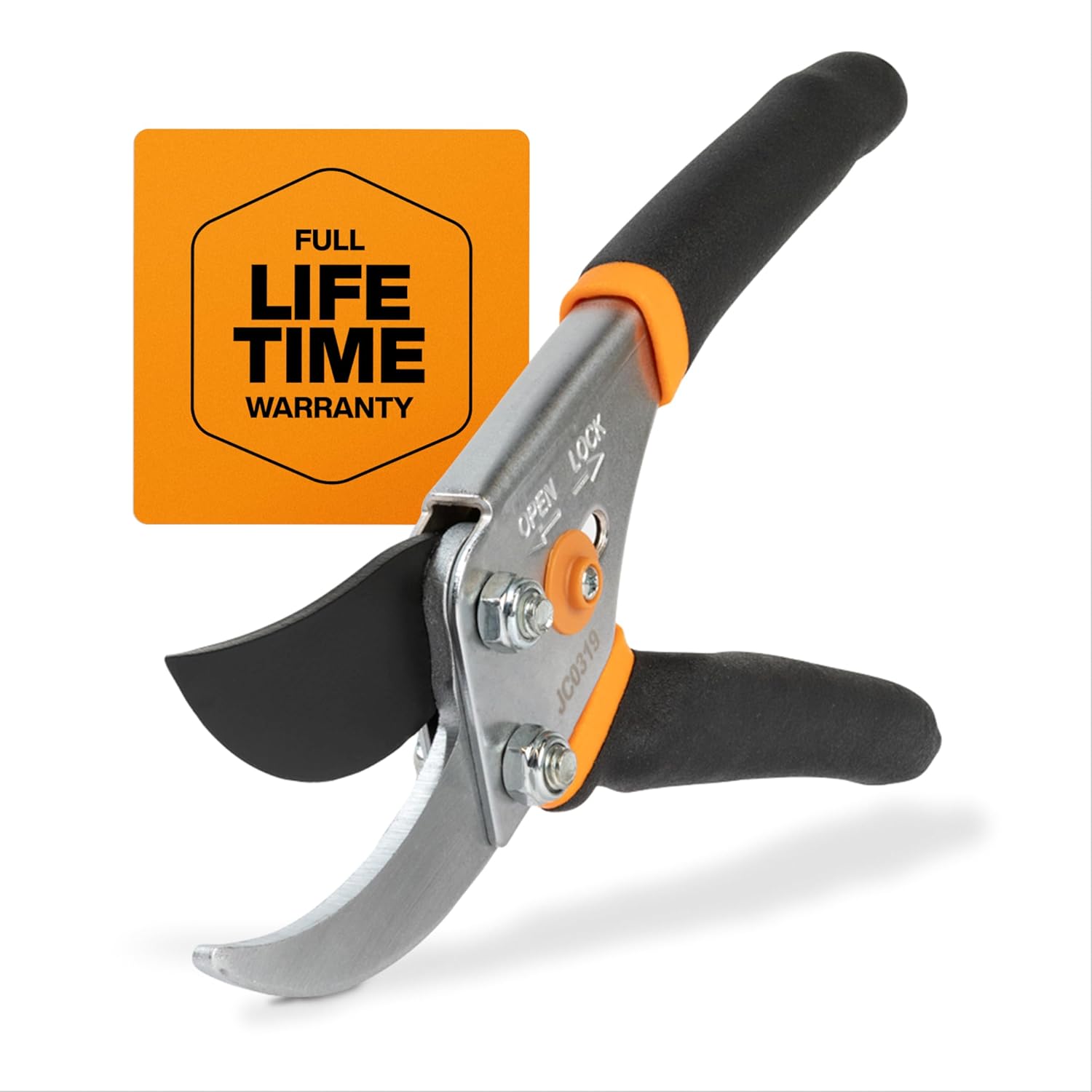
Fiskars Bypass Pruning Shears with Nonstick Coating
| Cutting width | 0.63 inches |
|---|---|
| Blade Edge | Serrated |
| Blade Material | Alloy Steel |
| Hand Orientation | Ambidextrous |
These Fiskars bypass pruning shears are a straightforward, reliable tool for everyday garden pruning. They use a bypass cutting action with precision-ground alloy steel blades and a low-friction coating so stems and green growth are sheared cleanly without crushing, which is helpful for flowers, shrubs, and small woody shoots up to about 5/8 inch. The pruners include a sap groove and nonstick finish to reduce sticking and rust, and an ergonomic non-slip handle that makes repeated trimming more comfortable. Because they are all-steel construction they feel solid and hold an edge through routine use, and the safety lock keeps the blades closed for storage. The main limitations are the modest cutting capacity, which is not suited for thick branches, and the simpler design lacks compound leverage for heavy cutting, so they work best for regular maintenance rather than heavy-duty pruning. For gardeners who want a durable, easy-to-maintain daily pruner, these are a dependable choice.
Best for: Home gardeners who want a dependable, low-maintenance pruner for routine trimming, deadheading, and shaping of flowers and small shrubs and who value proven, widely used tools.
Less Ideal for: People who need a pruner for larger woody branches or frequent heavy-duty cutting should choose a lopper or powered/pruning tool instead.
- Bypass blades and precision-ground steel deliver clean cuts on live stems
- Low-friction blade coating and sap groove reduce sticking and resist rust
- Ergonomic non-slip handle improves control and reduces hand fatigue
- All-steel construction offers durable, long-lasting performance
- Cut capacity limited to about 5/8 inch so not suitable for thicker branches
- No compound leverage mechanism, making heavy or woody cuts harder
Verdict: A tough, no-nonsense pruner that provides clean cuts and low-maintenance blades for everyday garden grooming.
Fiskars Forged Steel Bypass Pruning Shears (1" Cut Capacity)

| Cutting width | 1 inches |
|---|---|
| Blade Type | Bypass |
| Blade Edge | Serrated |
| Blade Material | Alloy Steel |
| Hand Orientation | Ambidextrous |
These Fiskars bypass pruning shears are built for regular garden use and handle bush pruning and shrub maintenance with confidence. The forged-steel handles and fully hardened, precision-ground alloy-steel blade deliver the strength needed to cut live stems and branches up to 1 inch in diameter, while the low-friction coating reduces sap buildup and helps resist rust. The serrated, replaceable blade and ambidextrous design make the tool straightforward to maintain and share around the yard. SoftGrip textured touchpoints improve comfort during longer sessions and give better control for tidy cuts on branches close to the crown of a bush. Because the blade is sharpenable and replaceable, the pruners can retain performance over multiple seasons, which suits gardeners who prefer durable tools they can service. On the downside, these are hand pruners only, so they are not suitable for larger limbs or mechanized needs and the metal handles make the tool heavier than lightweight composite models.
Best for: Gardeners who prioritize dependable, serviceable tools for routine shrub and bush maintenance and prefer products that offer longevity and easy blade replacement.
Less Ideal for: People who need ultralight pruners for extended high-volume clipping or who regularly cut limbs larger than 1 inch should consider other specialized tools.
- Forged steel construction provides strong, long-lasting durability for frequent bush pruning
- Precision-ground alloy-steel blade stays sharp and is replaceable to extend tool life
- Low-friction blade coating reduces sap buildup and improves rust resistance
- SoftGrip textured handles increase comfort and control during extended use
- Heavier metal handles may feel tiring for users who prefer ultralight pruners
- Designed for cuts up to 1 inch only and not suitable for larger limbs
Verdict: A durable, serviceable bypass pruner built for dependable shrub and bush pruning with a replaceable precision blade.
Choosing the Right Pruning Shears for Bushes: Key Factors to Consider
Blade Material and Edge Retention
Blade material determines how long the cutting edge stays sharp and how it reacts to sap and moisture. High-carbon steels take and hold an edge well but may need protective coatings or regular oiling to resist rust. Stainless steels resist corrosion better but vary in hardness and thus in how long they stay sharp.
For bush pruning you want blades that can slice through woody stems without crushing or tearing the bark. That typically means a harder steel with a finely honed bevel and the option to resharpen. Consider whether replacement blades are available and how easy it is to perform routine sharpening at home.
Cutting Mechanism and Jaw Geometry
Different cutting mechanisms change how force is applied to stems. Bypass blades act like scissors, passing a sharp edge by a curved anvil and are best for live shrub wood because they make clean cuts. Anvil or single-bevel designs can handle tougher, dead wood but may crush living tissue if used incorrectly.
Jaw shape and cutting angle influence how well shears slice through variable-diameter stems. A narrow, curved jaw helps reach into tight shrub interiors and snip at awkward angles. For bushes with many small to medium stems, choose shears designed to produce smooth, flush cuts that promote healthy regrowth.
Handle Design and Ergonomics
Pruning bushes often requires many repetitive cuts and working at shoulder height or below. Comfort-focused handles with ergonomic shaping reduce fatigue and the risk of hand strain. Look for models with comfortable grip material that resists slipping when wet and that distribute pressure across the palm rather than concentrating it on a single spot.
Spring return design and a smooth pivot reduce the effort per cut. For gardeners with smaller hands or mild arthritis, lower-effort mechanisms and cushioned grips can make longer pruning sessions manageable.
Cutting Capacity Relative to Bush Types
Bushes vary from soft-stem flowering shrubs to stiff, woody hedging. Know the typical stem diameters you will encounter and match shears that advertise an appropriate cutting capacity. A pair rated for thicker stems will have a more robust pivot and blade geometry, while lighter models are easier to use on many small stems but may fail on larger branches.
Choosing a slightly higher capacity than your average stem size gives margin for occasional thicker growth. Also consider reach and maneuverability for dense foliage where access is limited.
Corrosion Resistance and Weather Tolerance
Garden tools live outdoors and get exposed to moisture, sap, and fertilizer residues that accelerate corrosion. Coatings, stainless alloys, and sealed pivots improve longevity and reduce binding after wet storage. Corrosion-resistant finishes also cut down on the frequency of cleaning and oiling required.
If you prune in humid climates or often work near coastal areas, give extra weight to materials and finishes that explicitly resist rust. Durable coatings also protect the blade during transport and storage.
Maintenance, Sharpening, and Serviceability
Regular maintenance keeps shears cutting cleanly and extends their life. Check whether the shear allows the pivot to be adjusted and whether blades can be removed for sharpening or replacement. Some designs include micro-adjustments that restore alignment without special tools.
Consider whether the blade profile is straightforward to sharpen at home and if replacement parts are generally available. Tools that are easy to disassemble and clean reduce buildup of sap and debris that dulls edges and causes binding.
Best Shears for Dense, Overgrown Bushes
Dense or overgrown bushes often have a mix of twiggy growth and several thicker stems. For this work, prioritize shears with a larger cutting capacity and a robust pivot that resists bending. A bypass design with a slightly wider throat helps clear multiple small shoots while still giving clean cuts on mid-size wood.
Also look for a comfortable non-slip grip and a spring that returns reliably after heavy use. These features make long cleanup sessions less taxing and keep cutting consistent as you move from branch to branch.
- Look for larger jaw openings and reinforced pivots
- Prefer handles with secure grip textures for wet conditions
- Choose blades that accept sharpening or replacement
Shears for Fine Shaping and Topiary Work
When you are sculpting bushes or doing fine shaping, blade precision and balance matter more than raw cutting capacity. Narrow, finely honed blades give clean lines and allow you to trim flush without tearing bark. Lightweight handles and good balance improve control for careful shaping.
Small, well-balanced shears also reduce wrist fatigue during extended trimming sessions, and a crisp blade edge makes finishing touches neater, which helps the plant recover with minimal scarring.
- Prefer narrow curved blades for precision
- Choose lighter, well-balanced designs for control
- Look for secure locking mechanisms for safe carrying
Maintaining Sharpness and Preventing Rust
A brief maintenance routine keeps pruning shears working reliably. After use, wipe blades with a cloth to remove sap and moisture, then apply a light coat of oil to the pivot and blade surfaces. If rust spots appear, use fine abrasive or rust eraser to remove them quickly to avoid pitting.
Regular sharpening with a fine file or whetstone restores a keen edge. If the shear allows disassembly, clean the joint and apply grease lightly to prevent binding. Proper maintenance reduces the need for early replacement and keeps cuts healthier for your bushes.
- Wipe blades after each use and oil pivot
- Sharpen periodically to maintain clean cuts
- Inspect for rust and remove promptly
Ergonomic Tips for Long Pruning Sessions
Alternate hand positions and take short breaks to avoid cramping when pruning several bushes in sequence. Use tools with lower cutting effort and cushioned grips if you expect long sessions. For gardeners with joint concerns, test leverage mechanisms that reduce required hand force.
Adjust technique to use your forearm and shoulder more than finger pinch to prolong comfort. Keeping tools sharp also minimizes the force needed per cut, which reduces overall strain.
- Use cushioned grips and lower-effort mechanisms
- Alternate hands and posture to reduce fatigue
- Keep blades sharp to lower required cutting force
When to Use Bypass Vs Anvil Shears
Bypass shears are generally preferred for live, green shrub growth because the scissor-like action produces clean cuts that heal quickly. They are ideal for shaping, pruning new shoots, and removing live branches without crushing the stem.
Anvil shears can be useful for cutting dead wood or very tough stems because they press material against a flat surface and do not require as sharp an edge. For bush work, consider a primarily bypass tool unless you routinely remove significant amounts of dead, woody growth.
- Use bypass for live growth and shaping
- Reserve anvil for dead wood and very tough stems
- Choose the style that matches your pruning tasks
How We Chose the Best Pruning Shears for Bushes
We evaluated pruning shears for bushes using concrete garden-focused criteria that reflect real tasks and wear patterns. Blade sharpness and edge retention was a primary filter because clean, smooth cuts heal faster on woody stems and reduce disease risk. Cutting capacity and jaw geometry were checked to ensure each shear handles typical bush stem diameters without crushing. Ergonomics and handle comfort were assessed for repeated use during shaping or seasonal pruning, including hand position, grip material, and effort required per cut. Build quality and corrosion resistance determined how well tools stand up to sap, moisture, and outdoor storage. Maintenance and serviceability was included to prefer shears that accept replacement blades, are easy to sharpen, and have accessible pivot adjustments. We excluded lightweight deadheading scissors and long-reach loppers that are not intended for close-in bush work. We also excluded shears with obviously poor corrosion resistance or no reasonable maintenance path. The final list focuses on tools that balance cutting performance with durable construction and ergonomic design for routine bush pruning tasks.
FAQ
What blade type is best for live shrub pruning?
Bypass blades are usually best for live shrubs because they make clean scissor-like cuts that heal faster. They reduce crushing of living tissue compared with anvil-style blades.
How often should I sharpen pruning shears used on bushes?
Sharpening frequency depends on use, but many gardeners sharpen after several heavy sessions or at the start of each pruning season. Regular touch-ups with a fine file keep edges clean between larger sharpening jobs.
Can I use pruning shears for thicker branches occasionally?
Occasional thicker branches are fine if the shear has higher cutting capacity, but repeated work on thick wood wears blades and pivots. For consistent larger branches, consider a tool designed for bigger diameters.
How should I store shears to prevent rust?
Clean blades, dry them thoroughly, apply a light coat of oil, and store shears in a dry place. Hanging them or keeping them in a tool roll helps protect the cutting edge and prevents moisture buildup.
Are replaceable blades worth choosing?
Replaceable blades extend the life of a good handle and pivot assembly and simplify maintenance for avid gardeners. If you prune often, the ability to swap a worn blade can be cost-effective over time.
Final Verdict
For pruning bushes, prioritize a clean-cutting blade, comfortable ergonomics, and materials that resist rust and wear. Balance cutting capacity with maneuverability so the shears handle the typical stem sizes in your garden without being unnecessarily heavy. Regular maintenance and a design that allows sharpening or replacement parts will keep the tool working well season after season. Focus on the decision tradeoffs between cutting power and control: pick a robust bypass-style shear for most live shrub work, and favor ergonomic features if you prune frequently or for extended periods. Those priorities will help you choose a shear that keeps bushes healthy and pruning sessions less tiring.
