

Note: This article contains affiliate links. If you click on these links and make a purchase, I may earn a small commission at no extra cost to you. This helps support my research and content. Read my full affiliate disclosure here.
When you deadhead regularly, the right pruning shears reduce plant stress and speed the task. You want blades that make quick, clean cuts without crushing delicate stems and handles that stay comfortable through repeated use. This guide covers six top shortlisted pruning shears for deadheading, focusing on how they behave in everyday garden work rather than lab-style testing. We evaluated tools for blade sharpness, cut type, ergonomics, and durability so you can pick a shear that suits frequent flower maintenance. Read on to understand the practical tradeoffs and which features matter most for keeping blooms tidy.
Top Picks at a Glance
| Best Overall The best all-around choice for most situations | Kimura 8" Pro Pruning Scissors — Japanese SK5 Hi-Carbon Steel, Vinyl-Coated Ergonomic Handles |  |
| Best Quality Built to a higher standard if you want something more solid | FELCO 100 Cut-and-Hold Pruning Shears |  |
| Best Budget The cheapest option that still gets the job done reliably | Fondwell 6.5" Garden Pruning Shears (6.5-inch) |  |
| Highest Rated A top-rated pick with lots of positive feedback | Horsvill Japanese-Style Garden Shears — High-Carbon Bypass Pruners |  |
| Most Popular A crowd favorite that many people choose with confidence | Fiskars Bypass Pruning Shears with Nonstick Coating |  |
| Best Seller A high-volume bestseller chosen again and again | VOTREK VT-C800 8.5" Bypass Pruning Shears with SK5 Teflon-Coated Blade |  |
Kimura 8" Pro Pruning Scissors — Japanese SK5 Hi-Carbon Steel, Vinyl-Coated Ergonomic Handles

| Blade material | Japanese SK5 hi-carbon steel |
|---|---|
| Blade coating | PTFE coated |
| Handle material | Aluminum with vinyl coating |
| Intended use | Deadheading, trimming, light pruning |
These Kimura 8" Pro Pruning Scissors are built for precise, frequent garden work where control and edge retention matter. The SK5 hi-carbon steel blades are heat treated to a hard edge and finished with a PTFE coating, so the blades slice cleanly through stems and resist sap buildup during extended use. The scissors are lightweight thanks to aluminum handles and the vinyl coating gives a secure grip that reduces hand fatigue during deadheading, shaping, and light pruning tasks. A simple locking strap keeps the blades closed when stored and ambidextrous handle geometry makes them comfortable for both right- and left-handed users. Expect long-lasting sharpness with occasional sharpening rather than frequent maintenance. They are not intended for heavy woody cutting or thick branches where bypass pruners or loppers are required, but for herbs, flowers, and small stems these deliver fast, precise results and are easy to maneuver in confined beds or containers.
Best for: Gardeners who prioritize precise, low-fatigue shears for frequent deadheading, trimming, and working in tight beds or containers.
Less Ideal for: Users who need a tool for heavy woody pruning or cutting large-diameter branches should choose bypass pruners or loppers instead.
- High-hardness SK5 hi-carbon steel blades for long edge retention
- PTFE-coated blades reduce sap buildup and improve cutting glide
- Lightweight aluminum handles with vinyl coating for comfortable, non-slip grip
- Ambidextrous design and easy locking strap for secure storage
- Not suitable for cutting thick woody branches or heavy-duty pruning
Verdict: A lightweight, precision-focused pruning shear that keeps a long-lasting edge and reduces hand fatigue for frequent garden trimming tasks.
FELCO 100 Cut-and-Hold Pruning Shears

| Blade Material | Carbon Steel |
|---|---|
| Handle Material | Forged Aluminium; Rubberized Grip |
| Cutting size | Up to 10mm |
| Blade Edge | Serrated |
| Hand Orientation | Ambidextrous |
The FELCO 100 is a purpose-built picking snip for gardeners who harvest cut flowers and do frequent deadheading. It combines a sharp carbon-steel blade with a fixed counter jaw that grips stems after the cut, so delicate blooms do not slip and bruise while you work. The forged aluminum handles and rubberized grips deliver a solid, fatigue-reducing hold for repeated cuts, and the micrometric adjustment makes it straightforward to keep the blades aligned and replaceable. The serrated edge and ambidextrous layout give reliable control on small to medium stems up to about 10 mm. Because the tool emphasizes precision and holding rather than heavy-duty chopping, it performs best on live stems and soft wood rather than thick branches. Maintenance is required to prevent corrosion of carbon-steel blades in wet conditions, but replaceable parts and a long manufacturer warranty support long-term ownership. For serious flower gardeners this shears speeds harvesting and reduces stem damage, though it is not a substitute for larger pruners when tackling woody growth.
Best for: Gardeners who deadhead and harvest cut flowers frequently and value clean, damage-free stems and fast repetitive cutting.
Less Ideal for: People who need a heavy-duty pruner for thick woody branches or general landscape pruning should choose a larger bypass pruner instead.
- Stem-gripping jaw holds cut stems to prevent drops and bruising
- Carbon steel blade for sharp, long-lasting edge retention
- Forged aluminium handles with rubberized grips reduce hand fatigue
- Micrometric adjustment and replaceable parts simplify maintenance and longevity
- Carbon steel needs regular cleaning/oiling to avoid rust in damp conditions
- Not intended for heavy woody branches or thick pruning tasks
Verdict: If you regularly deadhead or harvest flowers, these shears speed the job and protect stems by gripping each cut so blooms stay intact.
Fondwell 6.5" Garden Pruning Shears (6.5-inch)

| Blade Length | 2 inches |
|---|---|
| Cutting width | 1.2 inches |
| Blade Type | Bypass |
| Blade Material | Stainless Steel |
| Hand Orientation | Ambidextrous |
These Fondwell 6.5" pruning shears are a lightweight, budget-friendly tool for precise deadheading and detail pruning. The stainless steel bypass blades and micro-tip design let you reach tight buds and make clean cuts on flowers, small stems, and bonsai shoots without crushing tissue. The ambidextrous polypropylene handles with TPR-like grips and a spring action make repetitive snips easier and reduce hand fatigue during longer sessions. A push-to-lock safety keeps the blades closed for storage. Practical strengths are the non-stick rust-resistant blade finish that limits sap buildup and the compact size that gives excellent control for deadheading, harvesting small fruits, and indoor plant maintenance. The main limitations are the small cutting width and short blade length, which make these unsuitable for thicker stems or heavy pruning and mean you may need a larger pruner for tougher garden tasks.
Best for: Gardeners who need an affordable, precise tool for frequent deadheading, trimming flowers, and maintaining small potted or indoor plants. Ideal for users who prioritize control and low hand strain during repetitive snipping.
Less Ideal for: Not a good fit for people who regularly cut woody branches or stems thicker than light flower stalks; those users should choose a larger pruning tool.
- Micro-tip stainless steel bypass blades for precise, clean cuts on small stems and flowers
- Non-stick, rust-resistant finish reduces sap buildup and eases cleaning
- Lightweight 6.5" frame with spring action and ergonomic grips reduces hand fatigue
- Ambidextrous design and push-to-lock safety for easy use and secure storage
- Small blade and cutting width are not suitable for thick stems or heavy pruning
Verdict: A low-cost, compact pruner that delivers precise, low-fatigue deadheading and detailed trimming for flowers and small plants.
Horsvill Japanese-Style Garden Shears — High-Carbon Bypass Pruners

| Blade Material | High Carbon Steel |
|---|---|
| Blade Edge | Serrated |
| Blade Type | Bypass |
| Hand Orientation | Ambidextrous |
| Cutting width | 30 millimeters |
These Horsvill garden shears are a compact, Japanese-style bypass pruner built for precise cuts on flowers, stems, and small branches. The SK4 high carbon steel blades are heat‑treated and chrome plated to hold a sharp edge and resist sap and rust, which helps deliver clean, sterile cuts when deadheading. A serrated lower edge and a 30 mm cutting width make it easy to grab and trim stems without slipping. The ambidextrous, all‑metal handle uses an aviation‑grade alloy and offers an ergonomic, non‑slip grip plus a safety lock for secure storage. In practice the tool excels at repeated deadheading or light pruning where a sharp, reliable cut matters for plant health, and the compact size makes it comfortable for detailed work and long sessions. Limitations are that the blade length and 30 mm capacity suit small branches only, so heavier limb pruning will require a larger pruner or lopper. Also high‑carbon steel requires some care to avoid corrosion over long outdoor storage.
Best for: Gardeners who prioritize a dependable, sharp hand pruner for frequent deadheading and precision trimming and who value tools that stay sharp and give consistent sterile cuts.
Less Ideal for: People who need a tool for heavy pruning or cutting large-diameter branches should choose a larger pruner or lopper instead.
- SK4 high carbon steel blades with high‑temperature quenching for long‑lasting sharpness
- Chrome plating reduces sap buildup and improves corrosion resistance
- Ergonomic, ambidextrous alloy handle with non‑slip design for comfortable, low‑fatigue use
- Safety lock protects the blade and prevents accidental cuts
- Serrated bypass blade and 30 mm cutting width for secure, precise deadheading cuts
- Designed for small stems and branches so not suitable for heavy pruning or thick limbs
- High carbon steel needs occasional cleaning and drying to prevent rust if stored outdoors
Verdict: A precision-focused, reliably sharp Japanese-style pruner that delivers clean, repeatable cuts ideal for deadheading and detailed garden work.
Fiskars Bypass Pruning Shears with Nonstick Coating
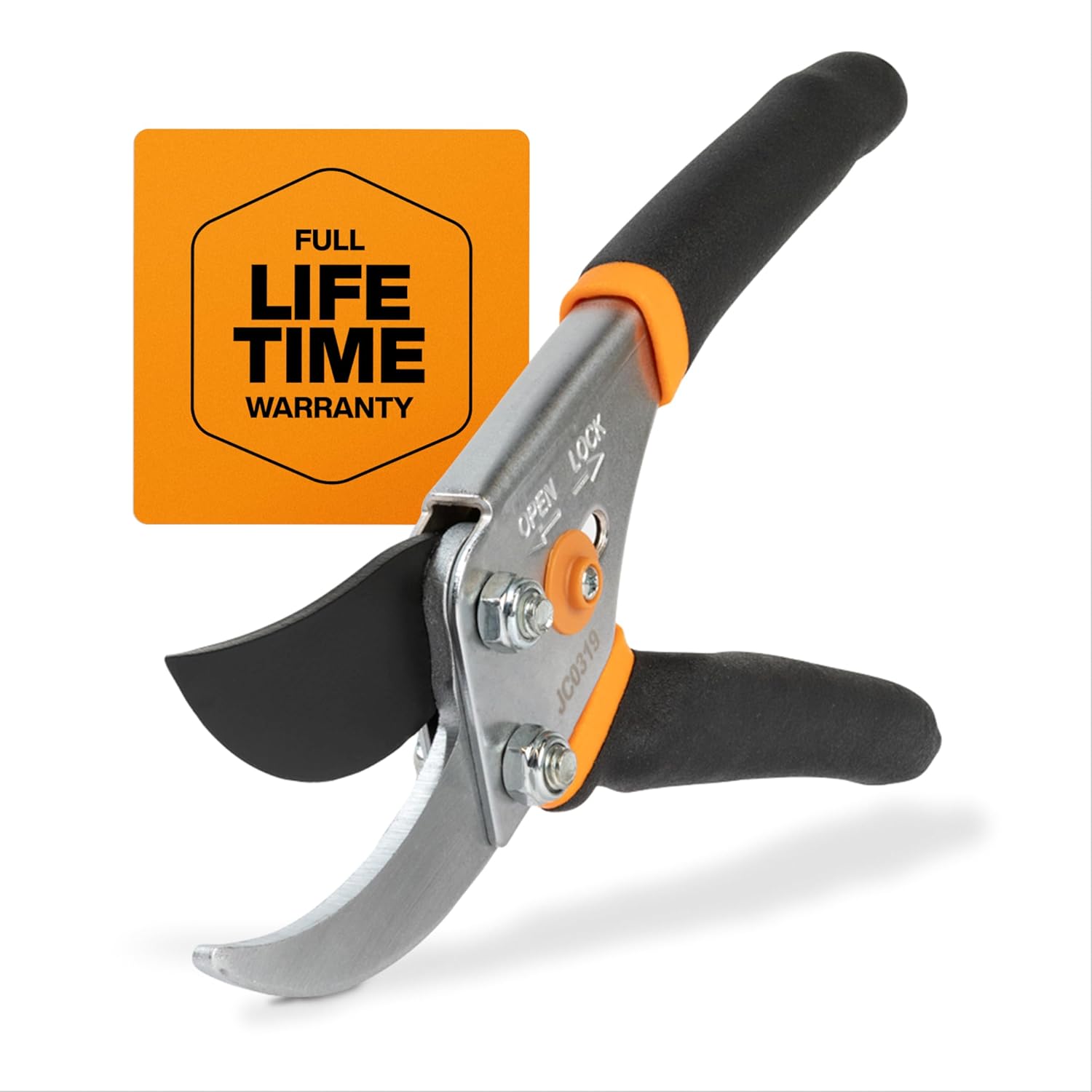
| Cutting width | 0.63 inches |
|---|---|
| Blade Edge | Serrated |
| Blade Material | Alloy Steel |
| Hand Orientation | Ambidextrous |
These Fiskars bypass pruning shears are a straightforward, reliable tool for everyday garden pruning. They use a bypass cutting action with precision-ground alloy steel blades and a low-friction coating so stems and green growth are sheared cleanly without crushing, which is helpful for flowers, shrubs, and small woody shoots up to about 5/8 inch. The pruners include a sap groove and nonstick finish to reduce sticking and rust, and an ergonomic non-slip handle that makes repeated trimming more comfortable. Because they are all-steel construction they feel solid and hold an edge through routine use, and the safety lock keeps the blades closed for storage. The main limitations are the modest cutting capacity, which is not suited for thick branches, and the simpler design lacks compound leverage for heavy cutting, so they work best for regular maintenance rather than heavy-duty pruning. For gardeners who want a durable, easy-to-maintain daily pruner, these are a dependable choice.
Best for: Home gardeners who want a dependable, low-maintenance pruner for routine trimming, deadheading, and shaping of flowers and small shrubs and who value proven, widely used tools.
Less Ideal for: People who need a pruner for larger woody branches or frequent heavy-duty cutting should choose a lopper or powered/pruning tool instead.
- Bypass blades and precision-ground steel deliver clean cuts on live stems
- Low-friction blade coating and sap groove reduce sticking and resist rust
- Ergonomic non-slip handle improves control and reduces hand fatigue
- All-steel construction offers durable, long-lasting performance
- Cut capacity limited to about 5/8 inch so not suitable for thicker branches
- No compound leverage mechanism, making heavy or woody cuts harder
Verdict: A tough, no-nonsense pruner that provides clean cuts and low-maintenance blades for everyday garden grooming.
VOTREK VT-C800 8.5" Bypass Pruning Shears with SK5 Teflon-Coated Blade

| Blade Material | High Carbon Steel (SK5) |
|---|---|
| Cutting width | 20 millimeters |
| Hand Orientation | Ambidextrous |
| Handle Material | Aluminum, Rubber |
The VOTREK VT-C800 is a straightforward hand pruner aimed at routine garden pruning, rose trimming, bonsai work, and light tree maintenance. It uses an SK5 high-carbon steel blade with a Teflon coating to resist sap buildup and keep cuts clean, while a sealed spring reduces debris jams and improves blade return in damp conditions. The ambidextrous thumb lock can be operated one-handed and works with gloves, which helps with safe carrying between jobs. Ergonomic aluminum and rubber handles and a non-slip grip reduce wrist strain for longer sessions and make the tool easier for users with weaker hands. The cutter is rated to slice branches up to about 20 mm (0.8 in), so it is best for live growth and small stems rather than large-diameter pruning. Buyers should expect to sharpen the blade occasionally to maintain peak performance and to avoid using it on dry, very hard wood where bypass pruners are less efficient. For routine backyard pruning where reliable, jam-resistant action and comfortable handling matter, this model delivers consistent, low-fuss performance.
Best for: A practical gardener who prioritizes reliable, low-maintenance tools and wants comfortable, safe shears for everyday pruning tasks around the yard.
Less Ideal for: People who need to cut thick, dry, or woody branches frequently should choose a larger anvil or powered pruner instead.
- Sharp SK5 high-carbon steel blade with Teflon coating reduces sap adhesion and keeps cuts cleaner
- Sealed jam-proof spring design resists debris and improves blade return in wet or dirty conditions
- Ambidextrous one-handed thumb lock that works with gloves for safer handling and storage
- Ergonomic aluminum and rubber handles with non-slip grip minimize wrist fatigue during extended use
- Cut capacity is limited to about 20 mm (0.8 in), so not suitable for larger branches
- Requires periodic sharpening to maintain optimal cutting performance
Verdict: If you want dependable, jam-resistant garden shears with a sharp, low-stick blade and comfortable grip for routine pruning, this is a solid, low-fuss choice.
Choosing the Right Pruning Shears for Deadheading: Key Factors to Consider
Blade Sharpness and Edge Geometry
Sharp blades are the single biggest factor in clean deadheading. A keen, well-ground edge slices stems cleanly, which reduces tearing and bruising that invite disease. For flower stems you will usually prefer a thin, acute edge that stays sharp through repeated light cuts.
Edge geometry matters because a slicing bevel will part tissue more cleanly than a thick chisel grind. Harder blade steels hold an edge longer, but they can be harder to resharpen. Consider whether you want a blade that is easy to touch up in the garden or one that stays sharp longer between professional sharpening.
Cut Type and Action
Bypass shears work like scissors, with two blades passing each other to make a slicing cut, and are generally best for deadheading soft stems and herbaceous material. Anvil designs compress stems against a flat surface and are better suited to woody or very hard stems, but they can crush delicate flower tissue.
Pay attention to how the shear's action feels. Some bypass models have long blades for a single long slice, while others use short, stout blades that are easier to control close to the bloom. For frequent deadheading you want predictable, clean action with minimal stem crushing.
Ergonomics and Hand Comfort
You may deadhead the same beds for extended periods, so handle shape, padding, and thumb/forefinger positions matter. Ergonomic grips that fit your hand size reduce fatigue and hotspots. Look for handles with enough texture to stay secure if your hands get sweaty or damp.
Take into account whether you are left- or right-handed, and whether the shear's closure force feels comfortable across many repetitions. Spring mechanisms that return smoothly and predictable locking positions also reduce hand strain and the risk of accidental cuts.
Weight, Balance, and Repetitive Use
Lightweight shears are easier to swing through dozens of cuts, but extremely light models can feel unstable if poorly balanced. Weight distribution between blade and handle affects control when cutting small stems near flowers.
Consider tools with a low moment of inertia so you can make controlled snips without wrist fatigue. If you frequently deadhead while standing or moving between beds, choose a shear that is comfortable to carry all day.
Corrosion Resistance and Maintenance
Garden tools live in moisture, sap, and soil, so corrosion-resistant finishes and materials lengthen usable life. Stainless or coated steels resist rust better, reducing the need for aggressive maintenance between sessions.
Still, any shear will benefit from routine cleaning, occasional oiling of the pivot, and edge touch-ups. Think about whether you want replaceable parts or a design that can be taken apart for deep cleaning at the end of the season.
Safety Features and Locking Mechanisms
A reliable locking mechanism prevents accidental openings in a pouch or apron and reduces the chance of cuts when moving around the garden. Locks that engage with one hand and stay secure under jostling are preferable.
Other safety considerations include rounded tip options for work near delicate blooms and a visible open/closed indicator. For frequent garden tasks, a simple positive lock and a smooth, snag-free handle finish reduce incidents and make routine transport safer.
When Deadheading Makes the Biggest Difference
Regular deadheading redirects a plant's energy into new blooms rather than seed production and keeps beds looking tidy. For many annuals, perennials, and some shrubs, the right shear makes the task faster and reduces damage around the crown and foliage. Quick, clean snips also reduce the time stems spend wounded and exposed to pests and pathogens.
- Target spent flowers at the base of the stem for best results.
- Cut at a slight angle to shed water from the wound.
- Use a shear that lets you get close to the foliage without crushing adjacent buds.
Bypass Versus Anvil: What Works for Flowers
Most flower deadheading benefits from bypass action because it slices rather than crushes. Bypass shears are better for soft, green stems and look after tender tissue. Anvil shears can be useful for thicker, woody stems but tend to compress soft flowers and are less commonly recommended for routine deadheading.
- Choose bypass for herbaceous ornamentals and most annuals.
- Consider small anvil shears only if you regularly cut semi-woody stems.
Caring for Shears Between Deadheading Sessions
After a day of deadheading, wipe blade sap and debris away to prevent gumming and corrosion. A quick swipe with a cloth, a drop of lubricating oil at the pivot, and a light sharpening touch keeps performance consistent over a season. Store shears dry and locked to prolong their life and avoid accidents.
- Clean blades with a damp cloth, then dry thoroughly.
- Apply a light oil to the pivot and blade surfaces to repel moisture.
- Sharpen lightly when cuts start to crush stems rather than slice.
Choosing the Right Size and Blade Length
Long blades let you cut multiple stems with a single smooth motion, which can be efficient for sweeping work in large beds. Shorter blades give precise control when deadheading tightly packed plants or working near buds. Consider the layout of your beds and whether you will mostly work close-in detail or perform quick passes across larger areas.
- Use longer blades for open, sprawling beds.
- Use shorter, more precise blades for crowded borders and mixed containers.
Maintaining Ergonomics for Long Sessions
If you deadhead for long periods, small ergonomic features add up. Look for handles shaped to distribute pressure across the palm rather than concentrating it on a few fingers. Soft-touch grips, spring tension tuned to your hand strength, and accessible locks reduce the chance of hand fatigue and repetitive strain.
- Test closure force before committing to long use.
- Consider gloves that still allow fine finger control if your hands are sensitive.
How We Chose the Best Pruning Shears for Deadheading
We focused on tools that excel at routine flower maintenance and deadheading rather than heavy woody pruning. Selection prioritized blades and mechanisms that minimize tissue crushing and encourage fast wound closure on herbaceous and semi-woody stems. We included only shears with clear design intent for light-to-moderate cutting loads and excluded heavy loppers or multi-tool systems. Key evaluation criteria included blade sharpness and edge geometry, because a slicing edge makes cleaner cuts; cut type, distinguishing bypass from anvil action and how that affects soft-stem cleanup; ergonomic design and hand comfort for frequent use; locking and safety features that prevent accidents during repetitive tasks; and corrosion resistance and serviceability so tools keep performing over seasons. We also considered weight and balance since lighter, well-balanced shears reduce fatigue during long deadheading sessions. Tools that were clearly designed for heavy woody work or lacked basic safety features were excluded from the shortlist.
FAQ
How often should I deadhead common annuals?
It depends on the species, but many annuals benefit from weekly checks during peak bloom. Removing spent flowers as they appear prevents seed set and encourages more blooms. Heavier bloomers may need deadheading several times a week.
Can I use pruning shears for deadheading delicate blooms?
Yes, but choose a small bypass shear with a fine blade profile. Larger shears or anvil types can crush delicate stems, so pick a tool sized for the task and your hand for the cleanest cuts.
How do I sharpen shears used for deadheading?
For light garden use, a fine diamond file or sharpening stone touched to the bevel is usually sufficient. Hone the bevel with a consistent angle and remove any burr on the opposite side. Only sharpen enough to restore a clean slicing edge to avoid altering blade geometry.
Should I disinfect shears between plants?
routine disinfection is not required for everyday deadheading, but if you move between plants with signs of disease, wipe blades with an appropriate disinfectant. Clean sap and debris first so disinfectant contacts the metal directly.
Are lightweight shears durable enough for regular deadheading?
Lightweight shears designed for garden use can be durable if made from corrosion-resistant materials and built with a solid pivot. Very cheap, flimsy models may fail sooner, so look for balanced construction and a good finish.
Is there a recommended blade length for container gardening?
Shorter blades in the 1.5 to 2.5 inch range often work best in containers because they offer greater control in tight plantings and reduce the chance of nearby stems being damaged.
Final Verdict
For routine deadheading, prioritize clean-cutting bypass blades, comfortable ergonomics, and a weight that lets you work without wrist fatigue. Expect to trade off absolute edge longevity against the ease of resharpening and choose a corrosion-resistant finish if you work in humid or coastal conditions. Focus on cut type, blade geometry, and handling when making your final choice. Those factors will determine how quickly you can tidy flowers, how little damage you cause to stems, and how pleasant the job is over a full gardening session.
