

Note: This article contains affiliate links. If you click on these links and make a purchase, I may earn a small commission at no extra cost to you. This helps support my research and content. Read my full affiliate disclosure here.
If you want a long-lasting, low-maintenance option for growing vegetables, herbs, or ornamentals, a composite raised garden bed can make a big difference. These beds combine the look of wood with weather-resistant polymers so you get structural longevity, reduced upkeep, and stable planting conditions. Choosing the right composite raised bed matters because depth, drainage, and assembly affect what you can grow and how easy the bed is to maintain. This guide covers six shortlisted composite raised garden beds suited to common garden situations from small patios to backyard plots. We evaluated build durability, planting depth, drainage, ease of assembly, and long-term maintenance to help you pick the best fit for your space and goals.
Top Picks at a Glance
| Best Overall The best all-around choice for most situations | BIVODA HDPE Weatherproof Raised Garden Bed with Legs |  |
| Best Quality Built to a higher standard if you want something more solid | YEFU 48-Inch Raised Garden Bed with Legs (HIPS) |  |
| Best Budget The cheapest option that still gets the job done reliably | Keter Maple 48" x 48" Wood-Look Raised Garden Bed (Resin) |  |
| Highest Rated A top-rated pick with lots of positive feedback | BIVODA HDPE Weatherproof Raised Garden Bed with Legs |  |
| Most Popular A crowd favorite that many people choose with confidence | Keter Urban Bloomer 12.7 Gallon Elevated Raised Garden Bed |  |
| Best Seller A high-volume bestseller chosen again and again | Keter Maple 48" x 48" Wood-Look Raised Garden Bed |  |
BIVODA HDPE Weatherproof Raised Garden Bed with Legs

| Material Type | High Density Polyethylene (HDPE) |
|---|---|
| Capacity | 20.7 gallons |
| Other Special Features of the Product | Drainage Hole, Fade Resistant, Rot Resistant, Rust Resistant, Weather Resistant |
| Mounting Type | Floor Standing |
This elevated planter box provides a durable, low-maintenance option for outdoor container gardening. Made from high-density polyethylene, it resists cracking, rot, rust, and fading so it stays serviceable across seasons; drainage holes and two reinforcing crossbars keep soil healthy and the base stable under load. Typical uses are vegetable starts, herbs, or compact flower beds on patios, decks, or balconies where raised height improves access and reduces bending. Assembly is straightforward thanks to pre-drilled panels and stainless steel fasteners so one person can put it together with basic tools. The plastic construction means it will not offer the natural insulation or look of wood, and its planting volume (about 20.7 gallons) limits how many larger plants or deep-rooted crops you can grow. It is a strong, weatherproof platform for productive small-space gardening but better suited to shallow to medium-rooted plants rather than full-size shrubs or trees.
Best for: People who want a long-lasting, low-maintenance elevated planter for productive small-space gardening and who prioritize durability and ease of use.
Less Ideal for: Gardeners seeking a traditional wood aesthetic, large-scale plantings, or deep-rooted crops that need greater soil volume should consider alternate solutions.
- Durable HDPE construction resists rot, rust, cracking, and fading for long outdoor life
- Built-in drainage holes and reinforcing crossbars maintain soil health and structural stability
- Pre-drilled panels and included hardware with stainless steel screws make assembly quick and achievable by one person
- Weatherproof, zero-maintenance finish that cleans easily with soap and water
- Planting volume is modest so it is not ideal for deep-rooted or large plants
- Plastic finish does not provide the thermal insulation or traditional look of wood
Verdict: Buy this if you want a weatherproof, maintenance-free elevated planter that reliably supports productive small-space gardening.
YEFU 48-Inch Raised Garden Bed with Legs (HIPS)

| Material Type | HIPS |
|---|---|
| Other Special Features of the Product | Drainage Hole, Fade Resistant, Frost Resistant, UV Resistant, Weather Resistant |
| Planting Depth | 8.5 inches |
| Capacity | 385 pounds |
| Mounting Type | Floor Standing |
The YEFU 48-inch raised garden bed is an elevated plastic planter designed to make small-scale vegetable, herb and flower growing easier on patios, decks and garden corners. It assembles into a 30-inch-high rectangular bed with a faux-wood HIPS finish that resists UV, frost and general weathering so you do not need wood maintenance. Practical details include a removable liner for easier filling, bottom drainage holes to prevent waterlogging, and an 8.5-inch planting depth that fits most herbs, lettuces and shallow-rooted vegetables. The unit passed a 385 lb static-load test so it will hold soil and plants without flexing on a stable surface. Because it is plastic, the bed rinses clean and will not rot, but it will not provide the insulating or moisture-buffering properties of real wood or heavy composite materials. Assembly is straightforward and the raised height reduces bending, but the shallow planting depth limits truly deep-rooted crops. For someone optimizing for low maintenance and ergonomic planting in a small outdoor space, this is a solid elevated box planter option.
Best for: Buyers who want a low-maintenance, ergonomic elevated planter to maximize growing space on patios, decks, or small yards while minimizing bending and upkeep.
Less Ideal for: Gardeners who need deep planting beds for large root vegetables or those seeking the insulating benefits and natural look of real wood should consider alternatives.
- Weather-resistant HIPS construction resists UV, frost and fading for low maintenance
- Included liner and drainage holes simplify filling and prevent waterlogging
- Raised 30-inch height reduces bending and improves accessibility
- Static-load rated to 385 pounds when properly assembled for stable soil support
- 8.5-inch planting depth is shallow for large or deep-rooted vegetables
Verdict: A low-maintenance, elevated HIPS planter that makes ergonomic, small-space vegetable and herb growing easy and durable.
Keter Maple 48" x 48" Wood-Look Raised Garden Bed (Resin)

| Capacity | 443 liters |
|---|---|
| Material Type | Resin |
| Mounting Type | Floor Standing |
| Indoor Outdoor Usage | Outdoor |
| Other Special Features of the Product | Fade Resistant |
The Keter Maple raised garden bed is a resin planter that gives the appearance of wood without the upkeep. It assembles in minutes with an easy snap-together system, so you can fill it with soil and plant right away. The Evotech composite corners and boards resist fading and weathering, which keeps the bed looking good season after season and eliminates the need for staining or sealing. With a shallow 12.6 inch depth and a square footprint, it is best for shallow-rooted vegetables, herbs, salad greens, and small annuals. The lightweight construction makes it easy to move before filling but means it should be placed on a stable, level surface once filled; it does not offer the heft of built timber. Capacity is suitable for a compact intensive planting layout and the plastic material is BPA-free, which simplifies cleaning and avoids rot. If you want a low-maintenance, attractive raised bed that is quick to set up and resists weathering, this is a practical choice; gardeners who need deeper beds for larger root crops or prefer natural wood grain and weight may want a different option.
Best for: Gardeners who want an affordable, low-maintenance raised bed that looks like wood and can be set up quickly for herbs, salad greens, and compact vegetable plots.
Less Ideal for: Growers who need deep beds for large root vegetables or who prefer the weight and rigidity of real wood or heavy-duty steel raised beds.
- Quick, tool-free assembly so you can start planting the same day
- Weather- and fade-resistant resin that needs no staining or maintenance
- Realistic wood-look finish for attractive, natural appearance
- BPA-free Evotech composite material that resists rot and decay
- Shallow depth limits use for deep-rooted vegetables and larger root crops
- Lightweight panels lack the long-term solidity of heavy timber when unfilled
Verdict: A low-maintenance, wood-look resin raised bed that offers quick tool-free setup and weather resistance ideal for budget-conscious gardeners wanting an attractive, easy starter bed.
BIVODA HDPE Weatherproof Raised Garden Bed with Legs

| Material Type | High Density Polyethylene (HDPE) |
|---|---|
| Capacity | 20.7 gallons |
| Other Special Features of the Product | Drainage Hole, Fade Resistant, Rot Resistant, Rust Resistant, Weather Resistant |
| Mounting Type | Floor Standing |
This BIVODA raised garden bed is a freestanding, elevated planter constructed from high-density polyethylene (HDPE) that resists rot, rust, fading, and splitting. It is intended for outdoor use on patios, decks, or balconies and arrives with pre-drilled panels, stainless steel screws, and an assembly guide for straightforward setup by one person. The molded HDPE panels and integrated finish mean you do not need to paint or seal the box, and the included drainage holes plus two reinforcing crossbars keep soil healthy while supporting the planting area. With roughly 20.7 gallons of planting capacity and a stated 300 lb maximum load, it works well for shallow vegetables, herbs, and annual flowers. The main compromises are the compact planting volume and fixed rectangular shape, which limit very deep-rooted crops and large-scale beds, and its plastic construction may not suit gardeners seeking a natural wood aesthetic. For anyone prioritizing a durable, near-zero-maintenance raised bed that stands up to weather, this unit delivers dependable performance.
Best for: Gardeners who want a reliable, low-maintenance raised bed that endures weather without ongoing upkeep and is simple to assemble and use on small outdoor spaces.
Less Ideal for: Growers planning large, deep vegetable plots or those who prefer traditional wood aesthetics or heavier-duty, built-in beds for landscaping projects.
- HDPE construction resists rot, rust, splitting, and fading for long outdoor life
- Pre-drilled panels and included stainless steel screws make single-person assembly practical
- Integrated drainage holes and reinforcing crossbars keep soil aerated and the bottom supported
- Low maintenance finish that does not require painting or waterproofing
- Limited planting capacity and depth restrict use with very deep-rooted or large vegetables
- Plastic look may not match gardeners seeking a natural wood or premium composite appearance
Verdict: Buy this if you want a tough, weatherproof raised bed that delivers years of low-maintenance outdoor planting with easy single-person assembly.
Keter Urban Bloomer 12.7 Gallon Elevated Raised Garden Bed

| Capacity | 22.4 gallons |
|---|---|
| Material Type | Resin |
| Other Special Features | Fade Resistant |
| Mounting Type | Floor Standing |
| Indoor Outdoor Usage | Outdoor |
The Keter Urban Bloomer is an elevated raised garden bed built for simple, low-maintenance herb and small-vegetable gardening on patios, balconies, or decks. It uses a built-in reservoir and water gauge to reduce watering frequency and help prevent overwatering and root rot, while a manual drainage tap allows you to empty the reservoir for indoor moves or heavy rain. The included seed sprouting tray makes starting seedlings neater, and the resin, wood-look finish is UV protected so it resists fading and rot better than real wood. Assembly is straightforward and the rectangular, floor-standing form fits alongside outdoor furniture. Because it is a single-piece plastic/resin planter, it is lightweight and weatherproof but will not provide the insulating or aesthetic qualities of natural wood or heavier materials. Capacity is limited compared with large raised beds, so it is best for herbs, salad greens, and a few compact vegetables rather than large crops.
Best for: Gardeners who want a practical, low-effort elevated planter for growing herbs and small salad greens on a balcony or patio and who prioritize easy watering management and low maintenance.
Less Ideal for: People planning to grow large vegetables, heavy production beds, or who want the look and thermal benefits of natural wood or metal raised beds.
- Self-watering reservoir with visible water gauge helps maintain consistent moisture and prevents overwatering
- Manual drainage tap makes it easy to drain excess water and move the planter indoors without leaks
- UV-protected resin construction resists fading, rot, and rust for low outdoor maintenance
- Included seed sprouting tray simplifies starting seedlings and transplanting into the bed
- Relatively small soil capacity limits the number and size of plants compared with full-size raised beds
- Resin construction lacks the natural insulation and aesthetic of wood or heavier materials
Verdict: If you want a compact, low-maintenance elevated planter that simplifies watering and seed starting for herbs and small veggies, this is a practical choice.
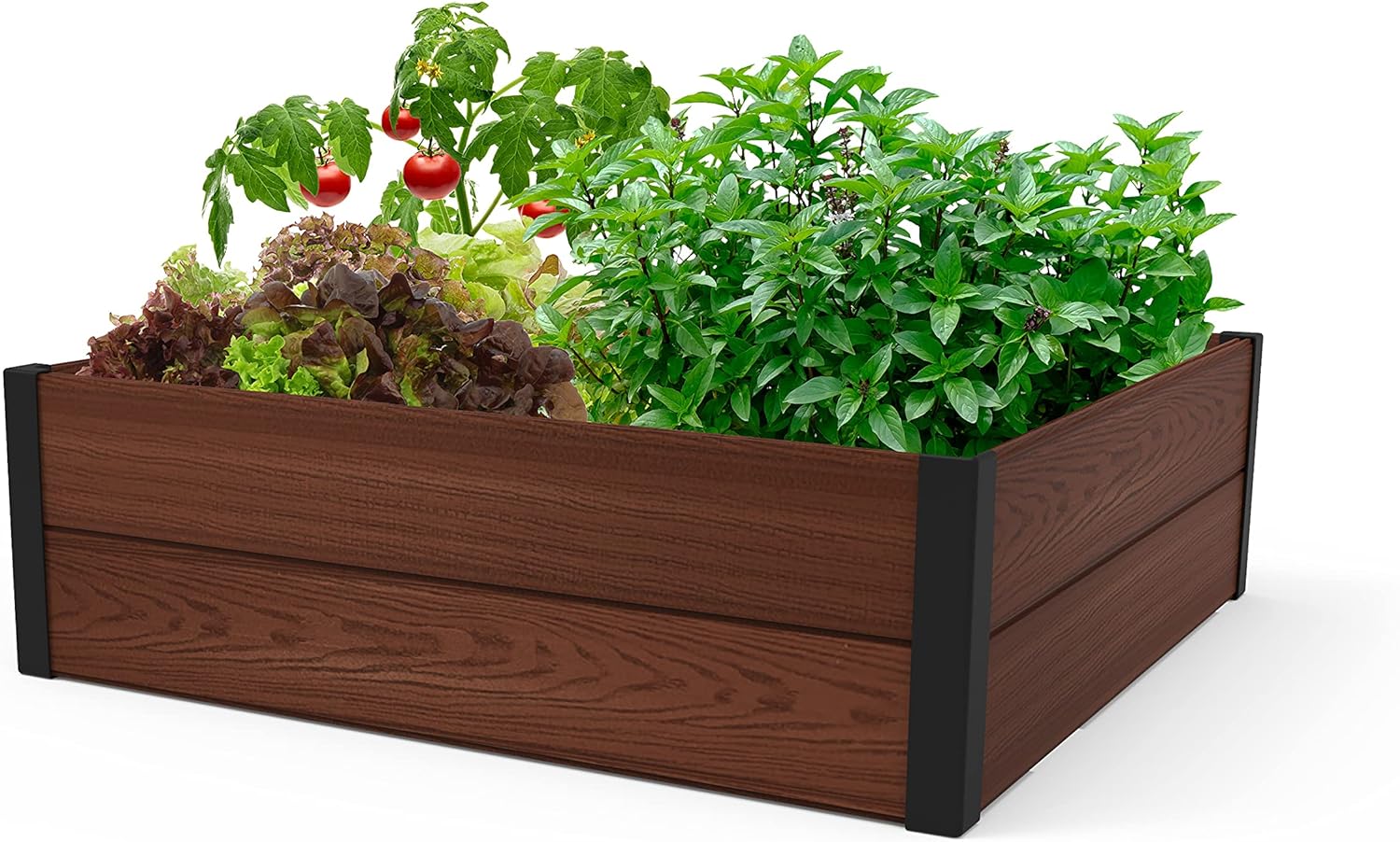
Keter Maple 48" x 48" Wood-Look Raised Garden Bed
| Capacity | 117 gallons |
|---|---|
| Material Type | Resin |
| Finish Types | Wood-Look |
| Mounting Type | Floor Standing |
| Indoor Outdoor Usage | Outdoor |
The Keter Maple 48 x 48 wood-look raised garden bed is a shallow, square planter made from durable Evotech resin that mimics the appearance of wood without the upkeep. It snaps together in minutes with no tools, so you can fill it with potting mix and plant herbs, salad greens, or summer annuals right away. The composite panels and reinforced corners are weather resistant and fade resistant, which keeps the bed looking attractive in exposed conditions and reduces maintenance compared with real wood. Its 117 gallon capacity gives enough soil volume for shallow-rooted edibles and flowers but its 12.6 inch depth is best suited to herbs, lettuces, and seasonal bedding rather than deep-rooted perennials. Practical benefits include light weight for repositioning, BPA-free material for food-safe planting, and a clean modern finish that complements patios and small yards. Expect limited depth for root crops and no built-in drainage control beyond the floor-standing design, so plan soil mix and watering accordingly.
Best for: Buyers who want an attractive, low-maintenance raised bed for herbs, salad greens, and ornamental plantings in a patio or small yard and prefer easy setup and upkeep over traditional wood construction.
Less Ideal for: Gardeners who need deep soil for root vegetables or want a heavy-duty, permanent raised bed for large perennial shrubs should consider deeper or sturdier alternatives.
- Realistic wood-look finish without maintenance
- Quick, tool-free assembly in about five minutes
- Durable, weather- and fade-resistant Evotech resin construction
- BPA-free material suitable for growing edibles
- Shallow 12.6 inch depth limits suitability for deep-rooted vegetables
- No integrated drainage features or base liner included
Verdict: If you want a good-looking, maintenance-free raised bed for herbs and shallow edibles that assembles in minutes, this wood-look resin planter delivers.
Choosing the Right Composite Raised Garden Bed: Key Factors to Consider
Structural Durability
Durability determines how long the bed will hold up to sun, rain, freeze-thaw cycles, and everyday gardening use. Composite materials vary in density and how fibers bind with polymer; denser boards resist warping and splitting better. Reinforced corners, thicker wall panels, and integrated framing all reduce movement and extend life span. A durable structure also resists damage from tools and repeated planting seasons, so you spend less time repairing and more time gardening.
Consider whether the bed uses internal supports or metal brackets at stress points. Those features add rigidity and prevent bulging when heavy, wet soil is added. Durability also affects resale, relocation ease, and whether the bed can be left in place year-round without collapsing.
Planting Depth
Planting depth drives what you can successfully grow. Shallow beds (under 8 inches) are fine for shallow-rooted herbs and salad greens but limit root crops and larger vegetables. Beds offering 12 inches or more allow for tomatoes, peppers, beans, and many root vegetables to develop properly. If you plan to grow perennials, small fruiting shrubs, or overwintered crops, prioritize deeper profiles.
Also think about layering for soil health. Deeper beds give room for layered amendments, compost buildup, and better root exploration, which improves drought resilience and nutrient access. If improving poor native soil, deeper beds let you bring in a richer growing mix without relying on subsoil.
Drainage Performance
Good drainage prevents waterlogged soil and root rot while allowing oxygen to reach roots. Composite beds can trap moisture if not designed with drainage in mind, so look for features that promote water movement, such as raised bases, predrilled weep holes, or the ability to add a gravel or coarse base layer. Drainage matters more in heavy clay soils and in areas with frequent rain.
Drainage also affects how often you need to water. Beds with poor runoff may require more careful irrigation scheduling and risk compaction. Well-draining designs encourage healthier root systems and reduce pest and disease pressure associated with overly wet conditions.
Ease of Assembly
Assembly affects how quickly you can get growing and whether you need extra hands or tools. Composite beds come as panels, interlocking sections, or kits with fasteners. Systems that use a simple slot-and-lock design or a few exterior screws usually go together faster and make future disassembly easier. Complexity increases when many small fasteners are required or when pieces must be precisely aligned.
Consider whether the bed requires pre-drilling, the weight of individual panels for handling, and whether instructions are clear. Easy assembly reduces setup mistakes that can compromise structural integrity and saves time getting soil and plants into the bed.
Maintenance Needs
One of the main appeals of composite beds is lower maintenance compared with untreated wood. However, maintenance still varies. Some composites resist staining, splitting, and insect damage almost entirely, while lower-grade mixes may fade or show surface wear over time. Maintenance factors include cleaning, occasional tightening of fasteners, and inspecting for edge separation.
Also consider how the bed responds to mulches, fertilizers, and landscape fabric. Beds that are easy to wipe clean and that do not absorb garden chemicals simplify seasonal upkeep. Maintenance needs influence long-term cost of ownership and how often you will need to re-level or refresh the growing medium.
Environmental and Site Fit
Think about how the material and bed size fit your site and environmental priorities. Composite materials vary in recycled content and manufacturing process, which may matter if you want a lower-impact option. Size and shape determine sun exposure, edge access for planting and harvesting, and whether the bed fits alongside walkways or under eaves.
Also evaluate heat retention in summer and cold conduction in winter. Darker composites can absorb more heat, which may speed soil warming in cool climates but can stress roots on very hot sites. Matching bed size to sunlight patterns and irrigation access reduces work and improves plant performance.
Sizing and Layout Tips for Small Yards
Measure your available planting area before choosing a bed. A narrow path of beds can suit a small yard or patio, but plan for 2 to 3 feet of clearance on at least one side for ease of access and harvesting. Consider modular beds that can be combined or separated as your garden needs change.
Place beds to maximize sun exposure for the crops you plan to grow. For rectangular beds, align longer sides east-west to promote even light across the bed. Think about irrigation runs and whether you need room for a watering wand or drip lines along the bed edges.
- Allow at least 24 inches of clearance for comfortable planting and maintenance.
- Use square or slightly narrower beds to fit tight patios while keeping reachability.
- Group beds to share a single irrigation line and simplify watering.
Preparing the Site and Soil for Composite Beds
You can sit composite beds directly on grass, soil, or gravel, but proper site preparation extends bed life and improves drainage. Remove perennial weeds and lay down a permeable weed barrier if weeds are a concern. If drainage is poor, add a coarse base layer or create a slight mound to encourage runoff.
Fill composite beds with a light, well-structured mix of compost, topsoil, and aerating material for best results. Avoid heavy, compacted soils that will retain too much water and reduce oxygen to roots. If you are building on a hard surface, ensure the bed has means to drain; raised feet or drilled holes help.
- Add 1 to 3 inches of coarse material at the bottom if your site has slow drainage.
- Use a loose, friable planting mix to encourage root growth and reduce compaction.
- Install a permeable fabric if weeds are a persistent problem.
Managing Water and Feeding in Composite Beds
Composite beds generally retain heat and moisture differently than in-ground beds, so adjust irrigation and feeding accordingly. Use drip irrigation or soaker hoses for consistent moisture and to minimize surface evaporation. Mulch the top of the soil to retain moisture and suppress weeds while allowing air exchange.
Fertilize based on crop needs and the fertility of your planting mix. Because beds use contained soil, nutrients can be depleted faster than in native ground, so plan for periodic top-dressings of compost or slow-release fertilizer. Monitor plants for signs of nutrient stress and correct promptly.
- Install drip lines along rows for even and efficient watering.
- Top-dress with compost each season to replenish organic matter.
- Avoid overwatering; composite walls can trap moisture without proper drainage.
Extending Bed Life Through Seasonal Care
Even durable composites benefit from seasonal checks. At the start and end of the growing season, inspect fasteners, corner joints, and panel alignments. Tighten any loose hardware and replace failed fasteners with corrosion-resistant options to prevent movement and moisture intrusion.
Protect beds from unnecessary mechanical damage by keeping heavy tools away from panel edges. If you winterize beds in cold climates, remove plant debris to reduce pest and disease carryover and consider a light cover to slow freeze-thaw stress on the growing mix.
- Check and tighten fasteners twice a year.
- Remove spent plants and crop residue each fall to reduce pests.
- Consider lightweight frost cloths to protect tender crops and soil structure.
Design Variations and Accessories That Matter
Look at accessory compatibility when choosing a bed. Trellis attachments, built-in seating ledges, and trellis-ready ends can expand what you grow in the same footprint. Consider whether the bed design allows for adding an irrigation kit, wire mesh for pest exclusion, or an insulating lid for early starts.
Color and finish choices affect heat absorption and aesthetics. Lighter tones reduce heat gain on hot sites, while textured finishes can hide wear and fade better than smooth surfaces. Think about whether you want a modular kit that can be extended in the future.
- Choose beds with accessory mounting points if you want trellises or covers.
- Select lighter colors for hot climates to reduce soil overheating.
- Pick modular designs if you expect to expand your garden footprint.
How We Chose the Best Composite Raised Garden Bed
We focused on attributes that matter in everyday garden use and excluded lightweight decorative containers and beds designed only for indoor or greenhouse use. Selection emphasized structural durability, planting depth, drainage performance, resistance to rot and insects, and practical assembly and maintenance. Durability looked at board composition and how the composite resists weathering and splitting in outdoor conditions. Planting depth was assessed because many vegetables and perennials need at least 8 to 12 inches of soil, while root crops and shrubs require deeper profiles. Drainage and water management were prioritized to prevent waterlogging and support healthy roots across common soil types. Ease of assembly and long-term maintenance also influenced inclusion because gardeners value beds they can set up and care for without specialty tools. We excluded options that rely solely on thin plastic liners or lack structural reinforcement that will fail within a few seasons. The final shortlist balances practical garden performance with longevity and straightforward upkeep.
FAQ
How deep should a composite raised bed be for vegetables?
For most vegetables, aim for at least 10 to 12 inches of planting depth. Shallow crops like lettuce and herbs can do well in 6 to 8 inches, but root crops and larger vegetables perform better in deeper beds.
Can you put a composite raised bed directly on grass?
Yes, you can place composite beds on grass, but remove persistent weeds and consider a permeable weed barrier to reduce maintenance. For sites with poor drainage, add a coarse base layer or elevate the bed slightly to encourage runoff.
Do composite raised beds need liners?
Most composite beds do not require liners because the material resists moisture and rot. However, a breathable landscape fabric can help with weed control while still allowing drainage. Avoid impermeable liners that trap water against the panels.
How long do composite raised garden beds typically last?
Lifespan depends on material quality and exposure but high-quality composite beds are designed to last many seasons without rotting. Regular seasonal checks and proper assembly increase longevity, while thinner composites in harsh conditions may show wear sooner.
Will composite beds get too hot in summer?
Darker composite surfaces can absorb more heat and warm the soil, which can be beneficial in cool climates but may stress roots on very hot sites. Use mulch, lighter-colored beds, or shade during peak heat to moderate soil temperature.
Final Verdict
When choosing a composite raised garden bed, prioritize structural durability, adequate planting depth, and reliable drainage for the crops you plan to grow. Ease of assembly and low maintenance make composite beds attractive, but match the bed size and color to your site conditions to avoid heat or access problems. Balance the need for a sturdy frame against how deep you want to plant and how you will water and feed the bed. With attention to those tradeoffs, you can select a composite bed that gives seasons of productive, low-fuss gardening.
