

Note: This article contains affiliate links. If you click on these links and make a purchase, I may earn a small commission at no extra cost to you. This helps support my research and content. Read my full affiliate disclosure here.
If you have limited space or poor native soil, an outdoor raised garden bed transforms a yard, patio, or balcony into a productive growing area. The right raised bed gives you deeper, well-draining soil, easier access for planting and harvesting, and better control over pests and weeds. This guide reviews seven shortlisted options that suit small to medium urban plots and compact backyards. We evaluated each bed for build durability, drainage and soil management, ease of assembly and access, and how well it fits confined spaces. Read on to compare practical features so you can pick the best raised bed for your outdoor growing needs.
Top Picks at a Glance
| Best Overall The best all-around choice for most situations | Best Choice Products 48 x 24 x 32 in Mobile Raised Garden Bed (Fir Wood) |  |
| Best Quality Built to a higher standard if you want something more solid | Vego Garden 17" Tall Modular Metal Raised Garden Bed Kit (Olive Green) |  |
| Best Value The sweet spot between price and what you get | JERIA Galvanized Raised Garden Bed Set (2-Pack, 4×2×1 ft) |  |
| Best Budget The cheapest option that still gets the job done reliably | JERIA Galvanized Raised Garden Bed 4×2×1 ft |  |
| Highest Rated A top-rated pick with lots of positive feedback | Vego Garden 17" Tall Modular Metal Raised Garden Bed Kit (8ft x 2ft) |  |
| Most Popular A crowd favorite that many people choose with confidence | Land Guard Galvanized Oval Raised Garden Bed Kit, 6×3×1 ft |  |
| Best Seller A high-volume bestseller chosen again and again | Utopia Home Galvanized Raised Garden Bed Kit, 4 x 2 x 1 ft |  |
Best Choice Products 48 x 24 x 32 in Mobile Raised Garden Bed (Fir Wood)

| Capacity | 135 quarts |
|---|---|
| Material Type | Fir Wood |
| Plant or Animal Product Type | Vegetable |
| Other Special Features of the Product | Drainage Hole |
| Mounting Type | Floor Standing |
This raised garden bed is designed for small outdoor vegetable plots where mobility and comfort matter. The bed stands 32 inches tall so you can tend plants without bending, and the included locking casters let you reposition the planter to follow sun or shade. Constructed from unfinished fir wood with a removable liner, it keeps soil off the wood to reduce rot while the liner also helps block weeds. A built-in lower shelf gives a handy spot for potting tools and small bags of soil and the four drainage holes prevent waterlogging for healthier roots. Assembly is required and the unfinished wood will need sealing or staining for long-term weather resistance. The 100 lb weight capacity limits very heavy soil mixes or large potted specimens, and fir is less rot-resistant than cedar, so expect to treat or replace it sooner if exposed to constant moisture. For gardeners who want an ergonomic, movable elevated planter with storage, this is a practical, space-efficient option.
Best for: Gardeners who want an easy-to-access, movable raised bed for growing vegetables in small yards, patios, or balconies and who prioritize comfort and practical storage while gardening.
Less Ideal for: People seeking a maintenance-free or long-lasting hardwood planter or those who need to use very heavy professional soil mixes or large planters that exceed the stated load capacity.
- Ergonomic 32 inch height reduces bending and back strain for planting and maintenance
- Locking wheels provide easy mobility to move the bed for optimal light or protection
- Removable garden bed liner separates soil from wood to slow rot and block weeds
- Built-in lower shelf offers convenient storage for tools and supplies
- Multiple drainage holes help prevent oversaturation and root problems
- Unfinished fir wood will require sealing or staining to resist weathering and decay
- 100 lb weight capacity limits use with very heavy soil mixes or large container loads
Verdict: A practical, movable elevated planter that makes vegetable gardening easier by combining ergonomic height, drainage, and on-board storage.
Vego Garden 17" Tall Modular Metal Raised Garden Bed Kit (Olive Green)

| Capacity | 21 cubic feet |
|---|---|
| Material Type | Metal |
| Other Special Features of the Product | Rust Resistant |
| Mounting Type | Floor Standing |
| Indoor Outdoor Usage | Outdoor |
This Vego Garden raised bed kit is a modular metal planter designed to create a secure, elevated planting area for vegetables, herbs, or flowers. The kit arrives as panels, base, connecting hardware, and basic tools that bolt together into one of several 10-in-1 configurations to fit different backyard layouts. Its painted metal construction with a zinc-magnesium-aluminum coating is promoted as rust resistant and engineered for long life, and the 17-inch depth gives more room for root development and better drainage than shallow planters. The kit includes rubber edging and an oval design that reduces sharp corners, which makes assembly safer and easier for a two-person build. Practical benefits include less bending when tending plants, the option to expand or reconfigure with add-ons, and compatibility with covers, trellises, and irrigation accessories. Limitations are that the product is a substantial metal structure that requires some lifting during assembly and that soil, liners, and any irrigation must be purchased separately to complete a planting system.
Best for: Gardeners who want a durable, reconfigurable raised bed that reduces bending and can be tailored to backyard layouts, especially those who value long-term corrosion resistance and modular expandability.
Less Ideal for: People who need a lightweight, ready-to-plant container or who prefer wood planters for a natural aesthetic should consider other options.
- Modular 10-in-1 design adapts to multiple layouts and can be expanded with add-ons
- 17-inch planting depth supports healthier root systems and improved drainage
- Metal construction with VZ 2.0 coating and painted finish resists rust for long-term use
- Includes base, side panels, connecting hardware, and tools for straightforward assembly
- Oval shape and rubber edging reduce sharp corners for safer handling
- Requires lifting and manual assembly of multiple metal panels, which can be heavy for one person
- Does not include soil, liners, or irrigation components so additional purchases are needed
Verdict: A durable, 17-inch-tall modular metal raised bed for gardeners who want a long-lasting, reconfigurable planting solution that reduces bending.
JERIA Galvanized Raised Garden Bed Set (2-Pack, 4×2×1 ft)

| Unit Count | 2 Count |
|---|---|
| Capacity | 226.56 liters |
| Material Type | Galvanized sheet |
| Finish Types | Powder Coated |
| Mounting Type | Floor Standing |
The JERIA galvanized raised garden bed set delivers two compact, easy-to-assemble rectangular planters intended for vegetables, herbs, and flowers. Each bed ships with the necessary hardware, a wrench, gloves, and an instruction manual so you can assemble them on a patio, balcony, or patch of lawn without extra trips to the hardware store. The galvanized sheet construction and powder-coated finish resist rust and fading, and the open base helps drain excess water to avoid soggy soil. The top edges come with rubber sealing strips to reduce sharpness and protect hands during planting. Because each unit is fairly shallow, these beds are best for shallow-rooted crops, container mixes, or as a tidy grouping of herbs and annuals rather than deep-rooted perennials. Overall the set is a practical, low-maintenance option if you want durable, movable planting zones that arrive with the basic tools for quick setup.
Best for: Gardeners who want a durable, low-maintenance way to create neat planting zones quickly and prefer products that arrive with tools and clear instructions.
Less Ideal for: Growers who need deep, permanent beds for large root crops or woody perennials should choose deeper or in-ground solutions instead.
- Galvanized metal with powder-coated finish for rust and fade resistance
- Includes assembly tools, hardware, and gloves for straightforward setup
- Open base design promotes drainage to prevent waterlogging
- Rubber edge strips reduce sharp edges and improve user safety
- Shallow depth limits suitability for deep-rooted vegetables and large perennials
Verdict: A practical, rust-resistant two-piece raised bed set that arrives ready to assemble for creating tidy, low-effort outdoor planting areas.
JERIA Galvanized Raised Garden Bed 4×2×1 ft

| Capacity | 424.8 liters |
|---|---|
| Material Type | Galvanized sheet |
| Finish Types | Powder Coated |
| Included Components | Tools, Instruction manual, Hardware |
| Indoor Outdoor Usage | Outdoor |
This JERIA galvanized raised garden bed is a straightforward, no-frills planter built for small vegetable and herb projects. It assembles from pre-cut galvanized sheets with the included hardware and basic tools, and the kit also adds rubber edge strips and gloves for safer handling. The open base drains freely, so it is best used on soil, gravel, or with a liner if you want to hold potting mix. Powder-coated, galvanized steel resists rust and fading for season-long outdoor use, and the 4×2×1 ft footprint gives enough room for a few rows of lettuces, herbs, or a couple of tomato cages in a compact space. Because it is shallow, it suits shallow-rooted vegetables more than deep-rooted crops. The lightweight panels make the bed easy to move during setup, but that also means it can be less rigid than heavier framed beds and may need extra support if placed on uneven ground. For gardeners wanting an affordable, durable raised bed to start a small vegetable patch, this delivers the essentials without extras.
Best for: Gardeners on a tight budget who want a durable, easy-to-assemble raised bed to grow small vegetables and herbs in a limited space.
Less Ideal for: Growers planning deep-rooted crops like large carrot varieties or permanent heavy-duty beds should choose a deeper, more rigid option instead.
- Galvanized steel with powder coating offers rust resistance for outdoor use
- Includes assembly hardware, tools, rubber edge strips and gloves for safer setup
- Open base allows natural drainage without additional modifications
- Compact 4×2 ft footprint fits small patios, balconies, or tight garden spots
- Shallow 1 ft depth limits planting to shallow-rooted vegetables and herbs
- Lightweight panels can feel less sturdy and may require extra bracing on uneven ground
Verdict: An affordable, corrosion-resistant raised bed that gives budget gardeners a quick, compact planting area for vegetables and herbs.
Vego Garden 17" Tall Modular Metal Raised Garden Bed Kit (8ft x 2ft)

| Material Type | Metal |
|---|---|
| Finish Types | Powder Coated |
| Capacity | 23 cubic feet |
| Number of Pieces | 20 |
| Indoor Outdoor Usage | Outdoor |
This Vego Garden raised bed kit is a modular metal planter designed for growing vegetables and flowers without bending to ground level. The 9-in-1 system assembles into multiple layouts so you can build an 8ft x 2ft oval bed or reconfigure panels to fit different garden footprints. Constructed from a Zn-Mg-Al coated steel with a powder-coated finish, the kit is marketed for long durability and corrosion resistance and includes rubber edging to cover panel edges for safer handling. At 17 inches deep it gives room for healthy root development and better drainage compared with shallow containers, which makes it suitable for most common vegetables. Installation is straightforward and uses fasteners and preformed panels so no specialized carpentry is required, though assembly of 20 pieces still takes time and two people make alignment easier. The system accepts add-ons such as trellises, covers, and irrigation to expand functionality, but those accessories are sold separately. This is a solid, low-maintenance option if you want a long-lasting, reconfigurable metal raised bed for productive vegetable planting.
Best for: Gardeners who want a durable, reconfigurable raised bed that supports productive vegetable growing and reduces bending while working. It suits practical owners who value long-term weather resistance and modular flexibility over a quick, one-piece planter.
Less Ideal for: People who need a ready-to-plant, lightweight single-piece container or those who prefer untreated wood or plastic planters for aesthetic or budget reasons.
- Modular 9-in-1 design lets you reconfigure layout to fit different garden spaces
- 17" planting depth supports deeper root systems and improved drainage for vegetables
- Powder-coated, Zn-Mg-Al treated steel construction for weather resistance and long life
- Rubber-edged panels reduce sharp edges for safer handling during assembly
- Accessories like trellises, covers, and irrigation are not included and must be purchased separately
- Assembly involves multiple panels and fasteners so it requires time and at least one helper
Verdict: A durable, 17" deep modular metal raised bed that gives serious vegetable growers a reconfigurable, low-maintenance planting system.
Land Guard Galvanized Oval Raised Garden Bed Kit, 6×3×1 ft

| Capacity | 15.55 cubic feet |
|---|---|
| Material Type | Q195 galvanized metal sheet |
| Finish Types | Double-layer galvanized |
| Mounting Type | Floor Standing |
| Indoor Outdoor Usage | Outdoor |
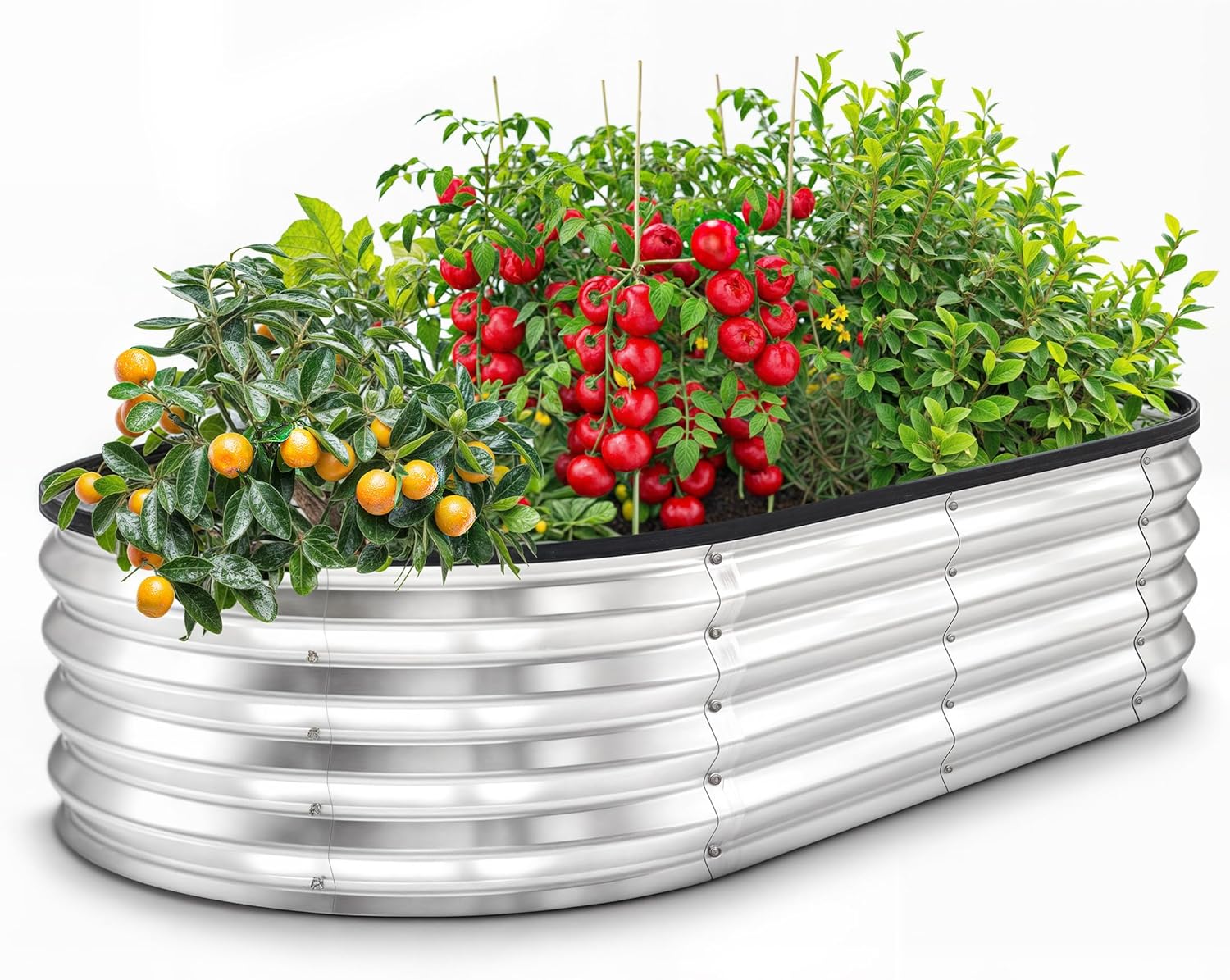
This Land Guard raised garden bed is a 6×3×1 ft oval planter made from double-layer galvanized Q195 steel designed for outdoor vegetable gardening. It assembles quickly and is intended to sit on the ground with an open base so excess water drains away and plant roots avoid sitting in moisture. The sheet metal is relatively thick compared with many budget metal planters, which should give the bed sturdiness and resistance to warping at the joints. The oval shape and wave-formed panels make the sides less likely to deform under soil pressure, and the rust-resistant finish extends usable life. Expect straightforward use for annual vegetables, herbs, and flowers in yards, courtyards, and greenhouses. Important limitations are that it is a shallow bed at 12 inches deep, so it suits shallower-rooted vegetables or requires frequent soil maintenance for larger root crops, and metal can heat up in direct sun requiring attention to watering and plant choice.
Best for: Gardeners who want a low-maintenance, long-lasting raised bed for growing vegetables, herbs, and flowers and who prioritize durability and simple setup over maximum soil depth.
Less Ideal for: Growers planning to cultivate deep-rooted crops like large carrots or potatoes or those who need very large soil volume should consider deeper or larger raised beds.
- Galvanized double-layer finish for improved rust resistance
- Thicker Q195 steel panels for greater rigidity and durable joints
- Open base design improves drainage and reduces root rot risk
- Quick, simple assembly suitable for weekend setup
- Only 12 inches deep, limiting room for deep-rooted vegetables
- Metal walls can warm up in hot sun and affect root temperatures
Verdict: Choose this galvanized oval raised bed if you want a sturdy, rust-resistant planter that sets up fast and reliably for seasonal vegetable and herb beds.
Utopia Home Galvanized Raised Garden Bed Kit, 4 x 2 x 1 ft
| Capacity | 216 liters |
|---|---|
| Material Type | Alloy Steel |
| Finish Types | Powder Coated |
| Mounting Type | Floor Standing |
| Indoor Outdoor Usage | Outdoor |
This Utopia Home galvanized raised garden bed is a simple, no-frills metal planter that turns a patch of yard or patio into a contained growing area. The kit arrives as flat panels that lock together around an open base so roots can grow into the ground while the box keeps soil and beds organized. Made from powder-coated alloy steel and described as lightweight, it is corrosion-resistant compared with untreated metal and includes a center support strip for added rigidity. Typical uses are starting vegetables, herbs, or flowers where you want clearer edges, better drainage, and less bending to tend plants. Assembly is straightforward and tool-light, so it is practical for quick seasonal setups or moving around the yard. Limitations are its modest 4 x 2 ft footprint and single-level depth, which limits the number of plants and makes it better for shallow-rooted crops; heavier-duty raised beds with thicker panels or built-in liners will suit long-term heavy use better than this lighter kit.
Best for: Buyers looking for an inexpensive, easy-to-assemble raised bed to start vegetables or herbs in small outdoor spaces and who prioritize low upfront cost and portability.
Less Ideal for: People who need large or permanent heavy-duty beds for long-term, high-yield vegetable production or who prefer deep, multi-level planters.
- Galvanized alloy steel with powder coat offers rust resistance for outdoor use.
- Open-base design allows roots to grow into native soil and improves drainage.
- Lightweight panels make assembly and relocation easy for seasonal use.
- Center support strip increases rigidity compared with basic panel-only kits.
- Small 4 x 2 ft footprint limits planting area for larger vegetable gardens.
- Lightweight construction is less robust than thicker steel or heavy-duty wooden beds.
Verdict: A budget-friendly, rust-resistant galvanized steel raised bed that is quick to assemble and easy to move, ideal for small-scale vegetable and herb gardening.
Choosing the Right Outdoor Raised Garden Bed: Key Factors to Consider
Material and Weather Resistance
What the raised bed is made from determines how it handles sun, rain, and cold. Wood offers natural insulation for roots but varies by species; rot-resistant hardwoods and cedar last longest without chemical treatment. Metal frames are durable but can heat up in full sun and may need powder coating to resist corrosion. Plastic and composite boards resist rot and are lightweight, but lower-grade plastics can become brittle over several seasons.
Consider how local weather affects material lifespan. In hot, sunny climates, materials that minimize heat transfer into the soil help protect root systems. In wet or freezing regions, look for corrosion-resistant fasteners and joined seams that shed water rather than trap it. Material choice also affects long-term maintenance tasks like sealing, painting, or replacing panels.
Soil Depth and Drainage
Vegetable roots and perennials need adequate soil depth to establish; most shallow beds limit what you can grow. Aim for a depth that matches the intended plants. Shallow beds suit herbs and salad greens, while root crops and shrubs require deeper profiles. Beds with integrated drainage holes or removable bottoms let you tailor drainage to local conditions and soil type.
Good drainage prevents waterlogging and root rot. If a bed sits on compacted clay or an impermeable surface, plan for added drainage features such as raised feet, bottom gravel layers, or lined perforations. Some beds include fabric liners that retain soil but allow water passage; others rely on solid bottoms and require manual drainage planning.
Assembly, Access, and Ergonomics
How a bed goes together matters for immediate setup and for future adjustments. Tool-free or simple fastener assemblies speed installation and reduce the chance of improper joins that fail later. Consider whether panels can be replaced individually and whether corners and joints are reinforced for repeated seasonal use.
Access is about easing planting, weeding, and harvest. Taller beds reduce bending and are better for gardeners with mobility concerns, while lower-profile beds make watering and soil mixing easier for kids and ground-level tasks. Modular designs that allow adding height or connecting multiple units give flexibility as gardening plans evolve.
Size, Shape, and Space Efficiency
Raised beds must fit the available footprint without crowding pathways or creating awkward sun shadows. Narrow, long beds maximize edge access for planting and maintenance, while square beds are space-efficient for small plots. Consider the bed width relative to reachability; a common guideline is to keep beds narrow enough to reach the center from one side or design double-sided access for wider boxes.
Also think about vertical possibilities. Stackable tiers, integrated trellis attachments, or beds designed for staggered placement allow you to increase production without expanding the ground footprint. For patios or decks, verify weight distribution and ensure the supporting surface can bear a fully planted bed.
Soil Management and Compatibility
A raised bed is only as good as the soil you put in it. Check whether the bed design makes soil replacement, amendment mixing, and addition of compost straightforward. Beds with removable side panels or accessible corners make it easier to refresh soil without dismantling the whole structure. Compatibility with liners or weed barriers matters if you plan to isolate the bed from contaminated ground or invasive roots.
Think about water retention and how the chosen bed affects it. Some materials and liners hold moisture longer, reducing irrigation frequency. Others promote faster drainage, which can be beneficial for crops prone to root rot but will require more frequent watering in hot weather.
Pest Management and Stability
Raised beds alter pest dynamics compared with in-ground gardens. Elevated soil can deter some ground-dwelling pests but may still allow slugs, voles, or burrowing animals access depending on bottom construction. Beds with solid bottoms are easier to protect from burrowing pests, while open-bottom beds allow beneficial soil organisms to move through the profile.
Stability is also critical when planting heavy crops or when winds are strong. Anchoring options, reinforced corners, and robust fasteners help the bed remain square and level. In windy or flood-prone areas choose designs that can be secured to the ground or weighted to prevent tipping and soil loss.
Sizing a Raised Bed for Small Yards
Measure the planting area and plan for 2 to 3 foot wide beds for single-side access or up to 4 feet if you can reach both sides. Leave pathways that let you move soil, wheelbarrows, and tools without trampling planting zones. Short lengths like 4 to 6 feet are easier to manage in narrow yards and allow you to stagger multiple beds for sun access.
Consider height based on who will use the bed. For gardeners who need reduced bending, beds 24 to 36 inches tall provide comfortable working height. For heavy soils or deep-rooted crops, taller beds let you build a deep, well-draining soil profile without having to dig extensively.
- Keep widths reachable from the edge to reduce trampling
- Use short lengths to fit between structures and avoid shadowing
- Factor in weight when placing tall beds on decks or patios
Placement and Sun Exposure
Raised beds should be placed where they get the light required for your intended crops. Most vegetables need at least six hours of direct sun. If only partial sun is available, prioritize leafy greens and root vegetables that tolerate lower light levels. Avoid placing beds too close to large trees that will compete heavily for water and nutrients.
Think about year-round access. Position beds so you can reach them in wet or cold weather, and allow for winter protection such as removable covers or cold frames. Also consider prevailing wind and whether windbreaks or trellises will be needed to protect taller crops.
- Map daily sun patterns before final placement
- Avoid low spots that collect runoff
- Leave room for irrigation lines or a watering can path
Soil Mixes and Filling Strategy
A balanced soil mix helps raised beds perform their best. Blend finished compost, high-quality topsoil, and a lighter component such as coarse sand or coconut coir for drainage and structure. Layering with a coarse base for drainage then finer top layers can help with water movement and root development.
When filling deep beds, plan for settling. Fill in stages and water each layer to compact it slightly, then add more mix to reach the final grade. Mulch the surface to conserve moisture and reduce erosion from heavy rain.
- Use well-aged compost to avoid nitrogen tie-up
- Avoid using raw wood chips as a major soil component
- Test drainage in a small section before filling the entire bed
Seasonal Care and Winterizing
Raised beds warm faster in spring and can extend the growing season. Still, they also lose heat quickly on cold nights. Add row covers, cloches, or insulated lids to protect tender plants early and late in the season. In winter, remove spent plants, add a thick mulch layer, and consider covering beds to protect soil structure from heavy rain or freeze-thaw cycles.
Inspect joints and fasteners annually and tighten or replace corroded pieces before spring planting. If a bed has a liner, check it for tears that could expose panels to wet soil and accelerate deterioration.
- Use covers to extend planting windows
- Mulch heavily after the last harvest
- Service hardware before the first frost
Making the Most of Vertical Space
Integrate trellises, obelisks, or staggered tiers to expand production without increasing footprint. Vining crops like peas, beans, and cucumbers save bed space when trained vertically. Look for beds designed to accept trellis attachments or that have built-in supports for climbing plants.
Be mindful of shade that tall vines can cast on nearby beds. Position vertical structures on the north side of beds in the northern hemisphere to reduce shading. Use removable supports if you want flexibility between seasons.
- Train vining crops upward to free ground space
- Place tall supports carefully to avoid shading
- Choose removable trellises for seasonal flexibility
How We Chose the Best Outdoor Raised Garden Bed
We shortlisted options that are built for outdoor use and sized for small yards and patios. Selection focused on tangible gardener concerns that affect season-to-season performance rather than marketing claims. Primary evaluation criteria included material durability and weather resistance, depth and drainage options for healthy root systems, ease of assembly and long-term maintenance, and adaptability to small spaces including modular or stackable designs. We favored beds that allow straightforward soil management, such as removable panels or liner compatibility, and those that maintain structural integrity under repeated watering and freeze-thaw cycles. Options that required specialized tools or complicated assembly were deprioritized. We excluded indoor-only planters, temporary fabric sacks that lack rigid structure, and products without clear outdoor-weather materials. The result is a set of choices that balance longevity, soil health, and gardener convenience for compact outdoor planting.
FAQ
How deep should an outdoor raised garden bed be for vegetables?
Depth depends on the crop. Most vegetables do well in 8 to 12 inches of quality soil, but root crops and larger vegetables benefit from 12 to 18 inches or more. If you plan on carrots or potatoes, aim for deeper profiles to allow for proper root development.
Can I place a raised bed directly on a lawn or patio?
Yes, but prepare accordingly. On lawns, remove turf or add a barrier to reduce weed pressure. On patios, check that the surface can support the soil weight and use feet or a raised base to protect the decking. Ensure drainage is accounted for to avoid water pooling.
What is the best soil mix for a raised bed?
A mix of finished compost, topsoil, and a drainage component like coarse sand or coir works well. The exact ratio depends on existing soil quality and crop needs, but aim for a light, friable mix that holds moisture while allowing excess water to drain.
How do I prevent wood raised beds from rotting?
Choose naturally rot-resistant woods or pressure-treated options rated for ground contact. Use a physical barrier or liner between the soil and wood to slow moisture transfer. Also allow for good drainage and avoid piling wet mulch directly against the wood sides.
Are tall raised beds worth it for accessibility?
Tall beds reduce bending and make gardening easier for people with limited mobility. They also allow for deeper soil profiles, but they weigh more when filled. Ensure the supporting surface can handle the load and choose a design that balances height with structural stability.
Final Verdict
For small yards and patios, prioritize material durability and drainage when choosing an Outdoor Raised Garden Bed. Decide on the soil depth you need for the crops you plan to grow, and favor designs that simplify filling, maintenance, and seasonal protection. Tradeoffs are inevitable: taller beds improve ergonomics but add weight and cost to fill, while low-profile boxes conserve soil but limit root crops. Select a bed that fits your available footprint and long-term plans for expansion. With the right balance of build quality, drainage, and access, a raised bed will provide seasons of productive growing in compact outdoor spaces.
