

Note: This article contains affiliate links. If you click on these links and make a purchase, I may earn a small commission at no extra cost to you. This helps support my research and content. Read my full affiliate disclosure here.
A raised garden bed for patio lets you grow vegetables, herbs, and flowers where soil is shallow or paved. Choosing the right bed matters because patio gardens face different challenges than in-ground plots: limited depth, heat retention from hard surfaces, and the need for tidy containment and drainage. This guide shortlists seven top raised beds for patio use and explains how each type performs in real outdoor conditions. We evaluated structure, drainage, and portability alongside ease of planting and maintenance so you can pick a solution that fits your patio layout and season length. Read on to find the bed style and features that match your space and gardening goals.
Top Picks at a Glance
| Best Overall The best all-around choice for most situations | FOYUEE 31.5" Elevated Mobile Raised Garden Bed with Wheels and Shelf |  |
| Best Quality Built to a higher standard if you want something more solid | Vego Garden Rolling Elevated Raised Garden Bed 2' x 4' with Legs and Storage Rack |  |
| Best Value The sweet spot between price and what you get | LEETOLLA 31.6" Elevated Raised Garden Bed with Wheels and Storage Shelf |  |
| Best Budget The cheapest option that still gets the job done reliably | JERIA Galvanized Raised Garden Bed 4×2×1 ft |  |
| Highest Rated A top-rated pick with lots of positive feedback | Vego Garden Modern Metal Raised Garden Bed, 4 x 4 ft, 17 in Tall |  |
| Most Popular A crowd favorite that many people choose with confidence | Land Guard Galvanized Oval Raised Garden Bed Kit (4×2×1 ft) |  |
| Best Seller A high-volume bestseller chosen again and again | GADI 67-Inch Galvanized Raised Garden Bed |  |
FOYUEE 31.5" Elevated Mobile Raised Garden Bed with Wheels and Shelf

| Capacity | 2.5 cubic feet |
|---|---|
| Material Type | Metal |
| Finish Types | Powder Coated |
| Mounting Type | Floor Standing |
| Included Components | Wheels, Plant Stand |
This FOYUEE elevated raised bed is a mobile, waist-height planter designed for easy, ergonomic vegetable and herb growing on patios and balconies. The galvanized steel box with a powder-coated finish resists rust and supports heavy fill so you can add ample soil for productive vegetable crops. Built-in drainage channels and a central drain help prevent waterlogging while the raised profile improves air circulation around roots. A lower storage shelf keeps tools and pots handy and the integrated handle plus 6-inch all-terrain wheels make it straightforward to reposition the planter for sun or shelter. Typical uses are growing salad greens, herbs, compact vegetables, or creating a movable culinary garden outside a kitchen door. Assembly and moving when fully loaded will require some effort despite wheels, and the metal surface can warm in strong sun so seedling protection may be needed. The unit favors growers who want less bending and an organized, movable planting station rather than a large in-ground plot.
Best for: Gardeners who want an ergonomic, moveable vegetable planter for patios or balconies and value easy access, organization, and rust-resistant construction.
Less Ideal for: People who need very large planting volumes, deep-rooted crops, or a permanent in-ground bed for large-scale vegetable production.
- Powder-coated galvanized steel construction resists rust for outdoor use
- Raised waist-height design reduces bending and back strain
- Integrated drainage channels and central drain prevent water buildup
- Built-in wheels and handle allow the planter to be moved for light or weather
- Lower shelf provides convenient storage for tools and supplies
- May be heavy and awkward to assemble or move when filled with soil
- Metal walls can heat up in direct sun and may require shading for sensitive plants
Verdict: Buy this if you want a durable, waist-height mobile planter that makes growing herbs and compact vegetables easier without stooping.
Vego Garden Rolling Elevated Raised Garden Bed 2' x 4' with Legs and Storage Rack

| Size | 2' x 4' |
|---|---|
| Capacity | 3.9 cubic feet |
| Material Type | Metal |
| Finish Types | Powder Coated |
| Weight Capacity | 700 lbs |
The Vego Garden Rolling Elevated Raised Garden Bed is a metal, floor-standing planter built for heavier-duty container gardening on patios and decks. It assembles from powder-coated VZ 2.0 steel panels and welded corner legs to create a 32-inch tall bed that raises the planting surface to reduce bending and offers a 12-inch planting depth for substantial root volume. The bed is tested to support up to 700 pounds for the 2' x 4' size, so it handles heavy soil mixes, multiple large plants, or potted specimens without sagging. Practical touches include rot- and rust-resistant finish, a lower storage rack integrated into the leg frame, and rubber edging for safer handling during assembly. Because it is elevated and rolling, the bed is easy to reposition for sun, shade, or winter storage, and it pairs with the brand's add-on covers and irrigation accessories. Limitations are typical of metal beds: you will need to manage insulating and drainage for extreme heat or cold, and assembly requires tightening multiple fasteners and aligning panels for the welded supports to sit correctly.
Best for: Buyers who prioritize durable, performance-oriented raised beds that hold heavy soil loads and make planting easier on the back, and who want a mobile solution for patios or small outdoor spaces.
Less Ideal for: People seeking a lightweight, foldable planter for seasonal use or those who prefer natural wood aesthetics for garden beds.
- High tested weight capacity (700 lbs) suitable for heavy soil and large plants
- VZ 2.0 powder-coated steel construction with welded corners for long-term corrosion resistance
- Raised 32" height reduces bending and provides a deeper planting profile
- Integrated lower storage rack adds useful tool or supply storage without extra footprint
- Metal construction can transfer heat to roots in hot climates without added insulation
- Assembly requires multiple fasteners and careful alignment of panels and legs
Verdict: Choose this rolling Vego Garden elevated bed when you need a tough, high-capacity, mobile planter that minimizes bending and stands up to heavy soil and large plants.
LEETOLLA 31.6" Elevated Raised Garden Bed with Wheels and Storage Shelf

| Capacity | 2.5 cubic feet |
|---|---|
| Number of Levels | 2 |
| Material Type | Iron |
| Indoor Outdoor Usage | Indoor, Outdoor |
| Other Special Features of the Product | 2 universal wheels + 2 stabilizing feet, 5 drainage holes + 2 cross-lines, Handle Bar, Storage Shelf |
This LEETOLLA elevated raised bed lifts container gardening to waist height so you can plant, water, and harvest without kneeling. It is built from painted iron with a powder-coat finish, includes two all-terrain wheels and an ergonomic handle for moving the filled bed, and has a lower shelf for tools or extra pots. The planting area holds about 2.5 cubic feet of soil and features five drainage holes plus cross-channels to help prevent waterlogging. Assembly is straightforward with the included hardware and takes roughly 30 to 45 minutes with two people. Practical benefits include reduced back strain, mobility to follow sun patterns or shelter plants from storms, and tidy storage on the attached shelf. Limitations are the metal construction, which will require touch-up care over time to avoid surface rust in very wet or coastal conditions, and the relatively narrow planting depth compared with deep beds, so very large root crops may be less suitable. The unit fits small balconies and patios but is best for mixed vegetables, herbs, and compact varieties rather than large, heavy crops.
Best for: Buyers who want comfortable, low-effort vegetable or herb gardening on a balcony, patio, or small yard and prioritize mobility and ease of use over maximal soil depth.
Less Ideal for: Gardeners seeking very deep beds for large root vegetables or those who prefer untreated wood or plastic planters that do not require metal maintenance.
- Elevated height reduces bending and kneeling for easier planting and harvesting
- Two large wheels and a handle let you reposition the bed to follow sun or avoid bad weather
- Built-in drainage holes and cross-channels reduce risk of overwatering
- Lower storage shelf keeps small tools and supplies handy
- Powder-coated iron construction for sturdier, decorative outdoor use
- Metal finish can require periodic touch-up to prevent corrosion in very wet or salty environments
- Planting depth is modest so very deep-rooted crops may be limited
Verdict: A mobile, waist-height metal raised bed that makes growing herbs and compact vegetables easier by cutting bending and letting you move plants to the best light.
JERIA Galvanized Raised Garden Bed 4×2×1 ft

| Capacity | 424.8 liters |
|---|---|
| Material Type | Galvanized sheet |
| Finish Types | Powder Coated |
| Included Components | Tools, Instruction manual, Hardware |
| Indoor Outdoor Usage | Outdoor |
This JERIA galvanized raised garden bed is a straightforward, no-frills planter built for small vegetable and herb projects. It assembles from pre-cut galvanized sheets with the included hardware and basic tools, and the kit also adds rubber edge strips and gloves for safer handling. The open base drains freely, so it is best used on soil, gravel, or with a liner if you want to hold potting mix. Powder-coated, galvanized steel resists rust and fading for season-long outdoor use, and the 4×2×1 ft footprint gives enough room for a few rows of lettuces, herbs, or a couple of tomato cages in a compact space. Because it is shallow, it suits shallow-rooted vegetables more than deep-rooted crops. The lightweight panels make the bed easy to move during setup, but that also means it can be less rigid than heavier framed beds and may need extra support if placed on uneven ground. For gardeners wanting an affordable, durable raised bed to start a small vegetable patch, this delivers the essentials without extras.
Best for: Gardeners on a tight budget who want a durable, easy-to-assemble raised bed to grow small vegetables and herbs in a limited space.
Less Ideal for: Growers planning deep-rooted crops like large carrot varieties or permanent heavy-duty beds should choose a deeper, more rigid option instead.
- Galvanized steel with powder coating offers rust resistance for outdoor use
- Includes assembly hardware, tools, rubber edge strips and gloves for safer setup
- Open base allows natural drainage without additional modifications
- Compact 4×2 ft footprint fits small patios, balconies, or tight garden spots
- Shallow 1 ft depth limits planting to shallow-rooted vegetables and herbs
- Lightweight panels can feel less sturdy and may require extra bracing on uneven ground
Verdict: An affordable, corrosion-resistant raised bed that gives budget gardeners a quick, compact planting area for vegetables and herbs.
Vego Garden Modern Metal Raised Garden Bed, 4 x 4 ft, 17 in Tall

| Capacity | 22.5 cubic feet |
|---|---|
| Number of Pieces | 1 |
| Finish Types | Powder Coated |
| Other Special Features of the Product | Rust Resistant |
| Mounting Type | Floor Standing |
This Vego Garden raised bed is a sturdy metal planter intended for patio and residential vegetable gardening. It arrives as a modular kit with concealed hardware and snaps together quickly, making assembly straightforward and feasible in roughly 30 minutes. The powder-coated, corrosion-resistant metal and rust-resistant finish are built for long-term outdoor exposure and the manufacturer claims a multi-decade lifespan, which is useful if you want a low-maintenance, durable container. The 17 inch depth gives enough soil volume for most vegetables, while the smooth rounded corners reduce snags and make it safer around children and pets. Because it is floor-standing and recyclable, it fits modern, sustainable outdoor designs and can be integrated with drip irrigation or tomato cages shown in product imagery. The main limitations are that it is a fixed metal structure so it is not collapsible for seasonal storage and you will need to ensure good drainage and a suitable patio surface to avoid staining or movement. It is best for gardeners who prioritize long-term reliability and a clean, modern look over lightweight or portable options.
Best for: Gardeners who want a low-maintenance, long-lasting raised bed for a patio or small yard and prioritize durability and a clean modern appearance over portability.
Less Ideal for: People who need a lightweight, temporary, or frequently moved planter or those who want a collapsible solution for seasonal storage.
- Powder-coated, corrosion-resistant metal construction designed to resist rust
- Modular design with concealed hardware that assembles quickly
- 17 inch depth provides substantial soil capacity for vegetables
- Smooth rounded corners improve safety around children and pets
- Fixed metal frame is not collapsible for easy seasonal storage
- May require attention to drainage and patio surface protection to prevent staining or shifting
Verdict: Choose this metal raised bed if you want a durable, rust-resistant planter built to last on a patio with a clean, modern look.
Land Guard Galvanized Oval Raised Garden Bed Kit (4×2×1 ft)

| Material Type | Metal |
|---|---|
| Finish Types | Double-layer galvanized |
| Capacity | 7.14 cubic feet |
| Mounting Type | Floor Standing |
This Land Guard raised garden bed is a simple, durable option for planting vegetables, herbs, or mixed annuals in a compact outdoor space. The kit arrives as flat panels that assemble into an oval planter about 4 by 2 feet and 1 foot deep, and setup is straightforward so you can fill and plant in minutes. Its double-layer galvanized steel construction and wave-shaped panels are intended to resist corrosion and add rigidity, and the manufacturer states thicker panels at stress points to reduce deformation. An open base design lets excess water drain and helps avoid root rot if placed on soil or lawn. Practical benefits include low maintenance, a tidy planted border that keeps soil contained, and a metal finish that lasts longer than untreated steel. Limitations are the shallow depth for deep-rooted crops and the likelihood the metal will warm quickly in hot sun, which may require more frequent watering or shade management. It is best used as a portable, long-lasting planter for raised-bed style container gardening rather than a full replacement for deeper in-ground beds.
Best for: Gardeners who want a quick-to-assemble, durable raised planter to grow vegetables or herbs in small outdoor spaces and who prioritize evidence of longevity over decorative complexity.
Less Ideal for: Growers who need deep soil for large root crops, or those looking for insulated or fully enclosed beds to control soil temperature and moisture long-term.
- Galvanized double-layer steel resists corrosion for multi-season outdoor use
- Oval, interlocking panel design assembles quickly with included tools
- Open base allows natural drainage to reduce standing water and root rot
- Compact footprint fits small patios, balconies, and tight garden beds
- Only 12 inches deep which limits planting of larger, deep-rooted vegetables or shrubs
- Metal surface can heat up in full sun and increase watering needs
Verdict: A tough, easy-to-assemble galvanized oval raised bed that gives small-space gardeners a durable, low-maintenance container for vegetables and herbs.
GADI 67-Inch Galvanized Raised Garden Bed
| Capacity | 7 cubic feet |
|---|---|
| Material Type | Metal |
| Finish Types | Powder Coated |
| Other Special Features | Breathable, Drainage Hole, Rust Resistant, UV Resistant, Weather Resistant |
| Mounting Type | Floor Standing |
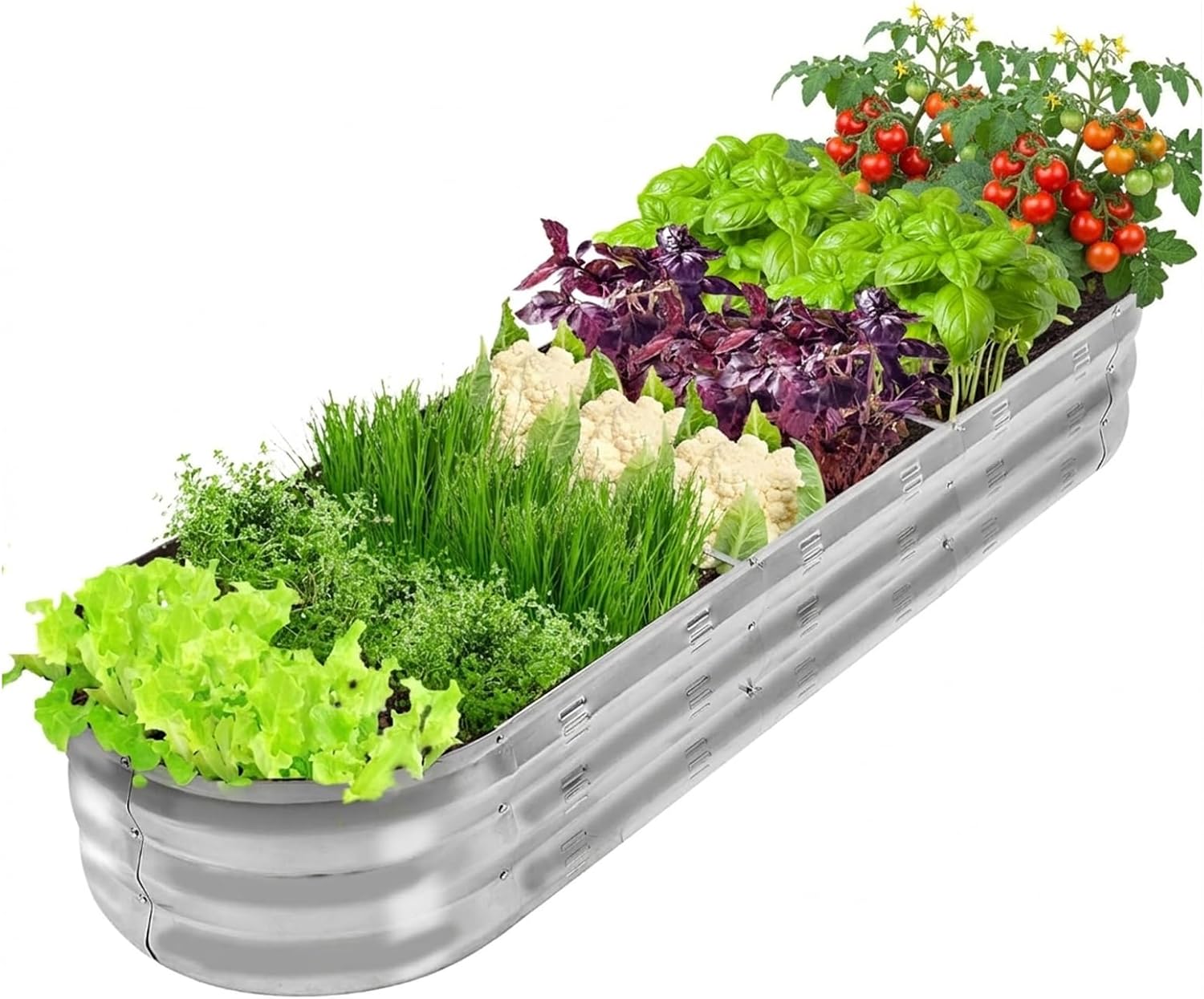
This GADI 67-inch galvanized raised garden bed is a straightforward metal planter built for outdoor vegetable and flower gardening. It assembles quickly with the included hardware and tools into a sturdy, floor-standing bed that uses a wave-shaped metal design for added rigidity. The galvanized steel with powder-coated finish and two layers of anti-corrosion paint give it rust resistance and UV/weather protection, while the open-bottom and drainage hole design prevent waterlogging and let roots access native soil. Side vents improve airflow to roots and help prevent excess moisture buildup. At roughly 7 cubic feet capacity it suits shallow-root vegetables, herbs, and annual flowers planted in patio or backyard settings. Expect limited depth for very deep-rooted crops and the metal construction will warm and cool with ambient temperatures, which affects watering needs. If you want a low-maintenance, durable raised bed that is quick to set up and resists corrosion, this is a practical choice for an efficient vegetable plot.
Best for: Gardeners who prioritize durable, low-maintenance solutions and want a quick-to-assemble raised bed for growing vegetables, herbs, and flowers in patios or small yards.
Less Ideal for: Growers planning to cultivate deep-rooted crops like large root vegetables or small fruit trees should consider deeper, soil-retaining alternatives or wooden beds.
- Galvanized steel with powder-coated finish resists rust and weathering
- Open-bottom design and drainage hole prevent water buildup and improve root access to soil
- Wave-shaped metal panels add structural strength for stability
- Includes necessary hardware and tools for quick assembly
- Shallow depth limits suitability for deep-rooted vegetables or large perennials
- Metal walls can heat up or cool quickly, affecting soil temperature and watering frequency
Verdict: A sturdy, weather-resistant galvanized raised bed that makes it easy to set up a productive vegetable patch with minimal upkeep.
Choosing the Right Raised Garden Bed for Patio: Key Factors to Consider
Material and Weather Resistance
The material of a raised bed determines how it weathers sun, rain, and temperature swings on a patio. Wood beds should be rot-resistant species or pressure-treated for outdoor use, and they will need occasional sealing or lining to slow water absorption. Metal options are strong and slim but can heat up in bright sun and may require rust-resistant coatings. Plastic and composite beds resist rot and are lightweight, but check for UV stabilization so they do not become brittle over a few seasons.
Consider how exposure differs on a patio compared with garden soil: reflected heat from paving, salt from coastal air, and limited airflow can all accelerate wear. Choosing materials that match your climate reduces maintenance and extends service life.
Drainage Design
Drainage is the single most important functional feature for patio-raised beds because excess water cannot soak away into the ground. Look for beds with built-in drainage holes, adjustable bottom panels, or the ability to add a removable tray to catch overflow. Some designs raise the soil above a shallow tray to allow water to exit without wetting the patio surface.
You also need to plan soil mix and irrigation accordingly. A fast-draining mix with organic matter and careful watering schedules prevents waterlogging. If your patio has limited slope, consider beds with integrated spouts or removable plugs to direct excess water away from decking and under-structure.
Planting Depth and Root Space
Patio beds are often chosen for compactness, but root space still governs what you can grow. Shallow beds work well for herbs, salad greens, and small annuals, while deeper beds allow for larger vegetables and longer-lived perennials. Check the internal depth and usable soil volume rather than the exterior height, since internal liners and bases reduce available space.
If you plan to grow root crops or larger shrubs in containers, aim for at least 12 to 18 inches of usable soil. For shallower beds, pool plant selections around plants adapted to confined root zones and plan frequent replenishment of nutrients.
Weight, Portability, and Patio Limits
Filled raised beds can become extremely heavy, and patios or balconies have load limits to respect. Consider the weight of the bed itself plus saturated soil when deciding on size and placement. Lightweight materials and modular designs let you move beds before they are filled, which is useful for seasonal repositioning or storage.
If you need to relocate beds frequently, look for options with lightweight frames or kits that disassemble. For permanent placements, verify that the patio or balcony can support the finished weight and avoid concentrating load on small sections of decking.
Assembly, Fit, and Installation
Ease of assembly affects how quickly you can start planting. Some patio beds arrive as simple panels that slot together without tools, while others require more complex fastenings. Consider whether a bed needs anchoring to a railing, a protective liner, or a drip tray added during setup.
Measure your patio carefully to ensure the bed fits both the footprint and access needs. Also factor in how the bed will be filled and whether it can be placed near water sources for convenient irrigation.
Maintenance and Seasonal Care
Raised beds on patios demand regular maintenance to stay tidy and productive. Maintenance includes refreshing soil, monitoring for salt or mineral buildup from watering, repairing liners or surface finishes, and cleaning any water collection trays. Pest management differs when beds are elevated; slugs may be less of a problem but container pests can still be an issue.
Plan for seasonal storage or blanketing in cold climates if beds are lightweight or have detachable parts. The easier it is to access inner corners and to remove liners, the less time you will spend on upkeep.
Best Bed Styles for Small Patios
Certain raised-bed styles suit small patios better than others. Narrow troughs and planter boxes are ideal for railing-side or narrow walkways, while square or modular boxes maximize planting area in a compact footprint. Consider stackable or tiered units if you want layered plantings without using more ground area.
Planter boxes and troughs usually require less soil and therefore reduce total weight. Modular systems let you add or remove sections as needs change, giving flexibility for seasonal crops or different arrangements.
- Narrow troughs work well for herbs and salad greens.
- Square modular boxes give flexible layouts.
- Tiered frames increase vertical planting without a bigger footprint.
Soil Mix and Fertility for Patio Beds
Patio beds benefit from a light, well-draining soil mix that still holds enough moisture for plants between waterings. A blend of compost, lightweight potting material, and coarse drainage elements like perlite or horticultural grit helps balance retention and drainage. Avoid using heavy garden soil alone in raised patio beds because it compacts and can become waterlogged.
Because containers dry faster than in-ground beds, you will need to replenish nutrients more often. Regular feeding with balanced fertilizers and seasonal topdressing with compost keep plants productive without replacing all the soil each season.
- Use a mix that favors drainage but retains some moisture.
- Topdress with compost mid-season to maintain fertility.
- Consider slow-release fertilizer for longer intervals between applications.
Watering Strategies for Hard Surfaces
Watering patio beds efficiently reduces runoff and protects the patio surface. Drip irrigation or soaker hoses placed at the root zone deliver water where plants need it and cut evaporation. If you water by hand, aim at the soil rather than overhead to limit surface wetting that can stain decks or encourage algae.
Install a saucer or catch tray if the bed lacks integrated drainage control. Regularly empty trays to prevent standing water that can attract insects or damage the patio finish.
- Use drip lines to provide targeted moisture.
- Place trays beneath beds that do not direct overflow away.
- Water in the morning to reduce evaporation and fungal risk.
Maximizing Sun and Microclimates
Patios create microclimates influenced by surrounding walls, buildings, and paving. These features can increase heat and reflected light or cast persistent shade. Assess daily sun patterns before placing beds and choose a location that matches the light needs of your chosen plants.
You can use raised beds to create warmer root zones for heat-loving crops by placing them near sun-reflective surfaces. Conversely, move more shade-tolerant plants to cooler corners or use taller plants to provide afternoon shade for sensitive species.
- Map sun hours across the patio before planting.
- Use bed placement to capture reflected heat when desired.
- Adjust plant selection to match the patio microclimate.
Integrating Containers and Raised Beds
Pairing standalone containers with a raised garden bed creates a layered look and expands planting options. Use containers for trailing plants, individual herbs, or seasonal highlights while the raised bed handles core vegetable or perennial plantings. This mix-and-match approach lets you rotate crops easily and replace soil in smaller units without disrupting the main bed.
Pay attention to consistent watering and feeding across containers and beds. Different volumes mean different drying rates, so group plants with similar needs together.
- Use containers for quick rotations and decorative accents.
- Group pots and beds by water needs to simplify irrigation.
- Choose similar soil mixes to make fertilizing schedule predictable.
How We Chose the Best Raised Garden Bed for Patio
We prioritized the practical features that determine how well a raised garden bed performs on patios and other paved or small outdoor spaces. Key evaluation criteria included material durability against sun and moisture, depth and volume for root development, drainage design and options to avoid waterlogging on impervious surfaces, ease of assembly and portability for temporary setups, and maintenance needs such as cleaning and seasonal storage. We also checked compatibility with typical patio constraints like railing mounts, balcony weight limits, and container-safe soil volumes. Products were excluded if they lacked adequate drainage provisions, were clearly meant only for in-ground use, or required permanent modifications to the patio surface. We favored beds that let gardeners control soil depth and that used rot-resistant materials or protective finishes suited to outdoor exposure. The result is a focused set of options that work specifically for patio gardening rather than general yard use.
FAQ
How deep should a raised garden bed for a patio be?
Depth depends on what you want to grow. Shallow beds of 6 to 8 inches suit herbs and salad greens. For most vegetables and small shrubs, aim for 12 to 18 inches of usable soil. Check internal depth rather than external dimensions because liners and bases reduce planting depth.
Can I use a raised bed directly on decking or a concrete patio?
Yes, but you must manage drainage and weight. Use trays or drainage channels to catch overflow and protect the surface. Also consider the combined weight of the bed plus wet soil and confirm that the patio or balcony structure can support it.
What soil mix works best for patio raised beds?
A light, well-draining mix made from compost, potting material, and coarse drainage elements like perlite works best. Avoid heavy garden soil alone because it compacts in containers and holds too much water.
How do I prevent raised beds from overheating on sunny patios?
Provide afternoon shade with taller plants or movable shade cloths, use lighter-colored materials that reflect heat, and keep soil mulched to reduce surface temperature swings. Choosing beds with insulating materials or liners can also moderate root-zone heat.
Do patio raised beds attract different pests than in-ground beds?
They can. Elevation reduces some ground pests like voles, but container-focused pests such as aphids, whiteflies, and certain fungal diseases still occur. Good sanitation, proper spacing, and monitoring help control problems early.
How often should I replace or refresh soil in a patio raised bed?
Refresh the top few inches of soil with compost each season and consider a partial soil replacement every two to three years depending on crop intensity. Frequent container cropping depletes nutrients faster than in-ground plots.
Final Verdict
For patio gardening, prioritize beds that balance usable soil depth with effective drainage and manageable weight. Material choice should match your climate and maintenance willingness, while portability and fit determine long-term usability on a small terrace or balcony. By matching bed depth to plant types and planning for drainage and irrigation up front, you can build a productive patio garden that fits your space and lifestyle.
