

Note: This article contains affiliate links. If you click on these links and make a purchase, I may earn a small commission at no extra cost to you. This helps support my research and content. Read my full affiliate disclosure here.
If you want deeper root space and less bending, tall raised garden beds change how you grow vegetables, herbs, and ornamentals in small yards, patios, and accessible gardens. The right tall bed improves soil volume for root crops, reduces compaction from foot traffic, and makes planting and maintenance easier for anyone with back or mobility concerns. This guide covers six shortlisted tall raised garden beds that suit a range of growing situations. We evaluate each option on practical, gardener-focused criteria like soil depth, durability in outdoor conditions, ease of assembly and access, and how they manage drainage and watering. Read on to find a tall bed that matches your crop choices, site, and maintenance style.
Top Picks at a Glance
| Best Overall The best all-around choice for most situations | Vego Garden Elevated Raised Garden Bed 2' x 4' with Legs and Storage Rack |  |
| Best Quality Built to a higher standard if you want something more solid | Vego Garden 26" Extra Tall Modular Metal Raised Garden Bed (6-in-1) |  |
| Best Value The sweet spot between price and what you get | Land Guard 24" Tall Galvanized Metal Raised Garden Bed Kit (4×2×2 ft) |  |
| Best Budget The cheapest option that still gets the job done reliably | DNKMOR 32in Tall Raised Garden Bed with Wheels and Storage Shelf |  |
| Highest Rated A top-rated pick with lots of positive feedback | Vego Garden 17" Tall 9-in-1 Modular Metal Raised Garden Bed (8 ft x 2 ft) |  |
| Best Seller A high-volume bestseller chosen again and again | FOYUEE 31.5" Elevated Mobile Raised Garden Bed with Wheels and Shelf |  |
Vego Garden Elevated Raised Garden Bed 2' x 4' with Legs and Storage Rack

| Capacity | 700 pounds |
|---|---|
| Plant or Animal Product Type | Vegetable |
| Material Type | Metal |
| Finish Types | Powder Coated |
This Vego Garden 2' x 4' elevated raised bed is a heavy-duty metal planter built for vegetable production and repeated seasonal use. It arrives as a kit that bolts together without special skills and uses powder-coated VZ 2.0 metal to resist rust and rot. The 32-inch overall height reduces bending while the 12-inch planting depth gives roots room for most vegetables, and a stated 700-pound capacity means it will hold ample soil and mature plants. Practical touches include one-piece welded corners and a center support that improve rigidity and a rubber edging that covers sharp panels during assembly. Because it is metal, the bed warms up and drains faster than wood or plastic, which can speed early-season growth but may require more frequent watering in hot weather. The kit needs assembly and fastener tightening, so expect an hour or two to set up. If you want a durable, high-capacity raised bed that eases back strain and stands up to multi-year vegetable gardening, this model delivers strong, performance-focused value.
Best for: Gardeners who prioritize long-term performance and structural strength for vegetable production and want an elevated bed that reduces bending and holds a lot of soil.
Less Ideal for: People who want a no-assembly, lightweight seasonal planter or those who prefer the moisture retention and look of natural wood in ornamental beds.
- Robust VZ 2.0 powder-coated metal construction offers long-term rust and rot resistance
- High load capacity (700 lb) supports deep soil and heavy plantings
- 32-inch total height reduces bending and improves ergonomics for planting and harvest
- One-piece welded corners, center support, and storage rack add rigidity and utility
- Metal walls warm and dry soil faster than wood, increasing watering frequency in heat
- Requires assembly with fasteners which takes time and basic hand tools
Verdict: A durable, high-capacity elevated metal bed built for serious vegetable gardeners who want less bending and long-lasting performance.
Vego Garden 26" Extra Tall Modular Metal Raised Garden Bed (6-in-1)

| Material Type | Alloy Steel |
|---|---|
| Finish Types | Painted |
| Planter Form | Raised Bed |
| Shape | Oval |
| Size | 6 in 1 |
The Vego Garden 26" Extra Tall Raised Garden Bed is a modular metal planter built for serious backyard productivity. Its 6-in-1 kit lets you assemble the oval bed in multiple configurations to fit different spaces and planting plans, and the 26" depth gives ample room for larger root systems, better drainage, and deeper soil profiles. Constructed from VZ 2.0 alloy steel with a painted finish, the bed is engineered for long life and corrosion resistance. Assembly is straightforward and uses fasteners rather than carpentry, and rounded edges with rubber trim reduce the risk of cuts. Practical benefits include easier harvesting and less bending due to the taller profile, plus compatibility with add-ons such as trellises, covers, and irrigation to turn it into a full gardening system. Limitations to note are that it is a metal bed so it can warm and cool faster than wood in extreme temperatures and will require a level surface and some time to assemble and secure in place for heavy plantings.
Best for: Gardeners who prioritize higher yields and healthier root development and want a configurable, long-lasting raised bed that integrates with accessories and irrigation.
Less Ideal for: People who prefer natural wood aesthetics or who need a completely maintenance-free, moveable planter for very small balconies.
- 26-inch extra depth supports larger root systems and improved drainage
- Modular 6-in-1 design allows multiple layouts to fit different garden spaces
- Durable VZ 2.0 alloy steel with painted finish for long-term corrosion resistance
- Rounded oval shape and rubber edging reduce sharp corners for safer handling
- Works with brand add-ons like trellises, covers, and irrigation for a complete system
- Metal construction can change temperature quickly compared with wood, affecting soil temperature
- Requires assembly and a level site before planting
Verdict: Choose this extra-tall modular metal bed if you want a durable, high-performance raised bed that boosts root growth and adapts to multiple garden layouts.
Land Guard 24" Tall Galvanized Metal Raised Garden Bed Kit (4×2×2 ft)

| Capacity | 144 gallons |
|---|---|
| Material Type | Metal |
| Finish Types | Powder Coated |
| Other Special Features of the Product | Open Base |
| Mounting Type | Floor Standing |
This Land Guard raised garden bed is a tall, oval metal planter kit built to give vegetables and larger plants extra root depth without occupying much ground footprint. Its 24-inch growing depth and 144-gallon capacity let you plant deeper-rooted crops or layer soil and compost for better drainage. The panels are made from 1.0 mm galvanized steel with a powder-coated finish, which helps resist rust and hold shape through wet seasons. An open-base design prevents water from pooling and keeps roots from rotting while letting soil organisms access the ground. Assembly is tool-free using upgraded screws and centre bars, so one person can set it up quickly on level ground. Important limitations are that metal can heat up in full sun and the bed has no integrated liner, so you may need to add landscape fabric or wood timbers for very sandy or heavy clay soils. Shipping weight and exact fasteners are modest, but the pack is simple and aimed at practical, low-maintenance gardening.
Best for: Practical gardeners who want a durable, low-maintenance raised bed that maximizes root depth in a compact footprint and can be assembled quickly without specialized tools.
Less Ideal for: Gardeners who prefer natural materials, built-in insulation, or very large planting areas should consider wooden or modular beds instead.
- 24 inch growing depth provides room for deep-rooted vegetables and layered soil profiles
- Galvanized 1.0 mm steel with powder coating resists rust and keeps structure rigid
- Open-bottom design improves drainage and prevents root rot
- Tool-free assembly with upgraded screws and center bars for quick setup
- Metal sides can get hot in full sun which may stress roots without shading or insulation
- No included liner or soil barrier, so additional fabric or amendment may be needed for some soils
Verdict: Buy this if you want a tall, rust-resistant metal raised bed that gives extra root depth and fast, tool-free installation.
DNKMOR 32in Tall Raised Garden Bed with Wheels and Storage Shelf
| Material Type | Alloy Steel |
|---|---|
| Capacity | 400 pounds |
| Indoor Outdoor Usage | Indoor, Outdoor |
| Other Special Features of the Product | Drainage Hole, Rust Resistant |
| Included Components | Shelf, Wheels |
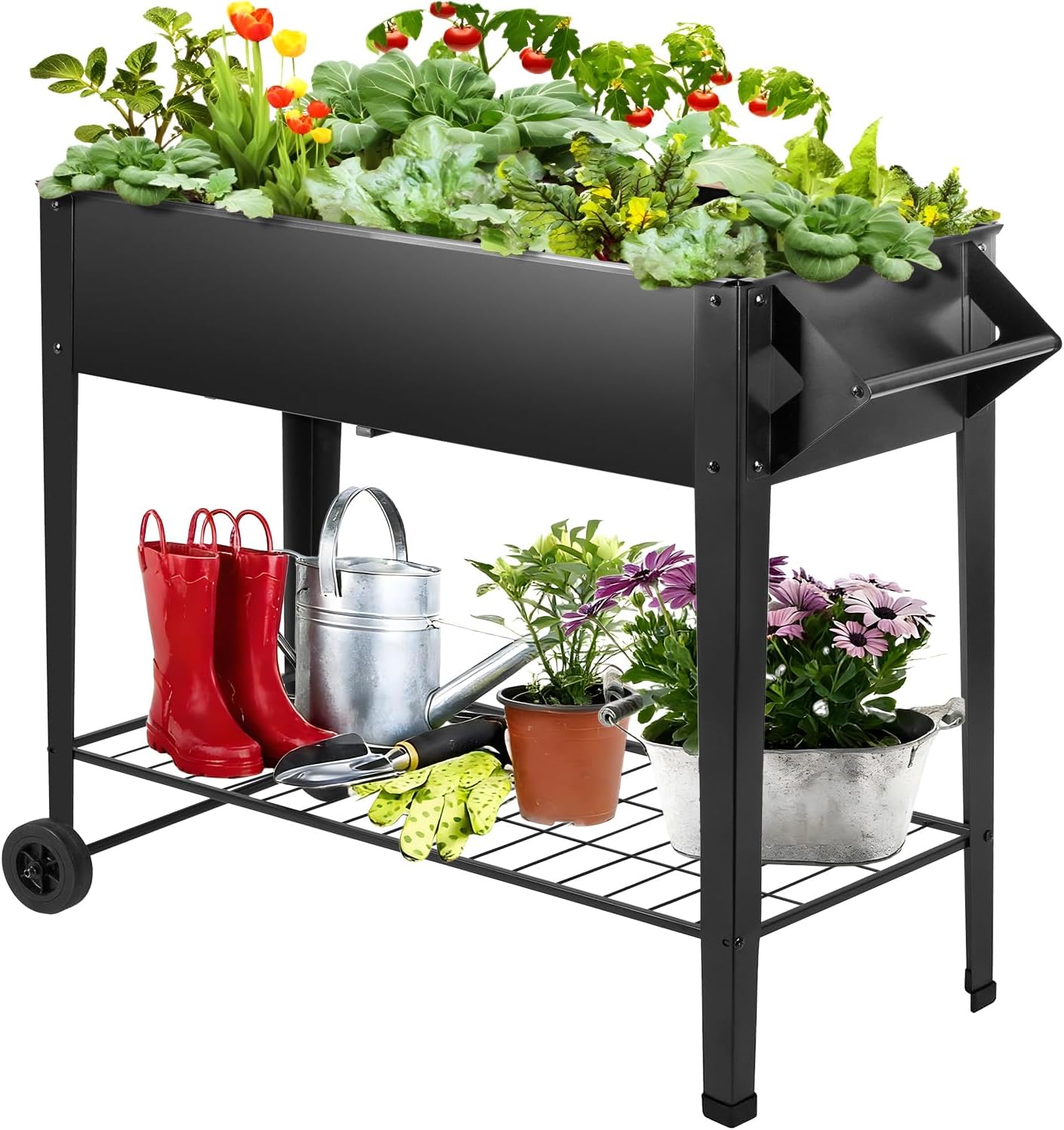
This DNKMOR raised garden bed is a straightforward, no-frills solution for gardeners who want a taller planting surface without permanent installation. Made from alloy steel with a rust-resistant coating, the bed stands 32 inches high on legs so you can plant, weed, and harvest without bending. It includes two wheels for easy repositioning and a lower shelf that keeps soil bags and tools handy. The planter has multiple drainage holes to reduce the risk of waterlogged roots and is rated to hold up to 400 pounds, making it stable when filled. Assembly is simple and fast using the included hardware and instructions. Expect a functional, compact footprint suitable for patios, decks, or narrow backyards, though the metal finish is unfinished so it will show wear over time and will feel colder than wood or composite alternatives. If you need larger volume for deep-rooted crops or a decorative finish, look elsewhere, but for a budget-focused, ergonomic raised bed that moves and stores gear, it performs well.
Best for: Practical gardeners on a tight budget who want an elevated, mobile planter that reduces bending and stores supplies close at hand.
Less Ideal for: Those seeking a decorative or natural-looking raised bed material or gardeners who need deep soil volume for large root crops.
- Rust-resistant alloy steel construction for outdoor durability
- 32 inch height reduces bending and helps gardeners with mobility issues
- Two wheels for easy relocation and a lower shelf for tool and soil storage
- Multiple drainage holes to prevent root rot and manage excess water
- Unfinished metal finish can show wear and looks utilitarian compared with wood
- Not ideal for very deep-rooted plants due to moderate planting depth
Verdict: A budget-friendly, tall steel planter that makes gardening easier by raising the bed, adding mobility, and giving handy under-shelf storage.
Vego Garden 17" Tall 9-in-1 Modular Metal Raised Garden Bed (8 ft x 2 ft)

| Material Type | Metal |
|---|---|
| Size | 8 ft x 2 ft |
| Capacity | 23 cubic feet |
| Number of Pieces | 20 |
| Set Name | 9-in-1 Modular Raised Garden Bed Set |
This Vego Garden 9-in-1 raised bed kit is a sturdy, taller raised planter aimed at gardeners who want a long-lasting, configurable bed for vegetables and flowers. The kit uses a coated steel VZ 2.0 finish that the brand says was tested for corrosion resistance, and the modular panels let you build one of nine layouts to fit different yard footprints. At 17 inches deep it gives more soil volume for root development and improved drainage compared with low beds, and the oval panels and rubber edging reduce sharp corners during assembly. Typical use is filling with quality soil mix, adding plants that benefit from deeper root space, and optionally pairing with add-ons such as trellises, covers, or a worm composter from the same system. Installation is straightforward for two people and requires only basic tightening of fasteners. Important limitations are that the metal panels are not insulated so soils can warm and cool faster than wood, and the kit requires time to assemble and fill with soil before planting. Overall it is a durable, modular choice for gardeners prioritizing longevity and flexibility.
Best for: Gardeners who want a reliable, long-lived raised bed with flexible layout options and deeper soil for stronger roots, and who value low-maintenance metal construction over frequent replacement.
Less Ideal for: People who need a ready-to-plant solution out of the box or who prefer the insulating properties and aesthetic of natural wood should consider other options.
- Modular 9-in-1 design lets you configure the bed to different shapes and footprints
- VZ 2.0 coated metal construction engineered for long corrosion resistance
- 17-inch depth provides generous soil volume for healthier root development
- Rounded panels and rubber edging simplify safer, easier assembly
- Compatible with add-ons like trellises, covers, and in-bed composting accessories
- Metal walls offer less thermal insulation than wood which can cause faster soil temperature swings
- Assembly and filling require time and at least two people for easiest setup
Verdict: Buy this if you want a taller, corrosion-resistant modular metal raised bed built to last and reconfigure for different garden layouts.
FOYUEE 31.5" Elevated Mobile Raised Garden Bed with Wheels and Shelf

| Capacity | 2.5 cubic feet |
|---|---|
| Material Type | Metal |
| Finish Types | Powder Coated |
| Mounting Type | Floor Standing |
| Included Components | Wheels, Plant Stand |
This FOYUEE elevated raised bed is a mobile, waist-height planter designed for easy, ergonomic vegetable and herb growing on patios and balconies. The galvanized steel box with a powder-coated finish resists rust and supports heavy fill so you can add ample soil for productive vegetable crops. Built-in drainage channels and a central drain help prevent waterlogging while the raised profile improves air circulation around roots. A lower storage shelf keeps tools and pots handy and the integrated handle plus 6-inch all-terrain wheels make it straightforward to reposition the planter for sun or shelter. Typical uses are growing salad greens, herbs, compact vegetables, or creating a movable culinary garden outside a kitchen door. Assembly and moving when fully loaded will require some effort despite wheels, and the metal surface can warm in strong sun so seedling protection may be needed. The unit favors growers who want less bending and an organized, movable planting station rather than a large in-ground plot.
Best for: Gardeners who want an ergonomic, moveable vegetable planter for patios or balconies and value easy access, organization, and rust-resistant construction.
Less Ideal for: People who need very large planting volumes, deep-rooted crops, or a permanent in-ground bed for large-scale vegetable production.
- Powder-coated galvanized steel construction resists rust for outdoor use
- Raised waist-height design reduces bending and back strain
- Integrated drainage channels and central drain prevent water buildup
- Built-in wheels and handle allow the planter to be moved for light or weather
- Lower shelf provides convenient storage for tools and supplies
- May be heavy and awkward to assemble or move when filled with soil
- Metal walls can heat up in direct sun and may require shading for sensitive plants
Verdict: Buy this if you want a durable, waist-height mobile planter that makes growing herbs and compact vegetables easier without stooping.
Choosing the Right Tall Raised Garden Bed: Key Factors to Consider
Soil Depth and Root Space
Deeper soil volume is the primary reason to choose a tall raised garden bed. Many vegetables, especially root crops like carrots, parsnips, and potatoes, need more vertical space to develop straight, healthy roots. Perennial herbs and young shrubs also establish better in a deeper profile because roots can spread and anchor without hitting the bottom barrier.
When evaluating depth, think about finished soil depth after any liner or bottom layers are added. If you plan heavy feeders or multi-season plantings, opt for the greatest usable depth you can accommodate to reduce the need for frequent repotting or replanting.
Material and Weather Resistance
Materials determine how a tall bed performs over time. Wood offers a natural look but can rot unless it is rot-resistant species or properly treated. Metal is durable and slim in profile but can heat soil in full sun and may corrode if not protected. Composite or recycled-plastic panels resist rot and insect damage but can have different thermal and weight characteristics.
Consider local climate when choosing materials. In wet regions, avoid untreated wood that sits against saturated soil. In very hot, sunny sites, choose materials that moderate soil temperature or add shading. Look for construction details like reinforced corners and bolted assemblies that hold up under repeated filling and winter conditions.
Assembly, Delivery, and On-Site Setup
Tall beds are heavier and bulkier than standard-height beds, so ease of assembly matters. Prefabricated panels that slot together without many specialized tools reduce setup time and the risk of misalignment. Some designs require a solid base or leveling before installation, while others can sit directly on grass or paving.
Also plan for how you will get the filled bed into place. Full beds are very heavy once filled with soil and compost, so choose a design you can assemble in its final location. Consider whether panels allow future disassembly for repositioning or winter storage.
Access, Ergonomics, and Maintenance
One of the main advantages of tall raised beds is reduced bending. Consider bed height relative to the primary gardener's comfort. Higher beds make planting and harvesting easier but can be harder to reach the center of wide beds, which may require paths or stepping stones. Edge width and top rails affect whether you can comfortably sit or lean while working.
Think about maintenance tasks such as weeding, feeding, and harvesting. Beds that allow tool access and have tidy edges reduce strain and speed up routine work. Also assess whether the design allows for adding trellises, supports, or covers for season extension.
Drainage, Soil Mix, and Watering
Tall beds hold more water and therefore require a deliberate approach to drainage. Good options include built-in drainage holes, free-draining bottoms, or removable liners that allow excess water to escape. Poor drainage leads to waterlogged roots, nutrient leaching, and pest problems.
Match your soil mix to the bed depth and drainage design. A lighter, well-structured mix with plenty of organic matter and coarse components improves aeration. Consider how irrigation will be managed-hand watering, drip systems, or soaker hoses work well but need planning so water reaches the full depth evenly.
Site Compatibility and Microclimate Effects
Tall beds alter the microclimate around plants by warming earlier in spring and retaining heat later into fall. This can extend the growing season but may also stress cool-season crops during hot spells. Check sun exposure, wind, and proximity to structures when siting a tall bed.
Raised profiles can change water runoff patterns across a yard and may need edging or paths to prevent erosion. Also consider whether the bed will cast shade on adjacent beds or plants and whether you need to orient the bed for trellis support or winter protection.
Best Uses for Tall Raised Garden Beds
Tall raised beds are ideal when you need deeper soil without expanding the garden footprint. They suit root crops, deeper-rooting perennials, container-style shrub plantings, and edible gardens where soil quality below grade is poor. In small yards and patios, tall beds deliver substantial planting volume while keeping pathways compact.
They also work well for accessible gardening because higher edges reduce bending. For community plots or shared gardens, tall beds make it easier for gardeners with limited mobility to participate without permanent soil changes to the site.
- Root vegetables and tubers
- Deep-rooted perennials and shrubs
- Accessible gardening for reduced bending
- Small-space edible or ornamental plantings
Preparing Soil and Filling a Tall Bed
Filling a tall bed with the right mix is crucial to plant health and long-term maintenance. Start with a base layer that encourages drainage such as coarse gravel or broken clay pots if the bed has limited bottom drainage. Then add a structured soil mix that balances aeration, water retention, and fertility.
A typical fill strategy uses a blend of topsoil, compost, and a lightweight amendment such as coir or well-rotted leaf matter. Layering with compost near the root zone supports early growth, while bulk fill lower in the profile can reduce the amount of premium planting mix needed.
- Start with a coarse drainage layer if needed
- Use a balanced mix of topsoil, compost, and lightweight amendments
- Top-dress annually with compost to replenish nutrients
Managing Water in Deep Beds
Watering tall beds requires attention to how moisture moves through a deeper column of soil. Surface watering may not reach lower root zones, especially in hot, dry weather. Installing drip irrigation or soaker lines at different depths ensures consistent moisture throughout the profile.
Mulch the surface to reduce evaporation and moderate soil temperature. Check moisture with a probe or simply by digging a small hole to see how wet the soil is at depth. Adjust frequency rather than duration-fewer, deeper soakings encourage deeper roots and better drought resilience.
- Use drip or soaker lines for even watering
- Mulch to conserve moisture and suppress weeds
- Check moisture at depth before increasing watering frequency
Season Extension and Protection
Tall beds warm earlier in spring, which helps with earlier planting. They can also be easier to protect with removable frames, cloches, or cold-frames because the raised sides provide a ready anchor for coverings. Consider lightweight hoops or snap-on covers to shield seedlings from late frosts or heavy rain.
For winter protection, insulate bed sides with straw bales or added compost layers to protect root systems. Removing covers on warm days prevents overheating and disease issues.
- Use frames and covers to start earlier and extend the season
- Insulate in winter with organic mulches
- Ventilate covers on warm days to prevent moisture buildup
Design Details That Matter
Pay attention to corner strength, joinery, and edge width. Narrow top rails can limit comfortable leaning, while broad edges allow sitting or placing a tray when harvesting. Reinforced corners reduce wobble when the bed is filled and under load.
Accessory compatibility is also important. Look for options that accept trellis attachments, row covers, or irrigation fittings so you can adapt the bed as your garden needs change.
- Reinforced corners and sturdy joinery
- Top rail width for ergonomic work
- Compatibility with trellises and irrigation
How We Chose the Best Tall Raised Garden Bed
Our selection focused on practical factors that matter in real gardens rather than brand names or flashy features. We prioritized soil depth and usable planting volume because many root vegetables and larger perennials require more substrate to thrive. Durability in outdoor conditions was another key filter, covering material resistance to rot, rust, and UV to ensure the structure lasts multiple seasons. Accessibility and ergonomics were included to reflect the core benefit of tall beds: reduced bending and easier planting and harvest. Drainage and water management were assessed to avoid soggy roots or added maintenance, especially in containerized or raised settings. Assembly and adaptability were considered so beds can be set up without specialized tools and adjusted for different site constraints. We excluded shallow or standard-height beds, floating planters, and temporary grow bags that do not provide the vertical soil volume this roundup targets. The final list highlights options that balance root depth, weather resistance, and user-friendly setup for a variety of garden spaces.
FAQ
How deep should a tall raised garden bed be for root vegetables?
Deep-rooted vegetables typically do best in beds that provide at least 12 to 18 inches of usable soil, with larger root crops benefiting from 18 inches or more. Factor in any liner or base layers so the finished planting depth meets crop needs.
Can I place a tall raised bed on grass or a patio?
Yes, most tall beds can sit on grass, soil, or hard surfaces, but you should consider drainage and leveling. On grass, remove turf or create a weed barrier to reduce invasion. On patios, ensure the surface can support the filled bed's weight and provide drainage.
What is the best way to water a deep raised bed?
A drip or soaker system placed roughly mid-depth encourages even moisture through the profile. Water deeply and less frequently rather than frequent shallow watering to promote strong root development. Mulch and check moisture at depth to avoid overwatering.
Will a tall raised bed dry out faster than a standard bed?
Not necessarily. Tall beds hold more soil and can retain moisture longer, but they also expose more surface area and may warm faster in sun. Soil mix and mulching influence drying more than height alone, so use a mix that retains moisture while providing good drainage.
How do I protect tall beds from winter damage?
Insulate the soil with a thick mulch or compost layer and consider temporary side protection in very cold, windy sites. Remove any lightweight covers on warm days and avoid saturating the soil before frost to reduce freeze-thaw damage.
Final Verdict
Tall raised garden beds are a practical solution when you need more rooting depth, improved ergonomics, and flexible planting in constrained spaces. Prioritize usable soil depth, durable materials for your climate, and drainage strategies that suit deeper profiles. Balance height for comfort with bed width so you can reach into the center without stepping into the bed. Focus on the factors most important to your garden: how deep the crops need to grow, how much maintenance you want, and how the bed will cope with local weather. With those priorities in mind, you can confidently choose a tall bed that delivers better yields and a more comfortable gardening experience.
