

Note: This article contains affiliate links. If you click on these links and make a purchase, I may earn a small commission at no extra cost to you. This helps support my research and content. Read my full affiliate disclosure here.
Picking the right large plant pot matters more than most gardeners expect. Too little drainage or a pot that is brittle in sun exposure can stunt root growth, make watering a chore, or lead to breakage when you move big specimens. You want a container that supports healthy root systems, handles outdoor conditions, and stays manageable for repotting and seasonal moves. This guide covers the top shortlisted large plant pots for growing shrubs, small trees, and large perennials in yards, patios, and large containers. We looked at how each option performs for drainage, material toughness, weight and handling, and suitability for indoor versus outdoor use. Read on to see the practical strengths gardeners should weigh before choosing a large pot for heavy or fast-growing plants.
Top Picks at a Glance
| Best Overall The best all-around choice for most situations | Veradek Demi Large Round Planter (Plastic-Stone Composite) |  |
| Best Quality Built to a higher standard if you want something more solid | LE TAUCI 12-Inch Ceramic Planter (Neutral Gray) |  |
| Best Value The sweet spot between price and what you get | homenote 14.5" Large Plastic Flower Pot with Drainage Plug |  |
| Best Budget The cheapest option that still gets the job done reliably | WSMKSZ 12" Water Ripple Plastic Plant Pot with Saucer |  |
| Highest Rated A top-rated pick with lots of positive feedback | DSNAPE Round Magnesium Oxide Planter with Drainage Hole |  |
| Most Popular A crowd favorite that many people choose with confidence | Root & Vessel Majestic Full Depth Cylinder Planter, 14-Inch, Glossy White |  |
| Best Seller A high-volume bestseller chosen again and again | Fielda 8/10/12 Inch Self-Watering Planter Set |  |
Veradek Demi Large Round Planter (Plastic-Stone Composite)

| Material Type | Plastic |
|---|---|
| Capacity | 112.17 liters |
| Other Special Features of the Product | UV Resistant, Weather Resistant |
| Mounting Type | Floor Standing |
| Indoor Outdoor Usage | Outdoor |
The Veradek Demi Large Round Planter is a substantial outdoor pot designed to hold large plants, small trees, or groupings of perennials on patios and balconies. Made from a plastic-stone composite with a textured finish and protective coating, it resists UV, cracking, and weathering across a wide temperature range so you can leave it outdoors year round. Pre-drilled drainage holes simplify planting and reduce the risk of overwatering, and the modern round silhouette works as a neutral backdrop for foliage or flowering specimens. Practical benefits include a high soil capacity that supports deeper-rooted plants and a lightweight feel versus true concrete for easier repositioning. It does not include casters or an internal liner, so moving the planter when filled will still require effort and careful lifting. The finish is durable but may show scratches if dragged across rough surfaces. For gardeners who want a low-maintenance, weatherproof large planter that reads like stone without the weight, this is a solid choice.
Best for: Gardeners who want a durable, low-maintenance large outdoor planter that looks like stone but is easier to handle than real concrete and will stay outdoors through seasonal weather.
Less Ideal for: People who frequently rearrange heavy pots, need lightweight portable containers, or who require built-in mobility features like casters should consider other options.
- All-weather plastic-stone composite resists UV, cracking, and fading
- Pre-drilled drainage holes for straightforward planting and better root health
- High soil capacity suitable for large plants and deeper root systems
- Textured, modern design that complements many outdoor styles
- Heavier when filled and has no integrated moving hardware so relocation is awkward
- No included liner or caster system for easier plant maintenance or mobility
Verdict: Choose the Veradek Demi for a large, weatherproof planter that gives a stone-like look with much less weight.
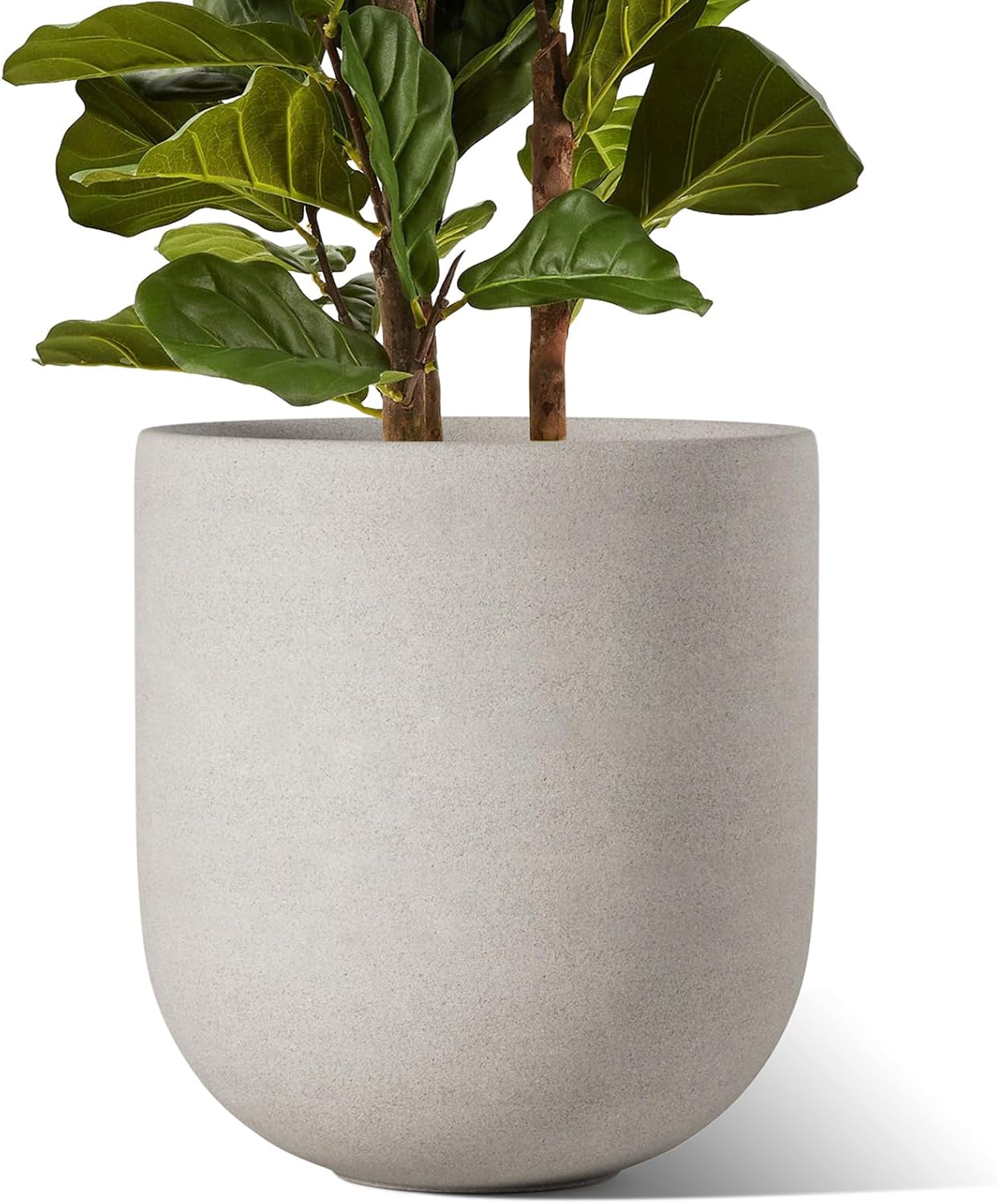
LE TAUCI 12-Inch Ceramic Planter (Neutral Gray)
| Material | Ceramic |
|---|---|
| Finish | Unglazed |
| Capacity | 8.96 liters |
| Included components | Fine-Mesh Drainage Screen, Silicone Drainage Plug |
| Indoor Outdoor Usage | Indoor |
This LE TAUCI 12-inch ceramic planter is built for steady indoor displays of statement plants like monstera or fiddle leaf fig. Its unglazed, textured neutral gray finish gives a concrete-like look while the substantial ceramic construction keeps tall pots from tipping. The planter includes a fine-mesh drainage screen to hold soil back when planting directly and a removable silicone plug so you can use the pot as a nursery-pot cover. Typical use is straightforward: plant directly with the mesh in place and a saucer underneath, or place an 11-inch nursery pot inside and remove it for watering so the outer pot stays tidy. Practical benefits include a roomy inner opening for larger root balls, good stability from the weight, and a neutral finish that fits modern interiors. Expect the usual ceramic limitations though, such as significant weight when filled and susceptibility to chipping if knocked. The product is focused on indoor styling and does not replace frostproof outdoor planters.
Best for: Buyers who prioritize stable, stylish indoor planters for larger houseplants and want a finished pot that supports both direct planting and nursery-pot use.
Less Ideal for: People who need lightweight, portable pots for frequent rearranging or who require frostproof outdoor planters.
- Unglazed ceramic with textured finish that complements modern interiors
- Includes fine-mesh drainage screen and silicone plug for flexible planting methods
- Large inner opening suitable for 11-inch nursery pots and small indoor trees
- Heavy, stable construction that resists tipping with tall plants
- Ceramic weight makes it cumbersome to move once filled
- Not rated for outdoor or freeze-prone use and can chip if dropped
Verdict: A heavy, stylish indoor ceramic planter made for stable displays of larger houseplants and flexible planting options.
homenote 14.5" Large Plastic Flower Pot with Drainage Plug

| Material Type | Plastic |
|---|---|
| Other Special Features of the Product | Drainage Hole |
| Included Components | Plug |
| Mounting Type | Floor Standing |
| Indoor Outdoor Usage | Indoor |
This homenote 14.5-inch plastic flower pot is a straightforward, no-frills large planter built for roomy root space and easy moisture control. It is typically used for indoor statement plants such as monstera, fiddle-leaf figs, or money trees where taller root systems need a deeper container. The pot includes a built-in drainage hole plus a removable rubber plug so you can water with the plug in for indoor use or remove it outdoors to prevent waterlogging. Made from thickened plastic, the pot is light for its size yet described as rigid enough to resist warping and tipping when filled with soil and a large plant. Practical benefits include low maintenance, durability, and flexibility to switch between indoor and outdoor placement. Limitations are that the material is basic plastic so it lacks the insulating or premium look of ceramic or resin and it may show scuffs over time; also the listing notes indoor usage which suggests limited long-term outdoor weather resistance.
Best for: Buyers who want a practical, roomy planter that makes repotting and moisture control easy and who prioritize function, light weight, and durability over decorative materials.
Less Ideal for: Shoppers seeking a decorative statement piece in ceramic, concrete, or frost-resistant materials for permanent outdoor placement should look elsewhere.
- Large 14.5-inch top opening provides ample room for bigger root systems
- Removable drainage plug lets you control moisture for indoor or outdoor use
- Thickened plastic construction resists warping and keeps the pot lightweight
- Simple round shape and neutral finish integrate with many decor styles
- Plastic finish is less premium and can scuff or fade over time
- Not marketed for prolonged outdoor exposure which may limit weather durability
Verdict: A practical, lightweight large planter with a removable drainage plug that makes watering control and repotting simple for big indoor houseplants.
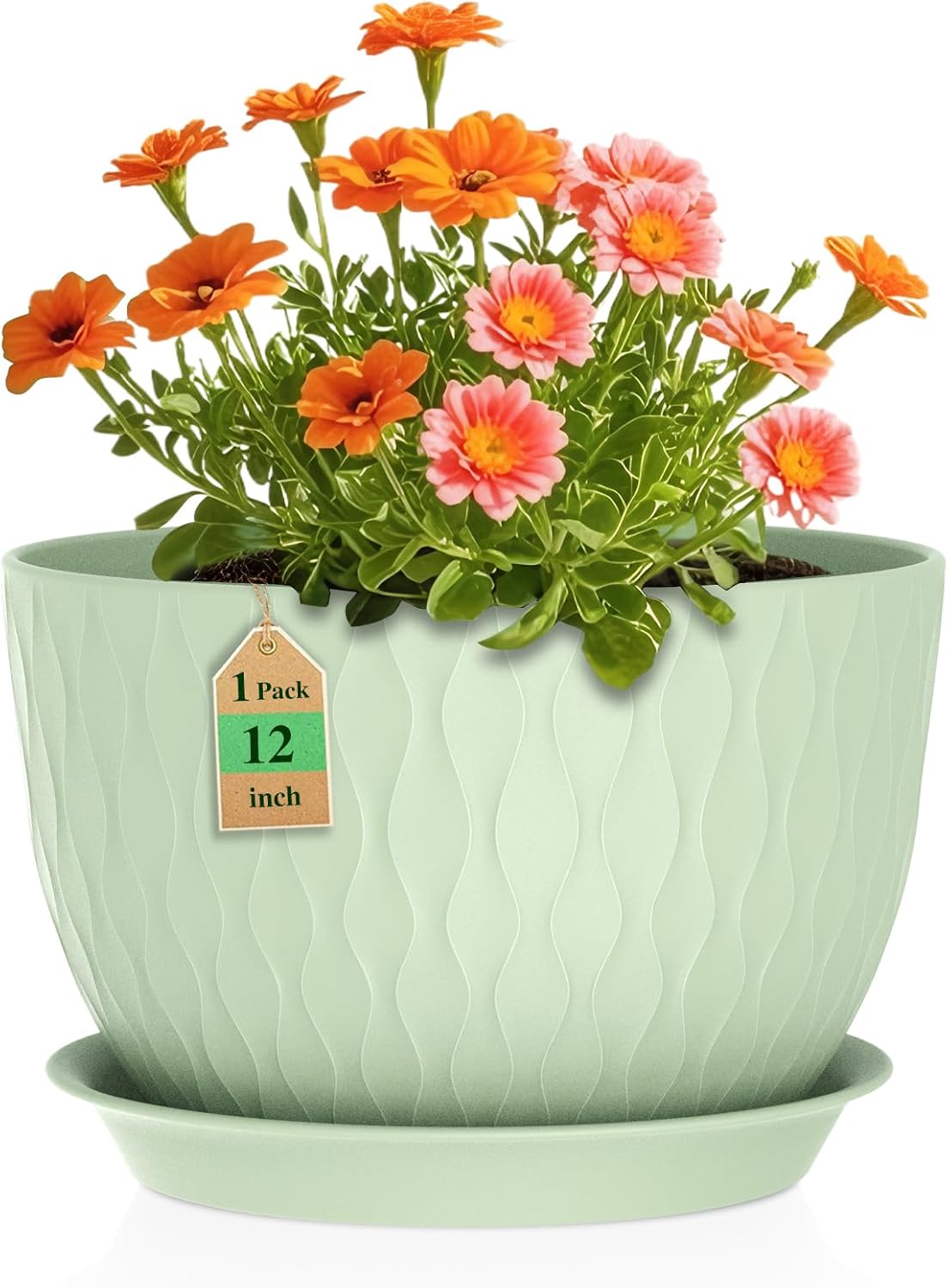
WSMKSZ 12" Water Ripple Plastic Plant Pot with Saucer
| Material Type | Plastic |
|---|---|
| Included Components | Tray |
| Other Special Features of the Product | Breathable, Drainage Hole, Fade Resistant, Lightweight |
| Indoor Outdoor Usage | Indoor, Outdoor |
This 12-inch WSMKSZ planter is a straightforward, functional pot for small to medium plants such as lilies. Made from recyclable PP plastic with a matte finish and 6 mm sidewalls, it is lightweight yet sturdy enough to resist crushing and outdoor weathering. The pot includes drainage holes and a saucer to catch runoff, which helps prevent root rot and keeps surfaces tidy. The wide ripple design provides extra planting space and a stable base for potted bulbs or clumping perennials. Because it is plastic the pot is easy to move and clean, and its fade resistant claim means it should keep an even look when used on a sunny patio. Limitations are typical of plastic planters: it offers less breathability than terracotta and will warm more in direct sun, so monitor soil moisture for heat-sensitive varieties. For gardeners who want an affordable, low-maintenance container that pairs well with lily bulbs, this pot covers the essential needs without unnecessary features.
Best for: Buyers who prioritize practical, low-maintenance containers that are easy to move and keep tidy for indoor or patio-grown lilies and other small to medium plants.
Less Ideal for: Gardeners seeking traditional porous materials or heavy, decorative planters for long-term outdoor display or for plants that require very cool root conditions.
- Drainage holes plus a matching saucer help prevent overwatering and protect surfaces
- Lightweight recyclable PP construction makes it easy to move and clean
- 6 mm sidewalls and matte finish resist deformation and fading for outdoor use
- 12-inch diameter gives ample room for lily bulbs or small clumping plants
- Plastic holds heat and offers less natural breathability than terracotta
- Not insulated, so roots may warm quickly in full sun
Verdict: A practical, lightweight 12-inch plastic pot that gives lily growers an affordable, easy-to-care-for container with built-in drainage and a saucer.
DSNAPE Round Magnesium Oxide Planter with Drainage Hole

| Capacity | 13.6 gallons |
|---|---|
| Material Type | Magnesium Oxide |
| Other Special Features of the Product | Drainage Hole, UV Resistant, Weather Resistant |
| Mounting Type | Floor Standing |
This DSNAPE magnesium oxide planter is designed to give the look of stone without the weight, making it easy to move when you reposition a large houseplant like a Monstera. It ships as a single floor-standing pot with a pre-drilled drainage hole and matte finish, so you can plant directly with potting mix and expect better drainage and less risk of root rot. The material is marketed as UV and weather resistant, so it works on patios or near windows without fading or cracking in seasonal conditions. At about 13.7 inches tall and 17.7 inches diameter it accommodates larger root balls and decorative soil profiles. The practical upside is durability plus easy handling compared with real stone, while the main limitation is that magnesium oxide planters can still chip if knocked and they lack the insulating thermal mass of heavier stone pots, so plants may experience quicker soil temperature changes outdoors.
Best for: Buyers who want a durable, low-maintenance planter for large houseplants like a Monstera and prefer something easy to move and resilient in mixed indoor/outdoor settings.
Less Ideal for: Gardeners who need heavyweight, stone-like thermal mass for extreme temperature stability or collectors who require heirloom-quality ceramic or terracotta aesthetics.
- Lightweight magnesium oxide construction makes repositioning large plants easy
- Pre-drilled drainage hole supports healthy roots and reduces overwatering risk
- UV and weather resistant for reliable outdoor and indoor performance
- Matte finish and simple round design fit with a variety of decor styles
- Not as thermally insulating as heavy stone which can affect soil temperature outdoors
- Magnesium oxide can chip if subjected to strong impacts
Verdict: A reliable, lightweight stone-look planter that makes housing and caring for a large Monstera simple while standing up to sun and weather.
Root & Vessel Majestic Full Depth Cylinder Planter, 14-Inch, Glossy White

| Capacity | 31.37 quarts |
|---|---|
| Material Type | Plastic |
| Finish Types | Glossy Finish |
| Other Special Features | Drainage Hole, Lightweight, Rust Resistant, UV Resistant, Weather Resistant |
| Indoor Outdoor Usage | Indoor, Outdoor |
This Root & Vessel 14-inch Full Depth Cylinder planter is a deep, lightweight plastic pot intended for everyday indoor or outdoor planting. It provides ample root space that suits larger houseplants like a Monstera and includes a snap-on drainage tray that protects floors and allows you to expose drainage holes when using the pot outdoors. The glossy finish and simple cylinder shape give a clean, contemporary look while the high-grade polypropylene construction makes the pot weather and UV resistant so it will hold up on a patio as well as inside. Practical details such as included drainage holes, a removable tray and recyclable BPA-free material mean less fuss during repotting and easy seasonal use. Because it is plastic, it is much lighter and less fragile than ceramic alternatives but will not have the same heft or premium feel. For people who want a durable, low-maintenance container that is easy to move and protects surfaces, this planter is a sensible choice.
Best for: Buyers who prioritize a practical, low-maintenance planter for a large houseplant and want a durable, easy-to-move pot that protects indoor surfaces.
Less Ideal for: Someone seeking a heavy, decorative ceramic or natural terracotta planter for a high-end look or for plants that benefit from porous pots.
- Full-depth interior gives generous root space suitable for larger plants
- Snap-on drainage tray protects floors and can be removed to expose drainage holes outdoors
- Lightweight, durable polypropylene construction is weather and UV resistant
- Glossy, minimalist finish fits contemporary interiors and outdoor settings
- Plastic construction lacks the weight and perceived quality of ceramic or terracotta
Verdict: A practical, weather-resistant deep pot that gives Monsteras plenty of root room while staying lightweight and easy to protect indoor surfaces.
Fielda 8/10/12 Inch Self-Watering Planter Set

| Included Components | Saucer, Water Level Indicator Window |
|---|---|
| Capacity | 2.5 gallons |
| Material Type | Plastic |
| Indoor Outdoor Usage | Indoor, Outdoor |
These Fielda planters are a practical self-watering set for anyone who wants lower-maintenance container gardening. Each pot has a deep reservoir and an absorbent cotton wick that draws water up to the root zone, while a transparent water-level window lets you check reservoir volume without disturbing the plant. Detachable saucers and multiple drainage holes simplify cleaning and prevent overwatering, and the thicker plastic walls make the pots durable for both indoor and outdoor placement. In real use they keep soil evenly moist for roughly a week for typical houseplants, which is convenient for busy schedules or short trips. Limitations to note are the reduced usable planting depth because of the reservoir and the lightweight plastic construction, which can tip with very top-heavy plants in windy outdoor spots. The design is straightforward to set up and maintain, and the visible indicator and removable tray make it easy to avoid waterlogging while reducing daily watering chores.
Best for: Buyers who want a low-maintenance, reliable self-watering solution that visibly shows reservoir status and simplifies weekly care for common houseplants and balcony pots.
Less Ideal for: Growers needing maximum root depth for large specimen plants or those who prefer heavy, terracotta-style pots for stability and aesthetic weight.
- Self-watering reservoir with cotton wick delivers consistent moisture to roots for up to 7–10 days
- Transparent water-level window provides easy visual monitoring without moving the pot
- Removable saucer tray and multiple drainage holes simplify cleaning and prevent waterlogging
- Durable, high-temperature-resistant plastic resists fading and cracking for indoor or outdoor use
- Reservoir reduces usable planting depth compared with a regular pot of the same outer size
- Lightweight plastic can be prone to tipping with large, top-heavy plants in windy conditions
Verdict: A convenient, visible self-watering planter set that cuts down weekly watering while working reliably for typical houseplants and balcony containers.
Choosing the Right Large Plant Pot: Key Factors to Consider
Material and UV Stability
The material a large pot is made from determines how it holds up to sun, heat, and cold. Plastic and resin options can be lightweight and resistant to cracking, but lower-quality polymers degrade under prolonged UV exposure, becoming brittle over time. Clay and terracotta are attractive and breathable but can absorb moisture and crack in freeze-thaw cycles if left outdoors without protection.
Consider whether you will leave the pot in full sun, under cover, or move it indoors for winter. For patio placements that see heavy sunlight, look for pots made from UV-stabilized composites or treated synthetics. In climates with hard freezes, frost-resistant glazed ceramics or thick stone alternatives reduce the risk of splitting.
Drainage Design and Root Health
Large pots must move excess water away from roots to prevent rot. Drainage comes from holes, raised feet, or interior systems that allow water to escape while keeping soil aerated. The size, number, and placement of drainage holes influence how quickly a large volume of potting mix will drain after heavy waterings or rain.
Also think about whether you will use a saucer or need to place the pot on feet to keep drainage clear. For plants that require consistent moisture control, a combination of bottom holes plus a well-draining potting mix with added grit or perlite gives the best results for root oxygenation and long-term health.
Weight, Handling, and Placement Practicalities
Once filled with soil and a mature plant, large pots become heavy fast. Weight affects how and where you can place a container and whether you can move it seasonally. Lightweight materials make repositioning easier but may sacrifice stability and wind resistance. Heavier materials like ceramic, concrete, or thick terracotta provide stability but often require dollies or multiple people to move safely.
Think about access to the planting spot during installation and the need for mobile bases or casters. Also consider whether the pot will live on a balcony or rooftop, where weight limits matter. For indoor large pots, plan for floors and saucers that protect surfaces from moisture and weight.
Root Volume and Shape for Plant Type
Different plants need different rooting spaces. A tree or large shrub benefits from deep, straight-sided pots that allow vertical root growth, while spreading perennials may do better in wider, shallower containers. The internal dimensions determine how many years a plant can stay without root-binding and when you must repot into a larger container or into the ground.
Also note tapering walls, internal ridges, and ledges that can restrict or guide root growth. Select a pot with generous internal volume and appropriate depth for the species you plan to grow to reduce stress and the frequency of repotting.
Thermal Performance and Insulation
Large pots are more exposed and can act like radiators, heating or cooling the root zone depending on material. Dark, thin-walled pots heat quickly in sun and can stress roots, while thick-walled materials and insulated composites moderate temperature swings. In hot climates, reflective finishes or light colors reduce heat gain. In cold regions, deeper pots and insulating material can help protect roots from freezing.
If you rely on container gardening for overwintering, consider adding insulation or moving pots to sheltered locations. Thermal stability matters most for sensitive species and container trees whose roots are close to the pot walls.
Aesthetics Versus Function
Large plant pots are a major visual element in garden design, but form should not override function. A pot that looks great but lacks drainage, has an unstable base, or is impractical to move will cause maintenance headaches. Conversely, very utilitarian pots may perform well but clash with the visual theme of your space.
Aim for a balance where the finish and color fit your garden while the pot still meets the material, drainage, and handling requirements for healthy large container plantings.
Sizing and How Much Soil You Actually Need
Estimating the right pot size goes beyond diameter. For large plants, depth and internal volume determine how long the plant will stay before repotting. A common rule is to choose a pot with a root volume at least equal to the current root ball, and larger for fast-growing species. Larger volumes also allow more stable moisture levels between waterings and reduce temperature swings in the root zone.
- Measure the root ball when repotting and add 2 to 4 inches of clearance on all sides for new potting mix.
- Consider the mature size of the plant; trees and big shrubs need both depth and width for trunk and root flare.
- Use lightweight soil amendments for very large pots to reduce overall weight.
Placement Strategies for Wind and Sun Exposure
Large pots catch wind and can tip if top-heavy. Use sheltered spots or choose heavier materials and wider bases for exposed patios. When placing pots in full sun, pick finishes and materials that reflect heat or that provide insulating thickness to protect roots. Grouping pots can reduce wind exposure and create microclimates that benefit the plants.
- Place pots on stable, level surfaces and use pads or feet to prevent direct contact with standing water.
- Cluster pots of similar watering needs together to simplify irrigation.
- Anchor tall specimens with soil depth and choose lower centers of gravity when necessary.
Seasonal Care and Winter Protection
Large pots exposed to freeze-thaw cycles need winter strategies. For overwintering, move vulnerable pots to sheltered areas, elevate them off wet ground, or pack insulating material around the pot exterior. In very cold climates, consider lifting the lip of the pot above the ground to reduce frost heaving and use pot feet to maintain drainage.
- Emptying very large pots is labor-intensive; plan for in-situ winter protection when moving is not feasible.
- Reduce watering in late fall to harden off root systems before freezes.
- Wrap pots in breathable insulating fabric rather than plastic to avoid trapping moisture against the vessel.
Soil Mixes and Fill Strategies to Reduce Weight
Large pots can be heavy when filled with standard soil. Use well-formulated container mixes that include light components like pumice, perlite, or composted bark to reduce weight while keeping drainage. For very large containers you can use a filler layer of clean, dry material at the bottom to reduce the required high-quality potting mix volume without compromising root zone performance.
- Avoid burying large amounts of structural debris that can retain water and cause cold spots.
- Keep the root zone in the top two-thirds of the pot where nutrients and oxygen are more available.
- Replenish topsoil annually rather than replacing the whole fill when possible.
How We Chose the Best Large Plant Pot
Our selection process focused on the attributes that matter when you are placing larger plants in containers. We prioritized material durability, drainage design, ease of handling, root space and depth, and weather resistance because these directly affect plant health and longevity in the landscape or on the patio. We also considered how easy each pot is to repot into and whether its size and shape support common large-container species such as trees and big shrubs. Excluded from this list were small or medium containers, purely decorative pieces not designed for live plants, and pots that lack any practical drainage solution. We filtered for pots that provide sufficient soil volume, stable bases to prevent tipping, and materials that tolerate sun, frost, or moisture according to intended use. Final picks represent a balance between gardener-friendly features and real-world durability for large container plantings.
FAQ
How large should a pot be for a small ornamental tree?
It usually depends on the trunk diameter and root ball. Choose a pot that gives at least several inches of clearance around the root ball and provides depth for root spread. Many ornamental trees do well in pots with substantial volume so they can stay in container culture for multiple seasons.
Can I use a decorative pot without drainage for a large plant?
Using a pot without drainage risks waterlogged roots. If you must use a decorative outer shell, keep the plant in a separate inner pot with drainage or create a secure drainage pathway and monitor moisture closely. Regular checks and careful watering are essential.
What is the easiest way to move a filled large pot?
Use a heavy-duty plant dolly or rolling base rated for the pot weight, and enlist help for very heavy containers. For temporary moves, tilting the pot on its edge and rolling on a blanket can work for short distances but is risky for fragile pots.
How often should I repot a large container plant?
Repotting frequency depends on growth rate and root development. Fast-growing species may need repotting every few years, while slower growers can stay longer. Watch for root circling, reduced water retention, or visible roots at the drainage holes as signs it is time to repot.
Will a lighter plastic pot damage plant health compared with clay?
Not necessarily. Many lightweight, UV-stabilized plastics support healthy root systems if they offer adequate drainage and insulation. The main tradeoffs are thermal behavior, breathability, and long-term durability under sunlight and temperature extremes.
Final Verdict
Prioritize drainage, material durability, and sufficient internal volume when choosing a large plant pot. Decide first whether you need portability or maximum stability, then match the pot material and wall thickness to your climate and placement. Keep in mind the tradeoffs between weight and durability: lighter pots are easier to move but may need protection from sun and wind, while heavier pots resist tipping and temperature swings but are harder to reposition. Choose a pot that leaves room for root growth, offers reliable drainage, and fits your seasonal care plan to ensure large container plants thrive for years.
