

Note: This article contains affiliate links. If you click on these links and make a purchase, I may earn a small commission at no extra cost to you. This helps support my research and content. Read my full affiliate disclosure here.
If you grow tomatoes, the right stake makes the difference between a tidy, productive plant and a tangled, disease-prone mess. Tomato plant stake options vary in material, height, and how they attach to vines, and those differences directly affect plant vigor, fruit access, and how often you need to re-tie branches. This guide covers six shortlisted tomato stakes that represent the best approaches for typical home gardens, patios, and small raised beds. We evaluated each option for structural strength, weather resistance, and ease of use so you can pick the stake style that fits your space and pruning habits. Read on for practical notes that will help you plant, secure, and harvest with confidence.
Top Picks at a Glance
| Best Overall The best all-around choice for most situations | BOVITRO Extendable Fiberglass Plant Stakes (3-pack) |  |
| Best Quality Built to a higher standard if you want something more solid | BOTINDO 48-inch Heavy Duty Garden Stakes, 25-Pack |  |
| Best Value The sweet spot between price and what you get | Fabulas 16-Inch Plastic-Coated Steel Garden Stakes — 70-Pack with Connectors and Clips |  |
| Highest Rated A top-rated pick with lots of positive feedback | FORUP 48-inch Steel Garden Stakes, 25-Pack (Rust-Resistant, Plastic-Coated) |  |
| Most Popular A crowd favorite that many people choose with confidence | Tingyuan 55-inch Plastic-Coated Steel Plant Stakes, Pack of 25 |  |
| Best Seller A high-volume bestseller chosen again and again | Sunnyglade 48" Plant Stakes (25-Pack) |  |
BOVITRO Extendable Fiberglass Plant Stakes (3-pack)

| Unit Count | 3 Count |
|---|---|
| Material Type | Fiberglass |
| Item Length | 42.3 inches |
| Number of Pieces | 3 |
These BOVITRO extendable stakes are simple, practical supports for tomatoes, vines, and tall potted plants. Each set includes three fiberglass poles that telescope from roughly 17.9 inches to 42.3 inches, plus detachable top clips and ties for training stems. Because they are fiberglass they stay lightweight, resist rust, and are easy to position in beds or containers. Typical use is inserting the pointed ends near the plant and extending the pole as the plant grows, clipping or tying stems to the stake for vertical support and cleaner plant structure. The notable strengths are durability in wet conditions, adjustable height so you do not need multiple fixed-length stakes, and the included clips and ties that make training quicker. Limitations are that the thin 0.51-inch diameter and pointed single-shaft design provide less lateral support than heavier cages or multi-prong tomato stakes, so they work best for indeterminate tomatoes trained to a single stem or for lighter vines rather than very heavy, fruit-laden stems.
Best for: Gardeners who want a tidy, adjustable support for tomatoes and climbing plants and prefer lightweight, weather-resistant stakes they can reuse season after season.
Less Ideal for: Growers who need heavy-duty support for very large, fruit-heavy plants or who prefer rigid cages and multi-point anchors for maximum stability.
- Adjustable length covers seedling to mature height without swapping stakes
- Fiberglass construction resists rust and stays lightweight for repositioning
- Includes top clips and ties so you can train stems immediately
- Slim single-shaft design offers limited lateral strength compared with cages or thick metal stakes
Verdict: A lightweight, rustproof adjustable stake set that makes training single-stem tomatoes and light vines tidy and fuss-free.
BOTINDO 48-inch Heavy Duty Garden Stakes, 25-Pack

| Unit Count | 25 pieces |
|---|---|
| Material Type | Alloy Steel, Plastic |
| Special Features | Heavy Duty |
| Recommended Uses For Product | Gardening, Plant Support, Fencing |
These BOTINDO garden stakes are long, stiff supports intended for tomatoes, cucumbers, beans and other climbing or potted plants. Each 48-inch stake is made from alloy steel with a green plastic coating that improves weather and rust resistance and gives vines something to grip. The pointed ends make installation straightforward in normal garden soil and the ridged surface helps tie or loop plants without slipping. Because they come in a 25-pack, they work well for multiple rows, raised beds, or installing a simple fence line. Expect a heavier, longer-lived alternative to bamboo or untreated wood, but very hard compacted soil may require pre-wetting or a hammer to drive them in. Also the plastic coating and steel construction make them visible in the bed, which some gardeners may prefer or dislike depending on aesthetics. Overall they deliver strong, low-maintenance vertical support for season-long crops and perennial climbers.
Best for: Gardeners who want durable, season-long vertical support for tomatoes and other climbers and who prioritize reliability and low maintenance across multiple plants.
Less Ideal for: Those seeking invisible or fully natural-looking supports for ornamental beds or gardeners who need lightweight, temporary stakes for occasional use.
- Sturdy alloy steel construction resists bending under typical plant loads
- Plastic coating provides rust, water and UV resistance for longer outdoor life
- 48-inch length suits most tomato and vine support needs without adding extensions
- Pointed ends and ridged surface make installation and plant tying easier
- Pack of 25 supplies multiple plants, rows, or raised-bed setups
- May require a hammer or pre-wetting to install in very compacted or rocky soil
- Plastic-coated finish is visible and may not suit gardeners wanting a fully natural look
Verdict: A robust, weather-resistant 25-pack of 48-inch steel stakes that gives dependable vertical support for vegetable and climbing plants.
Fabulas 16-Inch Plastic-Coated Steel Garden Stakes — 70-Pack with Connectors and Clips

| Unit Count | 70 Count |
|---|---|
| Material Type | Hollow Steel, Plastic |
| Special Features | Adjustable length design, connectors and clips |
| Recommended Uses For Product | Tomato stakes, seedling supports, trellis |
These Fabulas garden stakes are a practical kit for building tomato supports, trellises, and general plant staking around the garden or on balconies. Each 16-inch hollow steel stake is plastic coated to resist rust and blend into planting beds, and the pointed ends plus anti-slip ridges make insertion and tying simple. The set includes 40 cylindrical connectors so you can join stakes end-to-end to reach taller plants and 30 rotatable clips to create X-braces or custom shapes for lateral support. In use you would start with single stakes for seedlings and add connectors and clips as plants grow, or lay multiple stakes to form cages and panels. Benefits are durability compared with bamboo, flexibility to adapt support height, and a large quantity that works across many plants. Limitations are that the base pieces are short on their own so taller crops need assembly, and the thin-walled hollow steel is more flexible than heavy-duty rebar when used as long unsupported spans.
Best for: Gardeners who want a versatile, budget-friendly way to build and adapt supports for tomatoes and other climbing vegetables and prefer to customize support height over time.
Less Ideal for: Growers who need permanent, heavy-duty single-piece stakes for very tall or wind-exposed crops should consider sturdier solid steel or commercial cages instead.
- Large 70-piece kit supplies multiple plants or whole beds without buying extras
- Plastic coating adds corrosion resistance and a discreet garden-ready finish
- Connectors and rotatable clips let you extend length and build custom trellises
- Pointed ends and anti-slip ridges make insertion and tying plants easier
- Individual 16-inch stakes are short alone and require connectors for full-height tomato cages
- Hollow steel is less rigid than solid rebar for very heavy or tall supports
Verdict: A flexible, cost-effective kit for gardeners who want to build custom tomato supports and expand them as plants grow.
FORUP 48-inch Steel Garden Stakes, 25-Pack (Rust-Resistant, Plastic-Coated)

| Unit Count | 25 Count |
|---|---|
| Item Length | 48 inches |
| Diameter | 0.43" |
| Recommended Uses For Product | Supporting climbing plants, tomatoes, cucumbers, beans, and flowers |
These FORUP garden stakes are built for dependable, season-after-season plant support. Each 48-inch stake has a hollow steel core with a thick green plastic coating that resists rust and bending, making them suitable for determinate tomatoes, eggplants, dahlias and other medium-height crops. The laser-cut 60° tip slips into loose soil easily and the reinforced flat top accepts hammer strikes without mushrooming, so installation is fast even in compacted ground. Full-length anti-slip ridges keep ties, twine, and clips from sliding down the stake, which helps when training vines or securing heavy fruit. Sold in a 25-count bulk pack, the stakes provide uniform diameter and coating for consistent performance across a garden. The practical limits are height and diameter: these 48-inch stakes are intended for medium-height plants rather than very tall or extremely heavy vines, and the hollow profile is less massive than a solid rod while still offering good stiffness for typical vegetable beds.
Best for: Gardeners who prioritize long-lasting, reliable plant supports and want a uniform bulk supply to outfit beds of tomatoes, eggplants, and mid-height flowering perennials.
Less Ideal for: People growing very tall indeterminate vines or those needing extra-heavy solid steel rods for commercial-scale trellising should consider heavier or longer supports.
- Commercial-grade hollow steel core with thick rustproof coating for long-term durability
- 60° laser-cut tip and reinforced flat top speed installation in most soils
- Full-length anti-slip ridges hold ties and clips securely without sliding
- Bulk 25-pack provides uniform stakes for consistent garden-wide support
- Designed for medium-height plants so not ideal for very tall vines or extremely heavy loads
Verdict: Choose these FORUP 48-inch stakes when you need a dependable, rust-resistant bulk set that delivers consistent, long-lasting support for medium-height garden plants.
Tingyuan 55-inch Plastic-Coated Steel Plant Stakes, Pack of 25
| Unit Count | 25 Count |
|---|---|
| Item Length | 55 inches |
| Material Type | Alloy Steel, Plastic Coated |
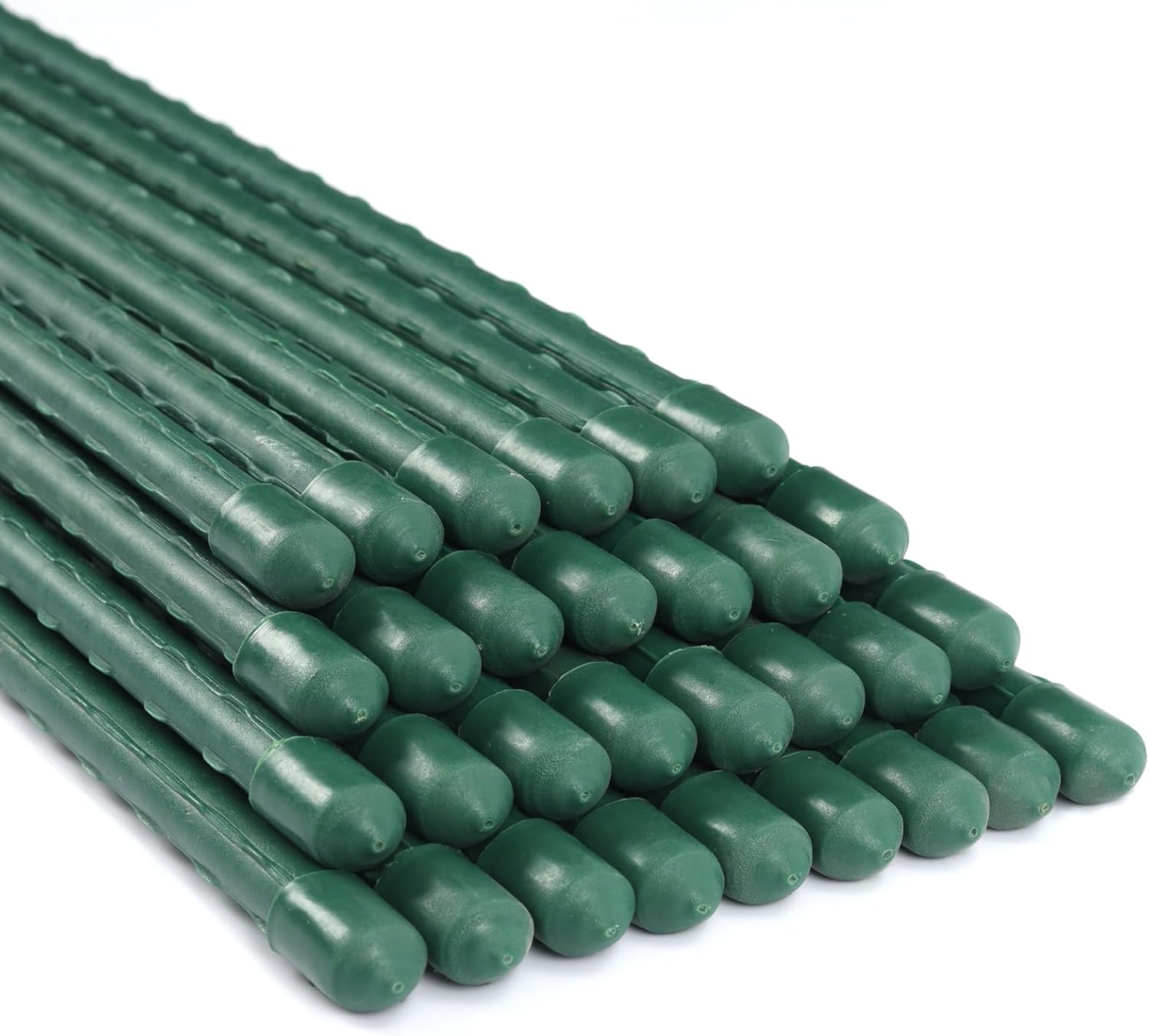
These 55-inch Tingyuan plant stakes are long, plastic-coated alloy steel rods sold in a pack of 25 for supporting tall tomato plants, grapevines and other climbers. You drive them alongside stems or rows and use ties or twine to train plants upward at multiple heights as they grow. The plastic coating helps the green stakes blend into foliage and protects the metal from the elements, while the steel core provides stiffness for multi-season use. Because they are long and meant for deep installation, they work well in raised beds and garden rows where plants need extended reach without frequent retying. Installation is easiest in loosened soil or with a pilot hole; the stakes can bend if forced into rocky or frozen ground. They are single straight stakes rather than cages or rings, so taller plants that need full perimeter support may require additional ties or paired stakes. Safety note: points are sharp, so handle carefully when placing and removing from soil.
Best for: Buyers who want reliable, inconspicuous vertical support for tomatoes and climbing plants and who prefer proven, well-reviewed gear for multi-season garden use.
Less Ideal for: Gardeners who need rigid cages or full-frame supports for heavy, sprawling plants or who frequently work in compacted, rocky soil where driven stakes could deform.
- Long 55-inch length offers extended vertical support for tall or fast-growing vines
- Plastic-coated steel construction resists rust and blends with foliage
- Pack of 25 covers multiple plants or an entire bed without buying extras
- Straight single-stake design makes it easy to reposition ties as plants grow
- May bend if forced into very hard, rocky, or frozen ground
- Not a full cage or ring so additional ties or multiple stakes are needed for wide or top-heavy plants
Verdict: Choose these long, plastic-coated steel stakes when you need straightforward, rust-resistant vertical support for multiple tall vines across a bed.
Sunnyglade 48" Plant Stakes (25-Pack)
| Unit Count | 25 Count |
|---|---|
| Special Features | Weather Resistance |
| Material Type | Plastic,Metal |
| Recommended Uses For Product | Supporting tomatoes, eggplants, pole beans, trees, shrubs, vines |
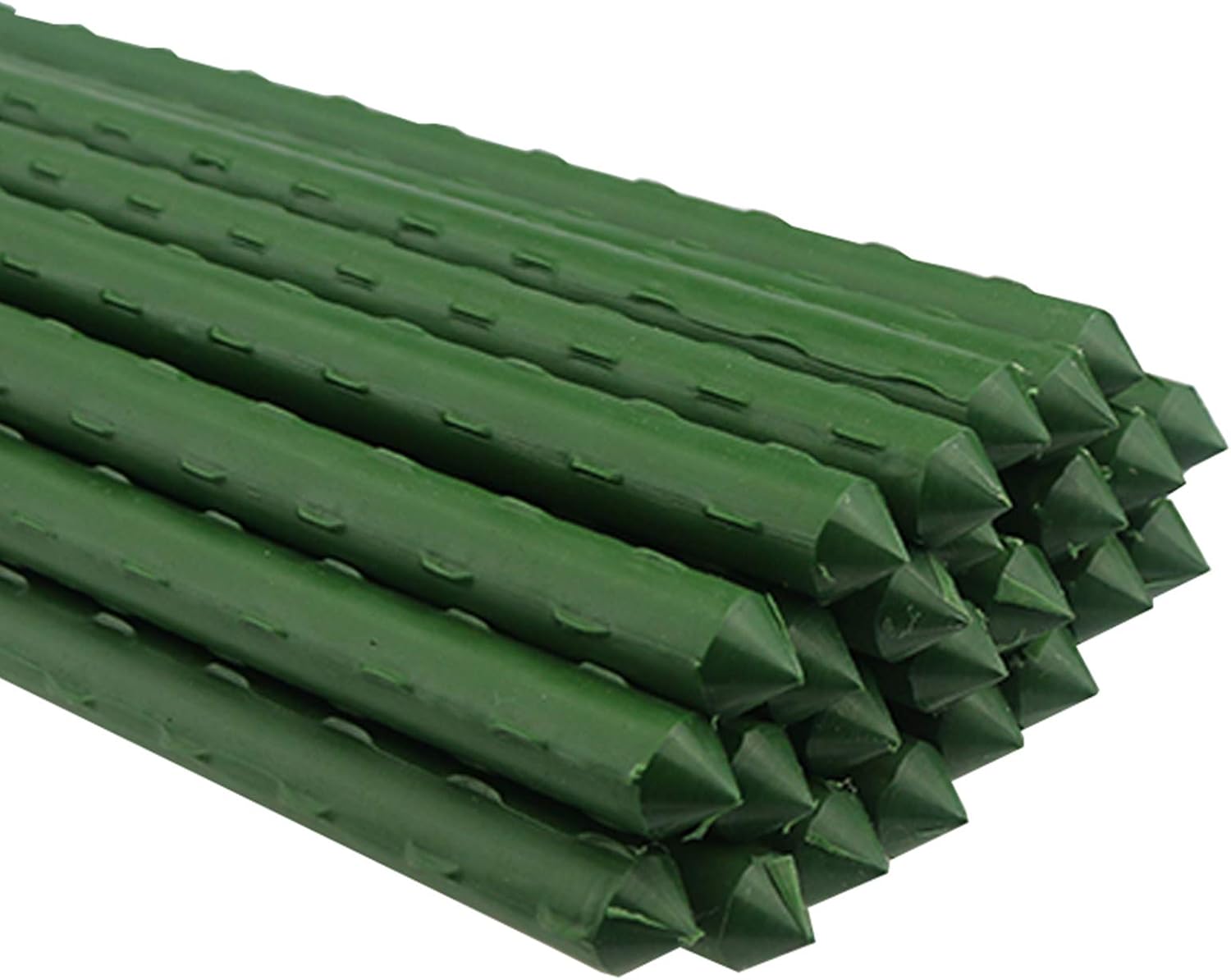
These Sunnyglade plant stakes are straightforward, no-frills supports for tomatoes, eggplants, pole beans and other climbing or tall vegetables. Each stake is a 48-inch galvanized-style metal rod with a non-fading green plastic coating and a sharpened end for easier placement in garden soil or pots. In use they provide vertical support to prevent leaning and make it simple to tie or clip plants as they grow, and the textured coating helps stems grip without cutting into them. The 25-count pack covers multiple plants or rows, which is convenient for small to medium vegetable beds or a run of potted tomatoes. Weather-resistant coating reduces rust risk, though very heavy plants will still need additional ties or a stronger trellis. Stakes can be hard to push into compacted or frozen ground without a mallet or pilot hole. For buyers who want a basic, long-lasting set of stakes, these are a practical choice; they are not a decorative trellis and provide simple vertical support rather than a finished plant training system.
Best for: Gardeners who want a reliable, low-maintenance way to keep tomato plants and other climbers upright across multiple plants or containers without complicated systems.
Less Ideal for: People seeking an attractive finished trellis, heavy-duty structural supports for very large plants, or those who frequently plant in hard, rocky ground.
- 25-count pack covers multiple plants or rows for immediate use
- 48-inch length gives ample height for indeterminate tomatoes and climbing vegetables
- Green plastic coating resists weathering and helps prevent rust
- Sharpened ends make installation easier in soft to moderate soil
- Stakes may be difficult to insert into hard, compacted, or frozen ground without tools
- Not designed as a decorative trellis or for heavy structural support
Verdict: A practical, weather-resistant 25-pack of 48-inch stakes that reliably holds up tomato plants and other climbers across a small to medium vegetable plot.
Choosing the Right Tomato Plant Stake: Key Factors to Consider
Material and Durability
The stake material determines how long it will hold up in a tomato patch. Steel and wrought iron stakes offer high rigidity that keeps tall plants upright but must be protected against rust or come with weatherproof coatings. Wood stakes are easy to cut to length and blend visually into the garden, but they can split, rot, or attract pests over multiple seasons. Plastic and fiberglass stakes resist rot and corrosion and are lighter, but cheaper plastics can bend under the weight of heavy fruit clusters.
When choosing material, consider how often you want to replace stakes and whether you prefer a permanent fixture or a seasonally removable support. Also think about ground type; rocky soil benefits from narrower, stronger shafts while sandy soil needs wider or longer anchors to prevent leaning.
Height and Rigidity
Tomato varieties vary in final height and vigor, so stake length and stiffness are critical. Indeterminate tomatoes can grow well past six feet and will put heavy loads on stakes; a short, flexible stake will bow or topple as vines fill out. Determinate types are more compact and usually need only moderate height and stiffness. Rigid stakes maintain vertical tension and reduce bending at the base, which helps keep fruit off the ground and improves air circulation.
Measure mature plant height and add extra stake length for tying points and potential twining. Stiffer materials or reinforced designs are better when you plan to train multiple canes on a single stake.
Anchoring and Installation
How a stake anchors into soil affects stability and ease of setup. Thin stakes are easier to push into soft loam but can be difficult in compacted or root-filled beds. Stakes with wider feet, ground spikes, or flanged bases resist pullout and leaning, especially when plants become top-heavy. Installation method also influences how neatly you can arrange rows or groups of plants.
Consider whether you want to set stakes before planting or add them later. Stakes that are difficult to remove or reposition can make crop rotation and bed maintenance harder. For container growing, look for stakes with bases designed to sit in potting mix or that attach to pot rims securely.
Vine Attachment and Plant Health
The way vines attach to a stake affects pruning, tying frequency, and potential stem damage. Smooth stakes let you wrap stems and twine without catching, while textured or ribbed designs give vines something to grip. However, rough surfaces can abrade stems and create entry points for disease if ties rub against the plant.
Plan a tying strategy that balances support and plant health. Soft garden twine, Velcro-style ties, or cloth strips distribute pressure and reduce girdling. Some stake systems include clips or integrated attachment points that simplify training tall vines and minimize repeated handling.
Maintenance and Longevity
Consider how much seasonal maintenance you are willing to perform. Metal stakes with protective coatings will outlast untreated wood but may need occasional repainting or rust treatment. Fiberglass and high-grade plastics require little maintenance but can suffer UV degradation over many seasons. Wooden stakes may need replacement each few years depending on exposure and insect pressure.
Also factor in storage and reuse. Removable stakes are easier to clean and store indoors, extending lifespan. Permanent in-ground installations reduce annual setup time but limit bed reconfiguration.
Staking Techniques for Different Tomato Types
Indeterminate and determinate tomatoes require different staking approaches. Indeterminate varieties keep growing and will need taller, more robust supports with multiple tie points spaced up the stem. Determinate varieties form a more compact bush and often do well with a shorter stake or a simple cage.
For indeterminate plants, train a single main stem to a tall stake, tying every 8 to 12 inches as the plant grows. For determinate plants, place the stake near the center of the plant to provide support without encouraging excessive vertical growth.
- Use flexible ties to avoid girdling when the stem thickens
- Place stakes at planting to avoid root disturbance later
- Adjust tie points regularly as vines thicken
Installing Stakes in Containers and Small Beds
Containers and small raised beds need stakes that work with limited root volume and shallow soil. Narrow, deep stakes can provide vertical support without taking up too much root space. Choose stakes designed for pots or add a stabilizing anchor to prevent tipping when the plant becomes top-heavy.
Space multiple stakes to support sprawling varieties and consider combining a short stake with lateral ties to the pot rim for extra stability.
- Drive stakes through the potting mix before transplanting when possible
- Use anchored bases or heavy pots to counterbalance tall plants
- Monitor moisture closely because stakes can change soil drying patterns
Seasonal Care and Storage
At season end, remove soil and plant debris from stakes before storing to reduce corrosion and rot. Metal stakes should be brushed clean and allowed to dry; any chips in protective coatings can be touched up. Plastic and fiberglass stakes benefit from a quick wash to remove sap and soil.
Store stakes off the ground in a cool, dry place. Wooden stakes can be treated with a light preservative before storage to extend life, but avoid treatments that will contaminate edible plant areas when reused.
- Label and group stakes by length for faster setup next season
- Inspect for cracks or bends and retire compromised stakes
- Keep a small repair kit for field fixes during the season
Common Mistakes and How to Avoid Them
Underestimating plant size is a frequent error that leads to bowed stakes and lost fruit. Always overestimate stake height for vigorous varieties and provide extra tie points. Another common mistake is tying too tightly, which can strangle the stem; leave some slack and retie as the plant grows.
Avoid placing stakes too far from the stem; wide offsets cause plants to lean into the open space. Finally, do not ignore soil conditions. Soft or sandy soils may require additional anchoring or deeper stakes.
- Check stake alignment after heavy wind or rain
- Use soft, breathable ties to prevent damage
- Choose stake spacing based on mature plant spread
Eco-Friendly and Reusable Options
If sustainability matters to you, consider stakes made from recycled metals, reclaimed hardwood, or durable composite materials that extend usable life. Reusable stakes lower waste over multiple seasons compared with single-use wooden dowels. Some gardeners also repurpose old tool handles or scrap metal as long-lasting garden stakes.
Evaluate the environmental tradeoffs: treated wood may last longer but can contain chemicals, while some plastics resist decay but are harder to recycle. Balance durability with maintenance and end-of-life disposal options when choosing materials.
- Prioritize reusable designs for long-term gardens
- Avoid chemically treated wood when using in direct contact with soil for edibles
- Consider repairability when assessing eco credentials
How We Chose the Best Tomato Plant Stake
We selected entries that perform well for common tomato growing setups: in-ground rows, raised beds, containers, and small urban plots. Our editorial filters prioritized stakes that provide reliable vertical support without damaging canes or requiring constant adjustment. Concrete evaluation criteria included material strength, corrosion and rot resistance, stake height and rigidity, how easily vines attach or are tied, user-friendly installation, and longevity under outdoor conditions. We excluded any stake designs intended solely for ornamental plants or temporary nursery use, and we did not consider purely decorative stakes that lack structural capacity. We also filtered out products with inadequate specifications for height or load capacity for indeterminate tomato varieties. The final shortlist balances sturdiness, weather tolerance, and practical handling so gardeners can match a stake to plant size, pruning style, and site conditions.
FAQ
How tall should a tomato stake be?
Stake height depends on the variety. For determinate tomatoes, stakes 3 to 4 feet often suffice. Indeterminate varieties usually need 6 feet or taller to allow room for tying and airflow.
Can I reuse wooden stakes from last season?
Often you can reuse wooden stakes if they are not rotted or infested. Clean and air-dry them, inspect for splits, and consider treating or painting exposed ends to slow future decay.
Are metal stakes better than plastic?
Metal stakes offer superior rigidity and long-term strength but may require a protective coating to resist rust. Plastic or fiberglass stakes resist rot and corrosion and are lighter, though lower-grade plastics can bend under heavy loads.
How do I tie tomato vines to a stake without damaging them?
Use soft garden twine, strips of cloth, or plant-friendly ties and allow a little slack to accommodate stem thickening. Retie periodically rather than leaving ties tight as the plant grows.
Is it better to stake plants individually or use a shared support?
Individual stakes give greater control over each plant and are easier to remove or reposition. Shared supports like trellises or cages can save space and materials but may complicate pruning and harvesting for large indeterminate vines.
Final Verdict
Pick a stake that matches your tomato variety, garden conditions, and how much seasonal maintenance you want to do. Prioritize material strength and weather resistance if you grow tall, heavy-fruited indeterminate types, and opt for moderate-height, easy-to-install stakes for compact determinate varieties. Remember that proper tying and anchoring are as important as stake choice; a well-placed, secure stake improves fruit quality and reduces disease risk. Choose the style that balances stability, longevity, and handling so you can focus on growing healthy, productive tomato plants.
