

Note: This article contains affiliate links. If you click on these links and make a purchase, I may earn a small commission at no extra cost to you. This helps support my research and content. Read my full affiliate disclosure here.
You want to keep spiders out of living spaces and outdoor seating areas without resorting to harsh chemicals. All natural spider repellents offer a gentler approach, using botanical oils, mineral compounds, or physical barriers that reduce spider activity while minimizing risk to people, pets, and beneficial insects. This guide covers our shortlisted options across indoor and outdoor situations and explains how we evaluated each repellent for real-world garden and household use. Read on to compare candidates by how long they last, how they smell, and how easy they are to apply and maintain.
Top Picks at a Glance
| Best Overall The best all-around choice for most situations | Mighty Mint Peppermint Oil Spider Repellent Spray, 16 oz |  |
| Best Quality Built to a higher standard if you want something more solid | Wondercide Indoor Pest Control Spray, Peppermint, 16 fl oz |  |
| Best Value The sweet spot between price and what you get | SEEKDIT 16-Pack Peppermint & Lemongrass Spider Repellent Pouches |  |
| Best Budget The cheapest option that still gets the job done reliably | STEM Plant-Based Bug Spray — Ants, Roaches & Spiders, 10 oz |  |
| Highest Rated A top-rated pick with lots of positive feedback | Aromovial Peppermint Oil Spider Repellent Spray, 16 oz |  |
| Most Popular A crowd favorite that many people choose with confidence | Mighty Mint Peppermint Oil Insect Repellent Spray, 16 oz |  |
Mighty Mint Peppermint Oil Spider Repellent Spray, 16 oz

| Size | 16 oz |
|---|---|
| Use areas | Indoor / Outdoor |
| Ingredients | Peppermint oil, geraniol, plant oils |
| Directions | Spray every few days for maintenance |
Mighty Mint Peppermint Oil Spider Repellent is a plant-based, ready-to-use 16 oz spray designed for quick, targeted pest control around the home. You use it by spraying baseboards, entryways, patios, and other problem spots a few times a week; the manufacturer also includes a microfiber cloth for precise application. The formula combines concentrated peppermint oil and geraniol to repel and kill spiders without harsh chemical fumes, making it suitable for households with pets or scent-sensitive people when directions are followed. Practical strengths are its ease of use, pleasant mint scent that is not overpowering, and versatility for both indoor and outdoor perimeter treatments. Limitations are typical for botanical repellents: it requires regular reapplication to maintain protection and may not offer the residual control or broad-spectrum knockdown of synthetic insecticides for heavy infestations. Also, like other sprays, direct contact is needed for best effect rather than system-wide elimination.
Best for: Buyers who want a low-odor, plant-based spider repellent for routine perimeter and spot treatments and prefer simple, ready-to-use solutions over chemical treatments.
Less Ideal for: People facing severe or widespread infestations who need long-lasting residual control or professional-strength pesticides should consider stronger alternatives.
- Plant-based formula using peppermint oil and geraniol for pest control
- Safe for use around people and pets when used as directed
- Ready-to-use spray with included microfiber cloth for targeted application
- Works indoors and outdoors on entryways, baseboards, patios, and similar areas
- Needs frequent reapplication to maintain effectiveness
- May be less effective than synthetic insecticides for heavy or established infestations
Verdict: A convenient, pet-friendly peppermint spray that keeps spiders away with regular spot treatments.
Wondercide Indoor Pest Control Spray, Peppermint, 16 fl oz

| Unit Count | 16 Fluid Ounces |
|---|---|
| Item Form | Spray |
| Target Species | Ants, Roaches, Spiders, Flies, Fleas, Ticks, Mosquitoes, Silverfish, Moths, Gnats |
| Active Ingredients | 4.2% Cedar Oil; 1.5% Peppermint Oil; 2.2% Sodium Lauryl Sulfate; 0.1% Sesame Oil |
Wondercide Indoor Pest Control is a ready-to-use peppermint-scented spray designed to kill and repel flying and crawling household pests including ants, roaches, spiders, flies, fleas, ticks, mosquitoes, moths, and gnats. It is typically used around baseboards, windows, doors, under sinks, in cabinets, on furniture and carpets, or sprayed directly on visible insects from 8 to 12 inches. Key features include a plant-derived active blend led by cedarwood and peppermint oils, a multi-surface sprayer with adjustable nozzle, and labeling that emphasizes safe use around people and pets when directions are followed. In practical terms this makes it a straightforward option for spot treatments and routine preventative spraying in kitchens, bathrooms, pet areas and living spaces. Limitations to keep in mind are that it must contact flying insects to kill them, surfaces can be slippery when wet, and some people may experience mild skin or eye irritation if misused. For someone looking to reduce reliance on synthetic pesticides while keeping indoor pest problems under control, this product delivers an easy, plant-based approach.
Best for: Buyers who prioritize practical, lower-toxicity solutions and want a versatile, easy-to-use indoor spray for routine spot treatment and prevention around the home and pet areas.
Less Ideal for: People who need long-duration residual control or professional-grade pesticide strength for large infestations should consider stronger or specialized treatments.
- Plant-powered formula with cedarwood and peppermint oils as primary active ingredients
- Kills and repels a broad list of common indoor pests including fleas, ants, roaches and flies
- Ready-to-use spray with adjustable nozzle for targeted or mist application
- Labeled safe for use around people and pets when directions are followed
- Must directly contact flying insects to be effective against them
- Can cause mild skin or eye irritation and surfaces may be slippery when wet
Verdict: A practical, plant-based indoor spray for homeowners who want an easy, lower-toxicity way to kill and repel common household pests while using a product safe for family and pets when used as directed.
SEEKDIT 16-Pack Peppermint & Lemongrass Spider Repellent Pouches

| Quantity | 16 pack |
|---|---|
| Ingredients | Peppermint |
| Manufacturer | SEEKDIT |
| Intended use | Indoor and outdoor |
These SEEKDIT repellent pouches use concentrated peppermint and lemongrass essential oils to create an odor barrier that discourages spiders from settling in garages, basements, closets, porches, and other sheltered spots. The product is ready to use out of the package: open the pouch, place it in a fabric bag or hang it from a porch light, and replace approximately every 60 days. Because the formula is plant based and labeled chemical-free, it is a low-risk option for homes with kids or pets when used as directed. Practical benefits include easy placement in many common hiding places, no staining, and coverage against a broad list of spider species. Limitations are that it is a deterrent rather than a kill method so it works best combined with cleaning and exclusion measures, and scent strength may vary with airflow and outdoor exposure which can shorten effective duration. For a homeowner seeking a simple, maintenance-light way to reduce spider presence the pouches are convenient and approachable, but heavy infestations will likely need integrated pest control steps.
Best for: Best for homeowners who want a low-effort, natural way to reduce spiders around entry points, storage areas, and sheltered outdoor spots without using synthetic pesticides.
Less Ideal for: Not a good fit for people dealing with active, heavy infestations or who need a fast knockdown solution.
- Plant-based peppermint and lemongrass formula provides a non-chemical deterrent
- Ready-to-use pouches that can be placed or hung in common spider hiding spots
- Each pouch lasts about 60 days for low-maintenance, periodic replacement
- Does not leave stains and is suitable for indoor and outdoor sheltered areas
- Works as a deterrent not a pesticide, so it will not eliminate established infestations
- Effectiveness can wane faster in open, windy, or very wet outdoor conditions
Verdict: A fuss-free, plant-based pouch system that reduces spider presence around sheltered indoor and outdoor areas with minimal upkeep.
STEM Plant-Based Bug Spray — Ants, Roaches & Spiders, 10 oz

| Item Form | Aerosol |
|---|---|
| Target Species | Ants, Roaches, Spiders |
| Unit Count | 10 Ounce |
| Active Ingredients | Geraniol 6.0%, Lemongrass Oil 0.5% |
This STEM plant-based bug spray is an aerosol insecticide formulated with geraniol and lemongrass oil to kill ants, roaches, and spiders while avoiding strong chemical odors or added fragrances. It is used like a conventional spray: aim at visible insects, crevices, or likely harborages and apply short bursts for spot treatments inside or around entry points outdoors. The botanical active ingredients make it suitable for households looking to reduce synthetic pesticide exposure and the product is labeled for use around people and pets when directions are followed. Practical benefits include a fresh, low-odor application, entomologist testing noted by the brand, and a compact 10 oz size that is convenient to store in a utility closet. Limitations are that it is a spot-treatment aerosol rather than a long‑lasting residual solution and botanical actives can require more frequent reapplication than some conventional synthetic insecticides for ongoing control of heavy infestations.
Best for: Buyers who want an inexpensive, low-odor spray for quick indoor and perimeter spot treatments and prefer plant-based formulations over conventional chemicals.
Less Ideal for: Those facing a heavy or persistent infestation who need a long‑lasting professional‑strength residual treatment should consider alternative products or professional services.
- Plant-based active ingredients (geraniol and lemongrass oil) that reduce harsh chemical odors
- Suitable for indoor and outdoor spot treatments when used as directed
- Compact 10 oz aerosol is easy to store and handy for quick use
- Formulation is marketed as safe around people and pets when directions are followed
- Provides spot control rather than long-lasting residual protection
- May require more frequent applications than stronger synthetic insecticides
Verdict: A budget-friendly, low-odor plant-based aerosol for quick spot control of ants, roaches, and spiders around the home.
Aromovial Peppermint Oil Spider Repellent Spray, 16 oz

| Volume | 16 oz |
|---|---|
| Active ingredients | Peppermint oil, geraniol |
| Intended use | Indoor and outdoor repellent |
| Formulation | Ready-to-use spray |
This 16 ounce ready-to-use spray delivers a plant‑based approach to spider control using pure peppermint oil and geraniol. It is applied directly to corners, windows, entryways, patios and garages by flipping the nozzle and spraying targeted areas where spiders appear or enter a home. The formula is non‑toxic and marketed as safe around children and pets when used as directed, which makes it suitable for scent‑sensitive households since it uses a natural mint fragrance rather than synthetic perfumes. The scent is noticeable and intended to linger as part of the deterrent effect. Practical benefits include easy targeted application, a fresh scent that most people find pleasant, and the ability to use the product both indoors and outdoors without staining surfaces. Limitations are that it is a repellent rather than a kill‑on‑contact insecticide so it may not remove an established infestation by itself, and effectiveness can vary with heavy infestations or in outdoor conditions where rain or wind will reduce residual action.
Best for: Buyers who prioritize a reliable, non‑toxic way to keep spiders out of living spaces and want an easy, ready‑to‑spray solution for routine prevention.
Less Ideal for: People facing an active, large spider infestation or professional pest controllers who need fast knockdown and long residual chemical control should consider stronger targeted treatments.
- Uses pure peppermint oil and geraniol rather than synthetic insecticides
- Ready-to-use spray for quick, targeted application
- Safe-for-home formulation intended for use around children and pets when used as directed
- Suitable for both indoor and covered outdoor areas without staining surfaces
- Designed as a repellent not an immediate kill, so it may not eliminate existing webs or large infestations
- Residual effectiveness outdoors can be reduced by weather exposure
Verdict: Aromovial’s peppermint oil spray is the easy non‑toxic choice for routine, reliable spider prevention around the home.
Mighty Mint Peppermint Oil Insect Repellent Spray, 16 oz
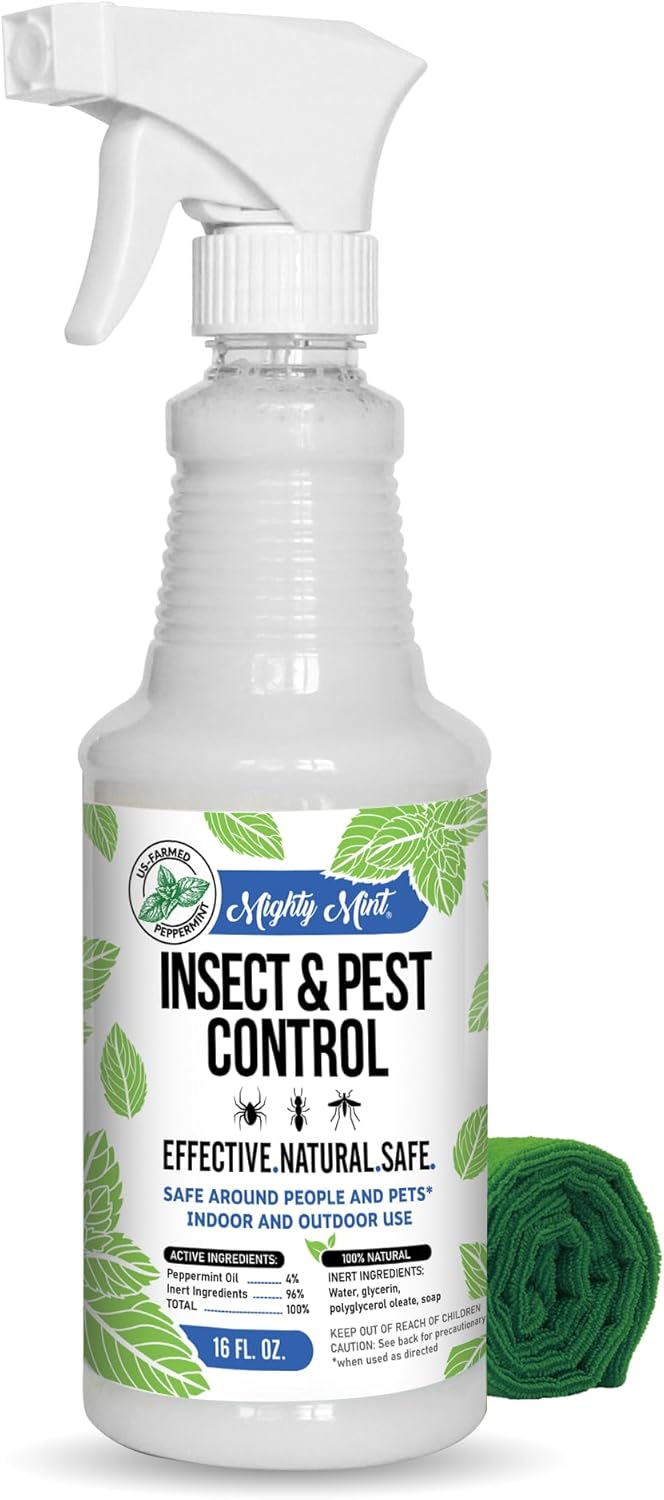
| Ingredients | Water, Glycerine, Polyglycerol oleate, Soap, Peppermint oil |
|---|---|
| Use Areas | Indoor / Outdoor |
| Size | 16 oz |
Mighty Mint is a plant-based, ready-to-use spray that uses concentrated peppermint oil to repel a broad range of household and patio pests. You apply it directly to problem areas such as baseboards, entryways, patios and around outdoor seating; the manufacturer recommends shaking and spraying until surfaces are covered and repeating applications two or more times per week for best results. Notable features include a peppermint-only scent profile, a formulation that avoids synthetic fragrances and the convenience of a 16 oz spray bottle for targeted spot treatments. Practical benefits are that it is safe to use around people and pets when dry and does not leave obvious stains on most surfaces, and the scent can make treated areas smell fresher than chemical alternatives. Important limitations are that it is a repellent rather than a pesticide so it works by discouraging pests rather than killing them, effectiveness depends on regular reapplication and it should not be applied when pollinators are present or to skin or food-contact surfaces.
Best for: Buyers who prioritize natural, low-toxicity solutions and want a targeted spray to reduce insects around patios and entryways while keeping family and pets in mind.
Less Ideal for: Anyone needing a one-time extermination or long-term residual pesticide for severe infestations should consider professional treatments or products formulated to kill pests rather than repel them.
- Plant-based peppermint formula that avoids synthetic fragrances
- Ready-to-use spray for quick, targeted indoor and outdoor applications
- Safe for people and pets when used as directed and allowed to dry
- Nonstaining on most surfaces and leaves a fresh mint scent
- Repels rather than kills insects so regular reapplication is needed to maintain protection
- Strong peppermint concentration may bother scent-sensitive individuals and requires keeping children and pets away until dry
Verdict: Choose Mighty Mint when you want a pet-friendly, plant-based spray to reduce patio and entryway insects with a fresh peppermint scent.
Choosing the Right All Natural Spider Repellent: Key Factors to Consider
Active Ingredient Type
Different natural repellents rely on distinct active agents such as essential oils, botanical extracts, diatomaceous earth, or mineral barriers. Essential oils like peppermint, citrus, or eucalyptus act through scent and may irritate spider sensory organs, while mineral-based options create physical or desiccating barriers. Knowing the active type helps set expectations for how quickly the repellent works, how long it lasts, and whether it requires reapplication after rain or cleaning.
Some actives are broad-spectrum and can disturb other insects, which may be undesirable if you want to protect pollinators. Others are localized and mostly affect spiders when they cross treated surfaces. Choose an active type that matches your tolerance for reapplication frequency and your need to protect beneficial invertebrates.
Application Area And Coverage
Consider where you will use the repellent. Indoor living spaces, attics, garages, and crawlspaces have different requirements than patios, foundation perimeters, or garden beds. Spray liquids and ready-to-use aerosols are convenient for small indoor treatments and cracks, while granular or barrier products are better for perimeter work. Some formulations offer concentrated mixes for large-area spraying, which is more economical for yards or fences.
Think about coverage rate and how much product you need to treat common spider harborage zones like window frames, door thresholds, eaves, and under-deck areas. Products that provide clear coverage guidance make it easier to estimate quantity and avoid overapplication.
Longevity And Weather Resistance
Natural repellents vary widely in how long they remain effective. Essential oil sprays often degrade under UV and wash off in rain, requiring more frequent reapplication. Mineral-based barriers or powders can remain in place longer but may lose effectiveness if disturbed or covered by debris. Consider whether you need a seasonal application or a short-term solution for peak spider months.
For outdoor use, look for formulations that tolerate sun and moisture or that specify reapplication intervals after heavy rain. Indoor treatments should resist quick dissipation and avoid leaving sticky residues on surfaces.
Safety For People, Pets, And Plants
All natural does not automatically mean safe in every situation. Some essential oils can irritate skin, eyes, or respiratory systems, especially for young children, asthmatics, or small pets. Diatomaceous earth can be an inhalation hazard if used as a dry dust in enclosed spaces. Verify recommended application methods, necessary drying times, and any temporary exclusion periods for people or pets.
Also consider proximity to edible plants or vegetable beds. Some botanical extracts can affect beneficial insects or phytotoxicity-sensitive plants when applied as foliar sprays. Choose products with clear safety instructions and use them in ways that limit unintended exposure.
Scent And Indoor Comfort
Scent matters a lot when treating living areas. Strong essential oil formulations can be pleasant at low concentrations but overpowering in small rooms or near bedding. If you are sensitive to odors, look for low-odor blends or application methods that localize treatment to crevices and entry points rather than broadcasting scent throughout the space.
Consider whether household members, guests, or pets have scent sensitivities before selecting a product. Lower-scent options often trade off with longevity, so plan for slightly more frequent reapplication if you prioritize mild smell.
Application Method And Ease Of Use
How you apply the repellent affects both effectiveness and how often you will actually use it. Sprays, ready-to-use triggers, concentrates, granular barriers, and powders all have tradeoffs. Sprays and triggers offer targeted application but may require bending or ladder work for eaves. Granules can be broadcast quickly around foundations but may migrate or blow away. Concentrates save storage space but add a mixing step.
Choose a delivery style that fits your physical ability, storage constraints, and the typical treatment areas in your home and yard.
Where Natural Repellents Work Best
Natural repellents are most effective when used as part of an integrated approach that removes spider harborage and entry points. They work well on threshold zones, window and door frames, eaves, and outdoor seating areas where spiders commonly build webs. For indoor use, target corners, baseboards, and behind furniture rather than treating entire rooms.
Outdoors, apply repellents to sheltered perimeters and under overhangs where sprays are less likely to wash away. Combining barrier products with habitat modification such as reducing clutter and sealing cracks improves long-term results.
- Treat sheltered spots where spiders actually travel rather than open garden beds
- Use perimeter barriers around doors and garage openings to reduce indoor entry
- Reapply after heavy rain or surface cleaning when using volatile formulas
Using Repellents Safely Around Pets And Children
Read label directions about reentry times and drying intervals. Many natural oils are safe once dried, but wet treatments may pose ingestion or contact risks for curious pets and toddlers. Keep treated areas inaccessible until the product has settled and dried completely.
If using powders, avoid applying them where pets scratch or dig. For households with birds, reptiles, or small mammals, choose products with explicit guidance about non-target species, and consider spot-treating rather than broadcasting.
- Allow sprays to dry fully before allowing pets back into treated areas
- Store concentrates out of reach and mix outdoors or in well-ventilated spaces
- Avoid dusting in enclosed spaces to reduce inhalation risk
Combining Repellents With Habitat Management
Repellents work best when you also reduce spider attractants. Regularly sweep away webs, reduce outdoor lighting that attracts insects, and clear leaf litter and woodpiles away from the house. Sealing gaps and installing door sweeps cut down the number of spiders that need to be repelled.
Use targeted treatments on entry points after cleaning. That approach reduces the need for frequent broad applications and helps maintain a low-chemical footprint in the landscape.
- Remove clutter and vacuum corners to interrupt web-building sites
- Minimize outdoor lighting or switch to motion sensors to reduce insect prey
- Store firewood off the ground and away from the house
Seasonal Timing And Reapplication Guidance
Spider activity often peaks in late summer and early fall in many regions. Plan preventive treatments ahead of those peaks to reduce indoor incursions. For year-round offenders in milder climates, schedule regular maintenance applications based on product longevity and local weather patterns.
Check treated areas monthly during active seasons. Reapply after heavy rain or surface cleaning when using water-soluble or volatile products. For powders and mineral barriers, inspect for displacement and refresh where necessary.
- Treat entry points before the seasonal rise in spider activity
- Reapply according to label guidance after significant weather events
- Keep a simple maintenance schedule rather than treating on impulse
Minimizing Impact On Beneficial Insects
Some natural actives can also repel or harm beneficial insects like pollinators and predatory beetles. To protect those species, avoid spraying flowering plants or areas where pollinators forage. Favor spot treatments near foundations and crevices over broadcast sprays across garden beds.
If pollinator protection is a priority, select formulations that emphasize non-attractant use patterns and avoid treating bloom-rich vegetation. Barrier and perimeter methods typically have lower non-target impacts than foliar broadcast treatments.
- Do not spray open flowers or active foraging areas
- Prefer perimeter treatments to protect pollinators
- Time applications for early morning or late evening when pollinators are less active
How We Chose the Best All Natural Spider Repellent
We focused on options that use naturally derived ingredients and avoid synthetic insecticides. Our selection filters favored repellents with transparent ingredient lists, clear usage instructions for indoor and outdoor settings, and evidence of reduced spider activity in gardener or homeowner reports. We prioritized formulations that are safe around pets and children when used as directed, since many users will apply these products near living areas, patios, and play spaces. Longevity in the field and resistance to weather or washing mattered for outdoor applications. Ease of application and low odor were important because repellents that sting the nose or stain surfaces are less practical for routine use. We excluded products that rely on undisclosed chemical blends or that make broad, unsupported eradication claims. Final choices reflect a balance of safety, real-world durability, user-friendly application, and documented deterrent effect against common house and garden spiders.
FAQ
Are all natural spider repellents safe around pets?
Often they are safer than synthetic insecticides, but safety depends on the formulation and application. Essential oils can irritate or be toxic if concentrated or ingested, and dusts can be an inhalation risk. Always follow label instructions and keep animals away until treatments dry.
How often do I need to reapply a natural repellent outdoors?
It usually depends on the active ingredient and weather. Volatile oil sprays may need reapplication every one to four weeks, while mineral barriers or powders can last longer but should be checked after heavy rain or disturbance.
Will natural repellents kill spiders or just deter them?
Most natural repellents are designed to deter spiders rather than kill them. They discourage spiders from settling or building webs in treated areas, which reduces sightings without relying on lethal contact.
Can I use natural repellents on edible plants?
Some products are formulated for ornamental use only. Botanical oils can sometimes affect fruit or leaf quality, so avoid treating edible foliage unless the product explicitly lists food-safe use and provides clear timing and washing instructions.
Do natural repellents affect other garden insects?
They can. Broad-spectrum botanicals may repel or disrupt beneficial insects if applied to flowering plants or foraging zones. Use targeted perimeter treatments and avoid spraying blooms to reduce non-target effects.
Are homemade essential oil sprays effective for long-term control?
Homemade sprays can provide short-term deterrence but tend to dissipate quickly and require frequent reapplication. They are useful for spot treatments but may not replace a formulated product designed for longer residual protection.
Final Verdict
Choose an all natural spider repellent based on where you need protection, how often you are willing to reapply, and the presence of children, pets, or pollinators. Prioritize clear ingredient lists and application methods that fit indoor comfort or outdoor durability needs. Expect tradeoffs between longevity and low odor, and pair repellent use with habitat management to get the best results. With attention to safety and targeted application, natural repellents can reduce spider activity while preserving a healthy home and garden environment.
