

Note: This article contains affiliate links. If you click on these links and make a purchase, I may earn a small commission at no extra cost to you. This helps support my research and content. Read my full affiliate disclosure here.
Picking the right drip sprinkler head changes how reliably water reaches roots in beds, containers, and borders. The wrong emitter can lead to underwatering, oversaturation, frequent clogs, or uneven coverage that stresses plants and wastes water. This guide highlights seven shortlisted drip sprinkler heads suited to common garden situations, from compact patio planters to larger in-ground borders. We evaluate options on the practical factors that matter to gardeners: how consistently each head meters water, how resistant it is to clogging from particulates, and how easy it is to install and adjust. Read on to see the real-world strengths gardeners should weigh when choosing an emitter for their layout.
Top Picks at a Glance
| Best Overall The best all-around choice for most situations | Raindrip PC8010B 2 GPH Pressure Compensating Drippers, 10-Pack |  |
| Best Quality Built to a higher standard if you want something more solid | Rain Bird SW20-30PS Drip Emitter, 2 GPH, 30-Pack | 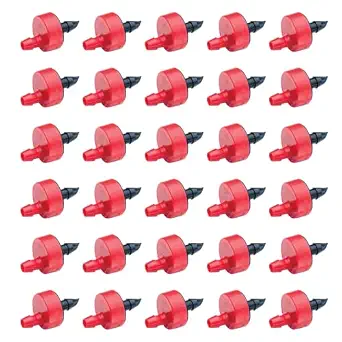 |
| Best Value The sweet spot between price and what you get | Xloey Adjustable Rotary Drip Irrigation Emitters, 100 Pack |  |
| Best Budget The cheapest option that still gets the job done reliably | Korty 1/4" Adjustable Drip Irrigation Drippers, 100-Pack |  |
| Highest Rated A top-rated pick with lots of positive feedback | Rain Bird MBF4PKS Micro-Bubbler on Stake, 360° Full Circle, 4-Pack |  |
| Most Popular A crowd favorite that many people choose with confidence | La Farah 50‑pack Adjustable 1/4" Drip Irrigation Emitters with Stakes |  |
| Best Seller A high-volume bestseller chosen again and again | Rain Bird SW10-30PS 1.0 GPH Pressure-Compensating Drip Emitters, 30-Pack |  |
Raindrip PC8010B 2 GPH Pressure Compensating Drippers, 10-Pack

| Flow rate | 2 GPH |
|---|---|
| Compatibility | Connects to 1/4 in. tubing or punches into 1/2, 5/8, 0.710 in. supply tubing |
| Material | Polyethylene with silicone, UV treated |
| Pack quantity | 10 pack |
The Raindrip PC8010B drippers are small pressure-compensating emitters intended to give each plant a consistent 2 gallons-per-hour output regardless of inlet pressure or position along the tubing. They install by pushing into 1/4 inch feeder line or punching directly into 1/2, 5/8, or 0.710 inch supply tubing, making them easy to add when laying out or expanding a drip system. The emitters use a turbulent, self-cleaning flow path to reduce sediment buildup and are made from UV-stabilized polyethylene and silicone for outdoor durability. In practice they are handy for individual shrubs, container plants, hanging baskets, and targeted landscape spots where a predictable slow application to the root zone matters. Limitations include the fixed 2 GPH rate for this pack, so you will need different emitters or adjustable units if plants require other flow rates, and like all small emitters they can still clog with very dirty water without upstream filtration. For balanced, general-purpose drip setups these are a straightforward, reliable choice.
Best for: Buyers who want a simple, reliable emitter for standard landscape and container drip zones and prioritize consistent, even water delivery without frequent adjustment.
Less Ideal for: Gardeners who need adjustable flow per plant, very high flow rates, or who plan to run unfiltered water with heavy debris should consider alternative emitters or filtration first.
- Pressure compensating design maintains a steady 2 GPH output across varying inlet pressures
- Self-cleaning turbulent flow reduces the chance of sediment clogging
- Compatible with 1/4 inch feeder line and commonly used supply tubing for easy installation
- UV-treated materials improve outdoor durability and longevity
- Fixed 2 GPH flow rate limits flexibility for plants that need higher or lower delivery rates
- Small emitter openings may still clog if water is not filtered upstream
Verdict: Choose these emitters when you need dependable, pressure-compensated 2 GPH delivery for a balanced, no-fuss drip irrigation setup.
Rain Bird SW20-30PS Drip Emitter, 2 GPH, 30-Pack

| Volume Capacity | 2 Gallon Per Hour |
|---|---|
| Fit Type | Self-piercing |
| Maximum Pressure | 50 psi |
| Material | Plastic |
| Unit Count | 30 Count |
The Rain Bird SW20-30PS is a simple, performance-focused emitter for delivering water directly to plant root zones. Each emitter is pressure-compensating so it maintains a consistent 2.0 GPH flow across a wide pressure range (15 to 50 psi), which helps keep watering uniform along long tubing runs. They are self-piercing for quick insertion into 1/2" or larger tubing or can be used with 1/4" tubing positioned at individual plants. Large internal passages and a self-flushing action reduce clogging, and durable UV and chemical-resistant plastic make them suitable for outdoor use. Typical use is spot watering shrubs, perennials, small trees, and medium containers where a steady medium-high flow is needed. Practical benefits include reliable, even delivery across varied pressure zones and easy installation by hand or with an insertion tool. Limitations are that they provide a relatively high fixed flow rate, so you may need different GPH options or additional flow control for very small pots or delicate seedlings.
Best for: Buyers who prioritize consistent, reliable spot watering for garden beds, shrubs, and medium containers and want emitters that hold performance across variable line pressures.
Less Ideal for: Growers who need very low flow rates or fine-tuned per-plant drip control for numerous small pots should consider lower-GPH emitters or adjustable options.
- Pressure-compensating design keeps flow consistent across 15–50 psi for uniform watering
- Self-piercing barbed ends allow fast insertion into 1/2" tubing or use with 1/4" tubing
- Large passages and self-flushing action reduce clogging risk
- Durable UV and chemical-resistant plastic suited to outdoor exposure
- Fixed 2.0 GPH output may be too high for very small pots or seedlings
Verdict: Choose these emitters when you need dependable, pressure-compensated 2.0 GPH spot watering across long runs for consistent plant watering.
Xloey Adjustable Rotary Drip Irrigation Emitters, 100 Pack

| Maximum Pressure | 43 psi |
|---|---|
| Maximum Flow Rate | 70 liters per hour |
| Inlet Connection Size | 0.25 inches |
| Unit Count | 100 Count |
| Material Type | Plastic |
These Xloey rotary drippers are a budget-friendly option for building or expanding a micro‑irrigation system. Each emitter snaps onto 1/4‑inch tubing and uses a ratcheting cap to adjust flow from nearly closed up to the rated maximum, so you can fine tune water delivery for individual pots, rows, or garden zones. The emitters claim a 1–70 L/h adjustable range and work across typical drip pressures, making them useful for potted plants, raised beds, and small landscape beds. The plastic construction keeps cost and replacement worry low, and the 100‑count pack is convenient for larger installs or maintaining spares. Expect basic durability appropriate for in‑soil and protected outdoor use rather than heavy UV‑exposed longevity. They are simple to install and provide decent uniformity, but because they are unfiltered drippers you should plan for inline filtration and occasional flushing to avoid clogging in mineral‑rich or particulate water. These are practical, no‑frills emitters that let you control per‑plant flow when paired with proper filtration and routine maintenance.
Best for: Buyers who want a cost‑effective way to add or replace many individual emitters and prefer adjustable per‑plant control to optimize water use in a small garden or container setup.
Less Ideal for: Gardeners seeking heavy‑duty, UV‑resistant commercial fittings or integrated filtered emitters should consider higher‑end alternatives.
- Large 100‑piece pack suitable for planting beds and multiple pots
- Adjustable rotary cap lets you fine tune flow from nearly shut off to full spray
- Fits standard 1/4‑inch barbed tubing used in most drip systems
- Rated for up to 43 psi and a wide maximum flow for flexible placement
- Plastic construction may degrade faster under prolonged UV exposure compared with tougher materials
- Emitters are not self‑filtering so they require upstream filtration or regular flushing
Verdict: A cheap, adjustable 100‑pack of rotary drippers that gives precise per‑plant control for small gardens when used with proper filtration.
Korty 1/4" Adjustable Drip Irrigation Drippers, 100-Pack

| Connection | 1/4-inch barb |
|---|---|
| Suitable tubing | 4mm/7mm inner/outer diameter |
| Adjustable flow range | 1-70 L/h |
| Working pressure | 1-3 KG |
| Pack quantity | 100 drippers |
These Korty adjustable drippers are a budget-friendly way to add precise drip irrigation to pots, raised beds, or small garden runs. Each emitter fits standard 1/4-inch barb tubing and offers a 360-degree adjustable cap that ranges from off to a full open flow that covers roughly a 10 to 12 inch circle. Users install them inline on 4mm/7mm tubing and can fine-tune flow with the cap rotation and ratchet stops, which is useful for matching water to different plant sizes. The emitters claim a working pressure range of about 1 to 3 kg and a flow adjustment roughly from 1 to 70 L/h, which helps maintain steady output even with modest pressure fluctuations. Because they are plastic and come in a large pack, they are well suited for expanding or experimenting with a drip system without a large upfront cost. Limitations are the basic plastic construction and relatively short spray radius, so they are best for container groups and close-spaced plantings rather than wide beds or turf.
Best for: Buyers on a tight budget who want to set up or expand a basic drip system for potted plants, small raised beds, or trial layouts without investing in premium emitters.
Less Ideal for: Gardeners who need heavy-duty, long-range emitters for large landscape beds or those who prefer professional-grade materials and long-term durability.
- Large 100-piece pack lets you outfit many pots or rows without extra purchases
- Adjustable cap provides shutoff and variable flow to match plant water needs
- Compatible with common 1/4-inch barb tubing used in most drip systems
- Designed to keep relatively constant flow across modest pressure fluctuations
- Plastic construction may be less durable than commercial-grade emitters
- Short effective coverage radius limits use to close-planted areas or containers
Verdict: A cost-effective 100-pack of adjustable 1/4-inch drip emitters ideal for budget-conscious gardeners outfitting pots and small beds.
Rain Bird MBF4PKS Micro-Bubbler on Stake, 360° Full Circle, 4-Pack

| Maximum Pressure | 60 psi |
|---|---|
| Maximum Flow Rate | 13 gpm |
| Inlet Connection Size | 0.25 inches |
| Number of Items | 4 |
The Rain Bird MBF4PKS micro-bubblers are compact stake-mounted emitters designed to give broader coverage than standard drippers while still using low-volume irrigation. Each unit projects eight small streams in a full circle pattern and adjusts from 0 to about 3 feet by twisting the cap, which also provides fingertip flow control and a shut-off. They connect directly to 1/4" drip tubing via a barbed fitting and are made from UV- and chemical-resistant plastic for long outdoor life. In practice these work well for flower beds, mass plantings, and ground covers where you need sprinkler-like coverage from a drip system without installing pop-up heads. They are simple to install, easy to clean by unscrewing the cap, and tolerate typical landscape pressures up to 60 psi. Limitations to note are the fixed full-circle pattern for this pack and modest maximum flow per emitter, so they are not ideal when highly targeted single-plant watering or variable arc coverage is required without swapping to the half-circle model.
Best for: Gardeners or landscapers who want a reliable, low-maintenance emitter that gives sprinkler-style coverage from a drip system for beds and mass plantings.
Less Ideal for: People who need precise single-plant drippers, quarter- or half-circle coverage around edges, or very low-flow emitters for small pots.
- Adjustable spray distance and fingertip flow control with shut-off
- 360° full-circle coverage suitable for beds and ground cover
- Barbed 1/4" inlet for easy, leak-resistant hookup to standard drip tubing
- Constructed from UV- and chemical-resistant plastic for outdoor durability
- Only full-circle pattern in this pack so you may need different models for edges or beds requiring arcs
- Higher flow rate than spot drippers which can be wasteful in very small containers
Verdict: Choose these micro-bubblers when you need a dependable, adjustable emitter that supplies sprinkler-like 360° coverage from a drip system for beds and ground cover.
La Farah 50‑pack Adjustable 1/4" Drip Irrigation Emitters with Stakes

| Number of pieces | 50 |
|---|---|
| Fit type | Barbed Tubing Connection |
| Maximum pressure | 3 bar (about 40 psi) |
| Special features | Adjustable Flow |
| Plant type | Flower |
These La Farah adjustable drip emitters install on 1/4" tubing and let you dial in flow for individual plants using a twist cap that also lifts off for cleaning. Each emitter mounts on a short stake so you can position water at the root zone of potted plants, shrubs, or greenhouse rows. The large internal passages and 8‑hole design reduce clogging and make the set tolerant of moderate particulate in irrigation water, while a barbed connector and compatibility with common 1/2" to 1/4" layouts simplify plumbing. They are intended for low‑to‑moderate pressure systems (up to about 40 psi) and deliver up to the listed maximum flow rate when fully open. Because they are molded plastic, expect normal wear from UV and seasonal reuse rather than decades of service, and very fine sediment can still require inline filtration and occasional disassembly for cleaning. This pack is practical for building or expanding a drip system where individual plant control and easy placement matter more than long‑term heavy‑duty durability.
Best for: Buyers who want an affordable way to give individual plants adjustable root‑zone watering in container beds, greenhouses, or home garden rows and who value easy placement and simple maintenance.
Less Ideal for: People building commercial or high‑pressure systems who need pressure‑compensating emitters or long‑term industrial durability should look at more heavy‑duty options.
- Comes in a 50‑piece pack to cover multiple plants or beds
- Adjustable flow cap lets you vary output from spray to shut‑off for individual plants
- Built‑in stakes make accurate positioning at the root zone easy
- Large passages and multi‑hole design reduce clogging compared with tiny‑orifice drippers
- Plastic construction will degrade faster than metal parts under constant sun exposure
- Not pressure compensating so flow changes with system pressure and elevation
Verdict: A cost‑effective 50‑piece kit that gives precise, adjustable root‑zone watering for home gardens and containers.
Rain Bird SW10-30PS 1.0 GPH Pressure-Compensating Drip Emitters, 30-Pack

| Flow rate | 1.0 GPH |
|---|---|
| Operating range | 15-50 PSI |
| Fit type | Barbed and self-piercing |
| Material | Plastic |
| Package quantity | 30 Count |
These Rain Bird SW10-30PS emitters provide steady, low-volume spot watering for container gardens, raised beds, shrubs, and landscape plantings. Each plastic emitter is pressure-compensating, so it keeps a consistent 1.0 GPH flow across a wide pressure range (15 to 50 PSI), which helps maintain even watering along runs of tubing. The self-piercing barb lets you insert emitters directly into 1/2" distribution tubing or attach to 1/4" tubing, and the barbed end gives a secure, leak-resistant connection. Large internal passages and a self-flushing action reduce the chance of clogging compared with finer-orifice emitters, and the UV- and chemical-resistant construction is built for outdoor durability. Because these are fixed-flow, non-adjustable emitters you need to pick the right flow rate for each plant or mix emitters to match different water needs. Installation is manual unless you use Rain Bird’s insertion tool, and very long runs may require planning to keep uniform pressure. Overall they are a straightforward, reliable option for simple, low-maintenance drip systems.
Best for: Buyers who prioritize a dependable, low-maintenance drip solution for evenly watering containers, raised beds, and shrubs and who prefer proven, simple components that reduce monitoring and fuss.
Less Ideal for: Gardeners who need adjustable flow at each plant or who want a single-emitter solution for very large trees or high-flow requirements should consider alternative emitters or bubblers.
- Pressure-compensating design delivers consistent 1.0 GPH flow across 15–50 PSI
- Self-piercing barb and barbed connection work with 1/2" and 1/4" tubing for easy placement
- Large passages and self-flushing action reduce clogging risk
- UV- and chemical-resistant plastic built for outdoor durability
- Pack of 30 provides enough emitters for multiple plants or garden areas
- Fixed 1.0 GPH flow is not adjustable at the emitter so different plant needs require mixing emitters or different products
- Installation along very long tubing runs may still require pressure planning or in-line placement near plants
Verdict: A reliable, low-maintenance pack of pressure-compensating 1.0 GPH emitters that keep watering even and simple for small to mid-sized drip irrigation setups.
Choosing the Right Drip Sprinkler Head: Key Factors to Consider
Flow Consistency and Pressure Behavior
How steadily a drip sprinkler head meters water across the pressure range you have determines whether plants get uniform irrigation. In many home systems pressure fluctuates with other household use, so a head that keeps output steady at varying pressures prevents overwatering near the source and underwatering at the far end of a line.
Consider whether an emitter is pressure-compensating, and check the recommended operating pressure range. Even non-compensating heads can work well if you zone lines and keep runs short. Flow consistency affects scheduling too: predictable emitters let you set run times with confidence.
Clog Resistance and Serviceability
Drip lines often encounter particulates, sand, or organic matter that will eventually reach emitters. A head with a good internal filter design, larger internal passages, or easily removable parts will resist clogging or let you clear blockages quickly without replacing the whole unit.
Think about how often you can flush lines, whether inline filters protect the whole system, and how simple routine maintenance is. Serviceable heads reduce long-term headaches in soils with fines or when using stored water sources.
Adjustment Range and Watering Patterns
Different plants and soil types need different volumes and delivery styles. Some drip sprinkler heads offer adjustable flow from a trickle to a small spray, or interchangeable nozzles to change wetting patterns. That flexibility lets you water shallow-rooted annuals differently than deeper-rooted perennials on the same line.
Evaluate the fineness of adjustments, how securely settings hold over time, and whether adjustments require special tools. Wide, reliable adjustment ranges let a single system serve mixed plantings.
Installation Options and Compatibility
Practical installation choices affect how the head sits in the bed, whether it reaches over mulch, and how easily you can relocate it. Consider stake-mounted emitters, riser-mounted heads, or ones that snap into drip tubing. Compatibility with common tubing sizes, barbed fittings, and risers simplifies retrofits and repairs.
Also assess how well the head integrates with existing components like micro-tubing or pressure regulators. Flexible installation reduces the need for custom adapters and makes seasonal layout changes easier.
Material Durability and UV Resistance
Emitters are exposed to sunlight, temperature swings, and moisture. Materials that resist UV degradation and brittle failure extend service life. Chemical resistance matters if you apply fertilizers through the lines or use water with higher mineral content.
Check how seals and moving parts fare over repeated adjustment cycles and seasonal storage. Durable materials lower replacement frequency and keep irrigation consistent year after year.
Maintenance Needs and Long-Term Cost
Some heads are nearly maintenance-free but require replacement when clogged; others are serviceable but need occasional disassembly. Think about the time you will commit to flushing lines, cleaning emitters, and swapping components for different seasons.
Lower-maintenance designs can save time in large installations, while easily serviceable emitters reduce waste and recurring replacement costs. Balance the expected lifespan against how accessible the parts are for cleaning or repair.
Best Uses by Garden Situation
Match the emitter style to where you are watering. Fine-adjustment or low-flow drippers are ideal for container gardens and raised beds where root zones are compact. Wider-pattern micro-sprays or adjustable heads suit flower borders and shrub foundations where you want shallow, even coverage.
For vegetable rows, consider a mix of inline drip hose and individual heads so you can concentrate water at the root crowns while still giving young transplants a softer, broader wetting pattern. Placement and emitter spacing often matter more than the nominal flow rate for achieving even growth.
- Containers and small pots: low-flow, adjustable drip heads placed near the root ball
- Raised beds: closer spacing with consistent flow emitters to avoid dry spots
- Borders and shrubs: adjustable spray heads for surface wetting under mulch
- Vegetable rows: inline drip for long runs, spot emitters for seedlings and transplants
When to Choose Pressure-Compensating Heads
Pressure-compensating emitters are helpful when you have long runs, elevation changes, or variable household pressure. They keep output steady across a specified pressure band so the first and last heads on a line deliver similar volumes.
If you can keep run lengths short and zone lines to limit pressure drop, non-compensating emitters may be simpler and less expensive while still performing well. Evaluate the layout and whether zoning or adding a pressure regulator is feasible before selecting emitter type.
- Use pressure-compensating heads for long lateral runs or hilly yards
- Non-compensating heads work for short, well-zoned lines with stable pressure
Simple Maintenance Routines
A few routine tasks keep a drip system running. Flush lines at the start and end of the season and after any repair work. Inspect emitters periodically and remove debris from filters. Where clogging is common, install a coarse inline filter at the supply and consider a finer filter at the branch level.
Keep spare emitters and a small toolkit on hand for quick swaps. Label lines or create a simple map so you can troubleshoot problem spots and track which emitters were adjusted for particular plantings.
- Flush supply and laterals regularly
- Use inline filters for water with sediment
- Keep spare parts and a map of emitter locations
Conserving Water With Smart Layouts
Placement and emitter spacing are the best water-saving levers. Put emitters where roots actively take up water rather than relying on surface wetting alone. Use lower flow rates and longer run times for deep watering, or shorter cycles for sandy soils that drain quickly.
Group plants with similar water needs on the same zone so you can tailor run times precisely. Mulch and soil preparation also extend intervals between irrigations by improving moisture retention.
- Position emitters at the root zone, not uniformly across the bed
- Zone plants by water need to avoid overwatering
- Combine drip with mulch to extend time between cycles
Seasonal Adjustments and Winter Prep
Adjust emitter output seasonally as plants grow and as evapotranspiration changes. Reduce run times in cool, wet periods and increase them during hot, dry spells. For winterizeable climates, drain lines and remove or cover vulnerable components to prevent freeze damage.
Some heads can be removed and stored to extend life, while others are designed to remain in place through seasons. Factor in how easy it is to access and protect the heads when planning for frost or freezing temperatures.
- Shorten run times in cooler months and lengthen in peak summer
- Drain and store removable parts before freezing weather
- Check seals and replace brittle components after winter
How We Chose the Best Drip Sprinkler Head
We focused on attributes gardeners rely on for dependable drip irrigation in a variety of garden settings. Key evaluation criteria included flow consistency under typical household water pressures, clog resistance with common particulates and organic debris, and adjustment range for tuning water delivery to different plant needs. We also measured installation flexibility including stake and riser compatibility, durability of materials for outdoor exposure, and maintenance needs like how easily an emitter can be disassembled or flushed. To keep the list practical we excluded heads designed solely for large agricultural systems, micro-sprayers that are not pressure-compensating, and any components that require specialized controllers or plumbing beyond standard drip tubing and fittings. Our process prioritized products that balance steady output, serviceability, and adaptability so gardeners can install and maintain a drip network with typical home tools and water sources.
FAQ
How do I choose emitter spacing for a new bed?
Spacing depends on plant size and root spread. For small annuals and densely planted beds, place emitters every 6 to 12 inches. For larger perennials and shrubs, emitters 12 to 24 inches apart or multiple emitters per root ball work better. Adjust spacing based on observed wetting patterns and soil texture.
Can I run drip heads on typical household water pressure?
Yes, many drip heads are built for typical household pressures, but performance varies. If you have fluctuating pressure or long runs, choose pressure-compensating emitters or add a pressure regulator. Short, well-zoned lines usually work fine with non-compensating heads.
How often should I clean or replace drip emitters?
Inspect emitters a few times per season and after major water events. Clean or flush clogged units as needed. Frequency depends on water quality; systems using unfiltered water or irrigation ponds require more frequent maintenance and occasional replacement of heavily scaled or damaged emitters.
Are adjustable heads better than fixed-flow emitters?
Adjustable heads offer flexibility for mixed plantings and changing needs, but they may be slightly more prone to accidental setting changes. Fixed-flow emitters are simple and reliable for uniform plantings. Choose adjustable models when you need variable output in the same zone.
Will drip heads work with automatic timers and controllers?
Drip heads work well with timers and controllers. The key is to set run times appropriate to flow rates and soil conditions. Avoid very short cycles that only wet the surface; use multiple short cycles if needed to allow infiltration without runoff on compacted soils.
Final Verdict
Choose drip sprinkler heads based on how your garden is laid out, how variable your water pressure is, and how much maintenance you are willing to do. Prioritize flow consistency and clog resistance for reliable long-term performance, and favor adjustable or pressure-compensating options when zones include diverse plant needs. Balance installation flexibility and material durability against maintenance demands. With the right emitter type and a sensible layout, you can achieve precise, water-efficient irrigation that reduces plant stress and simplifies seasonal care.
