

Note: This article contains affiliate links. If you click on these links and make a purchase, I may earn a small commission at no extra cost to you. This helps support my research and content. Read my full affiliate disclosure here.
When you manage buildings, warehouses, or large properties, the right commercial rodent poison matters for both control and safety. You need products that deliver dependable bait acceptance, consistent dosing, and options that integrate with bait stations or tamper-resistant placement. This guide covers seven shortlisted commercial rodent poisons chosen for professional pest control environments, with attention to bait formulation, application methods, and non-target risk mitigation. Below we outline the evaluation criteria and practical considerations that helped narrow these to top picks and explain how each characteristic affects results in real-world settings.
Top Picks at a Glance
| Best Overall The best all-around choice for most situations | Contrac Blox Rodenticide – 18 lb |  |
| Best Quality Built to a higher standard if you want something more solid | First Strike Soft Bait Rodenticide (16 lb) |  |
| Best Value The sweet spot between price and what you get | J.T. Eaton 704-PN Peanut Butter Bait Blocks, 64 count pail |  |
| Best Budget The cheapest option that still gets the job done reliably | Victor M925 Rodent Killer, 4 lb Fish‑Flavored Bait Balls | 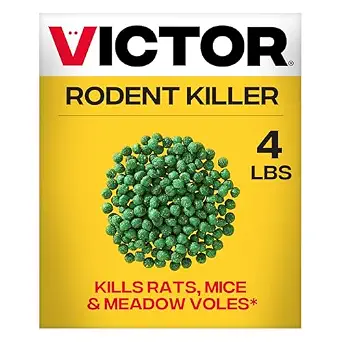 |
| Highest Rated A top-rated pick with lots of positive feedback | JT Eaton 709-PN Anticoagulant Bait Block, Peanut Butter Flavor (2 pails of 144) |  |
| Most Popular A crowd favorite that many people choose with confidence | Tomcat Bromethalin Bait Chunx Pail, 4.25 lb |  |
| Best Seller A high-volume bestseller chosen again and again | d-Con Corner Fit Mouse Poison Bait Station Refills, 10 Count |  |
Contrac Blox Rodenticide – 18 lb

| Item Form | Gel |
|---|---|
| Target Species | Insects |
| Active Ingredients | Bromadiolone |
| Item Weight | 18 pounds |
Contrac Blox is a heavy-duty rodenticide supplied as palatable bait blocks formulated with the active ingredient bromadiolone for single-feed control of mice and rats. It is typically used inside tamper-resistant bait stations in commercial or industrial sites where persistent rodent pressure requires a long-lasting, weatherable bait. The bait’s paraffin blend makes it stable in wet or dry conditions and attractive to rodents, which helps delivery of the single-feed anticoagulant. The product is intended for professional applicators and the manufacturer recommends rotating or replacing bait roughly every 40 to 60 days depending on activity. Important practical considerations are that it contains a potent active ingredient and is restricted to certified applicators, so it requires trained handling, secure placement, and strict safety controls to protect non-target animals and people. When used correctly in a monitored baiting program it provides effective knockdown of rodent populations in commercial settings.
Best for: Commercial pest control professionals and facility managers who need a weatherable, high-capacity bait for sustained control of mice and rats in industrial or institutional sites.
Less Ideal for: Homeowners, casual gardeners, or anyone without certification and access to tamper-resistant bait stations should not use this product and should consider consumer-grade options instead.
- Single-feed anticoagulant formulation effective for rapid control
- Formulated to be palatable and weatherable for use in wet or dry conditions
- Large 18 lb supply suited to sustained commercial baiting programs
- Contains bromadiolone, a widely used active ingredient for professional rodent control
- Labeled for professional certified applicators only, so not for homeowner use
- Potent anticoagulant requires secure placement and strict safety precautions
Verdict: A professional-strength, weatherable 18 lb bait block designed for certified applicators who need sustained, single-feed control of mice and rats.
First Strike Soft Bait Rodenticide (16 lb)

| Item Form | Spray |
|---|---|
| Target Species | Rat |
| Specification Met | EPA |
First Strike Soft Bait is a 16 pound pail of pouches designed for use inside tamper-resistant bait stations to control rats and mice. The product is a soft, highly palatable bait that secures to vertical or horizontal bait station rods and releases an attractive aroma to draw rodents. It contains the active ingredient difethialone, a potent anticoagulant designed for rapid knockdown in heavy infestations while using less active ingredient than some alternatives. Pest control pros will appreciate that the pouches resist scattering, are easy to mount, and maintain palatability in hot or cold conditions. The included bittering agent helps reduce accidental non-target ingestion, but the product remains a restricted-use commodity in several states and must be kept away from children, pets, and wildlife. This bait is best used as part of an overall IPM program and requires careful placement, monitoring, and disposal procedures to avoid secondary exposure and comply with local regulations.
Best for: Technicians and homeowners who need an effective, professional-style bait for quickly reducing heavy rodent populations and who will use tamper‑resistant bait stations and follow safe handling protocols.
Less Ideal for: Casual users seeking nonchemical or pet-safe methods or people unable to comply with local pesticide regulations should consider alternatives.
- High palatability increases acceptance even when competing food is present
- Soft pouch format secures easily to standard bait station rods and reduces scattering
- Difethialone active ingredient provides effective control with lower active load than some anticoagulants
- Formulation maintains integrity and attractiveness across hot and cold conditions
- Not for sale or shipment to certain states and subject to local restrictions
- Requires careful handling and placement to avoid exposure to non-target animals and people
Verdict: Choose First Strike when you need a highly accepted, fast-acting soft bait that professionals can secure in bait stations for rapid rodent knockdown.
J.T. Eaton 704-PN Peanut Butter Bait Blocks, 64 count pail

| Unit Count | 64 Count |
|---|---|
| Item Form | Block |
| Target Species | Rodents |
| Active Ingredients | Diphacinone |
The J.T. Eaton 704-PN bait blocks are solid 1-ounce peanut butter flavored rodenticide blocks sold in a resealable pail intended for routine rodent control in and around the home. You place individual blocks inside tamper-resistant bait stations or in tight attic spaces where rodents travel; the peanut butter flavor and rectangular shape make them easy to position and nab the attention of foraging mice and rats. The active ingredient diphacinone is a first-generation anticoagulant that typically affects rodents after repeated feedings, so expect results over several days rather than instant knockdown. The resealable pail and sturdy block form help the bait stay usable in storage and resist crumbling when positioned in drafty or dusty attics. Important limitations are the slower onset compared with single-feed rodenticides and the need to use the product only in secure bait stations to reduce accidental exposure to children, pets, or non-target wildlife.
Best for: Homeowners looking for a practical, long-term rodent control option for attics and outbuildings who prefer a durable, easy-to-deploy bait that stores well.
Less Ideal for: People needing immediate single-feed elimination or those who cannot guarantee secure bait placement around children, pets, or non-target animals should consider alternative solutions.
- Peanut butter flavoring increases attractiveness to mice and rats.
- Solid 1 oz blocks are easy to place inside bait stations and resist crumbling.
- Resealable pail keeps unused bait contained and protected during storage.
- Contains diphacinone, a commonly used anticoagulant effective with multiple feedings.
- First-generation anticoagulant requires multiple feedings and works more slowly than single-feed toxins.
- Must be used in tamper-resistant stations to avoid risk to children, pets, and wildlife.
Verdict: A practical, easy-to-store peanut butter bait block solution for homeowners who want reliable, long-term attic rodent control.
Victor M925 Rodent Killer, 4 lb Fish‑Flavored Bait Balls

| Item Form | Soft Bait |
|---|---|
| Target Species | Rodents |
| Specification Met | EPA |
| Active Ingredients | Diphacinone 0.005% |
Victor M925 is a ready-to-use rodenticide supplied as fish-flavored soft bait balls in a 4 lb bag for broad indoor and outdoor use. It is typically placed along walls, in concealed spots, or inside tamper-resistant bait stations to attract rodents and encourage repeated feeding until a lethal dose is consumed. Notable features include a palatable formulation that appeals to mice, rats, and meadow voles, an EPA specification, and weather-resistant properties that help the bait remain effective in damp exterior locations. The large bag gives enough material for multiple placements across a property or extended treatment periods. Important limitations are safety and non-target risk since the product is toxic to pets, children, and wildlife and must be secured in approved stations and handled with care. This product is a poison rather than a trapping solution, so it is best used where baiting is acceptable and strict placement and disposal rules can be followed.
Best for: Homeowners who prioritize a straightforward, low-maintenance baiting approach to reduce existing rodent activity and who will use tamper-resistant bait stations and follow label safety instructions.
Less Ideal for: People seeking a non-toxic or purely mechanical trapping method, or those unable to reliably prevent access by pets, children, or wildlife.
- Ready-to-use soft bait that requires no mixing or preparation
- Fish-flavored formula designed to attract rats, mice, and voles
- Weather-resistant so placements outdoors retain potency
- Large 4 lb bag provides enough bait for extensive or repeated treatments
- Contains an anticoagulant active ingredient and is hazardous to pets, children, and non-target wildlife
- Not a mechanical trapping solution so carcass removal and secondary poisoning concerns apply
Verdict: Choose this ready-to-use, weather-resistant bait when you want an easy-to-deploy, high-coverage rodenticide for indoor and outdoor infestations and can secure placements to protect people and pets.
JT Eaton 709-PN Anticoagulant Bait Block, Peanut Butter Flavor (2 pails of 144)

| Unit Count | 288 Count |
|---|---|
| Item Form | Bait |
| Target Species | Rodents |
This JT Eaton 709-PN bait is a professional-grade anticoagulant block designed to attract and eliminate mice and rats. It is supplied in two tamper-evident resealable pails, each holding multiple one-ounce blocks, which makes it straightforward to place in bait stations or protected areas around buildings. The peanut butter formulation is intended to improve palatability so rodents consume a lethal dose over multiple feedings. For reliability-focused buyers, the packaging and block form simplify storage and handling while helping maintain bait integrity during use. Important limitations are that this is a toxic rodenticide requiring careful placement in tamper-resistant stations and strict adherence to label instructions to avoid non-target exposures. It is not an instant-kill solution; the anticoagulant mode of action works over days and may require monitoring and repeated placements to achieve full control in heavy infestations.
Best for: Buyers who prioritize a dependable, professional rodent control product for buildings and need bait that stores and dispenses cleanly in bait stations; suitable for property managers and experienced homeowners.
Less Ideal for: Casual users seeking a non-toxic or immediate-action solution or those unable to guarantee tamper-resistant placement should consider alternatives.
- Professional anticoagulant block form suitable for use in bait stations
- Peanut butter flavor increases attractiveness to mice and rats
- Supplied in resealable, tamper-evident pails for secure storage and easy dispensing
- Contains anticoagulant active ingredients so it requires careful use to prevent accidental poisoning of non-target animals or people
- Not an immediate knockdown product; control occurs over several days and may need follow-up placements
Verdict: A dependable professional anticoagulant bait in resealable pails that makes sustained control of mice and rats practical and manageable.
Tomcat Bromethalin Bait Chunx Pail, 4.25 lb

| Item Form | Bar |
|---|---|
| Target Species | Rodents |
| Net Weight | 4.25 lb |
This Tomcat pail contains preformed 1 oz. bromethalin bait blocks intended for tackling mice, Norway rats, roof rats, and meadow voles in and around buildings. It is packaged for professional or agricultural use and is typically deployed inside tamper-resistant bait stations placed in basements, garages, crawl spaces, and around foundations within 100 feet of structures. The bait is fast-acting so rodents often consume a lethal dose in a single night and mortality can occur within a few days. The large 4.25 lb. pail supplies many placements and makes regular monitoring and replenishment simple. Important practical points are that outdoor placements must be in weather- and tamper-resistant stations and the label restricts use against certain species in California. Because this contains an acute pesticide, care is needed to keep it inaccessible to children, pets, and non-target wildlife and to follow local regulations and label directions.
Best for: Buyers who want a professional-strength, ready-to-use rodent bait for systematic control around buildings and who plan to use tamper-resistant stations and follow label directions.
Less Ideal for: Casual homeowners who cannot commit to secure bait station use or who need a rodent solution safe for free outdoor placement around pets and wildlife.
- Preformed 1 oz. blocks are easy to place and monitor in bait stations
- Contains bromethalin which is effective against anticoagulant-resistant rodents
- Large 4.25 lb. pail supplies many bait placements for ongoing control
- Suitable for indoor and outdoor use when placed in tamper-resistant stations
- Requires tamper- and weather-resistant bait stations for safe outdoor use and to protect non-targets
- Not permitted for use on several listed species in California and must be used according to label restrictions
Verdict: Choose this product when you need a professional-grade, preformed bromethalin bait supply for effective, managed rodent control around structures.
d-Con Corner Fit Mouse Poison Bait Station Refills, 10 Count

| Unit Count | 10 Count |
|---|---|
| Target Species | Mouse |
| Active Ingredients | Cholecalciferol |
This 10-count refill pack supplies the bait that fits d-Con corner-fit refillable stations and is formulated with cholecalciferol rather than traditional anticoagulants. You load the bait into the low-profile, tamper-resistant station and place it where you see mouse activity such as corners, behind appliances, attics or garages. The active ingredient is designed to be attractive to mice and can stop visible activity within a few days once mice consume the bait. The refillable format makes it easy to swap in fresh bait without replacing the entire station, and the manufacturer notes the station is weather-resistant for limited outdoor use. Important limitations are that this is a lethal control intended for rodents and contains a vitamin D derivative as the active ingredient, so users must follow label directions carefully to avoid accidental exposure to pets or children and to comply with local disposal rules. Also, bait effectiveness depends on proper placement and mice feeding on it, so monitoring and moving stations may be necessary.
Best for: Buyers who want a proven, replaceable bait option for established mouse activity and who prioritize products with social proof and a more familiar active ingredient profile.
Less Ideal for: People who need nonlethal or catch-and-release rodent solutions or who cannot guarantee secure placement away from children and pets.
- Contains cholecalciferol formulation instead of anticoagulant neurotoxins
- Refill pack fits d-Con corner-fit refillable stations for easy replacement
- Low-profile, tamper-resistant bait station design reduces access by children and pets
- Weather-resistant formulation and station suitable for indoor and limited outdoor placement
- Lethal to rodents so requires careful handling and strict adherence to label safety directions
- Effectiveness depends on mice actually feeding on the bait and correct placement of the station
Verdict: If you want a refillable, tamper-resistant bait option with cholecalciferol for quickly reducing house mouse activity, these 10-count refills are a practical choice.
Choosing the Right Commercial Rodent Poison: Key Factors to Consider
Bait Formulation and Palatability
Bait formulation determines whether rodents will readily consume the product when alternative food sources are present. Grain-based blocks, waxy pellets, pastes, and soft bait each behave differently in humid or dry environments and attract species in different ways. A highly palatable formulation reduces the time needed to achieve control because rodents take lethal doses before developing bait shyness.
Palatability also affects where you can place bait. Sticky or paste baits work well in tight runways and under appliances, while hardened blocks are better in high-traffic station use. Consider common food sources at the site and choose a formulation that still attracts rodents when competing food is available.
Active Ingredient and Kill Profile
The active ingredient and its required dose shape how quickly populations decline and whether surviving rodents develop aversion. Fast-acting compounds can reduce visible activity rapidly, but very slow-acting products may allow rodents to die away from bait stations, complicating cleanup. Conversely, some delayed-action ingredients reduce the chance of bait shyness because animals do not associate symptoms with the bait.
Understanding the required cumulative dose and whether single-feed control is possible helps plan application frequency. Also consider regulatory limits and recommended withdrawal periods for sites where pets, livestock, or food storage are nearby.
Application Method and Station Compatibility
Commercial settings demand secure, repeatable placement. Compatibility with tamper-resistant bait stations, wall-mount racks, and tray systems reduces non-target exposure and theft or tampering. Some baits are formulated specifically for locked stations and will not crumble or leak, while others are better suited to direct placement in protected runways.
Evaluate how the bait will be positioned during routine inspections and how easy it is to replace or top up. Packaging that allows dispensing into stations without direct contact improves worker safety and speeds service rounds.
Safety for Non-Target Species and Environment
Minimizing risk to pets, wildlife, and children is essential in commercial programs. Consider baits with lower secondary-poisoning potential, formulations that remain contained in stations, and products with clear labeling on carcass removal and disposal. The physical form matters because loose pellets or crumbs increase accidental ingestion risk for non-target animals.
Also review persistence in soil and the likelihood of active ingredient uptake by scavengers. Where sensitive receptors are present, prefer options and deployment strategies that reduce exposure pathways.
Packaging Size and Storage
Commercial operations need packaging that supports efficient inventory and reduces waste. Bulk packaging lowers handling frequency but may require decanting; small pouches are easier for single-site service but increase plastic and labor. Good packaging protects bait from moisture and pests until deployed and provides secure closure for leftover product.
Storage considerations include shelf life, required storage temperature, and whether the product needs locked storage under local regulations. Workflows that minimize open handling and allow rapid station servicing are preferable in large facilities.
Planning a Commercial Rodent Control Program
Start by mapping rodent activity and likely entry points across the property. Focus on areas with food, water, or shelter such as loading docks, mechanical rooms, kitchens, and utility corridors. A program that couples targeted bait placement with sanitation and exclusion will reduce reliance on poison alone.
Regular monitoring and documentation of bait take helps adjust placement and bait type. Track trends over weeks rather than reacting to single checks, since feeding rates can vary with season and stock movement.
- Inspect for droppings, rub marks, and gnaw damage to identify runways
- Prioritize secure bait station placement in high-activity zones
- Coordinate sanitation efforts to remove alternative food sources
Safe Deployment and Carcass Management
Plan for humane, legal, and safe carcass removal. Quick discovery and removal of dead rodents reduces secondary exposure risks to scavengers and limits odor complaints. Train staff on proper PPE and disposal procedures consistent with local regulations.
Place baits where carcass access by non-target animals is unlikely, and schedule follow-up visits to check for mortality. Use tools and containers that limit direct contact when removing carcasses.
- Wear gloves when handling bait or carcasses
- Record locations and times of carcass finds to identify hotspots
- Use sealed disposal bags and follow municipal disposal rules
Integrating Baiting With Exclusion and Sanitation
Baiting alone will not solve infestations if food and entry points remain. Seal gaps around doors, vents, and utility penetrations, and implement food-handling protocols to deny rodents easy meals. Effective exclusion reduces the amount of bait needed and improves long-term success.
Sanitation adjustments often reveal whether bait uptake reflects population size or simply available food choices. Reducing clutter and spillage improves bait attractiveness and shortens control timelines.
- Use durable materials to block holes larger than a quarter inch for mice and larger for rats
- Adopt housekeeping routines that eliminate spills and open food storage
- Combine rodent-proofing with periodic inspections
Recordkeeping and Regulatory Compliance
Commercial applications often carry recordkeeping requirements. Maintain logs of bait placements, active ingredient used, quantities, application dates, and personnel performing services. These records support compliance and help evaluate program effectiveness over time.
Understand local rules for restricted ingredients and storage. Some active ingredients require licensed applicators or specific storage conditions. Ensure staff are trained on label directions and legal constraints before deploying any product.
- Keep labeled product containers until empty and retain safety data sheets
- Document service rounds and any non-target incidents
- Review local pesticide regulations periodically
Troubleshooting Low Bait Uptake
If bait take is lower than expected, first check placement and bait condition. Moisture, mold, or contamination can make bait unpalatable. Move bait closer to identified runways or test a different formulation that better matches the local rodent diet.
Consider non-chemical pressures such as new food sources, seasonal behavior shifts, or competing wildlife. Use monitoring devices and trail cameras in persistent cases to observe how rodents interact with bait stations.
- Rotate bait formulations when uptake stalls
- Ensure stations are unobstructed and aligned with rodent travel
- Use tracking powders or monitoring blocks to verify activity without committing to a full bait change
How We Chose the Best Commercial Rodent Poison
We focused on attributes that matter to professionals and property managers working in commercial environments. Evaluation emphasized bait palatability and uptake under competing-food conditions, kill time and dose consistency to limit rodent survival and bait shyness, and compatibility with common tamper-resistant bait stations and placement methods used in warehouses and service corridors. We also assessed formulations for reduced non-target exposure risk, including grain, block, paste, and pellet options that fit secured deployment. Application practicality was another filter: ease of handling, packaging sizes appropriate for commercial use, and clear labeling for safe placement and disposal were required. Environmental persistence and documented secondary-poisoning risk were considered to avoid products with excessive residual hazard to wildlife. Anything marketed primarily for consumer lawn or garden spot use was excluded, as were products lacking clear instructions for professional application or that did not list active-ingredient concentrations. Overall we prioritized measurable bait performance, safe deployment options, and formulation fit for structured commercial pest programs.
FAQ
How long does it typically take for commercial rodent poison to reduce activity?
It depends on the active ingredient and bait acceptance. Some formulations reduce visible activity within days, while others require multiple feedings and may take one to two weeks for a clear decline. Consistent placement and monitoring speed the process.
Can commercial bait be used in tamper-resistant stations?
Many commercial formulations are designed for use in tamper-resistant stations. Match the bait form to the station design to prevent crumbling or leakage and to keep non-target exposure low.
What should I do if non-target wildlife accesses bait?
Stop further placement in that location, remove any accessible bait, and inspect station placement. Increase station security or move baits to more protected runways. Report significant incidents per local regulatory requirements.
Are there differences in bait choice for mice versus rats in commercial settings?
Yes. Mice and rats have different feeding behaviors and runway sizes. Choose bait sizes and formulations suited to the target species and place stations where the specific species travels to improve uptake.
How should leftover commercial rodent poison be stored?
Store unused product in the original sealed container in a locked, dry area away from food and animal access. Follow label instructions for temperature limits and shelf life to maintain efficacy and comply with regulations.
Do I need a licensed applicator to use commercial rodent poisons?
It often depends on local rules and the active ingredient. Some products or concentrations require licensed applicators or specific training. Check regulations before purchase and ensure staff follow label directions.
Final Verdict
Choose a commercial rodent poison that balances bait acceptance, safe deployment, and an appropriate kill profile for the site. Prioritize formulations that fit secure stations and reduce secondary exposure, and plan application around sanitation and exclusion work. Keep detailed records and be prepared to adjust bait type or placement if uptake is poor. With those priorities in mind, you can build a reliable, compliant control program that limits reinfestation and reduces non-target risks.
