

Note: This article contains affiliate links. If you click on these links and make a purchase, I may earn a small commission at no extra cost to you. This helps support my research and content. Read my full affiliate disclosure here.
Picking the right soil for container gardening changes how your plants drink, breathe, and feed. In pots, there is no native ground to buffer water or nutrients, so mix structure and ingredient choices directly determine growth, flowering, and overwintering success. This guide covers seven shortlisted soils suited for gardening in pots, focusing on their drainage, moisture retention, and nutrient behavior in real-world container setups. Read on to understand the practical tradeoffs between light, fast-draining mixes and denser, moisture-holding formulas, plus how to match a mix to your plant type and pot style.
Top Picks at a Glance
| Best Overall The best all-around choice for most situations | BuildASoil Organic Living Potting Soil Mix (28.3 lb) |  |
| Best Quality Built to a higher standard if you want something more solid | FoxFarm Ocean Forest Potting Soil, 12 Quart |  |
| Best Value The sweet spot between price and what you get | Miracle-Gro Organic Outdoor Potting Mix, 16 qt. |  |
| Best Budget The cheapest option that still gets the job done reliably | Miracle-Gro Indoor Potting Mix for Seed Starting, 8 qt. (2-Pack) |  |
| Highest Rated A top-rated pick with lots of positive feedback | Michigan Peat Garden Magic General Purpose Potting Soil Mix, 40 lb (2-Pack) |  |
| Most Popular A crowd favorite that many people choose with confidence | Miracle-Gro Indoor Potting Mix for All Plants, 6 qt., 2-Pack |  |
| Best Seller A high-volume bestseller chosen again and again | Back to the Roots Organic Expanding Coco Coir Potting Soil Brick (10 lb) |  |
BuildASoil Organic Living Potting Soil Mix (28.3 lb)

| Volume | 1 cubic feet |
|---|---|
| Item Weight | 28.3 pounds |
BuildASoil Potting Soil Recipe 3.0 is a fully amended, organic living soil mix intended for container-grown vegetables and indoor plants that you want to manage with minimal feeding. The mix combines compost, worm castings, peat moss and mineral amendments to create a chunky, well-aerated medium that drains reliably while retaining enough moisture for steady root uptake. Because it is formulated as a water-only soil, beneficial microbes and built-in nutrients supply plants through vegetative growth and flowering, so typical use is repotting or filling grow pots and letting the soil sustain plants without regular bottled fertilizers. Practical benefits include reduced feeding chores, improved root oxygenation from the aerated texture, and a biological nutrient cycling that supports long-term container culture. Limitations are that it is a preblended living mix so advanced growers who want precise control over NPK or need a specifically fast-draining succulent formula may find it less adjustable. Also, living soils require careful watering and occasional top-ups of organic amendments to maintain microbe activity over multiple seasons.
Best for: Best for vegetable growers who want a low-maintenance, reliable potting medium that supports consistent growth without frequent fertilizing and who prefer biologically active soils.
Less Ideal for: Not a good choice for growers who need exact synthetic nutrient control or those growing plants that require very fast-draining, inert media.
- Fully amended water-only formula reduces the need for frequent fertilizer applications
- Organic ingredients and worm castings support biological soil life and nutrient cycling
- Chunky, well-aerated texture promotes strong root development and reliable drainage
- Not ideal for gardeners who need precise, measured nutrient inputs or tailored NPK profiles
Verdict: Buy this if you want a reliable, ready-to-use organic living soil that sustains potted vegetables through a full growth cycle with minimal feeding.
FoxFarm Ocean Forest Potting Soil, 12 Quart

| Item Form | Granules |
|---|---|
| Specific Uses For Product | Dry Fertilizer |
| Coverage | 4.8 sq ft |
| Mixing Ratio | 1:1 |
FoxFarm Ocean Forest is a pre-mixed potting soil that combines aged forest products, sandy loam and sphagnum peat moss with organic amendments like fish meal, crab meal and earthworm castings. It is sold ready to use straight from the bag for planting in containers, seed starting or top dressing; the manufacturer recommends no additional nitrogen fertilizer for the first 30 days. The mix has a light, aerated texture that promotes drainage while still retaining moisture, and the built-in micronutrients make it practical for growers who want strong early growth without immediate feeding. Practical benefits include easy pot filling, good root zone aeration for roses in containers, and built-in organic fertility to support blooms. Limitations to consider are that the bag is best for containers or small beds only and heavier feeders may need supplemental feeding after the initial month; users should also follow handling precautions to avoid skin or eye irritation.
Best for: Gardeners who want a high-quality, nutrient-rich potting medium to get container roses or plant starts off to a strong, flowering start and prefer a ready-made organic blend.
Less Ideal for: Large in-ground rose beds or landscapers needing bulk soil amendments should look for bulk garden soil or custom rose mixes instead.
- Ready-to-use out of the bag so you can pot immediately
- Organic amendments (fish meal, crab meal, earthworm castings) supply early nutrients
- Light, aerated texture that supports drainage and root development
- pH adjusted for optimal nutrient uptake per product description
- Pack size (12 qt) covers a small area and may require multiple bags for several roses
- No long-term feeding provided after the first 30 days so additional fertilizer is needed for sustained heavy bloom
Verdict: Choose this soil if you want a ready-made, organically amended potting mix that jump-starts container roses and seedlings with good drainage and early fertility.
Miracle-Gro Organic Outdoor Potting Mix, 16 qt.

| Volume | 16 qt. |
|---|---|
| Item Highlight | Plant Soil For Outdoor Container Plants, Contains Quick-Release Natural Fertilizer, OMRI Listed |
| Manufacturer | Scotts Miracle Gro |
This 16 qt. Miracle-Gro Organic Outdoor Potting Mix is designed specifically for outdoor container plants and is useful for planting strawberries in pots. The mix contains responsibly sourced peat and upcycled green waste and includes a quick-release natural fertilizer that feeds for up to two months, which helps young strawberry plants establish and start producing. It is OMRI listed so it fits an organic container-gardening approach. Typical use is to partially fill a 12-inch pot, set the plant with a loosened root ball, add more mix, and water thoroughly; a single bag is sized to fill about one 12-inch container. Practical benefits include moisture retention suitable for exposed pots and a built-in starter nutrient charge so you may not need immediate additional feeding. Important limitations are that nutrients last about two months so plan a feeding schedule for fruiting plants and that peat-based mixes can compact over time, so repotting or refreshing the soil biannually is recommended for continued vigor.
Best for: Gardeners who want an organic-ready potting mix for outdoor container strawberries and prefer a product that gives an initial nutrient boost while simplifying first-season care.
Less Ideal for: Growers who need a long-term, self-sustaining soil blend for mature strawberry beds or those who avoid peat entirely should consider alternatives.
- OMRI listed and made with responsibly sourced peat suitable for organic container gardening
- Includes quick-release natural fertilizer that feeds plants for up to two months
- Formulated to retain moisture for outdoor containers exposed to sun and wind
- Contains upcycled green waste and is locally crafted to reduce transport distance
- Fertilizer effect is limited to about two months so additional feeding is needed for ongoing fruiting
- Peat-based mix can compact over time and requires bi-annual repotting to refresh structure
Verdict: A convenient OMRI-listed container potting mix that gives outdoor strawberry starters an organic nutrient boost and good moisture retention for the first months.
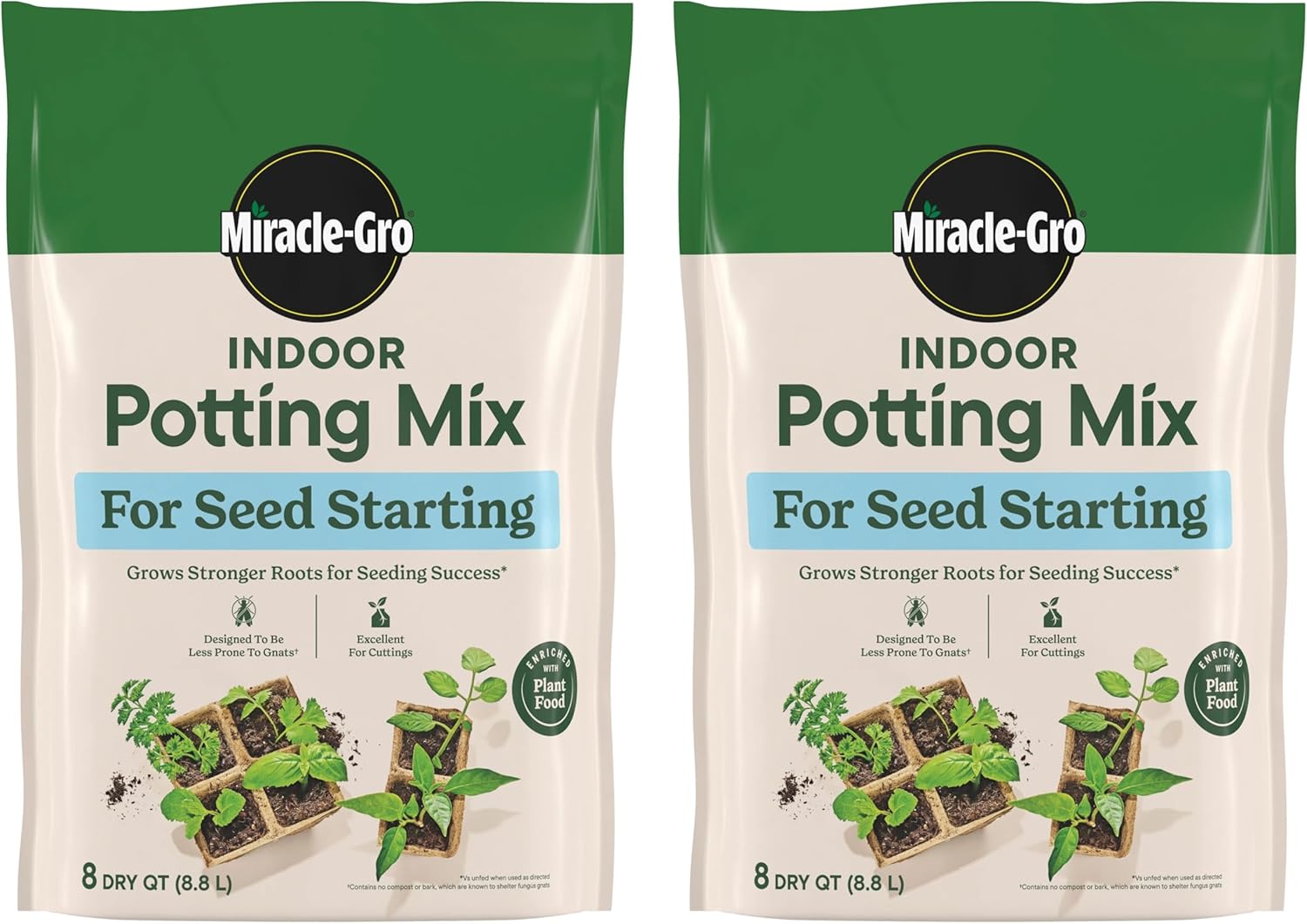
Miracle-Gro Indoor Potting Mix for Seed Starting, 8 qt. (2-Pack)
| Brand Name | Miracle-Gro |
|---|---|
| Item Type Name | Potting Mix |
| Number of Packs | 2 |
| Volume | 8 quarts |
This two-pack of Miracle-Gro Indoor Potting Mix is designed specifically for starting seeds and rooting cuttings indoors. The blend is lightweight and pre-enriched with plant food so seedlings get a nutrient boost during early root development, and the manufacturer says it yields stronger roots compared with unfed mixes when used as directed. It is intended for vegetables, flowers, and herbs and works well in cell trays and small containers; one 8 qt. bag will fill roughly three 72-cell trays. Notably, the formula omits compost and bark, which helps lower the chance of fungus gnat infestations in damp seed-starting setups. Use it by filling trays or pots, keeping the mix evenly moist, and shielding newly sown seeds from direct sun until germination. Important limitations are standard for enriched mixes: it contains fertilizer (so handle carefully) and it is a seed-starting medium rather than an all-purpose potting soil for mature plants, so you will likely transplant seedlings into a different mix or amend soil later.
Best for: Buyers who want a low-effort, indoor seed-starting medium that supports faster root development and reduces common pest risks while following proven seed-starting practices.
Less Ideal for: Gardeners who need a permanent potting soil for mature container plants or who prefer fully organic, compost-rich mixes should consider alternatives.
- Lightweight, ready-to-use formula tailored for seed germination and cuttings
- Pre-enriched with plant food to support early root and seedling growth
- Excludes compost and bark to reduce habitat for fungus gnats
- Comes as a two-pack so you have enough mix for multiple trays
- Contains fertilizer which requires careful handling and storage
- Intended for seed starting so not formulated as long-term potting soil for mature plants
Verdict: A practical, low-risk seed-starting mix that boosts early root growth and reduces fungus gnat risk, making it a reliable choice for indoor vegetable seedlings.
Michigan Peat Garden Magic General Purpose Potting Soil Mix, 40 lb (2-Pack)

| Manufacturer | Michigan Peat |
|---|---|
| Size | 40 lbs Pack of 2 |
| Item model number | 2 x 5740 |
This Garden Magic general-purpose potting soil is a heavy, peat-based mix sold as two 40 lb bags intended for use in pots, raised beds, and other container applications. It combines reed sedge peat and organic peat moss in a formulated blend that retains moisture well, so it helps potted plants through moderate dry spells without constant watering. The product arrives ready to use out of the bag, which saves time when filling pots or refreshing topsoil. Because it is a straightforward mix without added specialized amendments, it works reliably for a wide range of ornamentals and vegetables and is especially convenient for standard container tasks. Important limitations are that the description does not list fertilizer content or pH, so growers who need tailored nutrition or precise soil chemistry for acid-loving or heavy-feeding plants may want to test and amend this mix. Also the bags are large and heavy which is fine for bulk work but less convenient for frequent small transfers.
Best for: Gardeners who prioritize a dependable, no-fuss potting mix for potted ornamentals and bulbs and want a moisture-retentive base that performs consistently in containers.
Less Ideal for: Growers who need a pre-amended soil tailored to lilies with specific fertilizer ratios or pH adjustments should consider a specialist lily mix or plan to amend this product before planting.
- Peat-based blend that holds moisture to reduce watering frequency in containers
- Ready-to-use straight from the bag for quick potting and top-dressing
- Suitable for indoor and outdoor container use across many plant types
- Sold in two 40 lb bags for bulk coverage when repotting multiple containers
- No listed fertilizer content or pH information for precise nutrient or acidity control
- Large heavy bags can be cumbersome to lift and handle for some gardeners
Verdict: Choose this peat-based, ready-to-use potting mix when you want a reliable, moisture-holding base for potted lilies without fuss.
Miracle-Gro Indoor Potting Mix for All Plants, 6 qt., 2-Pack

| Number of Packs | 2 |
|---|---|
| Unit Count | 400.58 Ounce |
| Item Highlight | Feeds for up to 6 Months |
| Ingredients | Sphagnum Peat Moss, Coir, Perlite, Fertilizer, Wetting Agent |
This Miracle-Gro indoor potting mix is formulated as an all-purpose soil for indoor container plants and is sold in a two-pack of 6‑quart bags. It combines sphagnum peat moss, coconut coir, and perlite to create a lightweight, well-draining mix that holds moisture yet releases it to roots, which helps tropical houseplants like a Dragon Tree avoid waterlogged roots. The bagged mix includes a slow-release fertilizer meant to feed plants for up to six months so you do not need to amend immediately after potting. Notably the formula excludes bark and compost, which can reduce habitats for fungus gnats — useful when repotting indoor specimens. Use is straightforward: fill a pot with drainage, set the plant, backfill with mix, and water. Limitations are that the fertilizer schedule is fixed to the included feed and heavy feeders may need additional fertilizing after several months, and serious growers who want a custom cactus or orchid-style mix will find the texture too fine. For routine repotting of Dragon Trees and similar tropical houseplants this mix is convenient and consistent.
Best for: Buyers who want a reliable, low-effort potting mix for repotting tropical houseplants like Dragon Trees and prefer a product with built-in feeding and pest-reduction features.
Less Ideal for: Specialist growers who need custom texture blends for succulents, orchids, or aggressive feeders should choose purpose-formulated mixes or amend this product accordingly.
- Balanced blend of peat moss, coir, and perlite for good moisture retention and drainage
- Includes slow-release fertilizer that feeds up to six months for low-maintenance care
- Bark- and compost-free formula reduces places for fungus gnats to breed
- Ready-to-use bag makes repotting quick with no mixing required
- Fertilizer is fixed for about six months so additional feeding may be necessary for heavy feeders
- Texture may be too fine for plants that prefer very fast-draining or chunky mixes
Verdict: A convenient, low-maintenance indoor potting mix that keeps Dragon Trees healthy with good drainage and up to six months of built-in feeding.
Back to the Roots Organic Expanding Coco Coir Potting Soil Brick (10 lb)

| Item Highlight | 10 lb compressed coco coir brick; peat-free; OMRI Listed |
|---|---|
| Item Type Name | Coconut Coir |
| Volume | 2 cubic feet |
| Ingredients | Coconut Coir |
| Style Name | Expanding Potting Soil |
This compressed coco coir brick provides a lightweight, peat-free potting medium that expands when you add water to create loose, airy substrate for containers and seed flats. It is typically used by hydrating the 10 lb block to about 2 cubic feet of coir and then using it alone for potted plants, mixing it into garden soil to improve drainage and aeration, or blending with compost for starting seeds. Notable features include OMRI listing for organic use, a balanced pH suited to a wide range of plants, and compact storage before expansion which saves space. Practical benefits are improved root aeration and water retention compared with heavy garden loam, easier handling than bulky bags, and versatility across vegetables, herbs, and ornamentals. Important limitations are that coco coir is a soilless substrate and does not supply significant nutrients on its own so you will need to add fertilizer or compost for long-term potted herbs like rosemary, and the product requires time and a water source to expand before use.
Best for: Buyers who prioritize low-risk, easy-to-handle, organic potting media and want a versatile base for container herbs and seed starting without dealing with heavy bags.
Less Ideal for: Gardeners who want a ready-to-plant, nutrient-rich potting mix out of the box or those who prefer soil with built-in slow-release fertilizer.
- Peat-free OMRI listed organic coco coir suitable for organic growing
- Expands from a compact brick to about 2 cubic feet for easy storage and transport
- pH balanced and airy texture that improves drainage and root aeration
- Versatile use: can be used alone, for seed starting, or mixed into existing soil
- Provides little inherent fertility so supplemental feeding or compost is needed for nutrient-hungry plants
Verdict: A compact, peat-free coco coir brick that expands into an airy, pH-balanced base ideal for low-risk organic container gardening and seed starting when paired with fertilizer or compost.
Choosing the Right Soil for Gardening in Pots: Key Factors to Consider
Drainage and Air Porosity
In pots, roots need oxygen as much as water. A mix with good drainage and stable air pockets prevents waterlogging and reduces the risk of root rot. Drainage behavior depends on both particle size and the presence of coarse amendments like perlite, pumice, or bark. Larger particles increase porosity but can reduce moisture-holding capacity, so look for a balance suited to your plant type.
For shallow or wide containers, drainage becomes more critical because the soil layer is thinner and can stay saturated after watering. For tall pots, capillary movement can keep lower zones wetter; choosing a mix with consistent porosity through the profile helps maintain even root conditions.
Moisture Retention and Watering Frequency
Different plants and container positions demand different moisture-holding characteristics. Mixes with peat, coir, or compost hold water longer and reduce how often you must water, which is helpful for busy gardeners or hanging baskets. However, high water retention can be a liability for plants that prefer a drier root zone or in cool, low-light locations.
Consider how often you want to water and the microclimate of the pot. South-facing balconies and exposed patios dry containers quickly and benefit from moisture-retentive components. Shaded or indoor containers usually need faster-draining mixes to avoid prolonged dampness.
Nutrient Delivery and Longevity
Pot soils cannot rely on surrounding earth for nutrient exchange, so a good container mix includes a nutrient plan. Some mixes come with a starter charge of slow-release fertilizer or rich compost to feed plants for several weeks to months. Others are intentionally inert so you can control feeding precisely.
Think about the plants you will grow and your willingness to fertilize. Long-term planters and vegetable pots usually need sustained nutrient release or a routine feeding schedule. Annual bedding plants and quick-season containers may be fine with a lighter, pre-charged mix.
Weight and Container Handling
Weight matters for mobility and structure. Heavy soils, often rich in compost or garden loam, add stability for large outdoor urns but make moving and hanging difficult. Lightweight mixes use coconut coir, perlite, or lightweight pumice to reduce mass without sacrificing porosity.
If you use raised balconies, rooftop planters, or hanging containers, prioritize lighter blends. For ground-level large pots where wind or top-heaviness is a concern, a slightly heavier mix can improve stability.
pH and Plant Preferences
Soil pH in a container affects nutrient availability. Some mixes are formulated for acid-loving plants with added peat or sulfur amendments, while others are neutral to support a wide range of ornamentals and edibles. Many ornamentals tolerate a broad pH range, but blueberries, azaleas, and some ericaceous plants need acidic mixes to thrive.
Check whether a mix leans acidic or neutral, especially when growing specialty crops. Adjusting pH in a container is possible, but selecting an appropriate base mix reduces ongoing corrections and stabilizes nutrient uptake.
Ingredient Quality and Sustainability
Ingredient sourcing affects performance and environmental impact. High-quality compost and aged bark add structure and nutrients but can vary widely in maturity and salt content. Coconut coir is a renewable alternative to peat, offering similar water-holding properties without peat extraction concerns. Inert additives like perlite and pumice are stable and do not break down quickly, preserving porosity over time.
Look for clear ingredient lists and avoid mixes with vague terms such as "soil conditioner" without detail. Consider sustainable choices if peat-free or recycled components are important for your garden ethic.
Matching Mix Texture to Plant Type
Different families of plants require distinct root environments. Succulents and Mediterranean herbs prefer a gritty, very free-draining medium that mimics rocky soils. Vegetables and annual bedding plants do better in looser, more moisture-holding blends that still drain freely after watering. Acid-loving ornamentals need a mix with organic matter that slightly acidifies over time.
To choose, classify your container plant by root habit and watering tolerance. For mixed containers, use an intermediate, well-balanced mix and increase drainage with an added coarse amendment if you include succulents.
- Gritty mixes for succulents: large mineral particles plus little organic matter
- Balanced mixes for vegetables: coir or peat with compost and perlite
- Acid mixes for ericaceous plants: peat-heavy or acidified organic matter
Adapting Soil for Seasonal Needs
Soil requirements change with season. In summer, higher temperatures increase evaporation, so mixes that retain moisture without becoming waterlogged are helpful. In winter, reduced light and cooler temperatures slow plant uptake and soil drying, so a slightly faster-draining mix reduces risk of prolonged wetness.
You can adapt the same base mix by adjusting surface mulch, increasing or decreasing watering frequency, or adding more coarse amendment for winter to improve drainage.
- Summer: add moisture-retentive components or surface mulch to reduce watering frequency
- Winter: increase coarse amendments to improve drainage and reduce standing moisture
Pot Size, Material, and Soil Choice
Container dimensions and material change how soil performs. Clay pots breathe and wick moisture, drying mixes faster than plastic or glazed ceramic. Shallow containers hold less water overall, so choose mixes with better moisture retention for shallow planters. Large pots buffer fluctuations but benefit from a stable, well-structured mix to avoid compaction over time.
Match the mix weight to the pot material and location. Lightweight mixes are preferred for plastic or hanging containers, while heavier mixes can add stability to tall, narrow planters.
- Clay pots: faster drying, favor mixes with higher moisture retention
- Plastic/glazed pots: slower drying, use mixes with better drainage
- Shallow planters: prioritize moisture-holding amendments
Refreshing and Reusing Potting Soil
Over time, potting soils break down and lose structure and nutrients. Refresh soil annually in active containers by replacing a portion of the top layer or mixing in fresh amendments and slow-release fertilizer. For perennial containers, plan for partial replacement every 1 to 3 years depending on plant vigor and observed compaction.
When reusing soil, inspect for pests, disease signs, and salt buildup. Sterilizing soil is rarely necessary for healthy containers, but discarding and replacing heavily contaminated mixes prevents problems from carrying over.
- Top-dress with fresh compost or slow-release fertilizer each season
- Replace one-third of the potting mix annually for high-demand containers
- Watch for white crusts on the soil surface as a sign of salt build-up
Custom Mixes Versus Ready-Made Blends
Making a custom mix lets you tune drainage, weight, and nutrient levels. Typical DIY blends combine a base organic matter such as coir or compost with coarse mineral amendments and a small amount of slow-release fertilizer. Ready-made blends save time and ensure consistent texture, which is useful for gardeners managing many containers.
Decide based on scale and confidence. If you manage a few specialty pots, mixing your own gives control. For dozens of planters or mixed-use containers, a high-quality ready-made mix reduces variability and handling time.
- Custom mixes: tailored performance, adjustable moisture and nutrient profiles
- Ready-made blends: consistent texture, convenient for large-scale container plantings
How We Chose the Best Soil for Gardening in Pots
We selected soils that perform reliably in container environments and that represent common gardener needs: mixes formulated for drainage, moisture retention, long-term nutrition, organic composition, lightweight profile for hanging containers or balconies, and specialty blends for vegetables or acid-loving ornamentals. Our editorial filters prioritized ingredient transparency, drain-holding balance, and typical behavior in 6- to 20-inch pots rather than raw lab scores. We excluded bulk garden loam and undrained potting soils intended for in-ground use because those do not suit container root aeration. Evaluation focused on measurable, gardener-relevant dimensions: drainage and air porosity under regular watering, moisture retention between waterings, nutrient delivery and longevity, weight per volume for container handling, and ingredient quality such as compost content and inert amendments. We also considered seedling and transplant performance as reported by experienced growers. Products were dropped from consideration if they lacked clear ingredient lists, were tailored only to a single crop without general-purpose use, or had inconsistent real-world drainage reports.
FAQ
How often should I replace potting soil in containers?
Replace or refresh the top one-third of soil in active containers every year. Fully replacing the mix every one to three years prevents compaction and nutrient depletion, depending on plant vigor and observed soil breakdown.
Can I use garden soil in pots?
Garden soil is usually too dense for containers and can compact, reducing aeration and drainage. It is better used to amend outdoor beds. For pots, choose a formulated container mix or create a custom blend with coarse amendments.
Is coconut coir a good peat alternative for pots?
Yes, coconut coir provides similar water retention and structure to peat with better sustainability credentials. Coir may require buffering for salts and sometimes needs an added nutrient charge since it is relatively low in nutrients initially.
How can I improve drainage in an existing pot?
Remove a portion of the surface soil and mix in coarse materials like perlite, pumice, or horticultural grit. Ensure the drainage hole is clear and consider elevating the pot on feet to improve bottom airflow and water exit.
What type of mix is best for vegetables grown in pots?
Vegetables prefer a fertile, well-draining mix that holds consistent moisture. Look for blends with compost or slow-release nutrients plus good porosity from perlite or pumice to balance water and air for fast-growing roots.
Final Verdict
Choosing soil for gardening in pots means balancing drainage, moisture retention, and nutrient delivery to match your plants and container situation. Prioritize mixes that provide consistent aeration and clear ingredient lists, and tailor weight and water-holding properties to your pot size and exposure. Remember that refreshing or partial replacement is a routine part of container care. With the right mix and a simple feeding schedule, you can reliably support healthy growth across a wide range of container-grown plants.
