

Note: This article contains affiliate links. If you click on these links and make a purchase, I may earn a small commission at no extra cost to you. This helps support my research and content. Read my full affiliate disclosure here.
Picking the right soil for lemon trees makes a real difference in growth, fruiting, and winter survival whether your tree lives in a pot or the ground. Lemon roots need a mix that drains quickly to avoid root rot while still holding enough moisture and nutrients for steady blooms and fruit set. This guide covers seven shortlisted soils for lemon, chosen for their drainage profiles, nutrient balance, and suitability for container and in-ground planting. Below you will find practical notes on what to expect from each type and the evaluation criteria we used to compare them.
Top Picks at a Glance
| Best Overall The best all-around choice for most situations | GARDENWISE Organic Lemon Tree Soil (3 quarts) |  |
| Best Quality Built to a higher standard if you want something more solid | LECHUZA CITRUSPON Citrus Potting Soil, 2.7 US dry gal |  |
| Best Value The sweet spot between price and what you get | Duspro Pre-Mixed 4‑in‑1 Citrus Tree Potting Soil Mix, 6 Quarts |  |
| Best Budget The cheapest option that still gets the job done reliably | Doter Citrus Tree Potting Soil Mix (1 qt) |  |
| Highest Rated A top-rated pick with lots of positive feedback | E.B. Stone Organics Citrus & Palm Mix Potting Soil, 1.5 cu ft |  |
| Most Popular A crowd favorite that many people choose with confidence | Miracle-Gro Cactus, Palm & Citrus Potting Mix, 8 qt. |  |
| Best Seller A high-volume bestseller chosen again and again | Back to the Roots Organic Expanding Coco Coir Potting Soil Brick (10 lb) |  |
GARDENWISE Organic Lemon Tree Soil (3 quarts)

| Unit Count | 96 Fluid Ounces |
|---|---|
| Included Components | Perlite, coarse sand, coconut coir, vermiculite, garden compost, peat moss, dolomite, organic fertilizer |
| Item Type Name | Lemon Tree Soil |
| Volume | 3 quarts |
This citrus-specific potting mix is designed to give potted lemon trees the acidic, well-draining root zone they prefer. The blend combines perlite, coarse sand, coconut coir, vermiculite, compost, peat moss and dolomite with organic fertilizer and mycorrhizal fungi to improve aeration, moisture retention and nutrient uptake. It is typically used for repotting or topping up containers for Meyer lemons and other citrus where good drainage and slightly acidic pH matter. The included organic fertilizer claims up to six months of feeding, which reduces the need for frequent fertilizing early on. Notable features are the optimized pH range of 5.5 to 6.5 and the extra coarse particles that help prevent waterlogging and root rot. Because the product comes in a small 3 quart volume, it suits small potted trees, starter plants, or targeted soil amendments rather than full repots of large containers. Expect to supplement with additional soil if you are filling larger pots or planning long-term container culture.
Best for: Buyers who want a ready-made, citrus-focused potting mix that simplifies feeding and improves drainage for potted lemon or Meyer lemon trees.
Less Ideal for: Gardeners needing large volumes for in-ground planting or repotting very large containers should look for bulk mixes or larger bags.
- Formulated pH of 5.5–6.5 ideal for citrus health
- Contains a mix of drainage materials (perlite and coarse sand) to reduce overwatering issues
- Includes organic fertilizer that supplies nutrients for up to six months
- Lightweight, breathable texture that promotes strong root development
- Small 3 quart volume means multiple bags are required for repotting larger containers
Verdict: A ready-to-use, citrus-tuned potting mix that gives potted lemon trees the acidic pH and drainage they need with built-in organic feeding.
LECHUZA CITRUSPON Citrus Potting Soil, 2.7 US dry gal

| Brand Name | Lechuza |
|---|---|
| Item Highlight | peat-free mineral substrate; improves drainage and aeration; for lemon, orange and citrus |
| Volume | 12 liters |
LECHUZA CITRUSPON is a purpose-built potting mix for lemon, orange and other potted citrus that emphasizes fast drainage and root aeration. It is a mineral, peat-free substrate that comes pre-fertilized to feed plants for approximately six to eight months, so you can repot a citrus tree and expect steady nutrient availability during establishment. In practice the mix sheds excess water quickly and helps prevent the soggy root conditions that stunt fruiting, while its open structure improves oxygen access to root systems. That combination supports stronger flowering, better fruit set and healthier glossy foliage compared with generic potting soils. The product is sold in a 2.7 US dry gallon bag suitable for small to medium containers, and being mineral-based it is more stable and less compressible than peat mixes. Limitations are the fixed fertilizer payload and bag size: you may need to supplement nutrients after the initial feeding window and buy multiple bags for larger trees or repeated repots.
Best for: Growers who prioritize vigorous performance from potted citrus and want a ready-to-use, low-maintenance substrate that prevents waterlogging and supports fruiting.
Less Ideal for: Gardeners wanting a large-volume, budget bulk soil for landscape planting or those who prefer to custom-blend their own amendment and fertilizer schedule.
- Designed specifically for citrus so it targets the watering and nutrient needs of lemon and orange trees
- High drainage and aeration reduce risk of waterlogged roots and root rot in containers
- Pre-fertilized formula supplies nutrients for about six to eight months after repotting
- Peat-free, mineral composition offers a more sustainable, stable substrate than peat-heavy mixes
- Sold in a relatively small 2.7 US dry gallon bag which may require multiple bags for larger pots or trees
- Pre-fertilized nutrients are limited to about six to eight months and will need supplementation afterward
Verdict: Choose this mix when you want a peat-free, high-drainage, pre-fertilized substrate that helps potted lemon trees set fruit and avoid root waterlogging.
Duspro Pre-Mixed 4‑in‑1 Citrus Tree Potting Soil Mix, 6 Quarts

| Style Name | 6 Quarts |
|---|---|
| Brand Name | Duspro |
| Item Highlight | Indoor Fruit Tree Mix for Potted Lemon Tree, Oranges & Other Citrus Trees |
This Duspro 4-in-1 citrus potting mix is built for repotting potted lemon, lime and other citrus trees without the need to measure or blend ingredients yourself. The pre-mixed formula pairs coco coir and coco fiber with vermiculite to help retain balanced moisture while perlite increases drainage and root aeration, which reduces the risk of waterlogged roots in containers. It is easy to use: pour into a pot with drainage, center the tree, fill around roots and water. The product is double-screened for a consistent texture that pours cleanly and is available in sizes suitable for one to several 8-inch pots. Practical benefits include saving time, avoiding mixing errors, and a formulation tailored to the moisture and airflow needs of container citrus. Limitations to note are that the bag can be dusty when opened so some caution is needed during handling and the smallest 6-quart size only covers a limited number of repots for larger trees.
Best for: Buyers who want a reliable, no-mix potting medium for indoor or patio citrus trees and prefer a ready-made blend that reduces repotting guesswork and effort.
Less Ideal for: Growers who need very large volumes for multiple mature trees or who prefer to custom-blend their own media with specific amendments.
- Pre-mixed 4-in-1 formula (coco coir, coco fiber, perlite, vermiculite) tailored for container citrus
- Double-screened texture for cleaner pouring and more consistent repotting
- Promotes balanced moisture retention while improving drainage and root aeration
- Available in multiple sizes to match small to medium container needs
- Dusty when opened, requiring a mask or careful handling to avoid inhaling particles
- 6-quart size covers only a small number of repots for larger citrus trees
Verdict: A convenient, professionally blended potting mix that takes the guesswork out of repotting potted citrus trees.
Doter Citrus Tree Potting Soil Mix (1 qt)
| Brand Name | Doter |
|---|---|
| Item Type Name | Garden soil |
| Volume | 1 quarts |
| Item Weight | 224 g |
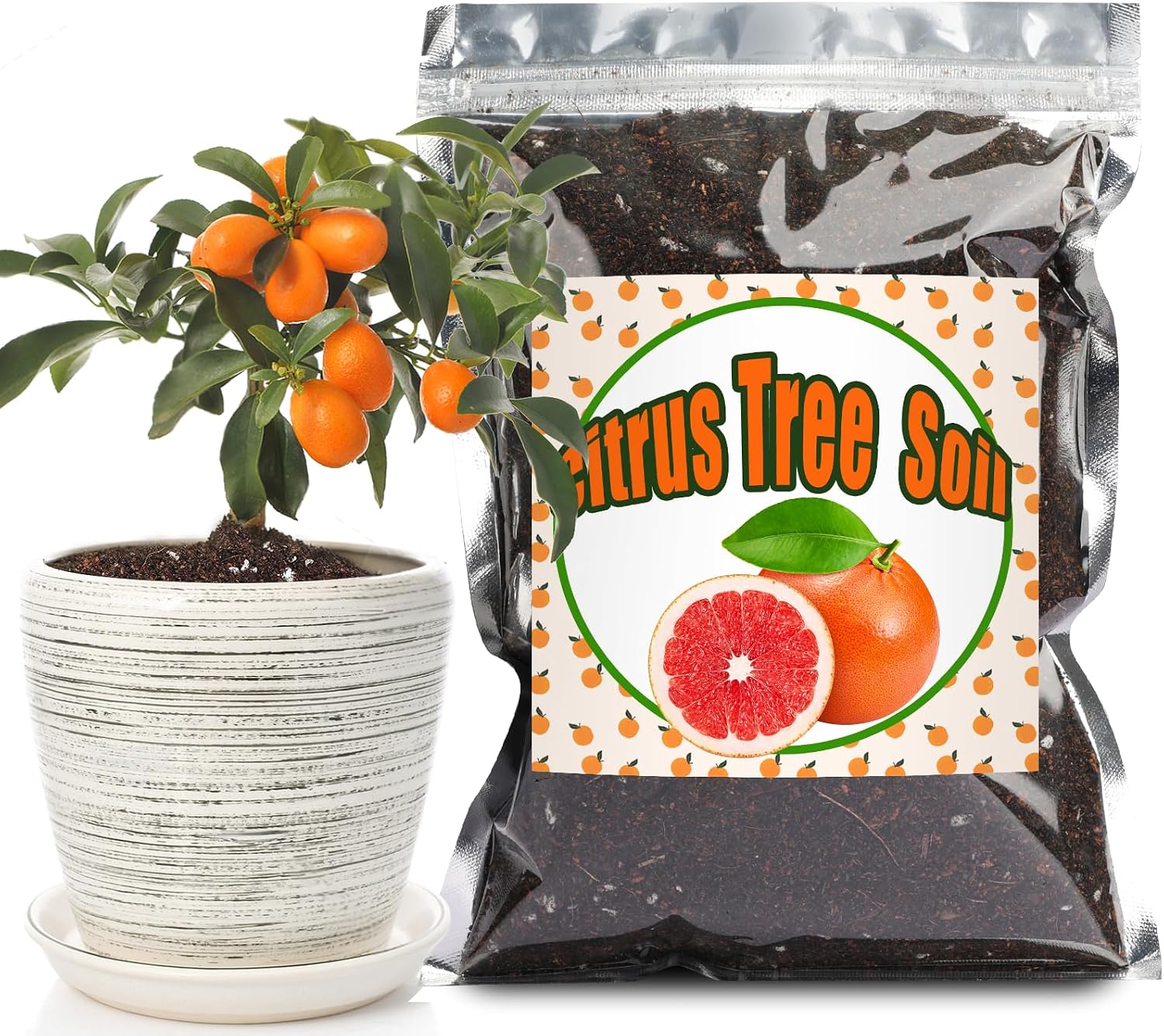
This Doter citrus potting mix is a small, 1-quart, ready-to-use soil blend designed for container-grown lemon, lime, orange and other citrus trees. It mixes organic and mineral components to deliver a balanced nutrient profile and claims an ideal pH between 6.0 and 7.1, which helps citrus roots access nutrients. The formulation emphasizes drainage and aeration so pots do not stay waterlogged, and the bagged format makes it convenient for repotting seedlings or refreshing the top layer in containers. For budget-conscious gardeners the single-quart size is useful for small projects, trial runs, or blending into larger mixes, but you will likely need multiple bags for a single mature container tree. The product works best as a component or short-term potting medium rather than a sole long-term planting substrate for large trees. Expect good seedling establishment and faster drainage compared with generic garden soil, but plan to supplement with larger volumes or slow-release fertilizer for sustained feeding on mature citrus.
Best for: Gardeners looking for an inexpensive, small-batch citrus-specific soil to repot seedlings, top-dress containers, or trial a citrus blend before committing to larger quantities.
Less Ideal for: Growers with mature potted citrus or those who need large volumes for in-ground planting should choose bulk soils or custom mixes instead.
- Formulated pH between 6.0 and 7.1, suitable for citrus nutrient uptake
- Designed for improved drainage and aeration to reduce root rot risk
- Nutrient-rich blend of organic and mineral components to support growth
- Ready-to-use bag convenient for repotting seedlings and small containers
- Small 1-quart volume means multiple bags are required for larger pots or trees
- Not marketed as a long-term complete potting substrate for mature trees
Verdict: A convenient, budget-friendly small bag of citrus-specific potting mix ideal for repotting seedlings and topping up container citrus plants.
E.B. Stone Organics Citrus & Palm Mix Potting Soil, 1.5 cu ft

| Brand Name | E.B. Stone Organics |
|---|---|
| Unit Count | 1536 Ounce |
| Volume | 1.5 cubic feet |
| Style Name | Potting Soil |
E.B. Stone Organics Citrus & Palm Mix is a ready-to-use organic soil blend designed for container and in-ground planting of citrus, palms, avocados and tropical foliage. The mix pairs aged fir bark and pumice to keep the root zone well aerated and fast-draining so plants that dislike soggy feet avoid root rot, while added mycorrhizae improve nutrient and water uptake. It is intended to be used straight from the bag for potting or worked into beds when planting, which simplifies planting and repotting tasks. For gardeners seeking reliability, this blend delivers consistent structure and moisture retention without heavy amendments, and the organic base supports longer-term soil biology. Limitations are the single bag volume of 1.5 cubic feet, which means larger projects will require multiple bags and mixing on site, and it does not list N-P-K numbers or slow-release fertilizer content so supplemental feeding may be needed for heavy-feeding specimens.
Best for: Gardeners who prioritize reliable, low-maintenance potting media for citrus and tropical plants and want a ready-made organic blend that supports healthy roots.
Less Ideal for: People who need large volumes for landscaping projects or who prefer a potting mix with specified fertilizer content and tailored nutrient ratios.
- Formulated specifically for citrus, palms and tropicals to match their root needs.
- Aged fir bark and pumice provide good drainage and aeration to reduce risk of root rot.
- Contains beneficial mycorrhizae to enhance root nutrient and water uptake.
- Ready-to-use bag simplifies repotting or planting without on-site blending.
- Single bag is only 1.5 cubic feet so multiple bags are required for larger trees or beds.
- No detailed fertilizer analysis provided so additional feeding may be necessary for heavy feeders.
Verdict: Choose this mix when you want a consistent, ready-to-use organic soil that promotes healthy, well-aerated roots for citrus and tropical plants.
Miracle-Gro Cactus, Palm & Citrus Potting Mix, 8 qt.
| Brand Name | Miracle-Gro |
|---|---|
| Volume | 8 quarts |
| Unit Count | 1 Count |
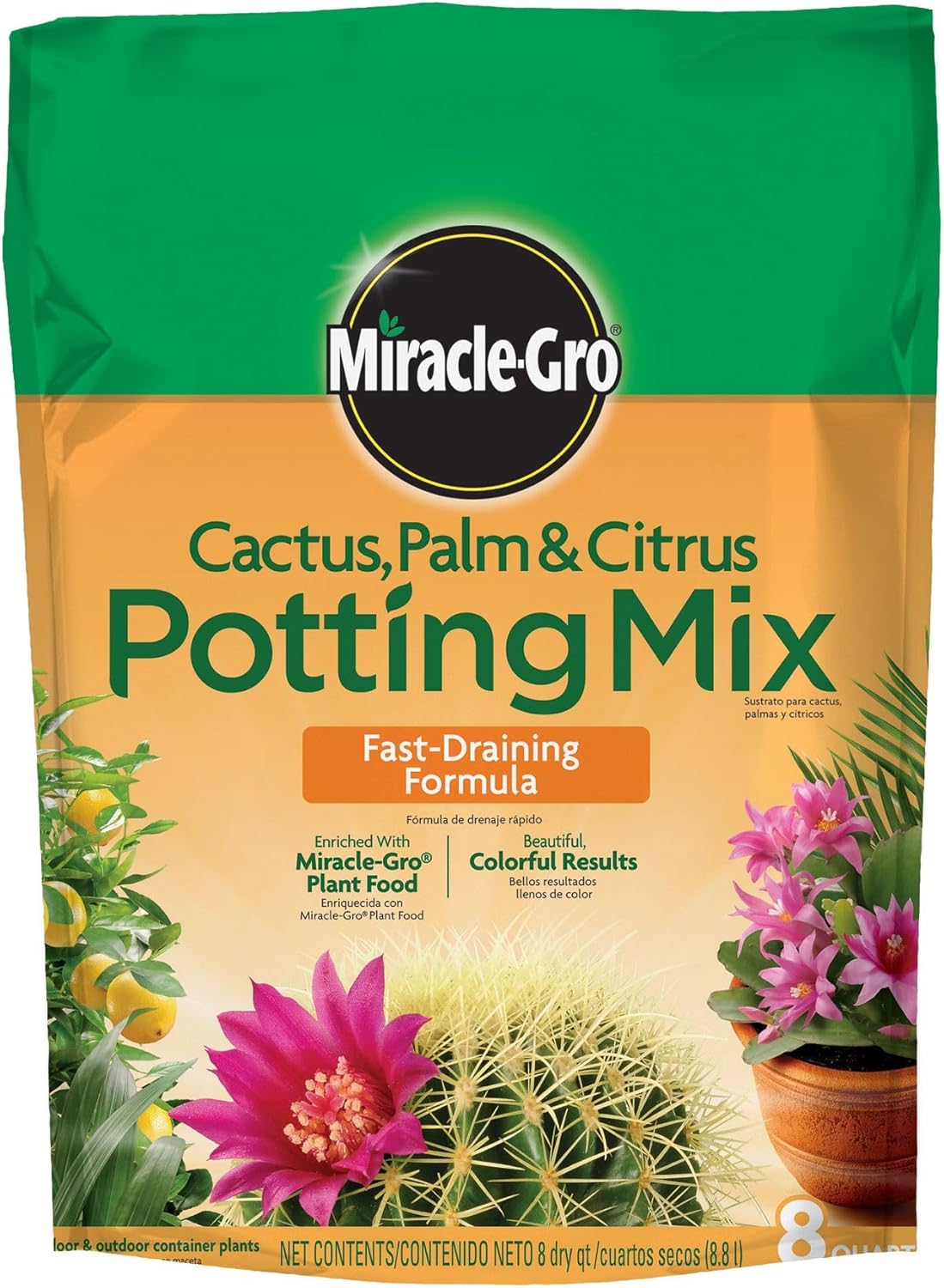
This 8-quart Miracle-Gro potting mix is designed for container-grown cacti, palms, and citrus and combines peat moss, sand, perlite, and forest products for faster drainage and reduced compaction. It arrives ready to use and is enriched with Miracle-Gro plant food so newly potted citrus get an initial nutrient boost without immediate fertilizing. Typical use is straightforward: choose a pot with drainage, fill about one third, set the root ball and top up, then water and allow to drain. The formula helps soil dry between waterings, which is important for citrus root health in containers, and one bag is enough for two 8-inch pots. Limitations are the small volume for larger trees and the presence of peat moss if you prefer peat-free mixes; heavier or older citrus will need larger volumes and eventual repotting. For growers wanting a quick, reliable container medium that balances moisture retention with drainage, this mix performs as expected.
Best for: Growers who repot or maintain container citrus and want a ready-to-use mix that balances drainage and initial feeding for healthier root development.
Less Ideal for: Gardeners potting mature or large citrus specimens that need large volumes of soil or those seeking a peat-free or custom mineral-heavy citrus bonsai substrate.
- Fast-draining blend reduces risk of waterlogged roots for container citrus
- Pre-enriched with plant food to give newly potted plants an initial nutrient boost
- Contains perlite and sand to resist compaction and maintain aeration
- Formulated for indoor or outdoor containers so it works across sites
- 8-quart bag is small for larger or multiple citrus containers
- Contains peat moss which some buyers avoid for sustainability reasons
Verdict: A convenient, fast-draining, plant-food–enriched container mix that makes repotting small to medium citrus trees quick and reliable.
Back to the Roots Organic Expanding Coco Coir Potting Soil Brick (10 lb)

| Item Highlight | 10 lb compressed coco coir brick; peat-free; OMRI Listed |
|---|---|
| Item Type Name | Coconut Coir |
| Volume | 2 cubic feet |
| Ingredients | Coconut Coir |
| Style Name | Expanding Potting Soil |
This compressed coco coir brick provides a lightweight, peat-free potting medium that expands when you add water to create loose, airy substrate for containers and seed flats. It is typically used by hydrating the 10 lb block to about 2 cubic feet of coir and then using it alone for potted plants, mixing it into garden soil to improve drainage and aeration, or blending with compost for starting seeds. Notable features include OMRI listing for organic use, a balanced pH suited to a wide range of plants, and compact storage before expansion which saves space. Practical benefits are improved root aeration and water retention compared with heavy garden loam, easier handling than bulky bags, and versatility across vegetables, herbs, and ornamentals. Important limitations are that coco coir is a soilless substrate and does not supply significant nutrients on its own so you will need to add fertilizer or compost for long-term potted herbs like rosemary, and the product requires time and a water source to expand before use.
Best for: Buyers who prioritize low-risk, easy-to-handle, organic potting media and want a versatile base for container herbs and seed starting without dealing with heavy bags.
Less Ideal for: Gardeners who want a ready-to-plant, nutrient-rich potting mix out of the box or those who prefer soil with built-in slow-release fertilizer.
- Peat-free OMRI listed organic coco coir suitable for organic growing
- Expands from a compact brick to about 2 cubic feet for easy storage and transport
- pH balanced and airy texture that improves drainage and root aeration
- Versatile use: can be used alone, for seed starting, or mixed into existing soil
- Provides little inherent fertility so supplemental feeding or compost is needed for nutrient-hungry plants
Verdict: A compact, peat-free coco coir brick that expands into an airy, pH-balanced base ideal for low-risk organic container gardening and seed starting when paired with fertilizer or compost.
Choosing the Right Soil for Lemon: Key Factors to Consider
Drainage and Aeration
Lemon trees are highly intolerant of waterlogged roots. Good drainage prevents root rot and promotes healthy root hair development. In practical terms this means choosing a soil with coarse components such as coarse sand, perlite, or pumice to keep pore spaces open. For containers, drainage also depends on pot size and bottom drainage holes, so match the soil texture to the container and your watering frequency.
Aeration affects oxygen availability for roots and beneficial microbes. Soils that compact after repeated wetting reduce oxygen and slow root growth, leading to yellowing leaves and poor fruiting. Look for mixes that retain a crumbly structure over time or that are easy to loosen between seasons with light amendment.
Nutrient Content and Buffering
Young and fruiting lemon trees need a steady supply of nitrogen, phosphorus, potassium, and micronutrients like iron and magnesium. A good lemon soil either contains a balanced starter nutrient charge or accepts fertilizer applications without rapid leaching. Organic components such as compost or well-aged manure provide slow-release nutrients and improve microbial life, but they should not dominate the mix in a way that reduces drainage.
Buffering capacity is the soil's ability to maintain stable nutrient and pH levels between feedings. Soils with good cation exchange capacity help hold onto applied fertilizer, meaning you can feed less often with more predictable results. For container-grown lemons, media that lose nutrients quickly will require more frequent feeding and monitoring.
pH Suitability for Citrus
Most lemon trees prefer slightly acidic to neutral soil, typically around pH 5.5 to 6.5. Soil pH affects nutrient availability, with iron and manganese becoming less available at higher pH and phosphorus availability changing with extremes. Choosing a soil that starts in the proper pH range reduces early nutrient lockup and the need for corrective amendments.
If your local water or fertilizer program tends to push pH upward or downward, select a mix with some buffering ingredients so you are not constantly adjusting pH. For container trees, check pH annually since irrigation and fertilizer can shift it more rapidly than in-ground plantings.
Structural Longevity and Amendment Needs
Soil structure changes as organic matter decomposes. A mix heavy in fine peat or uncomposted bark may compact within a year, requiring repotting or amendment. Structural longevity refers to the soil's ability to maintain pore structure and nutrient retention over multiple seasons.
Gardeners should consider how often they are willing to refresh or top-dress soil. Long-lived structures use stable inorganic components like grit, pumice, or coarse sand combined with moderate organic matter. This reduces the need for frequent repotting and preserves root health through repeated wetting and drying cycles.
Container Versus In-Ground Suitability
Soils for container-grown lemons have different needs than soils for in-ground plantings. Containers demand mixes that drain quickly but hold enough water between waterings, while in-ground soils need to integrate with existing garden soil and accommodate deeper root systems.
When planting in-ground, consider how well the soil blends with native soil and whether amendments will change drainage patterns. For containers, use lightweight, well-structured mixes that allow air exchange at the root crown and reduce the risk of waterlogging around the root collar.
Water-Holding Capacity and Irrigation Frequency
Water-holding capacity determines how often you must water. Soils that dry out too fast cause stress and reduce fruit set, while soils that retain too much moisture increase disease risk. The ideal soil for lemon balances these needs so you water on a predictable schedule that fits your climate and pot size.
Consider your irrigation method. Drip-irrigated or self-watering systems can work with coarser mixes, while hand-watering in hot climates benefits from mixes that retain moisture a little longer. Match soil choice to how often you realistically will water.
Container Planting Tips for Lemon Trees
Choose a pot that is only moderately larger than the root ball to avoid excess moisture retention in unused soil. Ensure the container has adequate drainage holes and use a saucer only when you intentionally want to capture runoff for reabsorption.
When filling the pot, place a coarse layer of grit or broken terracotta pieces at the bottom if your chosen soil tends to compact. Mix in pumice or perlite to improve aeration and reduce repotting frequency. Repotting every two to four years is usually sufficient for most container lemons, depending on growth rate.
- Avoid extremely large pots that hold too much wet soil
- Top-dress with compost or slow-release citrus fertilizer each growing season
- Check root health when repotting and prune circling roots lightly
Adjusting Soil pH and Nutrient Programs
Test soil pH annually. If pH drifts high, iron chelates or acidifying fertilizers can correct deficiencies. If pH is too low, incorporate lime sparingly and retest after several months.
Base fertilizer schedule on growth stage. Young trees need slightly more nitrogen to establish canopy, while mature, fruiting trees benefit from balanced NPK with added micronutrients. Slow-release formulations help keep nutrient levels steady between applications.
- Use soil test results to guide amendments
- Avoid sudden large pH adjustments; make gradual corrections
- Include micronutrient checks if leaves show interveinal chlorosis
Amending Native Soil for In-Ground Lemons
When planting lemons in the ground, dig a planting hole at least twice the width of the root ball and mix native soil with coarse sand and organic matter to improve drainage and fertility. Avoid creating a sharply different soil pocket that can trap water; instead blend amendments evenly with the surrounding soil.
If native soil is heavy clay, increase grit content and organic matter to open pore space. Over time, top-dress with compost and mulch to maintain moisture and feed microbial life without burying the trunk.
- Blend amendments with native soil rather than creating an isolated pocket
- Use mulch but keep it clear of the trunk base
- Improve clay soils with coarse amendments rather than only organic matter
Seasonal Care and Soil Management
Monitor soil moisture through the seasons. In hot months you may need to water more often, while in cool, wet periods reduce frequency to prevent saturation. Adjust fertilizer timing to active growth and fruit development cycles.
Mulching reduces surface evaporation and moderates temperature swings around roots. Refresh mulch annually and inspect soil structure each spring to decide whether top-dressing or light aeration is necessary.
- Water deeply but infrequently to encourage a strong root system
- Refresh topsoil or compost each spring for container and in-ground trees
- Inspect root collar each season for signs of rot or girdling
Signs a Soil Needs Replacing or Refreshing
If container soil compacts, smells sour, drains poorly, or shows persistent nutrient deficiencies despite feeding, it is time to refresh or replace the mix. In-ground soils that remain waterlogged after heavy rains or that form hard crusts at the surface also require amendment.
Regular observation will tell you whether simple top-dressing is enough or if a full repotting or soil excavation is needed. Healthy soil should drain within a day of heavy watering and support steady leaf color and fruit set.
- Look for compaction, slow drainage, or foul odors
- Check leaf color and fruit set as indicators of root-zone health
- Plan repotting during the tree's slower growth periods
How We Chose the Best Soil for Lemon
We focused on attributes that matter most to gardeners growing lemons, whether in containers on a patio or planted in a small yard. Our selection criteria prioritized drainage characteristics, nutrient content and buffering capacity, pH suitability for citrus, organic matter and long-term structure, and compatibility with container culture. We favored mixes that promote rapid excess-water escape while retaining enough water for fruiting cycles, and soils that either contain or accept standard citrus fertilizer routines without rapid nutrient loss. We excluded blends aimed solely at succulents, general-purpose potting soils with poor drainage, and mixes formulated only for acid-loving ornamental plants. We also filtered out products lacking clear ingredient lists or those with excessive peat content that would compact quickly. The final shortlist reflects practical garden performance: how the soil behaves around roots, how often it requires watering or amendment, and how it supports flowering and fruit development under typical home-garden conditions.
FAQ
What is the ideal pH range for lemon tree soil?
Lemons usually prefer slightly acidic to near-neutral soil, commonly around pH 5.5 to 6.5. That range helps keep micronutrients like iron available while supporting healthy growth.
Can I use regular potting soil for potted lemon trees?
Regular potting soil can work but often lacks the coarse drainage components citrus need. Improve it by adding coarse sand, perlite, or pumice and some organic matter to balance moisture retention and aeration.
How often should I repot a lemon tree in a container?
Most container lemons benefit from repotting every two to four years, depending on growth rate and soil condition. Repot sooner if the soil compacts, drains poorly, or roots are circling the pot.
How much water-holding capacity should I expect from lemon soil?
Aim for moderate water-holding capacity: enough to keep roots moist between waterings but not so much that the soil stays saturated. The right balance depends on pot size, climate, and your irrigation routine.
Should I add compost to lemon tree soil?
Adding well-aged compost improves nutrient content and microbial life, but do so in moderation. Excessive organic matter can reduce drainage. Use compost as a component rather than the majority of the mix.
How do I correct iron deficiency in lemon leaves?
Iron deficiency often appears as yellowing between leaf veins. Correct it by adjusting soil pH if it is too high and by using iron chelates or foliar iron sprays as a targeted short-term fix while addressing underlying soil conditions.
Final Verdict
Choosing the right soil for lemon revolves around balancing drainage, nutrient availability, and pH stability. Prioritize mixes that provide good aeration, steady nutrient buffering, and a pH suited to citrus, and match the formula to whether the tree will live in a container or the ground. Expect to top-dress or lightly amend soil every season for long-term health, and repot when compaction or root crowding limits growth. With those priorities in mind, you can pick a soil that supports healthy roots, reliable fruiting, and simpler seasonal care.
