

Note: This article contains affiliate links. If you click on these links and make a purchase, I may earn a small commission at no extra cost to you. This helps support my research and content. Read my full affiliate disclosure here.
Choosing the right soil mix for a Meyer lemon tree matters more than many gardeners expect. In containers or tight beds, soil controls drainage, root oxygen, nutrient holding, and how quickly you need to fertilize. A poor mix can cause root rot, slow growth, or weak fruit set, while the right blend encourages steady growth, reliable flowering, and better fruit quality. This guide shortlists seven top soil mix approaches suited for Meyer lemon trees and explains the practical tradeoffs gardeners face. We evaluate each option for drainage, structure, and nutrient retention so you can pick a mix that fits your pot size, climate, and maintenance routine.
Top Picks at a Glance
| Best Overall The best all-around choice for most situations | Soil Sunrise Citrus Tree Potting Soil Mix (30 Quarts) |  |
| Best Quality Built to a higher standard if you want something more solid | Wekiva Foliage Meyer Lemon Tree Soil Mix (4 Quarts) |  |
| Best Value The sweet spot between price and what you get | Duspro Pre-Mixed 4‑in‑1 Citrus Tree Potting Soil Mix, 6 Quarts |  |
| Best Budget The cheapest option that still gets the job done reliably | Doter Citrus Tree Potting Soil Mix (1 qt) |  |
| Highest Rated A top-rated pick with lots of positive feedback | Via Citrus Chunky Potting Soil for Citrus Trees, 4.25 qt |  |
| Most Popular A crowd favorite that many people choose with confidence | Soil Sunrise Citrus Tree Potting Soil Mix (12 Quarts) |  |
| Best Seller A high-volume bestseller chosen again and again | Miracle-Gro Potting Mix, 16 qt. (2-Pack) |  |
Soil Sunrise Citrus Tree Potting Soil Mix (30 Quarts)

| Volume | 30 quarts |
|---|---|
| Ingredients | Peat moss, perlite, sand, worm castings, lime |
| Unit Count | 1 Count |
| Style Name | Sandy |
This Soil Sunrise mix is a lightweight, well-draining potting soil designed for container fruit trees. It combines peat moss for water retention, perlite and coarse sand for quick drainage and aeration, worm castings for slow-release nutrients, and lime to keep pH suitable for acid-sensitive fruit. In use you would fill pots or repot rootballs with this blend to reduce soggy roots and encourage steady growth and fruiting. The resealable 30-quart bag and all-natural ingredient list make it a low-fuss option for regular repotting and seasonal top-ups. Important limitations: the formula is targeted at citrus and formulated with lime, so its pH profile and ingredient balance are optimized for citrus preferences rather than apple-specific needs; heavier-feeding or larger potted apple varieties may also require supplemental fertilizer over time. For growers seeking a clean, airy base for container fruit trees this mix provides a reliable starting medium, but you should monitor soil fertility and adjust amendments for apples as they mature.
Best for: Home gardeners who want a clean, well-draining base mix for potted fruit trees and prefer an all-natural, low-maintenance soil to encourage steady growth.
Less Ideal for: Growers who need a soil tailored precisely to apple tree pH or nutrient demands, or those planting large standard apple trees in oversized containers without planned fertilization.
- Designed for container fruit with a balance of peat, perlite, and sand to prevent waterlogging
- Includes worm castings to provide natural nutrients and improve soil biology
- Lime added to stabilize pH for fruit-bearing trees that prefer slightly higher pH
- All-natural, hand-blended ingredients with no fillers listed
- Resealable bag and 30-quart volume suited to repotting small to medium trees
- Formulated specifically for citrus so pH and lime content may not match apple preferences exactly
- May require additional fertilization for heavier-feeding apple varieties over a growing season
Verdict: A well-draining, all-natural container mix that gives small to medium potted fruit trees a healthy airy foundation and low-maintenance starting point.
Wekiva Foliage Meyer Lemon Tree Soil Mix (4 Quarts)

| Brand Name | Wekiva Foliage |
|---|---|
| Unit Count | 4 Count |
| Volume | 1 quarts |
This Meyer Lemon Tree Soil Mix is a ready-to-use potting medium tailored to potted Meyer lemons and other container citrus. It combines coarse perlite for open drainage with coarse peat and hydra fiber to hold moisture without waterlogging, and lime to help stabilize pH for citrus uptake. In practice it makes repotting and top-dressing simpler: the blend encourages quick root establishment, reduces the risk of root rot in containers, and supplies an immediately hospitable environment for flowering and fruit set. The mix is lightweight and easy to work with, so it is convenient for indoor and patio use and for growers who repot annually. Limitations are its small 4 quart size, which means multiple bags are needed for larger containers or for multiple trees, and it does not list specific fertilizer analysis or long-term nutrient release, so growers who want multi-season fertility may need to supplement with slow-release fertilizer or regular feedings.
Best for: Serious home growers or performance-oriented gardeners repotting or top-dressing potted Meyer lemon trees who prioritize fast root establishment and reliable drainage.
Less Ideal for: Casual gardeners with many large containers or those who want an all-in-one fertilized soil for multiple seasons without additional feeding.
- Formulated specifically for Meyer lemons with lime for pH balance
- Coarse perlite improves drainage and reduces risk of root rot in pots
- Hydra fiber and peat components retain moisture while maintaining aeration
- Ready-to-use mix suitable for indoor and patio container use
- Sold in a small 4 quart bag that is insufficient for large pots or multiple trees
- No listed N-P-K or fertilizer longevity information for multi-season feeding
Verdict: Choose this mix if you want a citrus-focused potting medium that promotes strong roots and dependable drainage for potted Meyer lemon trees.
Duspro Pre-Mixed 4‑in‑1 Citrus Tree Potting Soil Mix, 6 Quarts

| Style Name | 6 Quarts |
|---|---|
| Brand Name | Duspro |
| Item Highlight | Indoor Fruit Tree Mix for Potted Lemon Tree, Oranges & Other Citrus Trees |
This Duspro 4-in-1 citrus potting mix is built for repotting potted lemon, lime and other citrus trees without the need to measure or blend ingredients yourself. The pre-mixed formula pairs coco coir and coco fiber with vermiculite to help retain balanced moisture while perlite increases drainage and root aeration, which reduces the risk of waterlogged roots in containers. It is easy to use: pour into a pot with drainage, center the tree, fill around roots and water. The product is double-screened for a consistent texture that pours cleanly and is available in sizes suitable for one to several 8-inch pots. Practical benefits include saving time, avoiding mixing errors, and a formulation tailored to the moisture and airflow needs of container citrus. Limitations to note are that the bag can be dusty when opened so some caution is needed during handling and the smallest 6-quart size only covers a limited number of repots for larger trees.
Best for: Buyers who want a reliable, no-mix potting medium for indoor or patio citrus trees and prefer a ready-made blend that reduces repotting guesswork and effort.
Less Ideal for: Growers who need very large volumes for multiple mature trees or who prefer to custom-blend their own media with specific amendments.
- Pre-mixed 4-in-1 formula (coco coir, coco fiber, perlite, vermiculite) tailored for container citrus
- Double-screened texture for cleaner pouring and more consistent repotting
- Promotes balanced moisture retention while improving drainage and root aeration
- Available in multiple sizes to match small to medium container needs
- Dusty when opened, requiring a mask or careful handling to avoid inhaling particles
- 6-quart size covers only a small number of repots for larger citrus trees
Verdict: A convenient, professionally blended potting mix that takes the guesswork out of repotting potted citrus trees.
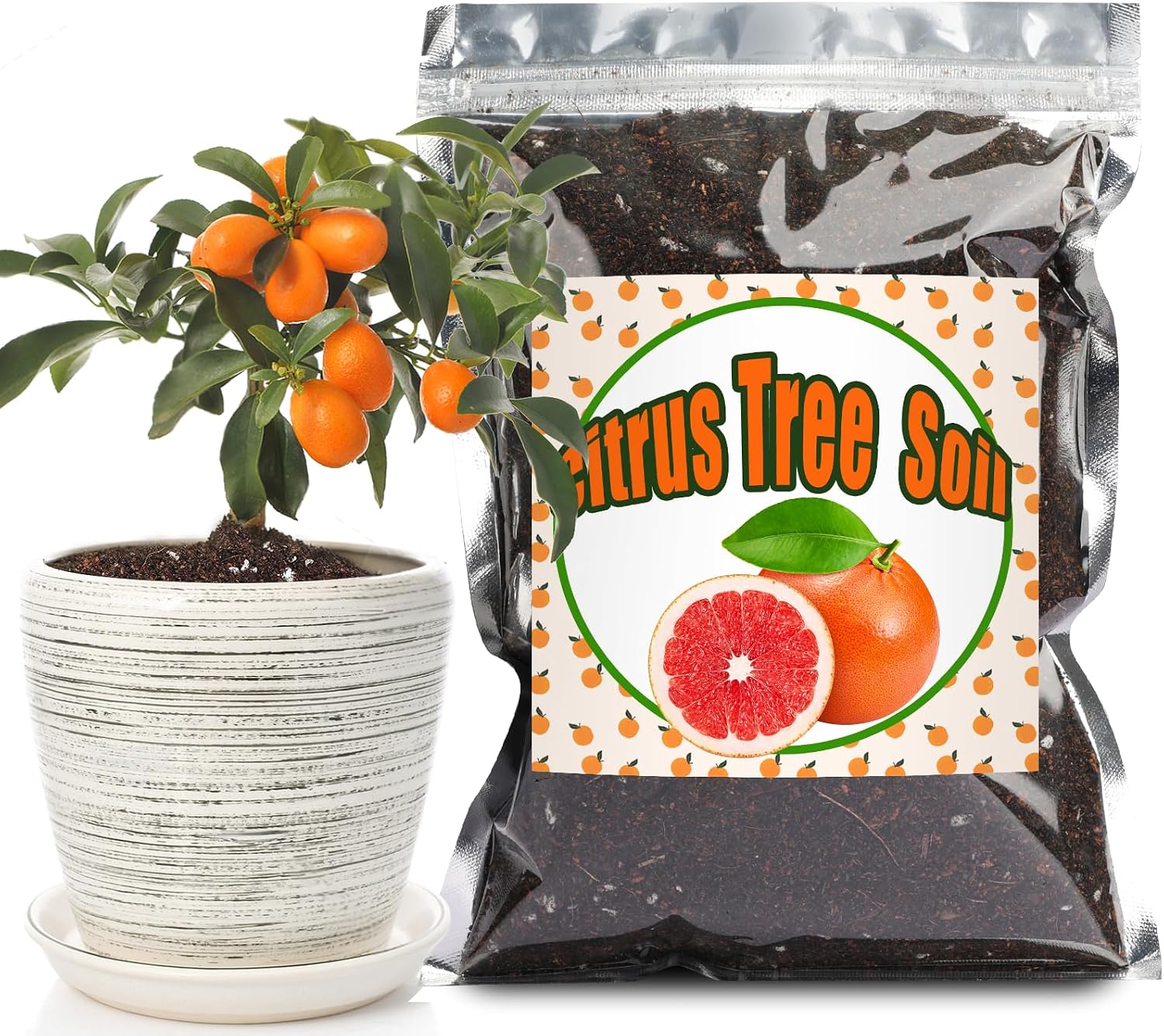
Doter Citrus Tree Potting Soil Mix (1 qt)
| Brand Name | Doter |
|---|---|
| Item Type Name | Garden soil |
| Volume | 1 quarts |
| Item Weight | 224 g |
This Doter citrus potting mix is a small, 1-quart, ready-to-use soil blend designed for container-grown lemon, lime, orange and other citrus trees. It mixes organic and mineral components to deliver a balanced nutrient profile and claims an ideal pH between 6.0 and 7.1, which helps citrus roots access nutrients. The formulation emphasizes drainage and aeration so pots do not stay waterlogged, and the bagged format makes it convenient for repotting seedlings or refreshing the top layer in containers. For budget-conscious gardeners the single-quart size is useful for small projects, trial runs, or blending into larger mixes, but you will likely need multiple bags for a single mature container tree. The product works best as a component or short-term potting medium rather than a sole long-term planting substrate for large trees. Expect good seedling establishment and faster drainage compared with generic garden soil, but plan to supplement with larger volumes or slow-release fertilizer for sustained feeding on mature citrus.
Best for: Gardeners looking for an inexpensive, small-batch citrus-specific soil to repot seedlings, top-dress containers, or trial a citrus blend before committing to larger quantities.
Less Ideal for: Growers with mature potted citrus or those who need large volumes for in-ground planting should choose bulk soils or custom mixes instead.
- Formulated pH between 6.0 and 7.1, suitable for citrus nutrient uptake
- Designed for improved drainage and aeration to reduce root rot risk
- Nutrient-rich blend of organic and mineral components to support growth
- Ready-to-use bag convenient for repotting seedlings and small containers
- Small 1-quart volume means multiple bags are required for larger pots or trees
- Not marketed as a long-term complete potting substrate for mature trees
Verdict: A convenient, budget-friendly small bag of citrus-specific potting mix ideal for repotting seedlings and topping up container citrus plants.
Via Citrus Chunky Potting Soil for Citrus Trees, 4.25 qt

| Brand Name | Via Citrus |
|---|---|
| Unit Count | 135 Ounce |
| Item Highlight | Fast Drainage, Root Aeration, Loamy Blend |
| Volume | 4.25 liters |
This chunky potting soil is designed specifically for citrus and other fruit trees grown in containers. The coarse, loamy blend keeps soil from compacting, promotes airflow around roots, and sheds excess water quickly enough to reduce the risk of root rot while still retaining some moisture for steady growth. In practice it works well when repotting or topping up pots for lemons, limes, and other indoor citrus where drainage and root stability matter. The product is sold in a small 4.25 quart bag, so it is convenient for spot repots or refreshing the top few inches of potting media, but you will need multiple bags for full repots of larger trees. It includes a safety note to avoid inhalation and to wash hands after handling. If you want a purpose-built citrus mix with a chunky texture to support root development and better aeration in container-grown lemon trees, this does the job; just plan for the bag size when budgeting for larger containers.
Best for: Sensible plant owners who want a purpose-made potting mix to improve drainage and root aeration for potted citrus and prefer to repot or top-dress plants themselves.
Less Ideal for: People who need large volumes of soil for multiple or large container trees at once or those who want an all-in-one fertilized potting blend.
- Formulated for citrus and fruiting container trees to support root development
- Chunky, loam-based texture improves drainage and prevents compaction
- Helps maintain balanced moisture while allowing excess water to escape
- Convenient small bag size useful for spot repots or top-dressing
- Small 4.25 qt volume means multiple bags are required for full repots of medium to large trees
- No listed fertilizer or nutrient analysis so additional feeding may be needed
Verdict: Choose this chunky loam mix when you want a citrus-specific potting soil that improves drainage and root aeration for healthier potted lemon trees.
Soil Sunrise Citrus Tree Potting Soil Mix (12 Quarts)

| Volume | 12 quarts |
|---|---|
| Ingredients | Peat moss, perlite, sand, worm castings, lime |
| Unit Count | 1 Count |
| Style Name | Peat Moss,Potting Soil Mix |
Soil Sunrise Citrus Tree Potting Soil is a 100% natural, hand-blended mix intended for growing potted citrus like Meyer lemons, key limes, and dwarf mandarins. The formula combines peat moss for moisture retention, perlite and sand for improved drainage and aeration, worm castings for gentle nutrients, and lime to stabilize pH—ingredients gardeners typically mix themselves but pre-blended here. In practice this makes repotting or starting citrus in containers simpler and reduces the risk of soggy roots that cause rot. The resealable 12-quart bag is sized for several small repots or one larger container, and the absence of fillers means you get a predictable texture. Limitations are that peat-based mixes compress over time and will need occasional refreshing or adding organic amendments, and it does not include slow-release fertilizer so planned feeding is still required for fruit production. For buyers who prefer a ready-to-use citrus blend, this delivers appropriate drainage and pH control but expect to supplement nutrients seasonally for best yields.
Best for: Home growers who want a ready-made, citrus-focused potting mix to simplify repotting and container growing of lemon and lime trees and who value proven ingredient combinations backed by other buyers.
Less Ideal for: Growers seeking an all-in-one fertilized potting media or those who avoid peat for environmental reasons should look at alternatives.
- Custom blend targeted to citrus with peat, perlite, sand and lime for balanced drainage and pH.
- Includes worm castings to provide natural, mild nutrient support.
- Hand-blended, all-natural formula without fillers or synthetic additives.
- Resealable 12-quart bag suitable for multiple small repots or one larger container.
- Peat-based mix can compact or settle over time and may require refreshing.
- Does not contain built-in slow-release fertilizer so regular feeding is still necessary.
Verdict: Choose this mix if you want a ready-to-use, citrus-specific potting soil that improves drainage and pH control for healthier potted lemon trees.
Miracle-Gro Potting Mix, 16 qt. (2-Pack)

| Feeds Plants | Up to 6 months |
|---|---|
| Volume | 16 quarts |
| Number of Packs | 2 |
| Intended Use | Outdoor containers |
| Ingredients | Sphagnum Peat Moss, Peat, Perlite, Compost, Fertilizer |
Miracle-Gro Potting Mix is a general-purpose container soil designed for outdoor pots, planters, and hanging baskets. It combines peat-based media, perlite, compost, and built-in fertilizer so you can pot vegetables, herbs, annuals, perennials, and shrubs without blending amendments. Typical use is straightforward: fill a pot about one third, set the plant at nursery depth, top off, and water until excess drains. Notable features are fast drainage to prevent root rot, an all-purpose nutrient charge that feeds plants for up to six months, and a texture that helps roots establish quickly. In practice this means less upfront prep and fewer immediate feedings compared with plain soil, and it is handy for seasonal repotting and new container plantings. Important limitations are that it is formulated for containers only (not in-ground beds) and the nutrient boost will diminish after the stated feeding period so you will need to supplement or repot for long-term specimens. Also peat-based mixes can compress over time and require refreshing each season.
Best for: Gardeners who want a low-effort, dependable potting soil for seasonal container planting and quick repots, especially those optimizing time and results across many pots.
Less Ideal for: Those wanting a soil to amend in raised beds or long-term in-ground planting should choose a garden soil formulated for in-ground use instead.
- Ready-to-use mix with built-in fertilizer that feeds up to six months
- Formulated for fast drainage to reduce risk of overwatering and root rot in containers
- Versatile for a wide range of outdoor container plants including vegetables, herbs, and flowers
- Not intended for in-ground garden beds
- Fertilizer effect is temporary and requires refeeding or repotting after about six months
Verdict: A convenient, fast-draining potting mix that simplifies container planting while providing up to six months of built-in nutrition.
Choosing the Right Soil Mix for Meyer Lemon Tree: Key Factors to Consider
Drainage and Aeration
Drainage determines how quickly excess water moves away from roots and aeration dictates how much oxygen stays around the root zone. Meyer lemon roots need a balance: they like consistent moisture but do not tolerate standing water. A mix with coarse particles such as horticultural sand, perlite, or pumice helps keep pore spaces open so roots get oxygen between waterings.
Poor drainage and fine-textured mixes compact faster and reduce oxygen, which raises the risk of root rot. When selecting or blending a soil mix, aim for visible coarse material and avoid mixes that feel muddy after wetting.
Nutrient Retention and Cation Exchange
Citrus trees are steady feeders and require accessible nitrogen, potassium, and micronutrients during growth and fruiting. Organic components like compost and coconut coir hold nutrients and slowly release them, which reduces the need for constant fertilizing. However, pure organic material can decompose and compact over time, changing the mix's structure.
Components such as peat or aged compost also affect cation exchange capacity. A mix with a balance of organic matter and inert aeration components keeps nutrients available while preserving porosity.
pH and Salt Management
Meyer lemons prefer slightly acidic soil, typically in the pH range of about 5.5 to 6.5. The mix should not contain alkaline amendments that push pH upward over time. Also, container-grown citrus are sensitive to salt buildup from fertilizers and irrigation water. Using low-salt components and flushing containers periodically helps avoid foliar damage and reduced fruiting.
Choose ingredients with predictable pH behavior, and plan for occasional monitoring and corrective measures such as elemental sulfur or acidifying fertilizers if pH drifts.
Particle Size and Long-Term Structure
The distribution of particle sizes in a soil mix controls how it holds water and air as it ages. Larger particles like bark, pumice, or perlite prevent compaction and maintain pore continuity. Finer particles increase water holding but can fill gaps and reduce aeration as organic matter breaks down.
For long-term container culture, prioritize mixes designed to retain structure for at least one to two seasons. That reduces the frequency of repotting and root stress caused by sudden changes in media properties.
Water-Holding Capacity Versus Frequency Of Watering
Home gardeners balance how often they want to water with how much water the mix holds. A high water-holding mix reduces the need to water daily but can cause slow drying and possible root rot if drainage is poor. A fast-draining mix dries faster and requires more regular irrigation, which is manageable if you have a consistent watering schedule.
Decide based on your climate and whether you use drip irrigation or hand watering. In hot, dry climates a slightly higher water-holding capacity helps reduce stress between waterings, while humid climates benefit from faster-draining blends.
Ease Of Sourcing And Mixing
Not every gardener has access to specialized amendments, so practical blends should use commonly available components like potting compost, perlite, coarse sand, and aged bark. The ease of sourcing affects whether you will re-mix or top-dress annually. Simple recipes that use widely sold goods let you reproduce the mix reliably.
Also consider weight for large containers. Heavy mixes can be hard to move, so gardeners may prefer lighter components like pumice or perlite when mobility matters.
Best Mix Basics for Container Meyer Lemons
Container-grown Meyer lemons do best in a free-draining yet moisture-holding mix. Start with a loose potting base and add coarse aggregates and a modest portion of stable organic matter so the root zone stays aerated but not bone dry.
Aim for a mix that feels gritty rather than sticky when wet. That texture helps roots extend quickly while giving the gardener room to adjust watering and feeding without risking waterlogging.
- Include one or more coarse amendments such as pumice, perlite, or coarse horticultural sand.
- Use well-aged compost or coconut coir for gentle nutrient release and improved moisture retention.
- Avoid mixes that are pure garden soil or unaged compost due to compaction risk.
Adjusting Mix for Climate and Pot Size
In hot, arid regions, increase water-holding components slightly but keep coarse particles high enough to maintain aeration. Larger pots naturally hold more water, so blends for big containers can afford a bit more organic matter.
In cool or humid climates, favor faster drainage with a higher proportion of coarse material. For small pots, prioritize drainage even more because they dry and heat up faster, which concentrates salts and can stress roots.
- Small pots: higher proportion of pumice or perlite for faster drying.
- Large pots: add more aged compost to reduce frequent watering.
- Humid climates: prioritize aeration to avoid prolonged wetness.
pH Checks and Corrective Additives
Test your mix's pH before planting and periodically afterward. If the pH drifts above the preferred range, use small, gradual measures to acidify rather than heavy-handed adjustments that can shock the tree.
Garden lime, sulfur, and different fertilizer formulas affect pH differently. Select fertilizers designed for citrus that help maintain acidity and supply necessary micronutrients.
- Use a simple soil pH meter or test kit for quick checks.
- Acidifying amendments should be applied conservatively and monitored.
Feeding Routine With Different Mixes
A mix with more inert components will release fewer nutrients and require a regular fertilizing schedule. Conversely, mixes with ample compost deliver nutrients for longer but may require lighter supplemental feeding to avoid nitrogen spikes.
For potted Meyer lemons expect to feed more frequently than trees in the ground. Choose a fertilizer that supplies iron, magnesium, zinc, and manganese along with the primary NPK elements because citrus commonly shows micronutrient deficiencies.
- Inert-heavy mixes: plan for monthly feeding during the growing season.
- Organic-heavy mixes: monitor growth and apply lighter feedings as needed.
Repotting and Refreshing the Mix
Over time organic matter breaks down and particle distribution changes, which affects drainage and nutrient dynamics. Plan to refresh the top third of the container or repot every 1 to 3 years depending on the mix stability and growth rate.
When repotting, inspect roots for circling or compaction and loosen the root ball gently. Add fresh coarse material to restore structure and a small amount of aged organic matter to replenish nutrients.
- Top-dress annually with compost or slow-release fertilizer to maintain nutrient levels.
- Repot when the tree becomes root-bound or when the media compacts noticeably.
How We Chose the Best Soil Mix for Meyer Lemon Tree
We prioritized criteria that directly affect health and productivity for Meyer lemon trees grown in containers or small garden spots. Key evaluation points included drainage and aeration characteristics because citrus roots need oxygen and do poorly in waterlogged mixes. We also assessed nutrient retention and cation exchange behavior to estimate how often a gardener must feed the tree. Structure and long-term stability were considered to determine whether the mix compacts over a season and how often repotting is required. pH buffering and ingredient acidity were examined since Meyer lemons prefer slightly acidic, stable pH. Finally, we evaluated ease of sourcing and mixing for common gardener skill levels. We excluded mixes that are purely decorative or that rely on specialized fertilizers rather than a balanced growing medium. Extremely high-organic-only blends that are prone to compaction or mixes designed exclusively for non-citrus ornamentals were not considered. The final picks focus on blends that give good drainage, steady nutrient availability, stable structure, and manageable maintenance for typical home gardeners.
FAQ
How often should I repot a Meyer lemon in a container?
Usually every 1 to 3 years depending on pot size and mix stability. Fast-compacting mixes or rapidly growing trees need repotting sooner; stable, coarse mixes allow longer intervals.
Can I use garden soil as the main component for a potted Meyer lemon?
Garden soil is generally too heavy for container citrus and can compact, reducing aeration. It is better used sparingly or blended with coarse amendments to prevent waterlogging.
What pH should I aim for in a Meyer lemon soil mix?
Aim for a slightly acidic pH around 5.5 to 6.5. Monitor periodically because container media can shift pH with feeding and water quality, and corrective steps should be gradual.
Is perlite or pumice better for citrus containers?
Both improve drainage and aeration. Pumice is heavier and reduces floatation during watering, while perlite is lighter and may break down over several seasons. Choose based on weight preferences and availability.
How do I prevent salt buildup in a citrus container mix?
Flush containers periodically with extra water to leach salts and avoid over-applying granulated fertilizers. Using low-salt water sources and slow-release formulas helps limit accumulation.
Final Verdict
Prioritize drainage and stable structure when choosing a soil mix for Meyer lemon trees, then balance organic matter for steady nutrient release. Your climate, pot size, and watering habits will dictate whether you favor faster-draining aggregates or mixes with more water-holding capacity. Focus on a gritty texture, slightly acidic pH, and ingredients you can source and refresh easily. That approach minimizes root problems and keeps the tree productive, making it easier to choose confidently among soil mixes.
