

Note: This article contains affiliate links. If you click on these links and make a purchase, I may earn a small commission at no extra cost to you. This helps support my research and content. Read my full affiliate disclosure here.
When you need clear shooting lanes, steady shooting platforms, or safer access around a blind, the right pole saw for hunting makes outdoor work faster and more controlled. Hunters face specific demands: cutting at height without leaving a stand, minimizing noise and movement, and keeping gear compact enough for transport. This guide covers the top five pole saws shortlisted for hunting use and explains the practical tradeoffs you should expect in reach, cutting power, vibration, and portability. Read on for the key evaluation points that guided our selections and a clear checklist so you can pick the best tool for your hunting setup.
Top Picks at a Glance
| Best Overall The best all-around choice for most situations | LAANPOLE 26ft Telescoping Manual Pole Saw with 5–20ft Extension Pole |  |
| Best Quality Built to a higher standard if you want something more solid | Notch Sentei 21' 4-Section Telescoping Aluminum Polesaw with 15.4" Hard Chrome Blade |  |
| Best Value The sweet spot between price and what you get | BlumeTrec 14.5 ft Manual Pole Saw with Mn Steel Blade and Adjustable Sections |  |
| Best Budget The cheapest option that still gets the job done reliably | RISETEX 11.8 ft Manual Extendable Pole Saw with Manganese Steel Blade |  |
| Highest Rated A top-rated pick with lots of positive feedback | LEVELEVE 7.3–27 ft Extendable Manual Pole Saw with Double-Hook Blade and Pruning Shears |  |
LAANPOLE 26ft Telescoping Manual Pole Saw with 5–20ft Extension Pole

| Power Source | Manual |
|---|---|
| Blade Material | Carbon Steel |
| Handle Material | Aluminum |
| Other Special Features of the Product | Lightweight |
The LAANPOLE telescoping pole saw is a manual tree pruner built to reach high branches without a ladder. It telescopes from a short working length up through a 5–20 foot adjustable extension and claims a 26 foot reach, so you can use it for trimming higher limbs, pruning lower shrubs and light trunk work while standing on the ground. The aluminum pole and safety locking joint keep the sections steady during use and the insulated anti-slip grip improves control in damp conditions. The blade is carbon steel and coated for corrosion resistance, and the hooked blade profile helps hold and pull cut branches for faster pruning. Because it is manual and lightweight, it is easy to carry and reduces fatigue during extended jobs. The main limitation is that it is hand-operated, so it requires physical effort and is best for small to medium branches rather than heavy, thick limbs; heavier professional cutting will need a powered saw or pole saw with a powered cutting head.
Best for: Buyers who want an affordable, easy-to-handle pole saw to do routine pruning and reach high branches from the ground without renting power equipment. It suits homeowners and gardeners doing intermittent trimming and light maintenance.
Less Ideal for: Landscapers or property owners who need to remove large, thick limbs or who prefer powered cutting tools for heavy daily use should look at motorized pole saws instead.
- Telescoping aluminum pole extends reach without ladders and locks securely for stability
- Carbon steel coated blade offers sharpness and corrosion resistance
- Lightweight construction reduces user fatigue during prolonged use
- Anti-slip insulated grip improves handling in wet conditions
- Manual operation limits cutting to small and medium branches and requires physical effort
- Not suitable for heavy professional pruning or very thick limbs
Verdict: A budget-friendly, lightweight telescoping manual pole saw that lets homeowners safely reach and trim higher branches from the ground without power tools.
Notch Sentei 21' 4-Section Telescoping Aluminum Polesaw with 15.4" Hard Chrome Blade

| Blade Length | 15.4" (390mm) |
|---|---|
| Number of Sections | 4 |
| Power Source | Manual |
| Blade Material | Hard Chrome plated Steel |
| Cut Capacity | 7.7" |
The Notch Sentei 21' polesaw is built for extended reach pruning where cutting performance and control matter. It telescopes to 21 feet in four sections, uses a 15.4" hard chrome-plated Sentei blade and attaches via a quick-connect saw head so you can swap or replace the blade without tools. The rigid oval aluminum pole and improved cam collar locks reduce flex at full extension while the abrasion-resistant low-profile grip improves handling during long cuts. Included blade scabbard protects the blade in transport and the aggressive tooth pattern is designed to slice through medium limbs smoothly. Expect professional-style cutting in backyard or field situations where long reach is needed without climbing. Limitations are typical for manual polesaws: cutting large-diameter hardwoods takes time and effort compared with powered saws, and the pole is conductive so it must never be used near energized lines. The tool is lightweight for its reach but still requires two-handed technique and basic trimming know-how to get the most from the extended length.
Best for: Serious hunters and outdoorsmen who need professional-grade reach to trim shooting lanes or clear high branches without climbing and who prioritize cutting performance and durability.
Less Ideal for: People who need fast removal of very large hardwood limbs or who prefer power tools for one-person, high-volume cutting tasks should consider powered pole saws instead.
- Extends to 21 feet for high pruning without climbing
- Hard chrome-plated 15.4" Sentei blade offers aggressive, smooth cutting
- Quick-connect saw head and replaceable blade for fast maintenance
- Rigid oval aluminum pole and improved cam locks reduce bending at full extension
- Abrasion-resistant low-profile grip improves control and comfort
- Manual operation requires physical effort on larger limbs
- Hollow aluminum pole can retain moisture and is conductive, so not safe near power lines
Verdict: If you need professional reach and a high-performance manual cutting blade for clearing shooting lanes or high branches, this 21' Notch polesaw delivers controlled, aggressive cutting without climbing.
BlumeTrec 14.5 ft Manual Pole Saw with Mn Steel Blade and Adjustable Sections
| Power Source | Manual |
|---|---|
| Blade Material | Alloy Steel |
| Blade Length | 16.7 inches |
| Included Components | Wrench |
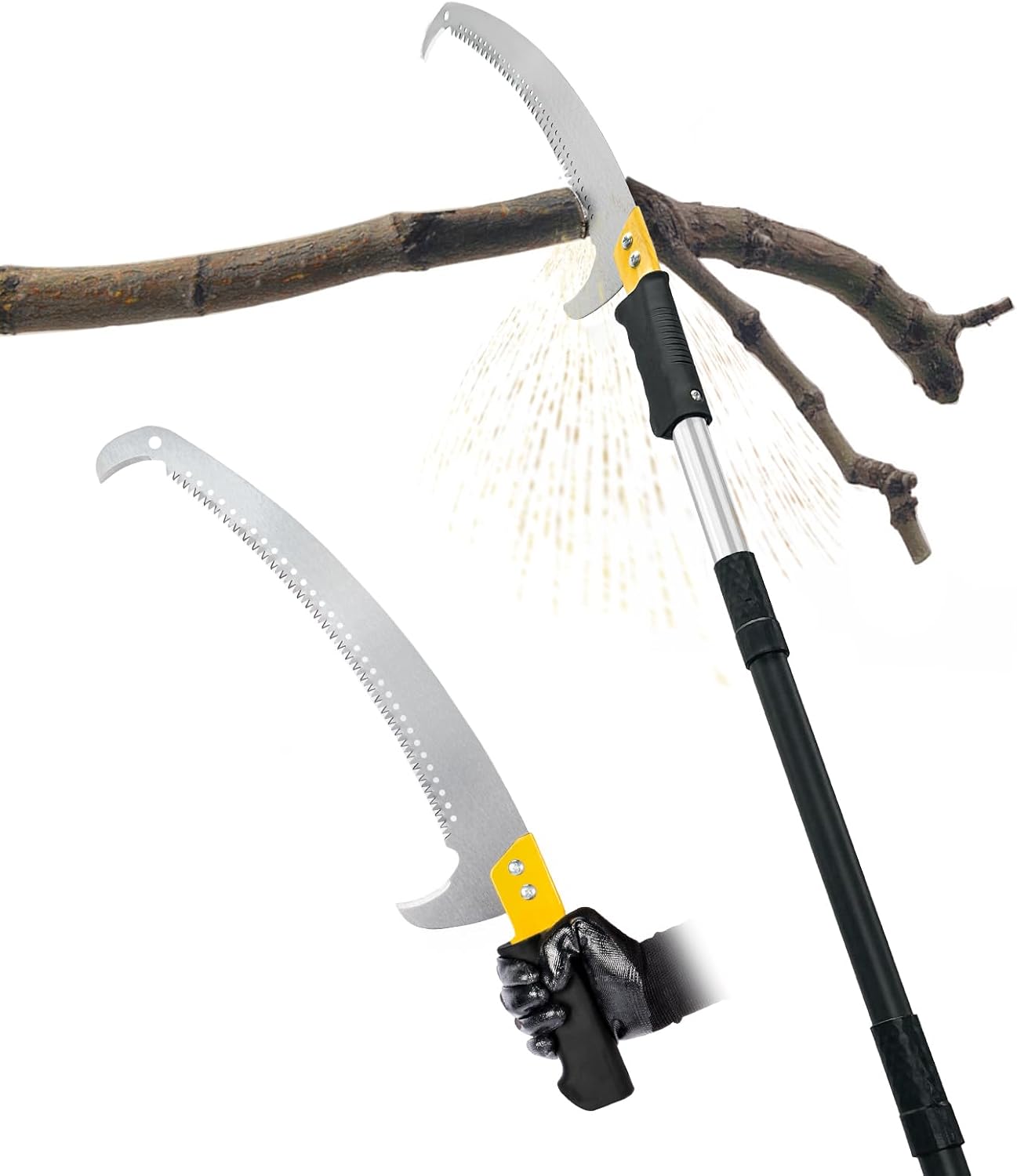
This BlumeTrec pole saw is a manual, multi-section pruning saw designed to let you trim high branches safely from the ground. The pole breaks down into sections so you can assemble it to three fixed lengths (8.5 ft, 11 ft, 14.5 ft) to match the task, and a manganese steel blade with a three-sided edge and double-sided barbs grips and slices branches for cleaner cuts. The stainless steel poles are powder-coated to resist rust and a tightening screw secures the saw head so it stays steady during use. In practice this is a basic, no-power tool that is quiet, low-maintenance, and lighter to carry than most motorized alternatives, making it easier for less experienced users to avoid ladders. Expect quicker work on small to medium branches but slower progress on very thick wood since it is manual. The plastic handle and anti-slip grip improve control but the modular pole means assembly time and storage space should be considered. Overall it is a straightforward, safety-minded option for everyday yard pruning when you want a simple, reliable tool rather than powered equipment.
Best for: Buyers who prioritize safety and simplicity and want to prune high branches from the ground without using power tools or climbing ladders; good for homeowners doing routine yard maintenance.
Less Ideal for: Professional arborists or anyone who needs to cut very large or numerous thick hardwood branches frequently should choose a powered pole saw or chainsaw instead.
- Adjustable multi-section pole offers three fixed reach lengths for flexible use.
- Mn steel blade with three-sided edge and barbs provides secure, clean cuts on small to medium branches.
- Powder-coated stainless poles resist rust for outdoor durability.
- Lightweight manual design reduces noise and maintenance compared with motorized saws.
- Anti-slip grip and extra screw to secure the saw head improve handling and safety.
- Manual cutting limits speed and effectiveness on very thick or hardwood branches.
- Plastic handle may feel less durable under heavy professional use.
Verdict: A simple, rust-resistant extendable manual pole saw that lets risk-conscious homeowners prune high branches from the ground without ladders.
RISETEX 11.8 ft Manual Extendable Pole Saw with Manganese Steel Blade

| Power Source | Manual |
|---|---|
| Blade Length | 14 inches |
| Blade Material | Manganese Steel |
| Handle Material | Rubber, Stainless Steel |
This RISETEX pole saw is a practical, no-frills tool for homeowners who need reach without power. The eight-section stainless steel pole assembles quickly without tools and extends up to 11.8 feet so you can prune high branches while staying on the ground. The 14-inch manganese steel blade has triple-sided, barbed teeth and double-sided rakers that bite and pull cleanly, and the detachable head turns the saw into a compact hand pruner for lower work. A soft-wrapped, non-slip grip and lightweight construction make it easier to hold extended for longer sessions. Important limitations are the manual operation and reliance on user strength for thick limbs, and very heavy or professionally large trees will need a powered saw or pole saw with a thicker blade. The powder-coated stainless poles resist rust, but the locking screw and connections should be checked periodically for tightness during regular use. For basic to moderate pruning tasks this pole saw delivers reach, versatility, and straightforward maintenance.
Best for: Budget-minded homeowners who want an extendable, rust-resistant pole saw for occasional to regular pruning and prefer a manual tool that also converts to a handheld pruner.
Less Ideal for: Arborists or users who regularly cut very large limbs or need motorized cutting power should choose a gas or battery pole saw instead.
- Extends to 11.8 feet with eight tool-free stainless sections for easy reach
- Manganese steel 14-inch blade with triple-sided teeth and rakers for efficient cutting
- Detachable head converts to a handheld pruning saw for versatile use
- Lightweight construction and soft-wrapped non-slip handle reduce fatigue
- Manual design requires significant user effort on thick or dense branches
- Locking screw and pole connections can loosen and need occasional tightening
Verdict: A practical, no-frills extendable pole saw that gives budget-conscious buyers ground-level access to mid- and high branches while doubling as a handheld pruner.
LEVELEVE 7.3–27 ft Extendable Manual Pole Saw with Double-Hook Blade and Pruning Shears

| Power Source | Manual |
|---|---|
| Number of Teeth | 68 |
| Blade Material | High Carbon Steel |
| Handle Material | Rubber |
| Included Components | Extra saw blade, 8 poles, bag |
This LEVELEVE pole saw is a full kit for reaching and cutting high branches without a ladder. The system uses eight epoxy fiberglass sections to extend from about 7.3 to 27 feet, and it converts between long-pole and handheld modes so you can prune tall trees, fruit trees, palms, and lower shrubs. The 1mm SK5 high-carbon steel saw with a Teflon coating and double-hook profile is designed to resist rust and reduce jams, while the pulley-driven scissors let you shear thicker stems with less effort. Upgraded double-lock electroplated joints aim to keep the pole rigid at full extension, and the rubber ergonomic handle plus included gloves and storage bag make the kit ready to use out of the box. Expect the benefit of ladder-free reach and a combined saw/shears solution that reduces trips up and down. Limitations are typical for manual pole tools: cutting very large-diameter hardwood limbs still requires a powered saw or professional help, and assembly or tightening of locked joints may need occasional attention after heavy use.
Best for: Buyers who prioritize a reliable, all-in-one manual pole pruner for routine yard and orchard maintenance and who want a tool that stays rigid and ready without relying on power tools.
Less Ideal for: People who need to remove very large tree limbs regularly, professional arborists, or anyone who prefers powered pole saws for high-volume or heavy-duty cutting.
- Very long adjustable reach from 7.3 to 27 feet for ladder-free pruning
- Rust-resistant SK5 high-carbon steel saw with Teflon coating to reduce corrosion and binding
- Pulley-driven shears reduce the user effort for thicker branches
- Upgraded double-lock joints improve rigidity at full extension
- Complete kit includes spare blade, gloves and storage bag for transport and maintenance
- Manual operation limits cutting capacity on very large hardwood limbs and extensive commercial work
- Extended pole can be unwieldy in windy conditions or confined spaces
Verdict: A dependable, full-kit manual pole saw that delivers long, ladder-free reach and corrosion-resistant cutting for routine home pruning tasks.
Choosing the Right Pole Saw for Hunting: Key Factors to Consider
Reach and Pole Adjustability
A pole saw for hunting must deliver enough reach to clear common branches from a ground blind or while standing in a ladder stand without overextending. Adjustable pole sections let you dial reach up or down depending on the job while reducing bulk for transport. Consider both the fully extended working length and the collapsed length for storage.
Equally important is the pole locking system. Quick, secure locks hold the extension steady during a cut; flimsy or loose locks can allow the blade to move unexpectedly, which is a safety hazard when working above your head. For hunting use, a pole that balances a long reach with compact stowage and reliable locking is generally the best compromise.
Cutting Power and Chain Quality
Cutting power determines how effortlessly a saw slices through limbs. For hunting tasks you will commonly encounter small-to-medium branches, but occasionally larger limbs will need trimming. Chain quality, bar length, and motor or engine torque all influence how cleanly cuts go and how often you need to reposition the saw.
A good chain keeps teeth sharp longer and reduces the need for frequent sharpening in the field. If you plan extended trimming sessions before season, prioritize models with robust chain designs and accessible tensioners so you can adjust or sharpen without specialized tools. For powered pole saws, look for consistent power delivery under load to avoid bogging mid-cut.
Weight and Balance
Weight affects how long you can hold and maneuver the pole saw while working at height. Heavy tools tire your arms quickly and increase the risk of losing control during a cut. Balance is equally critical; a well-balanced pole saw feels lighter than its listed weight and is easier to steer into a branch.
When choosing for hunting, consider whether you will often use the saw one-handed from a stand or two-handed on the ground. Lightweight construction materials help, but also look for comfortable grips and shoulder straps or harness compatibility that distribute load during extended use. Compact packing weight also matters if you hike to hunting spots.
Noise and Vibration
Noise can spook game and vibration accelerates fatigue. Gas-powered poles typically have higher noise and vibration levels, while battery-powered options tend to be quieter and smoother. For hunting, quieter operation lets you make adjustments without moving animals out of the area.
Vibration isolating handles, anti-vibration mounts, and balanced motors cut fatigue and improve cut precision. Evaluate how the tool behaves under load because some models hum quietly at idle but vibrate heavily when cutting thicker wood. Quieter, lower-vibration saws are better for stealthy pre-season or in-season work near active hunting areas.
Portability and Transport Considerations
Hunters often carry gear over rough terrain or need to fit tools into small vehicles and treestands. The collapsed length, disassembly options, and whether it fits in a pack or sling matter for access to remote stands. Lightweight, modular poles that break down quickly are easier to move between stands during a hunt.
Also consider how easy the saw is to set up at the stand. Quick assembly, secure couplers, and minimal tools required for field servicing make the tool more usable on long days. If you expect to hike a long distance, tradeoffs between power and portability will guide your decision toward either a compact battery model or a slightly heavier but more powerful option.
Maintenance and Field Serviceability
Regular maintenance keeps a pole saw ready for hunting season and reduces the chance of failure while you are away from home. Look for easy access to the chain for sharpening and tensioning, replaceable bars and chains, and a design that tolerates field cleaning from sap and debris.
For powered models, battery access or simple fuel systems streamline roadside repairs. Simpler mechanical designs often mean fewer things to go wrong in the field. Manuals that explain basic troubleshooting and common replacement parts will keep you cutting instead of waiting for service.
Why Hunters Prefer Lightweight, Quiet Options
Hunters tend to favor lighter, quieter pole saws because those tools let them clear lanes without drawing attention to the area. A quiet battery-powered saw or a low-revving small-engine unit reduces the chance of spooking nearby game during pre-season trimming or last-minute adjustments.
Lightweight tools also translate to longer working windows from a ladder stand and less shoulder strain when transporting gear. When sacrifice in raw cutting power is small, the benefits of quiet operation and low weight usually outweigh a minor loss in throughput for most hunting tasks.
- Quieter operation preserves local animal behavior.
- Lower weight extends usable time aloft.
- Smaller chains are easier to sharpen in the field.
Best Practices for Cutting From a Stand
Safety is paramount when cutting from a ladder or tree stand. Always position the pole so the cut will drop away from you and any equipment. Keep three points of contact on the stand whenever possible and avoid leaning out while making a cut.
Use a partner on the ground if possible to manage falls and to steady ladders. If working alone, plan your cuts so limbs fall in a clear, predictable direction and take frequent breaks if you feel your grip or balance weakening.
- Plan cuts so branches fall away from the stand.
- Wear eye and hearing protection even when using quieter tools.
- Check local regulations or safety guidelines for elevated cutting.
Transport and Storage Tips for Hunting Gear
Break down pole saws into the smallest practical components for packing. Use protective sleeves for the bar and chain to avoid accidental damage and to protect other gear in your pack. If you carry a battery-powered unit, keep spare batteries in padded compartments to prevent contact with metal tools.
Consider mounting or carrying options on your hunting pack so weight is distributed and the pole does not snag brush during the approach. For vehicle storage, stow the pole in a way that prevents the chain from contacting other items and supports the pole to avoid bending.
- Use blade covers and padded battery cases.
- Secure poles to packs to prevent swinging while hiking.
- Store with basic maintenance kit: file, spare chain links, and wrench.
Seasonal Timing and When to Trim
Trim shooting lanes during pre-season or well before active hunting days to allow scent to settle and to avoid displacing game. Heavy pruning during season can alter animal movement patterns and reduce hunting success in the short term.
Light touch-ups in season are reasonable when necessary, but make those adjustments quietly and strategically. After heavy storms, inspect lanes for safety hazards and remove unstable limbs promptly to keep stands safe.
- Do major clearing before season starts.
- Reserve in-season cuts for safety or critical sightline repairs.
- Inspect trees and limbs after storms for hazards.
Common Field Repairs and Carry Kit Essentials
Preparing a simple field kit prevents long delays. Include a compact file or sharpening stone, spare chain links or a short replacement chain, a multi-tool that fits the saw's fasteners, and basic safety gear such as gloves and eye protection. For battery models, carry an extra charged battery.
Knowing how to tension a chain, clean a clogged bar, and swap a chain quickly will keep you mobile and productive. Practice these tasks at home so you can perform them confidently in the field.
- Carry a compact sharpening file and spare links.
- Include a multi-tool matched to saw fasteners.
- Bring extra batteries or fuel containers as appropriate.
How We Chose the Best Pole Saw for Hunting
We focused on criteria that matter for hunting scenarios where mobility, stealth, and safe cutting at height are primary concerns. Each candidate had to offer reliable cutting performance across common branch sizes encountered when clearing shooting lanes and be serviceable in the field. We prioritized tools with an effective working reach while remaining manageable from a ladder, ladder stand, or ground blind. Evaluation criteria included reach and pole length adjustments, cutting power and chain quality, weight and balance for one-handed or two-handed operation, vibration and noise levels that affect stealth, and durability of materials and field serviceability. Battery runtime or fuel efficiency was considered for powered models because longer runtimes reduce trips to campsites. Portability and ease of transport were also examined so packs and vehicle storage were practical for hunters. We excluded specialty arborist rigs and heavy-duty commercial gear that exceed typical hunting needs, plus models that lacked basic safety features or were unsuitable for handheld elevated cutting. Final selections represent tools that balance field practicality with effective branch-clearing performance.
FAQ
Is a battery-powered pole saw better for hunting than gas?
Battery models are usually quieter and lighter, which suits hunting. Gas units offer longer runtime and more raw power. The best choice depends on how often you need sustained cutting versus the need for stealth and portability.
How long of a reach do I need to clear common shooting lanes?
Most hunting lanes can be managed with a 6 to 12 foot working reach from an elevated position, depending on stand height and branch size. If you frequently trim from the ground or need higher cuts, select a longer pole but consider transport length.
Can I safely use a pole saw from my tree stand?
You can, but exercise caution. Always maintain stability and three points of contact, plan the direction the branch will fall, and avoid overreaching. Using a partner on the ground for ladder support is safer when possible.
What maintenance should I do before the hunting season?
Clean debris from the chain and bar, sharpen or replace a dull chain, check tension and lubrication, and test the tool under load. For powered units, verify batteries hold charge or engines start reliably and bring spare parts you may need in the field.
How do I transport a pole saw safely to remote stands?
Break down the pole into compact sections, use a blade cover, and secure components to your pack so they do not swing. Store batteries separately in padded pockets and keep a small maintenance kit accessible.
Final Verdict
Choose a pole saw for hunting by balancing reach against weight and noise. Prioritize a tool that provides enough cutting power for typical branches you will encounter while remaining light and quiet enough for elevated work and stealthy use. Consider maintenance needs and how you will transport the tool to your stands. If you favor stealth and ease of use, lean toward a quieter, lighter option. If you need longer runtime and the ability to cut thicker limbs without stopping, a more powerful model may be the right tradeoff. Focus on the reach, cutting chain quality, and balance to match your hunting routines.
