

Note: This article contains affiliate links. If you click on these links and make a purchase, I may earn a small commission at no extra cost to you. This helps support my research and content. Read my full affiliate disclosure here.
Selecting the right external pond filter makes a big difference in how your pond behaves through the seasons. The right unit controls flow, removes fine debris and supports biological filtration so algae, cloudy water, and stressed fish are less likely to become recurring problems. This guide looks at six shortlisted external pond filters that suit a range of pond sizes and maintenance styles. We focus on concrete performance factors gardeners care about, including flow capacity, degree of mechanical and biological filtration, build and weather resistance, and ease of maintenance. Read on to see which features matter for your pond and why each criterion affects everyday pond health.
Top Picks at a Glance
| Best Overall The best all-around choice for most situations | VIVOHOME VH536 Pressurized Biological Pond Filter with 13W UV Clarifier |  |
| Best Quality Built to a higher standard if you want something more solid | AllClear G3 Bio Pressure Filter with UVC Clarifier |  |
| Best Value The sweet spot between price and what you get | VIVOGROW Bio Pressure Pond Filter with UV-C for 1000–2100 Gallons |  |
| Highest Rated A top-rated pick with lots of positive feedback | IRONMAX 2630 GPH Bio Pressure Pond Filter with 13W UV Light and Backflush |  |
| Most Popular A crowd favorite that many people choose with confidence | TotalPond Complete Pressurized Pond Filter with 9W UV Clarifier |  |
| Best Seller A high-volume bestseller chosen again and again | VIVOHOME VH515 Pressurized Biological Pond Filter with 13W UV Light |  |
VIVOHOME VH536 Pressurized Biological Pond Filter with 13W UV Clarifier

| Power Source | Corded Electric |
|---|---|
| Flow Rate | 7000 liters per hour |
| Voltage | 110 volts |
| Material Type | PP + ABS |
| Item Type Name | Pressurized Biological Pond Filter with 13-watt UV Sterilizer Light, Up to 2100 Gallons |
The VIVOHOME VH536 is a pressurized pond filter that combines mechanical sponges, bio-balls, and a 13W clarifying lamp to reduce debris and algae in small to medium ornamental and koi ponds. It is installed inline with a submersible or external pump using the included multi-size hose adapters and operates in two modes: filtering and backflush cleaning; rotating the handle runs a backwash that clears most loose debris so you can maintain the media without disassembling the housing. The unit’s reusable 20 and 25 PPI sponges and bio-balls provide biological surface area while the UV lamp helps control green water. Practical benefits include a compact, weather-resistant ABS body, a long power cord, and clear inlet/outlet labeling to simplify setup. Important limitations are that the clarifier is only 13W so it helps but will not instantly clear heavy algae blooms, and leaks or GFCI trips can occur if the O-ring is not sealed or the attached pump is overpowered; periodic manual rinsing of sponges gives the best results.
Best for: Gardeners who want a compact, low-maintenance external filter that blends biological filtration with a clarifier for year-round koi or ornamental pond care.
Less Ideal for: Owners of very large ponds or heavy algae problems who need higher-power UV sterilizers or industrial-scale filtration should look at larger filter and UV combinations.
- Pressurized design with backflush handle for easier weekly cleaning
- Combines mechanical sponges, bio-balls, and UV clarifier for multi-stage filtration
- Includes multi-size hose adapters for broad pump compatibility
- Durable ABS housing and weather-resistant construction for outdoor use
- 13W UV lamp is low power and may not eliminate heavy algae quickly
- Requires correct O-ring sealing and pump sizing to avoid leaks or electrical trips
Verdict: Choose this unit if you want an easy-to-clean, pressurized bio-filter with an integrated UV clarifier for small to mid-size koi and ornamental ponds.
AllClear G3 Bio Pressure Filter with UVC Clarifier

| Max Flow Rate | 3,000 GPH |
|---|---|
| Pond Size | Up to 4,000 Gallon |
| UV Wattage | 24w |
| Backflush Feature | Yes |
The AllClear G3 is a pressurized pond filtration system designed to clear green water and remove debris using three methods: a high-output UV clarifier, alternating mechanical filter pads, and biological media for beneficial bacteria. Typical installation is out of pond with 1.5" tubing and a compatible pump; water is routed through the UV chamber for algae and bacteria control then through the filter pads where solids are trapped and bacteria process ammonia and nitrates. Notable features include a center-mounted vertical UV bulb for maximum exposure, large alternating density pads that encourage bacterial colonization, and a built-in backflush/diverter valve and handle that lets you purge trapped waste without disassembling the unit. The unit can be buried and cosmetically covered for a discreet installation. Important limitations are that it must be matched to a pump within the listed max flow rate to avoid reduced UV performance and potential seal stress, and the unit must be removed in freezing climates to prevent damage.
Best for: Buyers who prioritize reliable, high-performance pond clarity and want a low-maintenance, multi-stage pressurized filter for a medium to large outdoor water garden.
Less Ideal for: People who need an all-season buried solution in freezing climates without winter removal or those seeking a simple plug-and-play internal aquarium filter.
- Combines UV, mechanical, and biological filtration for multi-stage water clarification
- High-output, low-energy UV clarifier with center-mounted bulb for strong exposure time
- Backflush diverter and handle allow tool-free cleaning without removing filter media
- Can be buried and camouflaged for a tidy, low-visibility installation
- Requires pairing with an appropriately sized pump or UV exposure and seals can be compromised by excessive flow
- Must be drained and removed in freezing conditions to avoid damage
Verdict: Choose the AllClear G3 when you want a high-performance, multi-stage external filter that combines strong UV clarification with easy backflush maintenance for reliably clearer pond water.
VIVOGROW Bio Pressure Pond Filter with UV-C for 1000–2100 Gallons

| Manufacturer | VIVOGROW |
|---|---|
| Item model number | VGPF-2100 |
| Maximum throughput | Up to 1840GPH |
| Suitable pond size | 1000–2100 gallons |
| Includes | Replaceable sponges and UV lamp |
The VIVOGROW Bio Pressure Pond Filter is a compact external canister filter intended to remove suspended matter and improve water clarity in medium-sized backyard ponds. It uses four replaceable sponge media layers for mechanical and biological filtration and an integrated 13W UV-C lamp to reduce free-floating algae as water passes through. The unit accepts a range of inlet and outlet pipe diameters via integrated fittings and includes a visible cleaning indicator that rises with turbidity, making maintenance timing straightforward. Installation can be on land or submerged and the top switch lets you direct drainage through different ports for convenient flushing. Practical benefits include relatively high throughput for its size and durable ABS construction that resists sunlight and aging. Limitations are that the product listing focuses on filter media and UV rather than pump performance, so you will need a sized pump suitable for your pond and plumbing, and the filter body is moderately heavy for lifting during service. Expect routine sponge replacement and periodic UV lamp servicing to keep performance at peak levels.
Best for: Buyers who want a practical, easy-to-maintain external filter to improve clarity and biological stability in medium backyard ponds and who prioritize visible maintenance cues and flexible plumbing options.
Less Ideal for: Those looking for an all-in-one pump-plus-filter solution or owners of very large koi systems who need higher flow rates and larger media capacity.
- Built-in 13W UV-C lamp to reduce free-floating algae and clarify water
- Four replaceable sponge stages for mechanical and biological filtration
- Cleaning indicator shows when the media needs attention for easier maintenance
- Integrated inlet/outlet fittings accept different pipe diameters for flexible plumbing
- Durable ABS construction designed to resist sunlight and aging
- Does not include a pump so users must match pump flow and head separately
- Sponge media and UV lamp require periodic replacement to maintain effectiveness
Verdict: A practical, compact pressure canister filter with multi-stage sponge media and a built-in UV lamp that makes clarifying and maintaining medium backyard ponds straightforward.
IRONMAX 2630 GPH Bio Pressure Pond Filter with 13W UV Light and Backflush

| Maximum flow | 2630 GPH (10,000 L/H) |
|---|---|
| UV lamp | 13W |
| Recommended pond size | Decorative ponds 2000-2600 gallons; fish ponds 1000-1300 gallons |
| Material | ABS |
This IRONMAX bio pressure filter combines mechanical and biological filtration with a 13W ultraviolet lamp and a convenient backflush function to keep pond water clear with less hands-on maintenance. It is used inline with a pump to pull water through layered sponges that trap debris while providing surface for beneficial bacteria, and the UV lamp helps control free-floating algae. Notable features include four interchangeable hose adapters for common pipe sizes, a transparent flow adapter to monitor water speed, and a float turbidity indicator that signals when backflushing is needed. The backflush knob allows cleaning the internals without disassembling the unit, which speeds routine upkeep. Constructed from ABS plastic, the unit is built for outdoor exposure and the sponge elements and lamp tube are replaceable to extend service life. Important limitations are that it requires a compatible pump sized for up to 2,630 GPH and replacement UV bulbs and sponges over time, so expect occasional parts maintenance and proper electrical protection for outdoor installation.
Best for: Buyers who prioritize a dependable, low-maintenance filtration system for a medium to large koi or decorative pond and want built-in UV clarification and easy cleaning features.
Less Ideal for: Small pond owners with low flow pumps or people who prefer simple gravity or DIY biofilters without electrical components should consider other options.
- Integrated 13W UV lamp reduces free-floating algae and helps clarify water
- Backflush valve lets you clean the filter interior without opening the unit
- Replaceable sponges and lamp tube extend usable life and simplify maintenance
- Includes four hose adapters plus a transparent flow adapter for easy plumbing
- Requires a pump capable of handling up to 2,630 GPH to reach rated flow
- UV bulb and sponges are consumables that must be replaced periodically
Verdict: A reliable, maintenance-friendly pressure filter with built-in UV clarification and backflush cleaning that suits medium to large koi ponds needing consistent water clarity.
TotalPond Complete Pressurized Pond Filter with 9W UV Clarifier

| Capacity | 1200 gallons |
|---|---|
| Other Special Features of the Product | UV Clarification |
| Purification Method | Ultraviolet |
| Power Source | Ac/DC |
| Included Components | Filter body, 9W UV Clarifier, 2 filter pads, 12 bio-balls |
The TotalPond Complete Pressurized Pond Filter combines mechanical pads, bio-balls and a 9W ultraviolet clarifier into a single freestanding unit for ponds and waterfalls up to 1200 gallons. You install your own pump and route water through the inlet so it passes the UV chamber, then two filter pads and the bio-ball chamber where beneficial bacteria establish. The enclosed, pressurized design keeps water moving and reduces clogging compared with open-media boxes, and the included stepped adapters accept 3/4 or 1 inch ID tubing for common pond setups. Practical benefits include simpler maintenance from the removable lid and preloaded media, plus UV-treated flow that helps clear green water and controls single-cell algae. Limitations are that the unit requires a separate pump sized to your pond and the 9W UV is modest for very high sunlight or larger koi ponds, so heavy algae pressure may need a stronger clarifier or supplemental filtration. The plastic housing is lightweight and easy to hide but not as rugged as heavy-duty commercial filters.
Best for: Buyers who want a single, compact filter that simplifies startup and maintenance while improving water clarity for backyard koi or decorative ponds and who prefer choices supported by established product reviews.
Less Ideal for: Large commercial koi collections, very high-biomass ponds, or owners who want an all-in-one pump-plus-filter solution without adding a pump.
- Integrated 9W UV clarifier to reduce green water and microscopic algae
- Pressurized design promotes steady flow and helps prevent debris settling
- Includes mechanical filter pads and bio-balls for combined mechanical and biological filtration
- Fits common tubing sizes with stepped adapters for straightforward plumbing
- Removable watertight lid and included media make initial setup and routine cleaning easier
- Requires a separate pond pump so additional cost and pump sizing are necessary
- 9W UV output is limited for very large or high-algae ponds
Verdict: A compact pressurized filter with UV and biological media that reliably improves clarity for backyard koi ponds up to 1200 gallons.
VIVOHOME VH515 Pressurized Biological Pond Filter with 13W UV Light
| Power Source | Electric |
|---|---|
| Voltage | 110 volts |
| Horsepower | 13 watts |
| Material Type | Acrylonitrile Butadiene Styrene (ABS) |
| Included Components | Filter, UV sterilizer light (13W) |
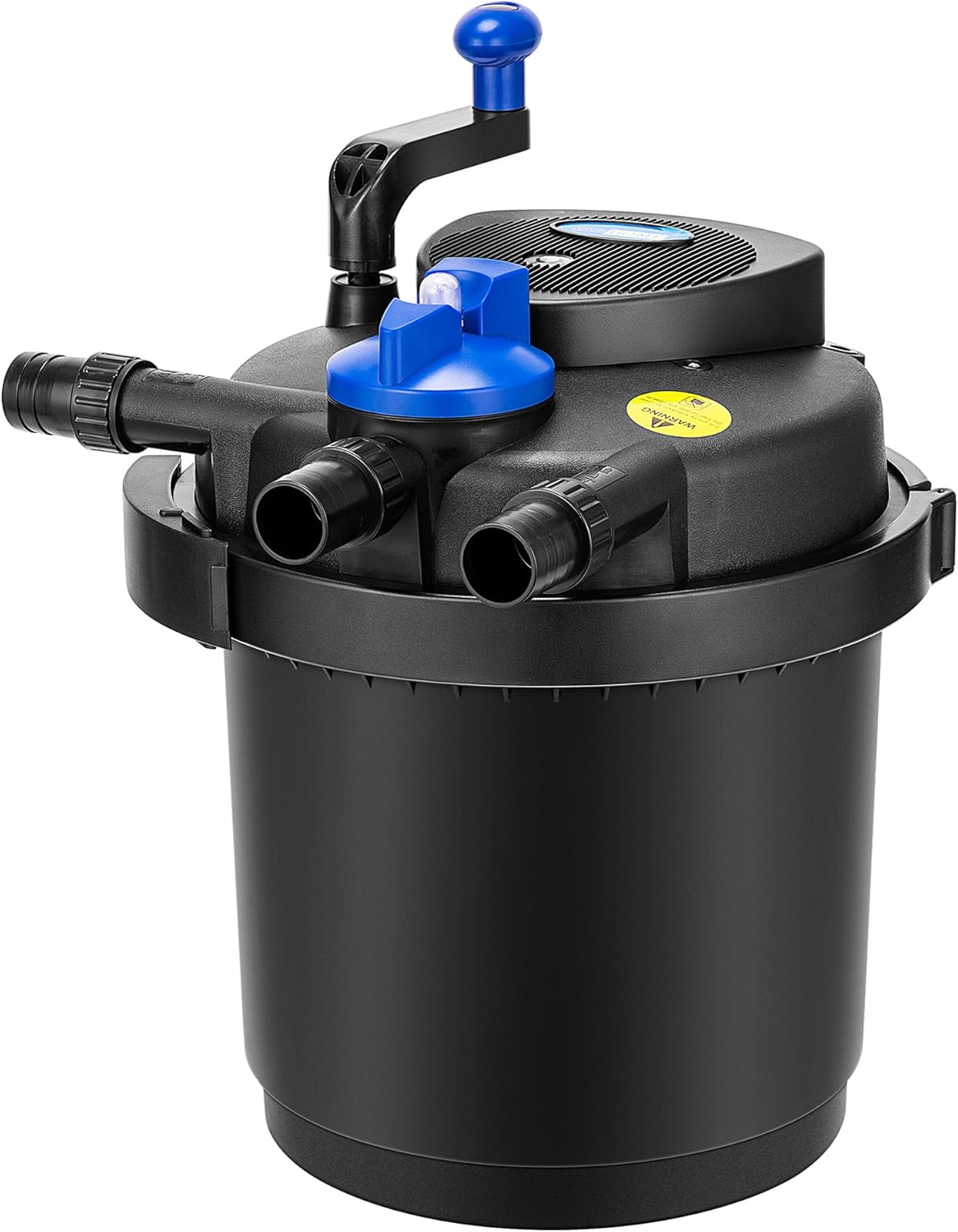
The VIVOHOME VH515 is a pressurized biological filter intended to keep koi and decorative ponds clear by combining mechanical sponge filtration with a 13W UV clarifying lamp. It is installed inline with a separate water pump and connects via the included multi-size hose adapters. Water passes through coarse and fine reusable sponges that trap debris while the lamp reduces free-floating algae, and a simple handle-driven backwash lets you switch to Clean mode and flush accumulated muck without disassembling the unit. The ABS, weather-resistant housing and clear inlet/outlet labels make outdoor siting straightforward and reduce installation guesswork. Practical benefits include low ongoing consumable cost because sponges are reusable, simple routine maintenance signaled by a red float, and compatibility with ponds up to about 1,600 gallons (ornamental) or 800 gallons with fish. Important limits are that the unit requires a separate pump and the UV bulb has a finite lifespan and must be replaced if water breaches the lamp seal; performance also depends on matching pump flow and hose size for steady filtration.
Best for: Buyers who want a low-maintenance, reliable filter for a small to mid-size koi or ornamental pond and prioritize simple installation and predictable upkeep.
Less Ideal for: Not the best choice for very large or heavily stocked ponds where industrial-scale filtration or integrated pumping is needed; pond owners who prefer fully submersible combo units should look elsewhere.
- Combined mechanical and UV clarification reduces both debris and free-floating algae
- Reusable coarse and fine sponge media lowers ongoing replacement costs
- Handle-driven backwash makes routine cleaning quick and tool-free
- Includes multiple hose adapters and clear inlet/outlet labeling for easier installation
- Weather-resistant ABS housing suited for year-round outdoor use
- Requires a separate water pump so total system cost and compatibility must be planned
- UV lamp has limited life and can fail if the lamp compartment seal is compromised
Verdict: A straightforward, low-maintenance pressurized biofilter that pairs with your pump to deliver clear water and easy weekly backflushing for small to mid-size koi and ornamental ponds.
Choosing the Right External Pond Filter: Key Factors to Consider
Flow Capacity and Pond Turnover
Flow capacity determines how much water the filter moves each hour and is fundamental to maintaining clear water. A unit that can handle the pond volume at the pump�s working head keeps solids suspended long enough to be captured by mechanical media and ensures water passes through biological media frequently enough to support nitrifying bacteria.
Underpowered filters leave water stagnant in pockets and increase the risk of algae and low-oxygen zones. Oversized flow can stress delicate plants or fish if not paired with adjustable flow or bypass options, so matching filter flow to both pond volume and pump head is important.
Mechanical Filtration Efficiency
Mechanical filtration captures leaves, silt, and organic solids before they break down and cloud the water. Look for multi-stage mechanical media that traps large debris first and finer foam or matting downstream; that arrangement reduces how often you need to dismantle the unit for cleaning.
The design of the mechanical chambers matters too. Settling chambers and pre-filters that allow solids to compact reduce the chance of clogging downstream biological media. Consider accessibility of the mechanical media so you can clean without disturbing beneficial bacteria more than necessary.
Biological Media Volume and Accessibility
Biological filtration is where beneficial bacteria convert ammonia and nitrite into less harmful nitrate. A generous volume of porous media increases the surface area available to colony formation and stabilizes water chemistry.
Accessible media trays or baskets that let you rinse gently without fully removing colonies make seasonal maintenance less disruptive. Avoid designs that bury biological media behind hard-to-reach fittings or require replacement of media that could instead be rinsed and reused.
Build Quality and Weather Resistance
External pond filters live outdoors and face sun, cold, and wet conditions. UV-stable plastics, corrosion-resistant fasteners, and robust seals reduce the risk of cracking, leaks, or frozen fittings in winter.
Pay attention to how the housing joins and whether there are replaceable seals. Units that allow you to winterize without disassembling internal plumbing are easier to manage in climates with prolonged freezes. Durability also affects long-term maintenance costs and the likelihood of sudden failures that could damage fish stocks.
Plumbing Compatibility and Installation Flexibility
A filter that matches common pipe sizes and offers multiple inlet and outlet orientations will integrate more easily into existing pond plumbing. Adaptable fittings and clear port labeling reduce installation time and potential for leaks.
Consider whether the unit needs to sit above water or can be buried partially, and whether it supports gravity-fed systems versus pump-fed configurations. Installation flexibility affects where you can place the unit in the yard and how simple future upgrades or repairs will be.
Ease of Routine Maintenance
Even the best filter needs periodic attention. Ease of maintenance covers how quickly you can access mechanical media, how simple it is to backwash or flush the system, and whether cleaning actions threaten established biological colonies.
Look for ergonomic handles, clear chamber separation, and parts you can remove without tools. Systems that provide visual indicators of clogging or flow reduction save time and prevent late-stage failures that require more extensive work.
Sizing Filters For Your Pond
Sizing an external pond filter means matching the filter�s flow capacity and head rating to your pond volume and the pump you plan to use. Calculate pond volume in gallons or liters, then aim for a filter and pump combination that provides complete turnover at a rate suited to your pond inhabitants. Koi ponds typically need faster turnover than planted wildlife ponds because of higher bio-loads.
- Estimate pond volume accurately before selecting a filter
- Compare filter flow ratings at relevant pump head rather than only maximum flow
- Choose adjustable flow or bypass options for delicate installations
Placement and Plumbing Layout Tips
Filter placement affects plumbing length, head pressure, and ease of servicing. Mounting a unit close to the pump keeps hoses short and reduces head loss, but make sure there is still room to open lids and access media trays. Use rigid fittings for permanent runs and flexible hoses for short connections that require vibration isolation. Label inlet and outlet lines and include shutoff valves or unions so you can isolate the filter for cleaning without draining the pond.
- Provide a flat, stable pad for the filter to sit on
- Include unions or quick-disconnects for winter removal
- Slope suction lines slightly to avoid air locks
Winter Care and Freeze Protection
Cold weather affects external filters differently depending on whether they remain filled with water or are partially drained. In freezing climates you may choose to winterize by isolating the filter, draining chambers that trap water, and protecting seals from ice damage. If you leave the filter connected, ensure fittings and housings are rated for freeze-thaw cycles and consider insulating exposed sections. Systems that let you run a small heater or keep minimal flow to prevent ice bridging can reduce winter maintenance risks.
- Drain low points before freezes if unit is not rated freeze-proof
- Insulate external plumbing or bury lines below frost depth
- Keep a small trickle of flow where appropriate to avoid ice blockages
Integrating with Biological Additives and Plants
External filters work in concert with plants and bacterial additives to create stable pond ecosystems. Biological media in the filter provides primary habitat for nitrifying bacteria, while marginal plants and submerged oxygenators help reduce nutrients and shade the water. Apply bacterial starters after initial setup to accelerate colonization, following product instructions carefully to avoid overfeeding microbes and depleting oxygen. Plan planting density and species to balance nutrient uptake without overly shading the pond surface.
- Choose porous media that encourages biofilm formation
- Avoid aggressive chemical algaecides that harm beneficial bacteria
- Use plants to reduce nutrient loads and improve clarity naturally
How We Chose the Best External Pond Filter
We focused on features that directly affect pond water clarity, biological stability, and user maintenance. Our shortlist process prioritized units with measured flow capacity appropriate for common pond volumes, multi-stage filtration that separates mechanical and biological media, and durable housings rated for outdoor and seasonal use. Evaluation criteria included flow capacity and pump compatibility, mechanical filtration efficiency for solids removal, biological media volume and accessibility, build materials and weather resistance, and ease of routine cleaning. We also assessed installation flexibility, plumbing connection options, and how simple it is to winterize or service the unit. Excluded from consideration were units intended only for decorative tabletop ponds, indoor aquaria, or filters lacking clear specifications for flow or media type. We also discounted models that require frequent proprietary cartridges when practical reusable media options were available. The result is a focused set of external pond filters suited to backyard ponds, koi pools, and larger water gardens.
FAQ
How do I match a filter to my pond size?
Match the filter�s rated flow at the pump head to your pond volume and desired turnover rate. Calculate pond volume, check pump head losses, and choose a filter that can move that volume without constant cavitation or overworking the pump.
Can I bury an external filter or does it have to be above ground?
Some external filters are designed to be semi-buried while others must sit above water. Check the manufacturer�s installation recommendations and ensure access for maintenance and drainage when deciding placement.
How often should I clean the mechanical media?
Cleaning frequency depends on seasonal debris load and pond stocking. High-leaf fall and heavy fish loads may require weekly attention for a period, while low-maintenance ponds might only need monthly checks and occasional rinsing.
Will cleaning the filter remove beneficial bacteria?
Aggressive cleaning can remove colonies, so rinse biological media gently in pond water and avoid using tap water with chlorine. Keep mechanical media clean to prevent solids entering biological chambers and reduce the need for disruptive deep cleanings.
What plumbing size should I use for an external pond filter?
Use hose and pipe sizes that match the filter ports and pump output. Avoid constricting the flow with smaller diameter runs, and keep runs as short and straight as practical to minimize head loss.
Final Verdict
Prioritize flow capacity, effective mechanical stages, and generous biological media when choosing an external pond filter. Build quality and plumbing flexibility determine how easy the unit will be to install and maintain through seasonal changes. Balance turnover needs with gentle flow options for planted or delicate fish ponds. Focus on durability and serviceability so routine cleaning is quick and does not disrupt beneficial bacteria. With those priorities in mind you can pick a filter that keeps water clear and fish healthy for years.
