

Note: This article contains affiliate links. If you click on these links and make a purchase, I may earn a small commission at no extra cost to you. This helps support my research and content. Read my full affiliate disclosure here.
Picking the right pond pump for a large pond changes how your water garden behaves through the seasons. A properly sized pump keeps water moving, powers filtration and waterfalls, and helps prevent stagnation and algae blooms in big bodies of water. This guide focuses on pumps built to handle larger volumes and longer runs, and it highlights models that balance steady flow with reasonable energy use. Below are our top shortlisted pumps for large ponds and the practical reasons they made the list. We evaluated each option for flow capacity, energy draw, durability, and suitability for common large-pond setups to help you choose the best fit for your site.
Top Picks at a Glance
| Best Overall The best all-around choice for most situations | WaterRebirth PSA8000 Submersible Pond Pump, 8500 GPH 600W with Adjustable Flow |  |
| Best Quality Built to a higher standard if you want something more solid | Aquascape AquaSurge PRO 4000-8000 GPH Pond Pump with Smart Control Receiver |  |
| Best Value The sweet spot between price and what you get | Alpine Corporation PAL8000 8000 GPH Submersible Pond Pump |  |
| Highest Rated A top-rated pick with lots of positive feedback | HALF OFF PONDS Aqua Pulse Submersible Pond Pump, 14,800 GPH (AP-14800-33) |  |
| Most Popular A crowd favorite that many people choose with confidence | RELIY 1 HP Pond Fountain Aerator with 15000 GPH Flow and Dual Nozzles |  |
WaterRebirth PSA8000 Submersible Pond Pump, 8500 GPH 600W with Adjustable Flow

| Power Source | Corded Electric |
|---|---|
| Maximum Lifting Height | 26.3 feet |
| Horsepower | 600 watts |
| Included Components | Hose Adapter, Sucker |
The WaterRebirth PSA8000 is a heavy-duty submersible pump built to move large volumes of water for big koi ponds, multi-tier waterfalls, and extensive water gardens. Powered by a 600W motor it is rated up to 8500 GPH at zero lift and can push water as high as 26.3 feet, and an integrated flow control lets you fine-tune output for the right waterfall height or circulation rate without extra valves. It includes a 2" hose adapter for large-diameter plumbing and a removable front cover for debris cleaning. The pump is oil-free and uses a ceramic shaft intended for long-running, quiet operation safe for fish and plants. Expect actual flow to fall as lift increases, and this unit is intended for freshwater use only rather than pools or hot tubs. The package is aimed at installers who need strong, continuous flow and are prepared to match plumbing and power requirements for a professional-scale pond system.
Best for: Buyers who maintain large koi ponds or multi-tier waterfalls and want a powerful, continuous-flow pump they can dial in for specific waterfall heights and circulation needs.
Less Ideal for: Not a good fit for small backyard ponds, hobbyist setups with low flow needs, or applications that require pool or spa certification.
- Very high maximum flow rate suitable for large ponds and big waterfalls
- Adjustable flow control built in for fine tuning fountain and waterfall effects
- Designed for freshwater use with oil-free construction safe for fish and plants
- Includes 2" hose adapter and removable front cover for easier plumbing and debris maintenance
- Rated flow is measured at zero lift so real-world GPH will drop significantly with high vertical head
- Requires appropriate electrical supply and plumbing for professional-scale installations
Verdict: If you need strong, adjustable, continuous flow for a large pond or professional waterfall, this pump delivers the power and plumbing readiness to handle it.
Aquascape AquaSurge PRO 4000-8000 GPH Pond Pump with Smart Control Receiver

| Flow Rate | 129.88 gpm |
|---|---|
| Maximum Lifting Height | 27.89 feet |
| Power Source | AC |
| Voltage | 115 volts |
| Included Components | Pump, Smart Control Receiver, multiple fittings |
The Aquascape AquaSurge PRO 4000-8000 is a heavy-duty asynchronous pump built to move large volumes of water for ponds, pondless waterfalls, and skimmer/filter systems. It delivers up to roughly 7,793 GPH and can be mounted horizontally or vertically, making it suitable for inline installations or submerged use. Notable features include an energy-efficient asynchronous motor that reduces operating cost, an included smart control receiver and wireless remote for on-the-fly flow adjustment, and a rotational ball output plus multiple fittings for flexible plumbing. Practical benefits include quieter operation thanks to rubber feet, an oil-free design safe for fish and plants, and a long 20-foot cord for placement flexibility. Important limitations are its substantial power draw at full output and the physical size and weight that require careful handling and a stable installation; it is aimed at experienced installers and larger systems rather than casual small-pond owners. The 3-year limited warranty and metal/plastic construction add durability for continuous use.
Best for: Buyers who need robust, high-flow performance for large ponds or pondless waterfall systems and prioritize energy efficiency and remote flow control during installation and operation.
Less Ideal for: Casual small-pond owners or those wanting a compact, low-power pump for tiny water features should consider smaller, quieter units that are easier to handle and install.
- Very high maximum flow rate suitable for large ponds and powerful waterfalls
- Asynchronous motor offers improved energy efficiency compared with traditional pumps
- Includes wireless remote and receiver for convenient flow adjustment and on/off control
- Oil-free design and corrosion-resistant construction make it safe for fish and long-term outdoor use
- High power requirement at top performance which can increase electricity use on continuous heavy-duty runs
- Large and relatively heavy unit that may need professional handling or secure mounting
Verdict: Choose this pump when you need professional-grade, high-flow performance with energy-efficient asynchronous motor technology and wireless flow control for a large pond or waterfall system.
Alpine Corporation PAL8000 8000 GPH Submersible Pond Pump

| Flow Rate | 133.33 gpm |
|---|---|
| Maximum Lifting Height | 33 feet |
| Power Source | Corded Electric |
| Voltage | 120 volts |
| Material Type | Acrylonitrile Butadiene Styrene (ABS) |
The Alpine PAL8000 is a heavy-duty submersible pump designed to move large volumes of water for big ponds, waterfalls, and outdoor fountains. It delivers up to 8000 gallons per hour driven by a 540-watt motor while maintaining relatively quiet operation, so it supports filtration and aeration without becoming a constant noise source. Installation is flexible: the pump can run vertically or horizontally, the multi-angle outlet lets you direct flow where needed, and the 33-foot cord gives plenty of reach to place the unit for optimal hydraulics. The ABS construction and corrosion-resistant design make it suitable for continuous outdoor submersion. Expect strong circulation and the capacity to lift water to significant heights, which helps when powering tall waterfalls or long runs of tubing. The practical trade-offs are its heavier motor and power draw compared with small pumps and the physical bulk that requires a stable mounting or sump area. Overall it suits serious pond setups that need reliable high-volume flow rather than small decorative features.
Best for: Pond owners who prioritize efficient, high-volume circulation and reliable long-term operation for large ponds, waterfalls, or advanced filtration setups and want a pump that can be positioned flexibly to optimize flow.
Less Ideal for: People with small decorative ponds or battery-powered/low-energy projects should consider smaller, lower-wattage pumps; this model is overbuilt for minimal-flow needs.
- Very high flow capacity up to 8000 gallons per hour for large pond circulation
- 540-watt motor provides strong, continuous performance suitable for waterfalls and filtration
- Versatile installation with vertical or horizontal placement and adjustable multi-angle outlet
- Long 33-foot power cord for flexible siting away from power sources
- Durable ABS, corrosion-resistant construction for continuous outdoor submersion
- Higher power consumption compared with smaller pumps
- Larger and heavier unit requires space and a stable mounting area
Verdict: Choose this pump when you need dependable, high-volume circulation and flexible placement for a large pond or waterfall system.
HALF OFF PONDS Aqua Pulse Submersible Pond Pump, 14,800 GPH (AP-14800-33)

| Flow Rate | 247 gpm |
|---|---|
| Maximum Lifting Height | 35.5 feet |
| Power Source | Corded Electric |
| Horsepower | 1.75 hp |
| Voltage | 120 volts |
The Aqua Pulse AP-14800-33 is a powerful submersible pump built to move large volumes of water while running 24/7. It delivers up to 14,800 GPH and a maximum head of 35.5 feet, making it suitable for large ponds, pondless waterfalls, and high-head fountain applications. The hybrid asynchronous mag-drive motor blends energy efficiency with durability, and the oil-free design is safe for fish and aquatic plants. Install it vertically or horizontally in a skimmer or basin and connect using the included 2.5"/3" fittings; the 33 foot cord gives flexibility for placement and safe outlet access. Practical benefits include a removable impeller for straightforward maintenance, quiet operation that keeps noise low around living spaces, and continuous-duty rating for round-the-clock circulation. Expect a robust installation that requires occasional cleaning of the impeller and consideration of plumbing size to realize the rated flow at higher heads. The pump's plastic construction keeps weight down but means corrosion resistance depends on water chemistry and installation choices.
Best for: Buyers who need a reliable, continuous-duty pump for large ponds or substantial waterfall projects and prioritize consistent flow and low-maintenance operation.
Less Ideal for: People with very small ponds, low-flow decorative fountains, or those who need a lightweight, portable pump for temporary setups should consider smaller, lower-capacity models.
- Very high flow rate suitable for large ponds and high-head waterfalls
- Hybrid asynchronous mag/direct-drive motor balances efficiency and durability
- Oil-free, fish-safe design for use with koi and planted water gardens
- Removable impeller and multiple outlet fittings simplify maintenance and plumbing
- Long 33 ft power cord allows flexible, safe placement away from outlets
- Plastic housing may be less durable than metal options in harsh environments
- High power draw (1100W) requires appropriate electrical circuit planning
Verdict: Choose this pump when you need dependable, high-volume continuous flow for a large pond or high-head waterfall project.
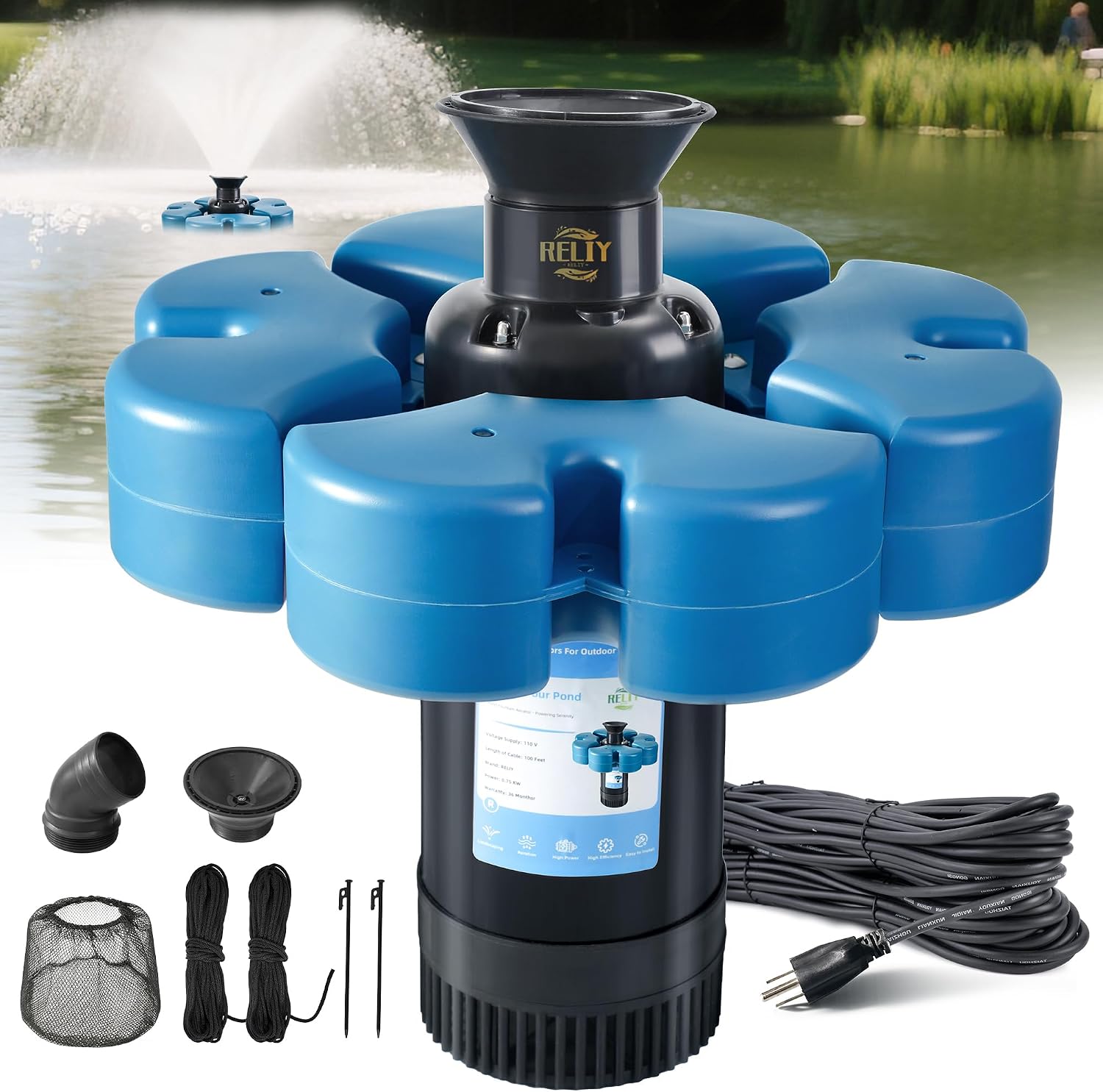
RELIY 1 HP Pond Fountain Aerator with 15000 GPH Flow and Dual Nozzles
| Power Source | Corded Electric |
|---|---|
| Flow Rate | 250 gpm |
| Voltage | 110 volts |
| Horsepower | 1 |
| Material Type | Metal,Plastic |
The RELIY 1 HP Pond Fountain Aerator is a corded floating pump designed to both oxygenate large ponds and create a decorative fountain. It uses a single-phase 1 horsepower motor (110 V) and a high flow rate—listed as 15,000 GPH—to push water up to roughly 7 feet high and spread about 30 feet across, and it comes with two nozzle heads for different spray patterns. Typical use is straightforward: place the float in the pond, attach the guide ropes and power cord, choose a nozzle, and let it run to break up surface film and improve circulation. Notable features include a long 100 ft power cord and two 100 ft guide ropes, an included filter screen to reduce debris intake, and a robust float meant to stay balanced on the water. Practical benefits are stronger circulation that helps control duckweed and increases oxygen for fish, plus an attractive water display. Important limitations are the need for a reliable GFCI-protected outlet near the pond and occasional maintenance of the filter and nozzles; this is a powerful, above-water float so it is not intended for underwater submersible use in tight or heavily vegetated pockets.
Best for: Buyers who need a robust, visually pleasing aerator for medium to large outdoor ponds and prioritize proven performance and physical circulation over compact or portable designs.
Less Ideal for: Those with very small ponds, ponds without safe access to a 110 V outlet, or users who need a compact submersible pump for enclosed or heavily planted water features.
- High reported flow rate (15000 GPH) and 1 HP motor for strong circulation and aeration
- Two interchangeable nozzles for different spray effects and visual appeal
- Includes long 100 ft power cord and two 100 ft guide ropes for flexible placement
- Comes with a filter screen to reduce debris intake and extend service intervals
- Float design intended to maintain balance and simple float-on-water installation
- Requires a nearby, GFCI-protected 110 V outlet and safe cable management
- Will need periodic cleaning of the filter and nozzles to maintain performance
- Not suitable as a submerged pump for confined or heavily vegetated areas
Verdict: Choose this RELIY 1 HP fountain aerator when you want strong circulation and an attractive spray pattern to aerate and beautify a large outdoor pond.
Choosing the Right Pond Pump for Large Pond: Key Factors to Consider
Flow Capacity and Head
Understanding flow capacity and head is essential because large ponds need higher gallons-per-hour to maintain circulation. Manufacturers list pump output at zero head, but actual installed flow falls as head height increases. Estimate the vertical lift from the pump to the highest point of your waterfall or outlet and consult flow curves to pick a pump that still delivers adequate gallons per hour at that head.
Choosing a pump with some spare capacity prevents chronic underperformance when plumbing friction, valves, or partial blockage reduce flow over time.
Energy Consumption and Efficiency
Energy use becomes a major operating cost for large pumps running 24/7. Look at watts or amps in addition to flow rating to compare efficiency. Two pumps with similar flow may draw very different power levels depending on motor design and impeller efficiency.
Selecting a more efficient pump can reduce long-term electrical costs and heat output in the water, and pairing the pump with a variable-speed controller can further optimize energy use for lower-flow periods.
Continuous-Duty Rating and Motor Cooling
Large pond pumps typically run continuously, so they must be rated for continuous-duty operation. Motor cooling method – whether water-cooled for submersibles or ventilated for external units – affects longevity. A pump designed only for intermittent use will overheat and fail in a large pond application.
Verify the pump's duty rating and cooling approach, and consider units with thermal protection or automatic shutdown to guard against dry-run conditions or prolonged blockage.
Debris Handling and Pre-Filtration Needs
Ponds pick up leaves, stringy algae, and sediment, all of which can clog impellers. Pumps with larger intake screens, vortex-style impellers, or dedicated macerators handle debris better and reduce service frequency. Even so, most large ponds benefit from pre-filtration like skimmers or settling chambers upstream of the pump to keep solids away from the impeller.
Plan for regular cleaning access and consider whether the pump can be maintained in-place or needs removal for servicing. Good debris handling reduces downtime and prolongs seal life.
Materials, Corrosion Resistance, and Seals
Materials matter in wet, outdoor environments. Stainless steel, high-grade plastics, and durable elastomers resist corrosion and degradation from UV, water chemistry, or pond treatments. Mechanical seals and shaft bearings are common failure points, so look for robust seal designs and replaceable wear parts.
A pump built with corrosion-resistant components reduces long-term maintenance and the risk of sudden failures that can destabilize pond filtration.
Plumbing Compatibility and Installation
Large ponds often use larger-diameter plumbing to keep friction losses low. Ensure the pump's discharge size matches your planned pipework or that adapters are available without excessively constricting flow. Also consider cable length, mounting orientation, and whether the pump will be installed in a hidden vault, skimmer, or exposed to winter conditions.
Properly sized plumbing and straightforward installation reduce head loss and make routine maintenance simpler.
Sizing Your Pump to Pond Volume and Features
Sizing for a large pond blends volume, desired turnover rate, and extra features like waterfalls. For basic circulation and filtration, aim to turn the pond volume at least once every two hours, then add capacity for waterfalls and long run distances. Calculate pond gallons and factor in the height and length of any water features before choosing a pump.
Remember that plumbing losses and fittings reduce delivered flow. After calculating theoretical needs, select a pump with a flow curve that shows enough output at your actual head height rather than relying on peak GPH numbers.
- Estimate pond gallons accurately by measuring depth contours or using conservative average depth.
- Add extra flow for decorative waterfalls and long geographic runs.
- Check pump flow curves at your expected head height.
Submersible Versus External Pumps
Submersible pumps sit inside the pond or skimmer, which simplifies plumbing and often cools the motor with surrounding water. They are quieter and conceal well but require reliable seals and may be harder to service without draining or removing components.
External pumps sit outside the water and are easier to access for maintenance. They can be more efficient for large flows and allow easier use of pre-filters or strainers, but they need frost protection and careful priming in some installations.
- Choose submersible when noise and concealment are priorities and the design allows easy removal for service.
- Choose external when you want simpler access and integration with above-ground filtration equipment.
Using Variable-Speed Controllers
A variable-speed controller lets you dial the pump back during low-demand periods and boost flow for waterfalls or cleaning. This saves energy and reduces stress on mechanical parts. For large ponds, pairing a pump with a controller can significantly cut electricity use while preserving peak performance when needed.
Ensure the pump is compatible with the controller and that the motor design supports speed changes without overheating or losing lubrication.
- Use lower speeds overnight or during cold weather to conserve energy.
- Run higher speeds briefly for filter backwashes or to clear debris.
Winter Care and Frost Protection
Winter handling depends on climate and pump type. External pumps often need indoor placement or insulated vaults to avoid freezing, while submersible units can sometimes stay in the pond below the freeze line. If you remove a pump for winter, follow manufacturer guidance for drying, storage, and lubrication.
Running a small circulation line to keep an area ice-free can protect gas exchange and aquatic life, but that requires a pump rated for continuous cold-weather operation or a winter-specific setup.
- Plan whether the pump stays installed or is removed each winter.
- Insulate or protect external plumbing to prevent cracking.
Maintenance Routines That Extend Service Life
Regular inspection of seals, impellers, and inlets prevents sudden failures. Establish a seasonal cleaning routine for pre-filters and skimmer baskets. Keep spare impellers and seals on hand for quick swaps when wear becomes visible.
Track electrical draw and flow output over time; a steady loss of flow or rising amp draw signals impending service needs rather than acute failure.
- Clean intake screens and pre-filters weekly during heavy debris seasons.
- Inspect seals and replace wear parts proactively.
How We Chose the Best Pond Pump for Large Pond
We shortlisted pumps that reliably move large volumes of water while remaining durable in outdoor pond conditions. Key evaluation criteria included rated flow capacity across realistic head heights, continuous-duty motor design and cooling, long-term energy consumption, materials and corrosion resistance, and compatibility with common pond plumbing and skimmer or filter systems. We favored pumps with clear flow-versus-head charts and robust seals to reduce maintenance needs. We excluded small or mid-range units that are undersized for ponds with several thousand gallons or extensive waterfall runs. Submersible and external designs were both considered, but any pump lacking continuous-duty rating or adequate seal protection against debris and moisture was removed from consideration. The final picks reflect models that meet the flow and durability demands typical of large pond installations.
FAQ
How do I calculate the pump size for a large pond?
Calculate pond volume in gallons and decide how often you want a full turnover. For circulation and filtration, turning the pond every two hours is a good starting point. Add extra capacity for waterfalls or long plumbing runs and consult pump flow curves at your estimated head height.
Can I use a pump rated for small ponds in a large pond?
Often that leads to underperformance. Small-pond pumps usually cannot provide the continuous flow or head needed for large volumes or significant waterfalls. It is better to choose a pump sized to your actual volume and features to avoid poor circulation and excessive wear.
Is a variable-speed pump worth it for a large pond?
Yes, variable-speed pumps save energy and let you match flow to seasonal needs or feature operation. They reduce electrical costs and mechanical stress when you do not need maximum flow. Confirm compatibility and ensure the motor supports variable operation without overheating.
How important is debris handling for a large pond pump?
Very important. Large ponds collect more organic matter, and a pump that manages debris or works well with upstream skimming reduces clogs and seal wear. Combining good pre-filtration with a pump designed for solids will lower maintenance frequency.
Should I choose a submersible or external pump for a large pond?
Both types work well depending on your site. Submersible pumps are quieter and sit in the water, while external pumps offer easier access for maintenance and often integrate better with large filtration systems. Consider noise, service access, and winter protection when deciding.
Final Verdict
For large ponds, prioritize pumps that deliver sufficient GPH at the actual head height you need, and balance that flow with reasonable energy consumption. Durable materials, continuous-duty motors, and good debris handling reduce downtime and long-term maintenance. Decide between submersible or external styles based on access and winter needs, and consider a variable-speed option to tune performance and cost. By matching pump capacity to pond volume and features, you will preserve water quality and keep decorative elements performing reliably.
