

Note: This article contains affiliate links. If you click on these links and make a purchase, I may earn a small commission at no extra cost to you. This helps support my research and content. Read my full affiliate disclosure here.
If you mow a sloped yard, the right riding lawn tractor changes a risky chore into a predictable, safe task. Machines tuned for hills deliver stronger low-end torque, better traction, and braking behavior that reduces rollback and improves control on inclines. This guide shortlists six top-rated riding lawn tractors for hills and explains the practical differences that matter in the yard, from transmission response to tire choice. Below we tease the evaluation criteria you'll see in each pick so you can match a tractor to your specific terrain and mowing routine.
Top Picks at a Glance
| Best Overall The best all-around choice for most situations | Greenworks PRO 80V 42" Electric Riding Lawn Tractor with Six 5.0Ah Batteries and Triple Dual-Port Chargers |  |
| Best Quality Built to a higher standard if you want something more solid | EGO Power+ TR4204 42" Electric Riding Lawn Tractor |  |
| Best Value The sweet spot between price and what you get | Husqvarna TS 140X 48" Riding Lawn Tractor, 24 HP Briggs V-Twin |  |
| Best Budget The cheapest option that still gets the job done reliably | Husqvarna TS 154X 54" Riding Lawn Tractor (24HP Briggs) |  |
| Highest Rated A top-rated pick with lots of positive feedback | Husqvarna TS 120 42" Riding Lawn Tractor (19 HP Briggs & Stratton) |  |
| Most Popular A crowd favorite that many people choose with confidence | Husqvarna 24 HP Riding Lawn Mower with 54-inch Deck |  |
Greenworks PRO 80V 42" Electric Riding Lawn Tractor with Six 5.0Ah Batteries and Triple Dual-Port Chargers

| Power Source | Battery Powered |
|---|---|
| Cutting width | 42 inches |
| Battery Average Life | 40 minutes |
| Maximum Adjustable Cutting Height | 4.5 inches |
| Number of Positions | 7 |
This Greenworks PRO 80V riding tractor is built to replace small gas tractors for owners with hilly, mid-size properties. It pairs a brushless 80V motor with six 5.0Ah batteries and three dual-port turbo chargers so you get long continuous runtime and fast recharging between jobs. The 42-inch reinforced steel deck and seven cutting-height positions let you manage different turf conditions while high-torque rear-wheel drive and a claimed ability to handle slopes up to 15 degrees make it more capable on inclines than many push mowers. The cab area is user-friendly with a high-back padded seat, foldable armrests, dual LED headlights for lower-light starts, and an integrated cargo bed that hauls light loads. Smart G Connect adds real-time monitoring and theft protection. Expect quieter operation and lower maintenance compared with gas, but plan for the unit's substantial mass and the logistics of charging and storing multiple batteries. This is a strong choice if you want gas-like performance without the fumes, but it requires space for batteries and chargers and an electrical outlet for recharging.
Best for: Buyers who need a low-maintenance, gas-free riding tractor for up to a couple of acres and want reliable hill-climbing performance with long battery runtime.
Less Ideal for: Those with very small yards who prefer compact storage or users who cannot provide a dedicated charging area and electrical access for multiple batteries.
- Long runtime on a single charge enabled by six 80V 5.0Ah batteries
- Brushless 80V motor and high-torque rear-wheel drive suited for hills up to 15 degrees
- 42-inch reinforced steel cutting deck with seven height positions for versatile mowing
- Includes dual LED headlights and an integrated cargo bed for low-light work and light hauling
- Smart G Connect provides real-time status, location tracking, and theft protection
- Very heavy and large which makes storage and transport more demanding
- Requires space and planning for charging multiple batteries and the included chargers
Verdict: If you want gas-like hill performance without fumes, this 80V tractor delivers long battery runtime and the torque to handle moderate slopes.
EGO Power+ TR4204 42" Electric Riding Lawn Tractor

| Power Source | Battery Powered |
|---|---|
| Cutting width | 42 inches |
| Battery Average Life | 60 minutes |
| Number of Positions | 12 |
| Manufacturer Warranty Description | 5-year tool warranty |
The EGO Power+ TR4204 is a cordless 42-inch riding lawn tractor engineered for heavy-duty yard work without gas. It uses up to six 56V ARC Lithium batteries and dual brushless cutting motors to produce the equivalent of about 21 horsepower and can mow at speeds up to 6 mph, which makes it capable on slopes and larger lots. Typical use is cutting up to roughly 1.5 acres per charge with the six included 6.0Ah batteries while adjusting blade height across 12 settings and choosing among three blade and drive speed modes via the digital LCD. Notable features include belt-free brushless motors for lower maintenance, LED lights, USB charging, Bluetooth, anti-scalp wheels, cruise control, and a rear tow hitch for hauling. Practical benefits are quiet, emissions-free operation and simplified upkeep compared with gas tractors, plus meaningful torque for hill work when configured with multiple batteries. Important limitations are the weight and need to manage battery charge and quantity for longer or steeper properties and that peak runtime depends on number and capacity of batteries installed.
Best for: Buyers who prioritize performance on hills and heavier lawns and want a low-maintenance, cordless alternative to a gas tractor that can deliver strong torque and customizable speed and cut controls.
Less Ideal for: Small-lot owners who rarely mow steep slopes or anyone who wants a lightweight, minimal-equipment option for only occasional trimming.
- Peak Power system uses up to six 56V ARC Lithium batteries to deliver gas-equivalent power for hill and heavy-cut performance
- Dual brushless, belt-free cutting motors reduce maintenance and improve torque under load
- Customizable digital controls with three blade settings, three drive speeds, and cruise control for precise performance
- Durable stamped steel 42-inch deck with 12 cutting height positions and anti-scalp wheels for consistent cut quality
- Premium extras like LED lights, USB port, Bluetooth, and a rear tow hitch increase utility and convenience
- Runtime and hill performance depend on number and capacity of batteries, requiring management of multiple battery packs
- Substantial machine weight can make transport and storage more demanding
Verdict: If you need gas-equivalent hill-capable performance without fumes, this multi-battery electric tractor delivers strong torque, low maintenance, and customizable ride control.
Husqvarna TS 140X 48" Riding Lawn Tractor, 24 HP Briggs V-Twin

| Cutting width | 48 inches |
|---|---|
| Power Source | Gas Powered |
| Operation Mode | Manual |
| Model Number | 970846801 |
The Husqvarna TS 140X is a straightforward, work-focused riding tractor built for larger lawns and routine mowing. It pairs a 24 HP Briggs & Stratton V-twin engine with a 48-inch stamped three-blade deck to cut wide swaths while keeping run time and refills reasonable. The pedal-operated transmission lets you keep both hands on the wheel, which improves control on slopes and around obstacles, and the reinforced steel deck with Air Induction helps deliver an even cut across varying turf. An upgraded seat and ergonomic steering wheel increase comfort during longer jobs, and the machine’s gas power and manual operation make maintenance and repairs familiar to backyard mechanics. Downsides to consider are the weight and footprint typical of this class, which can limit maneuverability in very tight yards, and the absence of hydrostatic transmission or advanced hill-assist features that some premium models offer for steep terrain. For a buyer focused on practical performance and straightforward serviceability, this tractor covers core mowing needs effectively.
Best for: Best for homeowners who prioritize straightforward, durable mowing performance on moderately hilly or expansive lawns and want a machine that is easy to maintain and operate.
Less Ideal for: Not a good fit for buyers needing tight-turn maneuverability for small, intricate yards or those who want advanced hill-assist or hydrostatic transmission features for very steep terrain.
- Powerful 24 HP Briggs & Stratton V-twin engine for strong cutting and acceleration
- 48-inch stamped three-blade deck covers ground quickly for fewer passes
- Pedal-operated transmission allows hands-on steering control during operation
- Reinforced steel deck and Air Induction technology promote a consistent cut
- Ergonomic seat and steering wheel improve comfort during extended use
- Manual transmission rather than hydrostatic limits finesse on very steep or technical slopes
- Large footprint reduces maneuverability in tight or heavily landscaped yards
Verdict: Choose the TS 140X if you want a no-nonsense, powerful riding tractor that delivers broad cutting coverage and easy, familiar servicing for larger residential lawns.
Husqvarna TS 154X 54" Riding Lawn Tractor (24HP Briggs)

| Cutting width | 54 inches |
|---|---|
| Power Source | Gas Powered |
| Operation Mode | Automatic |
| Material Type | Metal |
The Husqvarna TS 154X is a straightforward, workmanlike riding tractor centered on a 24HP Briggs engine and a 54-inch stamped three‑blade deck. It is used like a conventional lawn tractor for mowing medium‑sized lawns: drive with the hydrostatic transmission, set deck height, and cut long swaths quickly. Notable features include the K46 Tuff Torq hydrostatic transmission for variable ground speed, an automatic choke for easier starts, air‑induction deck airflow for improved cut quality, and LED gauges and headlights on the X‑line. Practical benefits are faster job completion thanks to the wide deck, simple controls that reduce learning time, and decent fuel capacity for longer sessions. Important limitations are that the stamped deck and 24HP engine are aimed at light to medium duty rather than heavy commercial or very steep, hilly terrain where higher torque, dedicated hill‑climb gearing, or heavier fabricated decks perform better. Expect competent residential performance but plan upgrades or a heavier model if you frequently mow steep slopes or very dense turf.
Best for: A budget-minded homeowner who needs a dependable, easy‑to‑use riding tractor to cut medium‑sized lawns efficiently and prefers straightforward controls over heavy‑duty commercial features.
Less Ideal for: Landscape professionals or owners who regularly tackle steep, large acreage or thick, turf‑heavy hills should choose a higher‑torque, fabricated‑deck model designed for sustained hillside work.
- 54‑inch stamped three‑blade deck covers large swaths for faster mowing
- 24HP Briggs engine offers reliable, conventional power for residential lawns
- Hydrostatic K46 transmission gives smooth, variable speed control for easy operation
- Air induction deck design helps improve airflow and cut quality
- Automatic choke and soft‑touch steering make starts and maneuvering user‑friendly
- Stamped deck and engine sizing are better suited to light or medium duty rather than heavy commercial use
- Not specifically configured for steep, heavy‑duty hill climbing compared with purpose‑built hillside tractors
Verdict: Choose the Husqvarna TS 154X if you want a reliable, budget‑friendly riding tractor that quickly covers medium lawns with simple, user‑friendly controls.
Husqvarna TS 120 42" Riding Lawn Tractor (19 HP Briggs & Stratton)
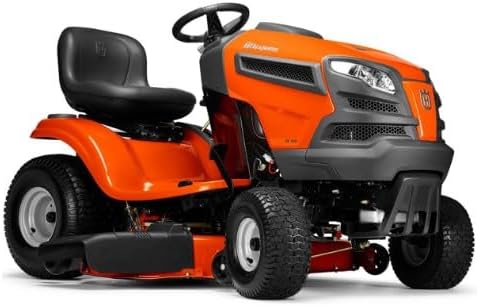
| Cutting width | 42 inches |
|---|---|
| Power Source | Gas Powered |
| Operation Mode | Manual |
| Engine | Briggs & Stratton 19 HP |
The Husqvarna TS 120 is a homeowner-focused riding tractor built to handle small to mid-size lawns with a 42-inch stamped deck and a 19 HP Briggs & Stratton engine. It uses a pedal-operated hydrostatic transmission so you can keep both hands on the wheel while smoothly adjusting speed, which helps when navigating slopes and varied terrain. The ergonomic seat and straightforward controls make longer mowing sessions less fatiguing, and the deck supports side ejection with optional collector or BioClip mulching for different cleanup preferences. Practical benefits include a wide cutting path to shorten job time and a familiar gas engine that is easy to service. Limitations are that detailed hill-capability specs such as grade rating or differential lock are not provided, so very steep properties may require a purpose-built hillside model with dedicated safety features. This tractor is most useful for routine lawn maintenance where comfort and steady, user-friendly control matter more than commercial durability or extreme-slope performance.
Best for: A homeowner who prioritizes reliable, easy-to-use equipment for routine mowing on small to mid-size properties and values operator comfort and straightforward maintenance.
Less Ideal for: Owners with very steep, irregular hills or commercial mowing needs should consider tractors specifically rated for steep-grade work and heavy continuous use.
- Pedal-operated hydrostatic transmission for smooth, hands-on steering control
- Robust 19 HP Briggs & Stratton engine suited to typical homeowner tasks
- 42-inch twin-blade deck reduces mowing time on medium plots
- Ergonomic seating and intuitive controls improve operator comfort
- Supports mulching or bagging with optional accessories
- No manufacturer grade/maximum slope specification provided for hill safety assessment
- Not marketed as a commercial or heavy-duty hillside tractor
Verdict: Choose the TS 120 if you want a comfortable, easy-to-operate riding tractor with a wide 42-inch deck and a dependable Briggs & Stratton engine for reliable homeowner mowing.
Husqvarna 24 HP Riding Lawn Mower with 54-inch Deck

| Power Source | gasoline-powered |
|---|---|
| Cutting width | 54 inches |
| Operation Mode | Automatic |
| Maximum Adjustable Cutting Height | 10.2 centimeters |
| Material Type | Alloy Steel |
This Husqvarna riding mower is built for large lawns and demanding jobs, pairing a 24 HP gasoline engine with a 54-inch ClearCut cutting deck to move through thick grass quickly. It is typically used for wide-area mowing where speed and fewer passes matter; the ClearCut deck offers multiple cutting positions to adapt to different turf heights. The mower emphasizes durability and traction with an alloy-steel frame, commercial-grade hydrostatic transmission and dash-operated differential lock, which helps maintain grip and reduce wheel spin on slopes. Comfort features such as an extra-high vinyl seat and overmolded steering wheel make extended sessions less tiring. Important limitations are its overall size and power, which require storage space and basic mechanical familiarity for maintenance, and the product is gasoline-powered so it produces noise and emissions compared with electric alternatives. For homeowners with hilly or challenging turf who want robust performance and traction control, this model delivers a strong balance of power and commercial features.
Best for: Buyers who need a robust, high‑capacity mower for large or hilly properties and prioritize traction, durability, and faster mowing over compactness or zero-emissions operation.
Less Ideal for: Small-lot owners, people who prefer electric or low-noise equipment, or those without room to store and maintain a full-size riding mower should look elsewhere.
- Powerful 24 HP gasoline engine for fast mowing on large lawns
- Wide 54-inch ClearCut deck reduces passes and improves productivity
- Commercial-grade hydrostatic transmission with differential lock for better traction on slopes
- Sturdy alloy steel frame and brush guard-style bumper for durability
- Comfort-oriented seating and steering for longer mowing sessions
- Large footprint and weight demand substantial storage space and may limit maneuverability in tight yards
- Gasoline engine requires regular maintenance and emits noise and fumes
Verdict: Choose this mower when you need strong engine power, a wide deck, and a differential lock for confident mowing on hills and large properties.
Choosing the Right Riding Lawn Tractor for Hills: Key Factors to Consider
Engine Torque and Power Delivery
On slopes, steady low-speed pulling power matters more than peak horsepower. A tractor that produces strong torque at mowing RPMs will climb inclines without lugging or stalling, and it will maintain blade speed under load. Look for engines and drivetrains designed to hold steady rpm under load rather than ones that only advertise high maximum power.
Consistent torque reduces the need to downshift constantly and prevents situations where the deck bogs down mid-slope. That improves cut quality and reduces heat and wear on the engine. For hilly properties, plan for extra working load from grass build-up and steeper grades when evaluating torque specs.
Transmission Type and Control
The transmission defines how smoothly you can manage speed and direction on an incline. Hydrostatic transmissions offer continuous, easy modulation between forward and reverse, letting you feather speed uphill and control descent without clutching. Manual gearboxes can provide positive gear ratios for heavy loads but require more operator input.
Consider gear range and low-speed creep control. A transmission that allows low forward gears and responsive throttle interplay reduces strain when starting on a slope. Also check for transmission cooling and serviceability since working under heavy load on hills increases operating temperatures and wear.
Braking Performance and Parking Security
Reliable braking and a secure parking system are essential for safety on slopes. Service brakes must provide predictable stopping power without fading during repeated downhill runs. A robust parking brake or mechanical park pawl prevents rollback when you stop on an incline and step off the tractor.
Evaluate how the brake engages and whether it is easy to apply firmly with the foot or hand control. Consider whether the tractor includes engine braking or a braking mode tied to the transmission for additional downhill control. Well-designed brakes reduce stress on the operator and cut the risk of accidents when navigating steep areas.
Traction, Tire Choice, and Weight Distribution
Traction on slopes depends on tire tread, tire pressure, and how weight is distributed between axles. Wider tires with deeper lugs bite better into soft or uneven ground, while lower pressures increase contact patch for better grip. Rear-biased weight often helps traction uphill, but balanced distribution improves downhill stability.
Think about the kinds of surfaces in your yard. On wet, loose, or uneven hills, aggressive tires and optional ballast or weight kits can prevent slippage. Avoid overly narrow or turf-only tires if you regularly mow steep or rough slopes.
Operator Controls and Ergonomics
Controls that are easy to reach and modulate make slope work less fatiguing and safer. A responsive throttle, clear gear or hydrostatic levers, and a comfortable seat with good support help you maintain posture and control during long runs on uneven ground. Features such as cruise control and an intuitive throttle-brake relationship reduce the chance of abrupt speed changes.
Also consider visibility from the operator position, the steering effort required at low speeds, and whether the layout allows quick access to the parking brake. Simple, predictable controls are preferable when you are negotiating a hill and need to react quickly.
Deck Compatibility and Load Management
The cutting deck should be suited to the tractor's hill performance so that the engine is not overloaded while maintaining an even cut. Heavier decks with larger blades increase load and require adequate torque and cooling. Deck mounting and anti-scalp features matter on slopes where uneven ground can cause snags or scalping.
Consider whether the tractor supports deck sizes that match your mowing speed and hillside profile. A deck that is too large for low-speed uphill work will force you to slow down excessively and increase stress on the drivetrain.
Terrain Assessment and Safe Operating Angles
Before choosing equipment, map your yard to understand slope percentages, transition zones, and flat spots. Some yards have short, steep pitches while others present long, gradual inclines; each calls for different traction and braking emphasis. Knowing where you will be mowing most often helps prioritize features such as low-end torque versus braking strength.
Safe operating angles vary by manufacturer and by machine configuration. In practice, avoid attempting steep faces that force you to turn across the fall line. Instead, plan mowing lines that run up and down the slope and limit cross-slope turns to areas where the grade is less severe.
- Measure slopes in degrees or percentage to compare against recommended limits.
- Identify rollover hazards and remove or fence-off obstacles before mowing.
- Create mowing patterns that minimize cross-slope maneuvers on steep sections.
Tire Upgrades and Ballast Options
Switching to a more aggressive tire or adding ballast can significantly improve traction on hills. Turf tires sacrifice grip for turf protection, while multi-purpose or agricultural-style treads provide better bite on loose or wet surfaces. Ballast in the form of wheel weights or front-mounted weights shifts the balance to favor traction where needed.
When adding weights, follow the tractor maker's recommendations for axle loads to avoid overloading bearings or altering handling in unintended ways. Small incremental changes let you evaluate benefits without creating new hazards.
- Choose tires appropriate for soil type and typical moisture conditions.
- Add ballast gradually and test handling in a safe area.
- Check tire pressure regularly; correct pressures vary with load and slope.
Safe Mowing Practices on Slopes
Operate at reduced speeds, especially on descents, and avoid sudden turns. Keep the blade engaged only when you have steady forward progress. If the tractor begins to lose traction, disengage the blades and stop in a straight line where possible; avoid braking hard while turning.
When mowing wet grass, wait for drier conditions if possible because moisture reduces traction dramatically. Use a spotter on very steep or complex terrain to help identify hazards and choose the best path. Regularly inspect the mowing area for hidden dips, rocks, or erosion that could destabilize the tractor.
- Mow up and down slopes rather than across them when practical.
- Avoid mowing on slopes beyond the tractor's recommended angle.
- Keep hands and feet inside the operator area and use seatbelt if the unit has ROPS.
Maintenance to Preserve Hill Performance
Tractors used on hills experience higher loads and may need more frequent maintenance. Keep the drive belts, brakes, and transmission fluids within service intervals and check for signs of overheating or unusual wear after heavy slope work. Tire condition and correct inflation are particularly critical for consistent traction.
Periodic inspections of steering linkages and frame welds can catch stress-related issues early. Replace worn tires and maintain clean cooling fins to prevent heat buildup during prolonged uphill operation.
- Inspect brakes before each mowing session on steep terrain.
- Change fluids and filters on an accelerated schedule if you frequently operate on hills.
- Monitor tire wear patterns to detect imbalance or misalignment early.
Accessory Considerations and Safety Gear
Certain accessories improve stability and safety on slopes. Roll-over protection structures, if available, add a major layer of safety when working on steeper grades. Lights, mirrors, and wheel weights enhance control in marginal conditions. Consider durable operator footwear and eye protection during slope tasks where ejected debris could be a hazard.
Keep a compact first-aid kit, a communication device, and basic hand tools in the storage compartments so you can respond quickly to small issues without leaving the machine unattended on a slope.
- Install ROPS if you regularly operate near the machine's maximum slope rating.
- Use rear ballast or front weights to fine-tune traction.
- Carry a tow strap and know safe recovery procedures if a machine becomes stuck.
How We Chose the Best Riding Lawn Tractor for Hills
We focused on attributes that directly affect safety and performance on inclined lawns. Primary evaluation criteria included engine torque and low-RPM power delivery, transmission type and gearing for controlled uphill and downhill speed, braking system efficiency and parking-hold capability, traction systems including tire tread and weight distribution, and operator controls that influence downhill stability such as cruise or engine braking features. We prioritized real-world handling characteristics over headline horsepower numbers because high torque at mowing speeds matters more than peak RPMs when climbing or descending. We excluded machines intended only for flat turf care, lightweight garden tractors with low ground contact, and units without clear manufacturer specs for braking or transmission gearing. We also filtered out models lacking common safety features important on slopes, such as a neutral start interlock or a reliable parking brake. The resulting shortlist balances hill-specific performance with general mowing usability, cutting deck compatibility, and durability for regular yard use.
FAQ
What slope angle is safe for most riding lawn tractors?
Safe slope angles vary by machine, but many residential riding tractors are rated for moderate grades. Always consult the operator manual for maximum recommended angles. When in doubt, avoid operating on steep faces and mow up and down slopes rather than across them.
Are hydrostatic transmissions better for hills?
Hydrostatic transmissions often give smoother speed control and easier modulation when climbing or descending, which can be an advantage on slopes. However, proper engine torque and braking are equally important, so transmission type is one part of the overall hill performance picture.
Can I add weights or change tires to improve hill performance?
Yes, adding ballast and switching to more aggressive tires are common ways to improve traction. Apply weights gradually and follow load recommendations to avoid overtaxing axles or altering handling in unsafe ways.
How should I mow wet or slippery slopes?
Avoid mowing when surfaces are wet or slippery if possible because traction drops significantly and stopping distances increase. If you must mow, use reduced speeds, avoid turns, and disengage the blades if traction becomes marginal.
Do safety features like ROPS matter for mowing hills?
Roll-over protection structures and seatbelt systems add important safety layers on steeper terrain. They do not replace cautious operation but can reduce risk in the event of a tip or rollover. Consider ROPS if your property includes significant grades.
Final Verdict
Choosing the right riding lawn tractor for hills means balancing torque, transmission control, braking ability, and traction. Prioritize machines that deliver steady low-end power, predictable braking, and tires or ballast suited to your soil and slope conditions. Tradeoffs are inevitable: higher traction setups can increase turf impact and service requirements, while lighter configurations are easier to maneuver on gentle slopes. Decide which risks matter most on your property and match those to the evaluation criteria discussed here. With the right combination of engine behavior, transmission control, brakes, and traction, you can make slope mowing safer and more efficient.
