

Note: This article contains affiliate links. If you click on these links and make a purchase, I may earn a small commission at no extra cost to you. This helps support my research and content. Read my full affiliate disclosure here.
Picking the right soil for a Venus fly trap matters more than many new growers expect. These carnivorous plants are adapted to nutrient-poor, acidic bogs and will decline quickly in mixes that are too rich, alkaline, or that retain excessive minerals. You want a medium that drains well, stays consistently damp without becoming waterlogged, and avoids fertilizers or added salts. This guide shortlists seven top soils and soil mixes suited to the Venus fly trap growing situation. We evaluated the mixes on moisture behavior, acidity, and physical texture so you can choose a substrate that matches your watering routine and container setup.
Top Picks at a Glance
| Best Overall The best all-around choice for most situations | Omitgoter Carnivorous Plant Soil Mix, 1 qt |  |
| Best Quality Built to a higher standard if you want something more solid | Josh's Frogs Sprig & Stone Carnivorous Plant Soil, 4 Quart |  |
| Best Value The sweet spot between price and what you get | Soil Sunrise Carnivorous Plant Potting Mix (12 Quarts) |  |
| Best Budget The cheapest option that still gets the job done reliably | Yilotuce Carnivorous Plant Soil Mix, 2 Qt (Perlite and Sphagnum Moss) |  |
| Highest Rated A top-rated pick with lots of positive feedback | Perfect Plants Carnivorous Plant Soil, 4 qt |  |
| Most Popular A crowd favorite that many people choose with confidence | Kapecute Carnivorous Plant Soil Mix, 2 Quart (Perlite and Sphagnum Moss) |  |
| Best Seller A high-volume bestseller chosen again and again | Leaves & Soul Carnivorous Plant Soil Mix, 2.2 Quarts |  |
Omitgoter Carnivorous Plant Soil Mix, 1 qt
| Brand | Omitgoter |
|---|---|
| Style | Carnivorous Plant Soil |
| Unit Count | 32 Ounce |
| Volume | 1 quarts |
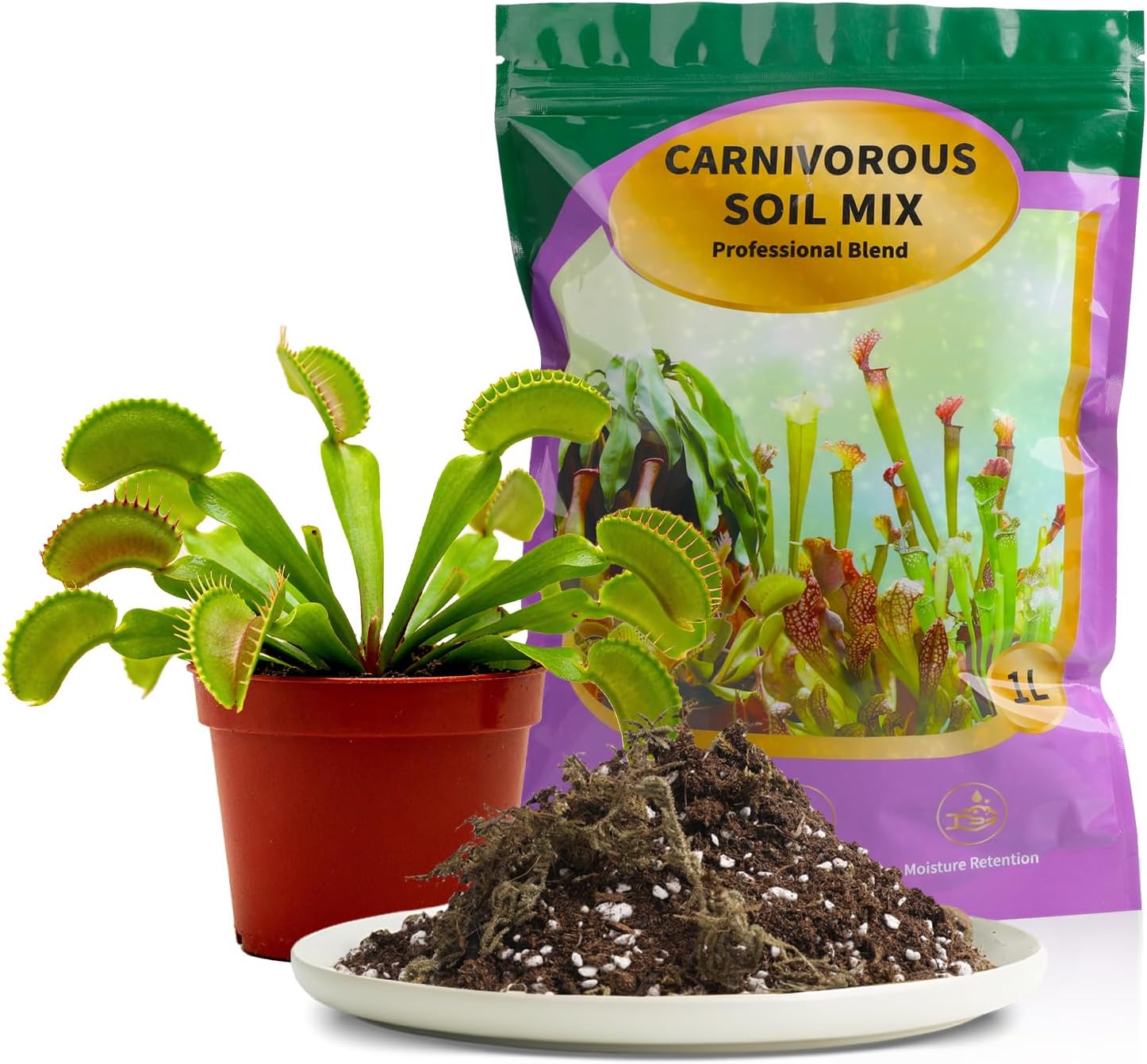
This 1 quart Omitgoter carnivorous plant soil arrives ready to use and is targeted at Venus flytraps, pitcher plants, sundews, and butterworts. The blend centers on peat moss with perlite, sphagnum moss, and horticultural sand to create a low-nutrient, fast-draining medium that mimics bog conditions and helps prevent root rot. In practice it simplifies repotting and routine care because you do not need to mix your own peat-to-perlite ratio; the texture is airy and resists compaction so roots stay healthy and traps can function normally. Notable practical benefits include improved drainage, good aeration for delicate roots, and an acid, low-fertility environment these species prefer. Limitations are inherent to the product type: a single quart is small for multiple plants or frequent repotting, and peat-based mixes require mindful watering and responsible sourcing considerations for long-term use. Overall it is a convenient, plant-focused medium for hobbyists who want a specialized, no-mix option.
Best for: Gardeners who want a hassle-free, species-specific soil for carnivorous plants and value a ready-made low-nutrient, well-draining mix that supports healthy traps and root systems.
Less Ideal for: Growers who need bulk quantities for many plants or who prefer peat-free, sustainably sourced media should consider larger or alternative mixes.
- Ready-to-use peat-based blend tailored for carnivorous species, so no mixing required
- Contains perlite and sand for fast drainage and improved aeration to reduce root rot risk
- Low-nutrient formula suitable for maintaining healthy trap function and growth
- Airy, non-compacting texture that supports root development
- Small 1 quart volume may require multiple purchases for more than one plant
- Peat-based composition requires careful, species-appropriate watering and handling
Verdict: Buy this if you want a convenient, ready-made low-nutrient, fast-draining soil that takes the guesswork out of potting carnivorous plants.
Josh's Frogs Sprig & Stone Carnivorous Plant Soil, 4 Quart

| Unit Count | 148 Ounce |
|---|---|
| Item Type Name | Terrarium Substrate |
| Brand Name | Josh's Frogs |
| Volume | 4 quarts |
Josh's Frogs Sprig & Stone Carnivorous Plant Soil is a ready-to-use peat and perlite mix made for Venus fly traps, sundews, and pitcher plants. It keeps substrate moisture high while retaining aeration around roots, which helps plants that require constantly damp, low-nutrient conditions. Typical use is straightforward: fill pots or transplant carnivores into this mix, keep containers boggy or set in trays of distilled or rain water, and avoid adding fertilizers. Notable features are its fertilizer-free, acidic composition and the inclusion of perlite to reduce compaction. Practically, the mix eliminates the need to source and mix peat and perlite yourself and reduces the risk of accidentally using nutrient-rich garden soil that can harm carnivorous species. Limitations are inherent to the formula: it is optimized only for bog-type carnivores and provides no nutrients, so it is unsuitable for general-purpose potting or for growers who want a multi-use soil. Also the product comes in consumer-sized volumes, so serious growers will need multiple bags for larger collections.
Best for: Growers who want a reliable, ready-made substrate that replicates bog conditions for Venus fly traps, sundews, and pitcher plants and who prioritize plant performance over multi-purpose convenience.
Less Ideal for: Casual gardeners seeking an all-purpose potting mix or growers who want a nutrient-containing soil for non-carnivorous plants should choose a different product.
- Pre-mixed peat and perlite tailored for carnivorous plants reduces guesswork when potting or repotting
- Fertilizer-free and acidic pH appropriate for species that die in nutrient-rich soils
- Perlite helps maintain air at the root zone and prevents compaction in consistently wet conditions
- Available in a consumer-friendly 4 quart volume suitable for small collections and individual repots
- Not suitable as a general-purpose potting soil since it lacks nutrients
- Small bag size means frequent purchases for larger collections
Verdict: Buy this if you want a proven, fertilizer-free peat and perlite mix that reliably supports healthy carnivorous plants without the hassle of mixing your own substrate.
Soil Sunrise Carnivorous Plant Potting Mix (12 Quarts)

| Volume | 12 quarts |
|---|---|
| Ingredients | Perlite and peat moss |
| Style Name | Custom |
This Soil Sunrise mix is a simple, purpose-built potting medium for carnivorous plants that pairs sphagnum peat moss with horticultural perlite to recreate bog-like conditions. You would use it for repotting or starting Venus fly traps, sundews, pitcher plants, and similar species in containers, indoors or outdoors. The peat provides the acidic, moisture-retentive base these plants need while the perlite keeps the blend open and fast-draining to prevent compaction and root rot. The formula contains no additives or fertilizers, which is appropriate because carnivores prefer low-nutrient media and are sensitive to salts. Practical benefits include consistent aeration, reduced risk of overwatering, and a clean, small-batch blend aimed at purity. Limitations are that the mix contains no added nutrients, so feeding or watering with appropriate insect prey or dilute fertilizer (only where suitable) is still necessary, and the peat base will slowly compress over time requiring occasional repotting. Also follow the safety guidance to avoid inhaling dust and use distilled or rainwater for irrigation.
Best for: Buyers who want a ready-made, low-maintenance medium that reliably mimics bog conditions for repotting or growing carnivorous plants and prefer a no-frills, clean blend.
Less Ideal for: Gardeners looking for an all-in-one soil with added fertilizers or those who prefer peat-free, sustainable potting media should consider alternatives.
- Simple two-ingredient formula of sphagnum peat moss and perlite tailored to carnivorous plants
- Fast-draining and well-aerated to reduce risk of root rot and soil compaction
- No additives or fillers, matching low-nutrient needs of carnivorous species
- Hand-blended in small batches for consistency and purity
- Contains no nutrients, so plants may need supplemental feeding or careful water management
- Peat-based mixes can compress over time and require repotting
Verdict: A straightforward peat-and-perlite mix that gives carnivorous plants the acidic, airy bog-like substrate they need without unnecessary additives.
Yilotuce Carnivorous Plant Soil Mix, 2 Qt (Perlite and Sphagnum Moss)

| Brand | Yilotuce |
|---|---|
| Volume | 1.76 quarts |
| Item Type Name | Other Garden and Outdoor Equipment, Accessories |
This compact kit supplies compressed sphagnum moss crumbs and separate perlite packets so you can rehydrate and blend a custom carnivorous-plant potting mix. Use it by soaking the compressed moss for a few minutes until it expands, mixing in the perlite, squeezing out excess water, and potting your Venus flytrap, pitcher plant, sundew, or moisture-needy seedling. The moss provides strong water retention while the perlite adds drainage and aeration, which helps roots establish without becoming waterlogged. Individual packaging and small portions make it easy to mix exactly the amount you need and to store leftover components. Downsides are the small total volume, which requires repeated purchases for multiple plants, and some perlite dust can be present after shipping, so handle carefully and avoid inhaling dust. For basic repotting and seed-starting this mix removes the need to source sphagnum and perlite separately and is convenient for hobbyists on a tight budget.
Best for: Buyers who need an inexpensive, ready-to-use substrate for one or a few carnivorous plants or seedlings and prefer a low-effort, premeasured solution.
Less Ideal for: Not a good fit for growers who need large volumes for many pots or who prefer to custom-blend bulk materials to exact ratios.
- Formulated specifically for carnivorous and moisture-loving plants with sphagnum moss plus perlite.
- Individually wrapped components let you mix only what you need and store leftovers.
- Perlite improves drainage and aeration while moss provides reliable moisture retention.
- Small 2 quart total volume means frequent repurchasing for collectors or multiple pots.
- Perlite dust may be present after shipping so requires careful handling.
Verdict: A convenient, budget-friendly premeasured sphagnum-plus-perlite mix that makes repotting or starting a few carnivorous plants quick and low-effort.
Perfect Plants Carnivorous Plant Soil, 4 qt

| Unit Count | 128 Fluid Ounces |
|---|---|
| Item Type | Carnivorous Plant Soil 4qt |
| Item Highlight | Organic sphagnum peat moss and perlite blend |
| Volume | 4 quarts |
This 4-quart carnivorous plant soil is a simple, grower-ready mix of organic sphagnum peat moss and perlite designed to hold the low pH and steady moisture levels that Venus flytraps, sundews, pitcher plants, and Nepenthes need. Packaged in a resealable heavy-duty bag, the mix is convenient to store and measure for repotting single plants or refreshing a few small containers. The high peat content gives reliable acidity and water retention while perlite improves drainage and aeration so roots do not become waterlogged. Because it contains no added fertilizers, it supports the nutrient-poor conditions carnivores require, letting you control any feeding separately. Practical limitations are its small 4-quart volume, which is best for 3 to 4 small pots and means you will need multiple bags for larger collections, and the peat-based formula requires mindful sourcing and disposal if you prefer peat-free alternatives. For growers who want a straightforward, purpose-blend medium, this product removes the guesswork and performs as expected in routine repotting and pot maintenance.
Best for: Growers who prioritize a dependable, purpose-made potting medium that consistently provides the low pH and moisture balance carnivorous plants require for healthy long-term growth.
Less Ideal for: People with large carnivorous plant collections who need bulk quantities or gardeners committed to peat-free growing media should look for larger or peat-free alternatives.
- Formulated with sphagnum peat moss and perlite to maintain acidic, moisture-retentive conditions required by carnivorous plants
- Resealable heavy-duty bag for easy storage and to keep the medium fresh between uses
- No added fertilizers so it preserves the low-nutrient environment carnivores need
- Ready-to-use blend removes the need to mix components yourself
- Small 4-quart volume may not be enough for larger collections or multiple repottings
- Peat-based mix may be undesirable for gardeners seeking peat-free or more sustainable media
Verdict: Choose this mix if you want a reliable, ready-made acidic potting medium tailored to the needs of Venus flytraps, sundews, and other carnivorous plants.
Kapecute Carnivorous Plant Soil Mix, 2 Quart (Perlite and Sphagnum Moss)

| Brand | Kapecute |
|---|---|
| Volume | 2 quarts |
| Number of Packs | 2 |
| Material | Sphagnum moss debris and perlite |
This Kapecute mix combines compressed sphagnum moss debris with individually wrapped perlite to create a lightweight, well-draining medium suited to Venus flytraps, pitcher plants, sundews and moisture-tolerant seedlings. The peat-like moss holds water so roots stay moist while the perlite improves aeration and prevents compaction, which helps young roots establish and keeps traps healthy. The product arrives in small compressed packets that expand when moistened and are easy to portion into small pots. Notable practical benefits are the naturally sourced ingredients with no additives and the handpicked components intended to reduce dust and unwanted debris. Important limitations are the small 2 quart volume and mini compressed packaging, which makes this better for potting a few plants or starting seedlings rather than filling many containers. Also follow the safety guidance to avoid inhaling dust during handling and keep away from children and pets.
Best for: Buyers who want a simple, natural potting medium for a few carnivorous plants or for starting moisture-loving seedlings and who prefer a product vetted by other users.
Less Ideal for: Gardeners needing large volumes for many pots or bed planting should choose bulk carnivorous soil or mix their own to save cost and reduce packaging waste.
- Blend of sphagnum moss debris and perlite provides moisture retention plus drainage
- Handpicked components minimize dust and unwanted impurities
- Compressed packets are easy to store and portion for small pots and seedlings
- 100% natural mix with no added fertilizers or additives
- Small 2 quart volume is insufficient for repotting multiple mature plants
- Perlite can produce dust or powder if squeezed during shipping
Verdict: A compact, natural sphagnum‑moss and perlite mix that makes potting and propagating a few carnivorous plants quick and straightforward.
Leaves & Soul Carnivorous Plant Soil Mix, 2.2 Quarts

| Brand Name | Leaves and Soul |
|---|---|
| Unit Count | 70.4 Fluid Ounces |
| Volume | 2.2 quarts |
| Made in | USA |
This ready-to-use mix is formulated specifically for carnivorous plants such as Venus flytraps, sundews, pitcher plants, and butterworts. The blend of peat moss and coco coir helps hold consistent moisture while perlite improves drainage and aeration, and dolomite moderates the substrate chemistry. You can pot seedlings, mature specimens, or use it when repotting without additional amendments, which simplifies care for growers who prefer predictable results. In practice the mix stays loose and resists compaction, so roots get oxygen even when kept damp, but watering still needs to be adjusted for container type and environmental conditions. Important limitations are that carnivorous species remain sensitive to minerals and water quality, so use low-mineral water and monitor for buildup; the bag size is small, so larger collections will require multiple purchases or bulk sourcing. For cautious hobbyists this soil reduces one variable in care by providing a consistent low-nutrient medium that works across common carnivorous genera.
Best for: Buyers who want a reliable, species-appropriate growing medium that reduces guesswork when caring for common carnivorous plants and who prioritize predictable, low-maintenance substrate performance.
Less Ideal for: Collectors with many plants or those repotting large specimens who need bulk volumes should consider larger-format mixes or commercial bulk blends.
- Formulated for low-nutrient needs of carnivorous plants to avoid overfeeding
- Peat moss and coco coir retain steady moisture without becoming waterlogged when potted correctly
- Perlite improves aeration and reduces compaction for healthier root zones
- Ready-to-use out of the bag so no mixing or amendments are required
- Small 2.2 quart volume may be insufficient for multiple plants or repotting larger specimens
- Contains dolomite and peat which require attention to water quality to avoid mineral buildup
Verdict: A convenient, ready-to-use low-nutrient soil blend that makes caring for Venus flytraps and other carnivores simpler and more predictable.
Choosing the Right Soil for Venus Fly Trap Plant: Key Factors to Consider
Acidity and Soluble Salt Content
Venus fly traps thrive in acidic, nutrient-poor media. High pH or soluble salts from fertilizers and certain bagged mixes can damage roots and inhibit prey digestion. When choosing a soil, prioritize mixes tested or labeled as low in soluble salts and free of lime or fertilizer.
A consistently low pH reduces competition from most common houseplant pathogens and helps the plant absorb what it needs from captured insects rather than from the substrate. Avoid substrates that list added nutrients, compost, or dolomite lime.
Moisture Retention Without Waterlogging
These plants need a persistently damp environment at the root zone but will develop root rot in anaerobic, waterlogged soils. Ideal soils combine components that hold water at the particle level while allowing excess to move away from the crown.
Look for peat or long-fiber sphagnum that retains moisture, paired with a coarse, inert component such as horticultural sand or perlite to maintain air pockets. The goal is even, gentle moisture rather than soggy saturation.
Drainage and Aeration
Good drainage prevents standing water and oxygen starvation in the root zone. Aeration also supports healthy root tips and helps traps remain vigorous. Soil mixes with a range of particle sizes create channels for water to flow and pockets for air to circulate.
Avoid fine, compacting substrates that close up after repeated wetting and drying cycles. A light, open structure preserves both drainage and the damp conditions these carnivores need.
Particle Size and Stability
Particle size affects both moisture dynamics and long-term stability. Very fine peat can compact and inhibit oxygen flow, while components that are too coarse may dry out unevenly. A balanced mix keeps its structure through multiple wetting cycles so you do not need to repot frequently.
Stable particles also reduce the risk of small debris clogging drainage paths or holding pockets of stagnant water. Choose materials that resist rapid breakdown in a constantly damp environment.
Organic Composition and Longevity
Organic components provide the moisture-holding backbone of the mix but break down over time. Sphagnum peat or long-fiber sphagnum perform differently: peat compresses slowly, while intact sphagnum maintains loft but can be harder to find. Consider how often you are willing to repot and refresh the medium.
Longevity matters especially for plants kept in small pots or trays where substrate replacement is more disruptive. A mix that lasts a couple of years before needing a refresh is often the most practical choice for casual growers.
Pest and Contaminant Risk
Soils can introduce pests, weed seeds, or chemical contaminants that stress carnivores. Clean, horticultural-grade components reduce the chance of fungus gnats, weed seedlings, or chemical residues affecting growth. Avoid reclaimed soils or mixes with unknown sources.
Sterilized or well-sourced materials lower the risk of introducing problems to an established collection of carnivorous plants.
Best Soil Types for Different Containers
Pots, trays, and bog-style containers each influence which soil mix works best. Small nursery pots dry out faster, so mixes with slightly higher water retention perform better there. Shallow trays used for a constantly wet tray method need a mix that resists complete saturation while still staying damp at the crown.
For taller pots, a mix with improved drainage near the bottom helps prevent waterlogging, while medium-height containers benefit from a balanced peat-to-sand ratio. Match the mix to your container depth and how you water.
- Shallow trays: higher peat content with coarse sand for surface dampness.
- Standard pots: balanced peat and coarse inert material for even moisture.
- Tall pots: add larger drainage particles at the base to prevent saturation.
Using Sphagnum Moss Versus Peat
Long-fiber sphagnum and sphagnum peat both provide acidic, low-nutrient bases but behave differently. Long-fiber sphagnum offers loft and air pockets that help aeration, while peat holds moisture uniformly but can compact over time.
Sphagnum is useful when you need a mix that stays open and airy, such as in small pots or hanging setups. Peat is convenient for stable moisture control in standard containers but plan to refresh compacted peat periodically.
- Sphagnum: better aeration, resists compaction, may need rehydration handling.
- Peat: uniform moisture retention, can compress and reduce aeration over time.
Amending Mixes Safely
When adjusting a base mix, only use inert, clean amendments that do not raise pH or add nutrients. Horticultural sand, perlite, and washed silica sand are common choices to increase drainage and reduce compaction. Avoid garden soil, compost, or lime-containing amendments.
Introduce amendments gradually and observe how the plant responds. A conservative approach prevents sudden shifts in moisture behavior or chemistry that can stress roots.
- Use coarse, washed sand or perlite for drainage.
- Avoid compost, garden loam, or fertilizer-containing additives.
- Test small adjustments before repotting an entire collection.
Watering Practices That Complement Soil Choice
How you water interacts directly with the soil you choose. Plants in peat-heavy mixes will need more frequent top watering to keep the media evenly damp. Tray methods work well with mixes that resist complete saturation and can hold a thin film of water.
Use distilled, rain, or low-mineral water to avoid buildup of soluble salts. Flushing the pot occasionally with clean water can help remove any developing salt accumulation without disturbing the plant.
- Top watering frequency varies by pot size and mix composition.
- Tray watering favors mixes that retain surface moisture but still drain.
- Use low-mineral water to prevent salt buildup.
When to Repot or Refresh the Soil
Monitor substrate texture and plant vigor to decide when to repot. Signs you need fresh soil include compaction, persistent discoloration, slow growth, or trapped water that does not drain. For many growers, refreshing the medium every one to three years keeps plants healthy.
Repotting also gives you a chance to check roots for rot or crowding. Use fresh, low-salt materials and avoid aggressive root pruning unless necessary.
- Check for compaction or a sour smell indicating poor drainage.
- Younger plants are more sensitive to substrate changes; proceed gently.
- Plan repotting during active growth, not during dormancy.
How We Chose the Best Soil for Venus Fly Trap Plant
We prioritized criteria that reflect how Venus fly traps behave in cultivated settings and what causes common problems. First, acidity and low soluble salts were essential because these plants get nutrients from captured prey and cannot tolerate mineral-rich substrates. Second, water retention and drainage were balanced: the right mix holds steady moisture at root level but does not become anaerobic. Third, physical texture and particle size matter for root development and for preventing compaction during repeated waterings. Fourth, organic composition and longevity were considered to judge how often a grower will need to refresh the medium. Finally, pest and contamination risk was reviewed by excluding mixes with known added fertilizers, lime, or composted materials that raise pH. We excluded any product that contained added fertilizers, lime, or composted manure and any mixes formulated for general houseplants rather than carnivores. The shortlisted soils therefore emphasize sphagnum peat or long-fiber sphagnum, clean horticultural sand, and inert mixes with predictable drainage and low conductivity. Our evaluation focused on acidity, moisture behavior, particle stability, and contamination risk to reflect real-world care for Venus fly traps.
FAQ
Can I use regular potting soil for a Venus fly trap?
Regular potting soil is usually too nutrient-rich and can contain lime or fertilizers that harm a Venus fly trap. These plants prefer a low-mineral, acidic medium. Avoid standard houseplant mixes unless they are specifically labeled as low-salt and fertilizer-free.
Is peat moss safe for Venus fly traps long term?
Peat moss is commonly used and provides steady moisture and acidity. Over time it can compact, so expect to refresh or repot every one to three years depending on pot size and watering habits. Combining peat with an inert drainage component helps preserve aeration.
What water should I use with these soils?
Use low-mineral water such as rainwater, distilled, or reverse-osmosis water. Tap water with high dissolved minerals will leave salts behind and raise conductivity in the soil, which stresses carnivores over time.
Can I add fertilizer to the soil?
No. Venus fly traps obtain nutrients from insects and are harmed by added fertilizers in the substrate. Do not add fertilizers to the soil or use mixes that list nutrient additives.
How do I prevent soil from compacting?
Incorporate coarse, inert materials such as washed sand or perlite to maintain structure. Avoid fine, dusty components and repot before the medium breaks down completely. Gentle handling when watering also reduces compaction.
Final Verdict
Choosing soil for a Venus fly trap is about recreating a low-nutrient, acidic bog environment while keeping roots oxygenated. Prioritize mixes that offer low soluble salts, steady moisture retention, and good drainage, and match particle size to your container and watering method. Expect to refresh the medium periodically and use low-mineral water to avoid salt buildup. Focus on the tradeoffs between longevity and aeration: peat-based mixes hold moisture well but can compact, while sphagnum and coarse amendments keep the medium open. With the right substrate and watering routine, you can maintain vigorous traps and healthy growth.
