

Note: This article contains affiliate links. If you click on these links and make a purchase, I may earn a small commission at no extra cost to you. This helps support my research and content. Read my full affiliate disclosure here.
If you want succulents that reward with real flowers rather than just attractive foliage, choosing the right varieties matters. Flowering succulents vary in bloom color, how often they flower, and the cultural needs that trigger blooms. In real garden and container situations you need plants that withstand indoor light swings, outdoor seasonal changes, and the occasional watering lapse. This guide shortlists the top picks for prettiest flowering succulents across different growing situations. Each selection was chosen for reliable bloom habits, manageable care, and visual impact. We evaluate bloom frequency and care difficulty, plus structure and seasonal interest, so you can pick varieties that fit your space and schedule.
Top Picks at a Glance
| Best Overall The best all-around choice for most situations | Plants for Pets Florist Kalanchoe 3-Pack (3.5 in pots) |  |
| Best Quality Built to a higher standard if you want something more solid | American Plant Exchange Desert Rose (6-inch potted flowering succulent) |  |
| Best Value The sweet spot between price and what you get | Sprout N Green 5-Pack Assorted Live Succulent Starter Plants in 2" Nursery Pots |  |
| Best Budget The cheapest option that still gets the job done reliably | THE NEXT GARDENER.COM Succulent Plants 4-Pack, Fully Rooted in 2" Pots |  |
| Highest Rated A top-rated pick with lots of positive feedback | CZ Grain Desert Rose (Adenium) 3-Pack — 2" Starter Pots |  |
| Most Popular A crowd favorite that many people choose with confidence | Altman Plants 2" Live Succulent Collection, 20-Pack (10 Varieties) |  |
| Best Seller A high-volume bestseller chosen again and again | THE NEXT GARDENER.COM Echeveria 'Dusty Rose' 4-inch Succulent, Fully Rooted |  |
Plants for Pets Florist Kalanchoe 3-Pack (3.5 in pots)

| Indoor Outdoor Usage | Indoor, Outdoor |
|---|---|
| Sunlight Exposure | Partial Sun |
| USDA Hardiness Zone | 10, 11, 12 |
| Soil Type | Sandy Soil |
| Moisture Needs | Regular Watering |
These Florist Kalanchoe plants arrive as three compact, flowering succulents in 3.5-inch pots and are designed for easy, low-maintenance color in the home or on a protected patio. They produce dense clusters of long-lasting blooms in warm tones and are commonly used as tabletop accents, windowsill plants, or grouped in small containers for seasonal displays. Kalanchoe thrives in bright, indirect light with partial sun exposure and prefers sandy, well-draining soil; water only when the soil has dried to avoid root rot. Notable features include extended bloom time, compact habit, and drought tolerance, which make them forgiving for busy owners. They are hardy only to warmer USDA zones and are best kept indoors or in sheltered outdoor spots where temperatures stay above about 50°F. Expect consistent flowering with proper light cycles if you want repeat blooms, and keep them away from pets since the species can be toxic. If you want an easy-to-manage burst of color without frequent grooming or complicated care, this three-pack delivers reliably.
Best for: Gardeners or home decorators who want an easy-care flowering succulent to add reliable, long-lasting color to small indoor spaces or protected patios without a lot of fuss.
Less Ideal for: Those seeking cold-hardy outdoor perennials for unprotected gardens or pet owners who cannot safely keep toxic plants out of reach.
- Long-lasting, brightly colored blooms that add instant decorative impact
- Low-maintenance and drought-tolerant once established
- Compact size suitable for windowsills, small tables, and grouped displays
- Sold as a set of three plants, offering variety and better visual coverage
- Cold-sensitive and only suitable for warm or sheltered outdoor locations
- Toxic to pets, requiring placement out of reach of cats and dogs
Verdict: This three-pack of florist Kalanchoe is the quick, low-effort way to add long-lasting, vibrant blooms to small indoor or sheltered outdoor spaces.
American Plant Exchange Desert Rose (6-inch potted flowering succulent)

| Indoor Outdoor Usage | Indoor, Outdoor |
|---|---|
| Other Special Features of the Product | Air Purification, Disease Resistant, Drought Tolerant, Extended Bloom Time, Low Maintenance |
| Expected Blooming Period | Spring to Summer |
| Sunlight Exposure | Full Sun |
| USDA Hardiness Zone | 10, 11, 12 |
The Desert Rose is a compact, flowering succulent built for sunny, low-water environments and decorative container culture. It is typically used as a desk or windowsill specimen, patio accent, or bonsai-style focal point where bright, direct sunlight is available. Notable features from the listing include its swollen water-storing base, drought tolerance, disease resistance, and extended bloom period in spring and summer. In practice that means this plant will tolerate occasional neglect and still set colorful trumpet-shaped flowers when given full sun and well-draining sandy soil. It ships in a small nursery pot ready for display or repotting into a decorative container. Limitations to consider are its climate range; it is recommended for USDA zones 10 to 12 so outdoor use is best in warm regions, and flowering depends on strong light and seasonal conditions. Buyers should expect a slow-growing habit suited to containers rather than a fast landscape filler. With basic care—infrequent watering and bright sun—the Desert Rose delivers a low-maintenance, showy flowering accent.
Best for: Buyers who prioritize visual performance and low-maintenance plants and want a striking flowering specimen for sunny containers or bonsai-style displays.
Less Ideal for: Those seeking cold-hardy landscape plants for temperate gardens or buyers who cannot provide several hours of direct sunlight indoors.
- Drought-tolerant succulent that tolerates infrequent watering
- Distinctive swollen trunk and trumpet-shaped flowers for strong visual impact
- Disease resistant and low-maintenance for busy owners
- Versatile for indoor bright windows or warm outdoor containers
- Not hardy below USDA zones 10–12 so outdoor use is limited in cooler climates
- Flowering requires bright, direct sun and may be sparse in low-light indoor spots
Verdict: Choose this Desert Rose when you want a low-water, showy flowering succulent for sunny containers or bonsai-style displays.
Sprout N Green 5-Pack Assorted Live Succulent Starter Plants in 2" Nursery Pots

| Indoor Outdoor Usage | Indoor, Outdoor |
|---|---|
| Other Special Features of the Product | Drought Tolerant, Low Maintenance |
| Sunlight Exposure | Partial Shade |
| Soil Type | Succulent & Cacti Soil Mix |
| USDA Hardiness Zone | 9a-11b |
These Sprout N Green succulents arrive as five small, assorted plants already potted in 2-inch nursery pots with a succulent and cacti soil mix. They are intended for easy indoor or protected outdoor display on windowsills, desks, terrariums, or as small gifts and DIY project material. The listing emphasizes drought tolerance and low maintenance: water only when the soil is mostly dry, provide indirect bright light or limited direct sun, and keep temperatures between about 60 and 80°F. Practical touches include guidance on cleaning and basic recovery steps for damaged or dried plants, plus packaging prepared at a California farm. Limitations are the small nursery size and mixed assortment, so you should expect tiny specimens that may need repotting for long-term growth and that color or form will vary. Also, these are suited to mild climates (USDA zones 9a–11b) or indoor culture in cooler areas. For someone who wants low-effort greenery or multiples for arrangements, these provide an easy start, but plan to upgrade pots and soil as plants grow.
Best for: Best for practical plant owners who want low-maintenance, ready-to-display succulents for indoor decor, small arrangements, or as starter plants to expand a collection.
Less Ideal for: Not ideal for growers who need mature specimens, specific named varieties, or outdoor planting in climates colder than USDA zones 9a–11b without indoor protection.
- Comes as a five-count assortment ready in nursery pots for immediate display or gifting
- Supplied with a well-draining succulent and cacti soil mix suited to low-water care
- Clear care guidance included for watering, light, and basic recovery of stressed plants
- Low maintenance and drought tolerant, suitable for busy owners or beginners
- Plants are very small and will require repotting for long-term growth
- Assortment means specific varieties and colors are not guaranteed
Verdict: An inexpensive, low-effort five-pack of starter succulents that gives you ready-to-display plants ideal for beginners or anyone wanting easy indoor greenery.
THE NEXT GARDENER.COM Succulent Plants 4-Pack, Fully Rooted in 2" Pots

| Indoor Outdoor Usage | Indoor |
|---|---|
| Sunlight Exposure | Partial Sun |
| Soil Type | Sandy Soil |
| Moisture Needs | Moderate Watering |
| Unit Count | 4 Count |
This four-pack of succulents arrives in 2-inch grower pots already rooted in a well-draining mix, making it a simple way to add low-maintenance plants to a home or desk. The plants are intended for indoor use with partial sun and only need moderate watering when the soil dries, which suits busy households or first-time plant owners. Each pot is hand-packed and shipped from the seller's farm, so you get live plants rather than bare-root cuttings. Practical benefits include low ongoing care, compact size for small spaces, and enough variety to create a small display or give as gifts. Limitations are the small pot size, which means you will need to repot to larger containers as the plants grow, and the set does not include decorative pots or long-term care instructions beyond basic watering guidance. For buyers focused on inexpensive, ready-to-grow succulents, this is a convenient starter option, but expect to provide repotting and occasional grooming over time.
Best for: Buyers seeking an inexpensive way to start a small indoor succulent collection or give simple plant gifts, especially those who want low-effort, ready-to-grow plants.
Less Ideal for: Collectors wanting mature specimens or gardeners looking for larger, display-ready plants without the need to repot should consider larger plants instead.
- Sold as four fully rooted live succulents ready to display or repot
- Shipped in 2-inch grower pots with well-draining soil for easy immediate care
- Low maintenance care requirements suitable for indoor partial sun conditions
- Compact size fits small apartments, desks, or windowsills
- Pots are small and will require repotting as plants mature
- Limited care guidance and no decorative containers included
Verdict: An affordable, low-care four-pack of fully rooted succulents that makes it easy to start an indoor plant collection or create small gifts.
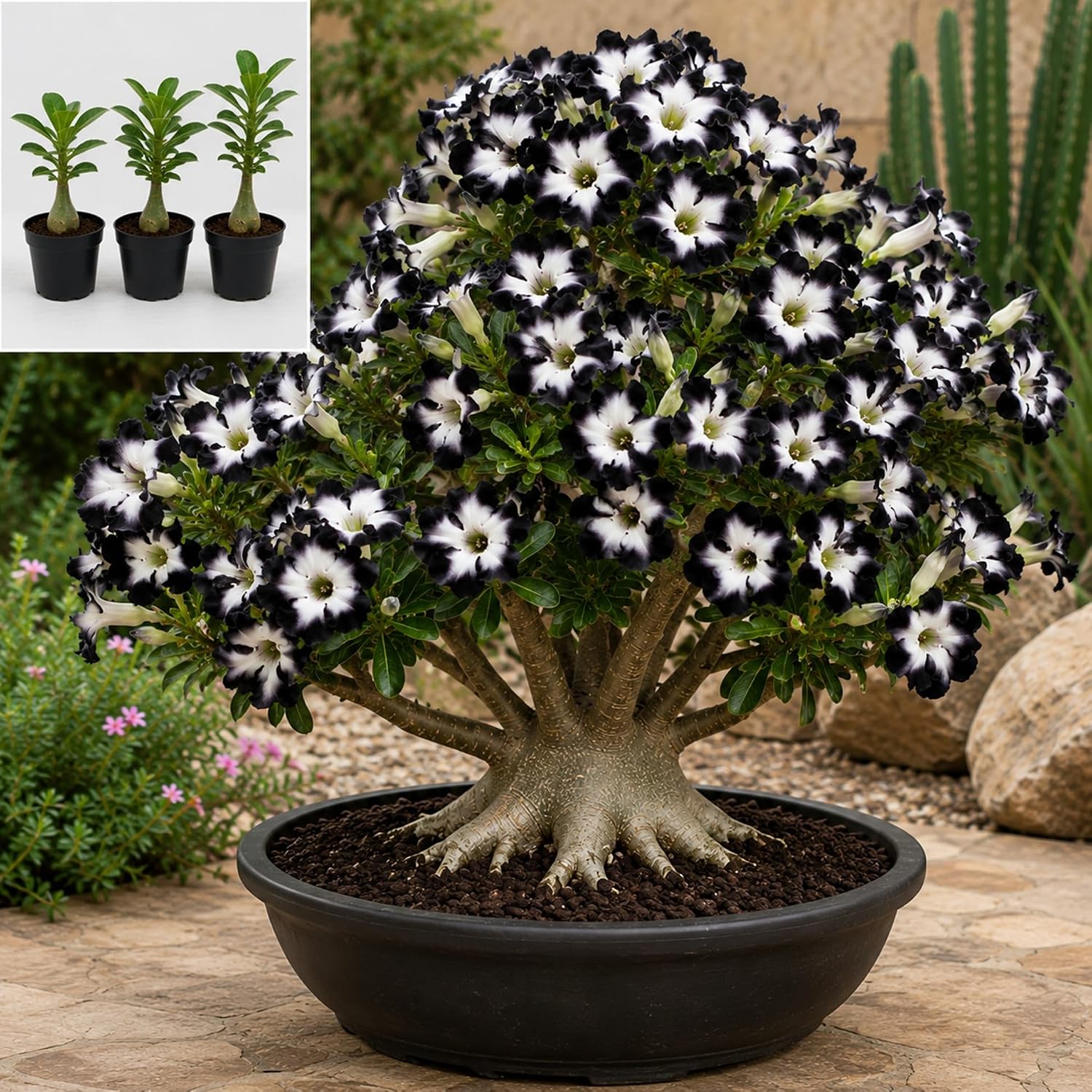
CZ Grain Desert Rose (Adenium) 3-Pack — 2" Starter Pots
| Expected Blooming Period | Summer to Winter |
|---|---|
| Sunlight Exposure | Partial Sun |
| USDA Hardiness Zone | 3-10 |
| Moisture Needs | Moderate Watering |
| Unit Count | 3 Count |
These three Desert Rose starter plants arrive already rooted in 2-inch nursery pots and are intended for transplanting into well-draining soil or decorative containers. Desert Rose (Adenium) is grown for its thick caudex, glossy foliage, and showy trumpet blooms; these starters are greenhouse-grown and suited to bright, sunny locations such as sunny windowsills, patios, or greenhouses. The listing notes low maintenance and moderate watering once established, and the plants tolerate drought conditions after settling in. Practical benefits include easy container culture, an eventual bonsai-like sculptural trunk, and a long summer-to-winter blooming period in suitable conditions. Important limitations are the small nursery pot size on arrival, which means you will need to pot up soon, and the mixed-color assortment means you cannot choose specific flower colors. Also, while the plants are hardy across a wide USDA zone range on the listing, they perform best with consistent bright light and careful watering to avoid root rot.
Best for: Buyers who want a reliable, low-maintenance flowering succulent to grow in containers, sunny windows, or a greenhouse and prefer established starters over seeds.
Less Ideal for: Gardeners seeking instant mature specimens or exact bloom-color selection should look for larger, named cultivars or single-color plants instead.
- Three live, rooted starters arrive ready for transplanting
- Greenhouse-grown for initial establishment and easier acclimation
- Low-maintenance once established and drought tolerant
- Attractive trumpet-shaped blooms and sculptural caudex develop with age
- Ships in very small 2-inch pots so repotting is required soon after arrival
- Mixed colors mean you cannot pick particular bloom shades
Verdict: A dependable set of three rooted Desert Rose starters that make it easy to grow showy, low-maintenance flowering succulents in containers or a greenhouse.
Altman Plants 2" Live Succulent Collection, 20-Pack (10 Varieties)

| Indoor Outdoor Usage | Indoor, Outdoor |
|---|---|
| Sunlight Exposure | Full Sun |
| Moisture Needs | Little To No Watering |
| USDA Hardiness Zone | 5 |
This 20-pack from Altman Plants provides a ready-to-use variety of small succulents sold in 2-inch nursery pots, ideal for starting a collection, filling a container garden, or using in DIY projects like terrariums and event decor. The assortment typically includes rosette-form succulents and species such as Echeveria, Crassula, Sedum, and Kalanchoe, delivered as ten pairs for consistent pairing. These plants are grown to be drought tolerant and suited to bright light or full sun, so they require infrequent watering and minimal day-to-day care. The biodegradable material features and plastic nursery pots make them easy to repot into decorative containers. Expect seasonal variation in exact varieties because the assortment is curated from a large breeding program, which is great for diversity but means you cannot pick specific cultivars. Also, pot size and small plant size limit immediate presence in large planters without trimming or grouping. For gardeners seeking low-maintenance, visually varied succulents, this pack simplifies getting started; for collectors wanting exact named varieties, the surprise element may be a drawback.
Best for: Buyers who want an easy, low-maintenance way to start a varied succulent collection or to create multiple small arrangements and gifts with minimal plant knowledge.
Less Ideal for: Collectors seeking specific named cultivars or experienced growers who need larger, mature specimen plants for immediate display.
- Large curated assortment across common succulent genera for visual variety
- Sold as ten matched pairs which simplifies arranging and gifting
- Designed for low-water care and bright light, suitable for beginners
- Comes in 2" nursery pots ready for repotting or use in small displays
- Exact varieties are not guaranteed because selection varies seasonally
- Small 2" pots mean plants may need repotting to make an immediate impact in larger containers
Verdict: Choose this 20-pack when you want an easy, low-water, visually diverse set of small succulents to start collections, gifts, or DIY displays.
THE NEXT GARDENER.COM Echeveria 'Dusty Rose' 4-inch Succulent, Fully Rooted

| Indoor Outdoor Usage | Indoor |
|---|---|
| Other Special Features of the Product | Drought Tolerant |
| Sunlight Exposure | Partial Sun |
| Soil Type | Sandy Soil |
| Moisture Needs | Moderate Watering |
This 4-inch Echeveria 'Dusty Rose' arrives fully rooted in a well-draining grower pot and is intended as an easy-care indoor succulent. It is drought tolerant and follows a simple soak-and-dry watering routine, making it convenient for owners who prefer low-maintenance plants. Place it on a bright windowsill or tabletop with several hours of indirect to partial sun to keep its compact rosette shape and color. The listing highlights sandy, well-draining soil and moderate watering needs, which help reduce root-rot risk when followed. Practical benefits include small footprint for desks or shelves, established roots for quicker acclimation, and general resilience to uneven care. Limitations are that succulents can suffer in low light or if overwatered, and the product description does not specify exact size beyond the pot or long-term hardiness details, so expect to monitor light and water closely after purchase. Shipping and handling can also affect leaf condition, so allow a brief recovery period if leaves arrive bruised.
Best for: Buyers who want a low-effort, attractive houseplant for bright indoor spots and prefer an already established plant that recovers quickly from normal household conditions.
Less Ideal for: People seeking cold-hardy outdoor plants, large specimen succulents, or those who want detailed cultivation specs for advanced propagation.
- Sold fully rooted in a grower pot for faster establishment
- Drought tolerant and low maintenance suited to infrequent watering
- Compact 4-inch size fits windowsills, desks, and small planters
- Limited hardiness and care details provided for long-term growth
- Can decline if kept in low light or irrigated too frequently
Verdict: An easy-care, fully rooted Echeveria that makes a low-risk, attractive choice for bright indoor spots where minimal watering is preferred.
Choosing the Right Prettiest Flowering Succulents: Key Factors to Consider
Bloom Frequency And Timing
How often a succulent flowers and when those blooms appear determines how much visual payoff you get from the plant. Some flowering succulents bloom annually with a big show in spring or summer, while others can produce small, repeated flushes through the growing season. Understanding the typical timing helps you plan groupings so one variety's off-season is covered by another's peak.
Bloom frequency also influences maintenance tasks. Plants that flower repeatedly may need light deadheading to tidy spent blooms, while once-a-year bloomers may require less regular grooming but more attention to feeding or light to encourage that single show.
Cultural Needs And Ease Of Care
Succulents vary from truly hands-off to ones that need precise moisture, feeding, or seasonal rest. Ease of care covers drought tolerance, soil preference, and how forgiving a plant is of errant watering or low light. For many gardeners, choosing varieties that handle occasional neglect reduces stress and increases success rates.
Consider whether you want a plant for a busy patio or an indoor windowsill. If you travel frequently or are new to succulents, prioritize robust, low-maintenance flowering types that do not require strict humidity or nightly misting.
Light Requirements And Placement
Flowers are often the result of adequate light. Some flowering succulents need bright, direct sun to bud and produce saturated colors, while others will bloom in bright indirect light. Placement decisions will affect bloom size, color intensity, and frequency. In containers, you can move plants seasonally to follow the sun, but in beds your choices are more permanent.
Also factor in afternoon heat. A site with morning sun and afternoon shade can protect blooms from bleaching or desiccation, helping both flowers and foliage stay healthy through hot periods.
Cold Hardiness And Heat Tolerance
Knowing the temperature range a flowering succulent tolerates matters for planting location and winter protection. Some species are hardy to light frosts and can be grown outdoors year-round in mild climates, while others are strictly frost-tender and need indoor overwintering.
Heat tolerance is equally important where summer highs can stress blooms. Choose varieties matching your USDA or local climate zone, or plan to move containers and provide temporary shade or frost protection when necessary.
Visual Texture And Structure
Flowers are only one part of the display. Leaf shape, color, and plant form determine how a succulent fits into containers and mixed plantings. Rosettes, trailing stems, and columnar forms each interact differently with blooms; a trailing succulent that flowers along its stems creates a very different effect from a tight rosette that sends up a single bloom stalk.
Consider combination planting and the silhouette you want to achieve. Varieties with striking foliage can offer garden interest even when not in bloom, extending the plant's usefulness in design.
Propagation And Longevity
Many succulents are easy to propagate from offsets, leaf cuttings, or stem sections, which affects long-term value and how quickly you can expand your collection. A plant that flowers in its first or second year and also readily produces offsets can be both immediate and sustainable in the garden.
Longevity also informs whether a plant is worth the space. Short-lived bloomers that quickly decline after flowering may be best used as temporary accents, while long-lived varieties give years of repeated interest with modest care.
Creating Conditions That Encourage Blooms
Most flowering succulents respond to a cycle of bright light and a cooler or drier rest period. For container plants, this often means placing them in the sunniest spot you can provide during the active season, then reducing water and fertilizer in autumn to mimic natural dormancy cues. Indoors, a bright south- or west-facing window works for many types, but supplemental light may be necessary in dim rooms.
Soil and drainage are equally important. A well-draining mix prevents root rot and allows the plant to tolerate drier intervals between waterings. When flowers fail to set, review light and watering before assuming the variety is non-flowering.
- Give a measured dry period in winter to encourage spring blooms for some species
- Avoid overfertilizing; light feeding during active growth promotes repeated flowering
- Ensure sharp drainage in pots and beds to prevent soggy soil conditions
Using Containers and Mixed Plantings
Containers let you control soil, light, and placement more than beds, making them ideal for encouraging blooms. Choose pots with adequate drainage and use a gritty, aerated mix. Group plants with similar light and water needs to reduce stress and competition.
Mix flowering succulents with contrasting foliage and textures to lengthen seasonal interest. Trailing bloomers can soften container edges while upright types create focal points. For balcony or windowsill displays, shallow trays with multiple small varieties can produce continuous color in a compact footprint.
- Plant companions with matching light and water requirements
- Use saucers or trays for grouped pots to simplify watering and movement
- Rotate containers periodically to keep light exposure even and blooms balanced
Encouraging Repeat Blooms
Repeat flowering is often a product of moderate feeding, proper light, and timely pruning. After a bloom cycle, remove spent flower stalks to redirect the plant's energy into growth and future buds. Apply a balanced, diluted fertilizer during active growth to support bud formation without promoting leggy growth.
Timing is also key. Many succulents need several weeks of cooler nights or reduced watering to initiate another bloom. Observe your plants across seasons to learn their cues and adjust care to trigger repeat displays.
- Deadhead spent flowers to improve appearance and encourage more buds
- Use light, infrequent feeding to support blooms without encouraging excessive foliage
- Record bloom times to learn each plant's individual rhythm
Protecting Flowers From Pests And Weather
Flower spikes and open blooms are vulnerable to pests and weather damage. Keep an eye out for common succulent pests that can weaken plants and reduce blooming, such as scale and mealybugs. Prompt treatment preserves both foliage and floral displays.
Shelter plants from heavy rain and strong winds that can shred blooms or collapse stems. For outdoor plantings, position bloom-prone varieties in locations that receive morning sun and afternoon protection when storms or strong sun are likely.
- Inspect blooms and leaf axils regularly for pests
- Provide temporary covers for unexpected storms
- Avoid overhead watering during bloom to reduce fungal risk
Design Ideas Using Flowering Succulents
Use flowering succulents as seasonal highlights in rock gardens, container salads, or mixed perennial borders. A few flowering specimens can elevate a neutral bed with pops of color and delicate textures. For small spaces, place one dramatic bloomer in the center of a pot surrounded by low-growing foliage types.
For indoor displays, cluster plants of varying heights to create depth and stagger bloom times by pairing early and late-season florifers. This approach extends interest and gives a more dynamic arrangement than relying on a single variety.
- Center a tall flowering succulent in a mixed container for a focal point
- Combine trailing bloomers at the pot edge with upright rosettes in the center
- Use repetition of color or form across multiple pots for cohesive displays
How We Chose the Best Prettiest Flowering Succulents
We prioritized varieties and specimens that are known to produce noticeable, attractive flowers in a range of common garden and container conditions. Selection criteria focused on traits gardeners can observe and manage: bloom frequency and display, ease of cultural care, tolerance for common indoor or outdoor light and moisture conditions, structural interest (form and foliage that complements blooms), and seasonal resilience across typical temperate and warm climates. Each candidate on the shortlist had to demonstrate regular flowering under reasonable care rather than requiring exacting greenhouse conditions. We excluded plants that need specialized setups such as strict cold frames, constant misting or artificial photoperiod manipulation to bloom. We also filtered out varieties that are primarily foliage plants with only occasional or insignificant flowers. The evaluation favors plants that are forgiving to novice and experienced gardeners alike, but we included varieties suited to containers, mixed beds, and windowsills. Final picks were chosen for repeat bloom potential, straightforward requirements, and aesthetic payoff in garden and home settings.
FAQ
How much light do flowering succulents need to bloom reliably?
It depends on the species, but most need bright light and several hours of direct sun to set buds and produce vivid flowers. Some types will bloom in bright indirect light, though their blooms may be smaller or less frequent.
Can I force a succulent to bloom out of season?
You can sometimes trigger flowering by adjusting light, temperature, and watering to mimic seasonal cues. However, forcing blooms repeatedly can stress the plant; it is usually better to learn a variety's natural schedule and support it gently.
Why did my succulent bloom once and never again?
Single bloom events can result from stress, a one-time favorable condition, or the plant reaching maturity. Review light, feeding, and dormancy cues; providing consistent, appropriate care often returns a plant to a repeatable blooming cycle.
Do flowering succulents need special fertilizer?
Most respond well to a balanced, dilute fertilizer applied during the active growth period. Avoid heavy feeding, which can promote soft, leggy growth at the expense of flowers. Use a product suitable for succulents or dilute a general-purpose fertilizer to half strength.
How do I protect blooms from frost or extreme heat?
Move potted plants to sheltered locations or indoors before frost. For in-ground specimens, use frost cloths on cold nights and temporary shade or misting during heat waves to reduce stress. Quick action during extreme weather preserves both foliage and flowers.
Final Verdict
When choosing the prettiest flowering succulents, prioritize bloom frequency, light needs, and ease of care relative to your climate and daily routine. Match plants to the conditions you can provide and plan placements that offer the right amount of sun and seasonal rest. Tradeoffs are normal: the most spectacular bloomers sometimes need a bit more attention, while the easiest plants may have smaller or less frequent flowers. Choose based on which trait you value most and plan combinations that keep color and texture in the garden across seasons.
