

Note: This article contains affiliate links. If you click on these links and make a purchase, I may earn a small commission at no extra cost to you. This helps support my research and content. Read my full affiliate disclosure here.
Growing roses in containers changes how roots access air, water, and nutrients. The right soil for roses in pots gives roots oxygen while holding enough moisture and feeding blooms between applications of fertilizer. Poor mixes either sit soggy and suffocate roots or dry out too fast, stressing plants and reducing flower production. This guide covers seven top-performing potting soils for roses in pots shortlisted for real garden use. We evaluate mixes for drainage, water retention, nutrient release, and structural stability so you can pick a soil that matches your container size, watering routine, and rose type. Read on to see the evaluation criteria and what each soil does in a real container garden.
Top Picks at a Glance
| Best Overall The best all-around choice for most situations | Perfect Plants Specialty Rose Soil, 4 qt Organic Potting Mix |  |
| Best Quality Built to a higher standard if you want something more solid | FoxFarm Ocean Forest Potting Soil, 12 qt (4-pack) |  |
| Best Value The sweet spot between price and what you get | Miracle-Gro Organic Outdoor Potting Mix, 16 qt. |  |
| Best Budget The cheapest option that still gets the job done reliably | Doter Organic Rose Soil Mix (1 qt) |  |
| Highest Rated A top-rated pick with lots of positive feedback | Coast of Maine Roses and Flowers Organic Planting Soil, 20 qt (2-pack) |  |
| Most Popular A crowd favorite that many people choose with confidence | Miracle-Gro Indoor Potting Mix for All Plants, 6 qt., 2-Pack |  |
| Best Seller A high-volume bestseller chosen again and again | Back to the Roots Premium Blend Organic Potting Mix, 6 Quart |  |
Perfect Plants Specialty Rose Soil, 4 qt Organic Potting Mix

| Volume | 4 quarts |
|---|---|
| Item Highlight | Composted pine bark, granite sand and peat with 18-6-8 slow release fertilizer |
| Style Name | Medium Drainage and Nutrient rich |
| Unit Count | 128 Ounce |
This 4 quart Perfect Plants rose soil is formulated for container-grown roses and mixes good drainage with steady nutrition. It combines composted pine bark and granite sand for improved aeration and drainage while peat moss helps retain moisture, so it suits potted Drift, Knock Out and other patio roses. The built-in 18-6-8 slow-release fertilizer provides a season-long feed that reduces how often you need to supplement liquid fertilizer. The resealable bag is convenient for storing partial amounts between repottings. Practical benefits include less risk of root rot from overwatering thanks to the coarser components and simpler feeding for casual gardeners. Limitations are the small 4 quart volume, which means multiple bags are needed for larger pots or several plants, and the safety note about potential skin or respiratory irritation means you should handle it with gloves and a mask.
Best for: Potted-rose growers who want an easy, pre-mixed potting medium that balances drainage and steady feeding without frequent fertilizer applications.
Less Ideal for: Gardeners planting into large in-ground beds or those who prefer to custom-blend soil and fertilizer components for specific soil tests.
- Blended for roses with composted pine bark and granite sand to improve drainage and aeration
- Contains peat moss to retain moisture for potted plants
- Includes 18-6-8 slow-release fertilizer that feeds for up to 12 months
- Resealable packaging keeps remaining mix fresh between uses
- Small 4 quart bag may require multiple purchases for larger containers or several roses
- Contains ingredients that can irritate skin or lungs so protective gear is recommended
Verdict: A convenient, ready-made potting mix that gives potted roses improved drainage and a year-long slow-release feed so you can spend less time fertilizing.
FoxFarm Ocean Forest Potting Soil, 12 qt (4-pack)

| Volume | 12 quarts |
|---|---|
| Number of Packs | 4 |
| Item Highlight | Ready-to-use, aerated soil with fish emulsion, crab meal and earthworm castings. |
| Brand Name | FoxFarm |
FoxFarm Ocean Forest is a premium potting soil designed to give container-grown plants a strong start. It combines aged forest products, sandy loam and sphagnum peat moss for a light, well-aerated texture that helps roots breathe and drains reliably in pots. The mix is amended with fish emulsion, crab meal and earthworm castings, so it supplies a starter charge of organic nutrients suitable for seedlings and established plants without immediate need for heavy nitrogen feeds. For roses in pots this means easier root development, good moisture retention without waterlogging, and a richer medium to support bloom production. Users should note the product is sold in 12-quart bags and may require topping up or re-potting for larger containers over a season. Also, like many amended mixes it can be heavier and contain fine dust when first opened, so allow settling and water thoroughly to remove air pockets before planting.
Best for: Gardeners who want a high-performing, ready-made potting mix that promotes strong root growth and abundant blooms for potted roses without needing to build a custom blend.
Less Ideal for: Those who prefer a lightweight soilless mix for very small indoor pots or gardeners who need a sterile, fertilizer-free medium for propagation should consider alternatives.
- Pre-amended with fish emulsion, crab meal and earthworm castings for immediate organic nutrition
- Light, aerated texture that improves root oxygenation and drainage in pots
- Ready-to-use straight from the bag so no mixing or additional amendments are required for initial planting
- Formulation includes peat and sandy loam to balance moisture retention and runoff for container use
- Sold in 12-quart bags which may require multiple bags for larger pots or repeated repottings
- May produce fine dust and can settle when shipped so initial watering and fluffing are recommended
Verdict: Choose this potting soil when you want a ready-made, nutrient-rich mix that helps potted roses establish strong roots and produce better blooms.
Miracle-Gro Organic Outdoor Potting Mix, 16 qt.

| Volume | 1 cubic feet |
|---|---|
| Item Highlight | Plant Soil For Outdoor Container Plants, Contains Quick-Release Natural Fertilizer, OMRI Listed |
| Brand Name | Miracle-Gro |
| Manufacturer | Scotts Miracle Gro |
This 16 qt. Miracle-Gro Organic Outdoor Potting Mix is designed for outdoor containers and is intended to give potted plants a nutrient boost and better moisture retention. It is blended with responsibly sourced peat and upcycled green waste and includes a quick-release natural fertilizer that feeds for up to two months, so it is useful when repotting roses into pots or refreshing container soil. Use it by partially filling the pot, loosening the rose root ball, setting the plant, then topping up and watering thoroughly. The OMRI listing makes it suitable for organic gardening and the bag size fills about a 12-inch container, which helps with small to medium pots. Limitations are the need to repot or replenish soil biannually to avoid compaction and nutrient depletion, and the bag only covers a single modest container, so multiple bags will be required for larger rose arrangements or several pots.
Best for: Gardeners who want an organic, ready-to-use potting mix that gives potted roses a short-term nutrient boost and improved moisture retention without custom blending.
Less Ideal for: Those planting many large roses or filling several large containers at once who need bulk soil or a long-term soil amendment strategy.
- OMRI listed for use in organic container gardening
- Includes quick-release natural fertilizer that feeds plants for up to two months
- Formulated to hold moisture and resist outdoor sun and wind stress
- Made with responsibly sourced peat and upcycled green waste
- 16 qt. bag only fills roughly one 12-inch pot, so you will need multiple bags for several roses
- Requires bi-annual repotting to prevent compaction and replenish nutrients
Verdict: A convenient OMRI-listed potting mix that gives potted roses an organic nutrient boost and improved moisture retention for small to medium containers.
Doter Organic Rose Soil Mix (1 qt)

| Volume | 1 quarts |
|---|---|
| Item Weight | 224 g |
This 1 qt Doter Organic Rose Soil Mix is a ready-to-use potting medium designed to help roses thrive in containers. It combines organic matter and compost for steady nutrient release, with coarse sand and perlite to improve drainage and prevent waterlogging—useful when repotting roses or refreshing the top layer in containers. The mix states a pH around 6.0–6.5 and added macro and micronutrients to support bloom production and healthy foliage. For practical use buy multiple bags for several pots or to top-dress larger containers; the small 1 qt size is convenient for spot repotting, grafting or mixing into existing soil. Limitations are the small volume per bag and the need to supplement with regular feeding for heavy bloomers over a season. Also handle with care to avoid dust and rinse hands if contact occurs. For potted rose care this gives a balanced, well-draining base that saves time compared with building a custom mix from scratch.
Best for: Gardeners potting or top-dressing a few potted roses who want a ready-made, rose-focused mix without blending ingredients themselves.
Less Ideal for: Those managing many large containers or an entire rose bed who need bulk soil or a long-term fertilization plan.
- Formulated pH range suited to roses for better nutrient uptake
- Contains organic matter and compost for steady nutrient release
- Includes coarse sand and perlite for improved drainage and aeration
- Very small 1 quart bag requires multiple purchases for several pots
Verdict: A convenient, rose-focused ready mix that gives potted roses balanced pH, nutrients, and good drainage in a small bag.
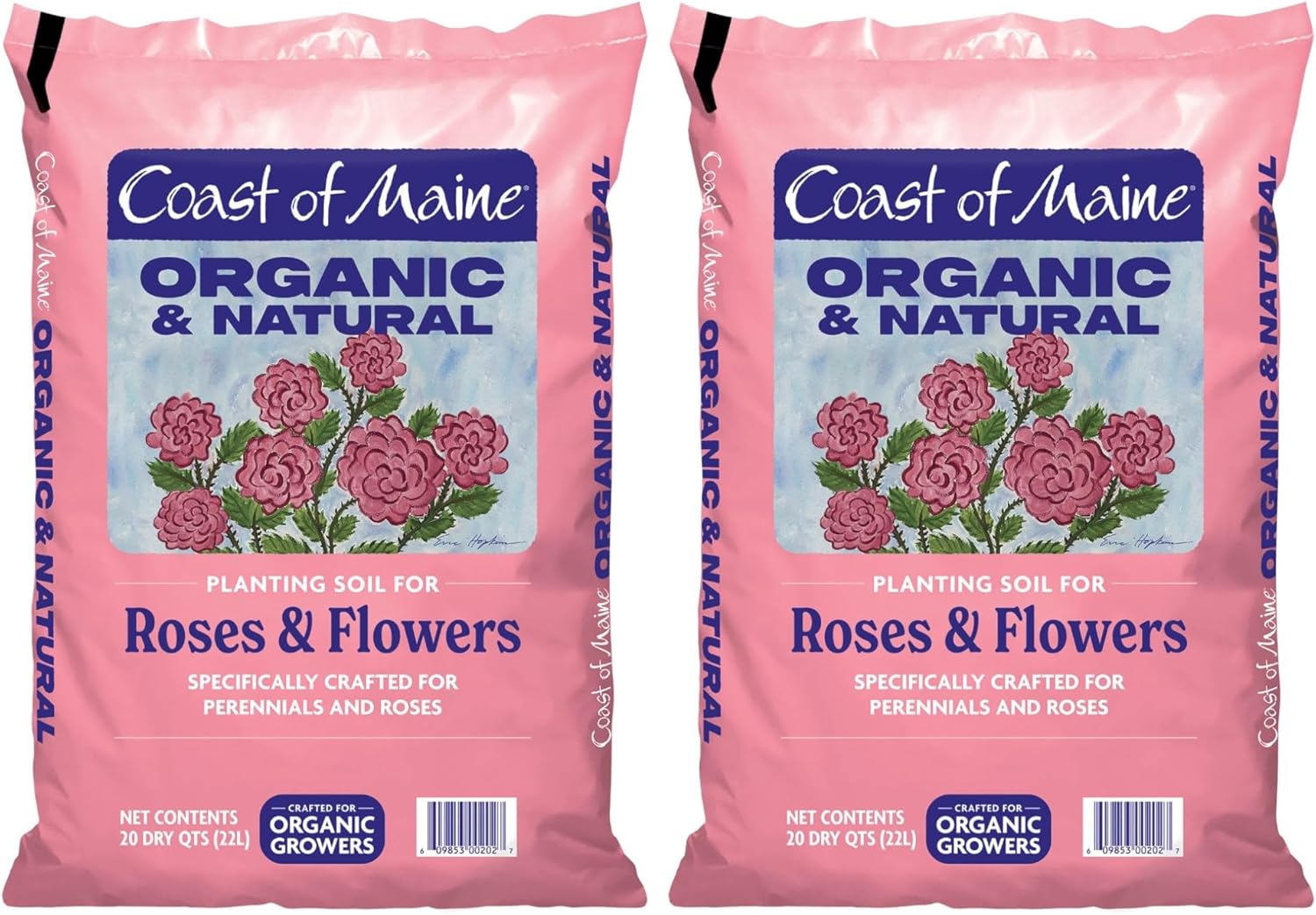
Coast of Maine Roses and Flowers Organic Planting Soil, 20 qt (2-pack)
| Unit Count | 2 Count |
|---|---|
| Volume | 20 quarts |
| OMRI | OMRI listed |
This Coast of Maine Roses and Flowers planting soil is an organic, compost-rich mix aimed at revitalizing soil for roses, annuals, and perennials. Typical use is as an additive when planting in pots or mixing into garden beds and raised beds to improve drainage, moisture retention, and nutrient content. The formula highlights premium ingredients such as seaweed and lobster meal and is OMRI listed, so it supports biological activity and is suitable for organic gardening. For container roses it helps create a looser, more friable medium that encourages root development and holds enough moisture between waterings without becoming waterlogged. Practical benefits include supporting beneficial microbes and reducing the need for synthetic amendments. Limitations are that the product comes in relatively small volume per bag for potted roses, so larger or multiple containers will require several bags or additional base potting mix; users should also follow handling guidance to avoid skin or eye irritation. Overall it is a dependable organic option for gardeners who prioritize soil health and natural inputs.
Best for: Gardeners who prioritize reliable, organic soil amendments for potted roses and flowering containers and want a product that supports long-term soil health and biological activity.
Less Ideal for: Buyers who need large volumes of pre-mixed potting soil for many containers at once or those seeking an all-in-one commercial potting mix with fertilizer already balanced for extended feeding schedules.
- OMRI listed organic formula that is safe for use around people and pets
- Contains nutrient-rich ingredients like seaweed and lobster meal that support plant growth
- Balanced texture that improves moisture retention while allowing drainage for container planting
- Designed to nourish soil biology and encourage healthier root systems
- 20 quart bags provide limited volume for multiple or large pots, requiring additional purchases
- May require mixing with a base potting mix for deep containers or long-term potted plants
Verdict: Choose this organic planting soil when you want a trusted, biology-forward amendment to improve root health and flowering in potted roses.
Miracle-Gro Indoor Potting Mix for All Plants, 6 qt., 2-Pack

| Number of Packs | 2 |
|---|---|
| Item Highlight | Feeds for up to 6 Months |
| Unit Count | 400.58 Ounce |
| Ingredients | Sphagnum Peat Moss, Coir, Perlite, Fertilizer, Wetting Agent |
Miracle-Gro Indoor Potting Mix is a lightweight, ready-to-use soil blend meant for indoor container plants that combines sphagnum peat moss, coconut coir, perlite, fertilizer, and a wetting agent. It is typically used for repotting houseplants, herbs, and small flowering plants by filling a pot with drainage, adding the root ball, topping up with mix, and watering. The formula is designed to hold and release moisture while staying airy thanks to perlite and coir, which helps roots breathe and reduces compaction between repots. The included fertilizer feeds plants for up to six months so newly potted specimens get an immediate nutrient boost. The mix intentionally omits compost and bark to reduce habitat for fungus gnats. For potted roses, this mix gives good drainage and initial nutrition, but heavier feeders like roses may need supplemental rose-specific fertilizer after the first few months and more frequent watering during bloom. Bags are small enough for easy handling but will require multiple bags for several rose containers.
Best for: Someone who wants a low-effort, ready-to-use potting mix that establishes potted plants quickly and reduces common indoor pest habitat, especially buyers who value proven products with strong user feedback.
Less Ideal for: Growers who need a heavy, long-term rose potting medium or who prefer fully organic or custom soil recipes for vigorous outdoor roses should look elsewhere.
- Light, airy blend with perlite and coir that helps prevent compaction in pots
- Contains starter fertilizer that feeds up to six months for easier establishment
- No compost or bark, which can reduce fungus gnat habitat
- Ready-to-use so no mixing required and simple repotting process
- Fertilizer is time-limited so additional rose-specific feeding is needed for sustained bloom
- 6 qt. bags are small for multiple rose containers and require buying several bags
Verdict: A convenient, airy indoor potting mix that jump-starts potted plants with six months of feed and lower risk of fungus gnats, making it a safe, low-effort choice for container roses initially.
Back to the Roots Premium Blend Organic Potting Mix, 6 Quart

| Unit Count | 192 Fluid Ounces |
|---|---|
| Item Highlight | Peat-free potting soil for outdoor plants, indoor plants, vegetables, herbs and flowers |
| Volume | 6 quarts |
| Item Weight | 6 pounds |
This 6-quart Back to the Roots Premium Blend is an all-purpose organic potting mix intended for indoor and outdoor containers, including herbs, vegetables, flowers, and potted roses. The peat-free formula is made from upcycled plant matter and wood fines and includes yucca extract to help with moisture distribution and dolomitic limestone to buffer pH, which helps sensitive plants like roses establish and take up nutrients. In practice the mix is light and workable for repotting or filling containers and is easy to tamp around roots without compacting excessively. Because it is organic and free of synthetic additives, it supports gradual nutrient release but may require supplemental feeding for heavy-feeding roses during peak bloom. The 6-quart bag is convenient for small to medium pots but gardeners who grow multiple roses or larger containers will need several bags. For a risk-averse buyer this product offers predictable, plant-friendly ingredients and simple use, but plan to top up fertilizer through the season for best rose performance.
Best for: Buyers who want a simple, plant-friendly organic potting mix for potted roses and prefer a low-risk, peat-free product that supports steady growth with minimal initial fuss.
Less Ideal for: Growers who rely on heavy, immediate fertilizer doses or who need bulk soil for many large containers should consider larger-volume mixes or plan to supplement nutrients more aggressively.
- Peat-free organic blend made from upcycled plant matter and wood fines
- Includes yucca extract to improve moisture distribution in pots
- Dolomitic limestone included to help buffer pH for plant health
- Light, easy-to-work texture suitable for potting and repotting small to medium containers
- Small 6-quart volume means multiple bags are needed for several or large rose containers
Verdict: A reliable, peat-free organic potting mix that makes repotting potted roses simple and low risk for cautious gardeners.
Choosing the Right Soil for Roses in Pots: Key Factors to Consider
Drainage and Aeration
Roses in pots need a balance of oxygen at the root zone and quick excess-water removal. Good container soil includes coarse components like perlite, grit, or bark to create air pockets and prevent saturation. That balance reduces root rot risk and helps beneficial microbes respire.
When drainage is poor, roots sit in anaerobic conditions and plants show yellowing or decline even when the surface looks wet. For heavier containers or glazed pots with small drainage holes, prioritize mixes with more coarse aggregate to ensure excess water exits the pot quickly.
Water Retention Behavior
Container media must hold enough moisture between waterings without becoming a sponge that stays waterlogged. Organic components such as coir, composted bark, and well-aged compost retain water but should be balanced with inorganic material so they do not compact and lose porosity.
Consider your watering frequency and climate. In hot, exposed locations you will want a mix that keeps moisture longer, while shaded or cool sites can use faster-draining blends. The right retention profile reduces watering chores and prevents cycles of drought stress followed by overwatering.
Nutrient Content and Release
Roses are moderately heavy feeders when flowering. Potting soils that include a measured slow-release fertilizer or stabilized organic nutrients provide steady feeding for weeks to months, reducing the need for constant foliar feeding.
Pay attention to the form of nutrients. Organic slow-release inputs release with microbial activity and warmth, while coated synthetic granules release predictably by time and temperature. Match the nutrient longevity to how often you want to fertilize and the length of your blooming season.
Structural Stability and Compaction Resistance
Over a season, many potting mixes settle and compact, reducing drainage and root air space. Mixes that maintain a crumbly texture keep roots healthier and make repotting easier. Ingredients like chunky bark, expanded clay, and horticultural grit help preserve structure.
Frequent watering and root growth can still compress a mix, so gardeners should factor in top-ups or light repotting every year. Stability also affects how quickly containers dry out and how easy it is to remove a root ball at season end.
pH and Soil Chemistry
Roses prefer a slightly acidic to neutral root environment. Container mixes with lime added to correct pH may be unsuitable for acid-loving varieties, while very acidic mixes can limit nutrient availability for others. A balanced pH supports nutrient uptake and robust flowering.
Look for mixes that state their pH range or are described as suitable for flowering shrubs. If pH control is important, plan to test and adjust soil pH with appropriate amendments when repotting.
Disease Risk and Sanitation
Pathogens and pest eggs can persist in poorly processed organic materials. Sterilized or professionally composted components reduce the risk of introducing crown rot, root rot, or soil-borne fungus into containers.
Using fresh, clean potting mixes when repotting or starting cuttings and avoiding reused, unsterilized soil lowers disease risk. Good drainage, balanced nutrients, and avoiding overwatering also reduce conditions that favor pathogens.
Matching Soil to Container Type
Container material and size change how quickly soil dries and therefore which mix you should choose. Unglazed terracotta breathes and dries fast, so use mixes with higher water retention. Plastic and glazed ceramic hold moisture longer, so choose faster-draining blends to prevent waterlogging.
Large containers maintain moisture more evenly and allow mixes with more organic content. Small pots heat and dry quickly, so a chunkier, more free-draining mix is usually better for small specimens or miniature roses.
- Terracotta pots: favor mixes with extra water-holding components.
- Glazed or plastic pots: pick faster-draining blends with more grit.
- Large containers: higher organic content is acceptable for longer feeding cycles.
How to Amend Standard Potting Mix for Roses
If a general potting mix is your starting point, you can tailor it for roses by adding coarse material and an organic slow-release nutrient source. Mix perlite or horticultural grit into the potting soil to improve aeration and drainage without sacrificing all moisture retention.
Incorporate a measured amount of composted bark or well-aged compost to deliver sustained organic matter and micro-nutrients. Avoid adding raw manure or high percentages of fresh compost, which can burn roots or create excess nitrogen spikes.
- Add 10 to 30 percent coarse aggregate for better aeration.
- Blend in slow-release organic fertilizer if the base mix has none.
- Avoid excessive fresh compost to prevent overheating or nutrient imbalance.
Watering Practices That Complement the Right Soil
Soil choice and watering are a pair. Even the best mix will fail if watering is inconsistent. Water deeply until runoff occurs so the entire root ball is moistened, then allow the top portion to dry slightly before the next watering to encourage deeper root growth.
Use finger checks or a moisture meter to monitor depth moisture rather than relying on surface dryness. Adjust frequency seasonally: more often in summer, less in cool months.
- Deep soak rather than light surface spritzes.
- Check moisture 2 to 4 inches below the surface for medium pots.
- Mulch the top of large containers to reduce evaporation and temperature swings.
Repotting and Refreshing Soil for Container Roses
Most container roses benefit from being repotted or having their top layer refreshed annually. Repotting every one to three years prevents compaction and restores available nutrients. When repotting, inspect roots and replace or renew the majority of the soil rather than simply topping up if the mix has compacted.
For larger established containers, removing and replacing the top 2 to 4 inches of soil with fresh mix can rejuvenate nutrient levels while minimizing root disturbance. Always loosen compacted soil around the root ball to promote air exchange.
- Full repotting: every 1 to 3 years depending on pot and plant vigor.
- Top-dress: replace top few inches annually for maintenance.
- Inspect roots for girdling or rot when repotting and prune as needed.
Adjusting Nutrition Through the Season
Even mixes with slow-release nutrients should be complemented with targeted feeding during heavy bloom periods. Use a balanced fertilizer regimen timed to support bud set and repeated flowering in repeat-blooming varieties.
Liquid feeds applied at lower strength provide quicker uptake when plants show active growth or if blooms start to fade. Strong, infrequent doses can cause foliage growth at the expense of flowers, so prefer measured, regular feeding.
- Slow-release at repotting for baseline nutrition.
- Light liquid feeds during peak bloom for extra performance.
- Adjust feeding if foliage yellowing indicates nutrient imbalance.
How We Chose the Best Soil for Roses in Pots
We focused on the performance attributes that matter most when roses grow in containers. Editorial selection prioritized mixes formulated to balance drainage and moisture retention, plus components that support healthy root structure over a growing season. We looked for stable texture so soil does not compact rapidly, a reliable nutrient-release profile suited to roses, and pH ranges appropriate for bloom development. Our filters excluded garden soils not formulated for containers and mixes aimed only at annuals or seedlings. We favored products with clear ingredient lists indicating organic matter, inert drainage components, and slow-release nutrient sources. Key evaluation criteria included drainage and aeration, water retention behavior under typical container watering, nutrient content and longevity, structural stability against compaction, and suitability for disease suppression or pathogen risk in enclosed pots. We also considered ease of use for typical container gardeners, such as bag density and mix consistency.
FAQ
Can I use garden soil for roses in pots?
Garden soil is often too dense for containers and tends to compact, reducing drainage and oxygen for roots. It is usually better to use a purpose-made potting mix or amend garden soil heavily with coarse materials before using in pots.
How often should I fertilize roses planted in potting soil?
Frequency depends on the soil's nutrient profile and the type of fertilizer. Mixes with slow-release nutrients may need less frequent feeding, often every 8 to 12 weeks, while inert mixes require more regular liquid feeding during the growing season.
What pH should container roses prefer?
Roses in containers do best in a slightly acidic to neutral range. A pH roughly between 6.0 and 7.0 supports most nutrient availability and healthy bloom production. Test and adjust pH if you suspect deficiencies.
How can I reduce the risk of root rot in potted roses?
Use a well-draining mix with coarse components, avoid overwatering, and ensure pots have adequate drainage holes. Repotting into fresh, clean mix and avoiding compacted media also reduce root rot risk.
Is it better to buy a moisture-retaining mix or a fast-draining mix?
It depends on container type, climate, and watering habits. In hot, exposed sites or for small pots, a moisture-retentive mix helps reduce watering frequency. For heavy pots, cool climates, or less frequent drainage, a faster-draining mix prevents waterlogging.
Can I reuse potting soil from last season for roses?
You can reuse soil if it was disease-free and has not compacted, but it will likely be depleted of nutrients and may have lost structure. Refresh at least the top few inches or mix with fresh potting media and add fertilizer before replanting.
Final Verdict
Choosing the right soil for roses in pots means balancing drainage, moisture retention, nutrient longevity, and structural stability for your specific container and climate. Tradeoffs are inevitable: mixes that retain more water reduce watering frequency but require careful drainage design to avoid root problems, while fast-draining blends need more frequent feeding and watering. Prioritize the factors that match your pot type and routine. Use structural amendments to prevent compaction, select a nutrient schedule that complements the soil's release profile, and plan routine repotting or top-dressing to keep potted roses vigorous and flowering reliably.
