

Note: This article contains affiliate links. If you click on these links and make a purchase, I may earn a small commission at no extra cost to you. This helps support my research and content. Read my full affiliate disclosure here.
If you need a tool that will break compacted soil, pry out stubborn roots, or chip through small rock, a pick axe is a go-to implement. Choosing the right pick axe matters because head material, balance, and handle resilience determine how effective and comfortable the tool will be during repetitive, heavy work. This guide presents seven shortlisted pick axes that suit different workloads and grips. We focus on construction quality, head geometry, handle materials, and how each design behaves in real garden and landscape tasks. Below are concise product choices followed by practical buying guidance and common-use tips.
Top Picks at a Glance
| Best Overall The best all-around choice for most situations | Truper 5 lb Pick Mattock with 36-Inch Fiberglass Handle |  |
| Best Quality Built to a higher standard if you want something more solid | Fiskars Pro IsoCore 36" 2-in-1 Pickaxe & Hoe, 5 lb |  |
| Best Value The sweet spot between price and what you get | Truper Pick Mattock, 2.5 lb Forged Steel Head with 36" Fiberglass Handle and Rubber Grip |  |
| Best Budget The cheapest option that still gets the job done reliably | ZUZUAN 15" Forged Adze Pick Mattock with Fiberglass Handle |  |
| Highest Rated A top-rated pick with lots of positive feedback | Estwing Burpee Rock Pick 17" with Shock Reduction Grip |  |
| Most Popular A crowd favorite that many people choose with confidence | Fiskars Pro IsoCore 14" Pick Mattock, 1.5 lb Head |  |
| Best Seller A high-volume bestseller chosen again and again | Truper 5 lb Cutter Mattock with 36-inch Fiberglass Handle and Shock-Absorbing Grip |  |
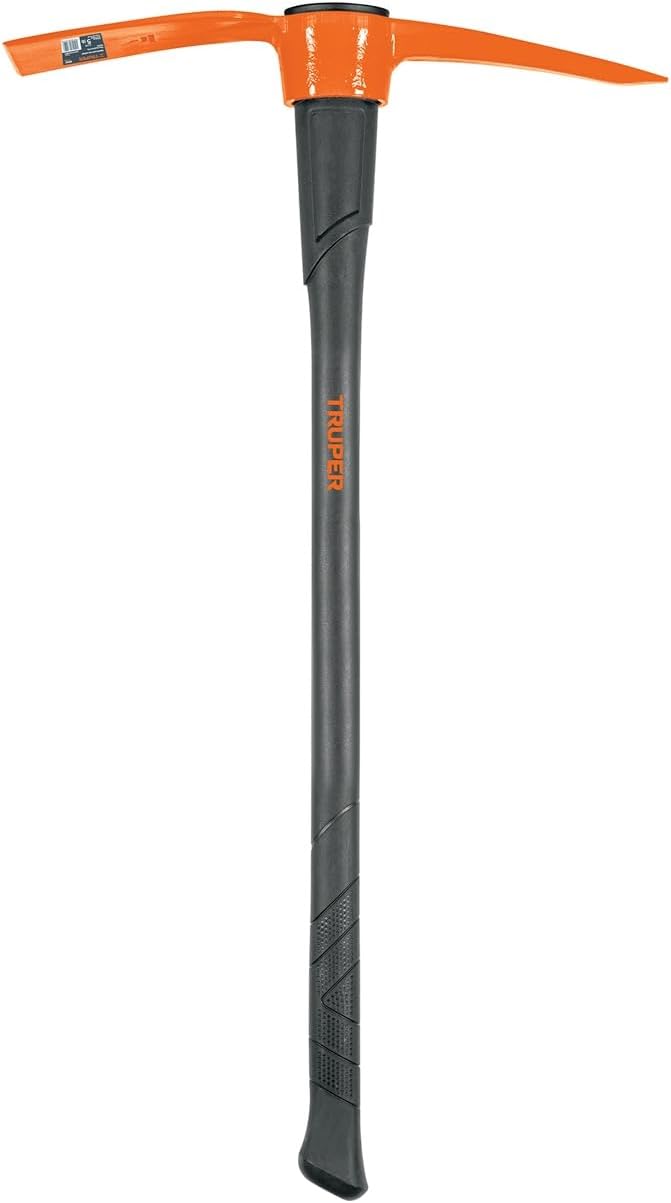
Truper 5 lb Pick Mattock with 36-Inch Fiberglass Handle
| Material Type | Alloy Steel, Fiberglass |
|---|---|
| Item Type Name | Pick-Mattock |
| Included Components | Pick-Mattock |
| Model Number | TP-5F |
The Truper 5 lb pick mattock is a heavy-duty hand tool built to break compacted ground and remove soil and roots. The forged high-carbon steel head combines a pointed pick for prying rock and breaking clay with a broad mattock blade for digging trenches and cutting roots, so you can switch tasks without changing tools. The 36-inch fiberglass handle resists rot and splintering and the molded shock-absorbing grip reduces vibration during repeated strikes, which helps reduce fatigue on longer jobs. A reinforced pivot and secure head-to-handle fit make the tool durable under leverage and hard use. For homeowners and landscapers who need a single robust tool for clearing rocky patches, loosening compacted beds, and cutting roots, this mattock covers most manual heavy-duty tasks. It is heavier and more impact-focused than small digging tools, so it is less suited to delicate planting or fine-grading work and requires safe lifting technique for prolonged use.
Best for: Gardeners and property owners who want one durable tool that handles both breaking hard or rocky soil and digging trenches or cutting roots without switching implements.
Less Ideal for: People focused on delicate planting, fine shaping, or frequent light-duty gardening should choose a lighter, more precise digging tool instead.
- Forged high-carbon 5 lb steel head provides strong impact and long-lasting edge retention
- Dual-head design (pointed pick and wide mattock blade) handles both breaking and digging tasks
- 36-inch fiberglass handle resists rot and splintering for longer service life
- Shock-absorbing non-slip grip reduces vibration and user fatigue during heavy use
- At 5 pounds the head adds significant weight, which can be tiring during extended use
Verdict: Buy this mattock if you need a single heavy-duty tool that reliably breaks rocky or compacted ground and digs or cuts roots without swapping implements.
Fiskars Pro IsoCore 36" 2-in-1 Pickaxe & Hoe, 5 lb

| Handle Material | Polypropylene (PP) |
|---|---|
| Blade Material | Forged Steel |
| Item Type Name | Dual-Ended Pickaxe Tool and Garden Hoe |
| Item Highlight | IsoCore Shock Control System Reduces Vibration |
This Fiskars Pro IsoCore 36" pickaxe/hoe is built for hard use. The pick end breaks compacted soil, rocky ground, and stubborn roots while the mattock/hoe side handles digging, cultivating, and light trenching. The forged steel head and riveted connection give the tool the durability to withstand repeated strikes, and the long, textured IsoCore handle noticeably reduces vibration and hand fatigue compared with standard wood handles. In practice the insulated grip and flared end help maintain control during powerful swings, making it easier to drive the pick into dense material and then switch to the hoe for clearing and leveling. It is heavier than a simple garden hoe, which helps penetration but makes it less convenient for very long, repetitive weeding sessions. Also the fixed, dual-ended design is great for general landscaping and hard soil but less suitable where you need a lightweight dedicated weeding tool or a short-handled option for tight spaces.
Best for: Buyers who prioritize performance and durability for demanding landscaping, hard soil breaking, and regular heavy-duty yard work and want a single tool that handles both pick and hoe tasks.
Less Ideal for: Casual gardeners who mainly do light weeding, container gardening, or need a compact short-handle tool for tight beds.
- Forged steel head with riveted connection for durable heavy-duty performance
- IsoCore shock control handle absorbs strike shock and reduces vibration
- Dual-ended pick and hoe design handles both breaking hard ground and cultivating
- Textured, flared grip improves control and reduces slippage during powerful swings
- Heavier 5 lb head can cause fatigue during prolonged light tasks
- Fixed long handle is less maneuverable in tight spaces or for short-reach jobs
Verdict: Choose this IsoCore pickaxe/hoe when you need a single, heavy-duty tool that breaks hard ground and absorbs shock for more comfortable, powerful work.
Truper Pick Mattock, 2.5 lb Forged Steel Head with 36" Fiberglass Handle and Rubber Grip

| Head material | Forged steel |
|---|---|
| Head weight | 2.5 lb |
| Handle material | Fiberglass |
| Handle length | 36 inches |
The Truper Pick Mattock pairs a 2.5 lb forged steel head with a pointed pick on one side and a wide mattock blade on the other, so it tackles compacted soil, pries rocks, severs roots, and digs trenches in one tool. The 36-inch fiberglass handle gives more impact resistance than wood and helps absorb shock, making repetitive strikes easier on wrists and shoulders. An ergonomic textured rubber grip improves control and reduces slipping during wet or sweaty work. This mattock is built to withstand professional use on landscaping, trail maintenance, and construction tasks, and its dual-purpose head reduces the need to switch tools when clearing ground. Because the head is relatively compact at 2.5 lb, it balances precision and power but will require more swings than heavier mattocks for extremely rocky ground or large roots. Expect good durability from the forged head and fiberglass shaft, but heavier-duty demolition jobs may call for a heavier head or specialized striking tool.
Best for: Buyers who want a single, durable tool that handles most digging, root-cutting, and light rock-prying jobs efficiently and reduces trips to change tools.
Less Ideal for: Users who need a heavier striking tool for constant work on very large roots, boulders, or demolition-grade breaking should consider heavier mattocks or specialty tools.
- Forged 2.5 lb steel head provides durable, reliable striking and cutting edges
- Dual-purpose head (pointed pick and wide mattock) handles prying, digging, and root cutting without changing tools
- Fiberglass handle improves impact resistance and absorbs shock to reduce user fatigue
- Textured rubber cushion grip offers a secure, non-slip hold during extended use
- 2.5 lb head may require more swings than heavier picks for very hard, rocky ground
Verdict: A well-balanced, durable pick mattock that combines a forged steel head and shock-absorbing fiberglass handle for efficient, all-purpose ground breaking and root cutting.
ZUZUAN 15" Forged Adze Pick Mattock with Fiberglass Handle

| Handle Material | Fiberglass |
|---|---|
| Blade Material | High Carbon Steel |
| Head Type | Adze |
| Unit Count | 1 Count |
This 15-inch ZUZUAN pick mattock is a small, double-headed garden pick intended for breaking hard soil, weeding, and light digging. One side has a pointed pick for prying and loosening compacted or rocky patches while the adze hoe on the opposite side serves for cutting roots, trenching, and hoeing shallow beds. The head is drop-forged from high carbon steel and heat treated for edge retention and re-sharpening, and the fiberglass shaft offers a cushioned, anti-slip grip and a hanging hole for storage. At 1.4 pounds it is easy to swing for raised beds, flower beds, and tight areas where a full-size mattock would be awkward. Assembly is required by sliding the head onto the handle and seating it with a few taps. Expect solid durability for routine garden work but avoid levering very large stones or heavy demolition tasks, since the short handle limits leverage and reach. For budget-minded gardeners who need a compact, refillable blade tool for soil prep, this is a practical, no-frills choice.
Best for: Gardeners on a tight budget who need a lightweight, compact pick for prepping flower beds, breaking crusted soil, and routine weeding in small to medium gardens.
Less Ideal for: Landscapers or users who regularly need maximum leverage, longer reach, or to move large rocks should choose a full-size mattock or heavier demolition tool instead.
- Double-headed design provides both a pointed pick for breaking compacted soil and an adze hoe for digging and cutting roots.
- Forged high carbon steel head is heat-treated and sandable so edges can be re-sharpened to extend service life.
- Fiberglass handle with ergonomic, anti-slip coating reduces vibration and improves comfort during repetitive use.
- Compact 15-inch length makes the tool easy to maneuver in tight beds and simple to store.
- Short handle reduces leverage and reach compared with full-size mattocks, limiting heavy-duty use.
- Head ships unassembled which requires basic assembly and seating by tapping to secure.
Verdict: A compact, affordable forged pick mattock that delivers reliable digging and weeding performance for small-plot gardeners.
Estwing Burpee Rock Pick 17" with Shock Reduction Grip

| Head Material | Alloy Steel |
|---|---|
| Handle Material | Alloy Steel |
| Grip Type | Shock Reduction |
| Included Components | Burpee Rock Pick – 17" Geologist Tool |
The Estwing Burpee Rock Pick is a heavy-duty, one-piece forged pickaxe built for breaking, chipping, and prying rock and other hard materials. Its design pairs a pointed tip for precise chipping with a chiseled end for prying and lifting, so you can switch tasks without changing tools. The shock reduction molded grip noticeably reduces impact vibration for longer work sessions and better control. Forged alloy steel construction and the single-piece build make this pick extremely durable and resistant to head-to-handle failure, which is why it is commonly chosen by geologists and prospectors. Practical advantages include good balance for controlled strikes and three magnets in the head for quick material sampling. The main limitation is that its specialized geometry and weight make it overkill for light gardening or delicate yard work, and its concentrated striking surfaces require care to avoid chipping brittle samples unintentionally.
Best for: Buyers who need a reliable, heavy-duty pick for geology, prospecting, or demanding outdoor work and who prioritize long service life and solid construction.
Less Ideal for: Casual gardeners or homeowners seeking a lightweight multipurpose tool for routine yard chores should consider a lighter, less aggressive digging tool instead.
- Forged in one piece from alloy steel for exceptional durability and reduced failure risk
- Shock reduction molded grip lowers impact vibration for more comfortable extended use
- Chiseled end and pointed tip provide two distinct functions for prying and precise chipping
- Integrated magnets in the head allow quick material pickup for field sampling
- Specialized weight and shape make it unsuitable for light or general-purpose garden tasks
- Designed for hard rock work so it can be aggressive on fragile specimens or soft soils
Verdict: Choose this Estwing Burpee pick if you want a proven, one-piece forged tool built for tough rock work and long-term reliability.
Fiskars Pro IsoCore 14" Pick Mattock, 1.5 lb Head

| Handle Material | Fiberglass + Steel Tube |
|---|---|
| Blade Material | Alloy Steel |
| Head Type | Mattock |
| Included Components | Pick/Mattock |
The Fiskars Pro IsoCore pick mattock is a compact, heavy-duty tool for breaking hard ground, cutting roots, and prying rocks. Its inseparable riveted forged-steel head puts a pick on one side and a mattock blade on the other so you can switch tasks without changing tools. The IsoCore shock control system and the textured, slip-reducing handle noticeably reduce vibration and user fatigue compared with traditional wood-handled picks, which makes longer sessions like trenching or demolition feel easier on shoulders and hands. The fiberglass plus steel-tube handle and milled alloy-steel head give the tool durable construction intended for repeated use, and the short 14-inch form makes it easier to maneuver in tight beds or around landscaping. Expect strong, concentrated strikes rather than long-reach leverage, so this is best for medium-duty digging and root cutting rather than large-scale rock breaking. The compact size is convenient for storage and control, but if you need extra reach or heavier impact force you should consider a longer or heavier model.
Best for: Buyers who prioritize a proven, lower-fatigue tool for regular medium-duty digging and landscaping tasks and who value peer-tested reliability and comfort over maximum reach.
Less Ideal for: People who need maximum leverage or heavy demolition power on large rocks or deep compacted soil should choose a longer, heavier pick or a dedicated sledge tool instead.
- IsoCore shock control system reduces vibration for less user fatigue
- Dual-head design (pick and mattock) handles root cutting, prying, and breaking ground without switching tools
- Forged alloy-steel head with riveted construction for durable, secure connection
- Textured, slip-reducing fiberglass handle improves grip and swing control
- Short 14-inch length limits reach and leverage compared with full-size pickaxes
- Head weight (1.5 lb) is tuned for medium-duty work and may be light for heavy rock or hardpan
Verdict: Choose this IsoCore pick mattock if you want a compact, durable pick that significantly reduces vibration for more comfortable medium-duty digging and root work.
Truper 5 lb Cutter Mattock with 36-inch Fiberglass Handle and Shock-Absorbing Grip

| Head material | High-carbon steel |
|---|---|
| Head weight | 5 lb |
| Handle material | Fiberglass |
| Handle length | 36-Inch |
This Truper cutter mattock combines a sharp vertical cutter blade with a wide horizontal mattock head to handle both root cutting and heavy digging. It is typically used for land clearing, trenching, and breaking compacted soil where alternating between chopping and digging is needed. The forged high-carbon steel head gives the tool the strength to bite into thick roots and rocky ground, while the industrial-grade fiberglass handle resists rot and splintering and reduces long-term maintenance. An ergonomically shaped, non-slip shock-absorbing grip helps damp vibrations and lowers hand and joint strain during extended use. The tool is built for demanding outdoor work and feels more durable than lighter garden picks, but its weight and aggressive head make it overkill for light planting or precision tasks. Users should expect a substantial, purposeful tool that favors power and durability over finesse and compactness.
Best for: Buyers who want a reliable, low-maintenance digging tool for heavy yard work, land clearing, or professional landscaping and prefer a durable, vibration-damping tool they can depend on.
Less Ideal for: Casual gardeners who need a lightweight tool for small beds or potted plants should consider smaller, less aggressive implements instead.
- Forged 5 lb high-carbon steel head for strong cutting and digging performance
- Dual cutter and mattock head lets you switch between chopping roots and excavating soil
- Fiberglass handle resists rot, warp, and splintering for long service life
- Shock-absorbing non-slip grip reduces vibration and hand fatigue during prolonged use
- Relatively heavy and aggressive design not suited to light-duty or precision gardening tasks
Verdict: If you need a robust, professional-grade mattock that cuts roots and digs tough soil while minimizing handle wear and vibration, this Truper model is a dependable choice.
Choosing the Right Pick Axe: Key Factors to Consider
Head Material and Heat Treatment
The head is the working element that receives the most punishment. Steel grade and heat treatment control how well the edge resists chipping and how much shock the metal absorbs on impact. A properly heat-treated head will hold its shape when striking stone or frozen ground and is less likely to crack under repeated stress.
For garden use, look for heads that are hardened enough to resist deformation but not so brittle that they shatter on a misstrike. The face and pick ends often require different hardness profiles, so even a single forged head should balance a tough strike face with a slightly tougher pick tip.
Head Shape and Weight Distribution
Pick axes come with a blade on one side and a pointed pick on the other. The blade's width, bevel, and tip profile determine how cleanly it slices into compacted soil or roots. The pick side concentrates force for breaking rock or prying. Weight placement affects how much momentum you get with each swing; heavier heads deliver more impact but increase user fatigue.
Consider the typical tasks you do. Frequent rock-breaking or hard-packed ground benefits from a heavier head with a narrow pick, while light garden chores and root cutting favor a narrower, lighter head for better control and less strain.
Handle Material and Construction
Handles are usually wood, fiberglass, or composite. Wood handles feel traditional and absorb some vibration but require maintenance and can break if not properly seated. Fiberglass and composite handles resist weather, are less prone to snapping, and often include molded grips, but some transmit more vibration or feel heavier.
Check whether the handle is through-wedged or secured by epoxy and mechanical fastening. Replaceable handles are an advantage for long-term ownership because a worn or damaged handle does not ruin the entire tool.
Shock Absorption and Grip Comfort
Repeated swings transfer shock to your hands and shoulders. A handle with good shock absorption reduces fatigue and the chance of bruising or blisters. Grip texture and diameter matter for control; a handle that is too thick or too thin will increase fatigue and error risk.
Look for handles with rubberized or textured grips if you do long sessions. Some designs incorporate internal damping to reduce vibration after impact, which is valuable when you strike rock frequently.
Head-to-Handle Connection and Safety
A secure head-to-handle connection is critical. Loose heads are dangerous and can fly off during use. Traditional methods use a wedged wooden handle, while modern designs may use bolted or encapsulated heads on fiberglass handles.
Inspect the bonding method, whether mechanical wedges are present, and if the head has an eye profile that resists turning. For garden work that includes prying and levering, a solid, immovable head is nonnegotiable.
Choosing the Right Pick Axe Weight
Weight affects both impact force and how long you can work without fatigue. For light landscaping and occasional root cutting, a 2.5 to 4 pound head is often plenty and keeps swings controlled. For breaking compacted soil or small rock, a 4 to 6 pound head provides extra force but requires more strength and care.
If you are unsure, pick an intermediate weight and test the swing in a safe area. Remember that handle length and personal fitness also influence how a given head weight feels in use.
- Lighter heads increase precision and reduce fatigue
- Heavier heads deliver more breaking power but tire the user faster
- Balance with handle length to maintain control
Handle Length and Work Situation
Handle length changes leverage and control. Shorter handles are better for tight spaces, working near plantings, or when you need precise placement of each strike. Longer handles increase leverage for heavy breaking and allow two-handed swings for more power.
Consider your typical working environment. If you frequently work among shrubs or in raised beds, a shorter handle prevents accidental damage to plants. For open landscape or demolition tasks, a longer handle maximizes force.
- Short handles for confined spaces and precision
- Long handles for leverage and power
- Check storage space and transport when selecting handle length
Maintenance Tips to Extend Tool Life
A few simple maintenance steps keep a pick axe serviceable for years. Clean mud and sap off the head after use and dry it to prevent corrosion. Lightly oil the head to protect the metal if it is not stainless or coated.
For wooden handles, periodically sand any splinters and apply boiled linseed oil to prevent drying and cracking. Inspect the head-to-handle joint before each use and tighten or replace wedges if any movement appears.
- Wipe and dry after use
- Oil metal surfaces occasionally
- Treat wooden handles and inspect connections regularly
Safe Swinging and Working Techniques
Use a stance that gives you balance and keeps bystanders at a safe distance. Plant your feet shoulder-width apart and swing from the hips and shoulders, not solely from the arms. Aim for controlled strikes rather than wild, high-energy swings.
When prying or leveraging, avoid using the sharp pick tip as a fulcrum against very hard rock that could shatter. Wear eye protection and sturdy gloves to protect against flying chips and blisters.
- Keep a stable stance and controlled swings
- Wear eye protection and gloves
- Inspect work area for hidden rocks or roots before swinging
When a Replaceable Handle Matters
Replaceable handles let you keep the head for many years while swapping worn handles. This is especially useful for high-use scenarios where handles take most of the abuse. Pay attention to how easily a handle can be replaced and whether standard replacements are available.
If you rely on the tool for seasonal heavy work, choose a design with straightforward handle replacement or well-documented attachment methods.
- Replaceable handles extend overall tool life
- Check part availability for long-term ownership
- Consider handle interchangeability if you have multiple tools
How We Chose the Best Pick Axe
We evaluated contenders on criteria that matter in gardens, yards, and small landscaping jobs rather than marketing claims. Key filters included head material and hardness to ensure the tool holds an edge when cutting roots or striking rock. We assessed head geometry and weight distribution because those determine chip-and-slice efficiency and user effort. Handle construction and shock absorption were judged to reduce fatigue and prevent blisters during extended use. Connection strength between head and handle was checked to avoid loosening or separation under heavy blows. We also considered overall balance and ergonomics for control when swinging in tight spaces. Tools that showed obvious manufacturing shortcuts, poor head-to-handle bonds, or unsafe finishes were excluded. The final list favors durable materials, replaceable or well-seated handles, and designs suited to common garden and landscaping tasks.
FAQ
What pick axe weight is best for general garden work?
It often depends on your strength and tasks. Many gardeners find a 2.5 to 4 pound head balances power and control for most soil and root work. Heavier heads are better for rock but increase fatigue.
Are fiberglass handles better than wooden handles?
Both have tradeoffs. Fiberglass resists weather and is less likely to break, while wood absorbs some vibration and is easier to sand or refinish. Choice depends on your preference for feel and maintenance willingness.
How do I know if a head is securely attached?
Inspect the head for movement, check for wedges or mechanical fasteners, and look for a tight eye fit. Any looseness or visible cracks around the joint means the tool should be repaired or retired before use.
Can I use a pick axe to pry large rocks?
Pick axes can help pry and shift smaller rocks, but large boulders require dedicated pry bars or machinery. Use the pick to break compacted material around the rock first and avoid levering from a brittle angle that could break the head.
How should I sharpen and care for the pick and blade?
Use a file or bench grinder carefully to restore the blade bevel, taking care not to overheat the metal. Maintain the pick tip by removing nicks and rust, and keep the head clean and lightly oiled to prevent corrosion.
Final Verdict
Prioritize head material, head-to-handle connection, and handle comfort when choosing a pick axe for garden or landscape work. Match head weight and geometry to the tasks you do most often, balancing breaking power with control to avoid unnecessary fatigue. If durability and long-term ownership matter, favor tools with strong attachment methods and replaceable handles. For occasional lighter work choose a lighter, more maneuverable tool; for frequent heavy work accept a heavier head and invest in a handle that reduces shock.
