

Note: This article contains affiliate links. If you click on these links and make a purchase, I may earn a small commission at no extra cost to you. This helps support my research and content. Read my full affiliate disclosure here.
A tidy edge makes a garden look finished, keeps mulch and soil where they belong, and reduces time spent on trimming. Choosing the right garden border matters whether you have narrow flower beds, a small vegetable patch, or a walkway that needs definition. The right edging product will withstand weather, be simple to install or move, and suit your garden style. This guide covers seven shortlisted garden borders that fit small-bed situations and similar compact plantings. We evaluate each pick against practical criteria gardeners care about, including durability, installation effort, and maintenance needs, so you can choose an edging solution that works in your space. Read on for a clear sense of tradeoffs and installation basics before the product list.
Top Picks at a Glance
| Best Overall The best all-around choice for most situations | WORTH Garden 33 ft. Metal Landscape Edging, 10-Pack |  |
| Best Quality Built to a higher standard if you want something more solid | STIRLINGEAR Cor-Ten Steel Landscape Edging 6-Pack (20 ft total) |  |
| Best Value The sweet spot between price and what you get | MIXC 100 ft Landscape Edging Kit with 150 Spikes (3-Pack, 33 ft/pack, 1.5 in Tall) |  |
| Best Budget The cheapest option that still gets the job done reliably | BLLREMIPSUR 2" x 16' Flexible Lawn Garden Edging with 15 Securing Pegs |  |
| Highest Rated A top-rated pick with lots of positive feedback | AUDEMAR Metal Modular Lawn Edging, 30 Pieces (9 m) |  |
| Most Popular A crowd favorite that many people choose with confidence | STIRLINGEAR 33 ft Powder‑Coated Galvanized Steel Landscape Edging (10-Pack) with Stakes |  |
| Best Seller A high-volume bestseller chosen again and again | EasyFlex No‑Dig Plastic Landscape Edging 40 ft Kit with Anchoring Spikes |  |
WORTH Garden 33 ft. Metal Landscape Edging, 10-Pack

| Material Type | Alloy Steel |
|---|---|
| Number of Items | 10 |
| Unit Count | 10 Count |
| Item Highlight | 10-Pack 40" L x 4.5" H with 11 Clips |
This Worth Garden metal landscape edging kit provides a straightforward way to define garden beds and keep grass from encroaching on planted areas. The set includes ten 40-inch galvanized steel strips with powder-coated finish, 11 clamps for extra stability, and gloves to help with installation. The strips are bendable so you can shape curves or straight runs and the hammer-in spikes make installation relatively quick without complex tools. In use it creates a low, rustic border that contains mulch and soil while giving lawn edges a tidy, finished look. The galvanized, powder-coated surface improves resistance to rust and wear compared with plain steel, but the edging sits only a couple inches above ground so it is a low-profile solution rather than a tall barrier. Installation requires some physical effort and gloves because the cut edges and saw-tooth spikes are sharp, and heavy clay or rocky soils will slow hammering. For routine bed definition and basic turf control this kit is effective and versatile, but it is not intended for heavy-duty containment or as a hard barrier against persistent root systems.
Best for: Gardeners who want a durable, low-profile edging to tidy beds and control turf spread while keeping installation simple and flexible.
Less Ideal for: People needing a high, heavy-duty barrier for roots, animals, or extreme soil containment should consider more substantial or taller edging systems.
- Bendable galvanized steel strips allow shaping around curves and straight runs
- Powder-coated finish resists corrosion and surface wear
- Includes 11 clamps and gloves for a more secure, ready-to-install kit
- Low-profile design keeps soil and mulch contained while creating a neat edge
- Only a couple inches above ground so not suitable as a tall containment barrier
- Sharp saw-tooth spikes and cut edges require gloves and care during installation
Verdict: A flexible, galvanized steel edging kit that quickly creates neat, low-profile borders for typical garden beds and lawn edges.
STIRLINGEAR Cor-Ten Steel Landscape Edging 6-Pack (20 ft total)

| Material Type | Cor-Ten Steel |
|---|---|
| Unit Count | 6 |
| Item Weight | 18.5 pounds |
| Unit Height | 8" |
| Unit Length | 40" |
This Cor-Ten steel edging is built for long-term, low-maintenance garden borders. Each pack includes six 40-inch sections (20 feet total) of flexible, 8-inch-tall steel that can be bent to follow curves and tapped into soil using the pre-formed teeth. The weathering steel develops a protective rust patina, so it resists further corrosion and blends into natural landscapes without paint or coatings. The front-and-back interlocking system makes a stable continuous edge once pieces are joined, and the 4-inch bury depth helps hold the edging in place to block grass and define beds. Because it is metal, installation is quicker and neater than digging in sod or installing bulky plastic edging, and it will stand up to foot traffic and edging tools. Limitations are the weight and stiffness of steel when positioning long curves and the permanent rustic finish that may not suit very formal styles; sharp teeth mean gloves and care are required during installation.
Best for: Gardeners who prioritize long-lasting, professional-looking borders and want a low-maintenance metal solution for defining beds, paths, or raised edges.
Less Ideal for: Those who need a lightweight, temporary, or color-matched edging solution or who prefer a decorative non-rusted finish.
- Durable Cor-Ten weathering steel that forms a protective rust patina
- Flexible sections that can be bent to follow curved beds
- Interlocking design creates a continuous, stable border
- 8-inch height with 4-inch bury depth helps prevent grass intrusion
- Quicker, low-maintenance solution compared with digging or plastic edging
- Heavier and stiffer than plastic options, which can make handling long runs harder
- Rusted finish is permanent and may not suit formal or modern designs
Verdict: Choose this Cor-Ten steel edging when you want a durable, low-maintenance metal border that holds its shape and develops a protective rust patina.
MIXC 100 ft Landscape Edging Kit with 150 Spikes (3-Pack, 33 ft/pack, 1.5 in Tall)
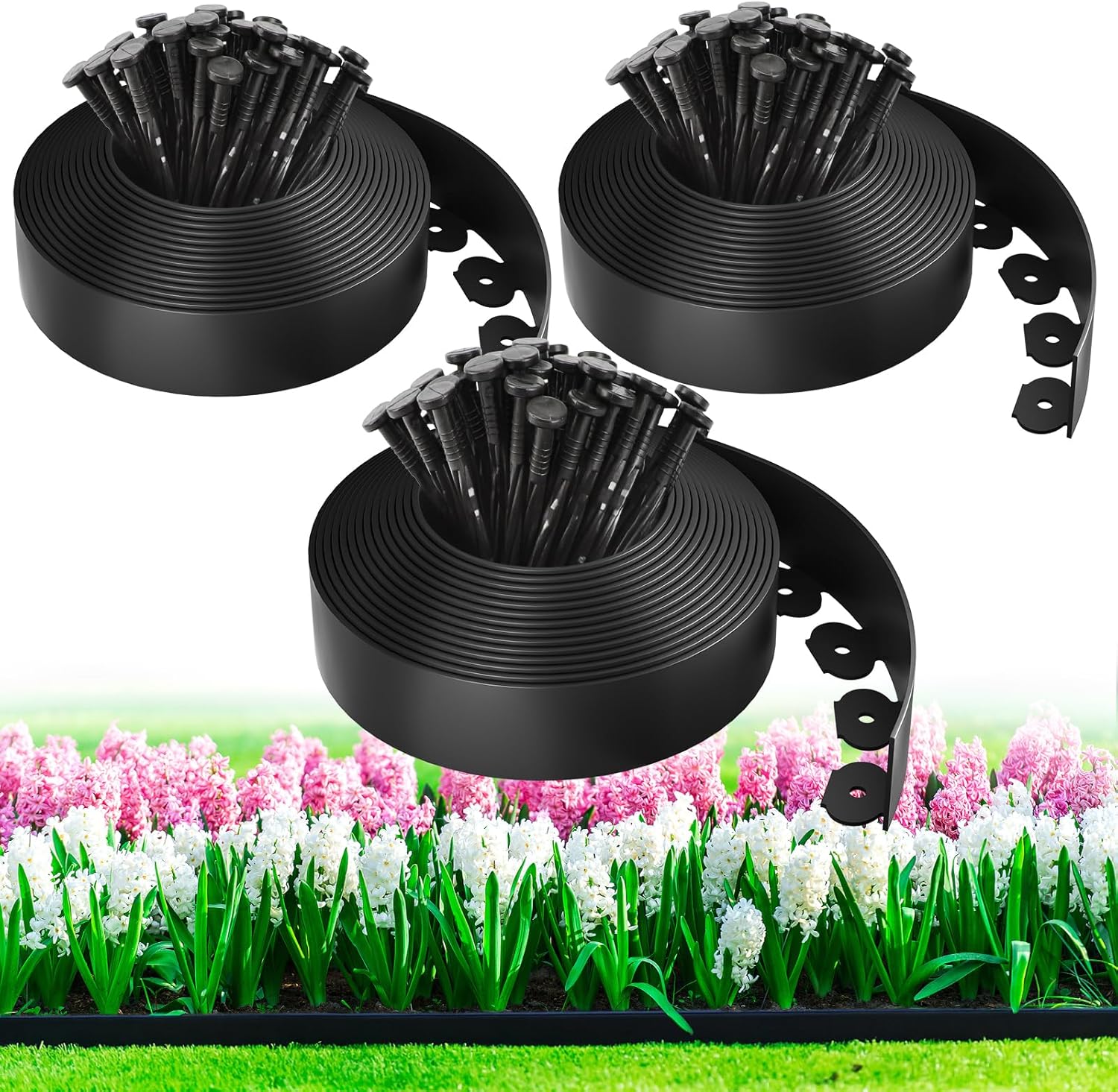
| Unit Count | 100 Feet |
|---|---|
| Number of Packs | 3 |
| Material Type | Plastic |
| Item Highlight | Not Digging Flexible Plastic Edge Border |
The MIXC landscape edging kit supplies three 33 foot rolls of flexible HDPE edging plus 150 spikes to create low-profile borders without trenching. It is typically unrolled along beds, curved around plantings, and secured with the pre-drilled holes and included stakes; a single person can handle most installations because each roll is short and light. The dual-layer design acts as a soil barrier and root blocker to slow grass and weed encroachment and reduce minor erosion on slopes. The material is UV-resistant and rated for several years of outdoor exposure, so it holds shape in sun and fluctuating temperatures. Limits to expect are its 1.5 inch height, which is best for shallow edging tasks rather than high containment, and the product needs softer ground for easy nailing of spikes so very compacted or rocky soil will require extra effort or pilot holes. For neat, budget-conscious border work on lawns, flower beds, paths, and gentle slopes this kit is straightforward and practical.
Best for: Gardeners who want an efficient, low-effort way to define beds and control turf spread without digging trenches, and who prioritize straightforward installation and budget-friendly coverage.
Less Ideal for: People needing tall or heavy-duty edging for large erosion control projects or those with hard, rocky ground where nailing in stakes is impractical.
- Three 33 ft rolls and 150 spikes make it easy to lay out custom lengths without heavy single rolls
- Flexible HDPE material bends for curves and uneven terrain for cleaner lines
- Pre-drilled holes and included stakes allow mostly single-person installation
- Dual-layer design provides a soil barrier plus root blocking to limit grass spread
- UV-resistant material designed to withstand temperature changes for years of use
- Only 1.5 inch height limits effectiveness for deep-rooted containment or high edges
- Spikes and installation work best in relatively soft soil and may be difficult in compacted or rocky ground
Verdict: A practical, no-dig edging kit that makes it quick and affordable to create neat garden borders and control turf spread on soft to moderate soil.
BLLREMIPSUR 2" x 16' Flexible Lawn Garden Edging with 15 Securing Pegs

| Material Type | Polyethylene (PE) |
|---|---|
| Length | 5m (16.4 feet) |
| Number of Items | 16 |
| Package Contents | 1 edging strip, 15 plastic spikes |
This flexible lawn edging is a simple, low-cost way to define beds, paths, and tree rings. The 16.4-foot PE strip bends to follow curves and can be cut to length, so installation around circular and irregular shapes is straightforward. The kit includes 15 plastic securing pegs that push into soil to hold the edging in place, making setup quick without special tools. Because it is made of polyethylene and described as oxidation-resistant, it should tolerate rain and winter conditions better than flimsy alternatives, though heavy frost or very strong impacts could still deform plastic. The product is best for creating a tidy visual barrier and slowing grass migration rather than serving as a deep root or heavy-duty retaining edge. If you need a long continuous run you may need multiple pieces and more stakes for extra stability. Overall this is a practical, budget-friendly option for homeowners who want a clean, flexible border for flower beds and lawns.
Best for: Practical homeowners on a tight budget who want an easy way to tidy up flower beds, lawn edges, and small landscape curves without heavy tools or professional help.
Less Ideal for: Landscapers or gardeners needing rigid, deep-root barriers or long uninterrupted runs across large properties should consider metal or thicker edging solutions.
- Flexible strip can bend to follow curves and irregular bed shapes
- Includes 15 securing pegs for quick, tool-free installation
- Made from polyethylene for basic weather resistance
- Can be cut to length for custom layouts
- Plastic construction is not suitable as a heavy-duty or deep-root barrier
- Single 16.4 ft piece may require joining multiple sections for larger projects
Verdict: A low-cost, flexible plastic edging kit that quickly creates tidy bed and lawn borders for budget-conscious gardeners.
AUDEMAR Metal Modular Lawn Edging, 30 Pieces (9 m)

| Number of Packs | 30 |
|---|---|
| Number of Items | 30 |
| Unit Count | 30 Count |
| Material Type | Alloy Steel |
This AUDEMAR modular metal edging kit is designed to form a continuous, decorative border by locking together 30 individual panels to cover about 9 meters. Install is straightforward: panels are laid along the desired line and driven into the soil with the included stakes and a hammer, so you can shape curved beds or straight runs without heavy digging or special tools. Made from alloy steel with an anti-UV finish, the edging resists rot and holds up better to trimmer contact than plastic alternatives, making it a low-maintenance option for a permanent-looking edge. The modular design also lets you cut or rearrange sections for custom layouts and easy removal if you renovate. Expect a solid, visually consistent separation between turf and beds, but be aware the kit covers a fixed total length and height per panel so very tall or long runs may need multiple sets or splicing; sharp bends require careful overlapping for a clean look. For homeowners after a long-lasting, professional-looking border, this kit delivers reliable performance.
Best for: Buyers who prioritize a long-lasting, low-maintenance border and want a dependable, professional-looking edge for small to medium beds and lawn runs.
Less Ideal for: Not the best choice for very large properties needing long continuous runs without seams or for projects requiring taller retaining edges or heavy containment.
- Modular panels lock together for flexible layouts and straightforward customization
- Alloy steel construction with anti-UV finish resists rot and wear better than plastic edging
- Includes stakes for quick install without heavy digging or extra tools
- Decorative embossed pattern provides a finished look that separates turf and beds cleanly
- Total coverage is limited to the supplied 30 pieces so larger projects may require buying additional kits
- Height and panel dimensions are fixed which limits use for very deep borders or containment needs
Verdict: Choose this modular alloy-steel kit when you want a sturdy, low-maintenance garden edge that creates a reliable, finished border for small to medium landscaping projects.
STIRLINGEAR 33 ft Powder‑Coated Galvanized Steel Landscape Edging (10-Pack) with Stakes

| Material Type | Powder-Coated Galvanized Steel |
|---|---|
| Number of Items | 10 |
| Unit Count | 10 Count |
| Item Weight | 20.2 pounds |
This STIRLINGEAR landscape edging kit provides a durable, low‑profile way to define lawns, flower beds, and walkways. The package covers 33 feet using ten 40 inch panels; each panel includes a 3 inch buried stake so the edge anchors without trenching and leaves a 2 inch visible lip for a neat line. Powder‑coated galvanized steel construction resists rust and keeps the border looking clean in wet conditions, and the hammer‑in design speeds installation for one‑person jobs. The panels are bendable and can be cut to follow gentle curves or custom shapes, which makes the set useful for typical yard layouts. Important limitations are that the edging is low height, so it will not block aggressive runners or hold large volumes of mulch, and very tight radii or rocky soil will make hammering stakes more difficult. For straightforward lawn-to-bed separation where a subtle, modern edge is wanted, this kit delivers longevity and a clean finish with minimal labor.
Best for: Buyers who want a durable, low‑maintenance edging solution to create clean lawn and flower bed separations quickly and with minimal digging, preferring proven materials and straightforward installation.
Less Ideal for: People who need tall edging to retain large mulch beds, block invasive runners, or who have very irregular beds that require rigid, custom‑formed barriers.
- Powder‑coated galvanized steel construction resists rust for outdoor durability
- Hammer‑in stakes allow fast installation without digging a trench
- Panels can be cut or bent to follow gentle curves and custom layouts
- Low‑profile 2" visible lip creates a neat, modern edge that blends with landscapes
- Low visible height means it will not contain large amounts of mulch or stop aggressive roots
- Hammering stakes through rocky or compacted soil can be difficult
Verdict: A long‑lasting, low‑profile steel edging kit that makes it fast and easy to create neat, modern garden borders with minimal digging.
EasyFlex No‑Dig Plastic Landscape Edging 40 ft Kit with Anchoring Spikes

| Unit Count | 40 Feet |
|---|---|
| Included Components | No‑Dig Plastic Landscape Edging Kit, 40ft |
| Item Type Name | No‑Dig Landscape Edging |
| Material Type | Plastic |
The EasyFlex 40 ft no‑dig landscape edging is a simple solution for defining beds, tree rings, and pathways without trenching. The kit ships as a 40‑foot coil of 1.5‑inch‑high recycled plastic edging plus 16 spiral anchoring spikes; you uncoil the edging to the desired shape, cut it with garden shears, align the tabs on the landscape side, and drive the spikes through the tabs with a rubber mallet. Its flexibility lets you form tight circles or gentle curves, and the L‑shape no‑dig profile protects roots while holding back mulch, rocks, and debris. The spiral spikes are intended to resist frost heave and heavy rain, and the plastic stands up to string trimmers and seasonal movement with only occasional maintenance. Limitations are the low height, which is not suited for holding large volumes of soil or high mulches, and the need to space spikes according to instructions for secure anchoring. For homeowners who want a low‑effort, durable border, this kit covers standard small to medium perimeter jobs and is easy to retrofit to existing beds.
Best for: Homeowners who want a low‑risk, low‑effort way to define flower beds and tree rings and prefer an easy installation that avoids digging and root disturbance.
Less Ideal for: Gardeners who need taller, heavy‑duty containment for large soil berms or those planning professional hardscape edging should consider more substantial metal or concrete options.
- No‑dig L‑shape design protects roots and installs without trenching
- Flexible coil forms tight circles or long curves for versatile layouts
- Made from recycled plastic and resists string‑trimmer damage
- Includes spiral anchoring spikes to reduce frost heave and hold edging in place
- Only 1.5 inches tall so it will not retain large amounts of soil or high mulch layers
- Kit includes 16 spikes which may be insufficient for unusually soft or uneven ground without adding extras
Verdict: If you want a simple, low‑effort border that installs without digging and holds mulch and small rock in place, this 40 ft recycled plastic kit is an easy, reliable choice.
Choosing the Right Garden Border: Key Factors to Consider
Material and Weather Resistance
The material of a garden border determines how it weathers sun, rain, freeze and thaw cycles. Metals vary from rust-prone steel to rust-resistant alloys; plastics differ in UV stability and brittleness; stone and concrete resist weather but may shift with frost heave.
Consider how long you expect the edging to last in your climate and whether you prefer a temporary option or a long-term installation. Materials that resist UV and moisture will need fewer repairs and retain a neater appearance, which reduces ongoing garden maintenance.
Installation Effort and Required Tools
Installation time and the tools required influence whether a border is a weekend DIY job or a multi-day project. Some borders are simply pressed into soil or staked down, while others need trenches, adhesives, or concrete footings.
If you plan to install edging yourself, choose options that match your skill level and available tools. Easy-to-install borders can be adjusted after placement; more permanent installations offer stability but make later changes more work.
Edge Retention and Soil Containment
A primary function of garden borders is to keep mulch, soil, and roots from spilling into lawn or path areas. The height and profile of the edging affect how well it holds materials in place and resists encroaching grass.
Evaluate expected soil movement and how you mulch. Higher profiles and undercut lips are better for heavy mulch or raised beds, while low-profile edging may be sufficient for decorative borders with light mulch.
Flexibility and Shape Adaptability
Garden beds are rarely perfect circles or straight lines. Edging that bends easily makes it simpler to create flowing curves and custom shapes. Some rigid options work well on straight runs but require cutting and fitting for curves.
Think about the shapes you want to define and whether you might redesign beds in the future. Flexible edging saves time for organic beds, while rigid materials can create formal lines that stay true over time.
Aesthetics and Garden Style
Border style contributes to the garden's overall look. Natural stone, brick, or corten-like finishes produce a classic appearance, while painted or molded profiles offer modern or playful looks. Color and texture affect how the edge reads against plants and lawn.
Consider the visual relationship between the border and plantings. A subtle edge may be best for cottage or wildflower beds, while a bold material can frame formal plantings and paths.
Maintainability and Longevity
Some edging materials require seasonal care such as re-securing stakes, clearing soil buildup, or refreshing finishes. Others remain essentially maintenance-free but may be harder to repair if damaged.
Factor in how often you want to do edge upkeep. Low-maintenance borders reduce annual chores but weigh that against repairability and the ease of replacing sections if a storm or mower damages them.
Preparing the Bed Edge Before Installation
Clear the planned edge line of debris and turf before installing edging to ensure a straight, stable placement. Mark the outline with string, a hose, or landscape paint and step back to confirm the curve or straight run looks right from multiple angles.
Digging a shallow trench often improves stability; even flexible edging benefits from a small anchor trench. Compact the soil base and make sure any transitions to paths or lawn are level so the border does not create trip hazards.
- Mark the edge with string or a garden hose to visualize curves
- Remove sod and level the trench base where needed
- Compact and tamp the soil to reduce future settling
Installing Flexible Versus Rigid Edging
Flexible edging typically snaps or stakes into place and bends to follow curves with minimal cutting. Work in short sections and bend gradually to avoid kinks. Stakes or anchors should be spaced according to manufacturer guidance to keep the edge firm.
Rigid edging such as stone, brick, or thick metal requires planning: measure and cut pieces to fit curves or create a stepped pattern to approximate arcs. Mortaring or interlocking systems increase permanence but make future removal more labor-intensive.
- For curves, use shorter rigid segments or create gradual steps
- Drive stakes on the high side of slopes to resist soil pressure
- Check alignment frequently during installation to maintain a clean line
Seasonal Care and Common Repairs
After installation, inspect borders annually for shifting, loosened stakes, or soil accumulation. Address small shifts promptly rather than waiting until larger settling occurs. Replace or re-seal any finishes showing wear to maintain appearance and protection.
In freeze-thaw climates, expect some movement; re-tamping and re-securing sections in spring prevents greater damage. For plastic edging that becomes brittle over years, plan for section replacement rather than repeated patching.
- Inspect and re-anchor loosened sections each spring
- Remove soil or mulch build-up that can hide edges and hide damage
- Replace small damaged sections rather than rebuilding entire runs when possible
Design Tips for Small Beds
In compact beds, proportion matters. Choose edging height and thickness that complements plant scale and does not dominate the bed. Low-profile edging often works best for small ornamental beds, while taller edges suit raised or utility beds.
Consider combining edging materials for visual interest, such as a low stone border with a discreet metal strip to prevent turf invasion. Keep maintenance in mind: intricate material combinations can look appealing but increase future upkeep.
- Match edge height to plant scale to avoid overpowering small beds
- Use materials that are easy to cut to fit tight turns
- Plan for access to plants for watering and pruning when positioning edges
Tools and Supplies You Might Need
Common tools for edging include a spade or half-moon edger, rubber mallet, landscape staples or stakes, a tape measure, and a level. For rigid materials you may also need a masonry saw, bolt cutters, or tin snips depending on the material.
Have extra anchors, replacement sections, and compacting tools on hand during installation. Small practical items like work gloves and safety glasses improve safety and comfort on longer edging runs.
- Spade or edging tool for trenching
- Rubber mallet and stakes for anchoring
- Cutting tools appropriate to the chosen material
How We Chose the Best Garden Border
We selected garden borders based on attributes that matter for everyday garden use and long-term performance. Primary evaluation criteria included material durability in outdoor conditions, how straightforward installation and anchoring are for DIY gardeners, the border's ability to hold mulch and soil back, and the maintenance or seasonal care required. We also considered flexibility for curved beds, visual style options for different garden designs, and how easy it is to modify or remove the edging later. Products were excluded if they were primarily decorative without functional edge retention, required specialized tools or professional installation, or lacked clear information on expected outdoor lifespan. We prioritized solutions that balance weather resistance with manageable installation effort so home gardeners can achieve a clean edge without extensive labor or unexpected upkeep. These criteria align with the scorecard metrics used in the product summaries.
FAQ
How deep should I install garden border edging?
Depth depends on material and purpose. Generally, burying the lower third to half of the edging provides good stability and prevents grass from creeping under. For rigid masonry, a deeper footing reduces frost heave risk.
Can I install edging on a slope?
Yes. On gentle slopes, step the edging to follow the contour or use flexible edging that conforms to the grade. For steeper slopes, anchors and stakes should be driven securely and, in some cases, a retaining feature or terracing may be needed to hold soil.
Will edging stop grass from invading my flower bed?
Edging reduces grass encroachment but does not always stop roots and runners. A taller or buried edge is more effective at blocking runners. For persistent invasive grass, combine edging with regular trimming and a buried physical barrier.
Is metal edging better than plastic for longevity?
Metal edging is often more durable but depends on the metal type and finish. Some metals resist rust and hold shape longer, while untreated metals can corrode. High-quality plastic with UV stabilization can also last several years without corroding.
Can I move or reuse garden borders later?
Many edging systems are reusable, especially flexible plastic or modular units designed for DIY removal. More permanent installations like mortared stone or concrete are much harder to move and are less reusable without demolition.
How do I blend edging with existing hardscape?
Choose materials with complementary color and texture. Subtle transitions such as a narrow metal strip between lawn and a stone path can cleanly separate areas without competing visually. Test a small section to check how the materials read together in natural light.
Final Verdict
Pick an edging solution by balancing durability, installation effort, and the shape of your beds. If you want low maintenance and permanence, choose a weather-resistant, well-anchored material. If you expect to reshape beds or prefer an easier DIY install, flexible or modular edging offers adaptability. Prioritize edge retention and appropriate height for the type of mulch and soil you use, and plan installation so the border is accessible for seasonal care. With those tradeoffs considered, you can select a garden border that keeps beds tidy and suits your garden style for years to come.
