

Note: This article contains affiliate links. If you click on these links and make a purchase, I may earn a small commission at no extra cost to you. This helps support my research and content. Read my full affiliate disclosure here.
If you want a greener indoor space without a sunny window, choosing plants that tolerate artificial light makes a big difference. The right species will maintain leaf color, grow steadily, and resist common indoor stresses under LED or fluorescent fixtures. This guide shortlists five top indoor plants that reliably perform under artificial light, and it explains the practical tradeoffs between light needs, water schedules, and space. We evaluated each option for measurable traits gardeners care about, including light tolerance and maintenance demands. Read on to match plant habits to your lighting and care routine before you bring saplings into your home or grow tent.
Top Picks at a Glance
| Best Overall The best all-around choice for most situations | Costa Farms Snake Plant (Sansevieria) Live Indoor Plant in Decorative Pot |  |
| Best Value The sweet spot between price and what you get | Plants for Pets Ceramic Pot Succulent Trio (Haworthia, Gasteria & Cactus) |  |
| Best Budget The cheapest option that still gets the job done reliably | Sprout N Green Haworthia Collection — 3 Live Succulent Plants in 2" Starter Pots |  |
| Highest Rated A top-rated pick with lots of positive feedback | Generic 6" Lucky Bamboo Live Plants (5 Stalks) |  |
| Most Popular A crowd favorite that many people choose with confidence | Plants for Pets Pothos 4‑Pack (assorted varieties) |  |
Costa Farms Snake Plant (Sansevieria) Live Indoor Plant in Decorative Pot

| Indoor Outdoor Usage | Indoor |
|---|---|
| Other Special Features of the Product | Air Purification, Drought Tolerant, Low Maintenance |
| Sunlight Exposure | Partial Sun |
| Moisture Needs | Moderate Watering |
The Costa Farms Snake Plant is a hardy, architectural houseplant packaged in a decorative pot and intended for easy indoor display. It performs well in bright indirect light but is famously tolerant of dim or artificial light, making it a strong choice for offices, bedrooms, and windowless rooms. Care is straightforward: occasional watering (about 2 to 3 cups once a week as a starting guideline) and minimal maintenance; the plant is drought tolerant and does not require pruning. Notable features include upright, sculptural leaves that add vertical interest and the plant's air-purifying reputation. Because it arrives potted and ready to display, it is convenient for newcomers and busy owners who want an instant decor piece. Limitations to keep in mind are basic: it is not edible and should be kept away from pets and children, and the exact variety and mature size can vary by shipment, so individual plants may look slightly different than the photos.
Best for: Buyers who want a low-effort, durable houseplant that improves indoor air and looks decorative under artificial or low light without much daily care.
Less Ideal for: Gardeners who want edible or pet-safe plants or those seeking fast-growing flowering specimens should look elsewhere.
- Very low maintenance and drought tolerant, suitable for busy owners
- Tolerates low and artificial light, so it works well in offices and windowless rooms
- Arrives potted in a decorative planter ready to display
- Striking vertical foliage adds architectural interest in small or narrow spaces
- Not safe for consumption by pets or children
- Individual plants and patterning may vary between shipments
Verdict: A dependable, low-light tolerant houseplant that delivers sculptural, low-maintenance greenery ready to display under artificial light.
Plants for Pets Ceramic Pot Succulent Trio (Haworthia, Gasteria & Cactus)

| Indoor Outdoor Usage | Indoor |
|---|---|
| Other Special Features of the Product | Drought Tolerant |
| Sunlight Exposure | Partial Shade |
| Moisture Needs | Moderate Watering |
| Included Components | Ceramic Pots |
This kit delivers three fully rooted succulents in small ceramic pots that are aimed at easy indoor care. The assortment typically includes one cactus plus one or two Haworthia or Gasteria plants, all pre-potted and topped with pebbles so you can display them immediately. They are drought-tolerant and recommended for partial shade or indirect light, which makes them suitable for rooms lit by artificial light or low natural light. Practical benefits include low watering frequency (about every other week), compact size for shelves or desks, and pet-safe varieties for households with animals. Limitations are the grower’s-choice assortment—you cannot pick exact varieties—and the small nursery pots mean plants will need repotting into larger containers as they grow. If you need plants that tolerate frequent overwatering or bright direct sun, these are not the right match.
Best for: Buyers who want fuss-free, small succulents to brighten low-light indoor spots with minimal care and who prioritize convenience over selecting specific varieties.
Less Ideal for: Gardeners who want full control over plant variety or immediate large specimens, or those seeking plants for bright, direct-sun locations.
- Arrives fully potted and display-ready in ceramic pots
- Low light and drought-tolerant so they do well under artificial or indirect light
- Compact footprint fits small indoor spaces, desks, and shelves
- Includes a mix of Haworthia, Gasteria, and a cactus for visual variety
- Grower’s-choice assortment means specific varieties are not guaranteed
- Small nursery pots will require repotting as plants mature
Verdict: An easy, low-maintenance trio of succulents that reliably tolerates low or artificial light and ships ready to display.
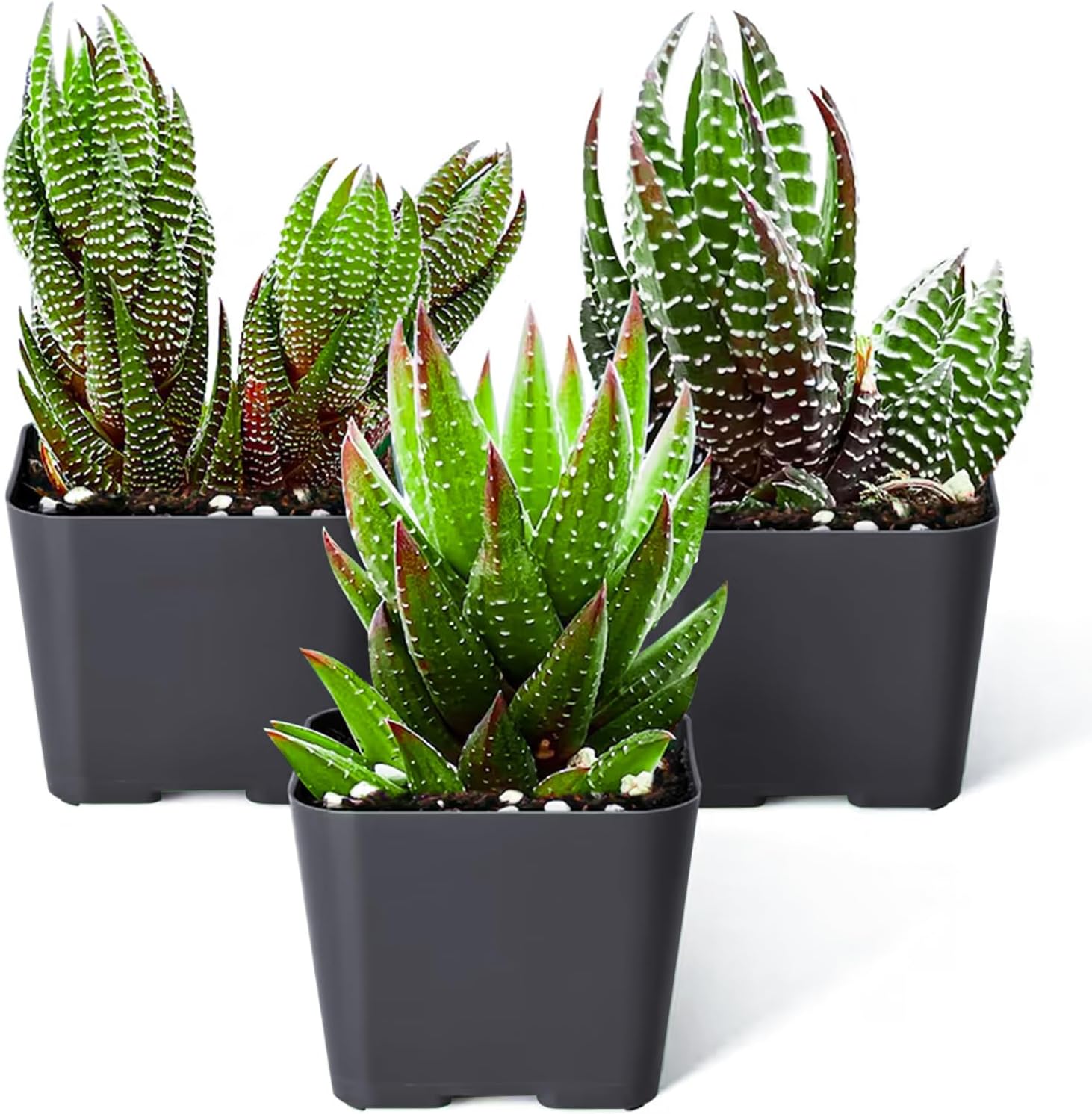
Sprout N Green Haworthia Collection — 3 Live Succulent Plants in 2" Starter Pots
| Indoor Outdoor Usage | Indoor, Outdoor |
|---|---|
| Other Special Features of the Product | Drought Tolerant, Low Maintenance, Pet Friendly |
| Sunlight Exposure | Partial Shade |
| USDA Hardiness Zone | 10a – 11b |
| Unit Count | 3 Count |
These three Haworthia succulents arrive fully rooted in 2-inch starter pots with a cactus/succulent soil mix, which makes them ready to display or re-pot immediately. Haworthias are small, slow-growing succulents that do well on a bright windowsill or under artificial grow lights, so they suit indoor setups where direct sun is limited. The listing notes drought tolerance, low maintenance, and pet friendliness, and the care guidance — lightly water only when soil is dry and keep in partial shade — fits typical succulent routines. Because each plant is established on a California farm before shipping, they tend to be more resilient than tiny unrooted cuttings. Expect some natural variation in leaf shape and occasional leaf loss in transit, but leaves regrow with proper care. Limitations are the small starter pot size and modest expected height, so you may want to re-pot to a larger container as plants mature; also USDA hardiness shows these are best kept frost-free. For growing under artificial light, their low light tolerance and compact habit make them an easy, budget-friendly choice.
Best for: Buyers wanting an inexpensive, low-effort indoor plant that tolerates artificial light and fits small spaces or windowsills.
Less Ideal for: Gardeners seeking large or fast-growing specimens or outdoor plants for frost-prone climates should look for hardier or larger options.
- Sold as a set of three fully rooted plants in starter pots, ready to display or re-pot
- Low maintenance and drought tolerant, requiring water only when soil is dry
- Compact size and partial shade tolerance make them suitable for indoor spaces and artificial light
- Pet-friendly variety and established root systems from farm-grown plants increase survivability
- Plants come in small 2-inch pots and will need re-potting as they grow
- Leaves are fragile and may drop during shipping, requiring some recovery time
Verdict: A budget-friendly trio of hardy, low-light-tolerant Haworthia succulents that are easy to keep under artificial light and perfect for small indoor spaces.
Generic 6" Lucky Bamboo Live Plants (5 Stalks)

| Indoor Outdoor Usage | Indoor |
|---|---|
| Other Special Features of the Product | Air Purification |
| Sunlight Exposure | Partial Shade |
| Soil Type | Adaptable to most soils |
| Moisture Needs | Keep roots covered in clean water, or keep potting soil lightly moist without waterlogging. |
These five lucky bamboo stalks are a low-maintenance indoor plant option that can be grown either in water or in well-draining potting soil, making them easy to place in a desk vase or small planter under artificial light. Each cane is about 6 inches long (measurement excludes leaves and roots) so they work well as small tabletop accents or grouped arrangements. Care is simple: keep roots covered with clean water and change it weekly for hydroponic display, or keep soil lightly moist without waterlogging if potted. The plants tolerate partial shade and are commonly used where indirect or artificial light is the primary source. Practical benefits include minimal watering needs, compact size for small spaces, and the ability to purify indoor air modestly. Limitations are that no container or decorative accessories are included, so you must supply a suitable vase or pot, and the listed size refers only to cane length so overall height with foliage will vary. Also mature height is not specified, so placement should allow some flexibility as leaves grow.
Best for: Buyers who want a reliable, low-effort indoor plant that will tolerate artificial or indirect light and fit small surfaces like desks or shelves.
Less Ideal for: People seeking a fully grown decorative arrangement out of the box or those who prefer large, fast-growing houseplants for dramatic focal points.
- Can be grown in either water or well-draining soil for flexible display options
- Compact size suited to desks, shelves, and small indoor spaces under artificial light
- Low maintenance care with weekly water changes or light soil moisture management
- Tolerates partial shade and bright indirect light, compatible with many indoor lighting setups
- No container or decorative accessories included so you must provide your own vase or pot
- Exact mature height not specified which requires allowance for future leaf growth
Verdict: A compact, low-maintenance choice for reliably adding live greenery to small indoor spaces where artificial or indirect light is used.
Plants for Pets Pothos 4‑Pack (assorted varieties)

| Indoor Outdoor Usage | Indoor |
|---|---|
| Other Special Features of the Product | Air Purification |
| Sunlight Exposure | Full Sun |
| Moisture Needs | Regular Watering |
| USDA Hardiness Zone | 3 |
This 4‑pack delivers a rotating assortment of pothos and similar vining varieties packaged in 4" pots and ready for indoor display. Pothos are known for tolerating low to bright indirect light, which makes this set a good fit for rooms lit by artificial light; they prefer the soil to dry between waterings and do well in typical indoor temperatures. The listing highlights variegated options such as Marble Queen, Neon, and Silver Satin, so you get visual variety without extra effort. Practical benefits include vigorous trailing growth useful for hanging baskets, shelves, or small plant stands, and pothos are also commonly cited for basic air‑purifying qualities. Expect modest maintenance needs and the ability to prune for bushier growth. Limitations are that the assortment is a grower’s choice so you may receive duplicate varieties and plants arrive in small nursery pots that will likely need repotting as they grow. Also these plants are pet‑toxic, so placement away from curious animals is necessary.
Best for: Buyers who want an easy, low‑effort way to add several indoor trailing plants to dimly lit rooms or artificial‑light setups and who value social proof from a bestselling, widely reviewed option.
Less Ideal for: Those seeking a guaranteed specific variety or larger, mature specimen plants or households where pets will have access to plants.
- Includes four plants for quicker room coverage or to create a varied grouping
- Assortment includes variegated and different pothos/philodendron types for visual interest
- Tolerant of low light and suitable for spaces lit primarily by artificial light
- Low maintenance care: allow soil to dry between waterings and simple pruning produces bushier growth
- Plants come in small 4" nursery pots and will likely need repotting within months
- Assortment is grower’s choice so specific varieties shown are not guaranteed
- Product is listed as pet‑toxic and must be kept away from pets
Verdict: An easy, low‑maintenance way to outfit dim indoor spaces with four attractive pothos vines that tolerate artificial light well.
Choosing the Right Plants That Can Grow in Artificial Light: Key Factors to Consider
Light Tolerance and Spectrum
Plants vary in how much light they need and which part of the light spectrum they use efficiently. Under artificial fixtures, you should match species to the typical output of your lights. Low-light tolerant plants can survive under 100 to 500 foot-candles, while moderate-light species benefit from brighter LEDs or closer fixture placement.
The spectrum matters for flowering and compact growth. Full-spectrum or grow-specific LEDs supply red and blue wavelengths that support leaf development and bloom cycles. Also consider photoperiod sensitivity; some species need longer daily light exposures to set buds or maintain compact form. Assess both intensity and daily duration when planning placement.
Watering Needs and Soil Mix
Indoor plants under artificial light often experience different evaporation rates than plants near windows. Lower light reduces transpiration, so overwatering becomes a common problem. Choose plants with flexible watering needs if you cannot maintain a strict schedule.
Soil mix affects drainage and root oxygen. Fast-draining mixes with aeration components reduce the risk of root rot in low-transpiration setups. Match pot size to root system; oversized pots hold excess moisture and increase disease risk when plants are kept under steady artificial light.
Size and Growth Habit
Think about how large plants will get under steady indoor light. Some species remain compact and are ideal for shelves or desks, while others can become leggy if light intensity is insufficient. Growth habit influences pruning frequency, container needs, and long-term placement in the home.
Vining plants can be trained on supports to save floor space, and rosette or clumping plants often require less structural care. When you expect limited vertical space, prioritize naturally compact or slow-growing varieties.
Temperature and Humidity Compatibility
Indoor environments vary widely in temperature and relative humidity. Artificial lights add some heat, which can slightly raise local temperatures near fixtures, affecting plants differently. Some species prefer warm, humid conditions, while others tolerate the drier air common in heated homes.
Match plants to the ambient conditions you can provide without special equipment. If you run grow lights continuously, monitor localized heat and humidity to avoid stress, especially on plants that prefer stable, moderate conditions.
Pest Susceptibility and Disease Risk
Indoor-grown plants face different pest and disease pressures than outdoor specimens. Low light and high moisture can encourage fungal problems, while dry, stagnant air can concentrate spider mites and scale. Choose species that historically show resilience indoors and inspect regularly for early signs of infestation.
Good cultural practices like proper sanitation, adequate airflow, and quarantine of new plants mitigate most risks. Also consider how easy it is to treat infestations on a given species without stressing the plant under artificial lighting conditions.
Maintenance and Propagation Ease
How much time you can commit will shape your choices. Some indoor plants require regular pruning, repotting, or specific feeding schedules to thrive under artificial light. Others do well with occasional attention and are forgiving of missed waterings.
Propagation ease matters if you want to expand your collection or replace lost specimens. Plants that root readily from cuttings reduce long-term costs and make experimentation with light duration or placement less risky.
Matching Light Intensity to Plant Needs
Translating artificial light output into practical placement means estimating light intensity at canopy level. Measure or estimate how far a fixture sits above the leaves and choose species rated for that intensity. Lower-light plants can be placed farther from a fixture, while moderate-light species need closer placement or higher-output LEDs.
Pay attention to photoperiod. Many indoor foliage plants do well with 10 to 14 hours of light per day, but flowering or fruiting species often need longer or precisely timed day length. Use timers to keep daily light consistent and prevent stretching or bud failure.
- Place low-light tolerant plants 2 to 4 feet below typical LED shop lights.
- Provide 12 hours of light as a general starting point for foliage crops.
- Watch for signs of low light such as pale leaves, elongated stems, or reduced new growth.
Best Containers and Potting Media for Artificial Light
Choose containers that promote drainage and allow easy inspection of root health. Materials like terracotta wick moisture faster, while plastic retains it longer. Under steady indoor lighting, err on the side of faster drainage to prevent waterlogged roots.
Use a potting mix with good aeration and organic matter that retains some moisture but does not compact. Adding perlite or coarse sand improves airflow and reduces the chance of root diseases in lower-transpiration environments.
- Avoid oversized pots for small root systems to limit excess moisture retention.
- Consider saucers or trays that keep humidity localized without creating standing water under pots.
Managing Fertilizer and Feed Schedules Indoors
Plants under artificial light still need nutrients, especially if grown in sterile soilless mixes. Use a balanced, water-soluble fertilizer on a conservative schedule to avoid salt buildup. Many indoor species do well with light feeding during active growth months and minimal feeding during slower seasons.
Flush containers occasionally to prevent salt accumulation and monitor leaf color for deficiency signs. Because growth rates may be slower under lower light, match feeding frequency to visible growth rather than a strict calendar when possible.
- Start with half-strength fertilizer when moving a plant to a new light setup.
- Reduce feeding in months where growth visibly slows to prevent over-fertilization.
Common Troubles and Quick Fixes
Yellowing leaves can indicate overwatering or low light. Check soil moisture and light placement before changing fertilizer or repotting. Leggy growth usually points to insufficient intensity or too great a distance from the fixture; raise the light or move the plant closer.
Pest outbreaks under artificial light are often spotted late. Quarantine new plants, inspect undersides of leaves, and treat early with appropriate cultural or organic controls. Improving airflow and reducing humidity spikes often stops fungal issues.
- Move a plant closer to the light for leggy stems; increase daily hours only if the species tolerates it.
- Trim affected leaves and isolate infested plants to prevent pest spread.
Creating Zones for Different Plant Needs
Group plants by similar light, humidity, and watering requirements to simplify care. A single artificial light bank can serve multiple plants if you arrange them by distance and use reflectors or supplemental bulbs where needed. This zoning approach reduces mistakes and improves overall plant health.
Use stands, shelves, or adjustable mounts to fine-tune each plant's distance from fixtures. Small adjustments in height can turn a marginally suitable spot into a thriving location for a species that tolerates artificial light.
- Place high-tolerance plants on upper shelves and low-light plants on lower shelves.
- Use light meters or smartphone apps as rough guides when creating zones.
How We Chose the Best Plants That Can Grow in Artificial Light
We prioritized characteristics that determine real-world success under artificial light. Key evaluation criteria included low-to-moderate light tolerance measured by minimum foot-candle equivalence, growth habit and compactness for indoor spaces, and adaptability to common indoor light spectra from LED or fluorescent fixtures. We also scored maintenance needs such as watering frequency and sensitivity to overwatering, and assessed pest and disease resilience in typical indoor conditions. Finally, ease of propagation and availability of verified cultivars were considered because they affect long-term replacement and experimentation. Products were excluded if they require direct sunlight for sustained flowering or fruiting, demand full outdoor seasonal cycles, or are tropical canopy plants that will outgrow confined indoor setups. We focused on species and cultivars that are demonstrably tolerant of continuous or supplemental artificial lighting and that perform well across a variety of common indoor light intensities.
FAQ
Can all houseplants live under artificial light?
Not all houseplants perform well under artificial light. Many shade-tolerant foliage plants adapt readily, but sun-loving species typically need higher intensity and full-spectrum light to maintain blooms or dense growth.
How many hours of artificial light do indoor plants need?
Most foliage plants do well with 10 to 14 hours of light per day under LED or fluorescent fixtures. Flowering plants may require longer or specifically timed light cycles depending on their photoperiod sensitivity.
Will artificial light cause plants to grow faster?
Growth rate depends on light intensity and spectrum as well as temperature and nutrients. Proper artificial lighting can support healthy growth, but insufficient intensity or wrong spectrum can slow growth or cause stretching.
Is LED lighting better than fluorescent for indoor plants?
LEDs are often more efficient and offer tunable spectra, but high-quality fluorescents still work well for many indoor plants. Choose fixtures that deliver adequate intensity and appropriate wavelengths rather than focusing on technology alone.
How can I prevent algae or mold in pots under artificial light?
Preventable by avoiding standing water, improving drainage, and ensuring air circulation. Use well-draining mixes and only water when the topsoil feels slightly dry. Reducing humidity spikes and cleaning trays regularly limits algal growth.
Final Verdict
Prioritize plants whose light tolerance and growth habit match the intensity and duration your artificial lighting provides. Focus first on light tolerance and watering flexibility, then consider size and pest resilience to fit your available space and care routine. When you match plant needs to your fixtures and cultural conditions, you can reliably grow healthy indoor greenery. Choose species that fit your maintenance level and be prepared to adjust placement, watering, and feeding as you observe how each plant responds to your artificial light setup.
