

Note: This article contains affiliate links. If you click on these links and make a purchase, I may earn a small commission at no extra cost to you. This helps support my research and content. Read my full affiliate disclosure here.
If you grow strawberries in containers, hanging baskets, or small raised beds, the right potting soil shapes crop health more than variety or fertilizer timing. Potting mixes that hold just enough moisture while offering good airflow around roots reduce rot, improve pollination outcomes, and support repeat fruiting through the season. This guide covers seven shortlisted potting soils for strawberries chosen for drainage, nutrient profile, and ease of use. Read on for practical notes about texture, feeding, and how to match a mix to your container and watering routine before the product list.
Top Picks at a Glance
| Best Overall The best all-around choice for most situations | Coast of Maine Planting Soil for Acid-Loving Plants, 20 qt (2-pack) |  |
| Best Quality Built to a higher standard if you want something more solid | FoxFarm Ocean Forest Potting Soil, 1.5 cu ft (with 2 Plant Tags) |  |
| Best Value The sweet spot between price and what you get | Perfect Plants Organic Strawberry Potting Soil (4 qt) |  |
| Best Budget The cheapest option that still gets the job done reliably | Doter Organic Strawberry Soil Mix, 2 qt |  |
| Highest Rated A top-rated pick with lots of positive feedback | Omitgoter All-Natural Strawberry Potting Mix, 1 qt |  |
| Most Popular A crowd favorite that many people choose with confidence | FoxFarm Strawberry Fields Fruiting & Flowering Potting Soil, 1.5 cu ft |  |
| Best Seller A high-volume bestseller chosen again and again | Back to the Roots Premium Organic Potting Mix, 6 Quart |  |
Coast of Maine Planting Soil for Acid-Loving Plants, 20 qt (2-pack)

| Unit Count | 2 Count |
|---|---|
| Volume | 20 quarts |
| OMRI Listed | Yes |
| Item Highlight | Low pH Formula, Ocean & Farm-Sourced Ingredients |
This Coast of Maine planting soil is a ready-to-use organic mix designed to favor acid-loving crops like strawberries, blueberries, and azaleas. The blend uses sphagnum peat moss, composted manure, and aged bark to improve structure, aeration, and moisture retention while keeping pH low for plants that prefer acidic conditions. It is lightweight and works well in raised beds and containers where drainage and root oxygenation matter, and the organic inputs help build living soil over time. Notable features include OMRI listing and ocean- and farm-sourced ingredients such as seaweed and lobster meal that supply slow-release nutrition and support soil life. Expect healthier root development and better flowering or fruiting compared with using generic garden soil. Limitations are that this is a 20 qt bag size in a two-pack, so larger beds will require multiple bags, and the peat-based formula may not suit gardeners seeking completely peat-free mixes.
Best for: Gardeners who want an organic, low-pH potting/planting mix to support fruiting acid-loving plants in containers, raised beds, or small garden plots and who value soil biology and sustainable ingredients.
Less Ideal for: Large-scale vegetable growers or landscapers needing bulk volumes or gardeners seeking a peat-free planting mix should consider other options.
- Low pH formulation tailored for acid-loving plants like strawberries and blueberries
- OMRI listed organic ingredients that support soil microbes and biodiversity
- Lightweight blend that improves drainage, aeration, and moisture retention
- Contains composted manure and seaweed-based inputs for slow-release nutrients
- Small 20 qt bag size means many bags are needed for larger beds
- Contains peat moss, so not ideal for gardeners avoiding peat-based products
Verdict: A small-bag, OMRI-listed low-pH planting mix that reliably supports strawberries and other acid-loving plants in containers and raised beds.
FoxFarm Ocean Forest Potting Soil, 1.5 cu ft (with 2 Plant Tags)

| Brand Name | FoxFarm |
|---|---|
| Unit Count | 520 Ounce |
| Volume | 1.5 cubic feet |
| Style Name | Light, Aerated Potting Mix |
FoxFarm Ocean Forest is a pre-mixed potting soil designed to give seedlings and container plants a strong start by combining organic amendments like fish meal, crab meal, and earthworm castings with composted humus and peat for a light, aerated texture. It is typically used straight from the bag for potting strawberries, houseplants, and other container-grown crops without needing immediate fertilizer. Notable features include a pH adjusted to about 6.3 to 6.8 for optimal nutrient uptake and ingredients that improve moisture retention while maintaining drainage to reduce root rot risk. For strawberry growers this mix supplies readily available organic nutrients during early growth and helps roots establish in confined pots. The main limitation is that Ocean Forest is a concentrated, nutrient-rich medium so heavier feeding schedules or adjustments may be needed later in the season for fruiting plants, and the peat-based component means it will compress over time and benefit from occasional loosening or top-dressing.
Best for: Gardeners who want a high-performance, ready-made potting mix to jump-start seedlings and container strawberries and who prioritize vigorous early growth over a DIY blend.
Less Ideal for: Growers seeking a low-input, long-term substrate for large beds or those who prefer peat-free or custom-mixed soils should consider other options.
- Ready to use out of the bag with pH adjusted to 6.3–6.8 for good nutrient uptake
- Rich organic amendments (fish meal, crab meal, earthworm castings) to support early growth
- Light, aerated texture from composted humus and sphagnum peat moss that balances moisture retention and drainage
- Includes two plant tags for easy variety tracking in containers
- Nutrient-dense mix may require altered feeding later in the season for fruiting plants
- Peat-based components can compact over time and need occasional refreshing or aeration
Verdict: Choose this mix if you want a high-nutrient, ready-to-use potting soil that helps container strawberries and seedlings establish strong, fast growth.
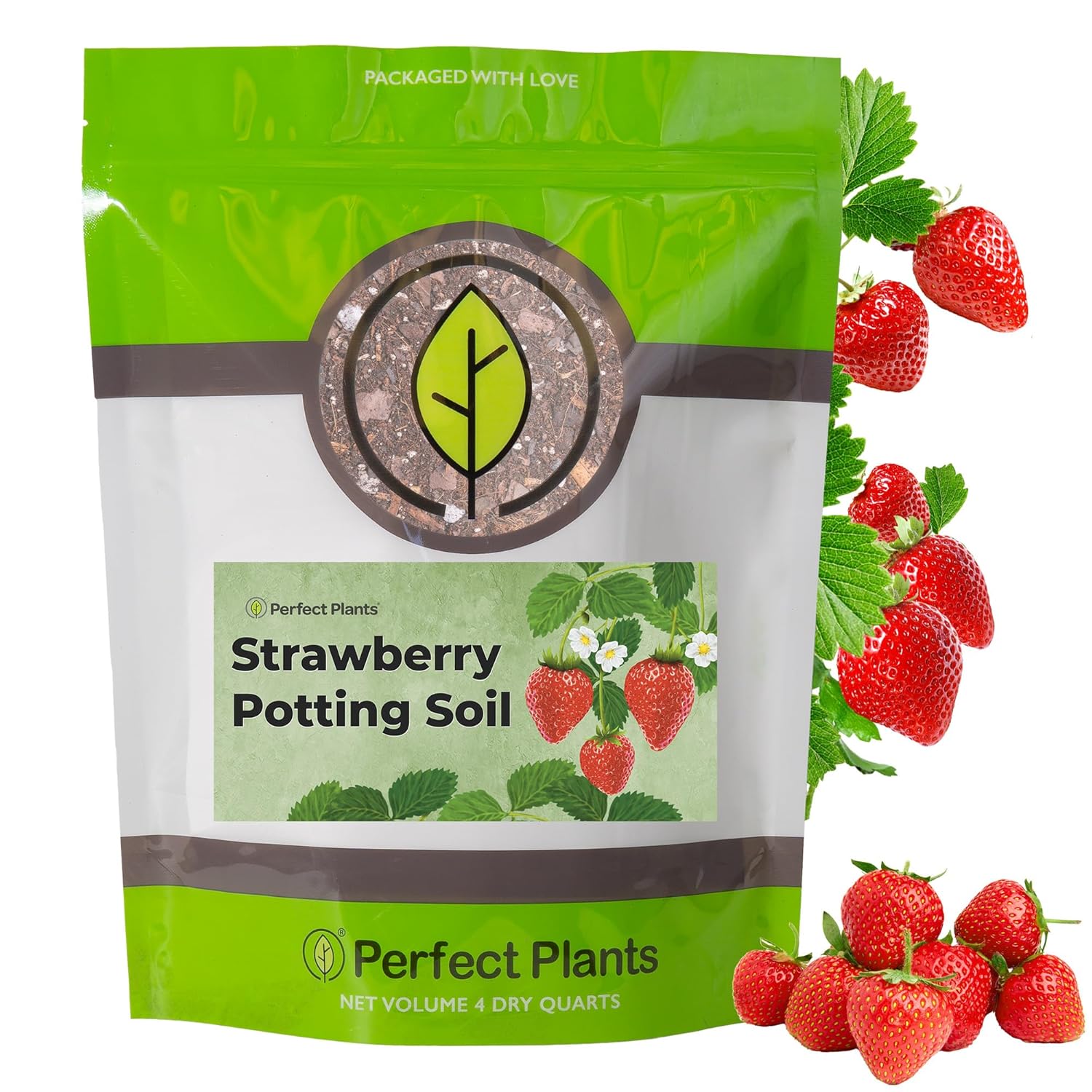
Perfect Plants Organic Strawberry Potting Soil (4 qt)
| Item Form | Powder |
|---|---|
| Coverage | strawberries and other acid-loving plants |
| Mixing Ratio | 18:6:8 |
| Unit Count | 128 Fluid Ounces |
Perfect Plants Organic Strawberry Potting Soil is a ready-made acidic mix designed to simplify growing strawberries in containers, raised beds, or small garden plots. It combines composted pine bark, granite sand, peat moss, and a balanced 18-6-8 fertilizer so you mix or top-dress into existing soil and let regular watering activate the slow-release nutrients. In practice this means less frequent feeding and a soil structure that favors good drainage and root development for berries. The powder format and resealable bag make portioning for pots straightforward, and the product is aimed at growers who want an all-in-one planting medium for acid-loving fruit. Limitations to note are that peat-based acidic mixes may compress over time and will still benefit from occasional aeration or amendment, and the product is tailored to berries so it is not a universal potting mix for all ornamentals or vegetables.
Best for: Gardeners who want a low-maintenance, species-specific potting mix to start or maintain strawberry plants in pots or small plots and prefer a product that reduces the need for frequent fertilizing.
Less Ideal for: People looking for a general-purpose houseplant or vegetable potting mix or those who prefer peat-free or non-acidic growing media.
- Formulated specifically for strawberries and other acid-loving berries
- Includes slow-release 18-6-8 fertilizer that feeds with watering for up to 12 months
- Blend of pine bark, granite sand, and peat promotes drainage and root health
- Resealable bag and powder form make it easy to mix into pots or raised beds
- Peat-based mix can compact over time and may need occasional aeration or amendment
- Not formulated as a universal potting soil for a wide range of plants
Verdict: Buy this if you want an easy, species-tailored potting mix that feeds strawberries for up to a year with minimal extra fertilizing.
Doter Organic Strawberry Soil Mix, 2 qt

| Brand Name | Doter |
|---|---|
| Item Type Name | Garden soil |
| Manufacturer | Doter |
| Volume | 2 quarts |
Doter's Organic Strawberry Soil Mix is a ready-to-use 2 qt potting medium blended for container strawberry cultivation. It combines organic matter and a soil conditioner to improve aeration and moisture retention, and the manufacturer says the mix is pH-balanced and contains slow-release nutrients to support plants through the season. In practice this makes it convenient for planting seedlings or refreshing small pots and strawberry planters without needing to mix amendments. The lightweight 2 qt size is easy to handle for balcony or patio growers and is useful when you only need soil for a few containers. Limitations are the small volume and lack of detailed ingredient percentages, so you may need additional fertilizer for heavy-feeding varieties or to fill multiple containers. Also customers should expect variable performance compared with larger, premium blends that list exact components. For growers wanting a simple, plant-specific potting mix for a handful of containers, this offers a quick, no-fuss option.
Best for: Budget-minded home gardeners who want a grab-and-go, plant-specific mix for one or two strawberry containers and prefer convenience over mixing components themselves.
Less Ideal for: Gardeners who need large volumes for raised beds or who want precise ingredient and nutrient data for intensive production should look elsewhere.
- Formulated for strawberries with added organic matter and pH consideration
- Includes slow-release nutrients for ongoing feeding through the season
- Improves aeration and moisture retention via a soil conditioner
- Convenient small 2 qt size for single pots or trial plantings
- Only a 2 quart volume so not suitable to fill multiple containers
- No full ingredient breakdown or nutrient analysis provided
Verdict: A compact, ready-made strawberry potting mix that saves time for small-container growers seeking an affordable, plant-targeted soil.
Omitgoter All-Natural Strawberry Potting Mix, 1 qt

| Brand Name | Omitgoter |
|---|---|
| Unit Count | 32 Ounce |
| Volume | 32 fluid ounces |
| Style Name | Nutrient-rich, Plant-specific |
This Omitgoter potting mix is designed specifically for strawberries and can be used for seedlings, container plants, and garden bed topdressing. The blend of peat moss, coconut coir and perlite improves aeration and drainage while worm castings and humus supply organic nutrients that support flowering and fruiting. It arrives ready to use with no blending required, making it convenient for planting runners, transplanting young plants into pots, or refreshing depleted soil in small raised beds. Because it contains no synthetic additives, it is suitable for gardeners who prefer organic inputs and want a predictable, chemical-free medium. Limitations to note are the small 1 quart (32 fl oz) volume, which is best for individual pots or starting trays rather than filling large containers or beds, and the usual caution about dust and handling around kids and pets. For a reliability-minded grower this mix offers a consistent, plant-focused formulation that simplifies growing ripe strawberries in containers or compact garden spaces.
Best for: Gardeners who want a dependable, chemical-free potting medium to start seedlings or grow strawberries in individual pots and small containers.
Less Ideal for: Those needing large volumes to fill raised beds or multiple large containers should choose bulk potting soil or bagged garden mix instead.
- Formulated specifically for strawberries with a mix of organic components
- Good drainage and aeration from perlite and coconut coir
- Contains worm castings and humus for organic nutrient supply
- Ready-to-use formula requires no mixing
- Small 32 fl oz volume makes it impractical for large beds or multiple containers
- May produce dust that requires careful handling for sensitive users
Verdict: A compact, all-natural potting mix tailored for reliable strawberry starts and single-pot production.
FoxFarm Strawberry Fields Fruiting & Flowering Potting Soil, 1.5 cu ft

| Volume | 1.5 cubic feet |
|---|---|
| Item Highlight | Coco Fiber, Mycorrhizae, Earthworm Castings |
| Ingredients | Coco fiber, sphagnum peat moss, aged forest products, perlite, fertilizer |
FoxFarm Strawberry Fields is a specially blended potting mix aimed at boosting blooms and fruit set for strawberries, berries, melons, bulbs, and flowering annuals. The mix combines coco fiber for improved moisture retention with sphagnum peat, perlite for drainage, aged organic materials, and a starter fertilizer derived from earthworm castings and oyster shell. It also includes mycorrhizae to help establish a healthier root system and encourage nutrient uptake. In practice you would use this in containers, raised beds, or in-ground plantings during the fruiting and flowering stages by lightly packing soil around plants and watering thoroughly. The 1.5 cu ft bag is convenient for small beds or several containers, and the moisture-holding coco fiber helps reduce watering frequency while perlite prevents waterlogging. Limitations are that this is a premixed bag with a nutrient profile intended for bloom and fruit stages rather than long-term pot culture, so heavy feeders may need supplemental fertilization over the season and larger projects will require multiple bags.
Best for: Gardeners growing strawberries or other small-fruited plants who want a purpose-built soil to improve bloom and fruit performance in containers or raised beds and who value established product formulations.
Less Ideal for: Growers establishing large in-ground beds or those who prefer to custom-blend soils and fertilizers for long-season crops should consider bulk or amendable alternatives.
- Formulated for fruiting and flowering to support better blooms and berry production
- High coco fiber content improves water retention for container-grown strawberries
- Includes mycorrhizae to enhance root efficiency and nutrient uptake
- Balanced mix of organic components and perlite for both moisture retention and drainage
- Small 1.5 cu ft bag means you may need several bags for even a modest strawberry patch
- Not formulated as a complete long-term potting medium for heavy feeders without additional fertilization
Verdict: Choose this mix when you want a ready-made soil that helps strawberries and other fruiting plants produce more blooms and better fruit with less fuss.
Back to the Roots Premium Organic Potting Mix, 6 Quart

| Unit Count | 192 Fluid Ounces |
|---|---|
| Item Highlight | Peat-free potting soil for outdoor plants, indoor plants, vegetables, herbs and flowers |
| Item Type Name | 100% Organic Potting Mix |
| Volume | 6 quarts |
Back to the Roots Premium Organic Potting Mix is a small-bag, all-purpose potting soil designed for indoor and outdoor container gardening. It is formulated from upcycled plant matter and wood fines rather than peat and includes yucca extract to help regulate moisture and dolomitic limestone to stabilize pH. Typical use is filling pots, planters, or strawberry containers and mixing with compost or fertilizers as needed. The organic plant food in the blend gives seedlings and established plants a gentle nutrient boost without synthetic inputs. For growers who prefer lower environmental impact and predictable performance, the peat-free composition and USA sourcing are reassuring. The 6 quart size is convenient for testing a few strawberry pots or topping up containers, but gardeners who need bulk for many plants will need multiple bags. Also, like most premium mixes, it may benefit from additional slow-release fertilizer for heavy-feeding varieties over the season.
Best for: Buyers who want an eco-conscious, ready-to-use organic potting mix for a few strawberry containers and prefer a predictable, low-risk product from a known brand.
Less Ideal for: People planting large raised beds or many strawberry plants who need bulk soil or those seeking a heavily amended mix tailored to professional growers.
- Peat-free, organic formula made from upcycled plant matter and wood fines
- Includes yucca extract to improve moisture regulation in containers
- Dolomitic limestone added to help balance soil pH for fruiting plants
- Ready-to-use 6 quart bag convenient for small batches or individual strawberry pots
- Small 6 quart volume requires buying multiple bags for larger plantings
- May need supplemental fertilizer during the growing season for heavy feeders
Verdict: A small, peat-free organic potting mix that gives risk-averse gardeners a reliable, eco-friendly base for a few strawberry pots.
Choosing the Right Potting Soil for Strawberries: Key Factors to Consider
Drainage and Aeration
Strawberries need soil that drains quickly enough to avoid waterlogged roots but still holds moisture between waterings. In containers, that balance comes from coarse components such as perlite, pine bark, or coarse sand mixed into finer organic material. Good aeration prevents anaerobic pockets that lead to root rot and poor growth.
When evaluating mixes, consider particle size distribution. Too many fine particles compact after repeated wetting and drying cycles. A mix with visible chunks of bark or perlite will maintain pore space, letting roots breathe while still allowing you to water deeply without creating standing water.
Moisture Retention
Potting soils must retain enough water to keep shallow strawberry roots hydrated between daily watering schedules, especially in hanging baskets and small pots. Ingredients such as coconut coir or peat can help hold moisture, but they should be balanced so the mix does not stay soggy.
Think about your microclimate and container size. In hot, exposed locations you will want a mix with higher water-holding capacity. For shaded or cool sites, a faster-draining mix reduces disease risk. Also factor in your watering routine: if you travel often, favor mixes that buffer moisture longer.
Nutrient Balance and Feed Schedule
Strawberries are moderate feeders that benefit from steady, available nutrients during flowering and fruit set. A potting soil with a modest starter charge of balanced nutrients helps young plants, but containers usually require supplemental feeding through the fruiting season.
Look for mixes that support easy foliar or liquid feeding and that do not lock up nutrients. Avoid mixes with extremely high initial fertilizer levels that can burn roots in small pots. Also consider the form of nutrients: slow-release granules extend feeding intervals, while mixes designed for organic gardeners use composted or mineral sources compatible with organic fertilizers.
Soil Texture and Particle Size
Texture affects root penetration, moisture distribution, and how the mix behaves when watered. Strawberries have a shallow root system that benefits from a light, friable mix so roots can quickly access water and nutrients near the soil surface.
A balanced texture prevents crusting, allows runners to root if you allow them to, and makes planting and transplanting easier. Avoid very dense, clay-rich components or overly woolly mixes that mat and shed water instead of letting it penetrate evenly.
Disease Suppression and Cleanliness
Pathogen-free starting material reduces the chance of crown and root diseases that can quickly ruin a strawberry crop in containers. Sterilized or pasteurized mixes and those containing disease-suppressive components like well-composted organic matter or horticultural charcoal help reduce inoculum loads.
Consider whether the mix has added biological aids such as beneficial microbes or mycorrhizae. These can help root health, though they require careful handling and appropriate storage to remain active. Also keep in mind that reused mix should be refreshed or replaced to avoid a buildup of disease organisms.
Longevity and Reuse
Container potting mixes compress, lose organic matter, and exhaust nutrients over a season. Longevity matters if you want to reuse soil between crops or over multiple seasons without full replacement.
Look for mixes with stable structure and amendments that resist rapid decomposition. Consider how easy it will be to refresh the mix with compost or slow-release fertilizer and whether the texture will hold up when you re-pot or divide plants next season.
Choosing a Mix for Containers Versus Raised Beds
Container-grown strawberries face faster drying and temperature swings than raised beds, so potting mixes for containers should emphasize water-holding ability and stable structure. Raised beds allow more freedom to blend heavier organic matter and garden compost because drainage is less constrained.
For hanging baskets and small pots, use a lighter mix with good moisture retention that still drains. For shallow raised beds, a richer, loamier potting soil that improves fertility and supports runner establishment is appropriate.
- Containers: prioritize stable, well-aerated mixes with moisture buffer ingredients.
- Raised beds: include more compost and organic matter to support long-term fertility.
- Hanging baskets: choose mixes designed to resist rapid drying and compaction.
Amending Potting Soil for Fruit Quality
Strawberries respond to steady, available potassium and phosphorus during fruit set. If a potting soil is low in these elements, plan a feeding strategy using water-soluble or slow-release fertilizers tailored for fruiting plants.
In small containers, add amendments conservatively to avoid salt buildup. Organic amendments like well-composted manure or kelp meal supply micronutrients and improve soil biology, but they should be integrated into the mix sparingly so drainage and texture remain appropriate.
- Avoid heavy topdressings that can alter drainage.
- Use soluble feeds during bloom for quick uptake.
- Refresh organic matter between seasons rather than piling it on during the growing season.
Managing Watering and Irrigation
Watering frequency interacts with soil choice. Fast-draining mixes need more frequent, deeper waterings. Mixes with good water retention permit longer intervals but still benefit from thorough soak-and-drain cycles to prevent salt accumulation.
If you use drip irrigation or self-watering containers, match the reservoir and wicking action to the mix. Coarser mixes wick less efficiently, so they may need a different delivery method than fine, coir-rich mixes.
- Check moisture by feel at root level rather than relying on surface dryness.
- Adjust feed schedule when switching mixes; more porous mixes typically require more frequent liquid feeding.
- Consider saucers or drip trays in sheltered areas to avoid standing water but capture runoff where needed.
Starter Prep and Planting Tips
Before planting, pre-moisten mixes that are very dry and allow them to settle to encourage even distribution of moisture. Fill containers so there is headspace for watering and to reduce overflow during heavy rains.
When transplanting plug plants, avoid deep planting of crowns. Keep the crown at soil level and firm soil gently around the roots. For runner management, provide a light rooting medium or small pots placed at the same level as the mother plant.
- Pre-soak dry bags of mix to remove air pockets before planting.
- Place a small amount of loose mix on the surface for runners to root into.
- Keep crowns exposed and do not bury them to prevent rot.
Seasonal Care and Rejuvenation
At season end, remove old foliage and lightly topdress containers with fresh potting mix or compost to restore organic matter. In colder climates, storing containers in an unheated but sheltered area reduces freeze-thaw damage to the mix.
If reusing mix, sieve out large roots and refresh with compost and a slow-release fertilizer to restore nutrient levels. Monitor for signs of compaction and replace heavily decomposed mixes to avoid poor drainage and root stress.
- Topdress rather than fully replace when structure is still good.
- Replace mixes that smell sour or show persistent disease symptoms.
- Store unused bags in a dry place to preserve biological additives.
How We Chose the Best Potting Soil for Strawberries
We selected potting soils that fit the specific needs of strawberry plants in containers and small raised beds. Evaluation emphasized mixes with balanced drainage, consistent moisture retention, and an accessible nutrient profile suited for fruiting. We also prioritized soil texture and particle size because fine, compacting mixes limit root oxygen and increase disease risk. Ease of use was judged by how ready a mix is out of the bag: whether it requires amendment, pre-wetting, or frequent feeding. Longevity and reusability mattered for gardeners who reuse containers across seasons. Excluded items include garden-top soil, straight compost, and mixes formulated only for seedlings or cacti, since those do not match the water and nutrient demands of fruiting strawberries. Final selections reflect these practical filters: water management, nutrient balance, texture and aeration, disease suppression potential, and long-term container performance.
FAQ
How often should I feed strawberries in pots?
Usually feed container strawberries every two to four weeks during the fruiting season with a balanced liquid feed or follow label directions for slow-release products. Frequency depends on mix fertility and container size; smaller pots often need more frequent feeding.
Can I use garden soil mixed with potting soil for strawberries?
Mixing garden soil into containers is generally not recommended because it can compact and reduce drainage. For raised beds, incorporating garden compost and screened topsoil is fine if drainage is good and the soil is free of pathogens.
Is coconut coir or peat better for strawberries?
Both hold moisture well, but coconut coir is more sustainable and tends to retain structure longer. Peat holds water effectively but can compact and has environmental concerns. Either works when balanced with aerating amendments like perlite or bark.
How deep should a container be for strawberry plants?
A container at least 6 to 8 inches deep suits most strawberry varieties because roots are shallow. Larger containers give more moisture buffer and room for runners to establish, reducing watering frequency.
Can I reuse potting soil from last year for new strawberries?
You can reuse soil if it is structurally sound and free of disease, but refresh it with compost and slow-release nutrients. Replace mixes that are compacted, depleted, or show signs of root disease to avoid poor performance.
Final Verdict
Choose a potting soil that matches your growing setup and watering habits. Prioritize a balance of drainage and moisture retention, a light friable texture, and a nutrient profile that supports flowering and fruit set. Expect to topdress or feed containers through the season and refresh the mix between crops. By focusing on these tradeoffs you can pick a mix that minimizes disease risk while maximizing fruit quality and consistency.
