

Note: This article contains affiliate links. If you click on these links and make a purchase, I may earn a small commission at no extra cost to you. This helps support my research and content. Read my full affiliate disclosure here.
Picking the right mix of potting soil and amendments matters more for herbs than many gardeners expect. Herbs prefer a balance of drainage, airflow, and steady nutrition to develop strong roots and concentrated flavors. Whether you grow in containers, raised beds, or a small kitchen patch, the right herb soil reduces rot, improves watering consistency, and supports regular harvests. This guide covers the top shortlisted herb soil blends selected for common herb growing situations. We evaluate mixes for particle texture, water management, nutrient-holding capacity, and suitability for both containers and in-ground beds to help you pick the right soil for your space and growing style.
Top Picks at a Glance
| Best Overall The best all-around choice for most situations | Miracle-Gro Potting Mix, 16 qt. (2-Pack) |  |
| Best Quality Built to a higher standard if you want something more solid | Rosy Soil Herb Mix Organic Potting Soil, 4 Quart |  |
| Best Value The sweet spot between price and what you get | Burpee Premium Organic Potting Mix with Coconut Coir (9 Quart) |  |
| Best Budget The cheapest option that still gets the job done reliably | Miracle-Gro Indoor Potting Mix for Seed Starting (8 qt., 2-Pack) |  |
| Highest Rated A top-rated pick with lots of positive feedback | FoxFarm Happy Frog Potting Soil, Container Garden, 2 cu ft (with 2 Plant Tags) |  |
| Most Popular A crowd favorite that many people choose with confidence | Miracle-Gro Organic Indoor Potting Mix, 16 qt. |  |
| Best Seller A high-volume bestseller chosen again and again | Back to the Roots 3-in-1 Organic Seed Starting Mix, 6 Quart |  |
Miracle-Gro Potting Mix, 16 qt. (2-Pack)

| Feeds | Up to 6 months |
|---|---|
| Volume | 16 quarts (per bag) |
| Number of Packs | 2 |
| Ingredients | Sphagnum peat moss, perlite, compost, fertilizer |
Miracle-Gro Potting Mix is a general-purpose container soil designed to support outdoor potted plants including herbs, vegetables, annuals, and perennials. You use it straight from the bag for planting or repotting: fill a drained pot about one third, set the plant, top off, and water through until excess drains. The mix contains peat, perlite, compost, and a built-in fertilizer that the brand says feeds plants for up to six months, which reduces how often you need to add nutrients during the growing season. Its light, fast-draining texture helps prevent waterlogged roots in planters and hanging baskets while giving seedlings and herbs an easy medium to establish roots. Limitations are that it is formulated for containers rather than amending in-ground beds and that the built-in feed means you should monitor fertilizer needs after the initial six-month period. For herb growers who prefer low-fuss container planting, this mix delivers consistent drainage and a nutrient boost without any blending or amendment required.
Best for: Ideal for gardeners who want an easy, reliable potting mix for outdoor container herbs and small vegetable pots and prefer a low-maintenance growing medium that provides initial feed without mixing soils.
Less Ideal for: Not the best choice for gardeners looking to amend native garden soil or for those who want a specialized mix for cactus, orchids, or long-term in-ground beds.
- Formulated specifically for containers so it drains well and reduces risk of root rot
- Includes slow-release fertilizer that feeds plants for up to six months
- Lightweight, ready-to-use mix that eliminates need for custom blending
- Suitable for a wide range of outdoor container plants including herbs and vegetables
- Not intended as a soil amendment for in-ground beds
- Nutrient boost lasts up to six months so additional feeding is needed afterward
Verdict: A convenient, fast-draining potting mix that gives outdoor container herbs a six-month nutrient head start with minimal fuss.
Rosy Soil Herb Mix Organic Potting Soil, 4 Quart

| Unit Count | 64 Ounce |
|---|---|
| Volume | 4 quarts |
| Item Highlight | Biochar, Worm Castings, Mycorrhizae Blend, Peat-Free, Fast Draining |
Rosy Soil Herb Mix is a ready-to-use 4 quart potting soil designed specifically for herbs grown indoors or in containers outdoors. It combines biochar, worm castings, compost, bark fines, and beneficial mycorrhizal fungi to improve root health, nutrient uptake, and moisture retention without peat moss. Use it straight from the resealable bag to fill 2 to 3 medium 6-inch pots, start seedlings, or refresh container mixes where fast drainage and a light, airy texture matter. The peat-free formula and added microbes make it practical for growers focused on plant performance and flavor, since healthier roots translate to better herb development. Limitations are the small bag size if you need to pot many plants or fill larger planters and the product requires proper storage to keep microbes active; it is not a bulk garden soil replacement for large beds. For focused herb containers and seed starting it delivers targeted benefits, but plan on multiple bags for larger projects.
Best for: Buyers who prioritize herb performance and want an organic, microbe-rich potting mix for containers or seed starting to maximize flavor and growth.
Less Ideal for: Gardeners who need large volumes for in-ground beds or landscapers looking for bulk soil solutions should consider larger-capacity products instead.
- Formulated for herbs with biochar and mycorrhizae to support stronger roots and nutrient uptake
- Peat-free, using compost and worm castings for an organic, sustainable profile
- Light, fast-draining texture suitable for seedlings and container-grown herbs
- Resealable 4 quart bag ready to use without additional mixing
- Small 4 quart volume means multiple bags are needed for larger container gardens or multiple plantings
- Not intended as a bulk garden soil for in-ground beds
Verdict: Choose this mix when you want a small-batch, performance-focused, peat-free potting soil that boosts herb root health and container growth.
Burpee Premium Organic Potting Mix with Coconut Coir (9 Quart)

| Coverage | 9 Qt Container |
|---|---|
| Item Form | Powder |
| Specific Uses For Product | Plant Growth, Root Development, Seed Development, Soil Conditioning |
Burpee Premium Organic Potting Mix is a ready-to-use container blend designed to give herbs and other potted edibles a balanced, low-maintenance growing medium. The mix pairs coco coir with organic nutrients to improve aeration and water retention so seedlings, transplants, and established herbs develop strong roots without staying waterlogged. It is OMRI listed and claims slow-release feeding for up to three months, which reduces how often you need to supplement with fertilizer during a single growing cycle. Typical use is straightforward: fill pots or raised containers, plant seeds or seedlings, and water; the bag is sized for small batches and seed starting. Practical limitations are its 9-quart coverage per bag, which means multiple bags are needed for larger herb gardens, and the bagged format offers less customization than mixing your own compost-rich blends. For gardeners who want an off-the-shelf organic potting soil that balances moisture and aeration, this mix is a convenient option.
Best for: Ideal for gardeners who want a reliable, low-effort potting mix to start seeds or grow herbs in pots and small raised containers and who prioritize organic, ready-made solutions.
Less Ideal for: Not the best choice for gardeners building large in-ground herb beds or those who prefer to customize soil blends with compost and specific amendments.
- OMRI listed organic mix suitable for organic herb gardening
- Coco coir improves moisture retention while preventing waterlogging
- Includes slow-release nutrients advertised to feed plants for up to three months
- Ready-to-use 9 qt bag convenient for seed starting and small containers
- Small 9-quart bag covers limited area so larger herb beds require multiple bags
- Bagged mix limits ability to tailor soil texture or fertility compared with custom mixes
Verdict: A convenient OMRI-listed potting mix that gives container herbs balanced moisture control and starter nutrients so you can get reliable growth with minimal fuss.
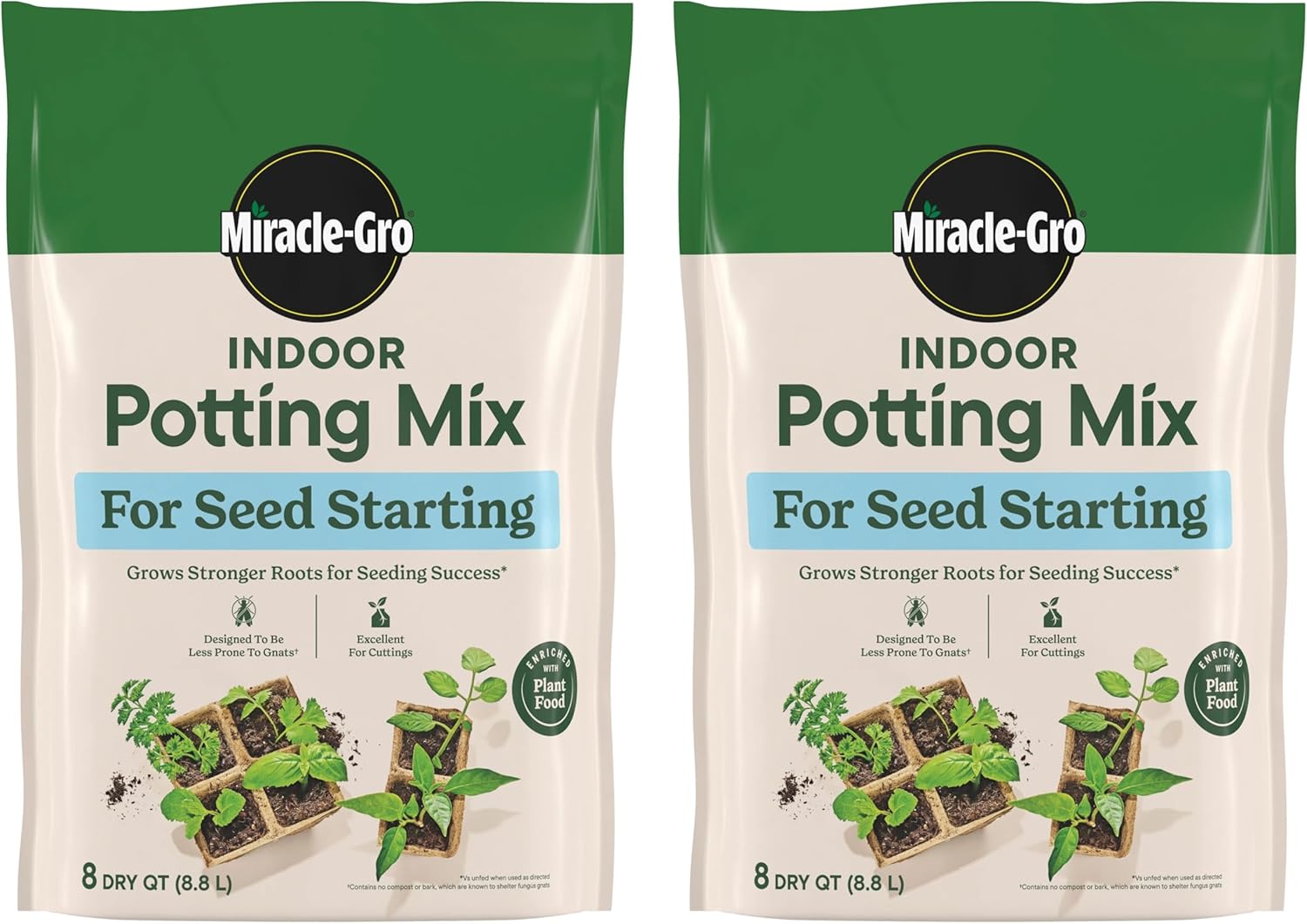
Miracle-Gro Indoor Potting Mix for Seed Starting (8 qt., 2-Pack)
| Number of Packs | 2 |
|---|---|
| Item Highlight | For Starting Vegetable, Flower, and Herb Seeds Indoors, Excellent for Cuttings |
| Unit Count | 512 Ounce |
| Volume | 8 quarts |
Miracle-Gro Indoor Potting Mix for Seed Starting is a lightweight, enriched mix intended for germinating vegetable, flower, and herb seeds and for rooting leaf or stem cuttings. It is typically used in cell trays or small containers where maintaining consistent moisture and gentle nutrition during the first weeks of growth matters most. Notable features include added plant food to support early root development and a formula that omits compost and bark, which the brand says reduces places for fungus gnats to hide. Practically, one 8 qt. bag fills roughly three 72-cell trays, and this two-pack gives enough medium to start multiple herb batches. The mix is ready to use out of the bag, so beginners can skip custom blends. Important limitations are that it is designed for starting and potting up seedlings rather than long-term container growing or in-ground beds, so you will need to transplant into a feeding potting mix or garden soil later and continue regular fertilization. Also the product contains fertilizer so handle with care to avoid inhalation or runoff.
Best for: Gardeners who want an easy, no-mix starting medium for herbs and other seeds and prefer a straightforward product that helps seedlings establish quickly without extra steps.
Less Ideal for: People seeking an all-purpose potting soil for mature containers or for amending garden beds should choose a product formulated for long-term growing instead.
- Lightweight, fine texture suited to seed trays and cuttings
- Pre-enriched with plant food to support early root development
- Formulated without compost or bark to help reduce fungus gnat habitat
- Ready-to-use so no mixing or amendments required
- Not formulated for long-term container use or in-ground soil amendment
Verdict: A convenient, seed-starting mix that makes it simple and affordable to start herbs and cuttings indoors.
FoxFarm Happy Frog Potting Soil, Container Garden, 2 cu ft (with 2 Plant Tags)

| Brand Name | FoxFarm |
|---|---|
| Item Highlight | Amended blend with soil microbes, earthworm castings, bat guano, and aged forest products |
| Volume | 2 cubic feet |
| Style Name | Container Garden |
FoxFarm Happy Frog Potting Soil is a premixed container blend designed to give potted herbs and other container plants a nutrient-rich, easy-to-use growing medium. It is typically used straight from the bag to fill pots, window boxes, and patio planters; the mix is amended with earthworm castings, bat guano, aged forest products, and beneficial microbes to support root development and nutrient uptake. For herb gardeners this means stronger vegetative growth and improved flowering or leaf production without needing immediate additional amendments. The included plant tags help track varieties and planting dates. Practical benefits include being pH adjusted for better nutrient availability and having organic amendments that reduce the need for frequent feeding. Important limitations are that it is sold as a potting mix only, so gardeners seeking a soil for in-ground beds or a sterile soilless mix for seedlings may prefer alternatives, and the bagged volume means multiple purchases are needed for larger container collections.
Best for: Herb gardeners who want a reliable, ready-made potting mix that reduces upfront fuss and promotes steady vegetative growth in containers.
Less Ideal for: People planning to amend or build in-ground beds, or those needing a sterile seed-starting medium should look at products tailored to those tasks.
- Pre-amended with earthworm castings, bat guano, and aged forest products for sustained nutrition
- Contains beneficial microbes and mycorrhizal fungi to improve root development and nutrient uptake
- pH adjusted for better immediate nutrient availability to container plants
- Ready-to-use out of the bag which saves time when potting herbs and ornamentals
- Formulated specifically for containers and not intended as an in-ground garden soil replacement
- Bag volume means multiple bags are required for larger collections of pots
Verdict: Choose this potting soil when you want a dependable, ready-to-use mix that feeds container herbs and promotes strong root and leaf growth.
Miracle-Gro Organic Indoor Potting Mix, 16 qt.

| Brand Name | Miracle-Gro |
|---|---|
| Item Highlight | Protects Against Over & Under Watering |
| Style Name | Indoor |
| Volume | 1 cubic feet |
Miracle-Gro Organic Indoor Potting Mix is a ready-to-use organic blend for indoor containers and seed starting. It combines coir for improved air space and moisture holding with sphagnum peat moss to retain and slowly release water, plus a quick-start natural fertilizer to give young plants an early nutrient boost. Typical uses include filling pots for herbs and houseplants, transplanting seedlings, and seeding in shallow trays; the bag notes that one 16 qt. pack will fill roughly a 12-inch container. Practical benefits for herb growers are better moisture regulation in indoor conditions and an OMRI listing for organic-compatible gardening. The texture should make repotting and seed starting straightforward, and the included starter nutrients reduce the need for immediate feeding. Limits to consider are that the mix is formulated for indoor use so drainage and drying behavior will differ from outdoor potting mixes, and the bag size is modest if you grow many herbs or larger containers. For best results use pots with drainage and monitor watering as plants establish.
Best for: A cautious herb grower who prioritizes organic-compatible, indoor-specific soil that helps regulate moisture and supports seed starting and repotting.
Less Ideal for: Gardeners planting large outdoor beds or those who need bulk quantities for many containers should choose an outdoor potting soil or larger bags.
- OMRI listed for organic use which suits certified organic indoor gardens
- Blend of coir and sphagnum peat moss balances aeration with moisture retention
- Includes quick-start natural fertilizer to feed seedlings and newly potted herbs
- Specifically formulated for indoor container plants and seed starting
- Small 16 qt. bag may not be economical for larger herb collections or many pots
- Formulation optimized for indoor use so drainage and drying differ from outdoor potting mixes
Verdict: A compact OMRI-listed indoor potting mix that makes seed starting and herb repotting easier by balancing moisture retention and aeration.
Back to the Roots 3-in-1 Organic Seed Starting Mix, 6 Quart

| Unit Count | 192 Fluid Ounces |
|---|---|
| Style Name | 3-in-1 Seed Starting Mix |
| Brand Name | Back to the Roots |
This 3-in-1 seed starting mix is a ready-to-use, peat-free potting medium designed to give young herbs and vegetable seedlings a strong start. It combines coconut coir, mycorrhizae, dolomitic limestone, and yucca extract to balance pH, retain manageable moisture, and encourage root development. Typical use is filling small pots or trays for starting seeds or repotting small herb seedlings before transplanting; the bag size is convenient for a few rounds of indoor seed starting or container herb gardens. Notable features include organic ingredients, built-in nutrients and worm castings, and a fast-draining texture that reduces the risk of waterlogged roots. For a cautious gardener this mix lowers the chance of early damping-off and overwatering problems while avoiding peat. Limitations are the small 6-quart volume, which means you may need multiple bags for several flats or larger containers, and the formula is aimed at starting and potting up rather than long-term in-ground soil amendment.
Best for: A cautious home gardener who wants a reliable, ready-made mix to start herb seeds or pot up young seedlings with minimal fuss and lower risk of overwatering or damping-off.
Less Ideal for: Growers who need large volumes for raised beds or who want a multipurpose all-season garden soil should look for bigger bulk mixes or amendments designed for in-ground use.
- Peat-free organic blend reduces environmental impact and supports healthy seedlings.
- Includes mycorrhizae and worm castings to boost root establishment and early growth.
- Moisture-controlling yucca extract and coco coir help manage watering and reduce overwatering risk.
- pH-balanced with dolomitic limestone to help prevent nutrient lockup for young plants.
- Small 6-quart volume may not be enough for multiple seed flats or larger container plantings.
- Formulated for seed starting and potting up rather than as a long-term garden soil amendment.
Verdict: Choose this organic, peat-free seed starting mix when you want a safe, low-risk soil that helps herb seedlings establish strong roots quickly.
Choosing the Right Herb Soil: Key Factors to Consider
Drainage and Aeration
Herbs generally dislike constantly wet roots. Good drainage and internal air spaces let excess water escape while keeping oxygen available to roots. A soil that drains too slowly raises the risk of root rot, particularly for Mediterranean herbs such as rosemary and thyme, which need free-draining conditions.
Assess the mix for visible coarse components like perlite, coarse sand, or aged bark. Those larger particles create pathways for water and air, preventing compaction over time. If you plan to grow in shallow containers, prioritize mixes with intentional coarse fractions to maintain air pockets even with frequent watering.
Nutrient Retention and Release
Herbs do not usually need very high fertility, but they do benefit from steady, moderate nutrient availability. Soil mixes that include stable organic matter such as composted bark, coconut coir, or well-aged compost help hold nutrients and release them slowly as microbes break the material down.
Avoid mixes that are overly inert if you want hands-off fertility; conversely, avoid mixes loaded with high-solubility fertilizers for long-term container plantings because they can burn roots or cause excessive leafy growth at the expense of flavor. Good herb soils balance nutrient-holding capacity with a predictable release profile.
Texture and Particle Size
Texture affects everything from watering frequency to root penetration. A fine, almost silty potting mix compacts quickly and can impede root growth, while an overly coarse mix may dry out too fast and require more frequent watering.
Look for a mix that combines fine components for moisture retention with coarse inclusions for structure. Particle size also affects how roots explore the volume of soil and how evenly nutrients and water are available through the root zone.
pH and Mineral Balance
Most common culinary herbs prefer a slightly acidic to neutral pH range. A soil with extreme pH can lock up nutrients and lead to deficiencies, even when organic matter is present. Knowing the pH tendency of a mix helps you plan amendments such as lime or sulfur when growing particularly pH-sensitive herbs.
Mineral balance is also important for longer-term plant health. Soils with excessive soluble salts from fertilizers or unwashed manures can stress young herbs, while mixes containing balanced, tested amendments reduce the need for corrective treatments.
Suitability for Containers Versus In-Ground
Growing herbs in pots imposes different demands than planting directly in garden beds. Container mixes must be lighter, drain reliably, and hold enough moisture between waterings. In-ground mixes can afford more structure and heavier compost because surrounding soil helps regulate moisture.
When choosing a herb soil, consider the intended environment. Some mixes are formulated for both uses, but if you primarily grow in small pots or window boxes, prioritize blends labeled for container use with extra coarse material to prevent waterlogging.
Soil Mixes for Different Herb Types
Herbs vary in their moisture and root preferences. Mediterranean or drought-tolerant herbs do best in mixes with excellent drainage and a lighter texture. Tender, leafy herbs will tolerate a bit more moisture and benefit from mixes with higher organic content. Match the mix texture to the botanical needs of the herbs you plan to grow to reduce stress and maintenance.
For mixed herb beds, consider creating a layered approach: a well-draining base combined with a top layer richer in organic matter. This gives deep-rooted plants room to breathe while supplying shallower herbs with accessible nutrients.
- Mediterranean herbs: favor coarser, grittier mixes
- Tender leafy herbs: tolerate finer, more moisture-retentive blends
- Mixed plantings: use a compromise mix or layer amendments
Adjusting Soil for Containers and Small Spaces
Containers dry faster and heat up more quickly than ground soil, so water management is crucial. Blend in coarse amendments like perlite or horticultural grit to keep channels open for air and drainage. Combining coir or peat alternatives with a measured amount of compost provides moisture retention without compaction.
Choose pot sizes that match root volume needs and avoid overly deep small-diameter pots that hold excess moisture near the crown. A soil that maintains balance in a medium-sized pot often performs well across a range of container types.
- Use coarser particles for shallow pots
- Increase organic fraction slightly for very small containers
- Consider topdressing with compost between growing cycles
Amendments and When to Add Them
Herb soils often benefit from periodic, light amendments rather than heavy initial fertilization. Slow-release organic fertilizers or modest liquid feeds during the growing season can supply nutrients without overwhelming plants. Mulching with a thin layer of compost between harvests supports microbial activity and nutrient cycling.
Avoid high rates of fresh manure or unprocessed organic inputs in container mixes, as they can cause nutrient spikes and heat that damages roots. Test small batches before applying amendments widely.
- Use balanced, low-salt organic fertilizers
- Topdress with compost in spring and late summer
- Incorporate grit or sand when drainage improvement is needed
Testing and Maintaining Soil Health
Regular observation and occasional testing help keep herb soils performing. A simple hand-squeeze moisture test tells you if the mix is holding too much water or drying out too fast. For persistent problems, consider a basic soil pH and soluble salt test to identify underlying issues.
Refresh container soils every season or two by replacing part of the mix and adding fresh organic matter. In permanent in-ground beds, topdress annually and aerate compacted areas to maintain structure.
- Perform a moisture squeeze test before watering
- Test pH and soluble salts if growth is uneven
- Replace or refresh container mix every 12-24 months
Sustainable Ingredient Choices
Look for mixes that use responsibly sourced components such as coconut coir instead of virgin peat, and avoid mixes with poorly composted materials that may rob nitrogen. Sustainable ingredients reduce environmental impact and often improve long-term soil structure when managed correctly.
Using locally available compost or screened yard waste lets you tailor mixes while minimizing transport footprint. Just ensure home-made amendments are well aged and free of persistent herbicides.
- Prefer coir or aged compost over fresh peat when possible
- Verify compost maturity before use
- Avoid materials that may carry herbicide residues
How We Chose the Best Herb Soil
We focused on attributes that directly affect how herbs establish, grow, and produce. Key evaluation criteria included drainage and aeration, because many culinary herbs are prone to root rot in heavy, compacted mixes; nutrient retention, to support steady growth without frequent overfertilizing; texture and particle size, which determine how easily roots penetrate and how evenly water is distributed; organic content and amendment quality, since stable organic matter supports microbial life and gradual nutrient release; and suitability across growing situations, meaning mixes that work well in pots, window boxes, and raised beds. We excluded mixes formulated specifically for high-nitrogen leafy vegetables or heavy feeders, and we did not consider blends intended only for seed starting. Products were also screened for misleading ingredient lists or lack of basic physical specs. The selections emphasize practical gardener outcomes: easy watering, robust root systems, and predictable fertility that suits common herb species.
FAQ
How often should I refresh herb soil in containers?
Container soil typically benefits from partial refresh every 12 to 24 months. Replace a portion of the mix or topdress with fresh compost and a light organic feed to restore structure and nutrients.
Can I use standard potting soil for all herbs?
Standard potting soil can work for many herbs but may be too moisture-retentive for drought-tolerant varieties. Adjust by adding coarse grit or perlite for better drainage when growing Mediterranean herbs.
What pH do most herbs prefer?
Most culinary herbs prefer slightly acidic to neutral pH, roughly 6.0 to 7.0. That range keeps most nutrients available without major adjustments.
Is compost enough to feed herbs in pots?
Compost provides a good baseline of organic matter and some nutrients, but it may not supply everything herbs need for a full season. Supplement with light organic fertilizer or periodic liquid feeds for sustained production.
How can I improve drainage in an existing garden bed?
Improve drainage by incorporating coarse materials such as coarse sand, grit, or aged bark and by breaking up compacted layers. Raising the bed or improving surface grading can also help move excess water away from roots.
Final Verdict
Choose a herb soil by matching texture and drainage to the botanical habits of the herbs you grow. Prioritize mixes that balance coarse structure with stable organic matter so roots get both air and steady nutrition. Expect to make small seasonal adjustments for containers, and refresh or topdress soils regularly to maintain structure and fertility. Focusing on drainage, nutrient retention, and particle size will help you select a mix that reduces disease risk and supports flavorful, productive herbs in pots or beds.
