

Note: This article contains affiliate links. If you click on these links and make a purchase, I may earn a small commission at no extra cost to you. This helps support my research and content. Read my full affiliate disclosure here.
Petunias are prized for nonstop color in containers, hanging baskets, and garden beds, but they only show their best when fed the right nutrients at the right rhythm. Choosing an appropriate fertilizer for petunias affects flower size, color intensity, and how long individual blooms remain productive. This guide shortlists the seven most useful fertilizer approaches for petunias across common garden situations, from containers on sunny patios to full-sun flowerbeds. We evaluate each option for how it delivers bloom-focused nutrients, how easy it is to apply during the season, and how it behaves in containers versus in-ground plantings. Read on to understand the tradeoffs and find the feeding approach that fits your petunia setup and maintenance style.
Top Picks at a Glance
| Best Overall The best all-around choice for most situations | Jack's Classic 20-20-20 All Purpose Water-Soluble Fertilizer (1.5 lb) | 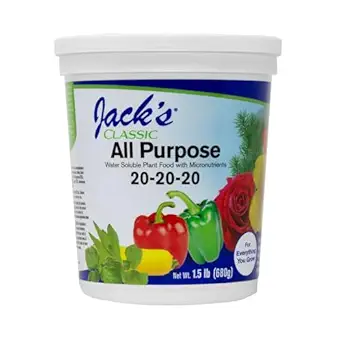 |
| Best Quality Built to a higher standard if you want something more solid | Jack's Classic Petunia FeED Water-Soluble Fertilizer, 1.5 lb (20-6-22) |  |
| Best Value The sweet spot between price and what you get | Miracle-Gro Water Soluble Bloom Booster Flower Food (4 lb) |  |
| Best Budget The cheapest option that still gets the job done reliably | Jobe's Organics Flower Fertilizer Spikes, 18 Count |  |
| Highest Rated A top-rated pick with lots of positive feedback | JACKS Classic Petunia Feed 20-6-22 Liquid, 64 oz |  |
| Most Popular A crowd favorite that many people choose with confidence | Miracle-Gro Water Soluble Bloom Booster Flower Food, 10-52-10, 1 lb |  |
| Best Seller A high-volume bestseller chosen again and again | Miracle-Gro Water Soluble All Purpose Plant Food, 3 lb |  |
Jack's Classic 20-20-20 All Purpose Water-Soluble Fertilizer (1.5 lb)

| Item Form | Powder |
|---|---|
| Unit Count | 24 Ounce |
| Mixing Ratio | 0.22 |
| Specific Uses For Product | Plant Growth |
| Target Species | Plants |
Jack's Classic 20-20-20 is a professional-grade, water-soluble powder that provides balanced nitrogen, phosphorus, and potassium for fast green-up and leaf expansion. You mix the powder with water using the included scoop and apply it to roots or foliage every 7 to 14 days, or use a lower concentration for seedlings and cuttings. Notable features include a targeted micronutrient package and versatility for foliar spraying, root drench, or continuous feed systems, which makes it practical for bedding plants, vegetables, and ornamentals. Because it is a concentrated powder it is economical when making multiple gallons of solution and dissolves cleanly for even feeding. Important limitations are that it is a general-purpose formula rather than a petunia-specific bloom booster, so gardeners wanting heavier flower set may pair it with a bloom-specific product, and safe handling is required since it is a concentrated fertilizer that can irritate skin or eyes if misused.
Best for: Gardeners who want a reliable, no-nonsense general fertilizer to maintain healthy foliage and steady growth across a mixed garden of bedding plants and containers. Ideal for users who value flexibility between foliar spray and root feeding and prefer a concentrated powder to make multiple gallons of solution.
Less Ideal for: Growers focused primarily on maximizing flower production on petunias who prefer a high-phosphorus bloom formula or a product marketed specifically as a flower booster.
- Balanced 20-20-20 N-P-K supports overall growth, leaf green-up, and vigor
- Water-soluble powder concentrates make large volumes of feed economically
- Suitable for foliar and root feeding and compatible with continuous feed systems
- Includes a measuring spoon and clear mixing directions for quick use
- Contains added micronutrients for more complete plant nutrition
- Not formulated specifically to boost flowering so may need pairing with a bloom booster for maximum petunia blooms
- Requires careful handling and dilution to avoid overfeeding or contact irritation
Verdict: A versatile, professional-strength all-purpose soluble fertilizer that reliably feeds foliage and overall plant vigor for mixed beds and containers.
Jack's Classic Petunia FeED Water-Soluble Fertilizer, 1.5 lb (20-6-22)

| Item Form | Powder |
|---|---|
| Specific Uses For Product | Bloom Production |
| Application Method | Spray |
| Unit Count | 24 Ounce |
Jack's Classic Petunia FeED is a concentrated, water-soluble powder fertilizer designed to produce vigorous green growth and abundant blooms on petunias and other iron-dependent annuals. You mix the measured powder with water using the included scoop and apply as a foliar spray, root drench, or in a continuous feed system, which makes it flexible for hanging baskets, containers, and garden beds. The 20-6-22 NPK ratio targets bloom production while added micronutrients support iron-loving plants and help maintain leaf color. As a powder concentrate it is economical because a small amount yields multiple gallons of feed solution. The product is straightforward to use with clear mixing directions, and the powder form stores compactly between uses. Limitations are that it is a single-purpose bloom formula so it is not a full-season balanced feed for all crops, and careful mixing is required to avoid overfeeding with concentrated solutions. For growers who prioritize strong flowering performance in petunias, this fertilizer delivers focused, professional-grade nutrition.
Best for: Gardeners focused on maximizing flower production from petunias and other iron-loving annuals who prefer a concentrated, professional-style fertilizer for containers and beds.
Less Ideal for: Casual gardeners seeking a single, all-season feed for mixed plantings or those who prefer ready-to-use liquid fertilizers will want a different product.
- High 20-6-22 NPK ratio geared toward bloom production and lush green growth
- Water-soluble powder concentrates make the product economical per gallon of feed
- Includes micronutrients formulated for iron-loving annuals to improve leaf color
- Versatile application as foliar spray, root feeding, or in continuous feed systems
- Specialized bloom formula rather than an all-purpose, balanced fertilizer
- Requires precise measuring and mixing to avoid nutrient burn
Verdict: Choose this concentrated water-soluble formula when you want targeted, professional-grade nutrition to boost blooms and leaf color in petunias.
Miracle-Gro Water Soluble Bloom Booster Flower Food (4 lb)

| Item Form | Powder |
|---|---|
| Application Method | Water Soluble |
| Target Species | flowers |
| Mixing Ratio | 1 tablespoon per gallon |
This Miracle-Gro water-soluble Bloom Booster is a powder fertilizer designed to increase flower production and color in container and in-ground flowering plants. It mixes at one tablespoon per gallon for outdoor use and can be applied with a watering can or the Miracle-Gro Garden Feeder every 7 to 14 days. The 10-52-10 NPK ratio means it supplies a high phosphorus dose that encourages bud set and larger blooms, which is useful for petunias and other heavy-blooming annuals. Because it is water soluble it works quickly and is easy to measure for regular feedings. The package size provides multiple applications across a season for small beds or containers, but the high middle number means it is focused on flowering rather than foliage growth or long-term soil feeding. Users should follow label directions for mixing and frequency to avoid overfeeding and may want a balanced or slow-release formula if they prefer less frequent maintenance. Overall it is a practical choice when you want fast, noticeable increases in bloom count and color.
Best for: Gardeners who want a straightforward, fast-acting fertilizer to increase flower production on petunias and other annuals, and who are willing to follow a regular feeding schedule.
Less Ideal for: Those who prefer low-maintenance, infrequent feeding or need a balanced feed for foliage and overall plant growth should consider a different slow-release or all-purpose formula.
- High phosphorus NPK (10-52-10) targets bigger and more abundant blooms
- Water-soluble powder mixes quickly for fast feeding results
- Versatile application with a watering can or Miracle-Gro Garden Feeder
- Suitable for both containers and in-ground flowering plants
- Requires regular applications every 7–14 days for best results
- Focused on blooms so it does not provide long-term slow-release nutrition for foliage
Verdict: Use this bloom-focused, water-soluble formula when you want quick, visible increases in flower number and color on petunias.
Jobe's Organics Flower Fertilizer Spikes, 18 Count

| Unit Count | 18 Count |
|---|---|
| Application Method | Insert into soil |
| Item Form | Sticks |
| Mixing Ratio | 8-9-12 |
| Coverage | Medium |
These Jobe's Organics fertilizer spikes are stick-form, slow-release plant food designed for potted flowers and hanging baskets. You insert the pre-measured spikes into the potting mix and the 8-9-12 NPK formula releases nutrients at the roots for up to eight weeks, which reduces surface runoff and the need for frequent feeding. The spikes are mess-free and set up to avoid overapplication, making them convenient for busy gardeners who want consistent bloom and foliage support without mixing liquids or granular products. They work well for containers and hanging baskets where even, root-level feeding matters, and the compact 18-count pack is handy for treating multiple pots. Limitations are that spikes only cover a medium-sized area per stick and they are not adjustable for different feeding rates, so heavy feeders or very large containers may need multiple spikes or a different regimen. Also they are formulated for potted applications, so they are not intended for beds or direct-soil use.
Best for: Best for home gardeners who grow petunias and other flowering annuals in pots or hanging baskets and want a low-effort, no-mess feeding schedule to maintain blooms.
Less Ideal for: Not a good fit for growers who prefer precise liquid feeding schedules, have very large planters, or need a fertilizer formulated for in-ground beds.
- Slow-release NPK 8-9-12 fed at the roots for up to eight weeks
- Pre-measured spikes minimize mess and overapplication
- Designed specifically for potted plants and hanging baskets for targeted feeding
- Coverage per spike is limited so larger containers require multiple spikes
- Not formulated for in-ground garden beds or broad landscape use
Verdict: A simple, low-maintenance way to keep petunias in pots and hanging baskets fed and blooming for up to eight weeks with no mess.
JACKS Classic Petunia Feed 20-6-22 Liquid, 64 oz

| Item Form | Liquid |
|---|---|
| Specific Uses For Product | Plant Growth |
| Coverage | Full |
| Target Species | Flowers |
| Unit Count | 64 Ounce |
JACKS Classic Petunia Feed 20-6-22 is a liquid fertilizer made for flowers that struggle to take up iron, with a micronutrient package designed to correct iron chlorosis and keep foliage green. It is typically mixed into watering for hanging baskets, containers, and other flower beds that are watered frequently or located in hard water areas. The 20-6-22 ratio provides a higher nitrogen and potassium balance with low phosphorus to encourage fuller plants without excessive bloom-forcing, and the added iron makes it especially useful for petunia, calibrachoa, bacopa, verbena, vinca and salvia. Practical benefits include visible improvement in leaf color, suitability for regular feedings, and convenience as a liquid that disperses quickly in pots and baskets. Limitations are that it is a general feed rather than a bloom-enhancing bloom booster and it requires regular application to maintain results; users should follow dilution instructions to avoid overfeeding. For gardeners focused on consistent, reliable foliage health in containers, this is a purposeful option.
Best for: Gardeners who prioritize consistent, dependable foliage health for petunias and similar container flowers and want a targeted feed to correct iron-related yellowing.
Less Ideal for: Growers seeking a one-time slow-release solution or those who want a fertilizer optimized exclusively for maximum bloom size and count.
- Formulated with added iron and micronutrients to correct iron deficiency and improve leaf color
- Liquid form mixes easily for regular feedings in hanging baskets and containers
- Low phosphorus formula encourages fuller plants rather than unnecessary bloom forcing
- Suitable for hard water areas where micronutrient availability can be reduced
- Requires ongoing regular applications rather than a single long-term treatment
- Not specifically formulated as a high-bloom booster for maximum flower production
Verdict: Choose this liquid feed when you want a reliable, iron-enhancing fertilizer to keep petunias and other container flowers consistently green and healthy.
Miracle-Gro Water Soluble Bloom Booster Flower Food, 10-52-10, 1 lb

| Item Form | Liquid |
|---|---|
| Application Method | Water Soluble |
| Coverage | 500 square feet |
| Target Species | all blooming plants |
| Mixing Ratio | 1 tablespoon/gallon (1.5 tsp/gal for indoor) |
This Miracle-Gro bloom booster is a water-soluble fertilizer designed to promote bigger, more abundant blooms in flowering plants such as petunias. You mix the powder into water (label recommends 1 tablespoon per gallon for outdoor use and a reduced dose for indoor plants) and apply every 7 to 14 days during bud set and bloom. Its 10-52-10 N-P-K ratio provides a high phosphorus spike that helps set and intensify flowers quickly, and it is usable with a garden feeder or a watering can for flexible application. Practical benefits include quick uptake through roots and foliage, compatibility with containers and in-ground beds, and a coverage claim that one feeder refill treats roughly 500 square feet. Important limitations are that the formula is bloom-focused rather than balanced for foliage growth, so it is not intended as an all-season feed, and repeated use at full strength risks overfeeding if label directions are not followed. For growers managing many flowering pots or staging seasonal displays, this product reliably accelerates bloom production when used as directed.
Best for: Gardeners who prioritize fast, visible flower production for petunias and other bedding plants and who follow label directions carefully to avoid overfeeding.
Less Ideal for: Growers seeking an all-in-one, slow-release fertilizer for overall plant health or those who prefer low-maintenance, infrequent feeding schedules.
- High phosphorus N-P-K (10-52-10) promotes bloom set and larger flowers
- Water-soluble formula acts quickly and works through roots and foliage
- Suitable for both containers and in-ground beds and compatible with a garden feeder
- Clear mixing directions and frequent-application schedule for predictable results
- Focused on flowering so it does not support leafy growth or long-term balanced nutrition
- Requires regular reapplication every 7 to 14 days during bloom period
Verdict: A quick-acting, high-phosphorus bloom booster that reliably increases petunia flower size and abundance when applied as directed.
Miracle-Gro Water Soluble All Purpose Plant Food, 3 lb

| Item Form | Powder |
|---|---|
| Application Method | Mix with water in a watering can |
| Fertilizer Analysis | 24-8-16 |
| Unit Count | 48 Ounce |
This Miracle-Gro water‑soluble all purpose plant food is a powdered fertilizer designed to dissolve in water and feed a wide range of plants, indoors or out. You mix measured scoops into a watering can and apply every 7 to 14 days for outdoor plants or every 2 weeks for houseplants, which makes it simple to incorporate into a regular watering routine. The 24-8-16 NPK formulation supplies a strong nitrogen boost for leafy growth while still providing phosphorus and potassium for root and bloom support, so petunias should respond with faster growth and fuller foliage when used as directed. Notable practical features include a dosing scoop and compatibility with a garden feeder for larger areas. Because it is water‑soluble it works quickly at the roots, but that also means it requires frequent reapplication compared with slow‑release granular products. Users should follow the mixing directions carefully to avoid overfeeding and keep the powder stored dry and out of reach of children and pets.
Best for: A cautious gardener who wants a reliable, fast‑acting fertilizer for mixed beds or container petunias and prefers clear instructions and predictable results when following label directions.
Less Ideal for: Gardeners seeking a low‑maintenance, infrequent feeding program or an organic slow‑release option should consider granular or organic fertilizers instead.
- Water‑soluble formula delivers nutrients quickly to plant roots
- All‑purpose NPK (24-8-16) suited for foliage and bloom support
- Simple mixing and included scoop make dosing straightforward
- Compatible with garden feeders for treating larger beds
- Requires frequent reapplication compared with slow‑release fertilizers
- Powder must be kept dry and handled carefully to avoid spills
Verdict: A dependable, fast‑acting water‑soluble fertilizer that quickly boosts growth and blooms for petunias when used as directed.
Choosing the Right Fertilizer for Petunias: Key Factors to Consider
Nutrient Ratio and Bloom Emphasis
Petunias respond to formulas that support flowering rather than heavy foliage growth. Look for fertilizer ratios that either show moderate nitrogen with emphasis on phosphorus and potassium or products labeled for flowering annuals. Higher phosphorus can encourage bud set and stronger blooms, while potassium supports overall plant vigor and stress tolerance.
Balance is important because too much nitrogen will produce lush green growth at the expense of flowers. For continuous bloom through the season, many gardeners choose a repeat-feed soluble fertilizer with a bloom-oriented NPK or a balanced slow-release that still favors flowering. Understanding the label lets you match feed strength to your planting and watering habits.
Release Type: Quick-Feed Versus Slow-Release
Soluble fertilizers deliver nutrients immediately and can revive fading blooms quickly, making them useful for containers and hanging baskets where nutrients wash out with frequent watering. They require more frequent application, typically every one to two weeks at a diluted rate, and are ideal when you want rapid response.
Slow-release granules or coated prills release nutrients over weeks to months and reduce the frequency of feeding. These are convenient in beds or large containers where you prefer set-and-forget maintenance but expect a slower correction of deficiencies. Consider the timing of your planting and how often you can tend containers when choosing a release type.
Salt Content and Burn Risk
Petunias in containers are especially vulnerable to fertilizer burn because salts accumulate in a limited root volume. Choose formulations with a lower salt index or follow label dilution guidelines to avoid leaf scorch and root stress. If using an easy-to-overdose soluble feed, measure carefully and flush containers periodically with plain water to leach excess salts.
For in-ground beds, salt buildup is less likely but still a concern near hardscaping or compacted soils. Slow-release options can reduce peak salt concentrations after application, lowering burn risk while providing a steadier nutrient supply.
Compatibility With Containers and Hanging Baskets
Growing medium and container size change how fertilizers behave. Shallow hanging baskets dry out faster and lose nutrients sooner than deep window boxes. A fertilizer that dissolves uniformly and does not cause rapid salinity spikes is preferable for shallow containers. Slow-release granules sized for potting mixes can provide even feeding, but choose particle sizes that will not float or clog watering systems.
Also consider how the fertilizer interacts with common potting media and whether it pairs well with water-retaining amendments. Match the fertilizer schedule to the container's watering frequency to maintain steady bloom production.
Application Convenience and Frequency
How much time you want to spend feeding affects the best choice. Soluble feeds require regular mixing and dosing but offer precise control and quick correction. Granular or coated slow-release options greatly reduce task load, which suits busy gardeners or large displays where frequent feeding is not practical.
Also evaluate packaging and measuring guidance. Products that provide clear dosing instructions scaled for container sizes and hanging baskets reduce the risk of over- or under-feeding and make routine maintenance straightforward.
Environmental Considerations and Runoff
Fertilizers that wash out of pots or beds can contribute to nutrient runoff. For patio and balcony gardeners, choose lower-solubility formats or feed at recommended rates to limit nutrient loss. Using slow-release forms or adding a mulch layer in beds helps retain nutrients in the root zone.
Additionally, consider organic-based options if minimizing synthetic inputs is a priority. Organic fertilizers generally break down more slowly and can improve soil structure, but they release nutrients less predictably and may require supplemental feeding for peak bloom.
Feeding Schedule for Peak Bloom
Establishing a simple feeding rhythm helps keep petunias blooming consistently. For soluble liquid feeds, a common approach is a light feed every seven to fourteen days at half the label strength for continuous bloom without overloading the root zone. Slow-release products are typically applied at planting and again midseason depending on their longevity.
Adjust frequency by watching plant performance. If buds form but drop or blooms are small and pale, increase feed frequency or switch to a bloom-focused formulation. If leaf scorch or stunted growth appears, flush containers with water and reduce fertilizer strength.
- Use more frequent dilute feeds in shallow baskets and small pots.
- Apply slow-release granules at planting for low-maintenance displays.
- Flush containers monthly if using soluble feeds to prevent salt build-up.
Best Practices for Application
Apply fertilizer to moist soil rather than dry to reduce root stress. When using water-soluble products, mix accurately and pour evenly across the surface so all roots get access to nutrients. Avoid applying granules directly against plant stems or crowns.
Re-pot or refresh topsoil each season for container-grown petunias and re-apply slow-release granules according to label timing. For in-ground plantings, lightly cultivate and top-dress with fertilizer or compost to supply nutrients without disturbing roots excessively.
- Water thoroughly after applying granular fertilizer to start nutrient release.
- Measure soluble feeds carefully and err toward weaker solutions for sensitive containers.
- Rotate fertilizer types seasonally if relying only on slow-release to avoid midseason deficiencies.
Organic Options and Soil Health
Organic fertilizers and amendments feed soil life as well as plants, which can improve structure and moisture retention over time. Composted amendments, fish emulsion, and kelp provide nutrients and trace elements that support vigorous, healthy blooms while slowly releasing fertility.
Organic feeds generally release nutrients more slowly and unpredictably than synthetic soluble formulas, so gardeners focused on maximum flower count may combine organic baseline fertilizers with occasional quick-acting feeds for short-term blooms.
- Use compost or well-aged manure as a seasonal base in beds.
- Top-dress containers with a thin layer of compost and supplement with a light soluble feed when needed.
- Consider kelp or seaweed extracts for stress resistance and root stimulation.
Troubleshooting Common Feeding Problems
Yellowing leaves, poor bud set, and reduced flowering suggest nutritional imbalance, watering issues, or salt build-up. Start by checking soil moisture and flushing containers if salts are suspected. If problems persist, switch to a fertilizer with a different NPK profile or reduce application strength.
Root-bound plants can also show feeding symptoms because limited soil volume restricts nutrient access. Repotting into a larger container with fresh potting mix and a measured fertilizer application often restores bloom vigor.
- If leaves yellow but stems remain healthy, test for nitrogen deficiency and adjust feed accordingly.
- Small or misshapen blooms may indicate phosphorus shortage; consider a bloom-focused feed.
- Salt build-up signs include leaf tip scorch and slowed growth; flush pots and reduce feed concentration.
Seasonal Timing and Climate Considerations
In cool climates, petunias grow more slowly and require less frequent feeding. Over-fertilizing in cool, wet conditions increases risk of root disease. In hot climates or during heat waves, plants use water and nutrients more rapidly and may benefit from more frequent, lighter feeds.
Shift feeding emphasis from growth to bloom as the season progresses. Reduce nitrogen-heavy applications once plants are established and switch to bloom-promoting schedules to encourage continuous flowering through peak season.
- Start with light feeding at planting and increase slightly as plants establish.
- Reduce feed frequency during cool, rainy spells to avoid root suffocation.
- In very hot weather, maintain consistent moisture and use lighter, more frequent feeds to avoid stress.
How We Chose the Best Fertilizer for Petunias
We focused on practical nursery and home-garden criteria that matter to gardeners growing petunias. Key evaluation dimensions included nutrient ratio and bloom emphasis to ensure fertilizers supply higher phosphorus or balanced NPK when needed for flower production, and release type to differentiate between quick-acting soluble feeds and longer-lasting slow-release formulations. Application flexibility was important, assessing how well products work in containers, hanging baskets, and in-ground beds. We considered ease of use, such as whether the fertilizer measures simply, dissolves cleanly, or can be top-dressed without disturbing roots. Salt index and risk of fertilizer burn were checked conceptually, prioritizing formulations with lower burn risk for frequent-feeding annuals. Environmental impact and runoff risk were also considered to favor options that limit excess nutrient loss. We excluded specialty fertilizers unrelated to flowering annuals, such as heavy-feeding vegetable blends or woody-plant fertilizers. We did not include unproven backyard recipes unless they matched safety and nutrient criteria. The final shortlist reflects products and approaches that meet bloom-focused nutrient needs, are practical for container and bed use, and minimize burn and runoff risk while being straightforward to apply.
FAQ
How often should I fertilize petunias in hanging baskets?
Hanging baskets dry out and lose nutrients faster, so a light soluble feed every 7 to 14 days is common. Alternatively, use a slow-release granule sized for containers at planting and supplement with a liquid feed if blooms start to fade.
Can I use a general-purpose fertilizer for petunias?
General-purpose fertilizers can work, but they may favor foliage over blooms if they are high in nitrogen. For best flowering, choose a formula labeled for flowering annuals or one with a balanced NPK that leans toward bloom support.
Are organic fertilizers effective for petunias?
Organic fertilizers improve soil health and provide steady nutrition, but they release nutrients more slowly. Many gardeners use organic amendments as a baseline and add targeted soluble feeds to boost blooms when needed.
What are signs of fertilizer burn in petunias?
Signs include brown leaf tips, leaf curl, wilting, and slowed growth despite apparent watering. If you suspect burn, flush the soil thoroughly with water, reduce feeding frequency, and use a weaker solution going forward.
Should I change fertilizer when petunias move from early growth to peak bloom?
Yes. Early on, slightly higher nitrogen can help establish foliage and roots. Once plants are established, shift to a bloom-focused schedule with higher phosphorus or balanced feeding to prioritize bud set and flower size.
How do I prevent nutrient runoff from container feeding?
Use the lowest effective feed concentration, water slowly to allow uptake, and avoid overwatering immediately after feeding. Choosing slow-release formulations or placing containers on saucers with captured runoff reused for watering smaller plants can also reduce waste.
Final Verdict
Choosing the right fertilizer for petunias means balancing bloom-focused nutrients, the release type that fits your maintenance rhythm, and the needs of your planting situation. Containers and hanging baskets typically need quicker or more frequent feeding than in-ground beds, while slow-release options reduce work but may require midseason supplementation. Prioritize a nutrient profile that encourages flowers over foliage, keep an eye on salt build-up in pots, and match application frequency to climate and container size. With those tradeoffs in mind, you can pick a feeding strategy that keeps petunias colorful and productive all season.
