

Note: This article contains affiliate links. If you click on these links and make a purchase, I may earn a small commission at no extra cost to you. This helps support my research and content. Read my full affiliate disclosure here.
Choosing the right full sun potted plants matters because containers on patios, balconies, and entryways get hotter and drier than garden beds. In strong sun you need varieties that set flowers, hold foliage color, and survive regular temperature spikes without constant fuss. This guide shortlists six top options that perform well in bright, exposed sites and explains the traits that matter for container success. We evaluated candidates for sun tolerance, drought resilience, ease of maintenance, and suitability for typical pot sizes. Read on to see which types fit your watering habits, decorative goals, and space.
Top Picks at a Glance
| Best Overall The best all-around choice for most situations | Plants for Pets Euphorbia (Crown of Thorns) Live Plant, 4-inch Pot |  |
| Best Quality Built to a higher standard if you want something more solid | Proven Winners Purple Pillar Rose of Sharon Hibiscus 2 Gal Shrub |  |
| Best Value The sweet spot between price and what you get | The Three Company Lavender (2-Pack) Live Purple Perennials in 1-Qt Pots |  |
| Highest Rated A top-rated pick with lots of positive feedback | ELLA'S HOMES Lantana Live Plants (2-Pack) |  |
| Most Popular A crowd favorite that many people choose with confidence | Perfect Plants Peach Drift Rose, 1 Gallon Live Flower Plant |  |
| Best Seller A high-volume bestseller chosen again and again | Perfect Plants Confederate Jasmine Live Plant, 1 Gallon |  |
Plants for Pets Euphorbia (Crown of Thorns) Live Plant, 4-inch Pot

| Indoor Outdoor Usage | Indoor, Outdoor |
|---|---|
| Other Special Features | Drought Tolerant |
| Sunlight Exposure | Full Sun |
| Soil Type | Loam Soil |
| Moisture Needs | Moderate Watering |
This Plants for Pets Crown of Thorns arrives in a 4-inch nursery pot and is intended as an easy-care flowering succulent for patios, balconies, or sunny windowsills. It produces clusters of pink bracts for much of the year and has thick stems that store water, so it tolerates periods of dryness and moderate watering schedules. Typical use is as a decorative potted specimen on a sunny patio or as part of a mixed succulent container; its compact habit fits small spaces and garden beds where larger shrubs would crowd. Notable features include wide light tolerance from full sun to partial shade, natural pest resistance, and a low-maintenance requirement thanks to its drought tolerance. Important limitations are the plant's caustic white sap and sharp spines, which can irritate skin and are toxic if ingested, so it should be placed out of reach of children and pets and handled with care. Expect a small specimen rather than a large shrub and plan for well-draining soil to keep it healthy in outdoor pots.
Best for: Buyers who want a low-maintenance, sun-loving flowering succulent for outdoor pots or sunny patios and prefer plants that give reliable color without constant attention.
Less Ideal for: Homes with curious children or pets where a toxic, spiny plant would be a hazard; also unsuitable for buyers seeking a large, fast-growing shrub.
- Drought tolerant and stores water in stems for low-frequency watering
- Produces colorful pink bracts that provide season-long visual interest in full sun
- Compact size fits small pots, patios, and mixed containers
- Naturally resistant to common garden pests, reducing maintenance
- Caustic white sap and sharp spines can irritate skin and are toxic if ingested
Verdict: A compact, drought-tolerant flowering succulent that delivers long-lasting color in full-sun outdoor pots with minimal care.
Proven Winners Purple Pillar Rose of Sharon Hibiscus 2 Gal Shrub

| Sunlight Exposure | Full sun to partial shade |
|---|---|
| USDA Hardiness Zone | 5, 6, 7, 8, 9 |
| Expected Blooming Period | Spring to Fall |
| Moisture Needs | Regular Watering |
| Plant or Animal Product Type | Shrub & Hedge |
The Proven Winners Purple Pillar is a columnar Rose of Sharon hibiscus marketed as a space-saving flowering shrub for outdoor containers and landscapes. It produces purple blooms along upright stems from spring through fall and is intended for full sun to partial shade in USDA zones 5 through 9. Its narrow, vertical habit makes it well suited to tight spots such as flanking an entryway, a patio container, or a narrow border where a tall accent or privacy element is needed. Care is straightforward: plant in well-draining sandy soil, water regularly during establishment, mulch, and fertilize in early spring. The plant ships dormant in winter to early spring and arrives trimmed to encourage healthy growth. Limits to consider are its tall mature height, which requires planning for overhead space, and the need for consistent moisture in hotter sites. For use in pots, regular watering and an appropriately large container are necessary to support its vertical habit and extended bloom period.
Best for: Gardeners who need a high-impact flowering plant for narrow spaces, patios, or containers and prioritize season-long blooms and vertical structure over wide spread.
Less Ideal for: Those seeking a compact, low-height shrub for small-scale groundcover or people who prefer plants that tolerate prolonged drought without extra watering.
- Columnar growth habit saves horizontal space while providing tall floral impact
- Long bloom period from spring through fall for extended seasonal color
- Suitable for full sun to partial shade and USDA zones 5–9 for broad climate adaptability
- Low maintenance cultural needs with simple planting and seasonal fertilizing
- Very tall mature height requires planning for overhead clearance
- Needs consistent watering when grown in containers or hot sites
Verdict: Choose this narrow, tall hibiscus when you want a container-friendly, space-saving plant that delivers long-lasting purple blooms in full sun.
The Three Company Lavender (2-Pack) Live Purple Perennials in 1-Qt Pots

| Sunlight Exposure | Full Sun |
|---|---|
| USDA Hardiness Zone | 5-9 |
| Expected Blooming Period | Late Spring to Summer |
| Moisture Needs | Low |
| Soil Type | Well draining soil |
This two-pack of lavender arrives in 1-quart pots ready for transplanting into sunny containers or garden borders. The plants are a compact, mounded variety that mature around 12 to 18 inches tall and wide and produce classic purple, fragrant blooms in late spring through summer. They are grown for outdoor use in USDA zones 5–9 and perform best in full sun with well-draining soil and minimal watering after establishment, making them well suited to low-maintenance beds, mixed containers, and pollinator-friendly plantings. Practical benefits include strong fragrance, deer deterrence, and attractiveness to pollinators, plus the convenience of buying a matched pair for symmetrical planting. Important limitations are that these are live nursery plants so success depends on proper planting and drainage, and they are not ideal for shady sites or heavy, poorly drained soils. Expect seasonal flowering rather than year-round blooms and occasional variability between individual plants shipped from the greenhouse.
Best for: Gardeners who want a low-maintenance, fragrant full-sun perennial for containers or sunny borders and who prioritize easy establishment and pollinator-friendly plantings.
Less Ideal for: People with mostly shady yards, heavy poorly drained soil, or those seeking continuous year-round blooms should consider other plants or varieties.
- Two live plants shipped in ready-to-plant 1-qt pots for quick establishment
- Fragrant purple blooms that attract pollinators and help deter deer
- Low moisture needs and good drought tolerance once established
- Compact, mounded habit suits containers, borders, and small beds
- Requires full sun and excellent drainage so it will not thrive in shade or heavy clay soils
- As live nursery stock, plant size and vigor can vary between shipments
Verdict: A practical two-pack of fragrant, low-water lavender that quickly establishes in full-sun containers or borders for dependable summer blooms.
ELLA'S HOMES Lantana Live Plants (2-Pack)

| Unit Count | 2 Count |
|---|---|
| Plant Type | Perennial Flower Plant |
| Sun Exposure | Full sun |
| Size at Shipment | 5-12 Inches Tall |
This 2-pack of Lantana live plants arrives ready to transplant into pots or garden beds and is aimed at straightforward, low-maintenance summer color. Each plant is described as well-rooted and 5 to 12 inches tall, with random blooming colors that provide mixed orange, yellow, red, and purple clusters. In practice these lantanas perform best in full sun and are valued for long bloom periods and drought tolerance once established, making them a reliable option for sunny patios and containers. The plants are perennial where climate allows but go dormant in winter, so they are best used as outdoor seasonal or multi-year accents depending on your zone. Limitations are the random color selection and modest initial size, so buyers who need specific color schemes or instant large specimens may want larger or labeled starts. For gardeners seeking fuss-free, sun-loving container plants, these lantanas are an easy way to add sustained bloom without heavy care requirements.
Best for: Buyers who want dependable, low-effort full-sun container plants that provide long-lasting color on patios and in sunny beds.
Less Ideal for: Gardeners who need specific flower colors on demand or immediate large displays should consider larger nursery specimens or labeled varieties.
- Ready-to-transplant, well-rooted plants for quick establishment
- Long-blooming, colorful flower clusters that thrive in full sun
- Low maintenance and drought-tolerant once established
- Sold as a two-pack for easy pairing in pots or beds
- Color is random so exact flower shades are not guaranteed
- Plants are small on arrival and may take a season to reach full size
Verdict: A simple, dependable two-pack of sun-loving lantanas that delivers long-lasting color with minimal care.
Perfect Plants Peach Drift Rose, 1 Gallon Live Flower Plant

| Indoor Outdoor Usage | Outdoor |
|---|---|
| Sunlight Exposure | Full Sun |
| Other Special Features of the Product | Drought Tolerant |
| Expected Blooming Period | Winter |
| Moisture Needs | Moderate Watering |
The Peach Drift rose is a compact, groundcover-style rose sold as a 1-gallon live plant intended for outdoor planting in full sun. It produces peach-colored blooms for much of the year and is offered with plant food to help establishment. Typical uses are massing along walkways, in pots on sunny patios, or as a low hedging/groundcover where a 1 to 2 foot plant height and spreading habit are desired. Notable features listed are drought tolerance, winter hardiness across multiple USDA zones, and moderate water needs, which together make it forgiving for busy gardeners and suitable for containers that drain well. Practical benefits include long bloom periods, attractive low-maintenance form, and easy placement in full-sun spots. Limitations are that it ships as a small 1-gallon specimen so it will take a season or two to fill a space, and it is not suitable for shady locations or climates outside the listed hardiness zones.
Best for: Buyers who want a low-maintenance, sun-loving container plant or groundcover that provides long-lasting color with minimal fuss and proven customer satisfaction.
Less Ideal for: Gardeners seeking an instant, mature specimen or plants for shady locations should look elsewhere.
- Long bloom period with peach-colored flowers for seasonal interest
- Drought tolerant and winter hardy across several USDA zones for low-maintenance care
- Compact, groundcover growth habit works well in pots or mass plantings
- Includes easy-to-use plant food to support establishment
- Arrives as a 1-gallon plant so it needs time to reach mature spread and height
Verdict: An easy-care, sun-loving rose that delivers long-lasting peach blooms in containers or mass plantings for gardeners who prioritize reliable performance.
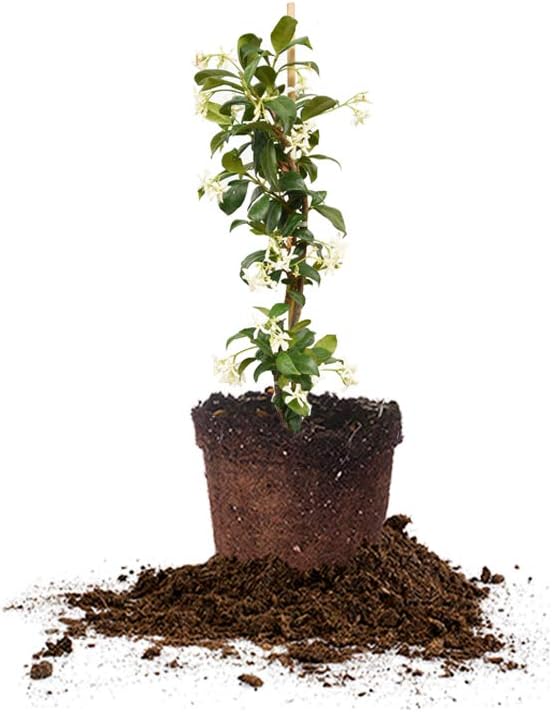
Perfect Plants Confederate Jasmine Live Plant, 1 Gallon
| Indoor Outdoor Usage | Outdoor |
|---|---|
| Other Special Features of the Product | Fragrant |
| Expected Blooming Period | Summer, Spring |
| Sunlight Exposure | Full Sun, Partial Shade |
| USDA Hardiness Zone | 4 |
This Confederate jasmine arrives as a 1-gallon live vine that is best used as a climbing or cascading plant on a trellis, fence, or container in a sunny spot. It produces pale pinwheel flowers in spring and summer that give off a strong, pleasant fragrance and the lime-green foliage provides good seasonal interest. The plant is described as hardy to USDA zone 4 and easy to grow, so routine moderate watering and loam soil are typically all that is needed for establishment. Its mature size makes it suitable for training along railings or vertical supports and for adding scent around patios or entryways. Limitations to note are that it ships only to some locations and the single-plant listing means you may need multiple purchases for larger coverage; also a mature vine needs regular pruning and supports to stay tidy. For gardeners who prefer low-maintenance fragrant vines for sunny outdoor pots, this is a straightforward choice.
Best for: Gardeners who want a low-maintenance, fragrant climbing vine for sunny outdoor pots or small patios and prefer straightforward plants that establish reliably.
Less Ideal for: Those needing instant dense coverage or groundcover should consider shrubs or multiple plants instead; people in restricted-shipping areas should look for locally available stock.
- Fragrant spring and summer blooms that add strong scent to outdoor spaces
- Described as easy to grow and hardy to USDA zone 4, suitable for many climates
- Works well trained on trellises, fences, containers, or railings for vertical interest
- Compact 1-gallon size is convenient for starting in a patio pot or small garden
- Sold as a single plant, so achieving large coverage requires multiple purchases
- Requires support and periodic pruning as it matures to keep a tidy habit
Verdict: Choose this Confederate jasmine if you want an easy, fragrant climbing vine that performs well in sunny outdoor pots and is simple to train on vertical supports.
Choosing the Right Full Sun Outdoor Potted Plants: Key Factors to Consider
Sun Tolerance and Heat Response
Full-sun containers experience higher temperatures and stronger light than soil beds. Plants rated for full sun can photosynthesize without leaf scorch and maintain blooms despite heat spikes. Pay attention to whether a variety prefers morning sun only or genuinely tolerates long afternoon exposure, because that affects placement on a balcony or along a west-facing wall.
Heat response also determines whether a plant will drop buds or set seed under stress. Those that close flowers, wilt, or shed foliage in extreme afternoons will need afternoon shade or different cultural care. Choosing plants with proven heat-hardiness reduces the need for shading strategies and frequent watering.
Drought Resilience in Small Soil Volumes
Pots dry out faster than ground soil, so drought resilience is critical. Plants that tolerate intermittent drying cycles survive better between watering rounds and need less hands-on care. Look for species with thicker leaves, deep or fibrous roots adapted to confined spaces, or metabolic traits that reduce transpiration.
Drought-tolerant container choices allow for longer intervals between watering without losing bloom or foliage quality. However, even drought-tolerant plants require regular checks during heat waves, and mulching the pot surface or using water-retentive mixes can extend the time between waterings.
Container Rooting and Mature Size
Not all sun-loyal plants adapt well to container life. Some develop aggressive root systems that quickly fill small pots and need more frequent repotting, while others stay compact and flower reliably in a 10- to 14-inch container. Consider the mature width and height relative to the pot and placement so the arrangement stays balanced and does not tip in wind.
Choosing plants with predictable container habits reduces maintenance and prevents chronic root-bound stress. Also evaluate whether a plant tolerates trimming or deadheading, which helps manage size and prolong flowering in restricted soil volumes.
Soil Mix and Drainage Needs
Full sun plants in containers need a potting mix that drains well yet holds enough moisture to avoid rapid desiccation. Sandy, open mixes with organic matter strike a balance for many sun-loving species. Good drainage prevents root rot during occasional heavy rains while an adequate organic fraction buffers moisture between waterings.
Also consider the pot material and drainage hole size; porous clay speeds drying, while plastic retains moisture longer. Matching soil and pot characteristics to a plant's moisture preference will directly influence how often you must water and how resilient a planting is during heat spells.
Bloom Duration and Seasonal Interest
For many container gardeners the primary goal is long-lasting blooms or striking foliage through the hottest months. Some full-sun plants produce an extended flush of flowers with routine deadheading, while others bloom in a short but spectacular window. Balance the desire for continuous color with expected maintenance: continuous bloomers often need more feeding and periodic pruning.
Also weigh foliage interest and texture. A plant with attractive leaves can carry a container when blooms fade briefly, providing visual appeal with less intervention.
Pest and Disease Resilience in Hot Conditions
High heat can amplify pest and disease pressures or reduce them depending on the organism. Choose plants known to tolerate typical container pests and common fungal issues exacerbated by heat and splash. Varieties with thicker leaves or sticky glandular hairs may deter pests and hold up better in exposed locations.
Regular inspection and good airflow around containers reduce outbreaks. Selecting resilient varieties lowers the chance of repeated treatments and helps maintain a healthy, attractive container display through summer.
Placement and Microclimate Planning
Study the specific sun patterns where you plan to place containers. South- and west-facing spots receive the most intense afternoon light and heat, which affects plant choice and pot material. Use taller plants or lattice screens to create graduated shade for more tender companions.
Group pots with similar watering and sun needs to simplify care. Microclimates on a balcony can vary by only a few feet, so testing one or two trial pots first helps you learn which species actually thrive where you live.
- Map morning and afternoon sun across the space for a week before planting
- Place heat-tolerant, lower-water plants where afternoon sun is strongest
- Use light-reflective backdrops or pale pots to reduce radiant heat on foliage
Pot Size, Material, and Stability
Choose pot sizes that match root habits. Larger pots hold more moisture and buffer temperature swings, which benefits thirsty bloomers. Smaller pots dry quickly and are better for succulents or other drought-tolerant species.
Material matters. Terracotta breathes and cools the root zone but dries fast. Resin and glazed ceramics retain moisture longer and reduce watering frequency. For windy patios, use heavy or weighted containers to prevent tipping when plants grow tall.
- Match pot diameter to mature plant spread
- Consider double-potting or adding weight for tall specimens
- Ensure clear, adequately sized drainage holes
Watering Strategies for Hot Weather
Watering frequency should reflect pot size, plant drought tolerance, and ambient heat. Early morning deep watering encourages roots to seek moisture and reduces midday stress. Quick surface wetting in the evening can invite fungal problems in dense, poorly ventilated groupings.
Use moisture meters, finger tests, or consistent schedules to avoid both chronic dryness and waterlogging. Mulching the pot surface and using water-retentive additives can smooth out soil moisture between irrigation events.
- Prefer thorough soak-and-drain waterings over shallow daily spritzes
- Adjust frequency during heat waves and cool spells
- Top-dress with organic mulch to reduce evaporation
Maintenance: Feeding, Pruning, and Deadheading
Container plants require regular feeding because nutrients leach with frequent watering. Use a balanced, water-soluble fertilizer or slow-release granules timed to bloom cycles to maintain flower production in full sun.
Prune and deadhead to encourage rebloom and to keep plants compact in containers. Remove spent flowers and leggy stems promptly so the plant redirects energy to new buds and roots.
- Feed according to the plant's bloom habit and pot size
- Trim back overgrown specimens to restore shape and vigor
- Inspect foliage and stems during maintenance to catch pests early
Design Pairings for Color and Texture
Compose containers with a combination of thriller, filler, and spiller types to achieve balanced visual interest. Thrillers provide height and focal points, fillers offer massing and repeated color, and spillers soften the pot edge.
Contrast leaf textures and flower forms to keep the arrangement readable at a distance. In strong sun, choose durable foliage and flowers that will not quickly fade or singe under high light.
- Use complementary colors or tonal palettes for cohesive displays
- Mix drought-tolerant fillers with a single showy thriller for lower maintenance
- Ensure all chosen plants share similar watering needs
How We Chose the Best Full Sun Outdoor Potted Plants
We focused on traits that actually affect how well potted plants handle prolonged direct sun in real outdoor settings. Criteria included sun tolerance, drought resilience in small soil volumes, container-rooting behavior, resistance to common sun-related pests and diseases, and seasonal ornamental value. We prioritized plants that establish quickly in containers, maintain foliage and bloom color under heat stress, and work across a range of pot sizes and placements such as south-facing balconies or exposed patios. Plants requiring specialized greenhouse conditions or large in-ground roots were excluded because they do not suit typical container situations. We also filtered out varieties that need constant shade or heavy daily misting to survive. The result is a shortlist that favors straightforward cultural needs, predictable summer performance, and low-to-moderate maintenance for busy gardeners.
FAQ
How often should I water full-sun container plants in summer?
Often depends on pot size and plant type. Small pots and thirsty bloomers may need daily checks and watering during heat waves, while larger containers or drought-tolerant species can go several days between thorough waterings.
Can I combine succulents with flowering sun plants in the same pot?
Usually not recommended because succulents prefer much drier conditions. If you want both aesthetics, use separate pots grouped together so each plant receives the appropriate moisture regime.
What potting mix is best for sunny outdoor containers?
Choose a well-draining, airy mix that includes organic matter to retain some moisture. Avoid heavy garden soil. Adding a small portion of coarse sand or fine grit improves drainage for heat-stressed roots.
Will fertilizing more frequently boost blooms in full sun?
Moderate feeding timed to bloom periods helps sustain flower production. Overfertilizing can force excessive foliage at the expense of blooms or stress roots in small pots, so follow label guidance and adjust based on plant response.
How can I prevent leaf scorch in very hot sites?
Provide afternoon relief with a shade cloth during heat waves, choose palest foliage or reflective surfaces nearby, and ensure consistent morning watering. Proper placement away from heat-radiating walls also helps reduce scorch risk.
Final Verdict
For sunny patios and balconies prioritize plants that tolerate sustained heat, dry soil cycles, and the physical limits of containers. Balance sun tolerance with realistic watering and pot size choices to match how much maintenance you want to do. Favor species with reliable bloom habits or striking foliage so a single container remains attractive even during brief stress periods. With the right match of plant, pot, and care routine you can enjoy long-lasting color and lower day-to-day effort in full sun spots.
